Lingnan Impression Park: Cantonese Village Life Frozen in Time
Set across 16.5 hectares in Panyu's University Town, Lingnan Impression Park recreates a Qing-dynasty Cantonese village with original-style architecture, folk craft workshops, and riverside scenery. It offers one of the most concentrated introductions to traditional Pearl River Delta life available within Guangzhou city limits.
Quick Facts
- Location
- Waihuan West Road, University Town, Panyu District, Guangzhou
- Getting There
- Metro Line 4 or Line 7 to University Town South Station, Exit B — approx. 800 m walk (10–15 min)
- Time Needed
- 2.5 to 4 hours
- Cost
- CNY 60 standard adult ticket; reduced rates for children and seniors; verify before visiting
- Best for
- Architecture enthusiasts, families, cultural travelers, photography, half-day excursions from central Guangzhou
What Is Lingnan Impression Park?
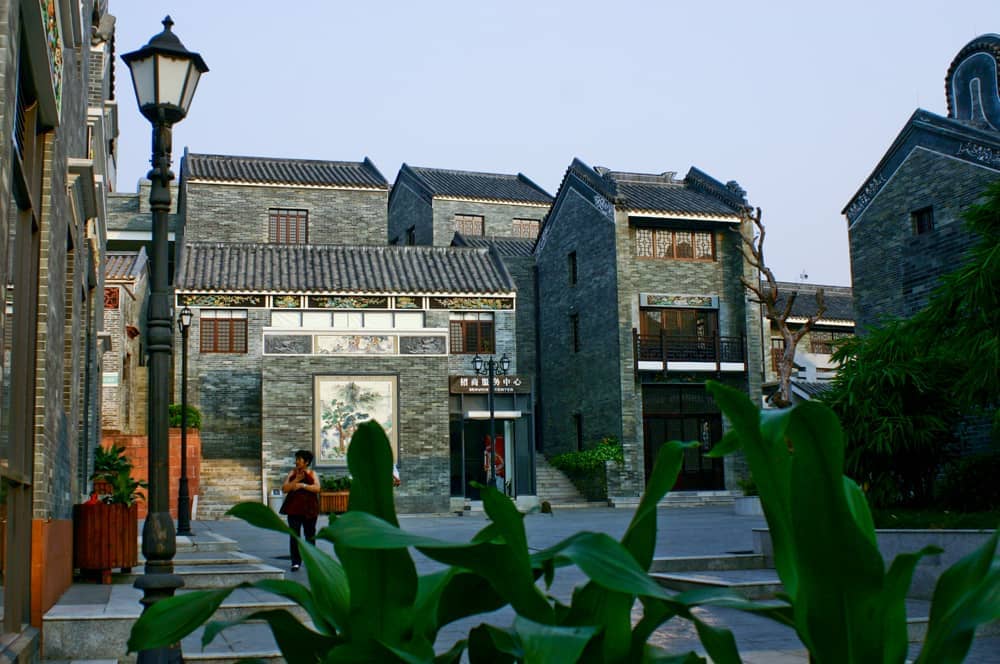
Lingnan Impression Park (岭南印象园) is a cultural theme park in Panyu District that reconstructs a traditional Lingnan-style village as it might have appeared during the Qing dynasty. The park spans 16.5 hectares and centers on a network of narrow stone lanes, whitewashed courtyard houses with dark-tiled roofs, covered arcades, and a web of small waterways crossed by arched stone bridges. The overall aesthetic draws from the Lingnan architectural tradition, the regional style native to Guangdong and surrounding provinces, which balances Chinese courtyard-house principles with adaptations suited to the Pearl River Delta's hot, wet climate.
The park is located in University Town, a large artificial island in the Pearl River developed in the early 2000s to host several major Guangzhou universities. That context matters: the surrounding area is clean, modern, and relatively quiet compared to central Guangzhou, which makes the transition into the park's recreated village feel more deliberate than it might in an older district.
Visitors who have already explored places like Chen Clan Ancestral Hall or Yongqingfang in Liwan will recognize some of the architectural vocabulary here, though Lingnan Impression Park leans more explicitly toward a lived-village experience rather than monumental clan architecture or urban bar-street renovation.
ℹ️ Good to know
Opening hours are generally listed as 09:30–18:00 with ticket sales ending at 17:00, though some sources cite 09:00–17:00 or seasonal extensions. Verify current hours directly before your visit, particularly during public holidays.
The Architecture: What the Buildings Tell You
The defining visual feature of any Lingnan building is the contrast between the pale lime-rendered walls and the deep charcoal or blue-grey roof tiles. Rooflines are often adorned with sculpted ridges, a decorative tradition that ranges from simple curved finials to elaborate ceramic figurines depicting scenes from folklore. Walking through the park, you will notice that the lanes are deliberately narrow — often no wider than two people side by side — which kept them shaded and reduced heat gain in summer. This was functional architecture long before it became picturesque.
Covered walkways, known locally as qilou when elevated to street level, appear throughout the park. These arcaded ground floors were a Lingnan adaptation borrowed partly from Southeast Asian trade-city architecture, designed to let people walk protected from both the summer downpours and the midday sun. The park reproduces this detail with enough consistency that it reads as a genuine spatial system rather than a scattered decorative gesture.
For a deeper look at how Lingnan architecture evolved across different building types in Guangzhou, the Guangzhou architecture guide provides useful historical context that enriches a visit here.
How the Park Changes Through the Day
Morning light, particularly in the hour after opening, falls at a low angle across the textured roof tiles and mossy stone paving. Shadows are long, the air still carries some overnight cool, and the lanes hold a genuine quietness that disappears once tour groups arrive from mid-morning onward. If you are visiting for photography, the 09:00–10:30 window is the most rewarding.
By late morning, folk performance schedules typically begin. Cantonese opera excerpts, lion dance demonstrations, and craft workshops involving paper cutting, clay figurines, or folk embroidery appear at various points around the park. These are genuine scheduled activities rather than continuous ambient performance, so picking up a daily program at the entrance is worthwhile. The performances draw audiences who cluster tightly, which can make individual lanes feel crowded for short periods before dispersing.
Midday in summer is genuinely uncomfortable, with the park fully exposed and the stone surfaces radiating heat. In autumn and winter, the same midday period is the most pleasant time to be outside. Afternoon light in the 14:00–16:00 range can be attractive for photography on the western side of the park, where it catches the whitewashed walls directly. The park closes at 18:00 with ticket sales ending at 17:00, so a late-afternoon arrival only makes sense if you are targeting specific areas rather than a full walk-through.
💡 Local tip
Wear flat, closed-toe shoes. The stone paving is uneven in places and can become slippery after rain. Light, moisture-wicking clothing is essential from May through September.
Folk Culture and Living Craft Demonstrations
The park positions itself as a living folk culture experience rather than a static museum, and the craft demonstrations are the main mechanism for delivering on that claim. Workshops along the main commercial lane typically involve artisans working in front of visitors, with small products available to purchase. Stalls offer items including Cantonese paper fans, lacquerware, ceramic figurines, preserved local snacks, and hand-painted ceramics. Quality and authenticity vary by stall, and the more tourist-facing products closest to the entrance are predictably generic. Walk deeper into the park to find smaller, quieter workshops where the ratio of genuine craft to souvenir shifts noticeably.
Cantonese opera is central to the park's cultural programming. Short performances, typically 20–30 minutes, feature costumed singers performing excerpts from the classical repertoire with live or recorded accompaniment. If you want to understand this art form in more depth before or after your visit, the Guangzhou Cantonese opera guide covers the history, character types, and key venues in the city.
Food stalls and small restaurants scattered through the park serve traditional Cantonese snacks: sticky rice in lotus leaf, sweet red bean soup, fried turnip cake, and sour plum drinks. These are not high-end, but they are appropriate to the setting. Eating here is part of the experience rather than a logistical interruption.
Getting There and Practical Logistics
The most straightforward approach is Guangzhou Metro Line 4 or Line 7 to University Town South Station. Exit from Exit B and walk approximately 800 meters, which takes about 10–15 minutes depending on pace. The walk passes through a section of the university campus area and is shaded in parts. Bus routes 384, 380A, 380B, 997, and Pan 201 are also listed by various sources as serving the area, though bus schedules and stops should be confirmed locally.
Panyu District is a broad area south of central Guangzhou that contains several other worthwhile attractions beyond the park. The Panyu neighborhood guide gives an overview of how to structure a full day in the district.
Ride-hailing via DiDi works well in this area and drops you directly at the park entrance, which saves the walk from the metro. Having the park's Chinese address ready (广州市番禺区大学城外环西路) is helpful for drivers unfamiliar with the entrance location.
⚠️ What to skip
Wheelchair and stroller accessibility is not clearly documented for this park. The stone-paved lanes and stepped bridges make parts of the route potentially difficult. If mobility is a concern, contact the park directly before visiting to confirm current conditions.
Practical Assessment: Is This Park Worth Your Time?
Lingnan Impression Park is a reconstructed environment, not a preserved historic village. That distinction matters. The architecture is built to evoke a period and aesthetic rather than to preserve original structures in place. Visitors expecting the texture and layered history of a genuinely old site will notice the difference in the quality of aging, the uniformity of the building finishes, and the way commercial stalls integrate with the architecture.
What the park does well is consolidate a large amount of Lingnan visual culture into a single walkable space. For first-time visitors to Guangzhou with limited time, or for families with children who benefit from interactive craft activities and performance schedules, it provides a coherent and well-organized introduction to the regional aesthetic. For travelers who have already spent time in older Lingnan villages or who have explored sites like Shawan Ancient Town, the park may feel like a simplified version of something more authentic available nearby.
If you are comparing Lingnan Impression Park against other options in the same district, Shawan Ancient Town offers a similar cultural focus but with a greater proportion of genuinely old structures and a more village-scaled urban form.
The CNY 60 admission price is reasonable for a half-day visit that includes performances and craft demonstrations. On weekends and public holidays, crowds increase significantly. The National Day Golden Week period in early October brings heavy visitor numbers, though the park reportedly offers a discounted rate of CNY 48 during that period.
💡 Local tip
Weekday mornings between Tuesday and Thursday consistently see the lowest crowds. If you visit on a weekend, aim to arrive at opening time to move through the main lanes before the first performance draws large audiences to the central plaza.
Photography Notes
The park is well-suited to architecture and street photography. The whitewashed walls reflect light cleanly, and the narrow lanes create natural leading lines. Doorways with carved lintels, roof-ridge ceramic figures, and reflection shots from the small canal bridges are the most rewarding compositions. Avoid direct midday shooting in summer when the contrast between bright walls and dark tile becomes extreme.
During folk performances, using a slightly longer focal length from the back of the crowd gives more natural expressions than shooting from the front row, where performers are aware of cameras. The early morning period before crowds arrive is ideal for empty-lane architectural shots.
Insider Tips
- Pick up the daily performance schedule from the entrance ticket booth. Performances run on fixed timetables and the schedule changes by day, so without it you may miss the Cantonese opera excerpts entirely.
- The park's deeper interior lanes, away from the main entrance axis, see significantly less foot traffic and contain some of the more detailed architectural features. Most casual visitors turn back before reaching them.
- Local Cantonese snacks from the stalls in the rear of the park tend to be fresher and less tourist-priced than the front-entrance options. Look for the stalls that have a visible cooking setup rather than pre-packaged goods.
- If you are visiting with children, the clay-figurine and paper-fan workshops generally run on a drop-in basis for a small additional fee. These provide 30–45 minutes of structured activity and let children take a finished piece home.
- The park sits near several universities, so on weekday afternoons you may encounter architecture and art students sketching the building details. Quiet conversation with them can be unexpectedly informative about the specific construction techniques on display.
Who Is Lingnan Impression Park For?
- Travelers making their first visit to Guangzhou who want a condensed introduction to Lingnan architecture and Cantonese folk culture
- Families with children ages 5–14 who benefit from interactive craft workshops and live folk performances
- Architecture and design enthusiasts interested in the spatial logic of traditional Pearl River Delta villages
- Photographers looking for textured, low-rise streetscapes with good morning light
- Visitors based in Panyu or University Town who want a half-day cultural activity without traveling into central Guangzhou
Nearby Attractions
Other things to see while in Panyu:
- Baomo Garden
Baomo Garden (宝墨园) in Panyu District is one of the most ornate classical gardens in Guangdong, fusing Lingnan architectural traditions with sculpted waterways, intricate ceramic murals, and Qing-dynasty decorative arts. Originally built in the late Qing era and extensively rebuilt from 1995, it rewards visitors who appreciate craft and detail over theme-park spectacle.
- Chimelong Paradise
Chimelong Paradise is Guangzhou's large themed amusement park, located in Panyu District and home to more than 60 attractions. From white-knuckle roller coasters to family-friendly rides and seasonal shows, it attracts visitors from across the region. Here is what to expect before you arrive.
- Chimelong Safari Park
Spread across more than 2,000 mu (about 330 acres) in Panyu District, Chimelong Safari Park is one of the largest safari-style wildlife parks in Asia. This guide covers how to get there, what the experience is actually like, and how to make the most of a full day.
- Chimelong Water Park
Spanning over 300,000 square meters in Panyu District, Chimelong Water Park is one of Asia's largest water parks. Whether you're chasing record-breaking slides or looking for a lazy river afternoon, here's everything you need to know before you go.