Baomo Garden: Classical Lingnan Craftsmanship in Panyu
Baomo Garden (宝墨园) in Panyu District is one of the most ornate classical gardens in Guangdong, fusing Lingnan architectural traditions with sculpted waterways, intricate ceramic murals, and Qing-dynasty decorative arts. Originally built in the late Qing era and extensively rebuilt from 1995, it rewards visitors who appreciate craft and detail over theme-park spectacle.
Quick Facts
- Location
- Dong'an Road, Zini Village, Shawan Town, Panyu District, Guangzhou
- Getting There
- Metro Line 3 to Shiqiao Station, then Bus Pan 12 or Pan 67 to the garden (no direct subway stop)
- Time Needed
- 2 to 3 hours
- Cost
- 54 CNY adults; 27 CNY reduced (certain children/seniors); free for under 1.2 m and over 65. Verify before visiting.
- Best for
- Architecture enthusiasts, cultural travellers, photography, families with older children
What Baomo Garden Actually Is
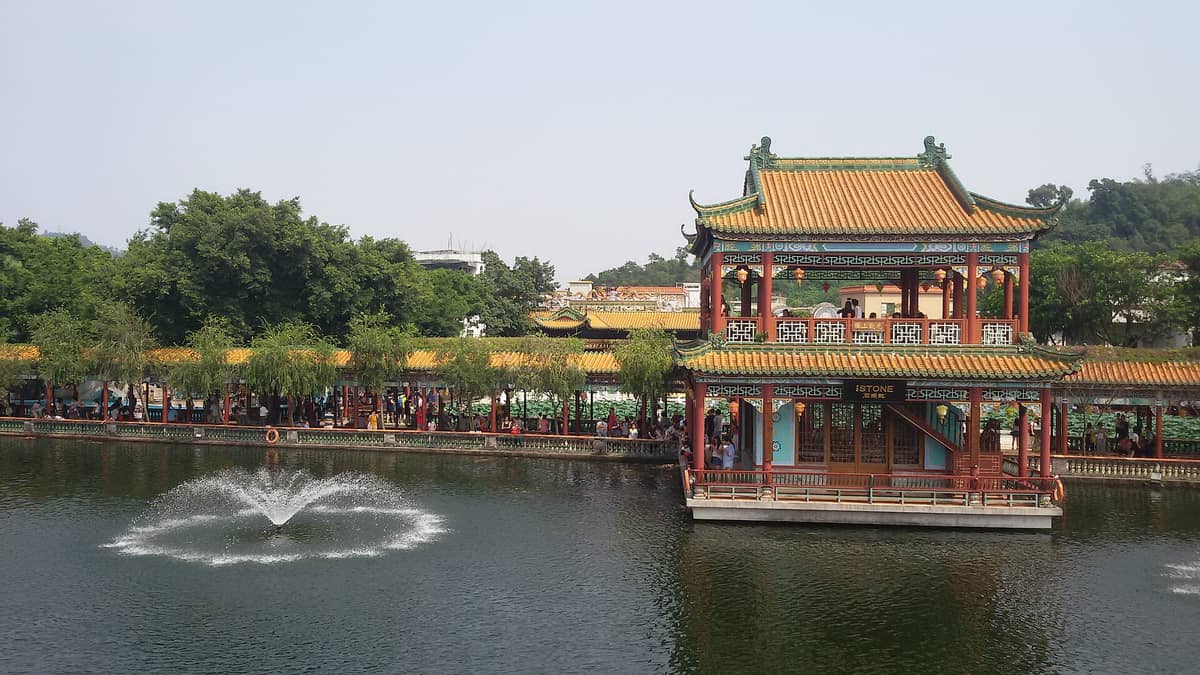
Baomo Garden, known in Chinese as 宝墨园, sits in Zini Village on the edge of Shawan Town in Panyu District, roughly 30 kilometres south of Guangzhou's historic core. It is a classical Chinese garden of the Lingnan school, a regional style rooted in the Pearl River Delta that blends southern Chinese decorative exuberance with courtyard planning borrowed from the Jiangnan tradition. The result looks different from the restrained ink-wash gardens of Suzhou: colour is everywhere, surfaces are carved or painted, and the water features are generous enough to cross by boat.
The garden spans roughly 100,000 square metres, which makes it large by the standards of classical private gardens in Guangdong. Within that space you get pavilions, covered walkways, rockery, ponds, a bonsai collection, large-format ceramic friezes, and several halls housing calligraphy and Lingnan paintings. It is not a botanical garden in the scientific sense, nor is it a pure historical relic. It is something closer to a living showcase of Cantonese decorative craft, with the water garden as its backbone.
ℹ️ Good to know
Opening hours are generally listed as 08:30 to 17:00 daily, with ticket sales ending at 16:50. Check locally before visiting, as hours can vary by season or public holidays.
A Brief History: Late Qing Roots and a 1990s Revival
The garden traces its origins to the late Qing Dynasty, when it was established as a local cultural institution in Zini Village. Like many traditional structures in the Pearl River Delta, it deteriorated over the turbulent decades of the twentieth century. The current garden is largely the product of a major reconstruction project that began in 1995, driven by local community investment and a desire to restore a functioning example of Lingnan garden culture.
That reconstruction context matters for managing expectations. Baomo Garden is not a dusty historical site frozen in the nineteenth century. It is an actively maintained, carefully curated garden built on a historical foundation. The craftsmanship is genuine: artisans brought in for the reconstruction used traditional Cantonese techniques for the ceramic relief panels, stone carvings, and wood lattice screens. But the fabric is relatively modern, which explains why everything looks unusually pristine compared to older heritage sites in the city.
For deeper context on the Lingnan architectural tradition that underpins the garden's design language, the Chen Clan Ancestral Hall in Liwan District is the essential comparison point. It predates Baomo Garden's reconstruction by a century and shows the same ceramic frieze tradition at its most refined.
The Ceramic Friezes and Decorative Craft
The feature that draws the most sustained attention is the ceramic murals. Long horizontal panels running along rooflines and courtyard walls depict scenes from Chinese history, mythology, and Cantonese folk narrative. The technique is Shiwan pottery work, produced in the kilns of Foshan's Shiwan district nearby. Figures are modelled in three dimensions and glazed in rich earth tones, ochres, deep greens, and cobalt blues, giving the panels a density of colour and story that rewards slow inspection.
Carry a wide-angle lens if you shoot photography, because the panels span facades that are difficult to capture without stepping back. Early morning light from the east catches the eastern-facing friezes directly; by midday, the light flattens. Late afternoon creates shadows that add depth to the relief work, making that the better window for photographing the architectural surfaces.
The stone carvings deserve equal attention. Doorframes, bridge balustrades, and column bases are worked with dragons, phoenixes, and floral motifs in a style that blends formal Confucian symbolism with the lusher naturalism typical of Cantonese craft. The quality is consistent across the site, which is itself a statement about the commitment of the 1995 reconstruction project.
Walking the Garden: What You Pass Through
The entrance sequence sets the tone immediately. A broad forecourt with ornamental rockery gives way to a covered gallery that channels visitors toward the central water garden. The galleries here follow a pattern common in Lingnan gardens: roofed corridors with latticed windows on one side and open courtyard views on the other, creating a rhythm of shelter and exposure as you move through the space.
The central pond is the garden's spatial anchor. Small covered bridges cross the water at several points, and pavilions project out over the surface on stone piles. On still mornings, the reflections of the pavilion rooflines in the water are sharp enough to disorient your sense of scale. By mid-morning on weekends, tour groups begin to fill the main corridors, and the relatively narrow walkways become congested near the major friezes. The inner sections of the garden, particularly the bonsai courtyard and the calligraphy halls, stay quieter throughout the day.
Several halls in the garden display Lingnan-school paintings and calligraphy. These rooms are air-conditioned and provide a natural rest stop in summer. The quality of the works varies, but there are pieces that would hold their own in a proper art museum. If you have any interest in Chinese ink painting, budget an extra twenty minutes here.
💡 Local tip
The inner courtyard areas near the bonsai collection are noticeably quieter than the main water garden route. If you want to photograph the architecture without crowds, head there first after entering.
How the Experience Changes by Time of Day and Season
Arrival between 08:30 and 09:30 on a weekday gives you something close to solitude. The light is soft, the air in Panyu carries a green, slightly damp smell from the surrounding flat delta landscape, and the sounds are birdsong and water. By 10:30, school and tour groups begin to arrive, and the atmosphere shifts toward something more managed and sociable.
Summer visits between June and August require preparation for both heat and humidity. The covered walkways provide shade, but the open sections of the garden accumulate heat by mid-morning. Bring water, apply sunscreen before entry, and wear light natural fabrics. The garden is at its most photogenic in autumn, roughly October to November, when the light is clear and direct without the haze that blurs distant rooflines in summer.
Spring visits from March to May coincide with the rainy season onset, meaning you may get overcast skies or light rain. A compact umbrella is worth carrying. For a broader read on seasonal timing across Guangzhou's attractions, the best time to visit Guangzhou guide breaks down month-by-month conditions.
Getting There and Practical Logistics
Baomo Garden requires a multi-leg journey from central Guangzhou. The standard route uses Guangzhou Metro Line 3 to Shiqiao Station in Panyu, then a transfer to Bus Pan 12 or Pan 67 to reach the garden. There is no direct metro connection to the site itself, and the bus leg adds meaningful travel time. Budget at least an hour from the city centre each way, more in traffic.
Taxi or ride-hailing via DiDi is the more convenient option if you are in a group or travelling with children. Give the driver the Chinese name 宝墨园 or the full address in Zini Village, Shawan Town. The approach road through Shawan is a narrow two-lane road lined with low-rise traditional buildings, and arrival by car gives you a preview of the surrounding old-town character before you reach the garden gate.
Shawan itself is worth combining into the same day trip. The Shawan Ancient Town sits close by and preserves genuine Qing-era streetscapes, ancestral halls, and Cantonese food stalls. The two destinations share the same general area and make a natural pairing.
⚠️ What to skip
There is no significant food offer inside the garden. Eat before you arrive or grab something in Shawan Town on the way. Bring a refillable water bottle, especially in summer.
Practical Assessment: Who This Garden Is For
Baomo Garden consistently surprises visitors who arrive with low expectations. The scale, the craft quality, and the integration of water, architecture, and decorative art produce an experience that goes well beyond a standard municipal park. The fact that it was rebuilt in the 1990s rather than preserved intact from the Qing Dynasty should not diminish the visit. The techniques are traditional, the materials are authentic to the Shiwan tradition, and the spatial logic of the garden follows classical Lingnan principles.
That said, travellers who prioritise raw antiquity, rough texture, and the patina of centuries will find the site's cleanliness slightly disconcerting. This is a garden that looks finished, maintained, and intentional. If you respond better to the peeling plaster and irregular stonework of older, less-restored sites, Baomo Garden may feel too polished.
First-time visitors to Guangzhou with limited days should weigh whether the journey to Panyu makes sense given their overall itinerary. The 3 days in Guangzhou itinerary can help you decide where Baomo Garden fits relative to closer central attractions. For travellers specifically interested in classical Cantonese architecture and gardens, it absolutely earns the detour.
If the architectural detail of Baomo Garden appeals to you, consider pairing the trip with a deeper read through the Guangzhou architecture guide which places the Lingnan tradition in its broader historical context.
Insider Tips
- Arrive at opening time (08:30) on a weekday to have the ceramic friezes and covered galleries largely to yourself. Tour groups typically don't arrive until after 10:00.
- The boat ride on the central pond, if available, gives you angles on the pavilions and bridges that you simply cannot get from the walkways. Check at the ticket counter whether it is operating on the day of your visit.
- The bonsai courtyard in the inner section of the garden is undervisited and often quiet even when the main areas are crowded. Take your time there.
- Combine the visit with Shawan Ancient Town, which is a short taxi or bus ride away and adds genuine Qing-era streetscape and local Cantonese food to the day.
- Late afternoon light, roughly 15:00 to 17:00, is the best window for photographing the ceramic relief panels, as the lower sun angle creates shadow relief that brings the three-dimensional figures to life.
Who Is Baomo Garden For?
- Architecture and decorative arts enthusiasts who want to see Lingnan-style ceramic and stone craft at scale
- Photographers seeking reflective water surfaces, ornate rooflines, and intricate carved detail
- Travellers pairing the visit with Shawan Ancient Town for a full day in historic Panyu
- Families with older children curious about classical Chinese garden design
- Visitors who have already seen Chen Clan Ancestral Hall and want to experience the Lingnan tradition in a garden setting
Nearby Attractions
Other things to see while in Panyu:
- Chimelong Paradise
Chimelong Paradise is Guangzhou's large themed amusement park, located in Panyu District and home to more than 60 attractions. From white-knuckle roller coasters to family-friendly rides and seasonal shows, it attracts visitors from across the region. Here is what to expect before you arrive.
- Chimelong Safari Park
Spread across more than 2,000 mu (about 330 acres) in Panyu District, Chimelong Safari Park is one of the largest safari-style wildlife parks in Asia. This guide covers how to get there, what the experience is actually like, and how to make the most of a full day.
- Chimelong Water Park
Spanning over 300,000 square meters in Panyu District, Chimelong Water Park is one of Asia's largest water parks. Whether you're chasing record-breaking slides or looking for a lazy river afternoon, here's everything you need to know before you go.
- Lingnan Impression Park
Set across 16.5 hectares in Panyu's University Town, Lingnan Impression Park recreates a Qing-dynasty Cantonese village with original-style architecture, folk craft workshops, and riverside scenery. It offers one of the most concentrated introductions to traditional Pearl River Delta life available within Guangzhou city limits.