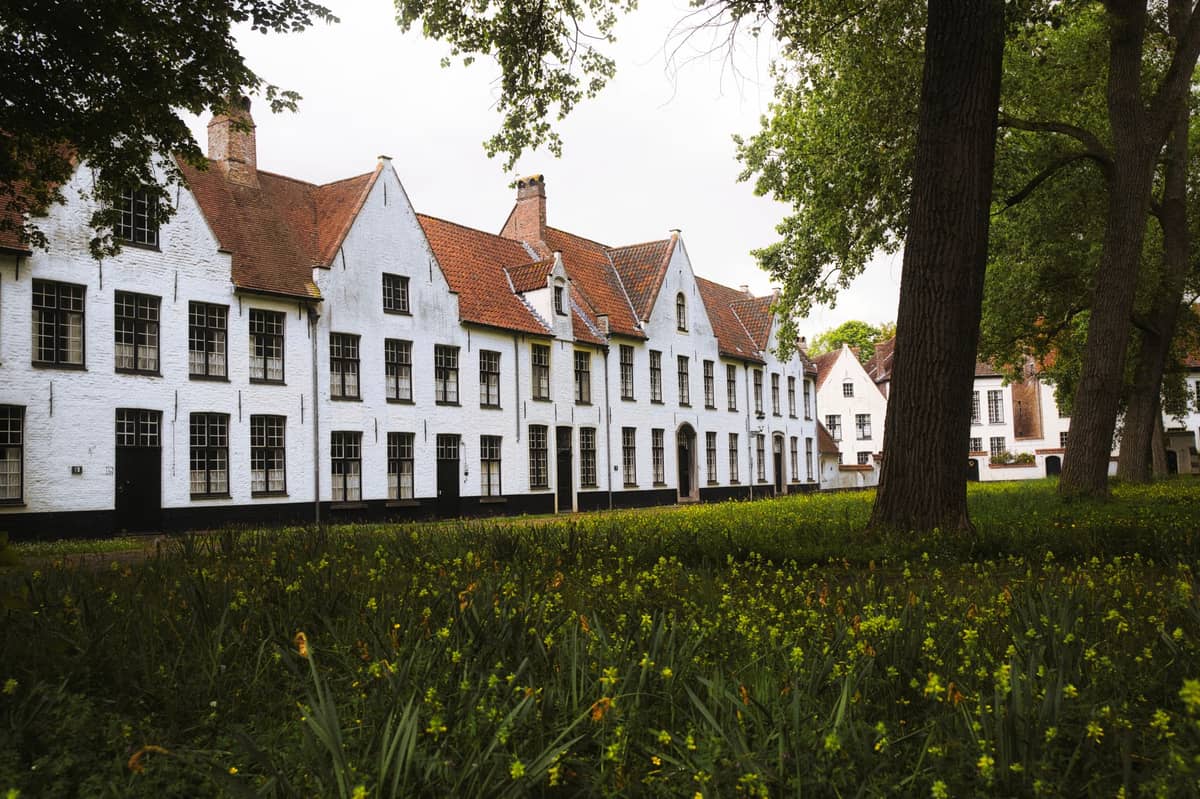
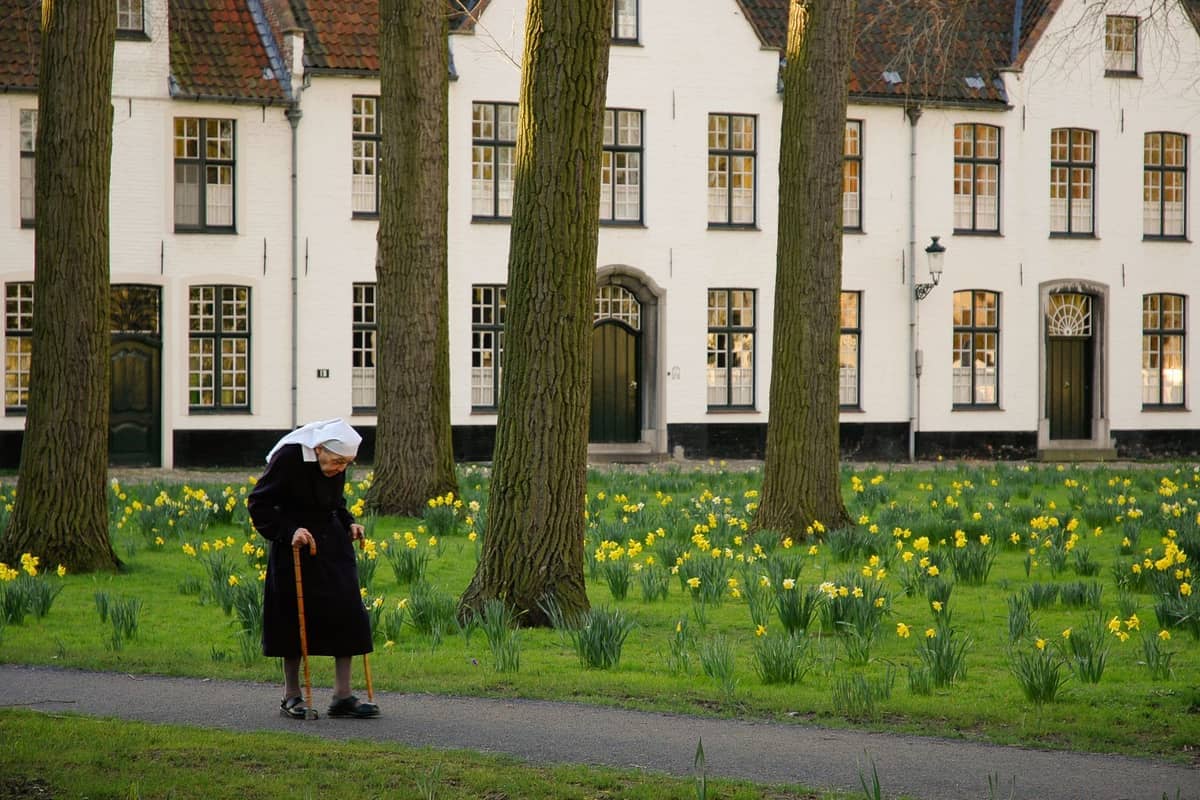
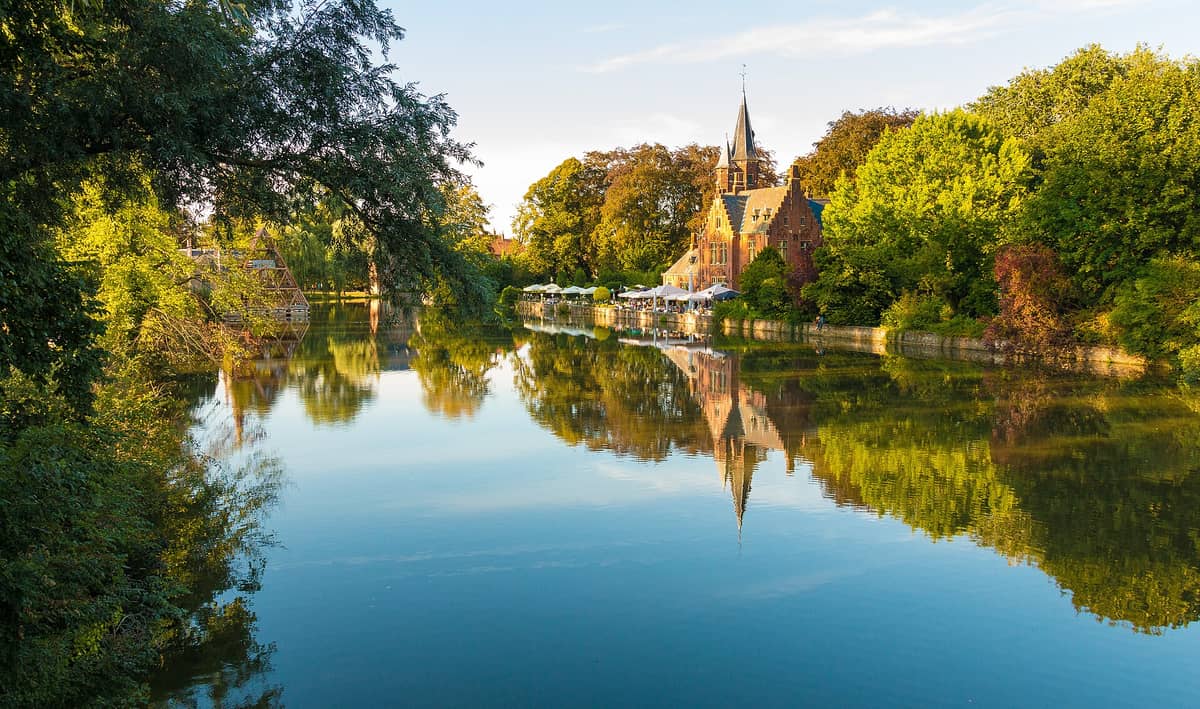
Minnewater and the Begijnhof form the quiet, contemplative southern edge of Bruges' historic centre. Here, the canal widens into the so-called Lake of Love, white-walled beguine houses face a courtyard full of daffodils in spring, and the city ramparts curve through parkland that locals use every day of the year.
At the southern tip of Bruges' old city, where the canals broaden and the streets grow quieter, two of the city's most affecting places sit almost within touching distance of each other: the Minnewater, a reed-fringed lake backed by medieval sluice architecture, and the Begijnhof, an enclosed beguinage whose whitewashed houses and central lawn feel entirely removed from the tourist circuits a few hundred metres north. This is the part of Bruges that rewards slow walking.
Orientation: Where Minnewater & Begijnhof Sit in Bruges
The Minnewater and Begijnhof area occupies the far southern edge of Bruges' UNESCO-listed historic centre, bounded roughly by the city ramparts (the Vesten) to the west and south, and by Wijngaardplein to the north. The Minnewater lake itself sits at Minnewater, 8000 Brugge, and the Begijnhof is just across the water on its eastern bank.
What makes this corner of the city geographically distinctive is its position right at the interface between the medieval urban fabric and the green ring of the Kruisvest ramparts and windmills. Walk south along the Katelijnestraat from the Church of Our Lady and you pass through a gradual transition: shops and restaurants thin out, the canal widens, and within five minutes you are standing at the lake with open sky above you and the silhouette of the rampart trees in the distance.
The area connects naturally northward to the Dijver canal quarter and the cluster of major museums around the Groeninge and Gruuthuse, and eastward along the rampart path toward the Gentpoort gate, then onward to the Kruisvest windmills and the Sint-Anna quarter beyond. Bruges railway station (Station Brugge) is a ten-minute walk due south, making this one of the first parts of the historic centre that arriving visitors reach on foot.
ℹ️ Good to know
The Minnewater area is roughly 1.2 km on foot from the Markt (main square), following the Katelijnestraat south. From Bruges station, it is approximately 700 metres north along Buiten Begijnenvest or through the Minnewaterpark entrance near Bargeplein.
Character & Atmosphere: What It Feels Like to Be Here
Early in the morning, before the canal boat routes start and the tour groups make their way down Katelijnestraat, the Minnewater area has a particular stillness. Mist sits over the lake in autumn and winter, the swans barely move, and the only sounds are birdsong and the distant chime of the Belfort. Local residents walk dogs along the park paths; a few cyclists cut through on their way to the city centre. This is when the area shows its non-touristic face most clearly.
By mid-morning the character shifts. Day-trippers and hotel guests who have read that this is one of the most photogenic spots in Bruges arrive in numbers, particularly in spring when the Begijnhof courtyard is carpeted in daffodils, and in summer when the park grass is full of people picnicking. The lake path and the bridge over the Minnewater become genuinely crowded on sunny weekend afternoons between April and September. This is not a secret corner of the city, and it would be dishonest to suggest otherwise.
Inside the Begijnhof walls, however, even moderate crowds feel muted. The enclosed courtyard absorbs noise in a way the open lake cannot, and the scale of the space, with its low white houses and central lawn, creates a sense of remove. The Benedictine sisters who now live there maintain a genuinely contemplative atmosphere; visitors who speak loudly or play music on phones are likely to draw disapproving looks from both residents and other visitors. It is one of the few places in Bruges where the expectation of quiet is genuinely enforced by social pressure.
After dark the area is calm and well-lit along the main paths, with the lake reflecting streetlights and the Begijnhof walls glowing faintly white. It is not a nightlife district in any sense. The nearest concentration of bars is back up toward Walplein, a small square that sits just north of Wijngaardplein and is home to the De Halve Maan brewery.
What to See & Do
The Minnewater (Lake of Love) is the visual anchor of this whole area. The name derives not from a medieval love story, as local legend sometimes suggests, but from older Flemish water-management vocabulary: the lake was historically a reservoir feeding the city's canal system, controlled by a lock tower that still stands at the southern end. That lock tower, the Sashuis, dates from 1519 and is one of the less-visited historic structures in the city despite being in plain view of the main path. It is worth pausing at the bridge to look south toward it rather than just photographing the swans.
The Begijnhof (Bruges Beguinage) received UNESCO World Heritage status in 1998 as part of the Flemish Beguinages inscription. The complex was founded in 1245 and originally housed beguines, laywomen who lived a quasi-religious communal life without taking permanent vows. The houses visible today mostly date from the seventeenth and eighteenth centuries, rebuilt after fires and the disruptions of the religious wars. Entry to the courtyard is free; a small museum inside one of the houses charges admission and gives a clear account of what beguine life actually involved.
The park surrounding the lake, Minnewaterpark, is a proper city park used by Bruges residents throughout the year. Its paths are paved and largely flat, making it accessible for pushchairs and wheelchairs. The park connects southwest to the rampart walk along the Kruisvest, where you can follow the green belt past the remaining windmills on the Kruisvest and continue toward the Gentpoort gate, one of the four surviving medieval city gates.
Minnewater lake and the 16th-century Sashuis lock tower
Begijnhof courtyard and the small beguinage museum
Minnewaterpark's rampart-side walking and cycling paths
The bridge over Minnewater (popular photography viewpoint toward the Begijnhof)
The rampart walk past the Gentpoort toward the Kruisvest windmills
💡 Local tip
The daffodil display in the Begijnhof courtyard typically peaks in late March and early April. For the lake's morning mist effect, arrive before 9am between October and February. Both are worth timing deliberately.
Eating & Drinking
The immediate Minnewater area is not a food district. There are no restaurants directly on the lake, and the park itself has no permanent food stalls. The closest concentration of options is around Walplein, a five-minute walk north, where the De Halve Maan brewery dominates the square and draws large numbers of visitors for its beer and food.
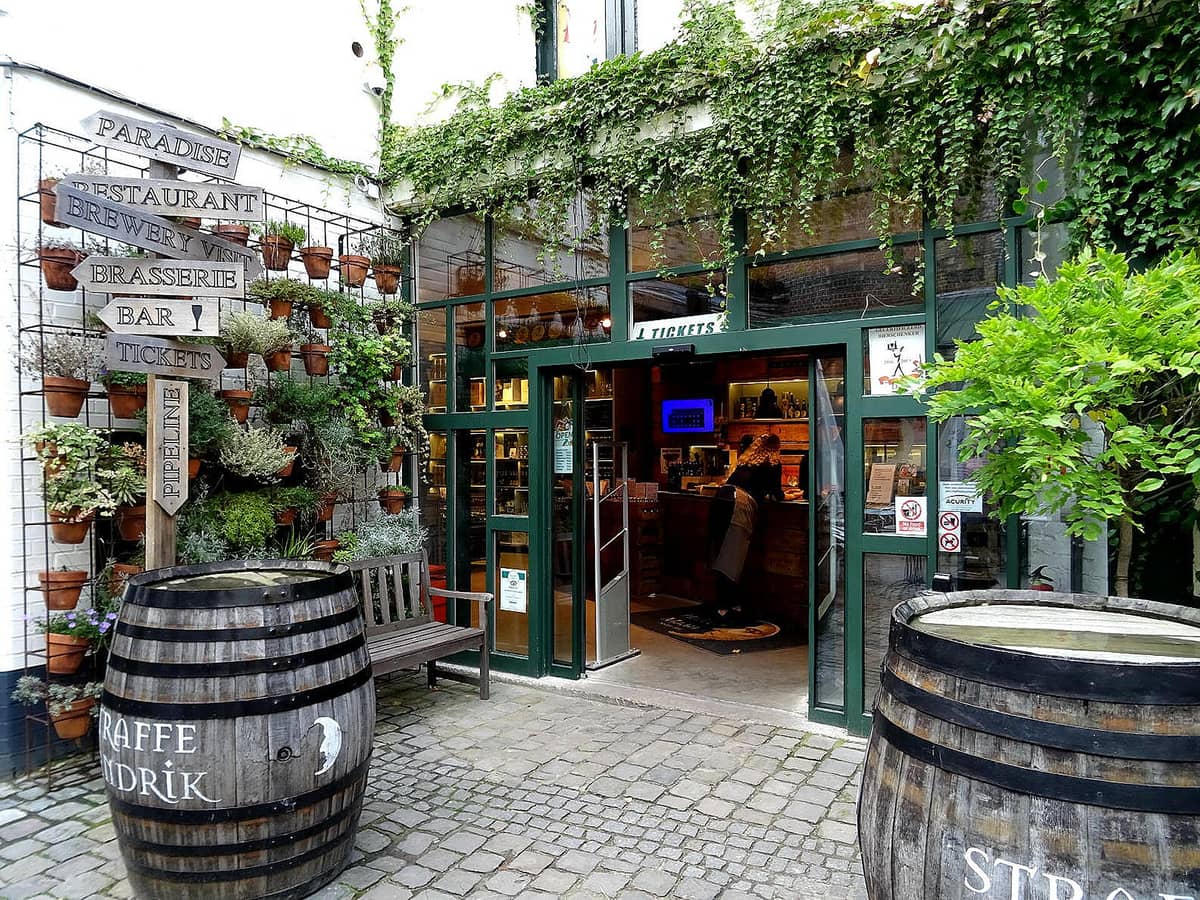
The De Halve Maan brewery on Walplein brews the Brugse Zot and Straffe Hendrik beers and offers tours with tastings at various points throughout the day. The brewery restaurant serves Flemish dishes and is consistently popular, so booking ahead for lunch or dinner is advisable in high season. Prices are mid-range for Bruges, which means not cheap by Belgian standards.
Along Katelijnestraat, the main pedestrian approach from the north, there are several chocolate shops, waffle stands, and cafés catering primarily to visitors walking down from the Onze-Lieve-Vrouwekerk. The quality varies considerably. For something more local, the streets around Wijngaardplein have a few smaller cafés and brown-style bars that attract a mix of residents and visitors. Prices here are broadly in line with the rest of the historic centre, which is to say higher than you would pay outside the tourist zone.
⚠️ What to skip
The area immediately around Minnewater has almost no food infrastructure. If you are planning a long walk along the ramparts, carry water and snacks, particularly outside the main season when even the Walplein options may have reduced hours.
Getting There & Around
Bruges railway station is the most convenient arrival point for this neighborhood. From the main station exit, the Minnewater is roughly 800 metres on foot, heading north along Buiten Begijnenvest or through the park entrance near Bargeplein. This is the closest major Bruges attraction to the station and many visitors reach it before they see anything else of the city. If you are arriving by train and want to orient yourself gradually, walking through Minnewaterpark to the Begijnhof and then continuing north is a logical way to enter the historic centre.
The nearest De Lijn bus stop to the park is Brugge Bargeplein, served by city bus routes connecting the station with the historic centre. A single ticket costs approximately 3 euros, though fares are subject to change and should be verified with De Lijn directly. From the Markt, the walk south along Steenstraat and Katelijnestraat takes around 15 minutes at a moderate pace.
Within the area itself, everything is walkable. The loop from the Minnewaterpark entrance, across the bridge, into the Begijnhof, around the courtyard, and back along the eastern bank of the lake takes around 30 to 40 minutes without stopping. Adding the rampart walk toward the Gentpoort city gate extends this to a comfortable 90-minute circuit. Cyclists can follow the rampart path easily; bikes can be parked at the Begijnhof entrance on Wijngaardplein.
For context on the broader cycling infrastructure and how this area fits into longer bike routes around Bruges, the cycling in Bruges guide covers the main routes and rental options.
Where to Stay
Accommodation options in the immediate Minnewater and Begijnhof area are limited but include a handful of hotels and bed-and-breakfasts along Katelijnestraat and the streets immediately to the east. Staying here puts you at the quieter end of the historic centre, which suits visitors who want to be away from the noise around the Markt and the Burg in the evenings but still within easy walking distance of the main attractions.
The tradeoff is distance from the northern part of the city, where the Markt, the Jan van Eyckplein, and the Sint-Anna quarter are located. From Minnewater, Jan van Eyckplein is about 25 minutes on foot. If your itinerary is weighted toward the southern museums, including the Groeninge, the Gruuthuse, and the Memling in Sint-Jan, this location is genuinely practical. If you want to be central to everything, the streets between the Markt and the Burg are better placed.
The Minnewater area is also convenient for early arrivals and late departures by train, given the short walk to the station. For a fuller picture of accommodation across the city, the where to stay in Bruges guide compares all the main neighborhoods.
💡 Local tip
Rooms on or near Katelijnestraat facing toward the Minnewater can be among the most atmospheric in the city, particularly in rooms with canal or park views. Book well in advance for spring and summer weekends.
Connecting to the Rest of Bruges
The natural progression north from Minnewater leads through the cluster of Bruges' most important museums. The Groeningemuseum and the Gruuthusemuseum are both within a ten-minute walk along the Dijver canal. The Church of Our Lady (Onze-Lieve-Vrouwekerk), which houses Michelangelo's Madonna and Child, sits at the northern end of Katelijnestraat and forms a natural endpoint to a walk from the station through Minnewater.
Westward, the rampart walk along the Kruisvest connects this area to the windmills and the broader green belt of the city's medieval fortifications. This is one of the better free walks in Bruges, offering views back across the rooftops and spires without any admission cost. The free things to do in Bruges guide lists this route alongside the other no-cost experiences in the city.
TL;DR
Best suited for: visitors who want calm, greenery, and two of Bruges' most historically significant sites (the Begijnhof and the Minnewater) without the density of the central tourist circuit.
Honest drawback: the area gets genuinely busy on fine weekend afternoons from April to September; the lake path and bridge can feel crowded, though the Begijnhof courtyard remains calmer.
Practical advantage: the short walk from Bruges train station makes this a logical first or last stop, and the rampart walk provides easy access to the wider city green belt.
Food and nightlife: minimal in the immediate area; Walplein (five minutes north) and the De Halve Maan brewery are the main food-and-drink anchors.
Who should skip it: visitors with very limited time whose priorities are the Markt, the Burg, and the northern canal quarter will find it a significant detour; for everyone else, it is worth the walk.
Two days is enough time to cover Bruges properly if you plan well. This itinerary walks you through the city's best sights, neighbourhoods, and experiences in a logical order, with a clear take on what to skip, what to prioritise, and how to avoid the worst of the crowds.
Bruges packs an unusually strong museum scene for a city of its size. From world-class Flemish Primitive paintings at the Groeninge to medieval hospital complexes, immersive history attractions, and specialist museums dedicated to lace, beer, and Belgian fries, the city rewards curious visitors at every turn.
Bruges (Brugge) rewards visitors in every season, but timing your trip well makes a real difference. This guide breaks down weather, crowds, prices, and key events month by month so you can decide when to go based on what actually matters to you.
Bruges (Dutch: Brugge) is a serious beer destination for a city of its size. This guide covers the city's working breweries, museum-style experiences, guided tasting walks, and the bars worth your time, with current pricing, opening hours, and practical advice to help you drink well without wasting money.
Bruges is one of Europe's most photogenic canal cities, and a boat ride through its medieval waterways is one of the best ways to take it all in. This guide covers prices, schedules, the best time to go, what the tour actually involves, and how to avoid the longest queues.
Bruges is one of Europe's most serious chocolate cities, with dozens of artisan chocolatiers, a dedicated chocolate museum, and guided tasting tours winding through the medieval centre. This guide covers everything: Choco-Story ticket prices, the best chocolate walks, how to tell craft shops from tourist traps, and the smartest way to plan your visit.
The Bruges Christmas market is part of the city-wide Winter Glow festival, running from late November through early January across multiple locations in the medieval centre. This guide covers every location, practical logistics, ice skating prices, the free light trail, and the best strategies for making the most of a winter visit to Bruges (Brugge), Belgium.
Bruges preserves some of the finest Gothic architecture in northern Europe, from the soaring Belfry on the Markt to the ornate City Hall on Burg Square. This guide covers every major site, explains what makes each one architecturally significant, and gives you the practical details to plan a focused visit.
Bruges rewards those who wander off the main squares. From a family-built replica of a Jerusalem church to almshouse courtyards that feel frozen in the 17th century, these are the places that reveal a quieter, deeper side of the city.
Bruges in winter is a different city entirely. Crowds thin out, the medieval canals take on a quiet atmosphere, and the city's official Winter Glow program transforms the historic centre from late November through February. This guide covers what's on, what's closed, how to get around, and what most visitors get wrong.
Bruges has been synonymous with handmade bobbin lace for centuries. This guide covers the craft's history, where to watch it being made at the Kantcentrum, how to shop for authentic pieces, and what to skip.
Bruges (Dutch: Brugge) has a reputation as a pricey destination, but the reality is more forgiving. Most iconic sights cost nothing, public transport is straightforward, and a single pass covers nearly every major museum. This guide breaks down exactly what things cost, what's genuinely free, and where it's worth spending a little more.
Bruges is one of Europe's most complete medieval cities, and a single day is enough to see its best. This itinerary gives you a logical, time-aware route through the Markt, the canals, the Belfry, and the quieter corners most visitors miss, with real prices and straightforward planning notes throughout.
From the Saturday market at 't Zand to the weekend antique market along the Dijver canal, Bruges rewards shoppers who know where to look. This guide covers the best shopping streets, market schedules, local specialities, and a clear take on what to buy and what to skip.
Not all Belgian waffles in Bruges are created equal. This guide breaks down the two main styles, names the best spots in the city centre, gives real prices, and tells you which tourist-facing counters to skip.
Bruges (Brugge) packs its most spectacular medieval architecture into a walkable 3–4km historic core. This guide covers the classic self-guided loop from the Markt to Minnewater, with practical notes on timings, entrance fees, crowd patterns, and how to adapt the route for your pace.
Bruges (Brugge) is one of Belgium's most rewarding destinations for families. Compact, walkable, and packed with hands-on museums, canal-side exploration, and chocolate around every corner, the medieval city offers real substance for children and parents alike. This guide covers the best kid-friendly attractions, practical logistics, seasonal timing, and a clear take on where the city delivers and where it falls short for families.
Bruges is one of the most cycle-friendly cities in Europe, with a flat historic centre, expanding bike-priority zones, and nearly 930 km of marked routes in the surrounding Brugse Ommeland. This guide covers rental options and prices, the numbered node network, traffic rules, seasonal considerations, and the best routes for day trips beyond the city walls.
Bruges sits at the center of one of Europe's most connected rail networks. From medieval Ghent to the Belgian coast, these are the best day trips from Bruges, with real train times, honest crowd advice, and exactly what to do when you get there.
Bruges holds one of the world's great concentrations of Flemish Primitive painting. This guide covers the three essential venues, what to look for in each, practical logistics, and how to avoid the most common planning mistakes.
Bruges is one of Europe's most photogenic cities, and a surprising amount of it costs nothing to enjoy. From iconic canal viewpoints and medieval squares to peaceful beguinage courtyards and rampart windmills, this guide covers the best free experiences the city has to offer.
Whether you're arriving by train from Brussels, flying into one of Belgium's two main airports, or planning to cycle the medieval streets, this guide covers every practical transport option for reaching Bruges and navigating the city. Includes real fares, parking rates, and local tips.
Bruges (Dutch: Brugge) is one of Europe's most photographed medieval cities, but does it live up to the hype? This guide cuts through the postcard image to tell you exactly what the city delivers, who it suits best, and how to get the most out of a visit.
Bruges (Dutch: Brugge) is one of Europe's most atmospheric cities for couples, with medieval canals, Gothic architecture, world-class chocolate, and a walkable historic centre that rewards slow exploration. This guide covers the best romantic experiences, practical logistics, and straightforward notes on when to visit and what to skip.
Bruges (Brugge) is a UNESCO World Heritage city in northwest Belgium packed with medieval architecture, Flemish masterpieces, canal tours, and craft beer culture. This guide covers the best things to do in Bruges, with real prices, seasonal tips, and honest takes on what's worth your time.
Bruges is one of Europe's great food cities in miniature. This guide covers everything worth eating, from street-food fries to moules-frites season, plus clear notes on avoiding tourist-trap versions of Belgian classics.
Bruges offers accommodation ranging from canal-side boutique hotels to budget hostels and rural B&Bs. This guide breaks down the best areas to stay, what to expect at each price point, and the practical details most booking sites leave out.