Self-Guided Walking Tour of Bruges: The Complete Route Guide
Bruges (Brugge) packs its most spectacular medieval architecture into a walkable 3–4km historic core. This guide covers the classic self-guided loop from the Markt to Minnewater, with practical notes on timings, entrance fees, crowd patterns, and how to adapt the route for your pace.
Plan and book this trip
Tools from our partner Travelpayouts help you compare flights and hotels. If you book through them, we may earn a commission at no extra cost to you.
Flights
Hotels map
TL;DR
- The classic self-guided loop covers roughly 3km and takes 2–4 hours depending on how many sights you enter.
- Start at the Markt and end at Minnewater for the most logical route through the historic centre.
- Most major churches are free to enter; the Belfry costs around €16 and is worth it for the views.
- Summer weekends bring heavy crowds to the Rozenhoedkaai and canal viewpoints — arrive before 9am or after 6pm for quieter photos.
- Download the free Visit Bruges Route App before you go, or pick up the one-day Bruges itinerary if you're short on time.
Why Bruges Works So Well on Foot
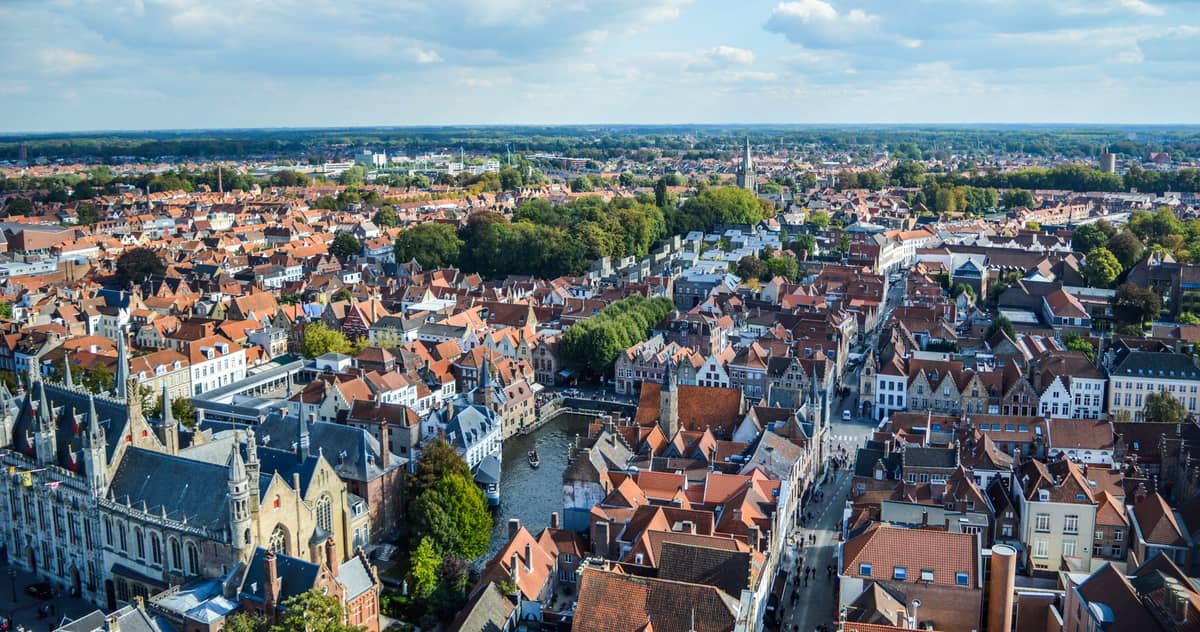
Bruges (Dutch: Brugge) is one of the few medieval European cities where the historic core survived largely intact. The entire UNESCO World Heritage-listed centre sits within a roughly circular network of canals, and almost every significant sight is within 1.5km of the central historic centre. There is no metro, and cars are actively discouraged in the inner city, which means walkers have the streets largely to themselves — at least in the early morning.
The city covers 138.4 km² in total, but the visitor-relevant area is a fraction of that. From the Markt to Minnewater is about 1.3km in a straight line, and the full loop described in this guide is around 3km. Flat terrain and well-maintained cobblestone streets make it accessible for most fitness levels, though the uneven stones can be tiring on unsupported footwear over two or three hours. Wear proper walking shoes.
💡 Local tip
The Visit Bruges Route App (free, iOS and Android) includes curated walking routes with short texts, photos, and 360° images. Download it before you arrive to avoid data roaming costs. Physical maps are also available free at the tourist offices on Stationsplein (the railway station) and Markt 1 (inside the Historium).
The Classic Route: Markt to Minnewater
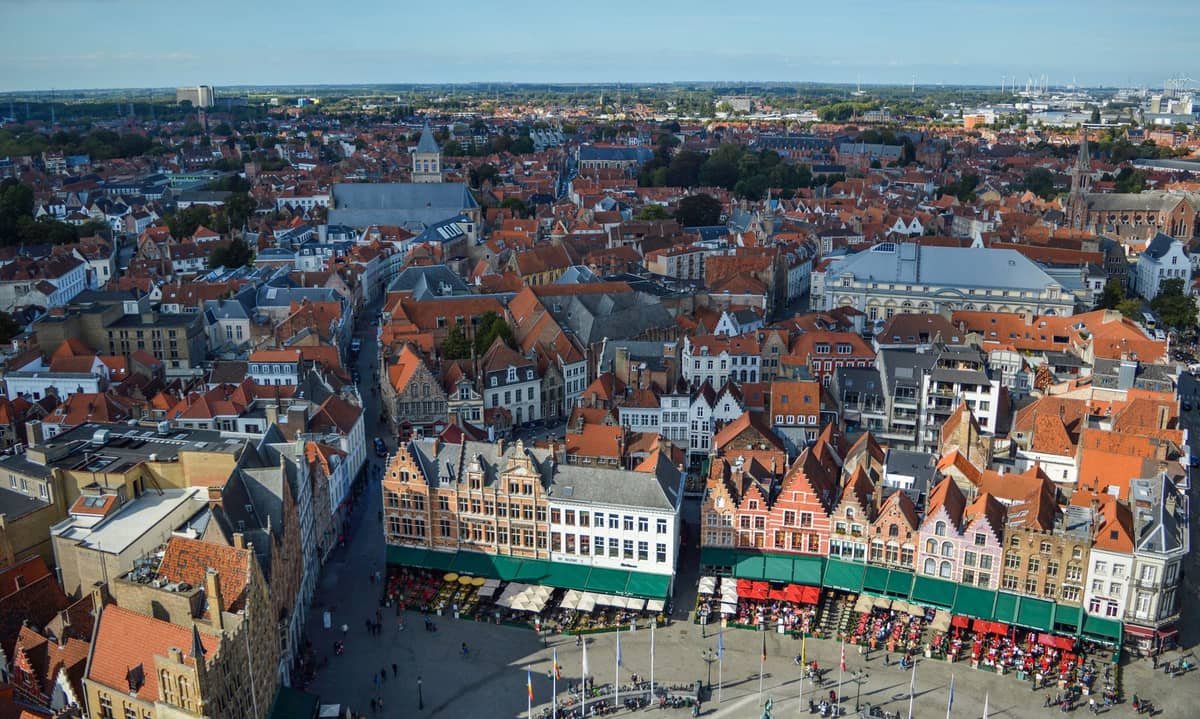
The standard self-guided loop follows a logical south-westerly arc through the city's landmark sights. Start at the Markt, Bruges' main square, where the Belfort (Belfry) dominates the skyline. Climbing the 366 steps takes around 20 minutes and costs approximately €16 for adults. The view over the rooftops and canals is genuinely useful for orienting yourself before the rest of the walk.
From the Markt, it is a two-minute walk east to Burg Square, the civic and religious heart of medieval Bruges. The Basilica of the Holy Blood occupies the square's corner and is free to enter. The lower Romanesque chapel and upper Gothic chapel offer a striking architectural contrast and take about 20 minutes to explore properly. The Gothic City Hall (Stadhuis) on the same square charges a small admission for its historic chambers.
Head south along Dijver towards the Rozenhoedkaai, the canal viewpoint that appears on virtually every photograph of Bruges. It is about a five-minute walk from Burg. This is where crowds concentrate most heavily between 10am and 5pm in summer, so either accept the company or time your visit accordingly. The canal-side walk continues past the Dijver canal quarter, where a weekend antiques and flea market operates from March to October.
- Markt and Belfry Start here. The Belfry climb costs around €14 and takes 30–40 minutes including queuing. The square is at its quietest before 9am.
- Burg Square 2-minute walk east. Basilica of the Holy Blood is free. Allow 20 minutes for both the lower and upper chapels.
- Vismarkt and Rozenhoedkaai 5-minute walk south. The fish market (Vismarkt) is active on weekday mornings. Rozenhoedkaai is the prime canal photo spot.
- Church of Our Lady and Michelangelo's Madonna Nave is free; treasury (housing Michelangelo's Madonna and Child sculpture) costs around €7. Allow 30 minutes.
- Bonifaciusbrug A short detour from Onze-Lieve-Vrouwekerk. The small bridge and garden are among the most photographed corners in the city.
- Begijnhof and Minnewater The Begijnhof is free and open daily. Minnewater park is a 5-minute walk further south. End the loop here or continue to Walplein for De Halve Maan Brewery.
The final stretch takes you to the Begijnhof, a tranquil walled courtyard that is free to enter and one of the few places in central Bruges that genuinely feels calm even in peak season. From there it is a short five-minute walk to Minnewater (the so-called Lake of Love), a willow-lined lake at the southern edge of the historic core. If you want to extend the walk by 15 minutes, continue to Walplein where De Halve Maan Brewery offers guided brewery tours — a logical endpoint before taking a bus or leisurely walk back to the Markt.
Extending the Route: Sights Worth the Detour
The core loop takes 2–3 hours without entering many interiors. If you have a full day, there are several additions worth considering. The Groeningemuseum on Dijver holds one of Europe's finest collections of Flemish Primitive paintings, including Jan van Eyck and Hans Memling. It sits directly on the standard route and adds about 90 minutes. Admission is around €16 for adults.
North of the Markt, the Sint-Anna quarter is quieter and far less visited than the core. The Jeruzalemkerk is a privately owned Gothic chapel modelled on the Church of the Holy Sepulchre in Jerusalem, and the adjacent Kantcentrum (Lace Centre) demonstrates the city's historic lace-making tradition. The Sint-Anna quarter rewards those willing to walk an extra 20 minutes north of the tourist core.
The eastern ramparts at Kruisvest feature four surviving windmills along the old city walls. This stretch of the walk is almost entirely crowd-free and takes about 25 minutes to cover. It connects back to the Markt via Jan van Eyckplein, passing the square named after the painter who spent much of his career in Bruges.
✨ Pro tip
The 'Oooh! Bruges' booklet (sold at the tourist offices on Stationsplein and Markt 1) contains four themed self-guided routes that go beyond the standard loop. If you are spending two or more days, it is worth the small cost. For a single day, the free app and city map are sufficient.
Practical Details: Timing, Crowds, and Costs
The historic centre is walkable year-round, but the experience varies considerably by season. July and August bring the largest crowds; the Rozenhoedkaai viewpoint and the narrow alleys around the Markt can feel genuinely congested between 10am and 5pm on weekends. Early mornings before 9am offer quieter streets and better light for photography. Winter (December to February) means shorter days, temperatures between 2°C and 7°C, and a smaller but still significant number of visitors — particularly around the Christmas market in December.
May, June, and September offer the best balance: comfortable temperatures (roughly 15–20°C), reasonable daylight hours, and fewer visitors than the peak summer weeks. If your priority is experiencing the city without crowds rather than weather, late January to mid-March is genuinely quiet, though some smaller attractions may have reduced hours.
- Belfry: approximately €16 adults. Allow 30–40 minutes including the 366-step climb. Last entry typically 1 hour before closing.
- Basilica of the Holy Blood: free entry. Upper chapel treasury may have a small donation charge.
- Church of Our Lady nave: free. Treasury with Michelangelo's Madonna: approximately €7.
- Groeningemuseum: approximately €16. Closed Mondays.
- Begijnhof: free entry to the courtyard. The on-site museum has a small admission charge.
- De Halve Maan Brewery tour: approximately €16–20 including tasting. Check current schedule as times vary by season.
- Jeruzalemkerk and Kantcentrum: combined ticket available, approximately €12.
⚠️ What to skip
Admission prices and opening hours change seasonally and occasionally year to year. The figures above are indicative based on recent information. Always check the official Visit Bruges website (visitbruges.be) or the individual attraction website before your visit. Several sights close on 25 December and 1 January, and some operate reduced hours outside peak season.
Getting Around: Logistics Before You Start
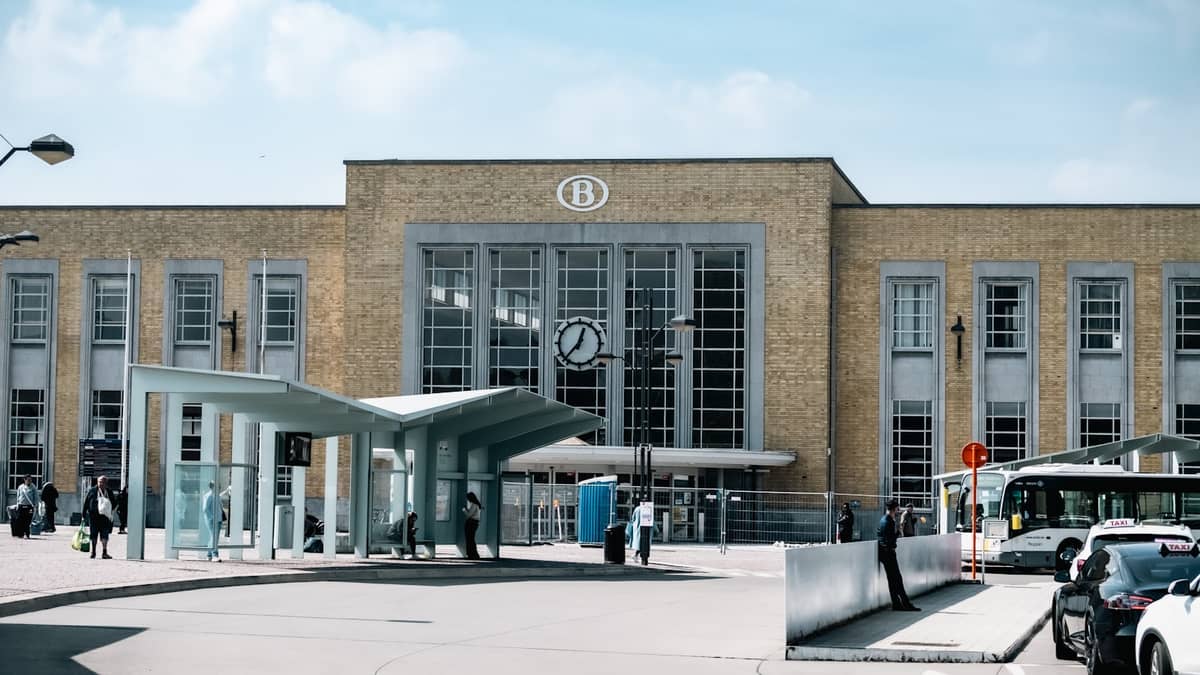
Most visitors arrive by train at Bruges railway station (NMBS/SNCB), about 1.5km south-west of the Markt. The station is not in the historic centre, but it is an easy 25-minute walk or a short De Lijn bus ride (single ticket around €3). If you are arriving from Brussels Airport (BRU, approximately 100km away), the rail journey takes roughly 1.5 hours with one change. See the full transport breakdown in the guide to getting to and around Bruges.
Within the historic centre, walking is genuinely the best option. Cycling is popular in Bruges and rental bikes are widely available, but the narrow streets around the Markt and Burg can be frustrating on a bike during busy periods. Canal boat tours operate along the main waterways and offer a completely different perspective on the city — useful if you have already done the walking loop and want to see the canal facades from water level. Departure points are at several spots along Dijver and near the Vismarkt.
For a deeper dive into tours beyond self-guided walking, including organised Bruges canal boat tours and food-focused walks, there are options at various price points. A guided walking tour of Bruges typically runs 1.5 to 2 hours and costs €15–25 per person. Free walking tours (tip-based) depart from the Markt at set times, usually twice daily in peak season — useful if you prefer context from a local guide before doing your own exploration.
Common Mistakes and What to Skip
The horse-drawn carriage rides around the Markt are expensive for what they offer and do not cover the most interesting parts of the city. The routes are short and formulaic, and the same ground can be covered on foot in 15 minutes. Worth skipping unless you have a specific reason.
Several chocolate shops on the main tourist streets are franchise operations selling mass-produced product with Bruges branding. For genuinely good chocolate, step off the main drag. The Bruges chocolate guide covers which shops are worth your time and which are purely tourist traps. Similarly, waffle stands directly on the Markt charge a premium; the quality-to-price ratio improves significantly one or two streets away.
One genuine misconception about visiting Bruges is that you need a paid guided tour to appreciate it. The city actively promotes self-guided exploration and provides strong free resources including the app, downloadable maps, and an accessible walking route (around 3.8km) designed for visitors with mobility considerations. If budget is a concern, there is plenty to see in Bruges without spending much. The Begijnhof, the canal viewpoints, the windmills at Kruisvest, and most church interiors are all free.
FAQ
How long does a self-guided walking tour of Bruges take?
The core loop from Markt to Minnewater covers roughly 3km and takes 2–3 hours at a relaxed pace without entering many paid attractions. Add another 1.5–2 hours if you visit the Belfry, Groeningemuseum, and Church of Our Lady treasury. A full day (6–7 hours) allows you to cover the extended route including the Sint-Anna quarter and the windmills at Kruisvest.
Is there a free walking tour in Bruges?
Yes. Tip-based free walking tours of Bruges depart from the Markt during peak season, typically twice daily. These are guide-led and last around 1.5–2 hours, covering the main historic centre. The Visit Bruges Route App also provides self-guided free walking routes with audio and visual content for independent use.
What is the best time of day to walk around Bruges?
Early morning (before 9am) is by far the best time. The streets around the Markt, Rozenhoedkaai, and Begijnhof are quiet, the light is good for photography, and the canal reflections are undisturbed. In July and August, these same spots can be very crowded from mid-morning through early evening.
Do I need to book anything in advance for a self-guided walk?
For most of the route, no advance booking is needed. The Belfry can have queues in peak season; buying tickets online in advance saves waiting time. The De Halve Maan Brewery tour and Groeningemuseum can also be booked ahead. The Basilica of the Holy Blood, Begijnhof courtyard, and canal viewpoints require no booking.
Is the Bruges walking tour suitable for families with children?
Yes, the flat terrain and compact distances make it manageable with children. The Belfry climb (366 steps, narrow spiral staircase) is not suitable for pushchairs and can be challenging for very young children. Minnewater park and the Begijnhof courtyard work well with kids. For a more structured family approach, the dedicated guide on Bruges with kids covers child-friendly pacing and alternatives to the standard adult route.