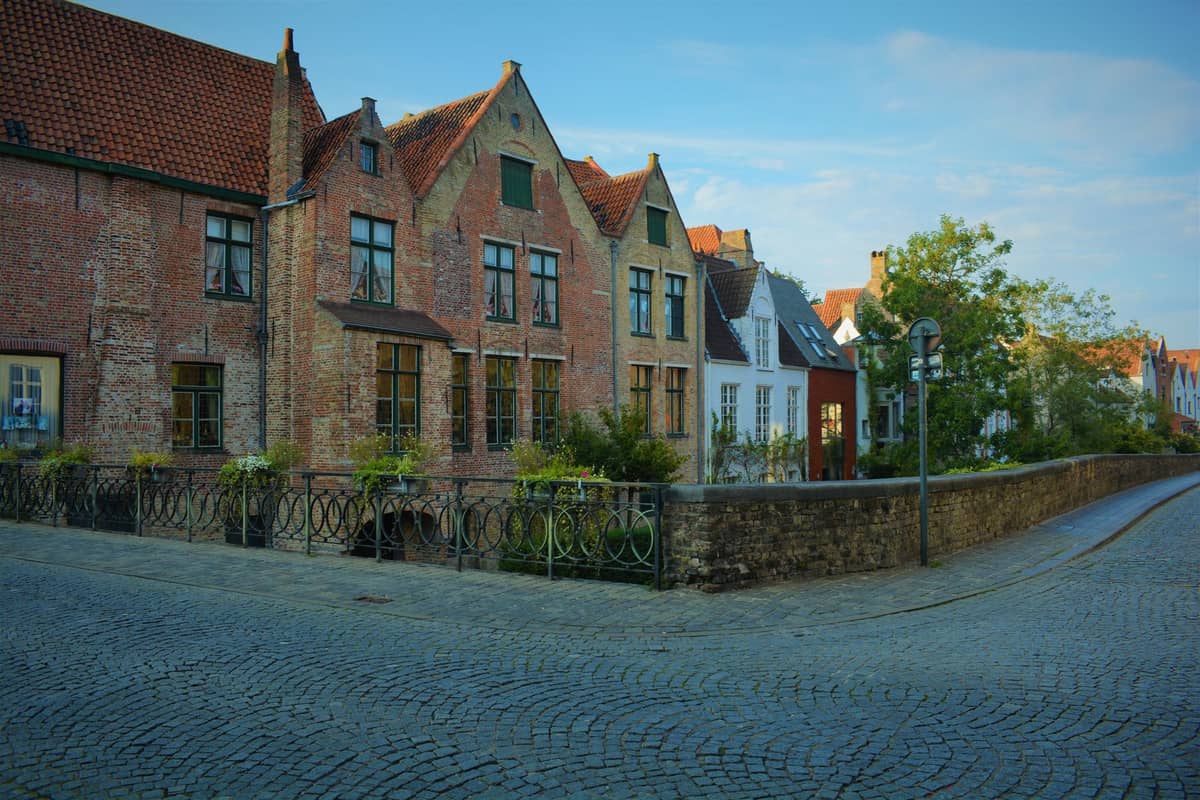
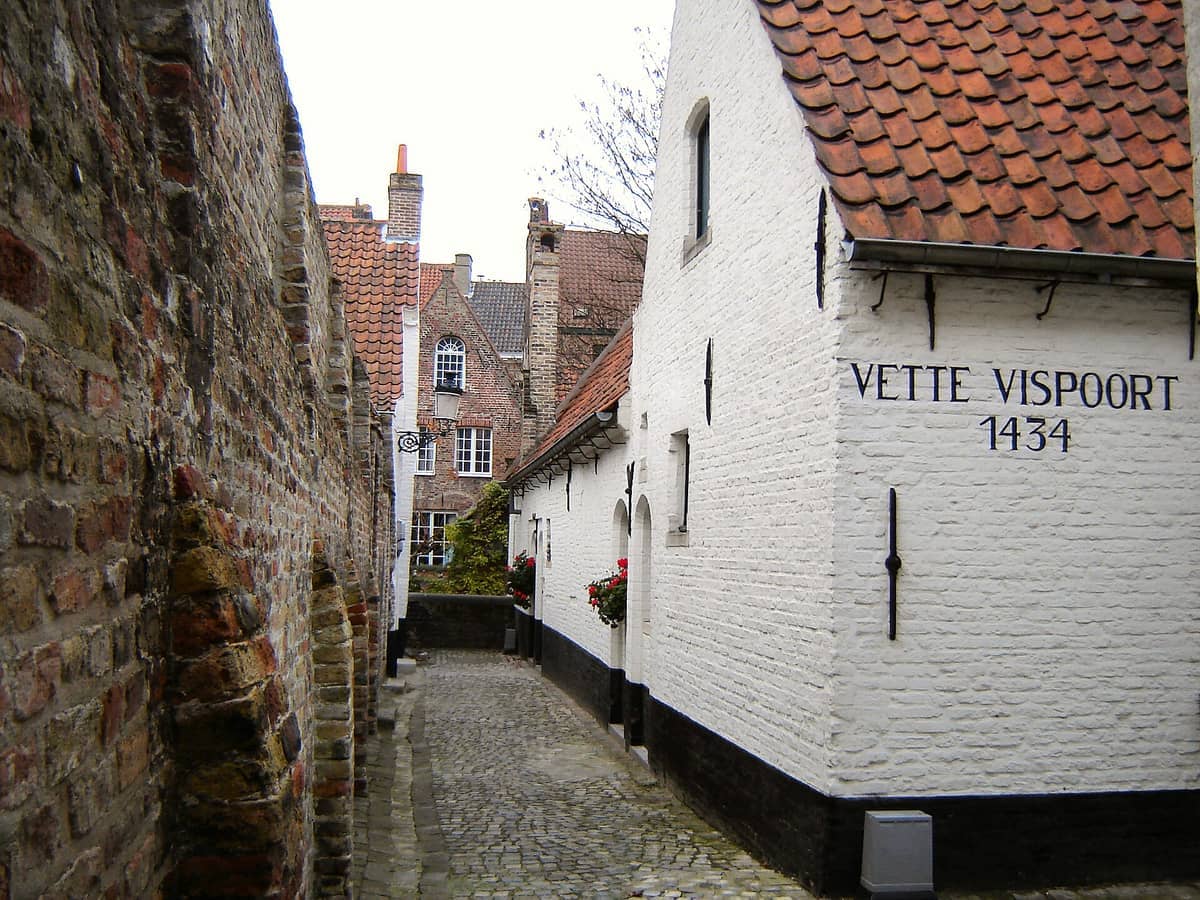
The Sint-Anna Quarter is Bruges' most authentically residential inner-city district, where Baroque churches, historic windmills on medieval ramparts, and lace-making heritage survive alongside everyday Flemish life. It sits northeast of the Markt, close enough to the historic centre to reach on foot, yet far enough to feel like a different city.
The Sint-Anna Quarter (Sint-Annakwartier) is where Bruges stops performing for visitors and starts living its own life. This northeast corner of the inner city trades canal-side restaurants and souvenir shops for quiet cobbled streets, a Baroque parish church, working-class townhouses, and some of the most quietly remarkable heritage in the whole city.
Orientation
The Sint-Anna Quarter occupies the northeastern quadrant of Bruges' inner city, bounded to the east and north by the Kruisvest, the broad green belt that follows the line of the city's medieval outer ramparts. To the west and south, Langestraat serves as the informal border with the Langestraat Quarter. The Sint-Annarei canal runs through the lower part of the neighbourhood, connecting it to the wider network of waterways that define Bruges.
The quarter is also known informally as the Seminariekwartier and Gezellekwartier, reflecting two of its defining institutions: the seminary complex that occupies a large portion of the area, and the birthplace of Flemish poet Guido Gezelle. Sint-Annaplein, the small square in front of Sint-Annakerk, acts as the social and geographical heart of the neighbourhood.
From the Markt, Sint-Anna is roughly 10 to 15 minutes on foot heading northeast, typically via Langestraat or along the canal paths of Sint-Annarei. The quarter sits at the edge of the walkable inner city: beyond the Kruisvest ramparts, the urban fabric shifts abruptly to modern residential Bruges. For orientation, think of Sint-Anna as the furthest northeast corner you can reach before leaving the historic centre entirely. The Kruisvest ramparts and windmills mark the quarter's outer edge clearly.
Character & Atmosphere
Sint-Anna does not look or feel like the rest of central Bruges. There are no horse-drawn carriages turning corners here, no queues outside chocolate shops, no menus translated into six languages. What you find instead are low brick townhouses with net curtains, residents cycling past with bags of groceries, and a church square that empties out by mid-morning and fills again with children in the late afternoon.
In the morning, the streets around Sint-Annaplein are quiet in the way that only genuinely lived-in neighbourhoods can be. The light comes in low and lateral from the east, throwing long shadows across the cobbles. The Baroque facade of Sint-Annakerk catches it well. By mid-morning, the quarter starts to receive its first careful visitors: people who have done their research, found the Kantcentrum, worked out how to reach the Jerusalem Chapel. They move slowly, which suits the pace of the place.
The area around Langestraat on the southern edge functions differently. This is Bruges' main local eating and drinking street, with bars and restaurants that cater primarily to residents rather than tourists. On weekday evenings it has a low-key neighbourhood energy: people stopping in after work, students from the seminary area, locals who have no interest in the Markt scene. Weekends bring a modest increase in foot traffic, but nothing that disrupts the residential character.
The Kruisvest edge of the quarter, where the ramparts meet the windmills, has a completely different feel again. Here you are walking on a grassy embankment above the city, with the mills turning slowly on clear days and the inner city spread out below and behind you. It is exposed to the coastal winds that roll in from the northwest, and on overcast afternoons can feel genuinely remote, despite being minutes from the centre.
💡 Local tip
Sint-Anna is at its most atmospheric on weekday mornings, when locals outnumber visitors, the church square is quiet, and the windmills are often turning. If you are visiting in summer, the light along Sint-Annarei in the early evening is exceptional for photography.
What to See & Do
Sint-Anna concentrates a remarkable density of heritage into a small, walkable area. The key is that most of it sits outside the standard tourist circuit, which means shorter queues, more space, and a more genuine sense of discovery.
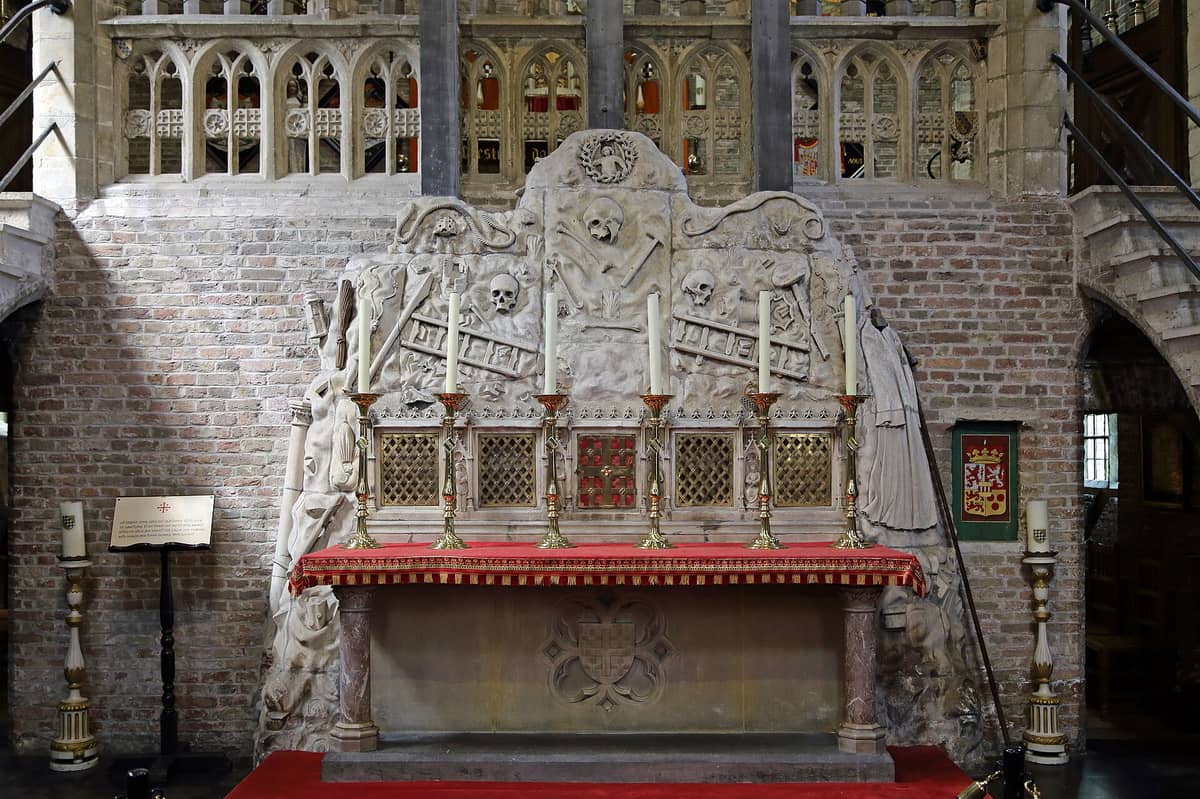
The Jerusalem Chapel (Jeruzalemkerk) is the neighbourhood's most singular monument. Built in the 15th century by the Adornes family, a wealthy merchant dynasty of Genoese origin, it was modeled on the Church of the Holy Sepulchre in Jerusalem following a family pilgrimage. The interior contains the tomb of Anselm Adornes and his wife Margriet van der Banck. It is still privately owned by the Adornes family descendants and operates as a heritage site. The adjacent Adornes Estate adds further context.
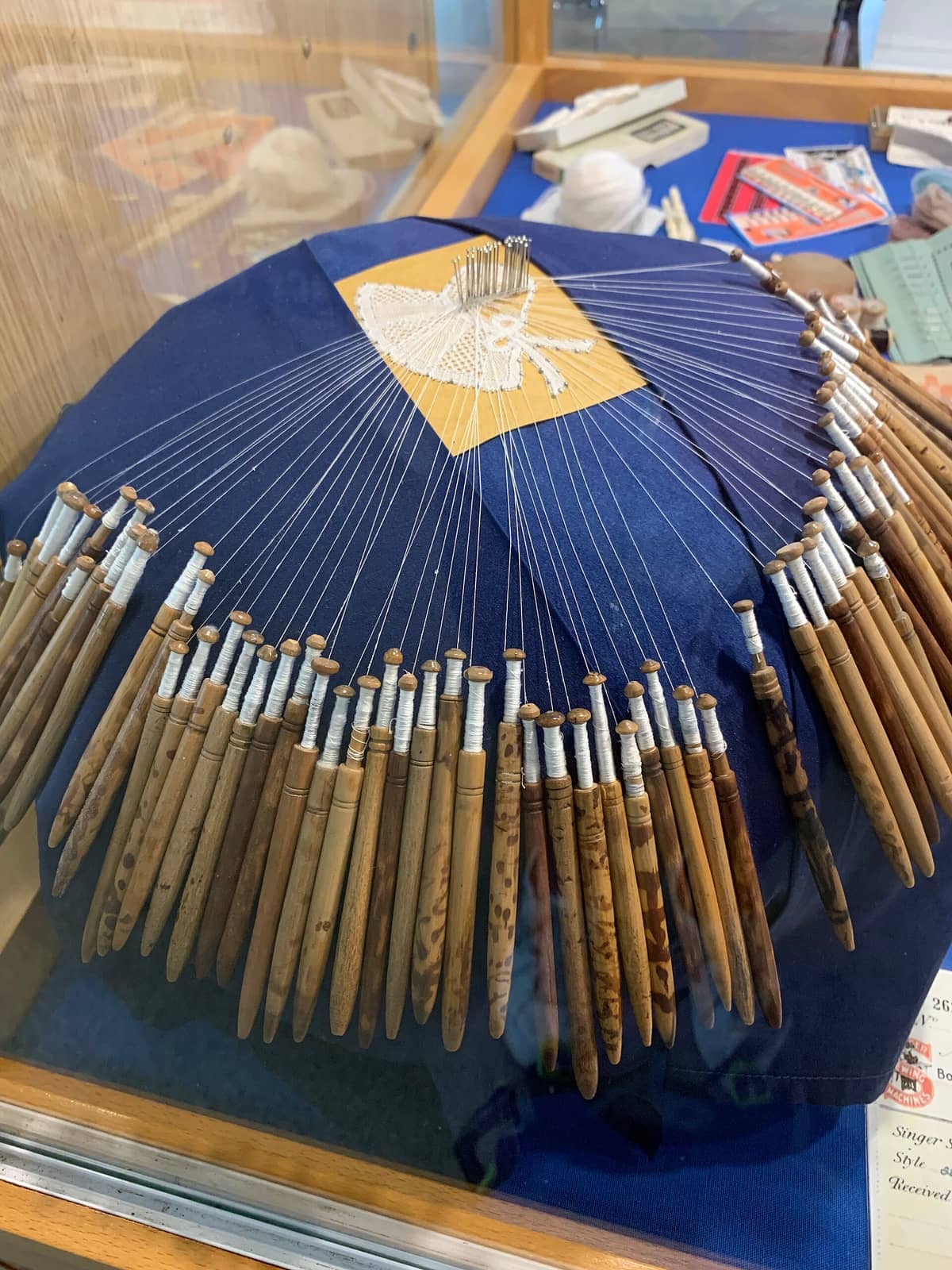
Immediately next to the Jerusalem Chapel, the Kantcentrum (Lace Centre) occupies the former almshouses of the Jerusalem estate. Bruges lace has been synonymous with the city's craft heritage since the 16th century, and this was the district where much of the handmade lace industry was concentrated, worked by local women in their homes. Today the centre runs live demonstrations and workshops, and its small museum traces the technical and social history of the craft.
The windmills on the Kruisvest are a defining feature of Sint-Anna's skyline. Four mills survive along the rampart embankment. Sint-Janshuismolen, dating from 1770, is the main visitor mill and, in season, one of the few that still grinds grain and opens to visitors in summer. Reaching them requires climbing the grassy bank at the eastern edge of the quarter, but the view back over the inner city makes the effort worthwhile.
The Guido Gezelle Museum occupies the house where the Flemish poet and priest was born in 1830. Gezelle is a central figure in 19th-century Dutch-language literature, and his work is deeply rooted in the landscape and culture of West Flanders. The museum is modest in scale and very quiet, which makes it a good stop for anyone with an interest in Flemish literary history.
Sint-Annakerk: Baroque parish church on Sint-Annaplein, with 17th-century interior decoration including carved wooden panels and a rood screen.
Sint-Annarei canal walk: the canal path running southwest from the quarter connects back toward the historic centre through some of the city's quietest stretches of waterway.
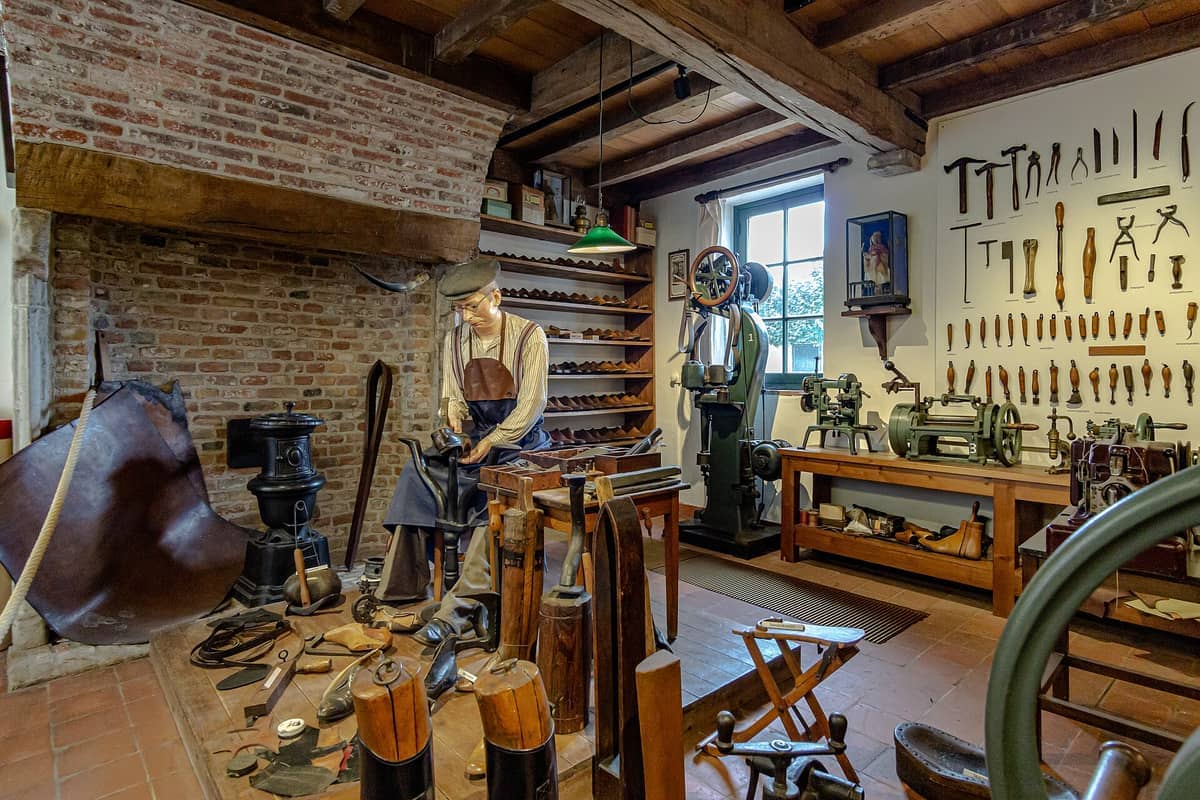
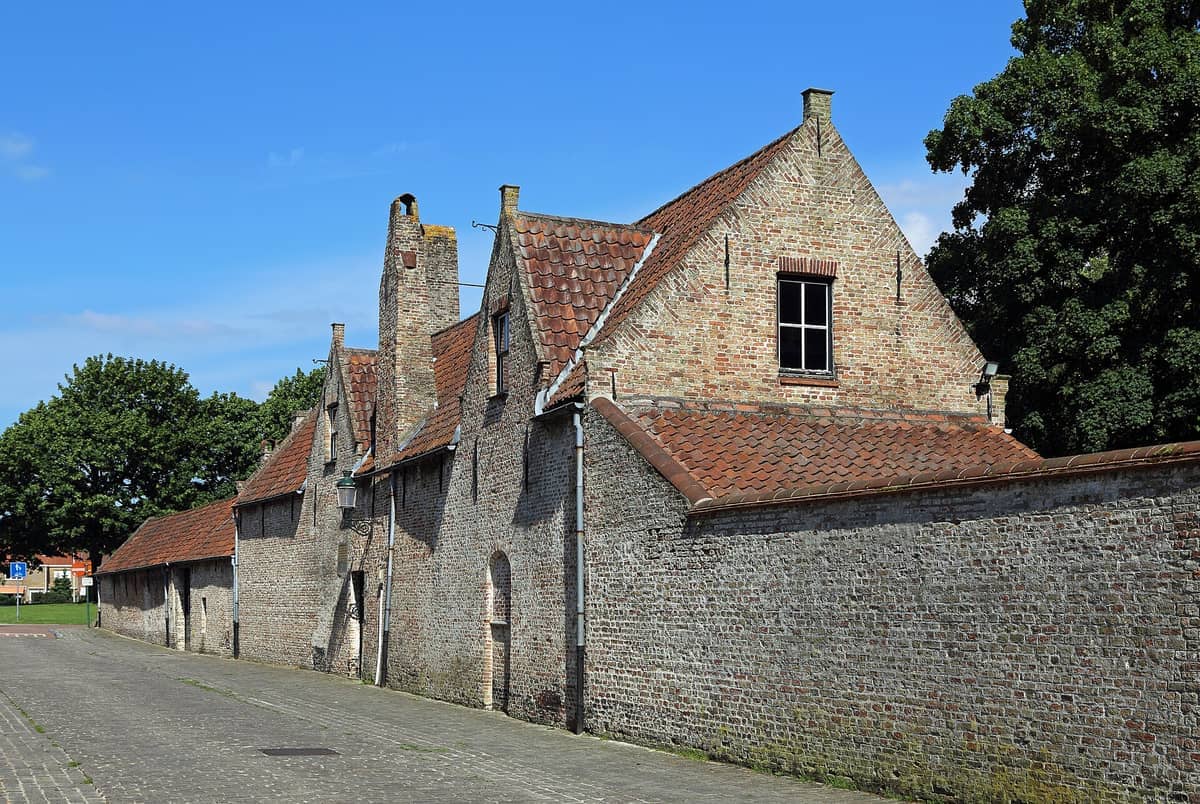
Folklore Museum (Volkskundemuseum): on Rolweg, on the edge of Sint-Anna, a small museum of Flemish popular culture housed in a row of former almshouses.
The Kruisvest green belt: the rampart embankment itself is worth walking for its scale and the sense it gives of the medieval city's outer defences.
ℹ️ Good to know
The Jerusalem Chapel, Kantcentrum, and Guido Gezelle Museum are all within a few minutes' walk of each other on Peperstraat and Rolweg. A focused visit to all three takes around two to three hours.
Eating & Drinking
Sint-Anna is not a dining destination in the way that the canal quarter or the Markt area are. There are no grand terrace restaurants overlooking the water, and the neighbourhood does not rely on tourist footfall to stay open. What it has instead is an honest local food scene concentrated primarily along Langestraat, which forms the southern edge of the quarter.
Langestraat has the character of a real neighbourhood high street: a mixture of cafés, friteries, small restaurants, and brown cafés (traditional Belgian pubs) that serve the people who live here. Prices are noticeably lower than in the tourist centre. If you want to eat the way Bruges residents eat, this is one of the better streets in which to do it. For context on local food culture and what to order, the guide to eating in Bruges covers Flemish specialities and regional dishes in detail.
The Belgian beer culture that defines Bruges is well represented in Sint-Anna's local bars. The brown café format, with dark wood interiors, extensive beer menus, and no particular interest in catering to tourists, is easier to find here than in the centre. For a deeper understanding of what to drink, the Bruges beer guide explains the key styles and producers.
Within the quarter itself, away from Langestraat, options are limited. There is a small amount of daytime café provision around Sint-Annaplein, but this is not a neighbourhood where you will easily find lunch outside of the main streets. If you are spending a full afternoon exploring the windmills and canals, it is worth carrying provisions or planning to eat before you arrive or after you return toward the centre.
Getting There & Around
The most practical way to reach Sint-Anna from the historic centre is on foot. From the Markt, the walk northeast along Langestraat takes around 10 to 15 minutes. From the Burg, following Sint-Annarei canal northeast is a pleasant route that traces one of the quieter waterways. For those arriving by train at Bruges station, De Lijn city buses serve stops along or near Langestraat; a single ticket currently costs €3, though fares should be verified before travel. The full guide to getting around Bruges covers all transport options in detail.
Within Sint-Anna, everything is walkable. The quarter is compact enough that the Jerusalem Chapel, Kantcentrum, Gezelle Museum, Folklore Museum, and windmills can all be reached on foot within a 20-minute radius. Cycling is also practical, and Bruges has a well-established cycling culture; bikes can be rented from several outlets near the train station. The canal paths and quieter residential streets of Sint-Anna are among the most pleasant cycling routes in the city.
The windmills on the Kruisvest are best reached by walking east along Rolweg or north along Carmersstraat to the rampart embankment. From the top of the embankment, you can walk the full length of the Kruisvest in either direction, connecting north toward Dampoort or south toward the Minnewater area. For those who want to combine Sint-Anna with a longer circuit of the city walls, the Bruges walking tour guide suggests several itineraries that pass through the quarter.
💡 Local tip
Cycling along the Kruisvest embankment and then cutting back through Sint-Anna via Carmersstraat is one of the best low-traffic routes in inner Bruges. It takes around 30 minutes at a relaxed pace and combines rampart views with the quiet residential streets of the quarter.
Where to Stay
Sint-Anna is not a major hotel district. Accommodation here tends toward smaller guesthouses, B&Bs, and holiday apartments embedded in converted townhouses, which suits the residential character of the area. Staying in Sint-Anna means waking up in a working neighbourhood rather than a tourist zone, which some visitors actively prefer. For a full overview of where to stay across all of Bruges' neighbourhoods, the guide to staying in Bruges provides useful comparisons.
The main trade-off when staying in Sint-Anna is distance from Bruges' main concentration of restaurants and attractions. The Markt, Burg, and the canal quarter are all reachable on foot in 15 to 20 minutes, which is not a significant inconvenience in a city of Bruges' scale. However, if you want to be immediately adjacent to the evening dining scene or the main sights, the historic centre offers more options at a range of price points.
For travellers who value quiet, authentic surroundings and are comfortable navigating a few extra minutes on foot, Sint-Anna offers genuine character at prices that often undercut the central tourist districts. The area is safe, well-maintained, and genuinely residential, which means you are less likely to encounter noise from bar-goers late at night than in some parts of the centre.
Practical Notes and a Clear Verdict
Sint-Anna is widely described as a safe, family-friendly residential area, and nothing about its street-level character contradicts this. It is one of the inner-city quarters most recommended for solo visitors who want to walk and explore without feeling overexposed. Daytime visits to the windmills and ramparts are straightforward; the Kruisvest embankment is open and well-used. As with any urban area, standard precautions apply at night in less-frequented stretches, particularly along the quieter sections of the ramparts after dark. For wider context on safety and neighbourhood character across Bruges, the guide to visiting Bruges addresses common concerns.
For visitors with limited time in Bruges, Sint-Anna may not be the highest priority. The Groeningemuseum, the Begijnhof, the Markt, and the canal quarter collectively represent the densest concentration of major sights in the city. Sint-Anna adds depth rather than volume: it is for the traveller who has already covered the essentials and wants to understand what Bruges looks like when it is not performing. If that is you, the guide to Bruges' lesser-known corners identifies several other areas with a similar character.
The combination of the Jerusalem Chapel, Kantcentrum, and windmills in a single half-day circuit is genuinely rewarding and sees significantly fewer visitors than the main canal quarter. If your interest runs toward the lace-making tradition or the broader story of Bruges' working-class history, Sint-Anna is essential rather than optional.
TL;DR
Sint-Anna Quarter is Bruges' most authentic residential inner-city district, sitting northeast of the Markt along the Kruisvest ramparts and Sint-Annarei canal.
Key highlights include the 15th-century Jerusalem Chapel, the Kantcentrum lace centre, four historic windmills on the ramparts, and the Guido Gezelle Museum.
The neighbourhood is best suited to travellers who have already seen the main Bruges sights and want to experience a quieter, more genuinely local side of the city.
Food and drink options are limited within the quarter but more extensive along Langestraat, where prices are lower and the clientele is primarily local.
Sint-Anna is safe, walkable, and compact enough to cover in a focused half-day visit; it works particularly well combined with a walk along the Kruisvest green belt.
Two days is enough time to cover Bruges properly if you plan well. This itinerary walks you through the city's best sights, neighbourhoods, and experiences in a logical order, with a clear take on what to skip, what to prioritise, and how to avoid the worst of the crowds.
Bruges packs an unusually strong museum scene for a city of its size. From world-class Flemish Primitive paintings at the Groeninge to medieval hospital complexes, immersive history attractions, and specialist museums dedicated to lace, beer, and Belgian fries, the city rewards curious visitors at every turn.
Bruges (Brugge) rewards visitors in every season, but timing your trip well makes a real difference. This guide breaks down weather, crowds, prices, and key events month by month so you can decide when to go based on what actually matters to you.
Bruges (Dutch: Brugge) is a serious beer destination for a city of its size. This guide covers the city's working breweries, museum-style experiences, guided tasting walks, and the bars worth your time, with current pricing, opening hours, and practical advice to help you drink well without wasting money.
Bruges is one of Europe's most photogenic canal cities, and a boat ride through its medieval waterways is one of the best ways to take it all in. This guide covers prices, schedules, the best time to go, what the tour actually involves, and how to avoid the longest queues.
Bruges is one of Europe's most serious chocolate cities, with dozens of artisan chocolatiers, a dedicated chocolate museum, and guided tasting tours winding through the medieval centre. This guide covers everything: Choco-Story ticket prices, the best chocolate walks, how to tell craft shops from tourist traps, and the smartest way to plan your visit.
The Bruges Christmas market is part of the city-wide Winter Glow festival, running from late November through early January across multiple locations in the medieval centre. This guide covers every location, practical logistics, ice skating prices, the free light trail, and the best strategies for making the most of a winter visit to Bruges (Brugge), Belgium.
Bruges preserves some of the finest Gothic architecture in northern Europe, from the soaring Belfry on the Markt to the ornate City Hall on Burg Square. This guide covers every major site, explains what makes each one architecturally significant, and gives you the practical details to plan a focused visit.
Bruges rewards those who wander off the main squares. From a family-built replica of a Jerusalem church to almshouse courtyards that feel frozen in the 17th century, these are the places that reveal a quieter, deeper side of the city.
Bruges in winter is a different city entirely. Crowds thin out, the medieval canals take on a quiet atmosphere, and the city's official Winter Glow program transforms the historic centre from late November through February. This guide covers what's on, what's closed, how to get around, and what most visitors get wrong.
Bruges has been synonymous with handmade bobbin lace for centuries. This guide covers the craft's history, where to watch it being made at the Kantcentrum, how to shop for authentic pieces, and what to skip.
Bruges (Dutch: Brugge) has a reputation as a pricey destination, but the reality is more forgiving. Most iconic sights cost nothing, public transport is straightforward, and a single pass covers nearly every major museum. This guide breaks down exactly what things cost, what's genuinely free, and where it's worth spending a little more.
Bruges is one of Europe's most complete medieval cities, and a single day is enough to see its best. This itinerary gives you a logical, time-aware route through the Markt, the canals, the Belfry, and the quieter corners most visitors miss, with real prices and straightforward planning notes throughout.
From the Saturday market at 't Zand to the weekend antique market along the Dijver canal, Bruges rewards shoppers who know where to look. This guide covers the best shopping streets, market schedules, local specialities, and a clear take on what to buy and what to skip.
Not all Belgian waffles in Bruges are created equal. This guide breaks down the two main styles, names the best spots in the city centre, gives real prices, and tells you which tourist-facing counters to skip.
Bruges (Brugge) packs its most spectacular medieval architecture into a walkable 3–4km historic core. This guide covers the classic self-guided loop from the Markt to Minnewater, with practical notes on timings, entrance fees, crowd patterns, and how to adapt the route for your pace.
Bruges (Brugge) is one of Belgium's most rewarding destinations for families. Compact, walkable, and packed with hands-on museums, canal-side exploration, and chocolate around every corner, the medieval city offers real substance for children and parents alike. This guide covers the best kid-friendly attractions, practical logistics, seasonal timing, and a clear take on where the city delivers and where it falls short for families.
Bruges is one of the most cycle-friendly cities in Europe, with a flat historic centre, expanding bike-priority zones, and nearly 930 km of marked routes in the surrounding Brugse Ommeland. This guide covers rental options and prices, the numbered node network, traffic rules, seasonal considerations, and the best routes for day trips beyond the city walls.
Bruges sits at the center of one of Europe's most connected rail networks. From medieval Ghent to the Belgian coast, these are the best day trips from Bruges, with real train times, honest crowd advice, and exactly what to do when you get there.
Bruges holds one of the world's great concentrations of Flemish Primitive painting. This guide covers the three essential venues, what to look for in each, practical logistics, and how to avoid the most common planning mistakes.
Bruges is one of Europe's most photogenic cities, and a surprising amount of it costs nothing to enjoy. From iconic canal viewpoints and medieval squares to peaceful beguinage courtyards and rampart windmills, this guide covers the best free experiences the city has to offer.
Whether you're arriving by train from Brussels, flying into one of Belgium's two main airports, or planning to cycle the medieval streets, this guide covers every practical transport option for reaching Bruges and navigating the city. Includes real fares, parking rates, and local tips.
Bruges (Dutch: Brugge) is one of Europe's most photographed medieval cities, but does it live up to the hype? This guide cuts through the postcard image to tell you exactly what the city delivers, who it suits best, and how to get the most out of a visit.
Bruges (Dutch: Brugge) is one of Europe's most atmospheric cities for couples, with medieval canals, Gothic architecture, world-class chocolate, and a walkable historic centre that rewards slow exploration. This guide covers the best romantic experiences, practical logistics, and straightforward notes on when to visit and what to skip.
Bruges (Brugge) is a UNESCO World Heritage city in northwest Belgium packed with medieval architecture, Flemish masterpieces, canal tours, and craft beer culture. This guide covers the best things to do in Bruges, with real prices, seasonal tips, and honest takes on what's worth your time.
Bruges is one of Europe's great food cities in miniature. This guide covers everything worth eating, from street-food fries to moules-frites season, plus clear notes on avoiding tourist-trap versions of Belgian classics.
Bruges offers accommodation ranging from canal-side boutique hotels to budget hostels and rural B&Bs. This guide breaks down the best areas to stay, what to expect at each price point, and the practical details most booking sites leave out.