Where to Stay in Bruges: Neighbourhoods, Hotels, and What You Need to Know
Bruges offers accommodation ranging from canal-side boutique hotels to budget hostels and rural B&Bs. This guide breaks down the best areas to stay, what to expect at each price point, and the practical details most booking sites leave out.
Plan and book this trip
Tools from our partner Travelpayouts help you compare flights and hotels. If you book through them, we may earn a commission at no extra cost to you.
Flights
Hotels map
TL;DR
- Stay inside or just outside the historic centre (Brugge) to walk everywhere; the historic centre holds most hotels, B&Bs, and boutique options.
- Expect to pay a city accommodation tax of €4.20 per person per night (incl. 12% VAT) on top of your room rate; children under 18 are exempt.
- Hotel occupancy in Bruges averaged around 70% in 2024, meaning peak-season rooms book out fast, especially in July, August, and during the Christmas market period.
- Budget travellers should look at hostels near the train station or consider staying on a tight budget in Bruges with self-catering holiday apartments.
- Motorhome travellers: overnight parking is only legal at two authorised sites, Kanaaleiland and Camping Memling.
Understanding Bruges Before You Book
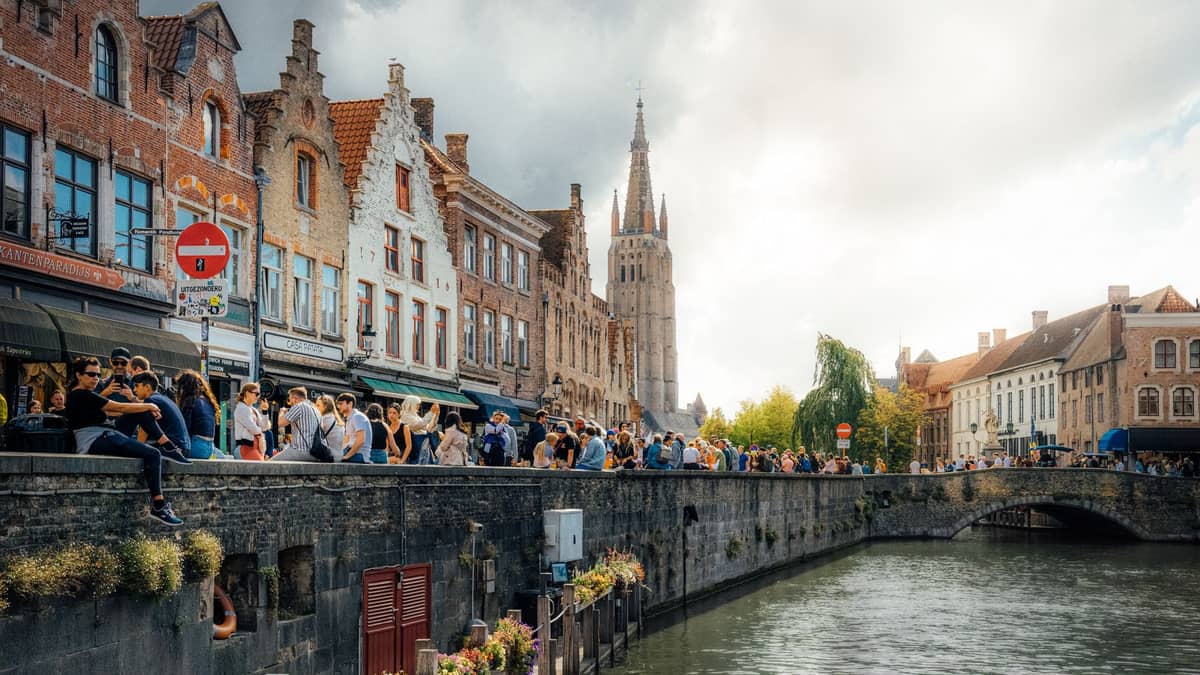
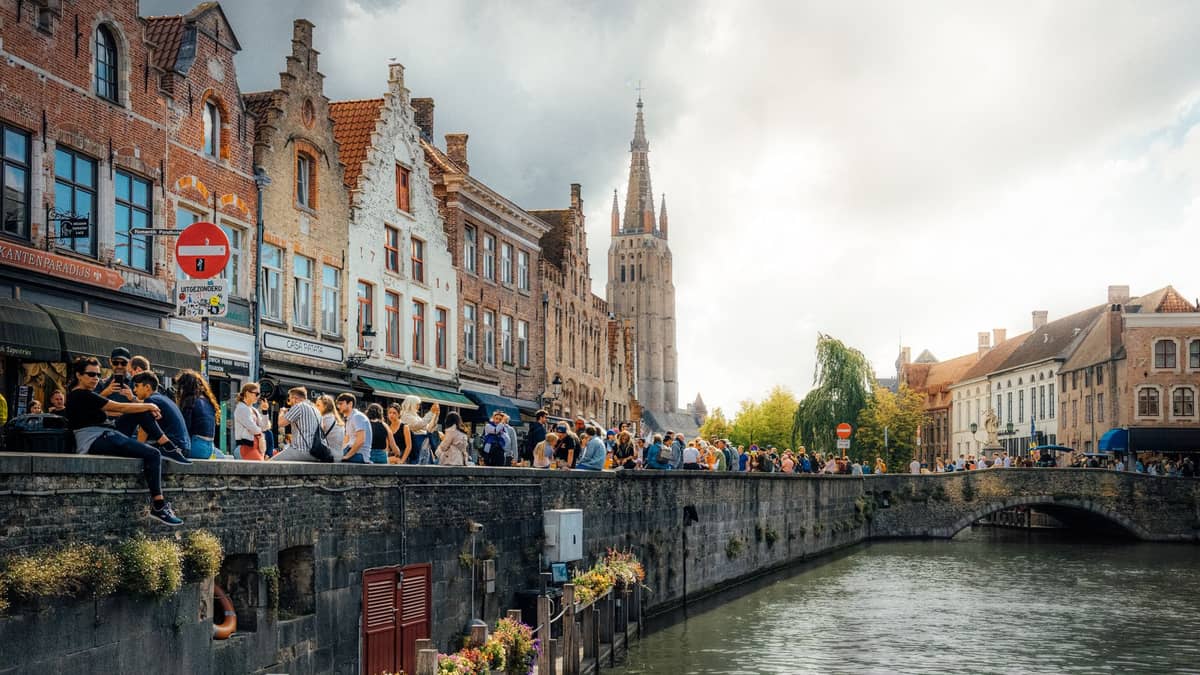
Bruges (Dutch: Brugge) is the capital of West Flanders in northwest Belgium, with a population of around 120,000 across the full municipality. The part that matters most for accommodation is the compact medieval core, a UNESCO World Heritage Site ringed by canals, where the majority of hotels, guesthouses, and B&Bs are concentrated. Almost every attraction worth visiting is within walking distance of the Markt and Burg Square, which makes location straightforward: closer to the centre means less walking, but also more noise and higher prices.
The city does not have a metro system. Getting around is done on foot, by bicycle, or by De Lijn city buses. The main train station, Brugge, sits about 1.5 km south of the Markt and is a 20-minute walk or a short bus ride (single ticket around €3). If you are arriving from Brussels Airport (BRU, roughly 100 km away), the train takes about 1.5 hours with one change, typically at Brussels-Midi or Brussels-Central. From Ostend-Bruges Airport (OST, around 30 km away), you connect by bus or taxi to Ostend station and then take the train into Bruges.
ℹ️ Good to know
Belgium uses the Euro (EUR). Plug sockets are Type C and Type E (230V, 50Hz). Tap water in Bruges is safe to drink. The emergency number is 112. Country dialling code is +32.
The Best Areas to Stay in Bruges
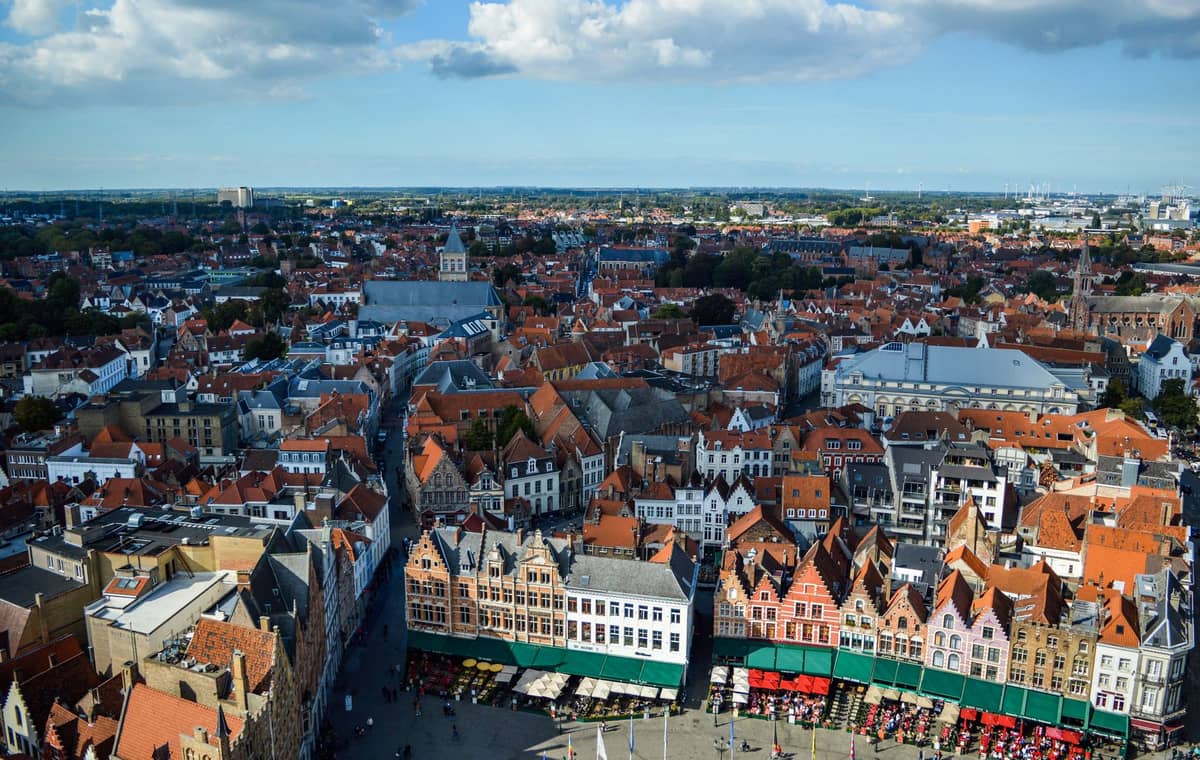
Bruges is small enough that neighbourhood choice is less about commute time and more about atmosphere and price. That said, where you sleep affects your experience in real ways.
- Historic Centre (Brugge core) The area bounded by the ring canal, centred on the Markt, is where most visitors want to be. You are within 10 minutes on foot of every major sight. Hotels here range from budget guesthouses to five-star canal-side properties. Noise from bars and horse-drawn carriages can be noticeable on weekend nights. This is the priciest zone.
- Around the Train Station (Sint-Michiels / south edge) A cluster of mid-range hotels and budget options sits near Brugge station. You trade a 15-20 minute walk or bus ride to the centre for meaningfully lower nightly rates. Good for travellers doing day trips, since you are already close to the rail connection.
- Minnewater and Begijnhof Quarter The southern edge of the historic centre, around Minnewater lake and the Begijnhof, is quieter than the Markt area while still being inside the canal ring. Ideal if you want walkability without the weekend crowds. A smaller selection of B&Bs and boutique hotels operate here.
- Sint-Anna Quarter (northeast) One of Bruges' less commercialised residential neighbourhoods, Sint-Anna has a handful of independent guesthouses and self-catering apartments. It is further from the main squares but close to the windmills along the Kruisvest ramparts. Prices tend to be lower than the central area.
- Outside the Ring Canal (Sint-Andries, Assebroek) Residential boroughs on the city's western and eastern edges. Chain hotels and budget options occasionally appear here. Not recommended unless price is the overriding factor, as you will rely on buses or a bicycle for every trip into the centre.
💡 Local tip
If canal views matter to you, specify 'canal view' explicitly when booking, not just 'historic centre'. Many hotels in the centre are on streets well away from the water despite their central postcode.
Types of Accommodation and What to Expect
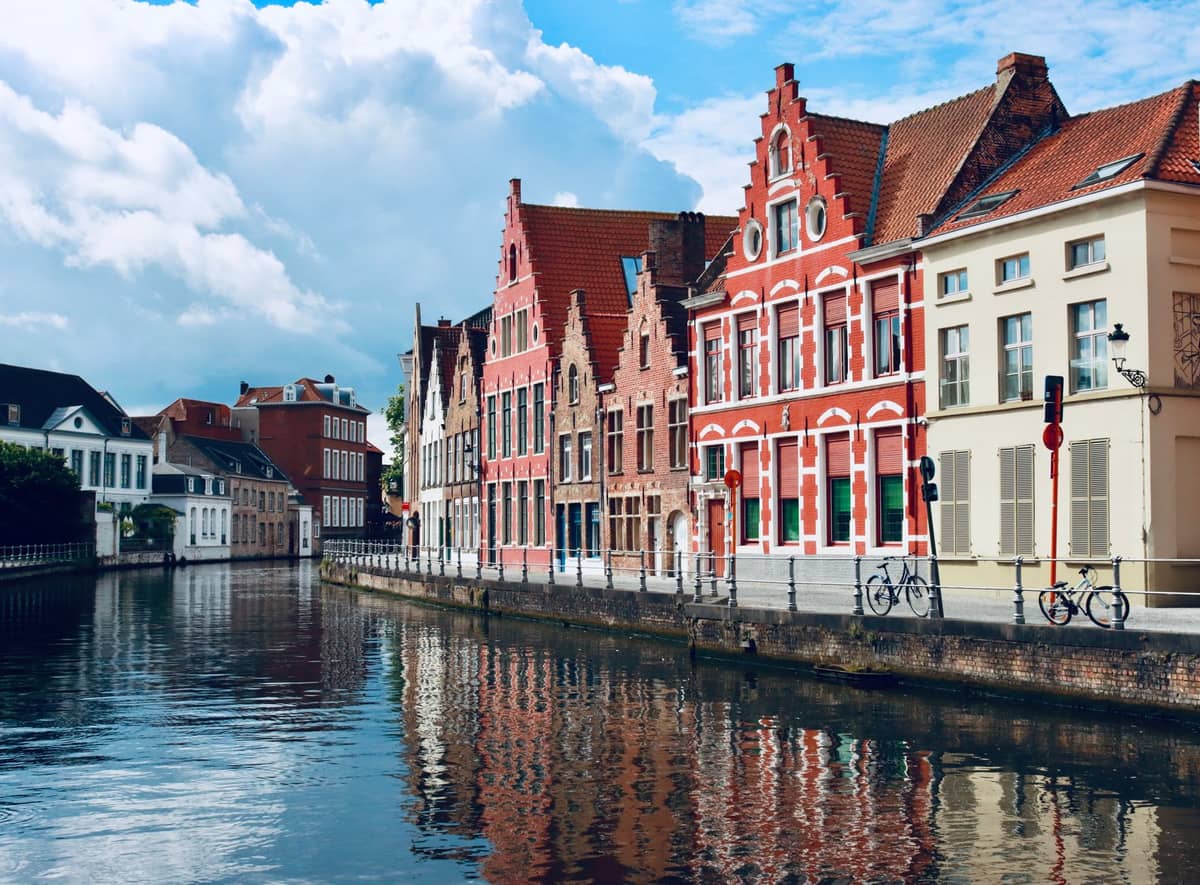
The official Visit Bruges platform, which lists properties approved by Tourism Flanders, covers hotels, family hotels, B&Bs, hostels, holiday homes, campsites, and camper sites. That breadth is useful context, because Bruges is not just a luxury destination. Here is how the main categories break down in practice.
- Boutique and Luxury Hotels Bruges has a strong collection of boutique properties, many in converted medieval townhouses or canal-side mansions. Nightly rates at the top end typically run €200-400+. Breakfast is often included but check, as it adds €15-25 per person if charged separately.
- Mid-Range Hotels Expect €90-180 per room per night for a solid three-star property in or near the centre. Quality varies considerably; read recent reviews specifically for noise levels, since some hotels on pedestrian streets still get late-night foot traffic.
- B&Bs and Guesthouses Bruges has an unusually good B&B scene, with many family-run properties in historic buildings offering genuine personal service. Rates typically fall between €80-150 per room. These often book out months ahead for summer and the Christmas market period.
- Hostels A limited but functional hostel offering exists, mainly targeting younger travellers. Dorm beds run roughly €20-35 per night. Most are near the station or the southern part of the centre.
- Holiday Apartments and Self-Catering For stays of three nights or more, self-catering apartments can offer better value and more space. Check that any listing is registered with Tourism Flanders to avoid unregulated rentals. These are distributed across the city, including quieter residential boroughs.
- Campsites and Motorhome Pitches Camping Memling is the main campsite serving the city. Motorhome travellers may only overnight legally at Kanaaleiland or Camping Memling; stopping on public roads, in forests, dunes, or on beaches is prohibited.
The Bruges Accommodation Tax: What You Will Actually Pay
Bruges levies a mandatory city accommodation tax that applies on top of your quoted room rate. For 2026-2027, the official rate for room-based accommodation is €3.75 excluding VAT, or €4.20 including 12% VAT, per person per night. For site-based accommodation such as campsites, the rate is €1.50 excluding VAT (€1.68 including VAT) per person per night. Children under 18 are exempt.
On a practical level, a couple staying three nights in a hotel will pay an extra €25.20 on top of their room cost. Reputable hotels include this in their checkout billing, but if you see a booking platform quoting a price that looks suspiciously low, check whether the tax is being added at payment. It is not optional and it is not the same as the separate day-visitor tax proposal that the city has been discussing for 2027, which would apply to non-overnight visitors.
⚠️ What to skip
Do not confuse the overnight accommodation tax with the proposed day-visitor levy. As of 2026, only overnight guests pay the tax. The day-visitor proposal is a separate, future measure not yet in effect.
When to Book and How Demand Shifts by Season
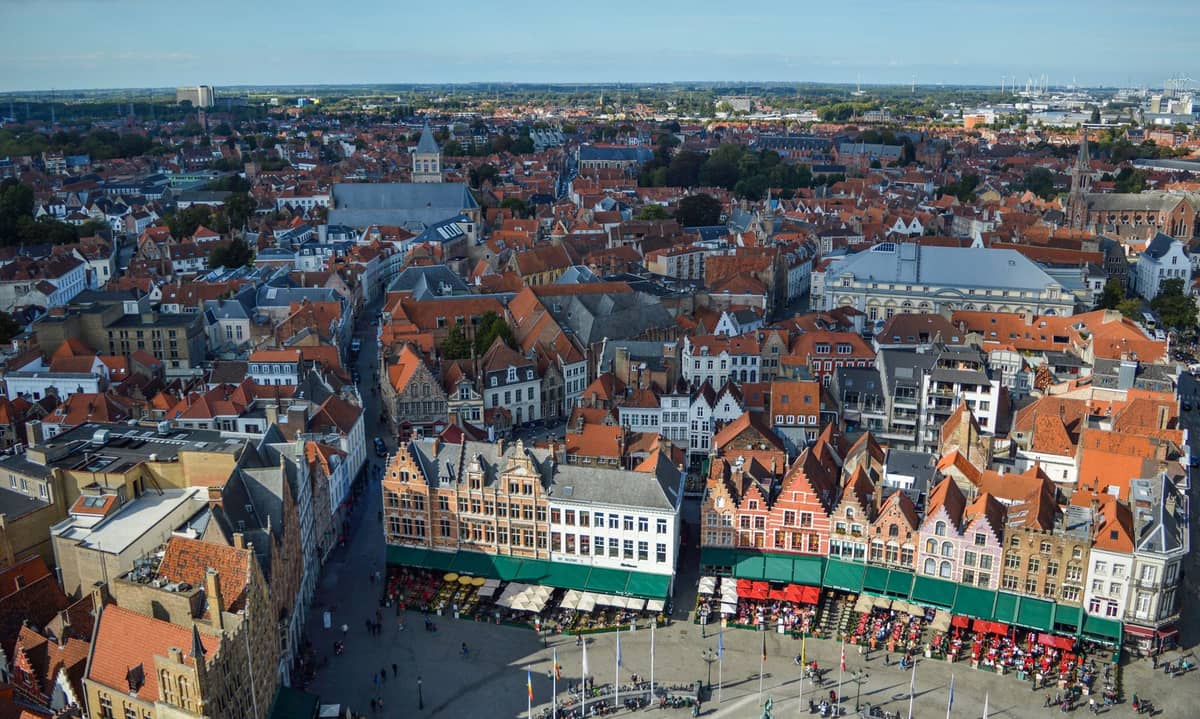
In 2024, Bruges received roughly eight million day and overnight tourists, with hotel occupancy averaging around 70% across the year. That figure masks significant variation. July and August are the peak months, with summer temperatures in the 18-22°C range drawing the largest crowds. The Christmas market season, typically running from late November through late December, fills hotels weeks in advance. Easter weekend is another pressure point.
The shoulder seasons, May to June and September to October, offer the best balance of decent weather, lower occupancy, and more competitive rates. Temperatures in May and June average around 15-19°C with roughly 10-11 rainy days per month. Winter stays are genuinely viable too; Bruges in winter outside the Christmas market weeks can be quiet, with room rates dropping noticeably at mid-range and budget properties.
Bruges' maritime climate means rain is possible in any month, around 143 rainy days per year on average, with November typically the wettest month at roughly 88 mm. A compact umbrella is useful regardless of when you visit. This is not a destination where weather alone should dictate your travel dates; crowd levels and your budget are often more decisive factors.
✨ Pro tip
Book any stay during the Christmas market period (late November to late December) at least two to three months ahead. B&Bs in the historic centre sell out particularly fast, and last-minute options will be limited to pricier hotels or accommodation outside the ring canal.
Practical Tips for Booking a Hotel in Bruges, Belgium
Belgium is part of the Schengen Area, meaning EU, EEA, and Swiss nationals enter freely, while citizens of the US, Canada, Australia, Japan, and several other countries can enter visa-free for up to 90 days in any 180-day period. Other nationalities require a Schengen visa. Check current requirements with the Belgian Ministry of Foreign Affairs before booking non-refundable accommodation. For getting to the city, the transport guide for Bruges covers all arrival options in detail.
Only book accommodation listed through Tourism Flanders-approved channels to ensure legal, regulated stays. Service is generally included in restaurant bills in Belgium; tipping is not required but rounding up a modest amount is common in cafes and restaurants. For planning what to do once you have your base sorted, the complete things to do in Bruges guide is a good starting point, and if you are working out how many nights you need, the two-day Bruges itinerary gives a realistic sense of the pacing.
- Request a quiet room: street-facing rooms near the Markt and main pedestrian routes can be noisy on Friday and Saturday nights.
- Check parking before you arrive: the historic centre is largely car-free, and most central hotels do not have on-site parking. Paid car parks exist just outside the ring (e.g., at the train station), and many hotels offer parking deals at nearby facilities.
- Confirm breakfast policy: it is not automatically included at most Belgian hotels, even at higher price points.
- Verify the accommodation is Tourism Flanders-registered if booking through a peer-to-peer platform.
- For families: hotels designated 'family hotels' on the Visit Bruges platform have been assessed for child-friendly facilities; see also the dedicated guide to Bruges with kids for neighbourhood and logistics advice.
- Cyclists: Bruges is exceptionally well set up for cycling, and some hotels offer secure bike storage or rental. If you plan to explore on two wheels, factor this into your choice of property.
One final note on neighbourhood character: the Sint-Anna quarter and the area around the Minnewater and Begijnhof offer a noticeably different feel from the tourist-dense core around the Markt. If you want to experience Bruges as a place people actually live rather than just a backdrop for day-tripper crowds, staying in these quieter pockets makes a real difference, even if you sacrifice a few minutes of walking time to the main sights.
FAQ
What is the best area to stay in Bruges?
For most visitors, the historic centre inside the ring canal is the best base. You can walk to every major attraction and the atmosphere is unmatched. The Minnewater and Sint-Anna quarters offer the same walkability with fewer crowds. Only consider the station area or outer boroughs if budget is the primary concern.
Is there a hotel tax in Bruges?
Yes. Bruges charges an accommodation tax of €4.20 per person per night (including 12% VAT) for hotel and B&B stays. For campsite and motorhome pitches the rate is €1.68 per person per night. Children under 18 are exempt. This is charged on top of your room rate.
How far in advance should I book a hotel in Bruges, Belgium?
For July, August, and the Christmas market period (late November to late December), book at least two to three months ahead, especially for B&Bs and smaller boutique hotels. Shoulder season stays (May-June, September-October) can typically be booked four to six weeks out, though good-value central properties still fill quickly.
Can you stay in Bruges in a motorhome?
Yes, but only at two authorised locations: Kanaaleiland and Camping Memling. Overnight parking in public streets, forests, dunes, or on beaches is prohibited. Check current availability and rates directly with each site before arrival.
Is it worth staying overnight in Bruges rather than doing a day trip?
Strongly worth it. Bruges empties of day-trippers by early evening and the city takes on a completely different, far quieter quality after about 6pm. Staying overnight lets you see the canals at dusk and dawn, access restaurants without the lunchtime crush, and explore lesser-visited areas without crowds. One night is a minimum; two nights is the more comfortable option for seeing the city properly.