Bruges on a Budget: How to See the Best of the City Without Overspending
Bruges (Dutch: Brugge) has a reputation as a pricey destination, but the reality is more forgiving. Most iconic sights cost nothing, public transport is straightforward, and a single pass covers nearly every major museum. This guide breaks down exactly what things cost, what's genuinely free, and where it's worth spending a little more.
Plan and book this trip
Tools from our partner Travelpayouts help you compare flights and hotels. If you book through them, we may earn a commission at no extra cost to you.
Flights
Hotels map
TL;DR
- Most of Bruges's best sights, including Markt, Burg, Rozenhoedkaai, Minnewater Park, the Begijnhof courtyard, and the windmills at Kruisvest, are completely free.
- A realistic budget day in Bruges runs around €35–€55 per person, including a simple lunch and one or two paid attractions.
- The Bruges City Card (€49 for 72 hours) covers entry to roughly 27 attractions and pays for itself after two or three museum visits. See the best museums in Bruges to decide whether it's worth it for your trip.
- Free walking tours run daily from Markt Square on a tip-only basis, offering an excellent overview without a fixed fee.
- Timing matters: visit in winter or early spring for lower hotel rates and shorter queues at the Belfry and Groeningemuseum.
What Actually Costs Money (and What Doesn't)
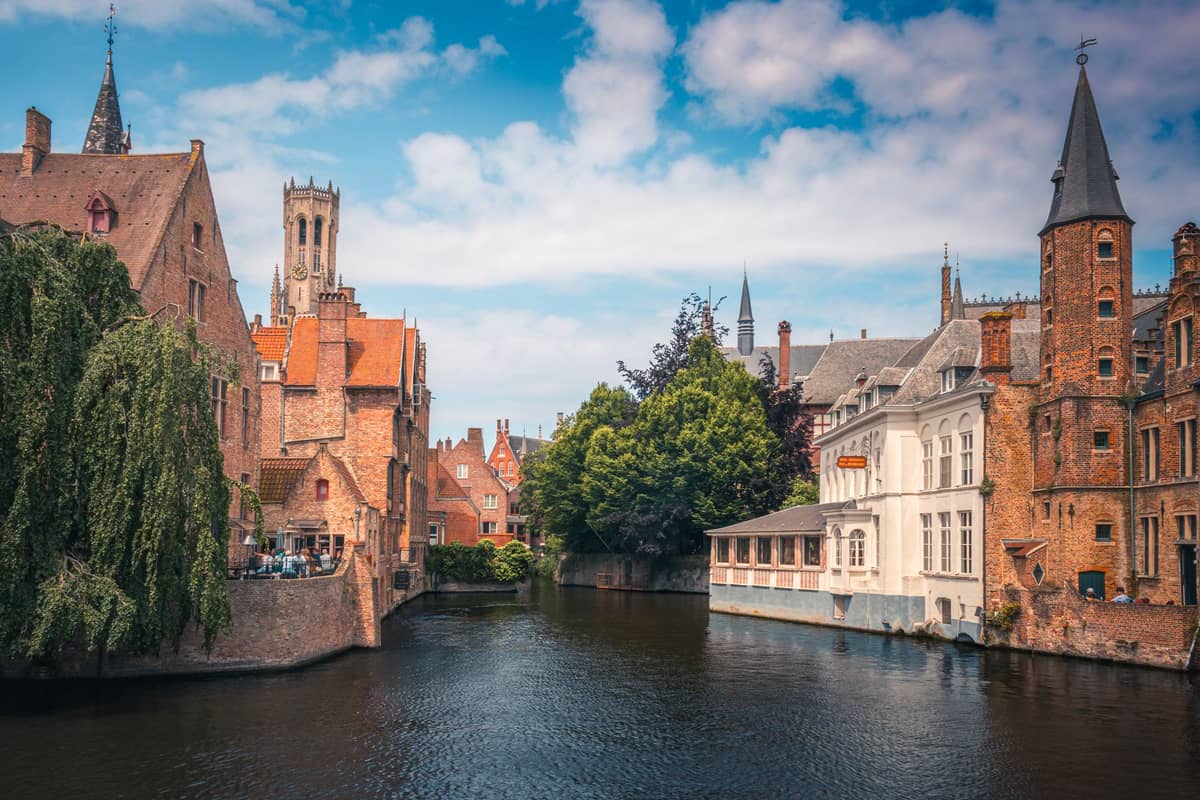
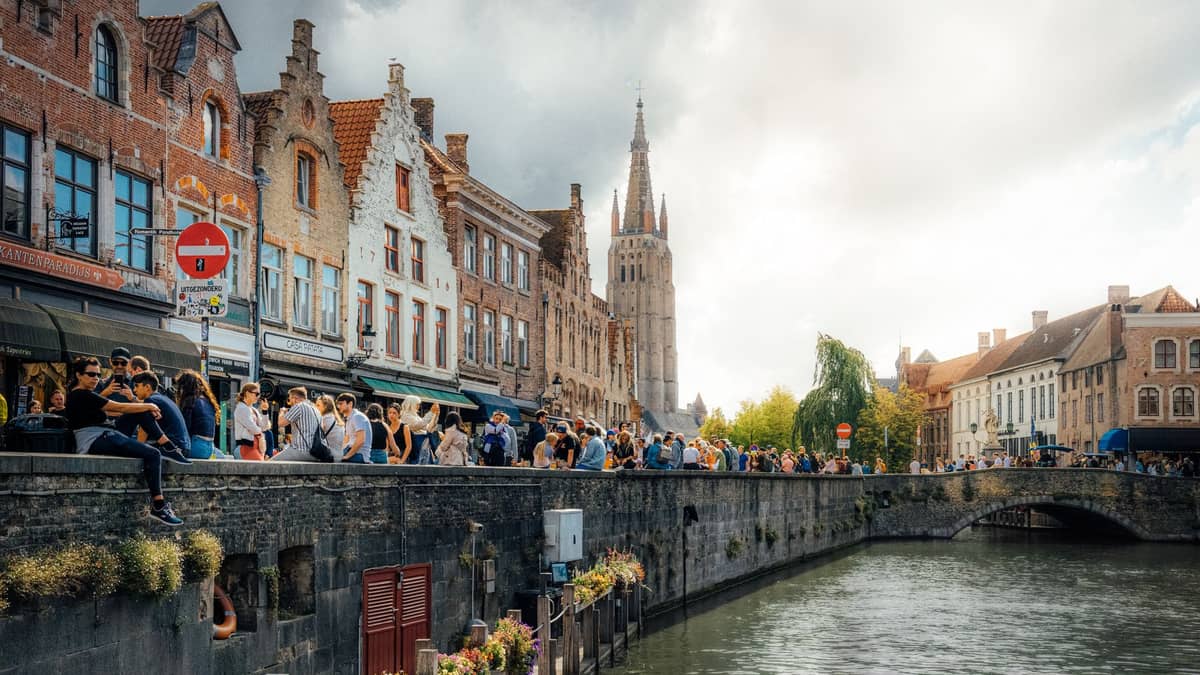
The biggest misconception about visiting Bruges on a budget is that the city's medieval streetscape comes with a ticket price. It doesn't. Markt Square and Burg Square are free to walk through at any hour. The canal views from Rozenhoedkaai and along the Groenerei cost nothing. The Begijnhof courtyard is open to visitors for free, as is Minnewater Park and the four windmills along the Kruisvest ramparts.
Where costs start adding up is at the ticketed interiors. The Belfort (Belfry) charges around €14 per adult for the 366-step climb. The Groeningemuseum, which holds the finest collection of Flemish Primitive paintings in existence, is around €12. The Historium immersive experience on Markt runs roughly €16–€18. A canal boat tour is typically €12–€15 per adult for about a 30-minute ride. None of these are extortionate, but they stack up quickly if you try to do everything in a single day without a pass.
Churches are a genuine bright spot for budget visitors. The ground-floor chapel of the Basilica of the Holy Blood is free. Sint-Salvatorskathedraal, the city's cathedral, is free to enter. The nave of Onze-Lieve-Vrouwekerk (Church of Our Lady) is also free, though viewing the Michelangelo Madonna and the ducal tombs in the transept requires a ticket. Know which sections are free before assuming you need to pay.
💡 Local tip
Several churches in Bruges ask for a modest 'suggested donation' rather than a fixed entry fee. There is no obligation to pay, but contributing a euro or two supports maintenance of genuinely remarkable medieval buildings.
The Bruges City Card: Is It Worth the Money?
The Bruges City Card (sold via Musea Brugge and the official bruggecitycard.com site) currently costs €49 for a 72-hour Musea Brugge Card. It covers entry to approximately 12–13 city-run museums and heritage sites managed by Musea Brugge, including the Belfort, Groeningemuseum, Gruuthusemuseum, and the museum section of Onze-Lieve-Vrouwekerk, but not private attractions such as Choco-Story, the Friet Museum, or the Historium. It also includes discounts on canal tours and a few other services.
The maths is straightforward: the Belfort alone is around €14, the Groeningemuseum around €15, and Memling in Sint-Jan around €12. Three of those covered sites already exceed the card price. If you plan to visit four or more paid attractions in three days, the card pays for itself. If you're only in Bruges for a single afternoon focused on free sights and a walk along the canals, skip it.
- Best value if you visit Belfort, Groeningemuseum, Gruuthusemuseum, Memling in Sint-Jan, and one specialty museum (Choco-Story or Friet Museum). That combination comfortably exceeds €49 at standard ticket prices.
- Not worth it if You're only in Bruges for a half-day, you're primarily interested in free sights and canal walks, or you strongly dislike visiting museums.
- Buy in advance The card can be purchased online before arrival. This saves time at ticket desks and means you can head straight inside popular sites during peak hours.
⚠️ What to skip
The Bruges City Card covers entry but does NOT eliminate queues. At the Belfort in summer, waits of 20–40 minutes are common even with a pre-purchased pass. Arrive at opening time (09:30) or after 15:30 to reduce wait times.
Free Things to Do in Bruges
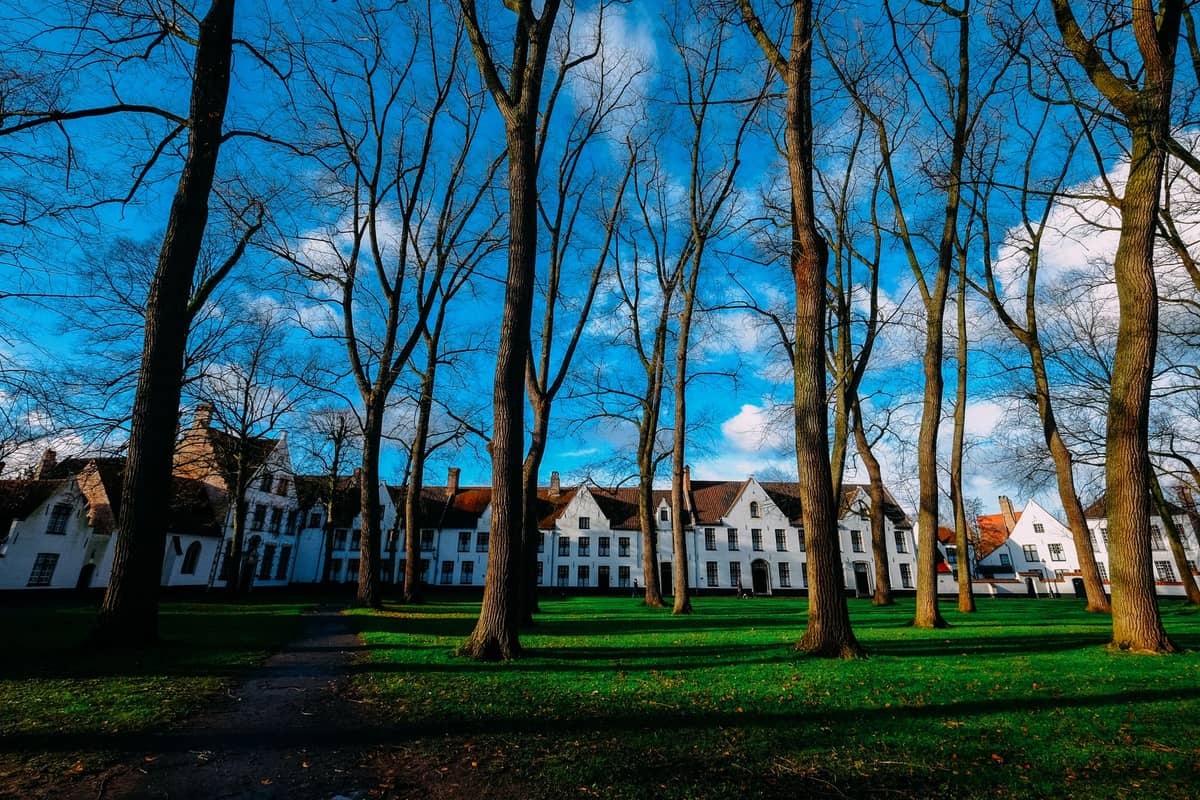
Bruges rewards slow walking more than almost any other city in Belgium. The Dijver canal quarter offers the classic postcard view of the city at zero cost. The Kruisvest ramparts form a green belt around the northern edge of the historic centre, with four surviving windmills accessible on foot. The Minnewater and Begijnhof area in the south of the centre is among the most photogenic corners of the city and costs nothing to walk through.
- Free walking tours from Markt Square (tip the guide at the end, typically €5–€15 per person)
- Rozenhoedkaai and the Groenerei canal walk
- The Begijnhof courtyard (open daily, free entry)
- Minnewater Park and the lake
- The windmills at Kruisvest (exterior views are free; one windmill sometimes has open days with small admission)
- Markt and Burg squares, including the facade of the Stadhuis
- The Arentshof Garden behind the Gruuthusemuseum
- Sint-Anna quarter, a quieter residential area northeast of the centre with the Jeruzalemkerk facade and the Lace Centre nearby
- Ground-floor chapel of the Basilica of the Holy Blood
- Sint-Salvatorskathedraal nave and treasury courtyard
Free walking tours are genuinely useful for first-time visitors. They typically cover the main squares, the canal network, and the history of Bruges as a medieval trading hub, in about two hours. The guides work on tips, so the quality is generally high. Check our Bruges walking tour guide for route options and what to look for along the way.
Getting Around Without Overspending
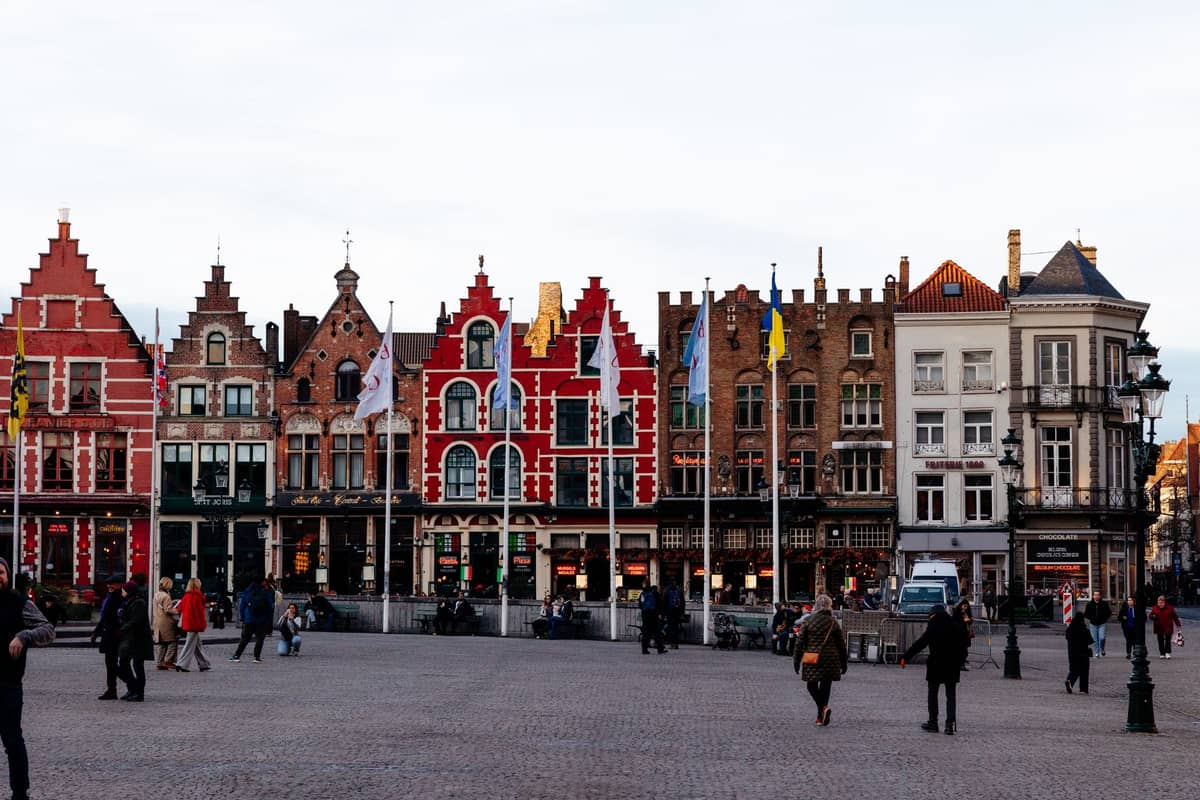
The single most important budget tip for Bruges is this: walk. The entire historic centre is roughly 2.5 km across at its widest point. Every major sight is reachable on foot from Markt Square within 20 minutes. You do not need a bus or taxi to get between attractions during a normal sightseeing day.
If you're arriving from Bruges train station (Brugge station, about 1.5 km south of Markt), the walk into the centre takes around 20 minutes and passes through pleasant streets. Alternatively, De Lijn urban buses connect the station to the centre for €3.00 per single ticket (valid 60 minutes). A 24-hour De Lijn day pass costs €9.00 from age 12, and children under 6 travel free when accompanied by a paying passenger. Buying tickets via the De Lijn app or website before boarding is cheaper than paying on board in some scenarios, and avoids the risk of not having the right contactless card.
Cycling is a serious option in Bruges and particularly good for reaching slightly further-out areas like Zeebrugge or the countryside east of the centre. Rental bikes are available at several points near the station and in the centre. For a full breakdown of routes and rental options, see the guide to cycling in Bruges.
✨ Pro tip
If you're arriving from Brussels Airport (BRU), the train to Bruges takes around 1.5 hours with one change at Brussels-Midi or Brussels-Central. Second-class fares are typically in the €20–€30 range one way. Book via the NMBS/SNCB website for the best available fare. Avoid taxis from the airport unless you're splitting the cost with a group.
Budget Eating in Bruges: Practical Expectations
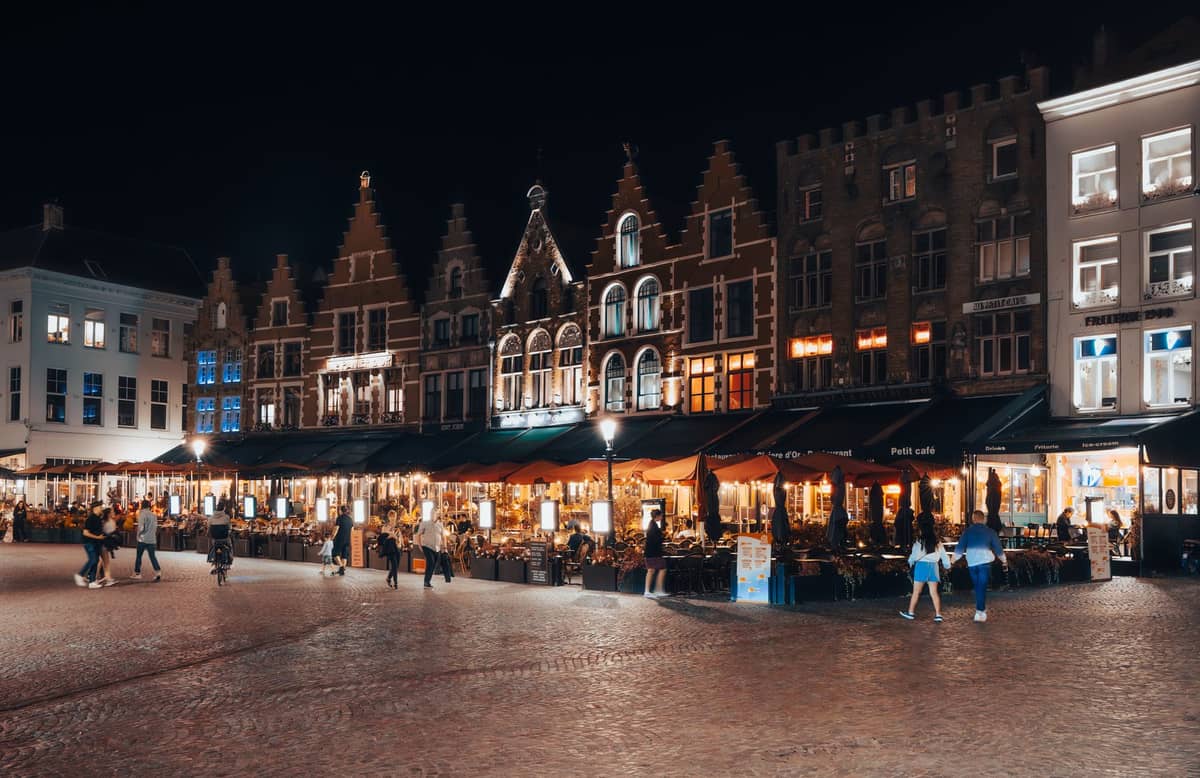
Food is where Bruges budgets most commonly go off track. The restaurants clustered around Markt Square and along the main tourist drags are priced for visitors, not locals. A three-course meal with a drink in one of those spots can easily reach €40–€50 per person. That's not a scam, just the reality of eating in a high-footfall medieval square.
The practical alternative is to eat where locals eat: bakeries for lunch, friteries (chip shops) for an afternoon snack, and the smaller cafes and brasseries in the Sint-Anna quarter or around 't Zand. A cone of Belgian fries from a friterie costs roughly €3–€4 and is genuinely good. The full guide to eating in Bruges covers specific dishes, where to find them, and which spots consistently offer good value.
For chocolate, the same logic applies. The tourist-facing shops on Steenstraat sell attractive boxes at premium prices. If you want to understand what you're buying before spending, the Choco-Story museum gives context for around €12, and is covered by the Bruges City Card. For a broader overview of where to buy and what to look for, the Bruges chocolate guide ranks the best options across price points.
Seasonal Budget Considerations
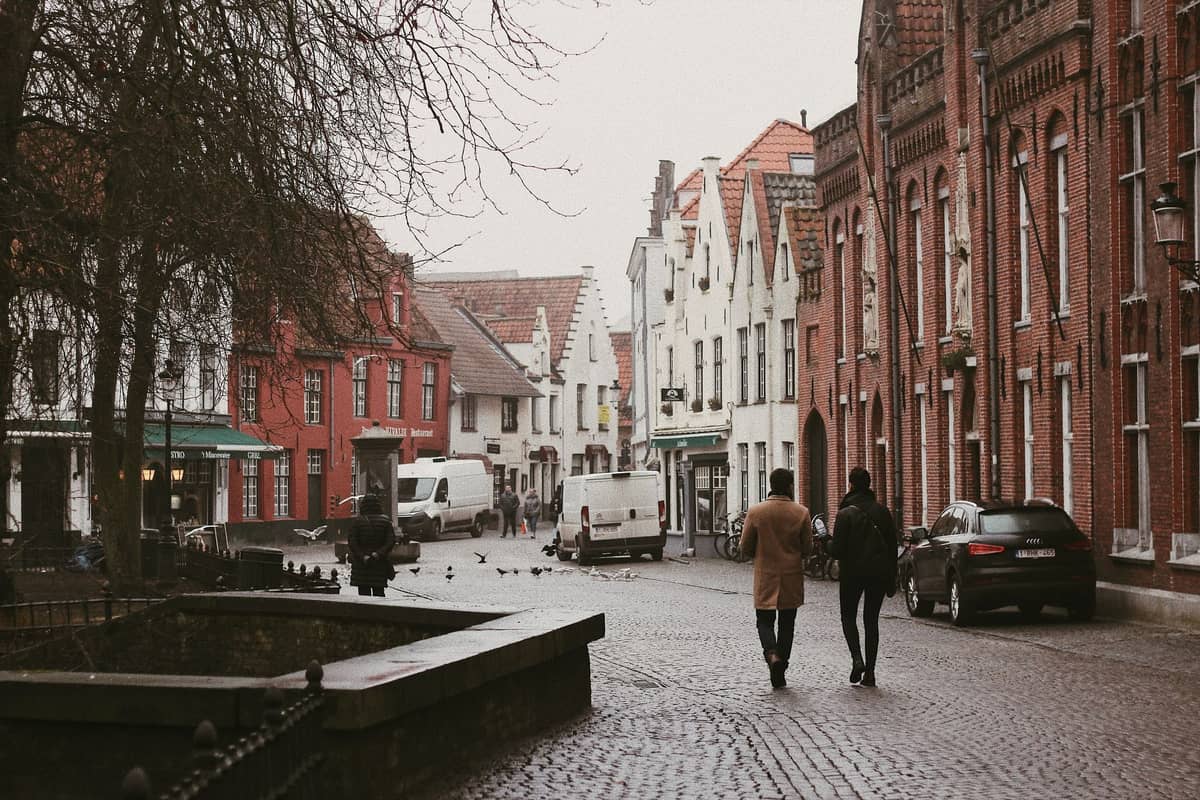
The cheapest time to visit Bruges from a pure cost perspective is January through early March, outside the Winter Glow period. Hotel rates drop significantly after the Christmas market crowds leave, and the city's paid attractions have shorter queues. The downside is cold, damp weather (average January daytime highs around 6°C) and reduced daylight. If that doesn't put you off, it's the clearest path to a low-cost visit. The guide to the best time to visit Bruges covers the full seasonal breakdown including crowd patterns and event calendars.
The Bruges Christmas market (Winter Glow, running from late November through early January) is atmospheric but crowds Markt and Burg squares considerably, pushing up hotel prices. The market itself is free to walk through, and De Lijn occasionally offers discounted or free bus travel on specific evenings, worth checking on the Visit Bruges mobility page before your trip.
Peak summer (late June through August) brings the highest accommodation prices and the longest waits at top attractions. If you're visiting then, book the Bruges City Card in advance, plan to hit the Belfort at opening time, and consider an early dinner to avoid the worst of the restaurant queues. May and September offer the best balance of reasonable prices, decent weather (15–19°C), and manageable crowds.
FAQ
How much does a day in Bruges cost on a budget?
A realistic budget day in Bruges, focusing on free sights and one or two paid attractions, runs around €35–€55 per person. This typically includes a De Lijn bus from the station (€3), one museum entry or a canal boat tour (€10–€14), a simple lunch or fries (€8–€12), and an afternoon coffee or beer (€4–€6). Accommodation is separate and varies widely.
Is the Bruges City Card worth buying?
It's worth it if you plan to visit four or more of the covered attractions within three days. The Belfort (~€16), Groeningemuseum (~€15), and Memling in Sint-Jan (~€15) alone nearly match the €49 card price. If you're only planning a half-day in the city focused on canal walks and the main squares, skip the card.
What is completely free to do in Bruges?
Quite a lot. Markt and Burg squares, the canal walk from Rozenhoedkaai, the Begijnhof courtyard, Minnewater Park, the Kruisvest windmills and ramparts, the Arentshof Garden, the Groenerei canal, the ground-floor chapel of the Basilica of the Holy Blood, and the naves of Sint-Salvatorskathedraal (main nave; some side areas like the treasury may charge a small fee) and Onze-Lieve-Vrouwekerk are all free to enter.
Do I need to tip in restaurants in Bruges?
Service is generally included in Belgian restaurant bills, so tipping is not obligatory. Rounding up the bill or leaving a small extra amount (a euro or two) is common in cafes and restaurants when service has been good, but there is no social pressure equivalent to what you might encounter in the United States, for example.
How do I get from Brussels Airport to Bruges cheaply?
The train is the best value option. Brussels Airport has its own train station (Brussel-Luchthaven) with connections to Bruges via Brussels-Midi or Brussels-Central. The journey takes around 1.5 hours and second-class fares typically run €20–€30 one way. Book via the NMBS/SNCB website. Taxis or private transfers from Brussels Airport to Bruges are considerably more expensive and generally not worth it unless you're travelling in a group.