Cycling in Bruges: Bike Routes, Rentals & Everything You Need to Know
Bruges is one of the most cycle-friendly cities in Europe, with a flat historic centre, expanding bike-priority zones, and nearly 930 km of marked routes in the surrounding Brugse Ommeland. This guide covers rental options and prices, the numbered node network, traffic rules, seasonal considerations, and the best routes for day trips beyond the city walls.
Plan and book this trip
Tools from our partner Travelpayouts help you compare flights and hotels. If you book through them, we may earn a commission at no extra cost to you.
Flights
Hotels map
TL;DR
- Standard city bikes rent for roughly €10–€15 per day; e-bikes cost €25–€35 per day, depending on the rental shop.
- The Brugse Ommeland cycling node network (fietsknooppunten) covers around 930 km of marked routes; check that any printed maps you use are the latest edition, as node numbers and routes are periodically updated.
- Bruges is rolling out a large fietszone (cycle zone) in the inner city with a 30 km/h speed limit for motor traffic — see our guide to getting around Bruges for the full transport picture.
- Late spring to early autumn (May–September) offers the best cycling weather, with average temperatures of 17–22°C and fewer rainy days per month than autumn or winter.
- Avoid the cobbled lanes around Markt and Burg Square on a standard city bike — the stones are hard on your wrists. Stick to the designated bike streets wherever possible.
Why Bruges Works So Well on Two Wheels
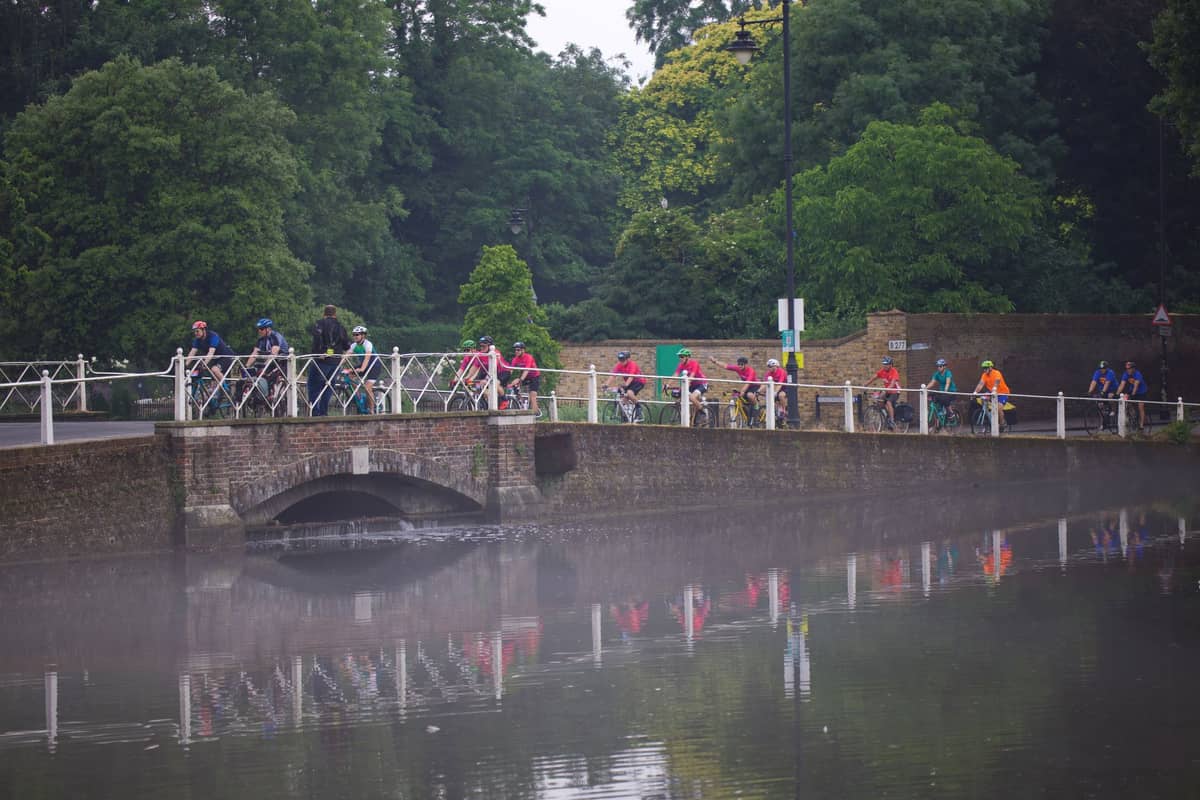
Bruges (Dutch: Brugge) sits on a flat coastal plain in northwest Belgium, barely 2 metres above sea level. That topography alone makes it unusually forgiving for cyclists of all fitness levels. Add a dense network of designated bike streets, expanding car-free zones in the historic centre, and an official cycling node system stretching across the surrounding countryside, and you have a city that actively rewards visitors who choose to explore by bike.
The compact historic centre — a UNESCO World Heritage Site — is roughly 2 km across at its widest point, meaning you can cross it by bike in under 10 minutes. Beyond the city walls, the canal-laced streets give way to open polders, windmills along the Kruisvest ramparts, and quiet village roads leading to destinations like Lissewege, Damme, and the coast at Zeebrugge. None of it requires any serious climbing.
ℹ️ Good to know
Belgium's West Flanders cycling node network (fietsknooppunten) is periodically updated, with node numbers and some routes revised from time to time. When using printed cycling maps, make sure you have a recent edition, as older maps may show outdated node numbers or discontinued links.
Bike Rental in Bruges: Prices, Shops & What to Expect
There are several rental operations in and around the city centre, ranging from small independent shops to larger outfits with e-bikes and guided packages. Prices vary more than you might expect, so it is worth comparing before you commit, especially if you are renting for multiple days.
- Ben's Bike ('t Zand) Centrally located near 't Zand square. City bikes at €4/hour, €10 for a half day (up to 5 hours), or €13 for a full day. Practical choice if you want to pick up and drop off quickly.
- Bruges Bike Rental Offers standard city bikes at around €13 per day and e-bikes at around €25 per day, with decreasing daily rates for multi-day hires. Worth booking ahead in peak season (July–August).
- Happy Wheels Bruges Prices run higher — around €32 per day for a standard bike and €52 per day for an e-bike. Better suited for premium bikes or guided experiences rather than basic day hires.
- General market rate (2025–2026) Across most central rental shops, expect to pay €10–€15 per day for a standard city bike and €25–€35 per day for an e-bike. Tandems typically fall in the e-bike price range.
Most rental shops require a form of ID and a deposit (usually by credit card hold). Helmet rental is available at most shops but is not legally mandatory in Belgium for adults. Child helmets are strongly recommended regardless. If you are renting for three or more days, ask about weekly rates — the per-day cost often drops significantly.
💡 Local tip
Your hotel may offer bike rental or have a partnership with a local shop. Before walking to a rental outlet, ask at reception — some hotels provide bikes free of charge or at reduced rates for guests, particularly in the mid-range and higher categories.
The Brugse Ommeland Cycling Node Network
The most structured way to explore beyond the city centre is via the fietsknooppunten (cycling node network) of the Brugse Ommeland. The system covers about 930 km of marked routes across the countryside surrounding Bruges, using numbered junctions connected by signed paths and quiet roads. You navigate by writing down a sequence of node numbers before you leave, then following the signs from one number to the next. No GPS required.
The online planner at Fietsknooppunt.be lets you build custom routes in either Knooppunt mode (staying strictly on the signed node network) or Offgrid mode (free routing). Printed maps covering the Brugse Ommeland and the Coast are available from Visit Bruges and most rental shops; just be sure you are using a recent edition so that node numbers and routes are up to date. These routes naturally pass landmarks like the windmills at Kruisvest and the peaceful countryside around Minnewater.
Three popular day-trip destinations that work particularly well as cycling routes from Bruges city centre are Damme (about 7 km northeast along the Damse Vaart canal towpath), Lissewege (around 10 km north, a medieval village with a 13th-century church), and Zeebrugge (roughly 14 km north, the working port borough of the Bruges municipality). All three are accessible on flat roads with minimal traffic.
✨ Pro tip
The Damse Vaart canal path to Damme is one of the flattest and most sheltered cycling routes in the region — poplar trees line much of the canal and provide useful windbreaks when the westerly wind picks up. It is mostly unpaved but firm enough for standard city bikes. Round trip takes about 1.5 to 2 hours at a relaxed pace.
Cycling Within the Historic Centre: Rules, Zones & Street Types
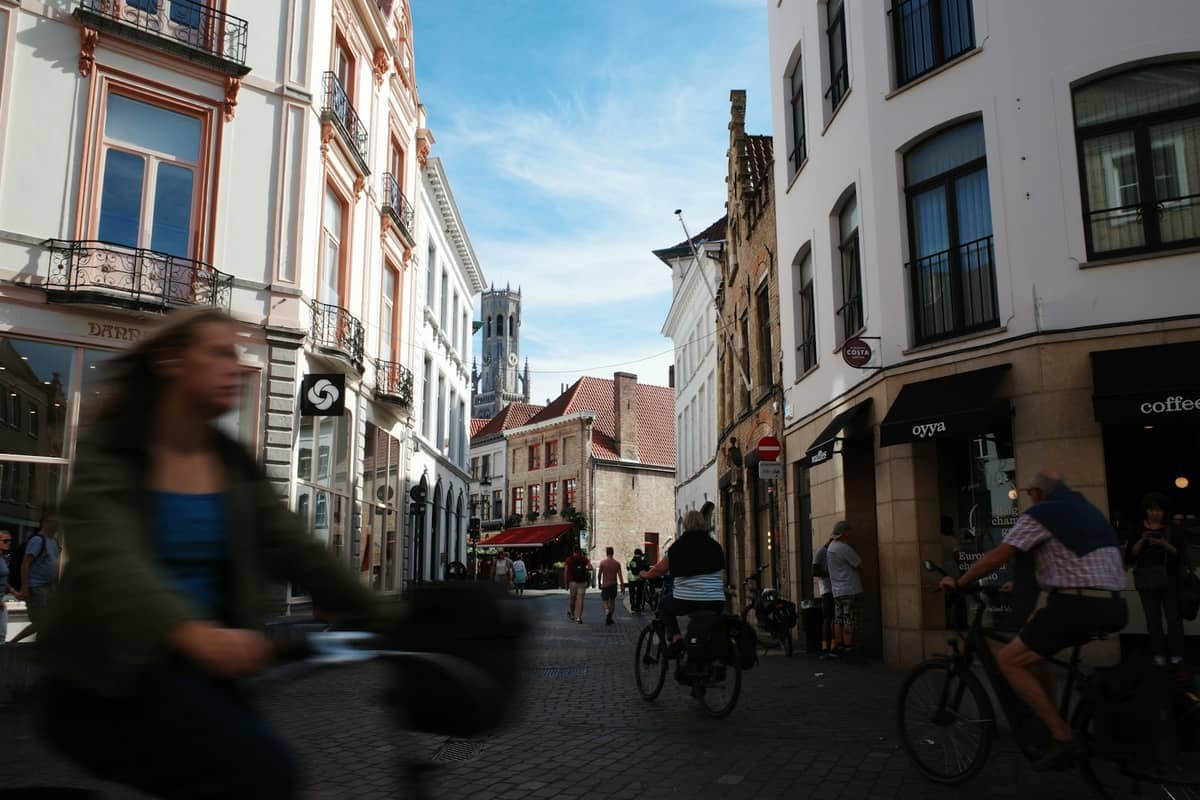
Bruges has been systematically expanding its fietszone (cycle zone) across the inner city. In designated bike streets, cyclists take priority and motor vehicles must follow behind them at a maximum of 30 km/h. These zones now form a connected network through the historic centre, making cross-city cycling routes significantly more comfortable than they were a few years ago.
Several central shopping streets, including Steenstraat and Katelijnestraat, operate car-free or car-light periods, typically weekday afternoons and weekends. The city uses a colour-coded system (green, yellow, orange zones) to indicate time-based motor traffic restrictions. Cyclists are unaffected by these restrictions and can use the streets freely throughout the day.
One important caveat: Bruges does not operate a low-emission zone for private cars, despite what some older travel resources suggest. Access restrictions in the centre are generally time-based, not emissions-based. For full details on current traffic measures and any temporary changes due to events or roadworks, the City of Bruges mobility page (brugge.be/mobiliteit) is the most reliable source. If you are planning a day around the historic centre, check there before heading out.
⚠️ What to skip
Cobblestone streets around Markt and Burg Square are uncomfortable on standard city bikes with narrow tyres and no suspension. If you plan to spend most of your time in the medieval core rather than cycling the countryside, a bike with wider tyres or a cushioned saddle makes a real difference. Ask the rental shop specifically about comfort bikes if that is your priority.
Best Seasons for Cycling in Bruges
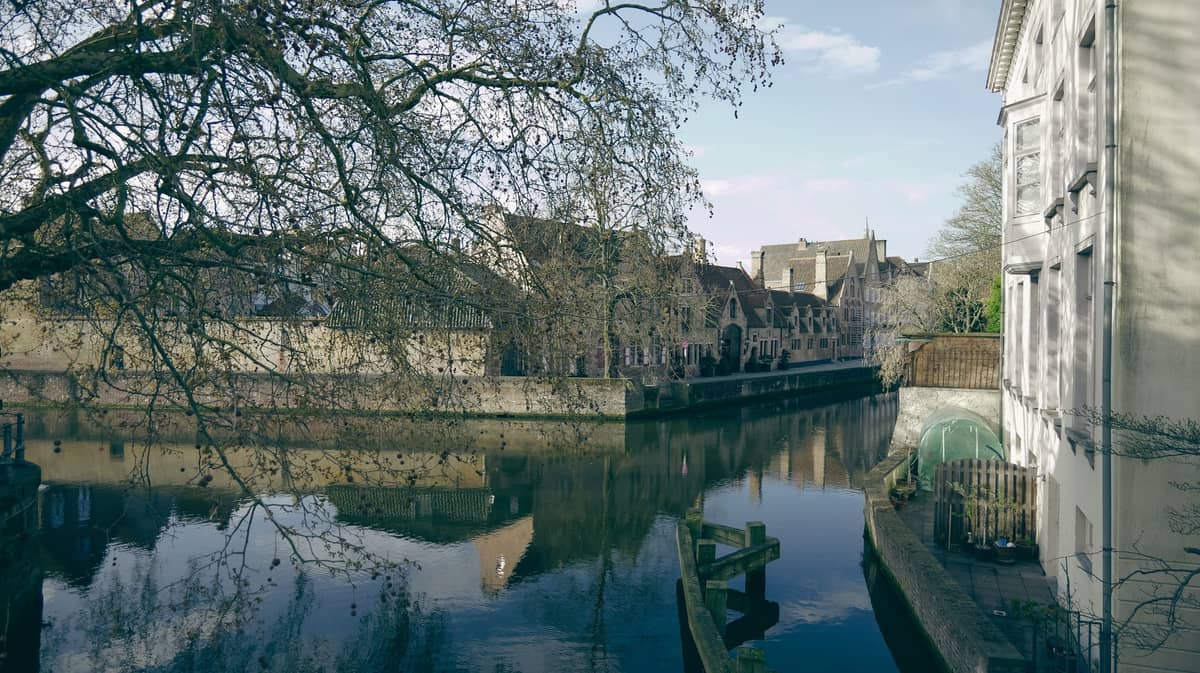
Bruges has a temperate oceanic climate with mild temperatures year-round and rainfall distributed fairly evenly across all months. That said, there are clear differences between seasons that affect how enjoyable a cycling day actually is.
- May to September (best overall) Average temperatures of 17–22°C in summer, dropping to around 15°C in September. Roughly 8–11 rainy days per month. Long daylight hours in June and July give you more time on the bike. Peak tourist season means rental shops are busiest in July and August — book ahead.
- April and October (good shoulder options) Temperatures around 10–15°C. More rainy days (12–13 per month on average) but also fewer crowds at popular route stops. April 2026 also marks the reopening of the renewed cycling node network, making it a natural time to explore updated routes.
- November to March (possible but marginal) Temperatures drop to 2–7°C in winter, with 12–14 rainy days per month. November is the wettest month, averaging 88 mm of rainfall. Cycling is technically possible, but cold headwinds off the North Sea and wet cobblestones make it significantly less pleasant. E-bikes help with the cold, but short daylight hours limit your range.
For more on how seasons affect a visit generally, the best time to visit Bruges guide covers crowd levels, events, and weather patterns in more detail.
Practical Tips Before You Ride
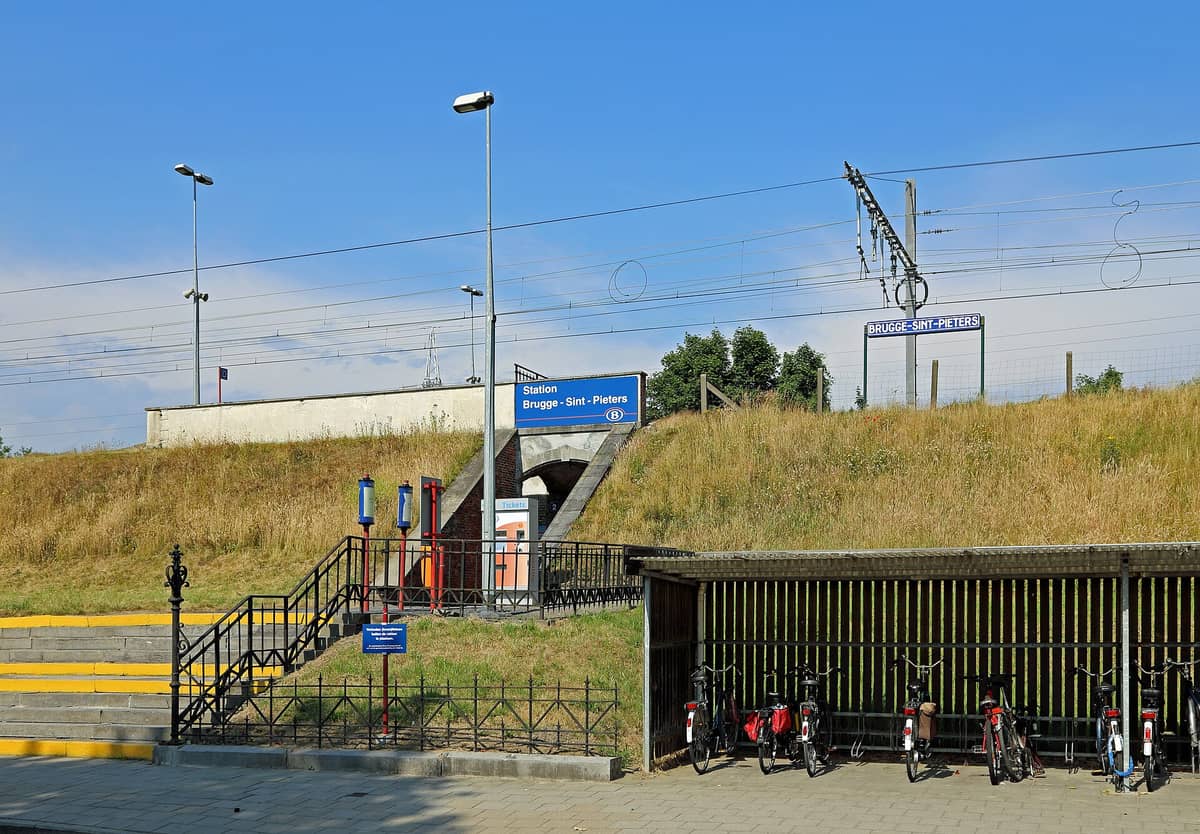
Bruges is easy to navigate by bike even without local knowledge, but a few practical details will save you time. The train station (Brugge, served by Belgian Railways NMBS/SNCB) is located about 1.5 km south of the Markt, and most rental shops are either near the station or in the central area around 't Zand. If you are arriving by train from Brussels Airport (around 95–100 km away, roughly 1.5 hours by rail), you can pick up a bike within minutes of leaving the station and start riding immediately. More on arrival logistics in the getting to and around Bruges guide.
- Belgium uses Type C and Type E plugs at 230V/50Hz — bring an adapter if you are charging a GPS device or e-bike display.
- Tap water in Bruges is safe to drink and meets EU standards, so bring a refillable bottle rather than buying plastic.
- In Belgium, tipping is not obligatory, and service is typically included in café and restaurant bills — relevant when you stop mid-route.
- The emergency number in Belgium is 112. Keep it saved if you are riding rural routes away from the city centre.
- Bike parking in the historic centre is available at designated racks near major squares. Avoid locking to canal railings or lamp posts — the city does remove illegally parked bikes.
- If you are cycling with children, most rental shops stock child seats and tag-along bikes. Bruges is genuinely suitable for family cycling given the flat terrain and low-speed zones.
If you want to pair cycling with sightseeing, the one-day Bruges itinerary works well as a loose cycling route — most of the key stops are within easy riding distance of each other, and the bike lets you cover more ground than walking alone. For a longer visit with two days to spare, the two-day Bruges guide includes suggestions that suit both walkers and cyclists.
FAQ
Do I need to book a bike rental in Bruges in advance?
In July and August, booking at least a day or two ahead is strongly recommended, especially for e-bikes and tandems, which have limited stock. Outside peak season (May–June and September), walk-in availability is generally fine at most central shops. If you have a specific departure time in mind, booking ahead is always safer.
Is cycling in Bruges safe for beginners or families with children?
Yes. The flat terrain, 30 km/h speed limits in the inner fietszone, and separated bike paths on many main routes make Bruges genuinely accessible for beginner cyclists and families. The main caveat is the cobblestone streets in the medieval core, which are harder to ride comfortably at speed. Stick to the designated bike streets where possible.
Can I take a bike on the train in Belgium?
Yes. Belgian Railways (NMBS/SNCB) allows bicycles on most trains, though you need a separate bike ticket and some trains (particularly peak-hour Intercity services) restrict bike spaces. Foldable bikes travel free. Check the NMBS website for current rules and reservations before your travel date.
Are cycling maps for the Brugse Ommeland still accurate?
Recent maps reflect the updated West Flanders cycling node network, which has undergone periodic revisions; older maps may show obsolete node numbers and some discontinued routes. Use the Fietsknooppunt.be online planner or pick up a current printed map from Visit Bruges or a local rental shop.
Is there a public bike share scheme in Bruges?
As of 2025–2026, Bruges does not have a large-scale docked public bike-share system comparable to those in Brussels or Ghent. The main option for visitors is renting from one of the private shops in the city centre. This situation can change, so check the City of Bruges mobility page or Visit Bruges for any updates before your trip.