One Day in Bruges: The Perfect Day Trip Itinerary
Bruges is one of Europe's most complete medieval cities, and a single day is enough to see its best. This itinerary gives you a logical, time-aware route through the Markt, the canals, the Belfry, and the quieter corners most visitors miss, with real prices and straightforward planning notes throughout.
Plan and book this trip
Tools from our partner Travelpayouts help you compare flights and hotels. If you book through them, we may earn a commission at no extra cost to you.
Flights
Hotels map
TL;DR
- Direct trains from Brussels to Bruges run every 30 minutes and take 55–65 minutes; a standard second-class single costs around €17. No advance booking discounts exist for domestic Belgian rail.
- The historic centre is compact enough to walk entirely. A logical route: Markt, Belfry, Burg Square, canals, Minnewater, Begijnhof, then back north via the quieter Sint-Anna quarter.
- Canal boat tours (30 minutes, €15 per adult) run March–October on a walk-up basis with no advance reservations needed. Skip the midday queue by going before 11:00 or after 16:00.
- Book the Belfry early: it opens at 09:00 in summer and queues build fast. Tickets are €16 for adults. See the full Belfort van Brugge details before you go.
- For a broader overview of what the city offers, read things to do in Bruges before finalising your itinerary.
Getting to Bruges: What You Need to Know Before the Day Starts
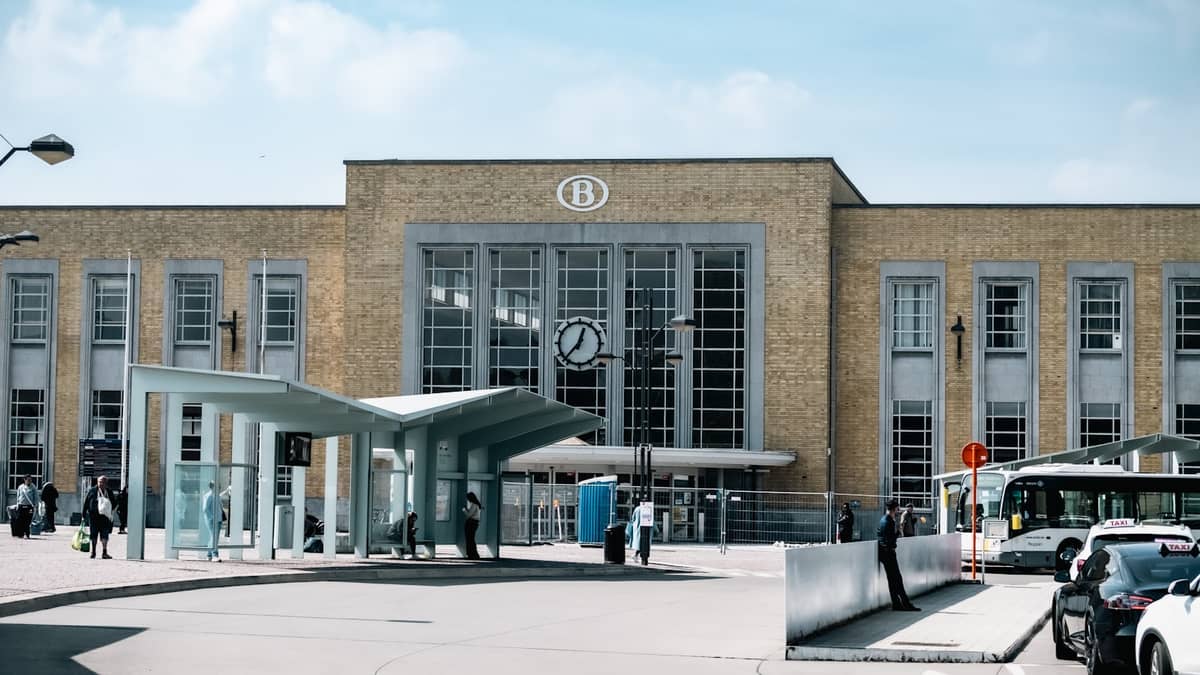
Bruges (Dutch: Brugge) sits in northwest Belgium, about 100 km west of Brussels in the province of West Flanders. For most visitors making a day trip, the train is the obvious choice and genuinely the best one. Direct IC trains depart Brussels-Midi, Brussels-Central, and Brussels-Noord roughly every 30 minutes throughout the day, arriving at Bruges station in 55–65 minutes. A standard second-class single costs around €17–€17.50. One critical point that catches many visitors off guard: domestic Belgian standard train fares are fixed. Booking a week ahead saves you nothing over buying at the station on the day.
Bruges station (Brugge) sits about 1.5 km south of the Markt, the central square. You can walk it in around 18–20 minutes, or take a De Lijn bus for around €3. Most visitors walk: the route along Steenstraat is flat and takes you past the first church spires before the crowds thicken. If you are arriving from elsewhere in Belgium or from Brussels Airport (BRU, approximately 100 km away), the journey involves a train change but remains straightforward via the Belgian Railways NMBS/SNCB network.
💡 Local tip
Aim to arrive at Bruges station by 09:00 at the latest. The Belfry opens at 09:00 in summer and the climb takes about 20 minutes each way. Getting there first means avoiding the queues that form by 10:30, especially on weekends between April and October.
Morning: The Markt, the Belfry, and Burg Square
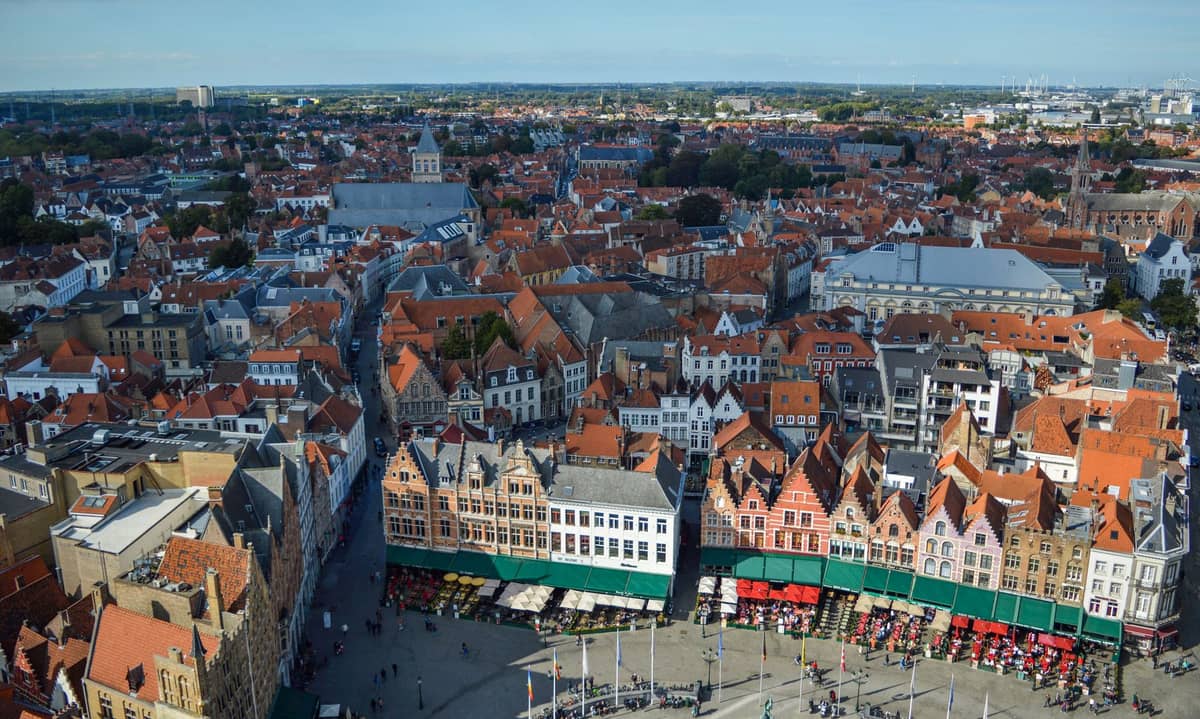
Start at the Markt, Bruges's main square. The square itself is architecturally impressive but surrounded by restaurants with tourist-trap pricing. Have your coffee before you arrive or find a side-street café instead. The Markt is best experienced early, when the light is low and the horse carriages have not yet filled the cobblestones.
From the Markt, the Belfort van Brugge dominates the southern end of the square. The 83-metre tower dates to the 13th century and contains a carillon of 47 bells still rung by a resident carillonist. Climbing its 366 steps earns you the best panoramic view in the city. Adult tickets cost €16, with reduced rates of €14 for ages 7–17 and those over 65. Children under 7 enter free. The tower is open 09:00–20:00 from 1 April to 2 November, and 10:00–18:00 in winter. Capacity is deliberately limited, so arrive at opening or expect a queue.
A five-minute walk east of the Markt brings you to Burg Square, one of the most architecturally layered spaces in northern Europe. The square contains Gothic, Renaissance, Baroque, and Neoclassical facades within a few metres of each other. On the north side, the Basilica of the Holy Blood draws long queues after 10:00. The lower Romanesque chapel is the more interesting of the two floors, and entry is free. On the south side, the Stadhuis van Brugge (Gothic Town Hall) contains one of the most ornate medieval council chambers in Belgium, with original vaulted ceilings and murals. Budget around 30 minutes for the square and the basilica combined.
Late Morning: The Canal Quarter and Rozenhoedkaai
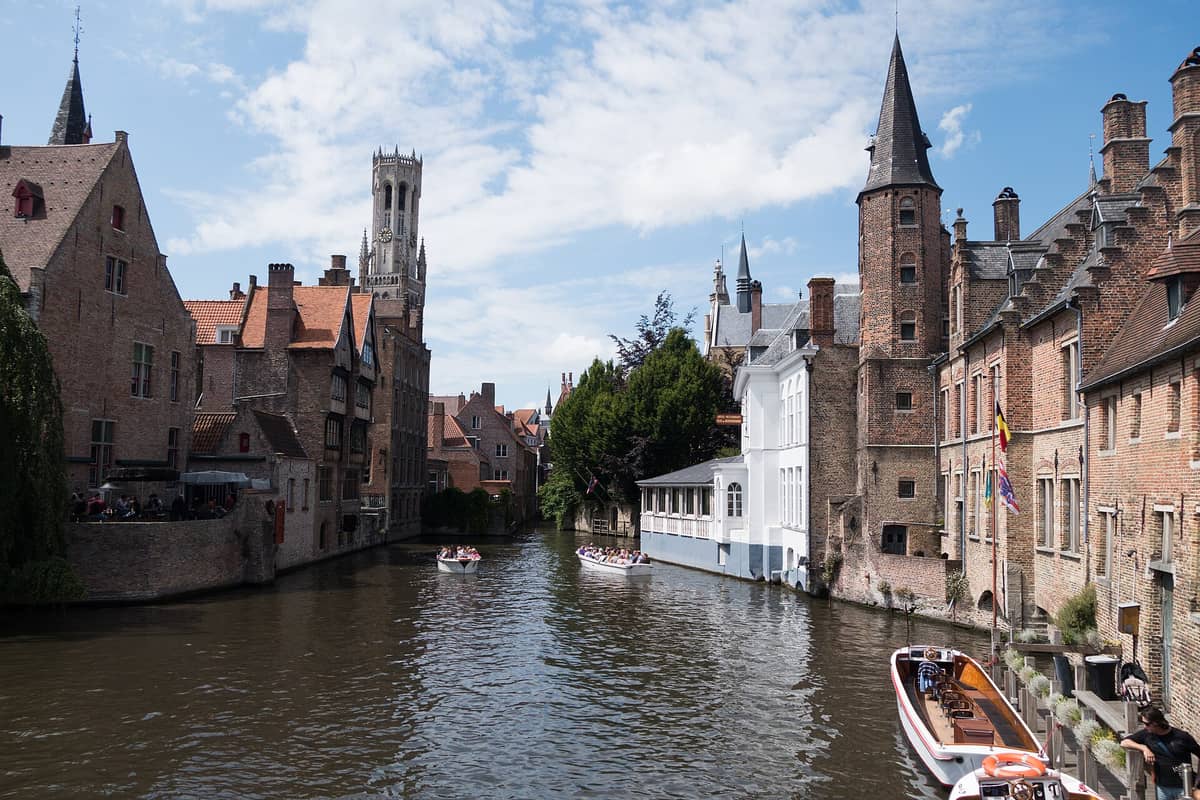
From Burg Square, head south toward the water. The stretch of canal around Rozenhoedkaai is the most photographed view in Bruges, and for good reason: a bend in the canal frames the Belfry perfectly. It is also genuinely crowded by 11:00 most days from April through September. Get there before 10:30 if you want the scene without fifty cameras in frame.
This is the right moment for a canal boat tour. Five licensed operators run departures from landing stages near the Dijver, Rozenhoedkaai, and Katelijnestraat. Tours last 30 minutes and cover the main canal loop. The experience is not particularly educational but the perspective from water level, especially under the low stone bridges, is worth having. Tickets cost €15 per adult, €9 for children aged 4–11, and under-4s travel free. Tours run daily from March to October, 10:00–18:00, with boats leaving roughly every 10–15 minutes. No reservation is needed or possible for regular public departures. For more detail on what to expect, see the Bruges canal tours guide.
⚠️ What to skip
Canal tours may be reduced or cancelled in bad weather or off-season conditions. From November through February, operators run on a rotation system with at least one jetty guaranteed open daily, but hours are shorter and weather-related cancellations are more common. If you are visiting between November and February, check current operator schedules before building the boat trip into your plan.
Afternoon: Minnewater, the Begijnhof, and the Quieter South
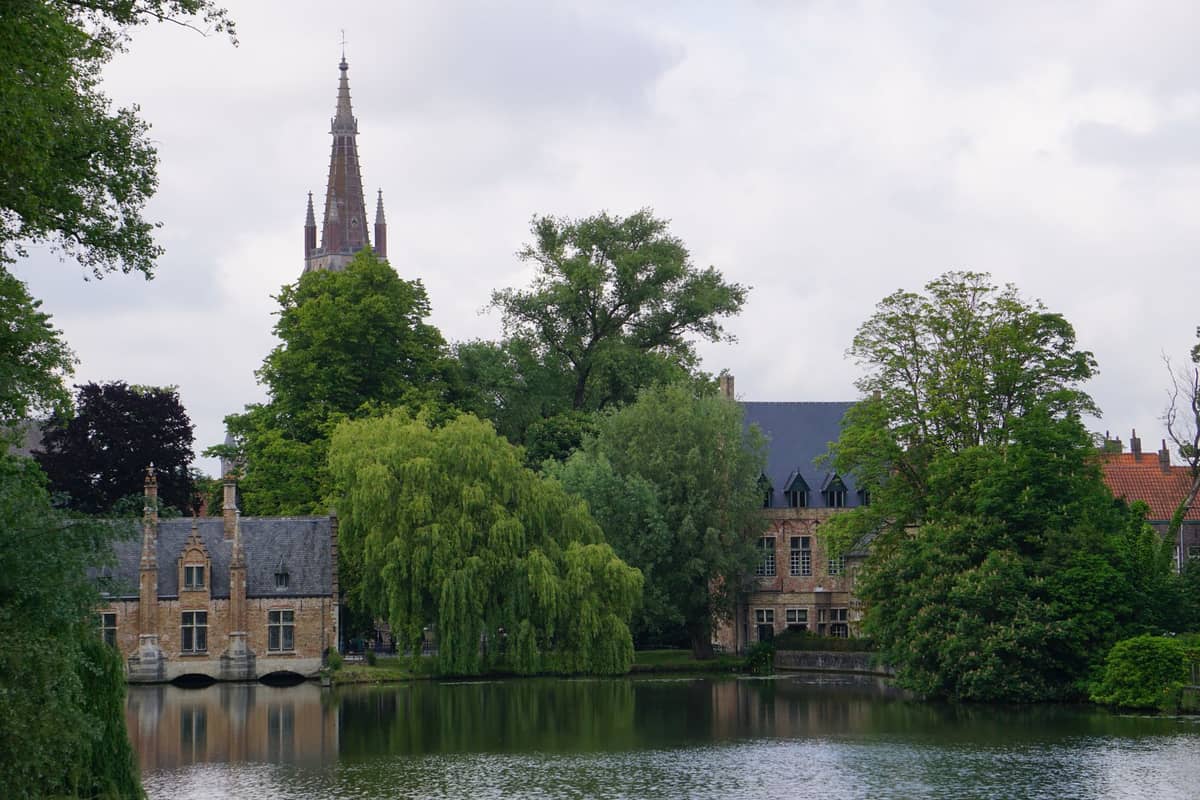
After the canal tour, walk south along the Dijver toward the Minnewater and Begijnhof area. The Minnewater is a small lake at the southern edge of the historic centre, flanked by willow trees and a 15th-century sluice gate. It is peaceful in the early afternoon when day-trip crowds have dispersed toward the central squares.
Immediately north of the Minnewater lies the Begijnhof, a walled enclosure of whitewashed houses built for the Beguines, a medieval lay sisterhood. The Begijnhof is a UNESCO World Heritage Site and still occupied by Benedictine nuns. Entry to the courtyard is free. Visitors are asked to keep noise to a minimum and dress modestly. It takes about 20 minutes to walk through properly, more if you enter the small museum inside. This is one of the few spots in Bruges where the medieval atmosphere is not competing with café terraces and souvenir shops.
If your interest runs to Flemish art and medieval hospitals, the Memling in Sint-Jan museum in the former Sint-Janshospitaal, just a few minutes walk north of the Begijnhof, houses some of Hans Memling's most significant work in the building for which it was originally commissioned. This is not a large museum but it is an excellent one, and rarely as crowded as the Groeninge. Budget around 45 minutes. For a fuller picture of what Bruges's museums offer, see the guide to the best museums in Bruges.
✨ Pro tip
The Musea Brugge combination tickets cover entry to several city museums including the Groeninge, Gruuthuse, and Sint-Janshospitaal. If you plan to visit two or more museums on the same day, the available combi-tickets usually save money over individual admissions, but they do not generally include the Belfry. Check current combinations and pricing on the Musea Brugge website before your visit.
Late Afternoon: Sint-Anna Quarter and What to Skip
If you have energy left after 15:00, the Sint-Anna quarter in the northeast of the historic centre is worth exploring. It is less visited than the central canal area and has a residential quality that the tourist core lacks. The Jerusalem Church (Jeruzalemkerk), built by the Adornes family in the 15th century as a private chapel modelled on the Church of the Holy Sepulchre in Jerusalem, is one of the most unusual ecclesiastical buildings in Belgium. The Kantcentrum (Lace Centre) next door offers a concise introduction to Bruges bobbin lace, a tradition with roots going back to the 16th century.
A note on what to skip when time is limited. The Historium on the Markt is a theatrical, multimedia experience aimed at families; it is not particularly useful for adults wanting historical depth. The Choco-Story chocolate museum on Sint-Jansstraat is fine but non-essential if you have already done a chocolate shop visit. The Frietmuseum (dedicated to Belgian fries) is a curiosity rather than a serious attraction. None of these are bad choices for a longer stay or with children, but on a single day they consume time that is better spent outdoors.
- Do: Climb the Belfry at opening time Queues at 09:00 are a fraction of those at 11:00. The view justifies the 366 steps.
- Do: Walk to Rozenhoedkaai before 10:30 The light and the crowd levels are both better in the early morning.
- Do: Take the canal boat tour 30 minutes, €15, no booking needed. Best before 11:00 or after 16:00 to avoid peak queues at the landing stages.
- Skip: Restaurant meals on the Markt or Burg Square Prices are elevated and quality is inconsistent. One or two streets back from the main squares, options improve significantly.
- Skip: Driving into the historic centre Parking is limited, expensive, and unnecessary. The city is designed for walking. The train station is the right arrival point.
Practical Details: Timing, Crowds, and Seasonal Considerations
Bruges receives a high volume of day-trip visitors, particularly between April and October. The city has a population of around 120,000 but welcomes considerably more tourists than residents on busy summer weekends. The central area around the Markt, Rozenhoedkaai, and the canal landing stages is at its most congested between 11:00 and 16:00. Arriving early and front-loading your outdoor sightseeing gives you a noticeably different experience from arriving mid-morning. For context on when to time your visit more broadly, see the guide on the best time to visit Bruges.
In winter, Bruges is quieter and the light has a particular quality that suits the architecture. Canal tours become unreliable, but the city's church interiors, museums, and covered market halls are fully operational. If you are visiting in December, note that the city hosts one of Belgium's best Christmas markets around the Markt and Simon Stevinplein. See the Bruges Christmas market guide for dates and layout. Winter temperatures average 2–7°C, so layer appropriately.
- Bruges uses the Euro (EUR). Cards are widely accepted but carry a small amount of cash for canal boats, which may not take cards at peak times.
- The Belgian emergency number is 112. The country dialling code is +32.
- Tap water is safe to drink throughout the city.
- Electricity is 230V, 50Hz, using primarily Type E sockets (compatible with Type C plugs). Bring an adapter if travelling from the UK or North America.
- Dutch (with a local West Flemish dialect) is the official municipal language. English is widely spoken in tourism contexts.
- Tipping is not compulsory in Belgian restaurants; rounding up or leaving a small amount is common but entirely optional.
If one day leaves you wanting more, Bruges rewards an overnight stay considerably. The city quiets down significantly after 18:00 when day-trippers leave, and the streets around the Dijver canal quarter take on a different character after dark. For those considering extending their trip, the guide on 2 days in Bruges builds directly on this itinerary with deeper neighbourhood coverage.
FAQ
Is one day enough for a Bruges day trip?
One day is enough to see the major landmarks: the Belfry, Burg Square, the canal quarter, and the Begijnhof. You will not have time for every museum, but you can get a thorough sense of the city. Arriving early (at the station by 09:00) and leaving after 18:00 gives you a solid 9 hours on the ground.
How do I get from Brussels to Bruges by train?
Direct IC trains run from Brussels-Midi, Brussels-Central, and Brussels-Noord to Bruges roughly every 30 minutes. The journey takes 55–65 minutes. A standard second-class single costs around €17–€17.50. Domestic Belgian standard fares are fixed, so there is no benefit to booking in advance.
Do I need to book Bruges canal tours in advance?
No. Standard public canal boat tours operate on a walk-up basis with no advance reservations. Five licensed operators run departures from landing stages near the Dijver and Rozenhoedkaai, typically every 10–15 minutes between 10:00 and 18:00, from roughly March to mid-November. Arrive before 11:00 or after 16:00 to avoid the longest queues.
What is the best time of year for a one-day visit to Bruges?
May, June, and early September offer the best balance: pleasant temperatures (around 17–22°C), long daylight hours, and slightly lower crowds than the peak July-August period. Winter visits (November to February) are quieter and atmospheric but canal tours become unreliable and some outdoor attractions are less enjoyable in cold, wet conditions.
How far is the Bruges train station from the city centre?
Bruges station is approximately 1.5 km south of the Markt. The walk takes about 18–20 minutes along Steenstraat and is flat throughout. Alternatively, De Lijn buses connect the station to the centre for around €3 per single journey.