Basilica of the Holy Blood: Bruges' Most Sacred Site on Burg Square
The Basilica of the Holy Blood (Basiliek van het Heilig Bloed) stands on Burg Square in Bruges' historic centre, housing a relic venerated since the Middle Ages. Entry to the basilica is free; the treasury costs €5. With two architecturally distinct chapels stacked on top of each other, it rewards visitors who take time to explore both levels.
Quick Facts
- Location
- Burg 13, 8000 Brugge — Burg Square, historic centre
- Getting There
- 15–20-minute walk from Bruges train station; buses stop near Burg Square in the city centre
- Time Needed
- 30–60 minutes for both chapels and the treasury
- Cost
- Basilica entry: free. Treasury/Museum: €5 adults, free for under-12s
- Best for
- History enthusiasts, religious pilgrims, architecture lovers, first-time visitors to Bruges
- Official website
- www.holyblood.com
What the Basilica of the Holy Blood Actually Is
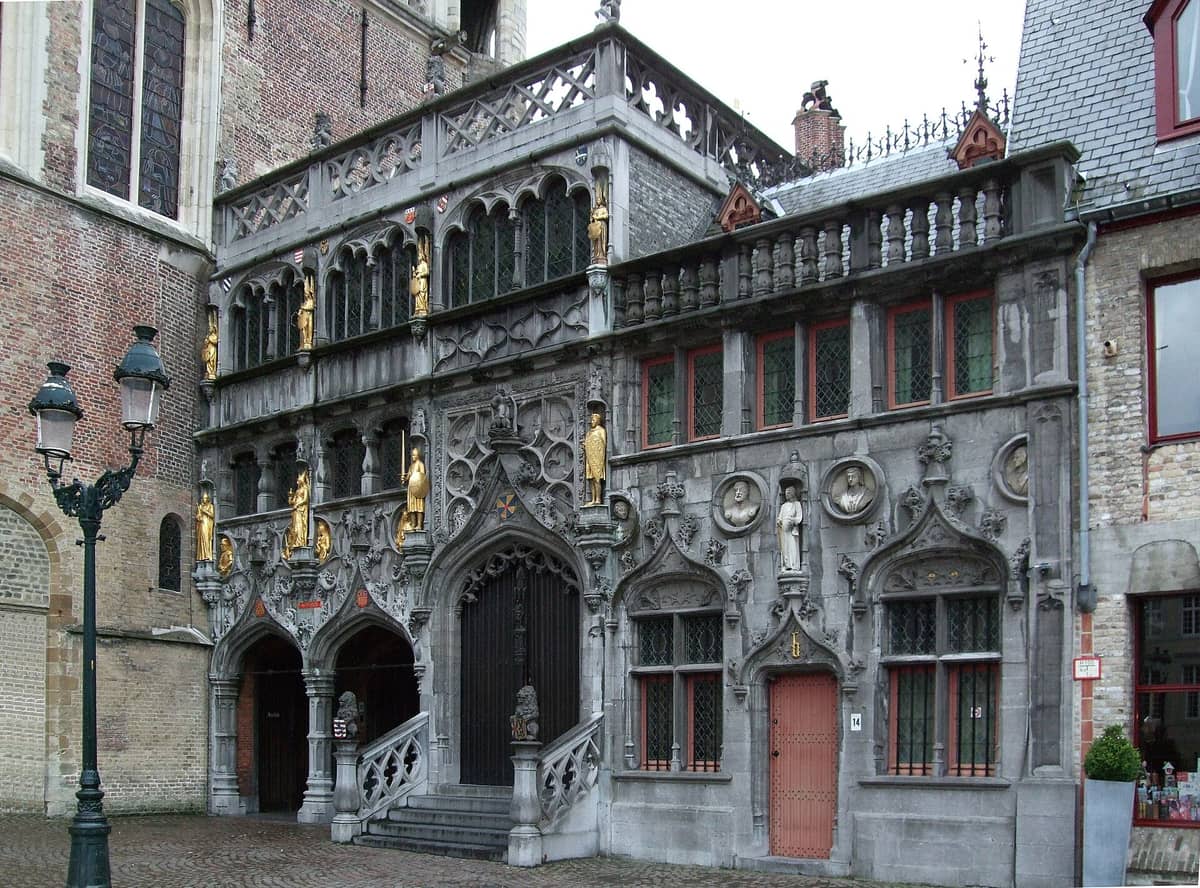
The Basilica of the Holy Blood (Dutch: Basiliek van het Heilig Bloed) occupies a low-slung corner of Burg Square, almost overshadowed by the towering Gothic Town Hall next door. From the outside, the neo-Gothic facade is ornate but compact — easy to walk past if you are scanning the roofline for something grander. Step through the door and the building reveals itself as two entirely different spaces stacked vertically: a dark, austere Romanesque lower chapel dating to the 12th century, and an elaborately decorated neo-Gothic upper chapel rebuilt in the 19th century after earlier damage and reached by a steep stone staircase.
What draws most visitors is the relic kept in the upper chapel: a phial said to contain a cloth wiped with the blood of Christ, traditionally believed to have been brought back from the Holy Land in the 12th century. Whether you come for religious reasons or out of historical curiosity, the relic is displayed for veneration at set times, and the ritual of visitors quietly filing past the glass cylinder is one of the more quietly charged experiences in Bruges.
ℹ️ Good to know
Opening hours: daily 10:00–17:15, with occasional closure periods (check the official site at holyblood.com before visiting, as short closures do occur, for example in January). Entry to the basilica is free. The treasury and museum cost €5 per adult; children under 12 enter free.
The Lower Chapel: Romanesque Severity
The lower chapel, dedicated to St. Basil, is the oldest surviving part of the basilica and one of the best-preserved Romanesque interiors in Belgium. Built in the 12th century, it is small and intentionally plain: thick stone walls, round arches, minimal ornamentation. The light is dim regardless of the time of day, filtered through narrow openings rather than decorative windows. The stone underfoot is worn smooth, and the air carries the cool, slightly mineral smell common to old masonry buildings that have been continuously used for centuries.
This chapel often receives less attention than the floor above, which is a mistake. Spend a few minutes here before ascending. The scale and silence are calibrated differently from the upper chapel — there is almost no visual noise, just arches, stone, and a few devotional objects. It gives you a clearer sense of what 12th-century religious architecture was doing before Gothic elaboration changed everything.
Tickets & tours
Hand-picked options from our booking partner. Prices are indicative; availability and final rates are confirmed when you complete your booking.
Historium Bruges entrance tickets
From 19 €Instant confirmationFree cancellationBruges food tour with full meal
From 139 €Instant confirmationFree cancellationBruges walking audio guided tour
From 9 €Instant confirmationBruges Family Walking Tour
From 259 €Instant confirmationFree cancellation
The Upper Chapel: Neo-Gothic Intensity
The upper chapel is a near-complete contrast. Rebuilt in the neo-Gothic style in the 19th century after earlier damage, it is rich with colour: painted vaults, gilded details, stained glass, and ornate woodwork. On a sunny morning, the windows project coloured light across the floor in shifting patches. On an overcast afternoon, the interior feels heavier, the gilding less luminous, the mood more contemplative.
The relic itself is housed in a silver tabernacle on the altar. At specific times during the day, it is brought out and placed in a monstrance so that visitors can venerate it directly. During these moments, a quiet line forms without prompting — people move slowly, some pray, some simply observe. Photography during veneration is best approached with discretion; the atmosphere discourages it even where it is not explicitly prohibited.
The upper chapel also contains a cycle of 16th-century paintings depicting the history of the relic, which are worth reading carefully if you want the full historical narrative. They are displayed around the walls at eye level and give context that the space alone cannot.
💡 Local tip
Arrive before 10:30 to have the upper chapel largely to yourself. By mid-morning, tour groups from the Markt begin cycling through Burg Square, and the basilica fills quickly. Early visits also give you the best chance of witnessing the relic veneration without a crowd.
The Treasury and Museum
The treasury (€5 admission) is a single, well-curated room adjacent to the upper chapel. It contains the golden and jewelled reliquary used to carry the phial during the annual Procession of the Holy Blood, along with paintings, historic vestments, and objects connected to the relic's long history in Bruges. The reliquary itself is extraordinary as a piece of medieval goldsmithing — encrusted with gems and enamel work, it was made to be seen from a distance in procession, and it reads differently up close.
For visitors primarily interested in religious art or the history of Flemish devotional culture, the treasury justifies its entrance fee comfortably. If you are short on time or primarily came for the architecture, the free basilica alone gives you the essential experience. Children under 12 enter the treasury for free, which makes it a reasonable addition for families.
If you want broader context for the religious and artistic heritage of Bruges, the Groeningemuseum nearby holds one of the finest collections of early Flemish painting in existence, including works by Jan van Eyck and Hans Memling that illuminate the spiritual world these chapels were built to serve.
Burg Square: The Setting Matters
The basilica cannot be fully understood without its setting. Burg Square (Burg) is the civic and religious heart of Bruges, and it reads as a compressed architectural history of the city: the 14th-century Gothic Town Hall, the Renaissance Old Civil Registry, the Baroque former deanery, and the basilica itself, all facing each other across a cobbled square. The juxtaposition is almost theatrical.
Arriving via the narrow passage from the Markt (main market square) is the most atmospheric approach — the square opens up suddenly after the confined alley, and the scale of the Town Hall of Bruges directly opposite sets the basilica's modest facade in sharp relief. Early in the morning, before the square fills with visitors, the cobblestones are still damp from overnight dew and the light catches the stonework at a low angle that disappears by mid-day.
Burg Square is part of the broader historic centre of Bruges, a UNESCO World Heritage Site since 2000. The density of significant buildings in this area is exceptional, and planning your visit to take in several of them in one morning walk is straightforward — distances are short.
Practical Notes: What to Know Before You Go
The basilica is open every day from 10:00 to 17:15. Occasional short closures do occur, particularly in January, so checking the official site (holyblood.com) before visiting is worth the 30 seconds it takes.
The basilica is at Burg 13, directly on Burg Square. From Bruges train station, the walk takes around 15–20 minutes through the historic centre. Local De Lijn buses serve the city centre with stops close to Burg Square. There is no underground system in Bruges; everything in the historic centre is walkable.
Detailed step-free accessibility information is not published on the basilica's official pages. Visitors with mobility requirements should contact the basilica directly before visiting, as the steep staircase between the lower and upper chapels may present a challenge.
Modest dress is expected inside, as with all active religious sites in Belgium. Bare shoulders and very short clothing are out of place. In cooler months (October through March), the interior is cold enough that an extra layer is worth bringing — stone buildings of this age retain chill efficiently.
⚠️ What to skip
The basilica is an active place of worship, not just a tourist attraction. Masses and religious services take place regularly. During services, tourist access to parts of the chapel may be restricted. Check the schedule on the official site if your visit timing is fixed.
The Procession of the Holy Blood: If Your Visit Coincides
Once a year, on Ascension Day (a moveable feast in May or early June), Bruges holds the Procession of the Holy Blood (Heilig Bloedprocessie), in which the relic is carried through the city streets in a large ceremonial procession with costumed participants re-enacting biblical scenes. This is one of the most significant religious and cultural events in Belgium, and the reliquary displayed in the treasury is the object carried during this event. The procession dates in its current form to the 14th century and draws large crowds.
If you are planning a trip around the procession, it significantly changes the experience of the city — and the basilica itself takes on a different weight when you have seen the reliquary in context. Our guide on the best time to visit Bruges covers seasonal events including Ascension Day and how they affect crowds and accommodation.
Who Should Skip This, and Who Will Get the Most From It
Visitors with no interest in religious history, medieval devotional practice, or Flemish Gothic architecture may find the basilica underwhelming — it is small, and the experience is quiet rather than spectacular. The exterior facade is photographable in about two minutes, and if the treasury does not appeal, the entire visit can feel brief.
For everyone else, particularly those with an interest in medieval European history, early Christian relics, or Flemish art and culture, it is one of the most concentrated experiences Bruges offers. Combined with the Town Hall interior and a walk along the Rozenhoedkaai five minutes away, it forms a natural half-morning in the historic centre that covers an enormous span of the city's history.
Insider Tips
- Visit the lower Romanesque chapel first and spend at least five minutes there before going upstairs. Most visitors rush straight to the upper chapel and miss the oldest, most architecturally significant part of the building entirely.
- The relic is displayed for veneration at specific times during the day rather than continuously. If witnessing this is important to you, check the current veneration schedule on holyblood.com before you arrive — it is not always the same across the week.
- The treasury's reliquary is most impressive when you know it is carried through actual city streets once a year in the Procession of the Holy Blood. Reading briefly about the procession before your visit makes the object significantly more legible.
- Burg Square is much quieter before 10:00 and after 17:00. If you want photographs of the basilica's facade without crowds in the frame, the early morning or early evening light on the square is considerably better than midday.
- The basilica shares Burg Square with the Stadhuis van Brugge (Town Hall), which has a remarkable Gothic hall interior open to visitors for a small fee. Combining both in a single Burg Square visit is efficient and the architectural contrast between the two buildings is instructive.
Who Is Basilica of the Holy Blood For?
- Travelers interested in medieval religious history and Christian relics
- Architecture enthusiasts who want to compare Romanesque and neo-Gothic interiors side by side
- First-time visitors to Bruges doing a historic centre walking loop
- Families with older children curious about medieval devotional culture (under-12s enter the treasury free)
- Visitors planning around or researching the annual Procession of the Holy Blood
Nearby Attractions
Other things to see while in Historic Centre:
- Belfry of Bruges (Belfort)
Standing 83 metres above the Markt, the Belfry of Bruges has dominated the city's skyline since the 13th century. The climb is steep and the staircase narrow, but the rooftop view over the canal network, church spires, and Flemish rooftops rewards the effort. Here is everything you need to know before you go.
- Burg Square
Burg Square, known locally as the Burg or Burgplein, is the political and ceremonial core of Bruges, framed by some of the finest medieval and Renaissance civic architecture in Belgium. Free to enter at any hour, it rewards careful exploration and rewards visitors who stay long enough to watch the light shift across its stone facades.
- Choco-Story Bruges
Choco-Story Bruges traces the story of chocolate from Maya and Aztec cacao rituals to the artisan praline shops lining today's Bruges streets. Located on Wijnzakstraat in the historic centre, it combines genuine cultural history with live chocolate demonstrations that make it one of the more substantive stops on the city's well-worn tourist circuit.
- Friet Museum
The Frietmuseum on Vlamingstraat is the world's only museum dedicated to the history and culture of Belgian fries. Housed in one of Bruges's oldest secular buildings, it traces the potato's journey from the Andes to the Belgian frituur, and yes, there are fries at the end.