What to Eat in Bruges: The Complete Belgian Food Guide
Bruges is one of Europe's great food cities in miniature. This guide covers everything worth eating, from street-food fries to moules-frites season, plus clear notes on avoiding tourist-trap versions of Belgian classics.
Plan and book this trip
Tools from our partner Travelpayouts help you compare flights and hotels. If you book through them, we may earn a commission at no extra cost to you.
Flights
Hotels map
TL;DR
- Belgian fries (from a proper frituur), Liège waffles, pralines, mussels, and local beer are the five pillars of eating well in Bruges.
- Bruges waffles come in two distinct styles — know the difference before you order. See our Bruges waffles guide for the full breakdown.
- The classic mussels season runs September to April (the 'months with an r' rule), so summer visitors should adjust expectations.
- Food tours starting near the Markt are one of the best ways to sample everything in a few hours without overpaying individually.
- Avoid touristy chocolate shops on the main squares — better pralines exist one or two streets off the beaten path.
Belgian Fries: The Real Thing
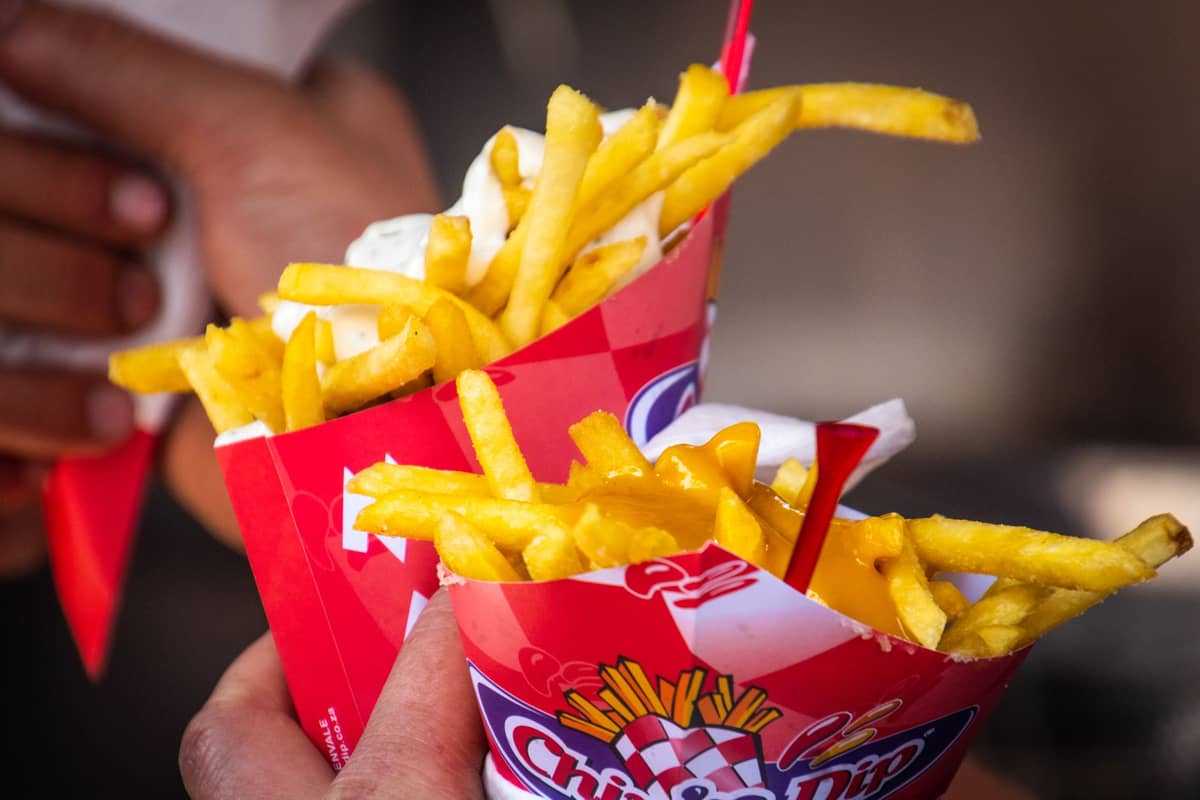
Belgian fries are not a side dish. In Bruges, as across Belgium, they are a standalone meal — eaten from a paper cone, standing at a frituur window, usually with a dollop of mayo or sauce andalouse. The distinction matters because restaurant fries, however good, are rarely the same experience as fries cooked fresh in a proper double-frying setup (first blanched at a lower temperature, then crisped at high heat), which is the traditional Belgian method.
Frituur stands cluster around the Markt and the side streets near the Burg. Prices for a standard cone run roughly €3 to €5 depending on size and toppings. The sauces are not an afterthought: Belgians take their frituur sauce selection seriously, and most stands offer a dozen or more options. Mayonnaise is the default, but andalouse (tomato-pepper mayo) and samurai (spicy mayo) are popular. Avoid any stand where the fries look pre-cooked and sitting under a heat lamp — fresh frites are made to order and take a few minutes.
💡 Local tip
Belgian fries are not a French invention — Belgians are emphatic on this point. The dish has deep roots in the Flemish low countries, and eating them from a frituur rather than a restaurant is the culturally correct approach. If a restaurant charges €6+ for a side of fries, you're paying for the tablecloth, not the quality.
Bruges Belgian Waffles: Two Styles, Two Contexts
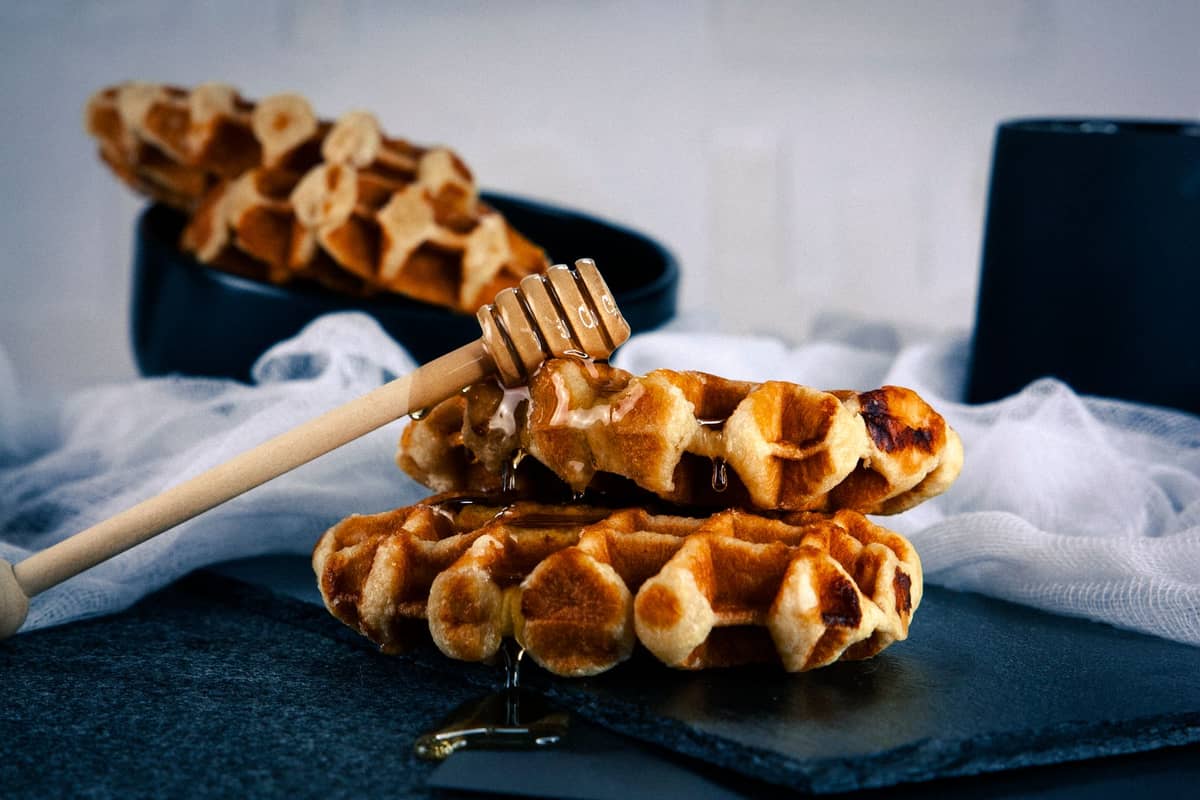
One of the most common mistakes visitors make in Bruges is treating waffles as a single food. There are two distinct types, and they are suited to completely different eating occasions. Getting this wrong usually means overpaying for something inferior.
- Liège Waffle (Gaufre de Liège) Dense, chewy, made with pearl sugar that caramelises during cooking. Served plain or with basic toppings. Best eaten warm from a street stand, no fork needed. This is the authentic Belgian street waffle.
- Brussels Waffle (Gaufre de Bruxelles) Lighter, crispier, rectangular, with deep pockets. Typically served on a plate in a café with whipped cream, strawberries, or chocolate sauce. More of a sit-down dessert than a street snack.
The tourist-trap version is a Brussels-style waffle piled with toppings and sold from a street kiosk near the Markt for €7-10. This is fine as a treat, but it is not representative of how Belgians actually eat waffles. For the real street-food experience, find a stand selling plain Liège waffles for around €2-3. For a fuller guide to both styles and where to find the best versions, see our dedicated Bruges waffles guide.
⚠️ What to skip
Avoid waffle kiosks that display photos of towering cream-and-fruit constructions right on the Markt. The waffles are often pre-made and reheated. The price reflects the location, not the quality. Walk one block off the main square and you'll typically find better product at half the price.
Chocolate and Pralines: What Actually Matters
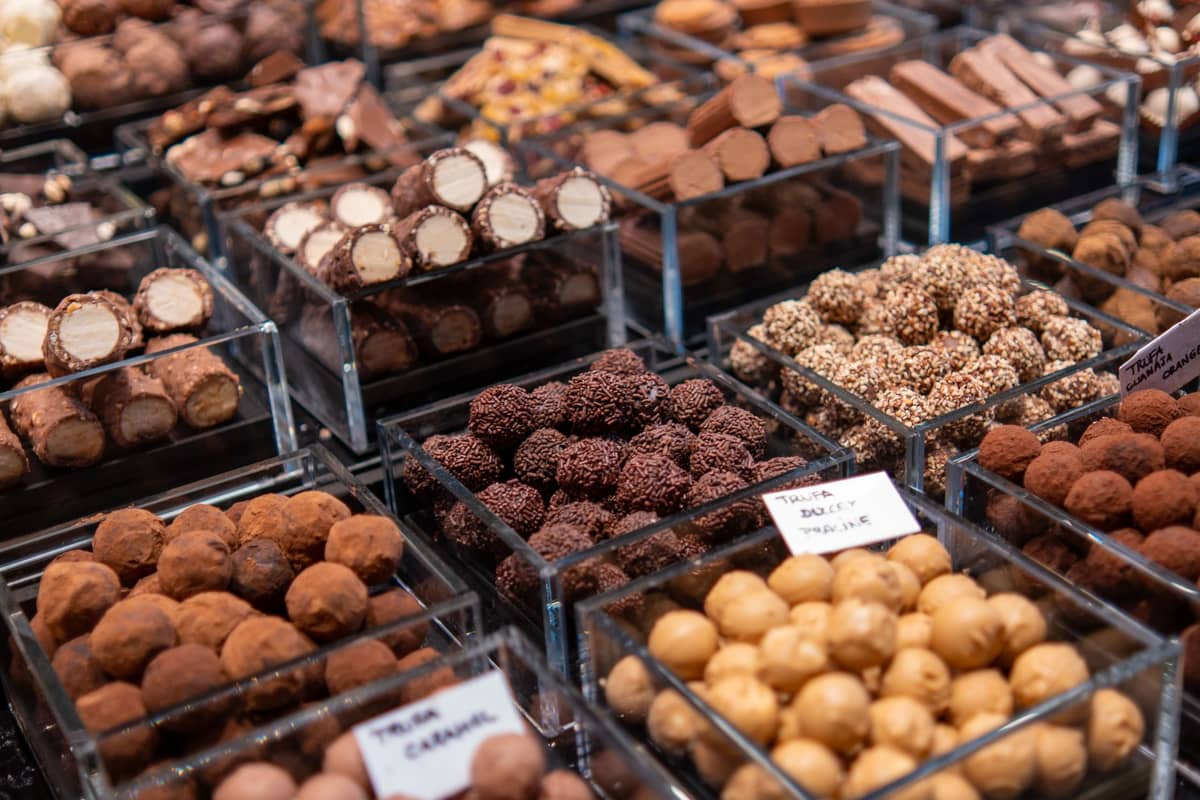
Bruges has more chocolate shops per square kilometre than almost any other city in Europe. The challenge is not finding chocolate, it is finding good chocolate at a fair price. The key distinction: in Bruges, quality chocolate means pralines sold by weight from a serious chocolatier, not branded tablet bars in tourist packaging. For a full breakdown of the chocolate scene, our Bruges chocolate guide covers the best shops and what to look for.
Pralines are filled Belgian chocolates — ganache, marzipan, caramel, or cream centres encased in tempered chocolate. A box of 10–12 pieces from a reputable shop now typically costs roughly €15–30 depending on the chocolatier and quality of ingredients. Shops on the Markt and near the Burg tend to charge a premium for the location. The better strategy is to explore the streets of the Sint-Anna quarter or the lanes off the Dijver, where smaller artisan producers operate with less foot traffic and more attention to the product.
If you want to understand the history behind Belgian chocolate production, Choco-Story Bruges is a dedicated chocolate museum that explains the full process from bean to praline. It is particularly useful context before you start shopping, so you can evaluate quality claims with more confidence.
✨ Pro tip
Ask chocolatiers whether their pralines are made on-site (ter plaatse gemaakt or fait maison). Many shops in central Bruges sell pralines made at a central production facility and shipped in — which is not necessarily bad, but it is different from fresh artisan product. Shops that make their own will usually tell you with some pride.
Mussels, Stew, and Flemish Classics
Beyond the street-food staples, Bruges has a strong tradition of Flemish cooking that visitors often overlook entirely in favour of waffles and chocolate. Two dishes deserve particular attention: moules-frites and waterzooi.
Moules-frites (mussels with fries) is the dish most associated with Belgian restaurant culture. Mussels are cooked in a large pot with white wine, shallots, celery, and cream or butter, then served with a cone of fries on the side. The quality and freshness vary dramatically by season. The traditional rule is to eat mussels only in months containing the letter 'r' in their name, which in practice means September through April, but modern refrigerated transport and Zeeland supply mean good mussels are usually available from July through April. This is not superstition: mussels spawn during summer and are at their best once they have recovered in the cooler months, with many specialists considering autumn (roughly September–November) the peak for moules-frites.
Waterzooi is a Flemish stew made with either chicken or fish in a cream-based broth with root vegetables. Chicken waterzooi (waterzooi de poulet) is the version most commonly found in Bruges restaurants. It is a filling, warming dish well suited to the city's cool, often drizzly climate. Expect to pay €20–30 for a main course portion in a mid-range restaurant. Stoemp (mashed potato with vegetables, often served alongside braised meat or sausage) is another Flemish staple worth ordering if you see it on a menu.
- Moules-frites: peak quality roughly September to November; order by the pot (usually 500g–1kg per person)
- Waterzooi: Flemish stew with chicken or fish; the city's most distinctive hot dish
- Stoemp: mashed root vegetables, served with sausage or braised meat
- Carbonade flamande: beef braised slowly in Belgian beer with onions and thyme, served with fries
- Bloedworst (blood sausage) with apple: a traditional Flemish combination found in brasseries
Beer in Bruges: What to Drink and Where
Beer is not a separate category in Bruges food culture — it is embedded in almost every dining experience. The two names most associated with Bruges brewing are Brugse Zot and Straffe Hendrik, both produced at De Halve Maan brewery, which operates from a 19th-century building in the city centre and offers brewery tours with tastings. For a detailed look at the local beer scene, see our Bruges beer guide.
Brugse Zot is a blonde ale with a light, fruity character — accessible and refreshing, well-suited to a first Belgian beer. Straffe Hendrik ('Strong Henrik') comes in a blond and a quadrupel (the quad is 11% ABV), and is a more complex, stronger option for experienced drinkers. Beyond these two, Bruges bars stock the full range of Belgian styles: Trappist ales, lambics, saisons, and gueuze. Ordering a random beer from a bar's full menu is usually a better experience than defaulting to generic lager.
ℹ️ Good to know
Belgian beer is served in the correct glass for each brand — this is taken seriously. Each beer has its own designated glass, and most bars stock them. If your Westvleteren arrives in the wrong glass, that is a red flag about the establishment's beer knowledge. Prices for a 33cl Belgian specialty beer in Bruges typically range from €4.00 to €7.00 depending on the bar and the beer's strength.
Food Tours and Practical Eating Advice
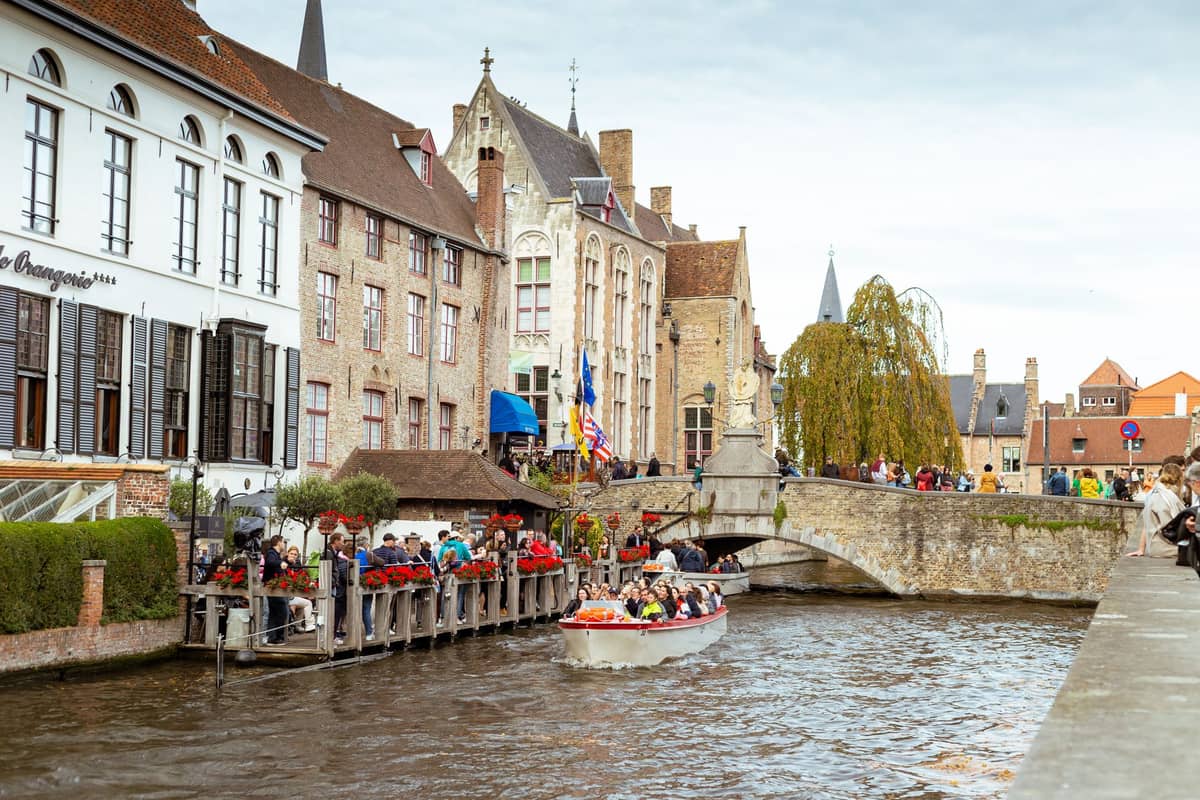
Bruges food tours are a practical option for first-time visitors who want to sample multiple categories in a structured way. Most tours start near the Markt and cover fries, waffles, chocolate, and beer in two to three hours. Bundled tasting walks are listed on booking platforms and typically cost €25-55 per person including tastings. The advantage is that a local guide will steer you toward better-value stops rather than the tourist-facing shops on the main squares.
For self-guided eating, the historic centre contains most of what you need within easy walking distance. Budget roughly €15-25 per person for a self-guided street food loop: a cone of fries (€3-4), a Liège waffle (€2-3), a beer at a brown café (€4-6), and a small box of pralines (€6-10). Restaurant meals in the centre run €20-40 per person for a main course and drink at a mid-range Flemish brasserie.
Tipping in Belgian restaurants is not obligatory — service is typically included in the bill. Rounding up or leaving a few euros for good service is appreciated but not expected. For more budget-conscious eating strategies and free options, see our guide to Bruges on a budget.
- Street food budget: €18–28 covers fries, a waffle, beer, and a small chocolate purchase
- Mid-range restaurant main course: €20–30 for Flemish classics like waterzooi or moules-frites
- Food tours: €25-55 per person including guided tastings of 4-6 items
- Avoid restaurants advertising 'tourist menus' at €12-15 — quality is almost always compromised
- Lunch is better value than dinner at most Bruges restaurants; many offer fixed-price lunch menus at €18–25
FAQ
What are the must-eat foods in Bruges?
The five essentials are Belgian fries from a frituur, a Liège waffle (plain, eaten warm), pralines from a reputable chocolatier, moules-frites during the September-April season, and at least one local Belgian beer — ideally Brugse Zot or Straffe Hendrik. These cover the full range of Bruges food culture without being arbitrary.
What is the difference between a Liège waffle and a Brussels waffle?
Liège waffles are dense, chewy, and made with pearl sugar that caramelises during cooking. They are sold plain from street stands and eaten by hand. Brussels waffles are lighter, crispier, and rectangular, typically served on a plate in a café with toppings like cream and fruit. For street eating in Bruges, the Liège style is the authentic choice.
When is the best time to eat mussels in Bruges?
The traditional mussel season runs September through April — the months that contain the letter 'r'. Mussels spawn during summer, which affects their texture and flavour, so autumn and winter visits are best for moules-frites. Summer menus will list mussels, but the quality is noticeably lower.
Are there good food tours in Bruges?
Yes. Guided food walks starting near the Markt typically cover fries, waffles, chocolate, and beer in two to three hours and cost €25-55 per person including tastings. They are a practical option for first visits because a local guide will take you to better stops than you would find by wandering. Check current listings on major booking platforms as operators and prices change.
Is the chocolate in Bruges actually good, or is it mostly tourist-oriented?
Both exist. The major chocolate shops on the Markt and Breidelstraat are heavily tourist-facing and charge premium prices partly for location. Genuinely excellent pralines are available in Bruges, but you need to look for chocolatiers who make their product on-site and operate slightly away from the main squares. Asking whether pralines are made in-house (ter plaatse gemaakt) is a quick quality test.