Bruges Lace: History, Shopping & Where to See It Made
Bruges has been synonymous with handmade bobbin lace for centuries. This guide covers the craft's history, where to watch it being made at the Kantcentrum, how to shop for authentic pieces, and what to skip.
Plan and book this trip
Tools from our partner Travelpayouts help you compare flights and hotels. If you book through them, we may earn a commission at no extra cost to you.
Flights
Hotels map
TL;DR
- Bruges lace means bobbin lace, a distinct hand technique using threads wound on small bobbins worked over a pillow.
- The Kantcentrum (Lace Centre) at Balstraat 16 is the single best place to see demonstrations and buy certified handmade pieces, open Monday to Saturday 09:30–17:00.
- Admission is €8 for adults; afternoon demonstrations (approx. 14:00–17:00) are included in the ticket.
- Most lace sold in souvenir shops around the Markt is machine-made imports, not Bruges bobbin lace. The label matters.
- Pair the visit with the Jerusalem Church and the Folklore Museum next door for a full afternoon in the Sint-Anna quarter.
What Makes Bruges Lace Different
When people talk about Bruges lace, they mean bobbin lace, known in Dutch as kantkloswerk. The technique involves interlacing dozens of threads, each wound onto a small weighted bobbin, over a stuffed pillow using pins to hold the pattern in place. It is painstaking, highly skilled work that bears no resemblance to the machine-made net sold in tourist shops across Belgium.
Bruges developed as a lace centre from at least the 16th century, when the city's textile trade connections and its pool of skilled female labour made it a natural hub. By the 17th and 18th centuries, Flemish bobbin lace was prized across European courts. The craft went into decline over time as machine-made lace undercut handmade production on price, but Bruges kept the tradition alive through institutions, schools, and dedicated lacemakers. Today, genuine hand-made Bruges bobbin lace is still produced here, though the number of active practitioners has shrunk considerably.
ℹ️ Good to know
Bobbin lace and needle lace are two entirely different crafts. Bruges is known specifically for bobbin lace (kantkloswerk). Needle lace, associated more with Brussels and Venetian traditions, uses a single threaded needle. If a shop describes its lace without specifying the technique, ask directly.
The Kantcentrum: What to Expect
The Kantcentrum (Lace Centre) at Balstraat 16 in the Sint-Anna quarter is Bruges's dedicated lace museum, education centre, and shop, all in one building. It sits a short walk from the Jerusalem Church and the Folklore Museum, making it a natural anchor for an afternoon in this quieter, eastern part of the historic centre.
The museum section traces the full history of bobbin lace in Bruges and beyond, with both historic and contemporary examples displayed in context. The collection is more thorough than most visitors expect: there are pieces spanning several centuries alongside explanations of how techniques and patterns evolved. Give it at least 45 minutes if you want to absorb the detail rather than just scan the cases.
The afternoon demonstrations, running approximately 14:00 to 17:00 Monday through Saturday, are the main draw for most visitors. A word of honest expectation-setting: these are not performances. Actual lacemakers sit and work at their own pace. You can watch over their shoulders, ask questions through any English-speaking staff on hand, and observe the bobbins moving in real time. It is a workshop atmosphere, not a theatre show. Some visitors expecting a scripted presentation leave underwhelmed; those who treat it as an opportunity to observe a rare living craft tend to find it quietly remarkable.
- Opening hours Monday to Saturday, 09:30–17:00. Closed Sundays and most public holidays. Open on 15 August (Assumption Day). Verify the official website before visiting during holiday periods.
- Admission €8 adults; €6 for ages 12–25 and seniors 65+; free for children under 12, Bruges residents, and Museumpass holders. A combination ticket with the adjacent Folklore Museum costs €13.
- Last entry Online tickets close at 16:00. Plan your arrival accordingly if booking ahead.
- Workshops and courses The Kantcentrum runs structured lacemaking courses for beginners and more experienced makers. These require advance booking via the official website and are separate from the standard museum ticket.
💡 Local tip
Arrive between 14:00 and 15:00 to catch the demonstrations at their most active, before lacemakers begin to pack up toward the end of the afternoon. Tuesday through Thursday tend to be quieter than weekends.
Buying Authentic Bruges Lace: What to Look For
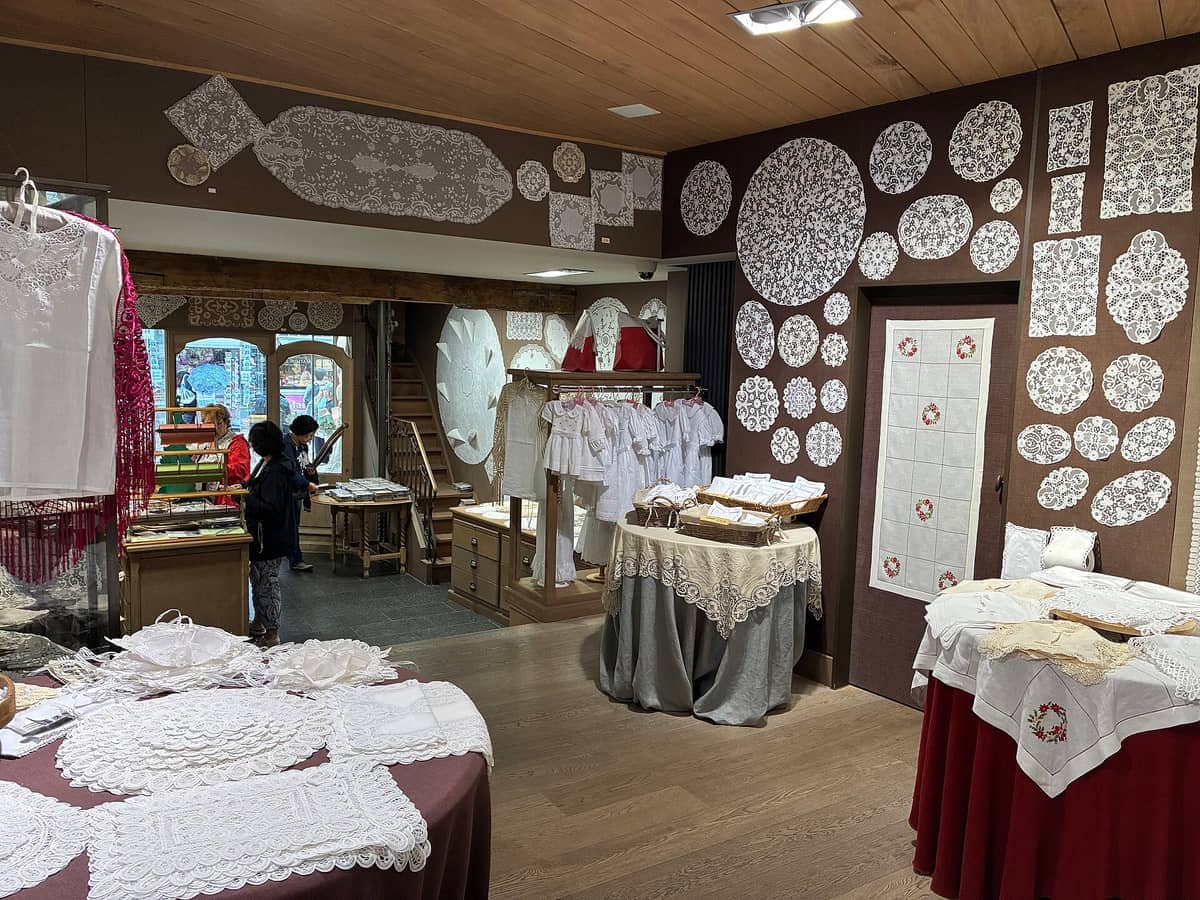
The single most important thing to understand about shopping for lace in Bruges: much of the lace items sold in souvenir shops along the Markt, Breidelstraat, and the main tourist corridors is machine-made, often imported from Asia or produced industrially in Belgium. It is not wrong to buy it, but you should know what you are paying for. A machine-made lace collar might cost around €5 to €15. A comparable piece made by hand in Bruges will cost several times more, and larger or more complex pieces can run into the hundreds of euros.
For verified handmade pieces, the Kantcentrum shop on Balstraat is the most reliable option in the city. Items listed as handmade Bruges lace in their shop are what they claim to be. The shop also sells lacemaking materials: bobbins, cushions, pattern books, and yarn, which makes it useful if you want to take up the craft yourself. The Bruges shopping guide covers wider retail options across the city if you want to compare.
- Ask whether the piece is handmade or machine-made. Reputable shops will answer directly.
- Genuine bobbin lace has a slightly irregular, organic quality when examined closely. Machine lace is perfectly uniform.
- Look for a certificate of authenticity or a written label stating 'handmade Bruges bobbin lace'.
- Price is a rough guide: a small handmade bookmark or brooch may start around €20–€40. Anything below €10 for a detailed piece is often machine-made.
- The Kantcentrum online shop allows purchases before or after your visit, with shipping available.
⚠️ What to skip
Some shops near the Markt display lacemakers in their windows as a marketing device but sell predominantly or exclusively machine-made stock. The presence of a lacemaker in a window does not guarantee that the lace being sold is handmade. Always check the label or ask.
The Sint-Anna Quarter: Context for the Visit
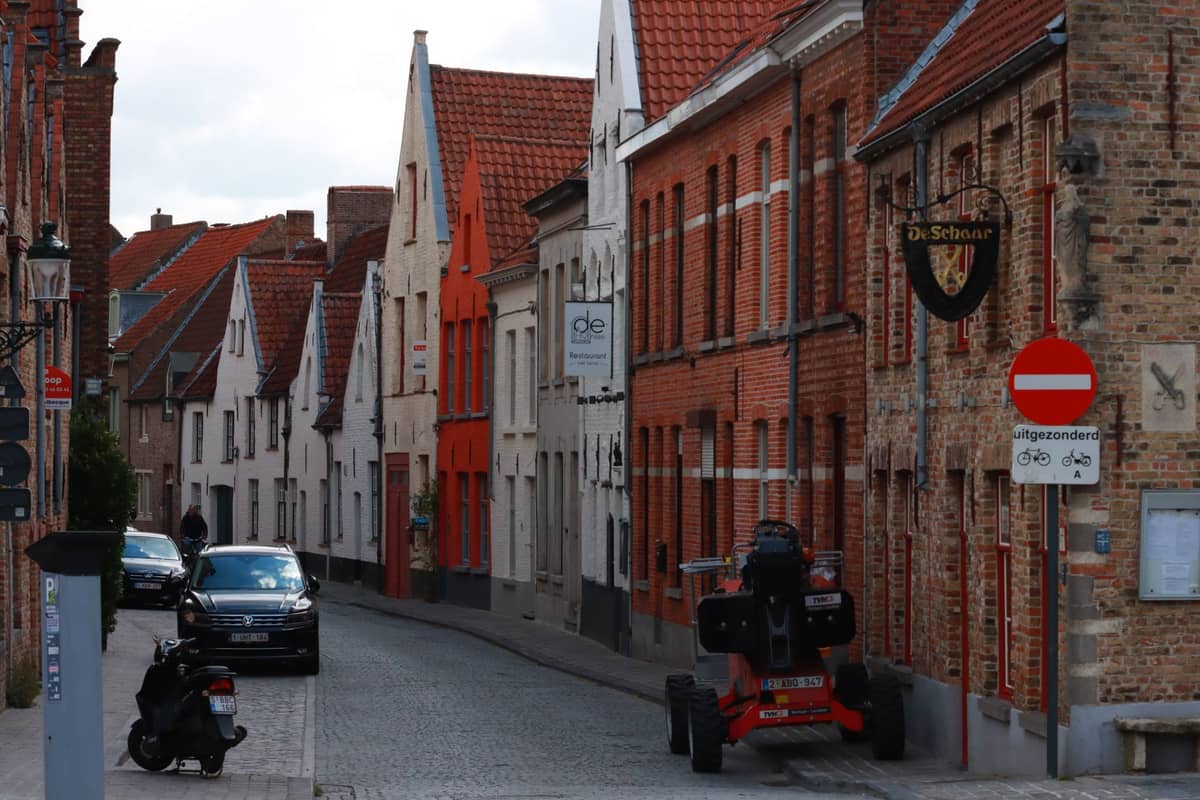
The Kantcentrum sits in the Sint-Anna quarter, one of the least crowded parts of the historic centre and the most rewarding for a slow walk. This is where Bruges feels most like a functioning neighbourhood rather than a set piece for tourists. The streets around Balstraat, Carmersstraat, and Sint-Annaplein retain a domestic scale that the central squares have lost to the weight of visitor traffic.
The Jerusalem Church on Peperstraat is a five-minute walk from the Kantcentrum and worth the detour: it is one of the most unusual Gothic buildings in Belgium, built by the Adornes family in the 15th century as a private chapel modelled on the Church of the Holy Sepulchre in Jerusalem. Combine it with the Folklore Museum (included in the Kantcentrum combination ticket at €13) and you have a half-day itinerary with genuine depth. The Folklore Museum is in a row of restored almshouses and covers everyday Flemish life from the 17th century onward.
If you are building a fuller day around the area, the windmills on the Kruisvest ramparts are a 10-minute walk north and offer one of the few elevated viewpoints over the flat Flemish landscape. The Bruges walking tour guide includes a route through Sint-Anna if you want a structured approach.
Lace in the Broader Context of Bruges Craft Culture
Lace is the oldest surviving artisan craft with a dedicated institution in Bruges, but it sits within a broader culture of traditional craftsmanship that also includes chocolate, beer, and medieval architecture. If you are interested in the city's historic industries more generally, the guide to Flemish art in Bruges provides useful context for understanding how Bruges's medieval wealth funded the arts and crafts that define its reputation today.
The Gruuthuuse Museum, a short walk away near the Dijver canal, houses one of the strongest collections of decorative arts in Belgium, including textiles and historic household objects that show the material culture lace belonged to. The Gruuthuuse Museum was extensively renovated and reopened in 2019; its permanent collection is among the better-curated in the city.
For visitors interested in the full range of what Bruges offers beyond lace, the complete guide to things to do in Bruges covers museums, canal tours, architecture, and day trips in detail.
Practical Tips Before You Go
The Kantcentrum is about a 20-minute walk from the Markt, or roughly 12 minutes from the Bruges railway station. The nearest bus stop is Brugge Molenbrug. If you are arriving by train from Brussels, the journey takes approximately 1 hour, with frequent direct services on the NMBS/SNCB network.
Bruges is compact and best explored on foot or by bicycle. The cycling in Bruges guide covers rental options and routes if you prefer two wheels. For wider practical planning, the guide to getting to and around Bruges covers transport from Brussels Airport (BRU, approximately 100 km away) and Ostend-Bruges Airport (OST, approximately 30 km away) in detail.
- Book Kantcentrum workshops well in advance, especially for summer visits. Weekend slots fill quickly.
- Photography is generally permitted inside the museum but ask before photographing individual lacemakers.
- The combination ticket with the Folklore Museum (€13) is good value if you plan to visit both, which are genuinely complementary.
- Bring cash as a backup: most shops in Sint-Anna accept cards, but smaller workshops may prefer cash.
- Check the Kantcentrum website for current hours before visiting, especially around Belgian public holidays in May and November when closures can fall unexpectedly.
FAQ
Is Bruges lace genuinely handmade or mostly machine-made?
Both exist in Bruges, and the distinction matters. Handmade Bruges bobbin lace is still produced by skilled artisans and sold at the Kantcentrum shop, as well as a small number of specialist retailers. The vast majority of lace sold in general souvenir shops around the Markt and main tourist streets is machine-made, often imported. Always check the label or ask the seller directly.
Can you watch lace being made in Bruges?
Yes. The Kantcentrum (Lace Centre) at Balstraat 16 hosts working demonstrations by real lacemakers every afternoon from approximately 14:00 to 17:00, Monday through Saturday. Entry is included in the museum ticket (€8 for adults). These are not scripted performances but working sessions: lacemakers work at their own pace while visitors observe.
How much does handmade Bruges lace cost?
Prices vary considerably by size and complexity. Small items such as bookmarks, brooches, or decorative motifs may start around €20–€40 for genuine handmade pieces. Larger items such as collars, table runners, or framed panels can cost €100 or more. Machine-made pieces cost a fraction of this, which is often the first indicator of what you are actually buying.
Is it worth visiting the Kantcentrum if you have no interest in buying lace?
For most visitors, yes. The museum provides a genuinely informative account of how lace was produced, traded, and worn across several centuries, and the afternoon demonstrations offer insight into a rare and disappearing craft. It pairs well with the Jerusalem Church and Folklore Museum nearby. Allow enough time to enjoy the full circuit.
Can beginners learn to make bobbin lace in Bruges?
The Kantcentrum offers beginner lacemaking workshops and longer courses, which must be booked in advance via their official website. These are popular, particularly in summer. The shop also sells starter kits with bobbins, a cushion, and basic pattern books for those who want to continue the craft at home.