Gruuthuse Museum: Inside Bruges' Most Personal Medieval Palace
The Gruuthuse Museum occupies a late medieval city palace on the Dijver canal, tracing Bruges' history from the Middle Ages to the 19th century through furniture, tapestries, weapons, and devotional art. It is one of the few places in Bruges where the building itself is as significant as what it contains.
Quick Facts
- Location
- Dijver 17C, 8000 Brugge — beside the Church of Our Lady
- Getting There
- Bus stop 'Brugge O.L.V. Kerk' (stop 502818); 15–20 min walk from Bruges main train station
- Time Needed
- 1.5 to 2.5 hours
- Cost
- Paid entry; part of the Musea Brugge ticket system — check current prices at museabrugge.be
- Best for
- History lovers, architecture enthusiasts, slow travelers, rainy-day visits
- Official website
- www.museabrugge.be/en/visit/locations/gruuthusemuseum
What the Gruuthuse Museum Actually Is
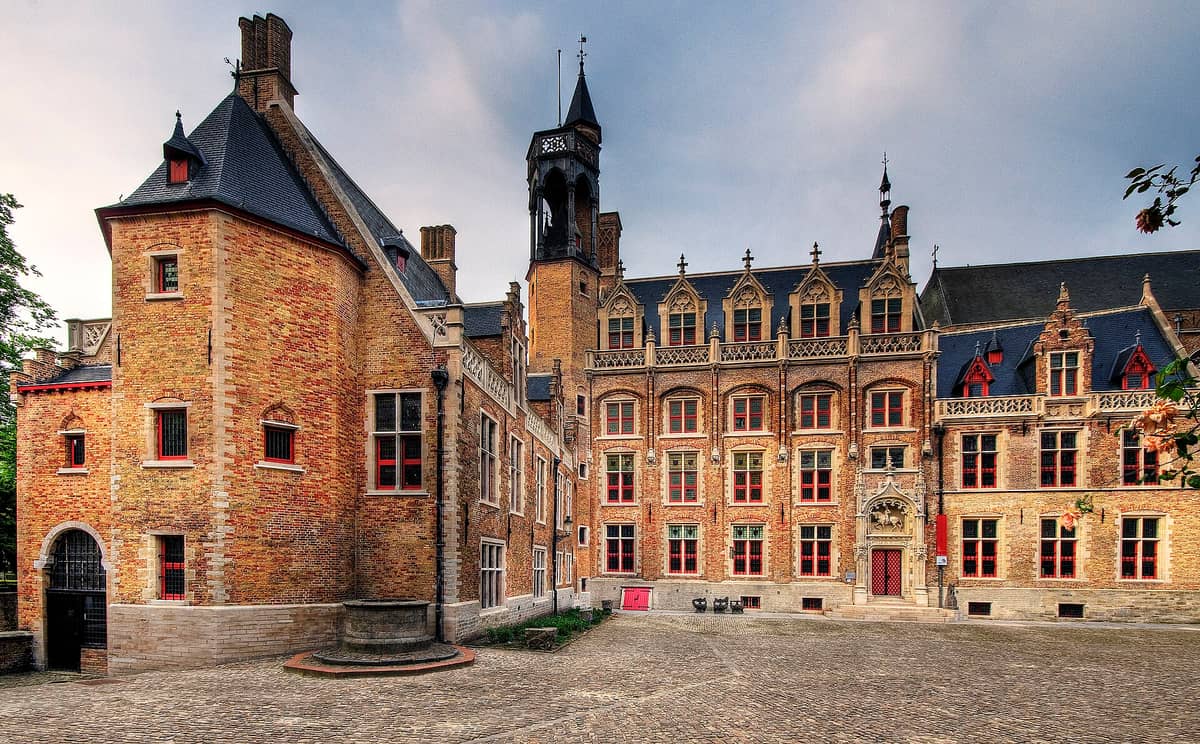
The Gruuthusemuseum is not a purpose-built museum. It is a late medieval city palace that was converted to hold a collection — and the distinction matters enormously. When you walk through its rooms, you are moving through the domestic spaces of one of Bruges' most powerful noble families, the lords of Gruuthuse, who controlled the monopoly on gruut, the dried herb mixture used to flavour ale before hops took over in the late Middle Ages. That commercial and political power is written into the stone and timber of every floor.
The building overlooks the Dijver canal in the UNESCO-listed historic centre of Bruges (Dutch: Brugge), standing directly beside the Church of Our Lady. Together they form one of the most photographed building pairs in the city. Inside, the museum covers roughly 500 years of Bruges' urban history, from the late Middle Ages through to the 19th century, using furniture, tapestries, weapons, lace, ceramics, musical instruments, devotional objects, and reconstructed interiors to trace how the city lived and changed.
ℹ️ Good to know
Opening hours: Tuesday to Sunday, 09:30–17:00. Closed every Monday, but open on Easter Monday and Whit Monday. Confirm current ticket prices at museabrugge.be before your visit, as prices are managed centrally and updated periodically.
The Building: A Palace That Survived by Changing Purpose
The palace dates from the late 15th century and was built in the Gothic style typical of wealthy Bruges merchants and nobility of that era. Its facade along the Dijver is asymmetric and layered, with stone tracery, stepped gables, and narrow windows that catch the canal light at different angles depending on the time of day. In morning light, the sandstone takes on a warm amber tone. By afternoon, the facades fall into the shadow cast by the Church of Our Lady next door, and the building becomes more austere.
The most famous architectural detail is a private oratory, a small chapel gallery that connects directly to the interior of the Church of Our Lady, allowing the lords of Gruuthuse to attend mass without leaving their palace. This passageway is still visible from inside the church and represents one of the clearest surviving examples of how medieval wealth translated into architectural privilege in Bruges.
For context on the broader architectural tradition the palace belongs to, the guide to Bruges Gothic architecture explains how the city's merchant and noble class expressed status through building during the 14th and 15th centuries.
Tickets & tours
Hand-picked options from our booking partner. Prices are indicative; availability and final rates are confirmed when you complete your booking.
Historium Bruges entrance tickets
From 19 €Instant confirmationFree cancellationBruges food tour with full meal
From 139 €Instant confirmationFree cancellationBruges walking audio guided tour
From 9 €Instant confirmationBruges Family Walking Tour
From 259 €Instant confirmationFree cancellation
Moving Through the Collection
The museum is spread across three floors with no elevator. The layout follows the original room plan of the palace, which means ceilings vary in height, corridors are narrow, and you occasionally step up or down between spaces without warning. This is not a complaint — it gives the visit an intimacy that white-cube museum design cannot replicate — but it is worth knowing before you arrive.
The ground floor tends to anchor visitors with larger objects: furniture, carved wooden panelling, and ironwork. Upper floors hold tapestries and smaller devotional items, including a series of carved alabaster panels and a remarkable collection of Bruges lace from multiple centuries. The lace collection in particular rewards a slow look; the patterns change significantly across periods, and the progression from simple needle lace to the dense bobbin work of the 17th and 18th centuries is visible if you take the time to compare pieces.
Bruges has a long tradition of lace-making that extended well beyond the aristocracy. The Kantcentrum (Lace Centre) in the Sint-Anna quarter offers live demonstrations if the topic interests you.
One of the more quietly affecting rooms contains personal devotional objects: small portable altarpieces, prayer books, and household shrines. These were the religious tools of daily private life, not the grand public display you find in the city's churches, and they make the faith of medieval Bruges feel less abstract than a cathedral does.
How the Experience Changes by Time of Day
Arriving when the museum opens at 09:30 is the most practical choice. The rooms are quieter, and the lower-floor spaces that receive natural light from the canal-facing windows are particularly good in the first two hours. By midday, group tours arrive and the narrower corridors become congested. If you are visiting during July or August, this effect is pronounced.
Late afternoon visits (after 15:00) can also work well. Tour groups have typically moved on, but bear in mind the museum closes at 17:00, so you need to be selective about which rooms you prioritise. The upper floors, which require more time to absorb, are better saved for a morning visit when you have the full day ahead.
💡 Local tip
Photography is generally permitted without flash in most areas of the museum. The oratory connecting to the Church of Our Lady is one of the most visually striking spots — try to photograph it from the interior side where the tracery frames the chapel space.
The Neighbourhood Setting: Dijver Canal Quarter
The museum sits in the Dijver canal quarter, the stretch of Bruges' historic centre that runs along the southern bank of the Dijver canal. This is also the area that draws the most visitors to Bruges in a single concentrated strip: the Rozenhoedkaai viewpoint is a short walk north, and the Groeningemuseum, which holds the city's collection of Flemish Primitive paintings, is directly adjacent.
If the Gruuthuse Museum's historical objects leave you wanting context for the paintings produced in Bruges during the same period, the Groeningemuseum is effectively next door and can be visited on the same day without backtracking.
The Church of Our Lady (Onze-Lieve-Vrouwekerk) shares a wall with the Gruuthuse palace. Its tower is the tallest in Bruges at 115.5 metres, and the interior contains Michelangelo's Madonna and Child, one of the few works by Michelangelo to leave Italy during his lifetime. Both sites can be covered in a half-day without feeling rushed.
Practical Intelligence
Getting There
The most direct approach on foot from Bruges main train station takes about 15 to 20 minutes, passing through the Markt and south along the canal. The bus stop 'Brugge O.L.V. Kerk' (stop 502818) serves De Lijn routes and drops you within a two-minute walk of the entrance at Dijver 17C.
For full transit options from Brussels or Ghent, the guide to getting to and around Bruges covers rail connections, bus routes, and walking distances from the station to key attractions.
Accessibility
This is a three-storey historic monument with many stairs and small level differences throughout. The museum's own guidance states it is less suitable for visitors with physical impairments and is not accessible for wheelchair users. Visually impaired visitors are advised to come with an accompanying person. A comfort strip has been laid on the cobbled approach, a tactile site map is available for orientation, and lightweight folding chairs and walking sticks can be borrowed free of charge at the ticket desk.
⚠️ What to skip
Wheelchair users and visitors with reduced mobility should note that the building cannot be made fully accessible due to its historic monument status. The Groeningemuseum next door has better accessibility if you are planning an alternative.
What to Wear and Bring
Wear comfortable flat shoes. The floors throughout the palace are original stone, tile, or wood, and some sections are uneven. There is no strict dress code, but the museum is cool inside even in summer, so a light layer is useful. Belgium's climate brings rain in most months, and the Dijver cobblestones get slippery when wet, which is worth bearing in mind on the approach from the canal side.
Who Should Think Twice
Visitors with only a few hours in Bruges and primarily interested in paintings should probably prioritise the Groeningemuseum over the Gruuthuse Museum, as the Flemish Primitive collection is internationally significant and takes time to see properly. The Gruuthuse collection is broader and more domestic in character; it rewards patience and curiosity about how people actually lived, rather than the study of individual masterworks.
Families with very young children may find the three-floor layout and the absence of interactive elements less engaging than other Bruges options. The Historium on the Markt is purpose-built for immersive storytelling and may suit younger visitors better.
Insider Tips
- The oratory gallery connecting the palace to the Church of Our Lady is easy to miss if you follow the standard room sequence quickly. Ask at the ticket desk which floor it is on and make it a specific stop rather than hoping to stumble across it.
- The Musea Brugge combined ticket covers multiple city museums including the Groeningemuseum and Memling in Sint-Jan. If you are planning to visit more than one museum, check whether a combination ticket saves money before buying individual entry.
- The exterior of the palace, including the canal-facing facade, is freely visible from the Dijver path and is worth examining before you enter. The best elevated view of the palace roofline is from the bridge near the Arentshof garden to the south.
- The cobbled square in front of the museum is heavily trafficked by canal boat tours passing on the Dijver. Morning visits before 10:30 are quieter, and the canal light at that hour is cleaner for photography of the exterior.
- The museum shop stocks several detailed catalogues on Flemish decorative arts, lace history, and Bruges domestic life. These are harder to find elsewhere and are worth browsing even if you do not buy.
Who Is Gruuthuse Museum For?
- Travelers interested in medieval domestic life and applied arts rather than fine art paintings
- Architecture enthusiasts who want to move through an intact late Gothic noble residence
- Rainy-day visitors looking for a substantial indoor experience with 1.5 to 2.5 hours of content
- Visitors combining a half-day in the Dijver quarter with the Groeningemuseum and the Church of Our Lady
- Those with a specific interest in Flemish lace, tapestries, or furniture across periods
Nearby Attractions
Other things to see while in Dijver Canal Quarter:
- Hof Arents
Hof Arents is a free public park in the heart of Bruges, set along the Dijver near the Church of Our Lady and the Gruuthuse domain. Once part of the historic Gruuthuse estate, it offers canal views and a quiet break in the historic centre.
- Boniface Bridge (Bonifaciusbrug)
The Bonifaciusbrug is a small pedestrian bridge over a canal in the heart of Bruges, tucked behind the Church of Our Lady and near the Gruuthusemuseum. Built in 1910 but styled to look centuries older, it offers one of the city's most reproduced canal views. Entry is free and the surrounding garden is open daily.
- Groeninge Museum
The Groeningemuseum on Dijver holds one of the most concentrated collections of Flemish Primitive painting anywhere in the world, including landmark works by Jan van Eyck and Hans Memling. Compact enough to absorb in two hours, serious enough to reward repeat visits, it anchors Bruges' reputation as a city of medieval artistic genius.
- Memling in Sint-Jan
Housed inside one of Europe's oldest surviving hospital complexes, Memling in Sint-Jan holds five major works by Hans Memling, the Flemish master who defined 15th-century devotional painting. The setting alone, a working medieval ward turned museum, makes this unlike any conventional art gallery in Bruges.