Gothic Architecture in Bruges: A Complete Visual Guide
Bruges preserves some of the finest Gothic architecture in northern Europe, from the soaring Belfry on the Markt to the ornate City Hall on Burg Square. This guide covers every major site, explains what makes each one architecturally significant, and gives you the practical details to plan a focused visit.
Plan and book this trip
Tools from our partner Travelpayouts help you compare flights and hotels. If you book through them, we may earn a commission at no extra cost to you.
Flights
Hotels map
TL;DR
- Bruges contains an exceptionally intact concentration of Flemish Gothic civic and religious architecture, much of it UNESCO-listed.
- The five essential sites are the Belfry (Belfort), the Stadhuis (City Hall), the Basilica of the Holy Blood, the Church of Our Lady, and Sint-Salvatorskathedraal.
- Entry to the Basilica and Sint-Salvatorskathedraal is free; the Belfry, City Hall Gothic Hall, and Church of Our Lady museum section are ticketed (roughly €10–€14 for adults, subject to change).
- Peak season (June–August) brings significant crowds to the Belfry and Burg Square; book timed-entry tickets online via Musea Brugge to avoid long queues.
- Not every building on Burg Square is purely Gothic: the Basilica of the Holy Blood combines a Romanesque lower chapel with a Gothic upper chapel, and the square itself blends Gothic, Baroque, and Neo-Gothic styles.
Why Bruges Is a Gothic Architecture Benchmark
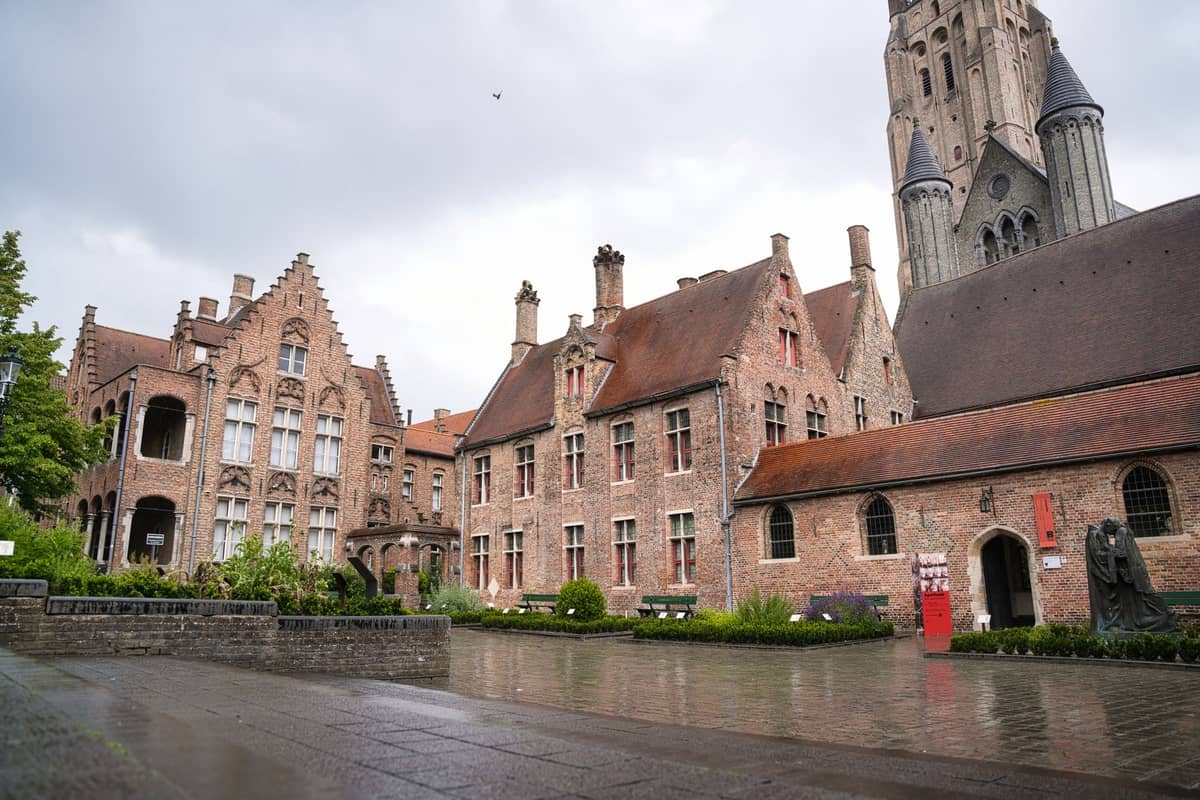
Gothic architecture flourished in Bruges between roughly the 13th and 15th centuries, fuelled by the city's status as one of the wealthiest trading centres in medieval northern Europe. Unlike cities that rebuilt heavily during the industrial era, Bruges experienced a long economic stagnation after the silting of the Zwin estuary cut off its sea access. That slowdown, often called a stroke of luck by architectural historians, meant the medieval fabric was largely left intact. The result is a city where Gothic civic and religious structures still dominate the skyline, not as isolated monuments but as a continuous urban environment.
The historic centre of Bruges was inscribed as a UNESCO World Heritage Site in 2000, and the Flemish belfries — including the Belfort — carry a separate UNESCO listing. If you want context before exploring on foot, the Historium Bruges on the Markt uses immersive storytelling to recreate the medieval city, which gives useful visual grounding before you walk the streets. For a broader itinerary that incorporates Gothic sites efficiently, see our Bruges walking tour guide.
ℹ️ Good to know
Bruges is in the Flemish Region of Belgium, where the official language is Dutch (the local dialect is West Flemish). Street signs, museum labels, and official building names are in Dutch — so 'Onze-Lieve-Vrouwekerk' is what you'll see on maps, not 'Church of Our Lady'. This guide uses both forms to help with navigation.
The Belfry (Belfort van Brugge): The City's Gothic Skyline Anchor
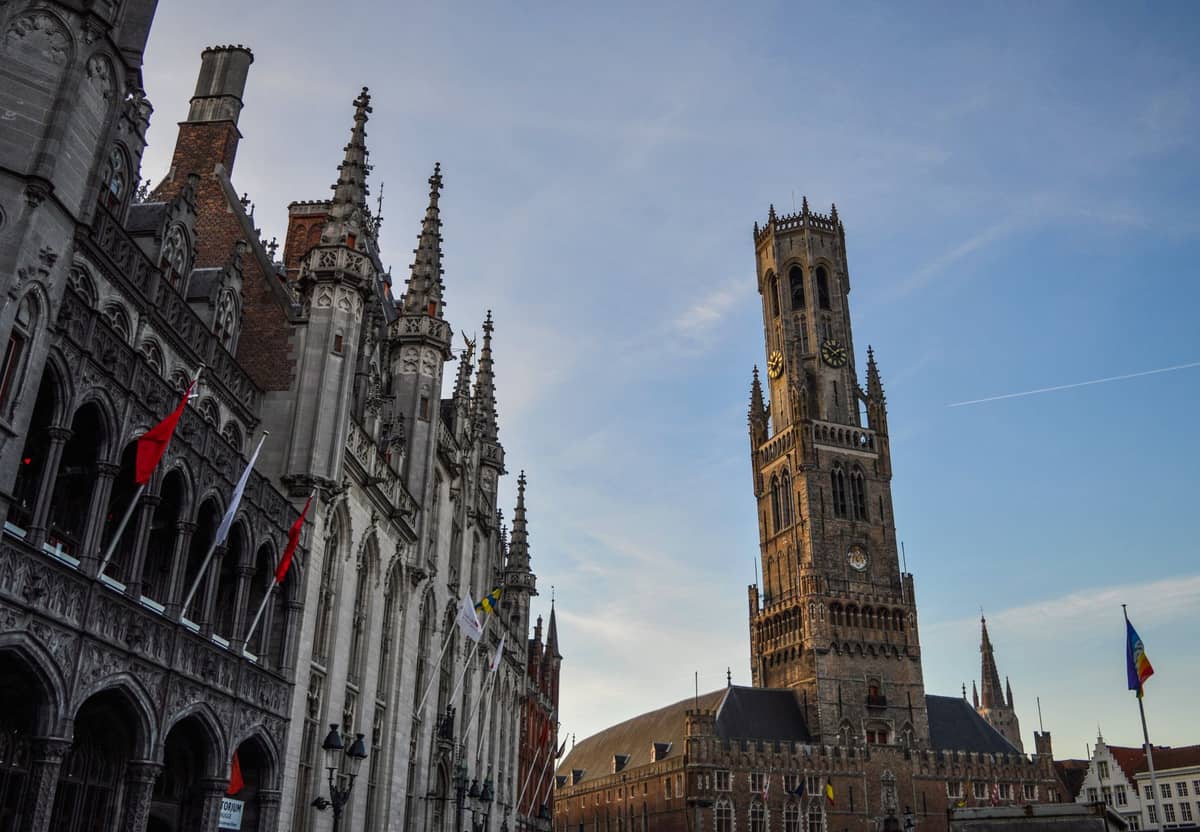
The Belfort rises 83 metres above the Markt and has anchored the city's silhouette since the 13th century, though it was modified and expanded through the 15th century. Architecturally, it is a civic belfry rather than a religious tower, originally built to store the city's charters and treasury. The octagonal upper section, added in the 15th century, is the most overtly Gothic portion, with its pointed corner turrets and decorative stonework. The belfry houses a 47-bell carillon that still plays on a regular schedule.
Visiting the interior means climbing 366 steps, passing the treasury room and the carillon drum mechanism before reaching the viewing platform. The climb is not suitable for visitors with mobility limitations, and the staircase is narrow in sections. Tickets are managed by Musea Brugge and can be purchased online or at on-site machines. Hours vary seasonally — typically around 09:00 or 10:00 to 18:00 or 20:00 — so check the Musea Brugge website before you go. Adult admission is currently around €16 on weekends and slightly lower on weekdays, though prices are subject to change.
💡 Local tip
The best time to photograph the Belfry from the Markt is early morning (before 08:30 in summer), when the square is clear of market stalls, horse carriages, and tour groups. The west face catches good morning light. By mid-morning in peak season, the Markt is packed.
Burg Square: Gothic Civic Power in Stone
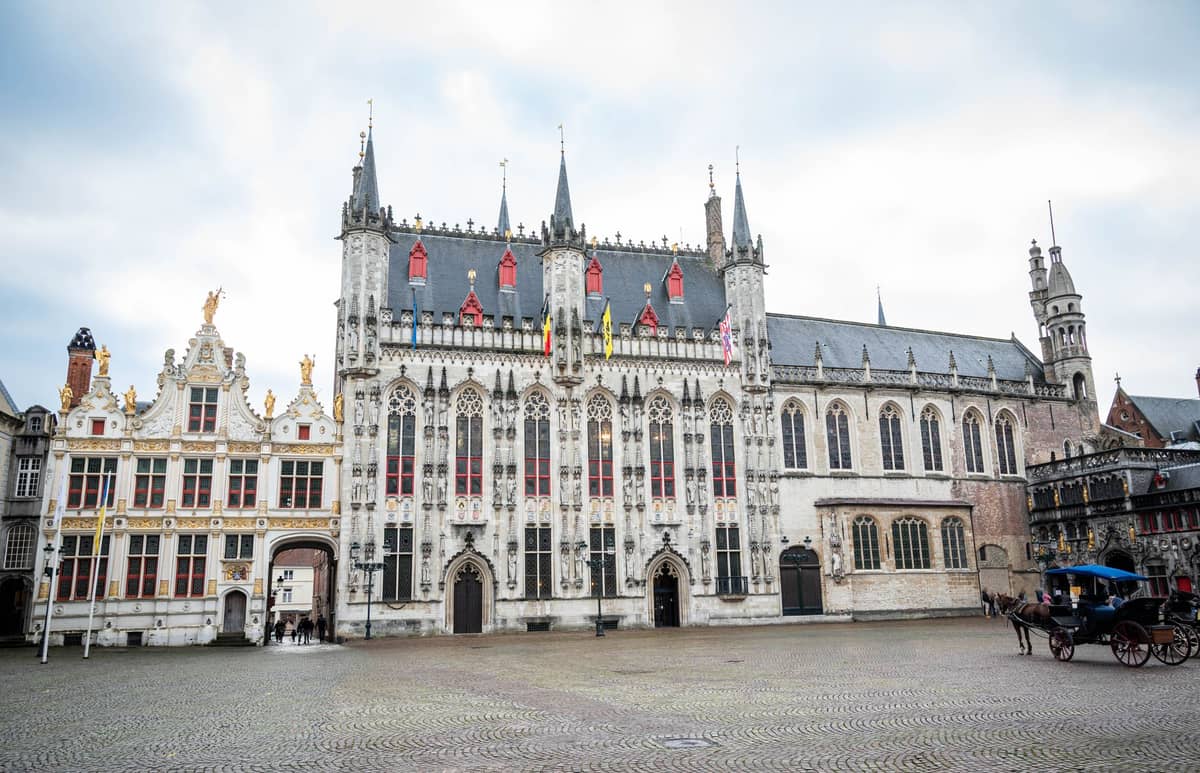
A five-minute walk from the Markt, Burg Square is the political and architectural heart of medieval Bruges. What makes it extraordinary is the density of significant buildings around a single open space. But it is not a unified Gothic set piece: the square combines Romanesque, Gothic, Renaissance, Baroque, and Neo-Gothic structures built across several centuries. Understanding this layering is what separates an informed visit from a superficial one.
- Stadhuis (City Hall) Dating from the 1370s–1420s, this is one of the oldest Gothic city halls in the Low Countries. The facade features elaborate niched statuary and pointed arches. Inside, the Gothic Hall (Gotische Zaal) has a polychrome vaulted ceiling restored in the 19th century. Ticketed via Musea Brugge; combined tickets with other sites are available.
- Basilica of the Holy Blood (Basiliek van het Heilig Bloed) The lower Romanesque chapel of St Basil dates from the 12th century; the Gothic upper chapel was rebuilt in the 15th and 16th centuries. The upper chapel houses a relic of the Holy Blood venerated daily. Free entry to the basilica; a small treasury museum is ticketed. Always verify current relic veneration schedules on the official Holy Blood website.
- Proosdij (Provost's House) A Baroque building from 1622, which stands in contrast to the Gothic structures around it. Worth noticing precisely because it breaks the Gothic uniformity many visitors assume the square has.
- Landhuis van het Brugse Vrije A Renaissance building housing the Brugse Vrije museum, notable for its carved Renaissance fireplace inside. Neo-Gothic additions were made in the 19th century.
⚠️ What to skip
A common mistake: many visitors assume the Basilica of the Holy Blood is a purely Gothic structure. The lower St Basil's Chapel is Romanesque — one of the best-preserved Romanesque interiors in Flanders. Go down the steps to see it, not just the Gothic upper chapel.
The Church of Our Lady (Onze-Lieve-Vrouwekerk): Gothic Height and Flemish Art
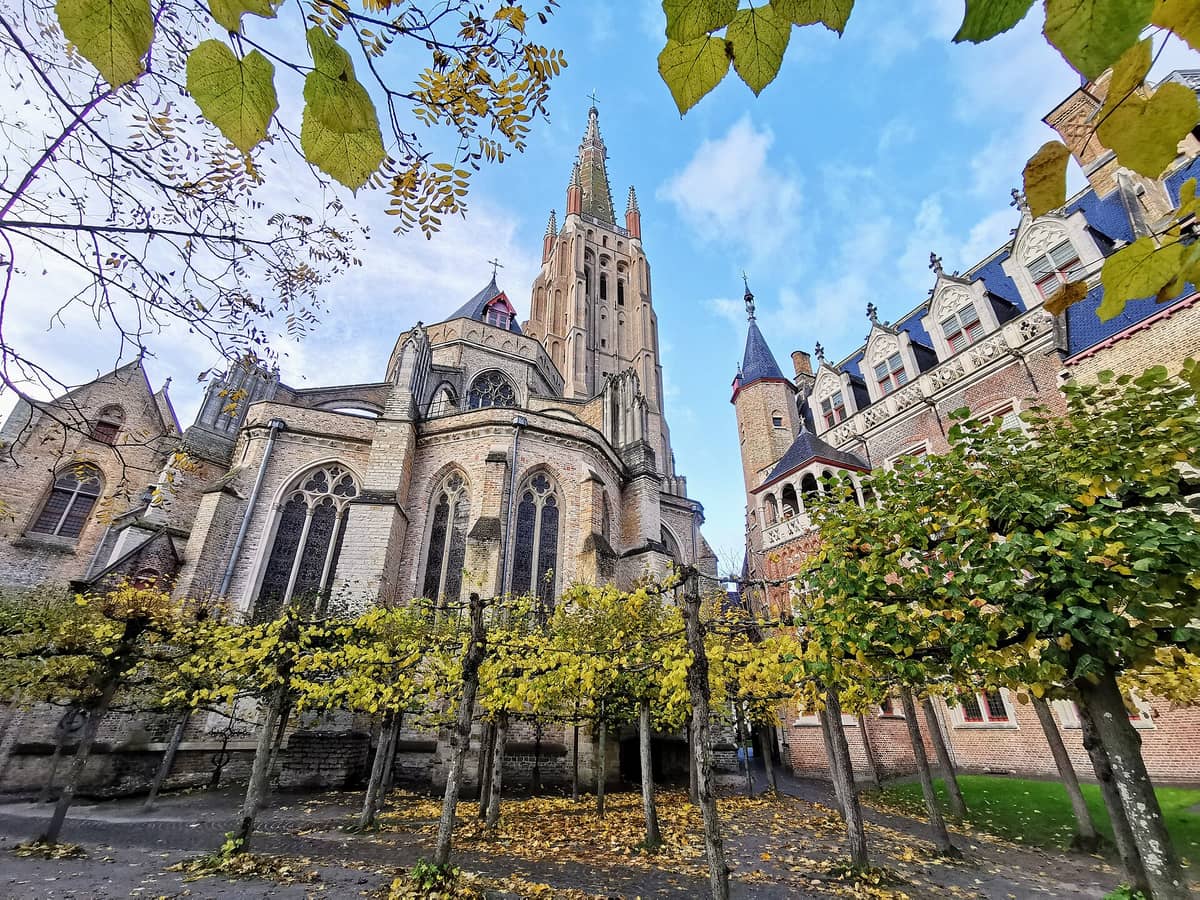
The Onze-Lieve-Vrouwekerk has the tallest spire in Bruges at 115.6 metres, making it one of the tallest brick towers in the world. Construction stretched from the 13th to the 15th century, and the result is a textbook example of Brabantine Gothic in brick: large nave, flying buttresses, and an interior that balances Gothic verticality with the accumulation of art and funerary monuments typical of prosperous Flemish churches.
The church is both an active place of worship and a museum. Entering the church itself for a brief visit is generally free, but the museum section — which contains Michelangelo's white marble Madonna and Child (1501–1504), one of the very few works by Michelangelo to leave Italy during his lifetime, and the painted tombs of Charles the Bold and Mary of Burgundy — is ticketed. Adult admission to the museum section is currently around €10, with reduced rates for ages 18–25 (around €9) and ages 13–17 (around €5); under-13s enter free. Hours are typically Monday to Saturday 09:30–17:00 and Sunday 13:30–17:00, though these change on public holidays and in the off-season. Always confirm on the Musea Brugge website before visiting.
Sint-Salvatorskathedraal and Further Gothic Churches
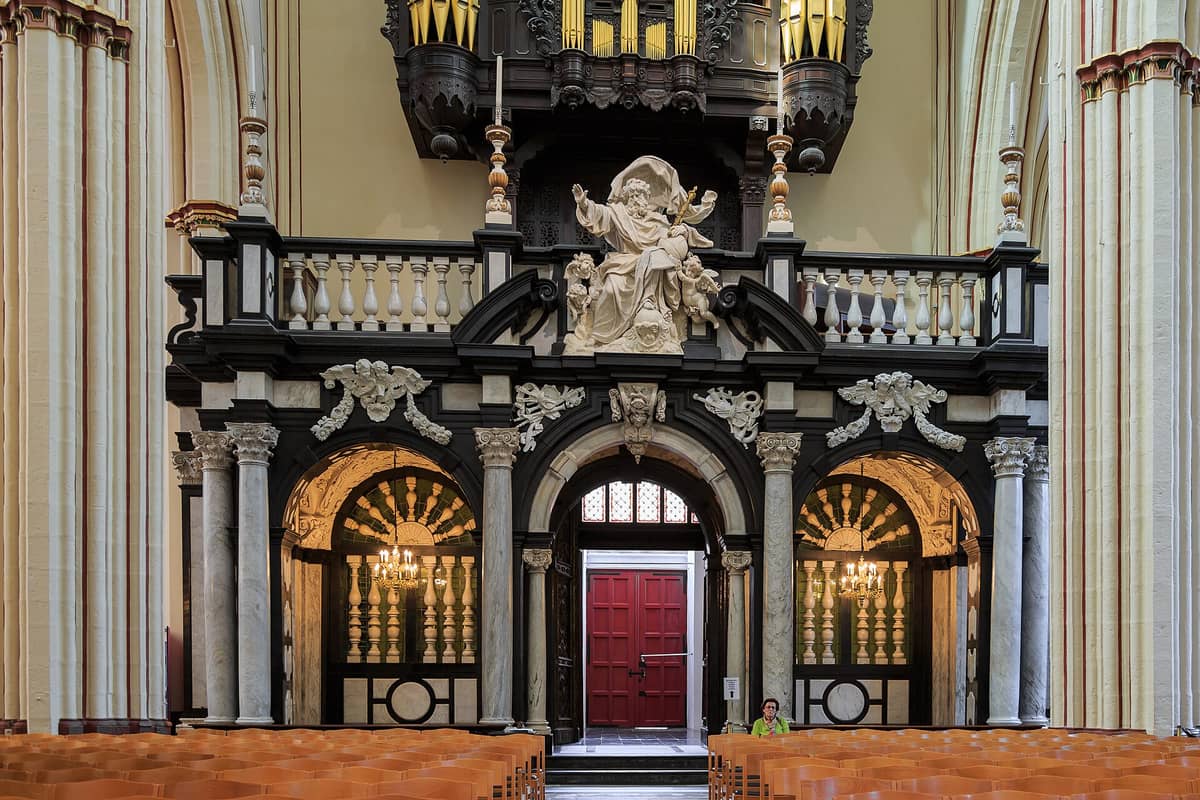
Sint-Salvatorskathedraal (Saint Saviour's Cathedral) is Bruges' oldest parish church, with origins in the 9th or 10th century, though the current structure is predominantly Gothic from the 13th to 15th centuries. The tower is a 19th-century Neo-Romanesque addition, which jars slightly against the Gothic nave — worth knowing so it doesn't confuse your reading of the building. Access to the cathedral itself is free; the treasury holds Flemish tapestries and medieval paintings and is separately ticketed. Opening hours are currently around 14:00–17:00 on weekdays and Sundays, with Saturday often closed to visitors; check the official Sint-Salvatorskathedraal website for the latest schedules. For a broader look at Flemish art connected to these Gothic churches, our guide to Flemish art in Bruges covers the major collections.
Beyond the headline churches, Bruges has several Gothic religious buildings that most visitors overlook. The Jeruzalemkerk in the Sint-Anna quarter is a private 15th-century chapel built by the Adornes family, modelled on the Church of the Holy Sepulchre in Jerusalem. It is small, ticketed, and far less crowded than the major churches. The Sint-Jakobskerk near the Markt contains an exceptional collection of Flemish paintings and funerary monuments, and general access is free. These two churches reward visitors willing to spend a morning in the Sint-Anna quarter away from the central tourist flow.
- Sint-Salvatorskathedraal: free entry to the cathedral; treasury ticketed. Principal Gothic cathedral in Bruges.
- Jeruzalemkerk: ticketed, small, and architecturally unique. Based on the Church of the Holy Sepulchre. Far fewer crowds than the Onze-Lieve-Vrouwekerk.
- Sint-Jakobskerk: free access; rich interior with Flemish paintings and carved tombs. Often bypassed by visitors heading directly to the Markt.
- Onze-Lieve-Vrouwekerk: museum section ticketed (around €10 adults); home to Michelangelo's Madonna and Child and Burgundian ducal tombs.
- Stadhuis Gothic Hall: ticketed via Musea Brugge; finest civic Gothic interior in the city, with a polychrome vault.
Practical Planning: Seasons, Crowds, and Tickets
Bruges has a temperate maritime climate with average summer temperatures of 17–22°C and winters around 2–7°C. For Gothic architecture specifically, the season matters less for the buildings than for the experience around them. June through August is when queues at the Belfry are longest — occasionally 45 minutes or more without a pre-booked timed-entry ticket. September and October offer cooler temperatures (around 10–17°C), smaller crowds at major monuments, and good light for photography. Winter visits (December–February) are cold and wetter, but the Bruges Christmas market on the Markt gives the Gothic skyline a particular atmosphere that many visitors find more evocative than the summer peak. For a full seasonal breakdown, see the best time to visit Bruges.
Most of the major Gothic sites cluster within a 15-minute walk of each other in the historic centre. The logical walking sequence runs: Markt (Belfry exterior) → Burg Square (Stadhuis, Basilica) → south along Wollestraat to the Onze-Lieve-Vrouwekerk → west to Sint-Salvatorskathedraal. Add the Jeruzalemkerk and Sint-Jakobskerk for a full day. The entire circuit covers roughly 2.5 kilometres on foot. Combine this route with our full guide to things to do in the historic centre to avoid missing smaller details along the way.
✨ Pro tip
The Musea Brugge combination ticket covers the Belfort, the Stadhuis Gothic Hall, the Church of Our Lady museum, the Groeningemuseum, and several other city museums. If you plan to visit more than two or three paid sites, this pass typically offers better value than buying individual tickets. Check the current price and inclusions on the Musea Brugge website before purchasing, as the combination changes periodically.
A note on dress codes: Bruges' Gothic churches are active places of worship. Covered shoulders and knees are expected at the Onze-Lieve-Vrouwekerk, Sint-Salvatorskathedraal, and the Basilica of the Holy Blood. The Jeruzalemkerk has the same expectation. This is not strictly enforced at the doors, but it is the respectful standard. If you're visiting Bruges with children, our Bruges with kids guide has advice on which Gothic sites are most engaging for younger visitors and which (like the narrow Belfry staircase) require more caution.
FAQ
Is the Gothic architecture in Bruges all original, or has it been heavily restored?
Most major Gothic structures in Bruges retain substantial original fabric, though all have undergone restoration work across the centuries. The Stadhuis interior (Gothic Hall) had its ceiling polychromy heavily restored in the 19th century, and Sint-Salvatorskathedraal's tower is a 19th-century addition. The Onze-Lieve-Vrouwekerk and Jeruzalemkerk are considered among the most authentic in terms of original medieval structure. The UNESCO listing specifically recognises the exceptional integrity of the historic urban fabric, which supports the authenticity of the architectural ensemble.
Can you enter the Gothic churches in Bruges for free?
Entry to the church itself (for visiting or worship) is free at Sint-Salvatorskathedraal, Sint-Jakobskerk, and the Basilica of the Holy Blood. The Onze-Lieve-Vrouwekerk allows free entry to the main church but charges for the museum section containing Michelangelo's Madonna and Child and the Burgundian tombs (around €10 for adults). The Belfort and the Stadhuis Gothic Hall are ticketed. The Jeruzalemkerk is ticketed throughout. Always verify current admission policies on official websites before visiting.
How long does it take to see the Gothic architecture in Bruges properly?
A focused half-day (around 4 hours) covers the Belfry exterior, Burg Square (Stadhuis and Basilica), and the Onze-Lieve-Vrouwekerk. A full day allows you to add Sint-Salvatorskathedraal, Sint-Jakobskerk, and the Jeruzalemkerk, plus time inside the Belfry if you want to climb it. If you also want to explore the Groeningemuseum (which houses Flemish Primitive paintings directly connected to the Gothic church patrons), plan for at least one and a half days dedicated to Gothic Bruges.
When is the best time of day to visit the Belfry and Burg Square?
Early morning, between 08:00 and 09:30, is significantly less crowded than mid-morning or afternoon at both the Markt and Burg Square. The Belfry opens around 09:00 or 10:00 depending on the season, and the first entry slot of the day typically has the shortest queues. If you book timed-entry tickets online through Musea Brugge in advance, you can bypass most of the queue at any time of day.
Is the Bruges Gothic architecture walk doable in one day?
Yes, the core Gothic sites — Markt, Burg Square, Onze-Lieve-Vrouwekerk, and Sint-Salvatorskathedraal — are within a 15-minute walk of each other and can be combined into a single well-paced day. The walking circuit is roughly 2.5 kilometres. Adding the Jeruzalemkerk and Sint-Jakobskerk extends the day comfortably. For a pre-planned route, see our Bruges one-day itinerary, which sequences these sites efficiently.