Historium Bruges: Walk Through the Medieval City on the Markt
Historium Bruges places you inside a cinematic recreation of 15th-century Bruges, using theatrical sets, film sequences, and virtual reality to tell the story of the city at the peak of its medieval power. Housed in a neo-Gothic building directly on the Markt, it is one of the few Bruges attractions that works as well on a rainy afternoon as on a sunny one.
Quick Facts
- Location
- Markt 1, 8000 Bruges, Belgium (Historic Centre)
- Getting There
- 15-min walk from Bruges train station; city buses stop at the Markt
- Time Needed
- 1.5 to 2.5 hours for the full experience
- Cost
- Around €22 for adults (verify current price at historium.be before visiting)
- Best for
- History lovers, first-time visitors to Bruges, rainy-day activities, families with older children
- Official website
- www.historium.be/en
What Is Historium Bruges?
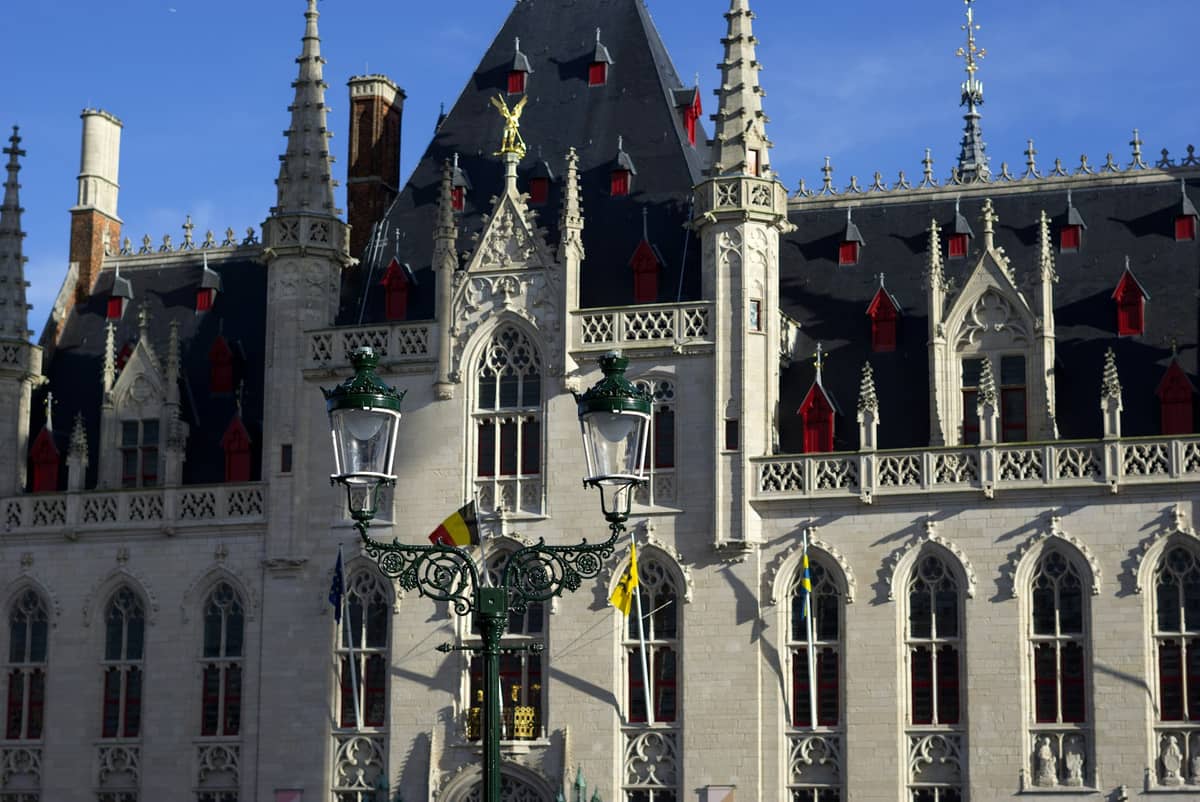
Historium Bruges (Dutch: Historium Brugge) is an immersive walk-through experience housed in the neo-Gothic building on the north side of the Markt, the main market square at the centre of medieval Bruges. The attraction uses a combination of theatrical room sets, professionally produced film sequences, atmospheric lighting, and an optional virtual reality component to place visitors inside the city as it was in the early 15th century, at the height of Bruges' commercial and artistic power.
That period is significant. In the early 1400s, Bruges was one of the wealthiest cities in northern Europe, a hub of the Hanseatic trade network and a center for Flemish art. Painters like Jan van Eyck worked and lived here. The city's wealth came from cloth, banking, and its position as a North Sea trading port. Flemish painting from this era is displayed just a short walk away at the Groeningemuseum, and seeing Historium first gives that collection a meaningful frame of reference.
💡 Local tip
Buy your Historium ticket online in advance, especially in summer and on weekends. The timed-entry system means walk-ups can face waits or sold-out morning slots during peak season.
The Experience Itself: What You Actually Walk Through
The journey through Historium follows a fictional Flemish merchant's apprentice named Jacob as he searches Bruges for the woman he loves. That narrative thread is a device, not the point. What it does is pull you through a sequence of recreated medieval environments: a harbor quayside, a cloth merchant's workshop, a candlelit tavern, the atelier of a Flemish master painter. Each room is a set piece, and each has its own short film scene projected within it.
The production quality is noticeably above the average heritage attraction. Costumes, props, and the recorded audio are all period-accurate in feel. The rooms smell faintly of wood and candle wax. Lighting is kept low and warm, which helps the illusion but can make it difficult to read the accompanying text panels if you want more historical detail than the narrative provides.
The experience finishes with a VR component called Historium VR, which recreates the medieval city in three dimensions and lets you look across rooftops and along canals as they would have appeared in the 1430s. This is sold separately or as a combined ticket. It adds roughly 10 to 15 minutes to the visit and is worth considering if you have younger visitors in your group or a particular interest in urban history.
Tickets & tours
Hand-picked options from our booking partner. Prices are indicative; availability and final rates are confirmed when you complete your booking.
Historium Bruges entrance tickets
From 19 €Instant confirmationFree cancellationTickets to the Historium with VR Experience
From 24 €Instant confirmationFree cancellationBruges food tour with full meal
From 139 €Instant confirmationFree cancellationBruges walking audio guided tour
From 9 €Instant confirmation
The Building and Its Setting on the Markt
The Historium building itself is part of the experience before you even enter. The neo-Gothic facade on the Markt dates from the early 20th century and was designed to complement the medieval character of the square, sitting directly opposite the Belfort van Brugge, the famous belfry tower that has dominated the Markt since the 13th century. The juxtaposition is not accidental: looking from the Historium entrance toward the Belfort, you are standing on one of the most photographed vantage points in the city.
On the upper floor of the Historium building, there is a bar and terrace with a direct view over the Markt. Access to this rooftop bar area can be done with a separate bar ticket rather than the full attraction ticket, and it is one of the better places to sit above street level and observe the square without paying for a full museum visit. It opens to the public during attraction hours and fills up quickly on sunny afternoons.
When to Go: Time of Day and Seasonal Considerations
Historium is open every day from 10:30 to 17:00, with Saturday evening opening extended until 20:00 according to the official schedule. The first slot after opening tends to be the quietest. By late morning, coach tour groups begin arriving at the Markt, and the queues at popular Bruges attractions lengthen noticeably between 11:00 and 14:00.
Because the experience is entirely indoors, weather does not affect what you see inside. This makes Historium particularly practical during the wetter months. Bruges receives roughly 135 to 145 rainy days per year, spread fairly evenly across all seasons, and having a two-hour indoor attraction in the city centre is genuinely useful on grey November days when outdoor sightseeing loses its appeal.
Summer (June to August) brings the highest visitor volumes to Bruges, with daytime highs averaging around 18 to 22°C and long daylight hours. If you visit in summer, arriving at opening time on a weekday gives you the quietest experience. If you are planning a longer stay and want to build a logical route through the city's historic centre, the one-day Bruges itinerary places Historium early in the morning before the Markt fills up.
ℹ️ Good to know
Saturday nocturnes run until 20:00. An evening visit, particularly in winter, gives the Markt a different character: the square quietens after dinner, and the Belfort is lit against the sky. The Historium rooftop bar is open during these extended hours.
Practical Walkthrough: Getting There and Getting the Most from Your Visit
Historium sits at Markt 1, the corner of the main square. From Bruges train station, the walk takes around 15 minutes through the pedestrianised city centre. Buses from the station also stop near the Markt; a single De Lijn fare is around €3, though fares are subject to revision and should be confirmed before travel. The address is straightforward to find on foot from any central point in the city.
The building has lift access, making it accessible for wheelchair users. Visitors arriving with multiple wheelchair users are advised to contact the attraction in advance by email, as the team can prepare accordingly. The official practical page notes that visitors with visual or hearing impairments can participate in parts of the experience, though the detail of adaptations available is best confirmed directly with Historium before your visit.
Ticket prices are approximately €22 for adults, with reductions for children and combination options including the VR component. Given the production values and the roughly 90-minute walk-through time for the main experience, this sits at the upper end of Bruges attraction pricing but below the cost of, for example, a guided canal boat tour plus a museum entry. If you are travelling on a tight budget, it is worth weighing against free or low-cost alternatives before booking.
⚠️ What to skip
The low lighting throughout the attraction is deliberate and atmospheric, but it can be disorienting for young children or visitors sensitive to dark enclosed spaces. The experience is generally rated suitable for children aged around 6 and up.
Is Historium Worth Your Time?
For a first-time visitor to Bruges with limited context about the city's medieval history, Historium delivers a lot of information in an engaging format. It works better than a conventional exhibition because the theatrical staging holds attention through the whole sequence. You leave knowing roughly who Jan van Eyck was, what made Bruges wealthy in the 1400s, and how the canal network functioned as a commercial artery. That is genuinely useful framing for the rest of the city.
It is a less compelling visit if you already have a solid grasp of Flemish medieval history or if you are primarily interested in original artefacts rather than recreations. The attraction contains no original medieval objects. Everything is reproduction, set design, and projection. Visitors drawn to primary sources will find more to engage with at the Groeningemuseum or the Gruuthusemuseum nearby.
Families with children between roughly 8 and 14 tend to get a lot from it. The narrative format and the VR component are more accessible than conventional museum displays. For solo travellers or couples interested in a deeper dive, pairing Historium with a visit to Memling in Sint-Jan on the same afternoon creates a coherent half-day around the period when Bruges was at its medieval peak.
Insider Tips
- The rooftop bar on the upper floor of the Historium building can be accessed with a separate bar ticket rather than a full attraction ticket and gives one of the best elevated views of the Markt. Go up for a drink before or after your visit.
- The Saturday nocturne hours (until 20:00) mean you can combine Historium with dinner in the historic centre and avoid the midday peak entirely. The Markt is significantly quieter after 19:00 in summer.
- If you are visiting with a mixed group where some want the VR add-on and others do not, the main experience and the VR component have separate queues and can be done independently. The VR is housed near the exit and does not require you to loop back through the main attraction route.
- The audio guide included with the ticket is available in several languages. Picking up the audio guide rather than rushing through the film rooms adds context that the projections alone do not fully provide.
- The Historium building shares the Markt with several restaurants whose terrace prices reflect the prime location. For coffee before your visit, walk one street back from the square and prices drop considerably.
Who Is Historium Bruges For?
- First-time visitors to Bruges wanting historical context before exploring the city
- Families with children aged 8 and above looking for an engaging indoor activity
- Rainy-day visits when outdoor sightseeing in Bruges becomes less appealing
- Travellers interested in Jan van Eyck and the Flemish masters who want a narrative introduction
- Groups with mixed interests where a structured, self-guided format suits different attention spans
Nearby Attractions
Other things to see while in Historic Centre:
- Basilica of the Holy Blood
The Basilica of the Holy Blood (Basiliek van het Heilig Bloed) stands on Burg Square in Bruges' historic centre, housing a relic venerated since the Middle Ages. Entry to the basilica is free; the treasury costs €5. With two architecturally distinct chapels stacked on top of each other, it rewards visitors who take time to explore both levels.
- Belfry of Bruges (Belfort)
Standing 83 metres above the Markt, the Belfry of Bruges has dominated the city's skyline since the 13th century. The climb is steep and the staircase narrow, but the rooftop view over the canal network, church spires, and Flemish rooftops rewards the effort. Here is everything you need to know before you go.
- Burg Square
Burg Square, known locally as the Burg or Burgplein, is the political and ceremonial core of Bruges, framed by some of the finest medieval and Renaissance civic architecture in Belgium. Free to enter at any hour, it rewards careful exploration and rewards visitors who stay long enough to watch the light shift across its stone facades.
- Choco-Story Bruges
Choco-Story Bruges traces the story of chocolate from Maya and Aztec cacao rituals to the artisan praline shops lining today's Bruges streets. Located on Wijnzakstraat in the historic centre, it combines genuine cultural history with live chocolate demonstrations that make it one of the more substantive stops on the city's well-worn tourist circuit.