Shopping in Bruges: Best Streets, Markets & Souvenirs
From the Saturday market at 't Zand to the weekend antique market along the Dijver canal, Bruges rewards shoppers who know where to look. This guide covers the best shopping streets, market schedules, local specialities, and a clear take on what to buy and what to skip.
Plan and book this trip
Tools from our partner Travelpayouts help you compare flights and hotels. If you book through them, we may earn a commission at no extra cost to you.
Flights
Hotels map
TL;DR
- Shopping in Bruges centers on a compact medieval core, with most stores open 10:00–18:30 Monday through Saturday.
- The main weekly markets are Wednesday at the Markt (8:00–14:00) and Saturday at 't Zand (8:00–13:30), covering food, clothing, and general goods.
- The Dijver antique and flea market runs weekends and public holidays from 15 March to 15 November, plus Fridays from June through September (10:00–18:00).
- The best genuinely local buys are handmade lace, Belgian chocolate, and craft beer — see the Bruges chocolate guide and Bruges lace guide for deeper detail.
- Mass-produced souvenir shops cluster around the Markt — quality drops sharply within 50 metres of the square.
The Shopping Landscape in Bruges
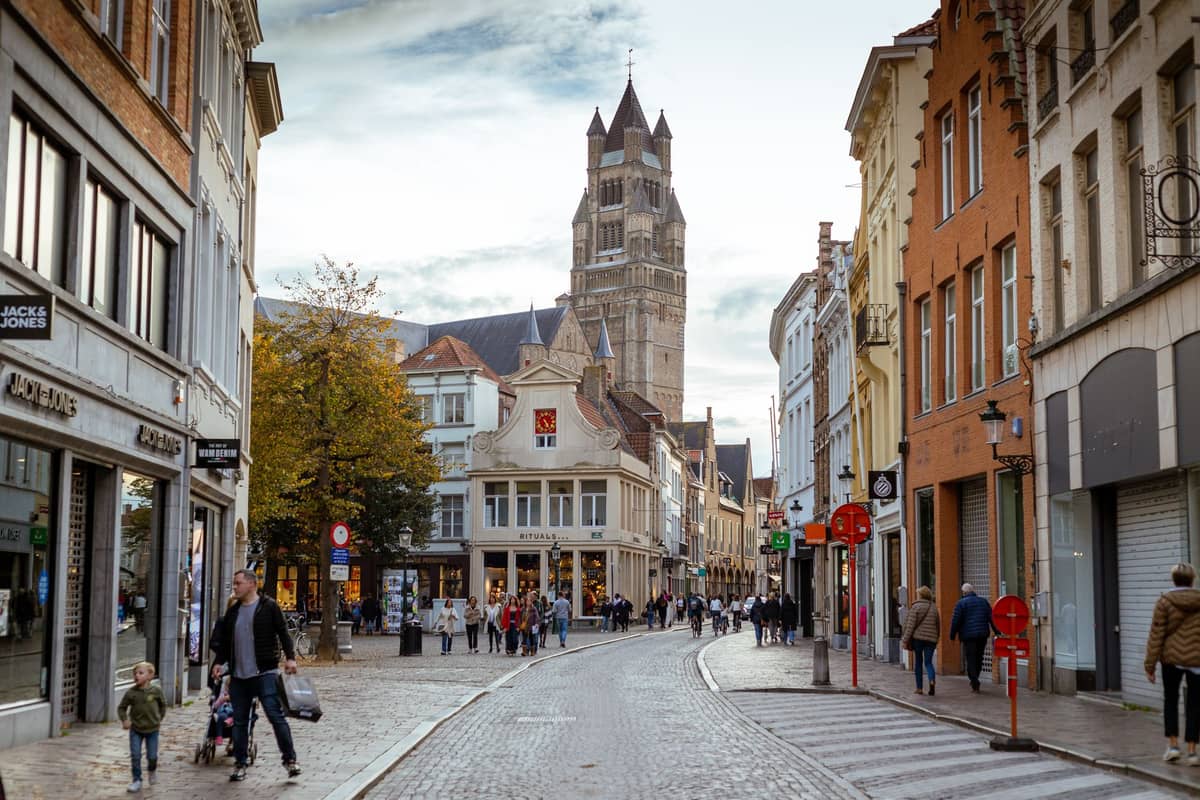
Shopping in Bruges is inseparable from the city's medieval street plan. Almost everything worth buying sits inside the ring canal that encircles the historic centre, and most of it is within a 15-minute walk of the Markt. That concentration is both a strength and a weakness: you cover ground quickly, but the streets closest to the main square are saturated with identical lace fans, Manneken Pis keychains, and boxed pralines that could have been made anywhere.
The city has a population of around 120,000 residents, and its shops reflect two distinct audiences: locals going about daily life, and the several million tourists who pass through each year. The visitor economy dominates the centre, but step one street off the obvious routes and the ratio shifts. Steenstraat, Noordzandstraat, and Geldmuntstraat form the main retail spine for everyday shopping, while smaller streets like Katelijnestraat and Langestraat carry more independent and specialist stores.
ℹ️ Good to know
Most shops in Bruges open around 10:00 and close between 18:00 and 18:30. Sunday trading is limited in Belgium; expect many independent stores to be closed on Sundays, though major chains and tourist-facing shops near the Markt may open. Verify current hours with individual retailers before planning a specific shopping day.
Best Shopping Streets in Bruges
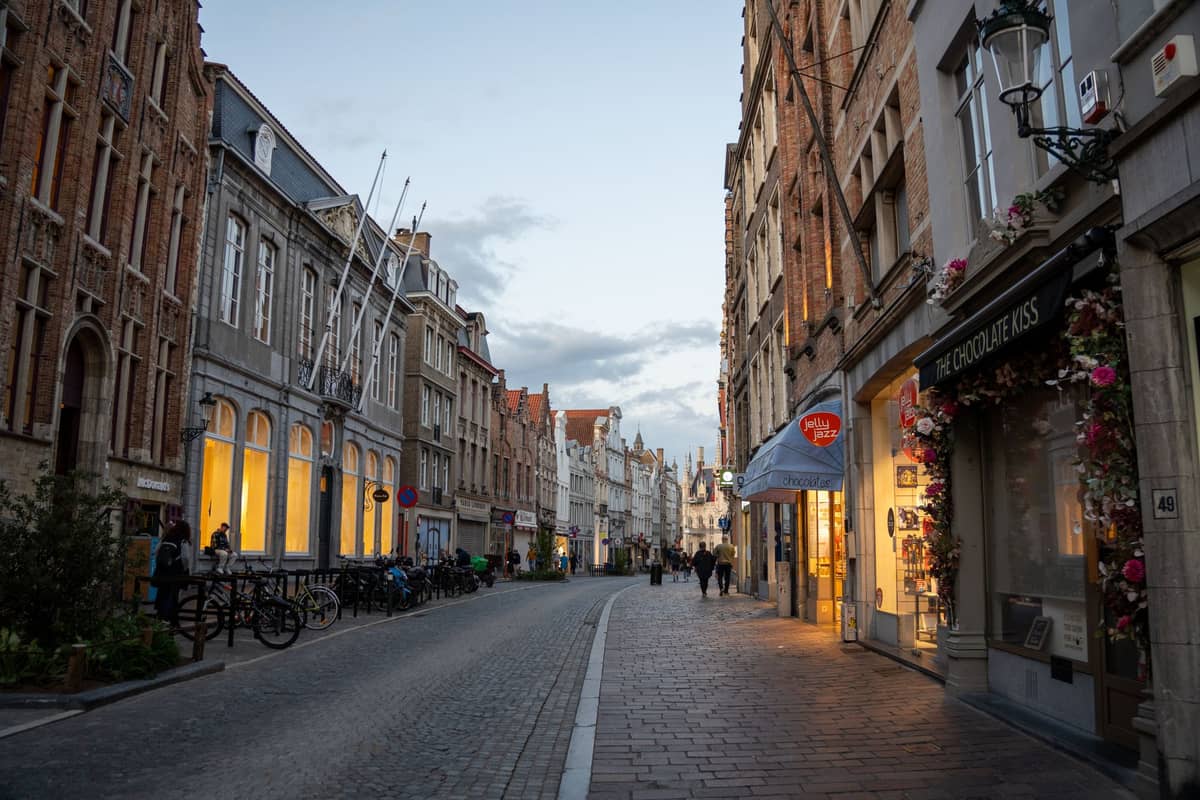
Steenstraat is the city's main pedestrian retail artery, running south from the Markt toward 't Zand. It carries familiar Belgian and European chain stores alongside a handful of independent shops, and it is where most residents do their practical shopping. Foot traffic is high on Saturdays but manageable on weekday mornings.
Noordzandstraat and Zuidzandstraat, which curve around 't Zand square, extend the chain-store offer with fashion and homeware brands. These streets are less touristically charged than the Markt area and more useful if you need something practical rather than something souvenir-shaped.
For specialist and artisan shops, Katelijnestraat (running south from the Onze-Lieve-Vrouwekerk toward the Begijnhof) is the most productive street in the city. You will find dedicated chocolate ateliers, lace workshops, and small antique dealers here. It is also where the Kantcentrum (Lace Centre) is located in the nearby Sint-Anna quarter, where you can watch bobbin lace being made and buy directly from makers.
- Steenstraat Main pedestrian retail street from the Markt to 't Zand. Chains, fashion, everyday goods. Best on weekday mornings.
- Noordzandstraat / Zuidzandstraat Curves around 't Zand. More fashion and homeware, fewer tourists than the Markt area.
- Katelijnestraat Best street for artisan chocolate, lace, and small antique shops. Runs south toward the Begijnhof.
- Langestraat Long street through the Sint-Anna quarter. Independent bookshops, vintage stores, and local-facing cafés.
- Geldmuntstraat Short connection street linking Steenstraat to the Markt area. Compact but contains some good independent food and gift shops.
Markets in Bruges: Schedules and What to Expect
Bruges runs several weekly markets, and understanding what each one actually offers prevents disappointment. The markets are not interchangeable: they serve different purposes, attract different crowds, and operate on different timetables.
The Wednesday morning market at the Markt runs 8:00–14:00 and focuses primarily on food: vegetables, cheese, bread, flowers, and seasonal produce. It is a functioning local market more than a tourist attraction, which is what makes it worth visiting. Arrive before 10:00 to see it at full capacity before the tour groups arrive.
The Saturday market at 't Zand square runs 8:00–13:30 and is broader in scope than most visitors expect. In addition to fresh food, it covers clothing, household goods, and general market merchandise. It draws a local crowd from across the municipality and is one of the more practical markets in West Flanders for everyday purchases.
The Sunday market at Veemarkt in Sint-Michiels (8:00–13:00) is less known to visitors because it sits outside the tourist centre, but it is worth the short bus ride if you want to see how residents actually shop. Sint-Michiels is a residential borough southwest of the centre, and the market reflects that.
The Dijver antique and flea market is the one most relevant to browsers and collectors. It runs along the Dijver canal on weekends and public holidays from 15 March to 15 November, with Fridays added from June through September. Hours are 10:00–18:00. The setting alone justifies a visit: stalls line the canal beside the Groeningemuseum, with the water and medieval gables as a backdrop. Quality varies considerably, from genuine antiques and coins to bric-a-brac, but it is the best place in Bruges to find an actual antique shop experience in an open-air format.
💡 Local tip
The Dijver market runs until mid-November, then stops for winter. If your visit falls between November and March, the canal-side antique browsing option disappears. Compensate by visiting the covered antique and second-hand dealers on Langestraat and in the Sint-Anna quarter instead.
The Vismarkt (Fish Market) area hosts artisanal products year-round, though hours shift by season: 9:00–17:00 from 15 March to 15 November, and 10:00–16:00 from 16 November to 14 March. This is separate from the fish traders and focuses on handcrafted goods. It is small but consistent.
What to Buy in Bruges: Genuinely Local vs Tourist Filler
The three categories of shopping that Bruges does better than almost anywhere else in Belgium are handmade lace, artisan chocolate, and Belgian craft beer. Everything else, from waffles to speculoos biscuits, is good but widely available throughout the country and not specifically Bruges.
Bruges has a legitimate, documented tradition of bobbin lace-making stretching back to the 16th century. Handmade Bruges lace is time-intensive, skilled work, and it is priced accordingly: expect to pay from around €20 for a small piece up to several hundred euros for complex pieces. Machine-made lace sold in tourist shops looks similar at a glance but costs a fraction of the price and has no local provenance. The Kantcentrum in the Sint-Anna quarter is the authoritative place to learn the difference and buy from verified makers.
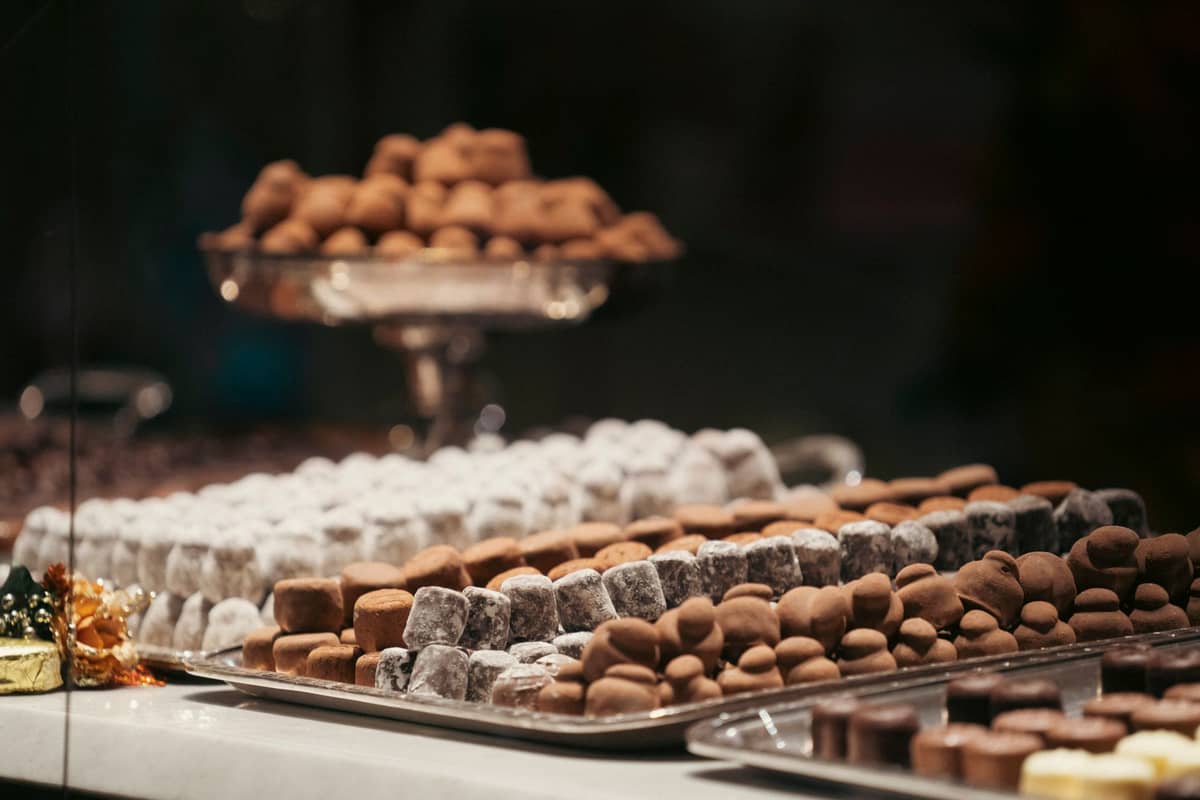
Belgian chocolate in Bruges ranges from excellent to mediocre, and the price per kilogram is not always a reliable guide. Several serious chocolatiers operate in the city, producing pralines and truffles with named Belgian couverture chocolate and seasonal fillings. The Choco-Story museum on Sint-Janstraat provides context before you start buying, which helps distinguish genuine craft production from repackaged industrial product. For a full breakdown of where to buy, see the Bruges chocolate guide.
Belgian craft beer makes an excellent and relatively portable souvenir. The De Halve Maan brewery on Walplein sells its Brugse Zot and Straffe Hendrik beers directly, along with branded glassware. Specialist beer shops around the centre stock a broader range of West Flemish and national beers. Bottles are durable for travel if wrapped carefully. For more on what to drink, the Bruges beer guide covers styles, bars, and buying options.
- Handmade bobbin lace: buy from the Kantcentrum or verified lace workshops; check for a certificate of authenticity
- Artisan pralines and chocolate: look for chocolatiers making their own product on-site rather than repackaging bought-in tablets
- Belgian craft beer: De Halve Maan brewery shop and specialist beer retailers are the most reliable sources
- Jenever (Belgian gin): aged grain spirit available at specialist spirits shops; look for aged expressions rather than flavoured tourist bottles
- Flemish art prints and reproductions: the Groeningemuseum shop carries high-quality reproductions of its Flemish Primitive collection
⚠️ What to skip
The streets immediately surrounding the Markt are densely packed with souvenir shops selling machine-made lace, generic Belgian chocolate brands, and plastic replicas of Bruges landmarks. None of these are bad purchases if you want an inexpensive memento, but none of them are specifically Bruges products. If provenance matters to you, walk at least two or three streets away from the Markt before buying.
Shopping for Antiques and Second-Hand in Bruges
Bruges has a genuine antique and second-hand scene that operates year-round, not just at the Dijver market. The Sint-Anna quarter, in particular, contains a cluster of smaller dealers and second-hand bookshops along Langestraat and the surrounding streets. These shops are less prominent online than the market stalls but tend to carry more consistent stock.
Collectors focusing on Flemish ceramics, religious objects, old maps, and pre-war Belgian glassware will find Bruges more productive than most Belgian cities outside Antwerp. The concentration of old private estates and ecclesiastical collections in West Flanders means that genuinely interesting pieces surface with some regularity. Prices at the Dijver market are negotiable in the afternoon, when vendors are packing up.
✨ Pro tip
The Dijver antique market is busiest between 11:00 and 14:00 on Saturdays in summer, when tour group itineraries typically route past it. If you are serious about examining pieces and talking to vendors, arrive at 10:00 on a Friday in June, July, or August, when crowds are thinner and vendors are more willing to negotiate.
Practical Tips for Shopping in Bruges
Belgium uses the euro (EUR). Card payment is widely accepted in central Bruges, including at most market stalls, though smaller vendors and the Dijver market occasionally operate cash-only. It is worth carrying €20–40 in cash if you plan to browse markets seriously.
Bruges is a compact city and almost all shopping areas are within walking distance of each other. If you are combining shopping with sightseeing, a walking tour of Bruges covers most of the relevant streets naturally. The main retail district is roughly 10–15 minutes on foot from the train station, and the Dijver antique market is about a 10-minute walk from the Markt.
Peak tourist season in Bruges runs from late spring through early autumn, with July and August bringing the highest visitor numbers to the centre. Shopping in the historic core in high summer means navigating crowds on Steenstraat and around the Markt. If you are visiting primarily for shopping rather than sightseeing, late September and October offer better conditions: fewer visitors, the same market schedules, and the Dijver market still running. For a broader view of timing, the best time to visit Bruges guide covers seasonal patterns in detail.
Belgium is part of the Schengen Area. Non-EU visitors may be eligible for VAT refunds on purchases above a minimum threshold from participating retailers; look for the Tax Free Shopping logo in store windows and ask for the paperwork at the point of sale. The standard Belgian VAT rate is 21%, so on significant purchases this is worth pursuing.
FAQ
What is Bruges most famous for shopping?
Bruges is best known for handmade bobbin lace, artisan Belgian chocolate and pralines, and craft beer. Handmade lace in particular has a centuries-old tradition in the city, and the Kantcentrum in the Sint-Anna quarter is the most reliable place to find authentic pieces and verify their origin.
When is the antique market in Bruges?
The Dijver antique and flea market runs on weekends and public holidays from 15 March to 15 November, with Fridays added from June through September. Hours are 10:00–18:00. It is located along the Dijver canal beside the Groeningemuseum. There is no equivalent outdoor antique market in winter, though some indoor dealers operate year-round in the Sint-Anna quarter.
What day is the market in Bruges?
Bruges has multiple markets on different days. The main food market is on Wednesday at the Markt (8:00–14:00). A larger general market with food, clothing, and goods runs on Saturday at 't Zand (8:00–13:30). A Sunday market operates at Veemarkt in Sint-Michiels (7:00–14:00). The Dijver antique market runs on weekends from mid-March to mid-November, plus Fridays in summer.
Are shops open on Sundays in Bruges?
Sunday trading is restricted in Belgium by law, and most independent stores in Bruges are closed on Sundays. Tourist-facing shops near the Markt and major chain stores sometimes open on Sundays, particularly in peak season, but this is not guaranteed. The Sunday market at Veemarkt in Sint-Michiels is a consistent option. Always verify with individual retailers before planning a Sunday shopping trip.
How do I avoid tourist trap souvenir shops in Bruges?
The simplest rule: the closer to the Markt, the more likely the shop is targeting tourists with generic products. For lace, go to the Kantcentrum or verified workshops in the Sint-Anna quarter and ask for provenance documentation. For chocolate, look for chocolatiers producing on-site rather than reselling packaged brands. For beer, the De Halve Maan brewery shop and specialist beer retailers offer more interesting options than the bottles sold in convenience-style souvenir stores.