Vismarkt (Fish Market): Bruges's Working Market in the Heart of the Old City
The Vismarkt is one of Bruges's oldest market sites, operating as a working fish market on Wednesday to Saturday mornings and hosting artisanal product stalls daily for much of the year. It sits at the edge of the historic canal quarter, a short walk from the Burg, and rewards visitors who arrive early and stay curious.
Quick Facts
- Location
- Vismarkt, 8000 Brugge, Historic Centre
- Getting There
- Brugge Dijver (bus stop); Station Brugge (main train station, ~15 min walk)
- Time Needed
- 20–45 minutes for the market itself; combine with canal walks nearby
- Cost
- Free to enter; purchases at your discretion
- Best for
- Food lovers, early risers, photographers, and those exploring the canal quarter
What the Vismarkt Actually Is
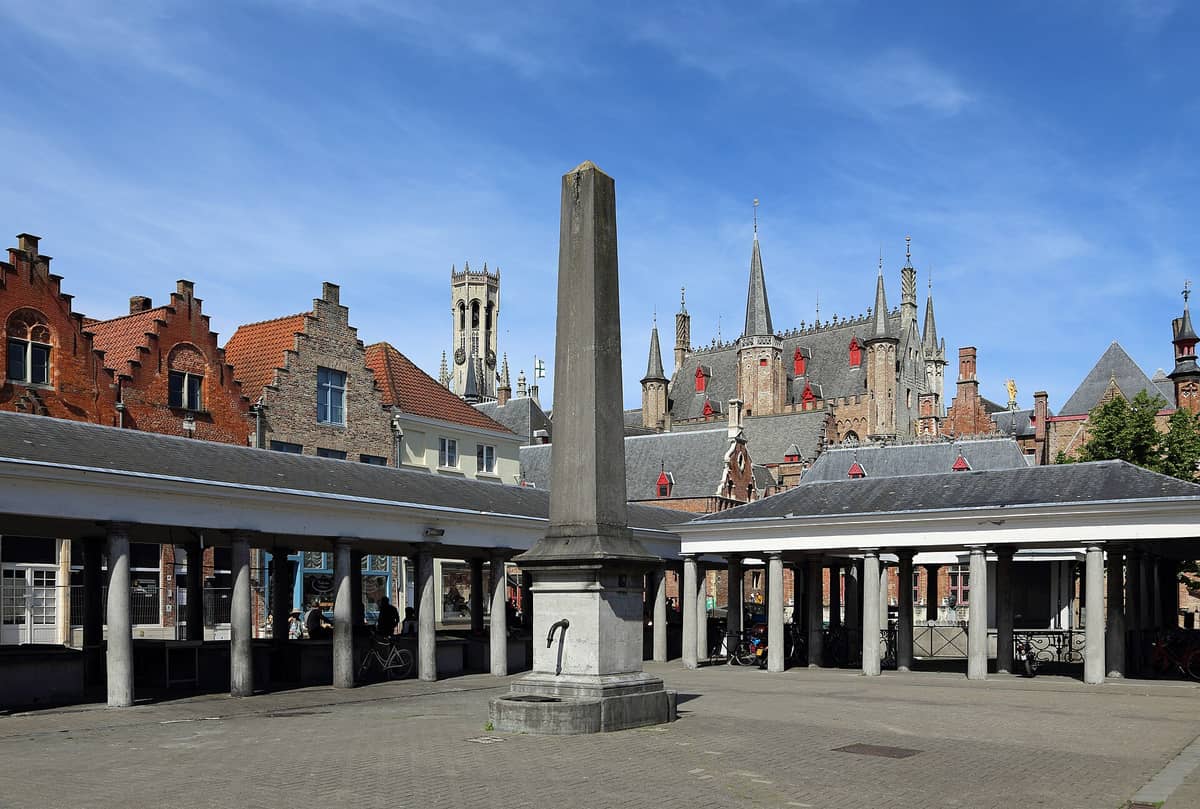
The Vismarkt, or Fish Market, is one of those Bruges attractions that works on two different registers depending on when you arrive. On Wednesday, Thursday, Friday, and Saturday mornings between 8:00 and 13:30, it functions as a genuine working fish market: stalls laid out under the colonnaded arcade, the smell of brine and fresh catch in the air, traders and local shoppers conducting the practical business of buying seafood. The rest of the time, particularly from March through November, it becomes a daily artisan market (open 9:00 to 17:00 in the warmer season, 10:00 to 16:00 from mid-November to mid-March), with stalls selling regional produce, handmade goods, and local crafts.
This dual identity is worth understanding before you visit. If you come expecting a lively fish market on a Sunday afternoon, you will find artisan stalls or an empty arcade. If you arrive on a Saturday at 8:30, you will find something closer to the city's living food culture, still operating much as market sites in this location have done for centuries.
ℹ️ Good to know
Fish market hours: Wednesday to Saturday, 8:00–13:30. Artisan market: daily, 15 March–15 November (9:00–17:00); 16 November–14 March (10:00–16:00). No admission fee.
The Setting: Architecture and Location
The Vismarkt sits in the historic centre of Bruges (Brugge), close to the Dijver canal and a short walk south of the Burg square. Its covered arcade structure, with open colonnades facing the street, is typical of historic northern European market architecture designed to shelter vendors and buyers from rain without fully enclosing the space. The stone and brick construction gives it a solidity that distinguishes it from temporary market setups elsewhere in the city.
The location places it in one of the most photographed parts of Bruges. The Rozenhoedkaai canal view is only a couple of minutes' walk away, and the Dijver canal quarter stretches along the water just to the south. Visitors who combine a morning visit to the fish market with a walk along the Dijver will get a good cross-section of what the historic centre looks and feels like before the main tourist rush begins.
Tickets & tours
Hand-picked options from our booking partner. Prices are indicative; availability and final rates are confirmed when you complete your booking.
Historium Bruges entrance tickets
From 19 €Instant confirmationFree cancellationBruges food tour with full meal
From 139 €Instant confirmationFree cancellationBruges walking audio guided tour
From 9 €Instant confirmationBruges Family Walking Tour
From 259 €Instant confirmationFree cancellation
What It Feels Like in the Morning
A weekday morning at the Vismarkt before 10:00 is one of the more grounded experiences available in central Bruges. The fish stalls carry whole fish, fillets, mussels, shrimp, and smoked varieties, all arranged with the kind of precision that suggests the vendors have been doing this for years. The smell is direct and unambiguous: fresh sea catch, cold stone, and the mild salt air that drifts into the covered space. Locals arrive with shopping bags, speak Flemish Dutch with the traders, and move efficiently. It is not a tourist performance.
By 11:00, the morning market character begins to shift. More visitors arrive. The light, which in summer comes at a low angle through the arcade openings, starts to illuminate the stalls more directly, making it better for photography but also a little busier underfoot. Arriving between 8:30 and 9:30 on a Saturday gives you the fullest experience of the fish market before it blends into general tourism foot traffic.
💡 Local tip
For the best combination of atmosphere and photography light, visit on a Saturday morning between 8:30 and 9:30. The stalls are fully set up, traders are active, and the crowds are still manageable.
The Artisan Market: A Different Atmosphere Entirely
Outside fish market hours, the Vismarkt functions as a daily artisan and craft market for most of the year. The character is noticeably different: quieter, more browsable, and oriented toward visitors rather than local shoppers making their weekly fish purchase. Stalls vary but typically include local produce, regional specialties, handmade items, and the kinds of goods that fill a pleasant twenty minutes of browsing.
If your primary interest is Bruges's food culture more broadly, the artisan stalls here pair well with a walk that takes in the Markt and the surrounding streets. For a deeper dive into what Bruges eats and drinks, the what to eat in Bruges guide covers the wider food landscape, from North Sea shrimp to Flemish stews.
Historical Context
Bruges was one of the most significant trading cities in medieval Europe, a hub of the cloth trade and a point of exchange for goods arriving by sea from across the continent and beyond. Fish was a staple commodity in this economy: a city built on canals and within practical reach of the North Sea had fish markets as functional infrastructure, not ornamental features. The Vismarkt's current structure reflects later architectural formalization of what would have been a long-established trading activity on or near this site.
The context of Bruges as a medieval commercial city is worth having in mind when you visit the Vismarkt. The market sits in the same historic centre that earned Bruges its UNESCO World Heritage designation, surrounded by Gothic and medieval architecture that has been carefully preserved. For a thorough grounding in the city's architectural heritage before or after your visit, the Bruges Gothic architecture guide covers the key buildings and their periods in detail.
Practical Walkthrough: Getting There and What to Bring
The nearest bus stop is Brugge Dijver, served by De Lijn city buses. From Bruges train station (Station Brugge), the walk to the Vismarkt takes roughly 15 minutes through the historic centre, passing through or near the Burg square on most natural routes. The address is simply Vismarkt, 8000 Brugge.
There is no admission charge. The covered arcade provides some shelter from rain, but the adjacent open areas are exposed. Bruges has a temperate maritime climate with around 143 rainy days per year spread fairly evenly through the seasons, so bringing a compact rain layer is practical advice for any outdoor visit regardless of the forecast. The stone floor of the arcade can be slippery when wet, which is worth bearing in mind if you have limited mobility.
No specific accessibility information was available on the official Visit Bruges pages at the time of writing. The market space is at street level with no steps at the main entry points, but the surrounding canal-quarter streets involve some cobblestone surfaces that can be uneven.
⚠️ What to skip
The fish market only operates Wednesday to Saturday, 8:00–13:30. If you arrive outside these hours expecting fresh fish stalls, you will find either the artisan market (in season) or an empty covered space. Check the day and time before making a specific trip.
Photography Notes
The Vismarkt arcade creates a consistent shaded interior with open sides, which means the light inside is softer and more diffuse than the direct sunlight outside. On bright mornings, this produces a contrast between the illuminated street outside and the covered stalls inside that rewards wide shots. Detail photography of the fish stalls, the market architecture, and vendor activity works well in the morning hours.
The canal views immediately surrounding the Vismarkt are among the most-photographed in Bruges. The Rozenhoedkaai is a two-minute walk and offers the classic view of the Dijver canal with the Belfort in the background. Combining a market visit with a canal walk early in the morning, before tour groups arrive, gives you both with minimal crowding.
Is This Worth Your Time?
The honest answer is: it depends entirely on when you go and what you are looking for. On a fish market morning, the Vismarkt is one of the few places in central Bruges where you see the city operating as a functioning place rather than a backdrop for tourism. That is genuinely valuable if you want texture beyond the postcard version of the city. On a weekday afternoon in the artisan market configuration, it is pleasant but not particularly distinctive compared to other spots in the historic centre.
Visitors who thrive on atmospheric city markets, food culture, and early mornings will find it rewarding. Those with very limited time who are prioritizing the major museums and churches can reasonably skip a dedicated trip, though passing through the area is almost inevitable given its central location.
Insider Tips
- Saturday is the busiest fish market day but also the most atmospheric. Wednesday and Thursday mornings are quieter and give you more room to observe without navigating crowds.
- The covered arcade's columns and open arches make strong compositional frames for photography. Position yourself at one end of the arcade and shoot toward the stalls for a natural leading-line image.
- The artisan market runs daily with seasonal hours, so even a winter visit in January or February will find some stalls operating from 10:00 to 16:00, making it a reasonable brief stop on a cold morning walk.
- From the Vismarkt, it takes less than five minutes on foot to reach the Burg square and its cluster of major civic buildings including the Stadhuis and the Basilica of the Holy Blood. Time your fish market visit to flow naturally into that circuit rather than treating it as an isolated stop.
- Vendors at the fish market are there to sell to local shoppers, not to pose for photographs. If you want close-up stall shots, make eye contact first and be respectful of the working environment.
Who Is Vismarkt (Fish Market) For?
- Food travelers and market enthusiasts who want to see Bruges beyond its tourist layer
- Early risers looking for something to do before the main attractions open
- Photographers interested in market scenes and covered arcade architecture
- Visitors building a canal-quarter walking itinerary who want a purposeful start point
- Anyone curious about how a medieval trading city's market culture persists into the present
Nearby Attractions
Other things to see while in Historic Centre:
- Basilica of the Holy Blood
The Basilica of the Holy Blood (Basiliek van het Heilig Bloed) stands on Burg Square in Bruges' historic centre, housing a relic venerated since the Middle Ages. Entry to the basilica is free; the treasury costs €5. With two architecturally distinct chapels stacked on top of each other, it rewards visitors who take time to explore both levels.
- Belfry of Bruges (Belfort)
Standing 83 metres above the Markt, the Belfry of Bruges has dominated the city's skyline since the 13th century. The climb is steep and the staircase narrow, but the rooftop view over the canal network, church spires, and Flemish rooftops rewards the effort. Here is everything you need to know before you go.
- Burg Square
Burg Square, known locally as the Burg or Burgplein, is the political and ceremonial core of Bruges, framed by some of the finest medieval and Renaissance civic architecture in Belgium. Free to enter at any hour, it rewards careful exploration and rewards visitors who stay long enough to watch the light shift across its stone facades.
- Choco-Story Bruges
Choco-Story Bruges traces the story of chocolate from Maya and Aztec cacao rituals to the artisan praline shops lining today's Bruges streets. Located on Wijnzakstraat in the historic centre, it combines genuine cultural history with live chocolate demonstrations that make it one of the more substantive stops on the city's well-worn tourist circuit.