Guido Gezelle Museum (Gezellehuis): Inside the Birthplace of Bruges' Greatest Poet
The Gezellehuis on Rolweg is the birthplace and former home of Guido Gezelle (1830–1899), one of the most celebrated poets in Dutch-language literature. This quiet literary museum in the Sint-Anna quarter preserves his life, manuscripts, and 19th-century world, wrapped around a garden that is open most of the year.
Quick Facts
- Location
- Rolweg 64, 8000 Bruges (Sint-Anna quarter)
- Getting There
- Bus stop Brugge Kruispoort (Kazernevest), stop 512124; Bruges railway station ~20 min walk
- Time Needed
- 45–90 minutes for museum and garden combined
- Cost
- Garden free to enter; museum admission via Musea Brugge ticketing – verify current prices at museabrugge.be
- Best for
- Literature lovers, slow travellers, garden seekers, Belgian cultural history
What the Gezellehuis Actually Is
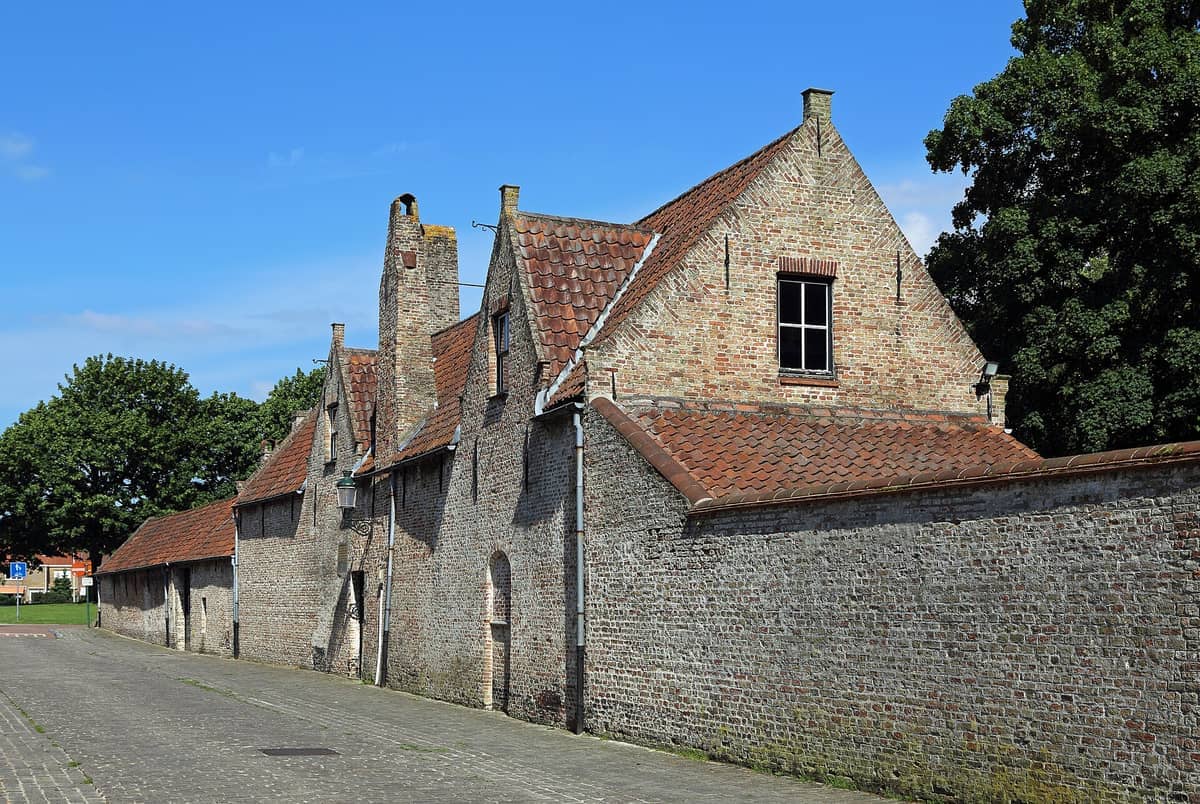
The Guido Gezelle Museum, known in Dutch as the Gezellehuis, is a literary and biographical museum housed in the building where Guido Gezelle was born in 1830 and spent his earliest years. Gezelle went on to become one of the most significant poets ever to write in Dutch, a priest-poet whose work drew deeply from West Flemish dialect, natural imagery, and Catholic faith. The museum is not a grand institution with sweeping galleries. It is a modest, carefully tended historic house that preserves the atmosphere of 19th-century Bruges as much as it displays artefacts.
The site sits on Rolweg, a quiet residential street in the Sint-Anna quarter, one of the least tourist-worn neighbourhoods inside Bruges' medieval ring. The street itself feels more like local Bruges than the postcard centre: red-brick facades, low foot traffic, the occasional cyclist passing without urgency. Arriving here already feels like an escape from the canal-tour crowds concentrated around the Markt and Rozenhoedkaai.
ℹ️ Good to know
The indoor museum is open only on the second Sunday of each month (09:30–12:30 and 13:30–17:00). If you are not visiting on that specific day, you can still access the garden during broader opening hours. Plan accordingly.
Opening Hours: A Detail That Matters More Than Usual
The indoor collection has unusually restricted access. The museum rooms open only on the second Sunday of each month, running in two sessions: 09:30 to 12:30 in the morning, and 13:30 to 17:00 in the afternoon. That is twelve opportunities per year. If you want to see the interior displays, you need to plan your Bruges visit around this schedule, not the other way around.
The garden operates on a more generous timetable. From 1 April to 2 November (summer period), it is open daily except Monday, from 09:30 to 17:00. From 3 November to 31 March (winter period), it closes on both Mondays and Tuesdays. Public toilets in the garden area are accessible free of charge during all garden opening hours. Verify exact hours with Musea Brugge before your visit, particularly around Belgian public holidays when schedules can shift.
⚠️ What to skip
If the second Sunday of the month falls on a Belgian public holiday, the museum may adjust its schedule. Always check museabrugge.be before making a special trip for the indoor collection.
Tickets & tours
Hand-picked options from our booking partner. Prices are indicative; availability and final rates are confirmed when you complete your booking.
Bruges walking audio guided tour
From 9 €Instant confirmationGuided retro bike tour to the hidden gems of Bruges
From 45 €Instant confirmationFree cancellationSelf-guided interactive pub trail in Bruges with online pub game
From 15 €Instant confirmationFree cancellationSelf-guided digital scavenger hunt in Bruges
From 13 €Instant confirmation
The Garden: Quieter Than You Expect, Worth More Than You Think
Even on days when the interior is closed, the garden makes a visit worthwhile. It is the kind of enclosed urban garden that rewards slow movement: not vast, not manicured into sterility, but sufficiently layered with greenery, stone paths, and old walls to create genuine calm. In spring and early summer, the light filters through the canopy at angles that make the brickwork glow a warm amber. The sounds from Rolweg barely penetrate.
Gezelle's poetry was saturated with close observation of nature, and standing in this garden it is not difficult to understand why. He wrote about spiders, water, light on leaves, the sound of rain on cobblestones. The garden is, in a sense, the most accurate annotation of his work that exists. Spending twenty minutes here with even a passing knowledge of his poetry makes the place considerably more resonant.
For travellers exploring the Sint-Anna quarter on foot, the Gezellehuis garden pairs naturally with a broader walk through this neighbourhood. Nearby you will find the Jeruzalemkerk, one of the most architecturally unusual churches in Bruges, and the Kantcentrum (Lace Centre), which sits just a short walk away on Balstraat. Together these three sites form a coherent half-day in a part of the city that many visitors never reach.
The Indoor Collection: Gezelle's Life in Objects
On second Sundays, the interior rooms open to reveal a biographical museum that moves through Gezelle's life chronologically. The displays include manuscripts, portraits, personal objects, and materials relating to his career as a priest and teacher as well as a poet. The rooms retain the proportions and character of a 19th-century Flemish townhouse rather than a purpose-built gallery space, which gives the collection an intimacy that larger museums cannot replicate.
Gezelle was born here in 1830, though he lived at multiple addresses in Bruges and Kortrijk throughout his life before returning to Bruges in later years. The museum contextualises his work within the cultural and religious landscape of 19th-century Flanders, a period when Dutch-language literature was fighting for prestige against the dominance of French in Belgian public life. His linguistic choices, his use of West Flemish dialect, and his insistence on the richness of spoken Flemish were not merely aesthetic decisions but cultural ones.
Visitors who have no prior knowledge of Gezelle can still engage with the museum as a document of how a 19th-century Bruges middle-class household looked and functioned. The material culture on display, the furniture, the books, the religious objects, carries its own historical weight independent of literary scholarship. That said, some prior reading will make the visit considerably richer.
💡 Local tip
Before visiting, read even a short English-language introduction to Gezelle's poetry. His themes of nature, faith, and Flemish identity become immediately visible in the objects on display. The Gezelle.be website offers background in English.
Getting Here and the Sint-Anna Quarter Context
The museum is at Rolweg 64. The most useful bus stop is Brugge Kruispoort (Kazernevest), stop 512124, served by De Lijn routes connecting to Bruges railway station. From the Markt, the walk takes roughly 15 to 20 minutes through the Sint-Anna quarter, passing along streets that shift gradually from tourist-oriented to quietly residential.
If you are arriving from the main train station, allow about 20 to 25 minutes on foot, or take a De Lijn bus towards Kruispoort. The Sint-Anna quarter is covered in detail in our Sint-Anna quarter neighbourhood guide, which maps out the most logical walking routes from the historic centre.
Cycling is the most practical way to move between Sint-Anna sites if you are combining multiple stops. Bruges has a well-developed cycling infrastructure and the terrain is flat throughout. Rolweg has parking for bicycles immediately outside the museum.
Photography, Practicalities, and Practical Caveats
The garden photographs well in morning light, roughly 10:00 to 11:30, when the sun comes over the rear wall and illuminates the interior greenery from a useful angle. The facade of the Gezellehuis on Rolweg is best photographed in the afternoon when the western light picks out the brickwork. The street is narrow, so a wide shot requires stepping back toward the opposite pavement.
Accessibility in a historic house of this age will not be seamless. The building has its origins in a former 16th-century house and was not designed with wheelchair access in mind. Visitors with specific mobility requirements are advised to contact Musea Brugge directly in advance at their central contact address to understand what is and is not accessible on any given visit day.
This is not an attraction that will occupy a full afternoon on its own. It fits best as part of a broader Sint-Anna walk or as a quieter counterpoint to the higher-footfall museums closer to the historic centre, such as the Groeningemuseum or the Memling in Sint-Jan. If you are building a day around Flemish cultural heritage, the Gezellehuis offers a literary dimension that the painting museums do not.
For visitors interested in the wider literary and cultural landscape of Bruges, the Flemish art and culture guide provides useful context on how Gezelle fits into the broader story of Flemish identity and 19th-century Belgian cultural politics.
Who Will Get the Most From This Place
The Gezellehuis rewards visitors who travel slowly and read before they arrive. It is a specialist interest site, not a crowd-pleaser. If your primary interest in Bruges is its canals, chocolate shops, and brewery tours, this museum will feel thin. The indoor collection is small, and without some engagement with Gezelle's work or 19th-century Flemish culture, the objects on display may not hold your attention for long.
For those who do connect with the subject matter, the experience is quietly memorable in a way that more prominent Bruges attractions are not. There is no queue, no audio guide competing with your thoughts, and no souvenir shop. You can stand in the garden of the house where one of the most original poets in the Dutch language was born and hear very little except birdsong and the occasional bicycle bell from a street away. That specific kind of stillness is increasingly rare in central Bruges.
Insider Tips
- Check the Musea Brugge website at the start of each month to confirm the exact date of the second Sunday opening. The date shifts every month and it is easy to miscalculate.
- The garden is free to enter during opening hours and requires no ticket. If you are passing through the Sint-Anna quarter on any day the garden is open, it is worth a 15-minute stop even without entering the museum.
- Combine your visit with the Jeruzalemkerk and Kantcentrum, both within a 5-minute walk. These three sites form a coherent half-day that most Bruges visitors never take, which means no crowds and a genuinely different experience of the city.
- Bring a printed or downloaded text of one of Gezelle's shorter nature poems in translation. Reading it in the garden where he grew up is a different experience from reading it anywhere else.
- The street facade of the Gezellehuis is plainly labelled but easy to walk past if you are moving quickly. Slow down on Rolweg and look for the modest heritage signage beside the door.
Who Is Guido Gezelle Museum For?
- Literature enthusiasts with an interest in Dutch-language poetry or 19th-century Flemish culture
- Slow travellers who want to step outside the main tourist circuit and into residential Bruges
- Visitors combining the Sint-Anna quarter's cluster of specialist cultural sites in a single half-day walk
- Photographers looking for a quiet, photogenic garden without the crowds of the central canal areas
- Travellers returning to Bruges for a second or third visit who have already covered the headline attractions
Nearby Attractions
Other things to see while in Sint-Anna Quarter:
- Bruges Almshouses (Godshuizen)
Bruges is home to 46 historic almshouse complexes, known locally as Godshuizen, almost all of which remain inhabited today. Free to enter, these medieval charity dwellings offer some of the most atmospheric and unhurried corners in the entire city, tucked behind low walls and wooden gates across the historic centre.
- Folklore Museum (Bruggemuseum – Volkskunde)
The Volkskundemuseum, part of the Bruggemuseum network, recreates daily life in Bruges from the 19th and early 20th centuries through immersive period interiors and craft workshops. Housed in a row of restored almshouse buildings on Balstraat, it offers a grounded, unhurried contrast to the city's more crowded heritage sites.
- Jerusalem Church (Jeruzalemkerk)
Built around 1430 by a wealthy Flemish merchant family inspired by Jerusalem, the Jeruzalemkerk is one of the most architecturally unusual churches in Belgium. Still privately owned by the Adornes family after nearly 600 years, this intimate chapel in the Sint-Anna quarter rewards visitors who make the short detour from Bruges' crowded centre.
- Lace Centre (Kantcentrum)
The Kantcentrum on Balstraat brings Bruges' centuries-old lacemaking tradition to life through daily afternoon demonstrations by working lacemakers, a museum tracing the craft's history, and a well-stocked specialist shop. Housed in a former lace school within the historic Adornes estate, it is one of the few places in Europe where the craft is still actively taught and practised in a public setting.