Jan Van Eyckplein: Bruges' Forgotten Commercial Heart
Jan Van Eyckplein is a free, open-air square in the historic centre of Bruges, framed by medieval guild houses, a 15th-century customs building, and a canal-side setting along the Spiegelrei. It honours the city's most famous resident painter and offers a quieter counterpoint to the tourist crowds of Markt.
Quick Facts
- Location
- Jan van Eyckplein 2, 8000 Brugge, Belgium (historic centre, north of Markt)
- Getting There
- Bus stop 'Brugge Jan Van Eyckplein' (stop 502114); Bruges main railway station nearby
- Time Needed
- 20–40 minutes for the square itself; allow 1–2 hours if exploring the Spiegelrei canal stretch
- Cost
- Free — public square, open 24/7
- Best for
- Architecture lovers, photographers, history enthusiasts, and anyone wanting to escape peak-hour crowds
What Jan Van Eyckplein Actually Is
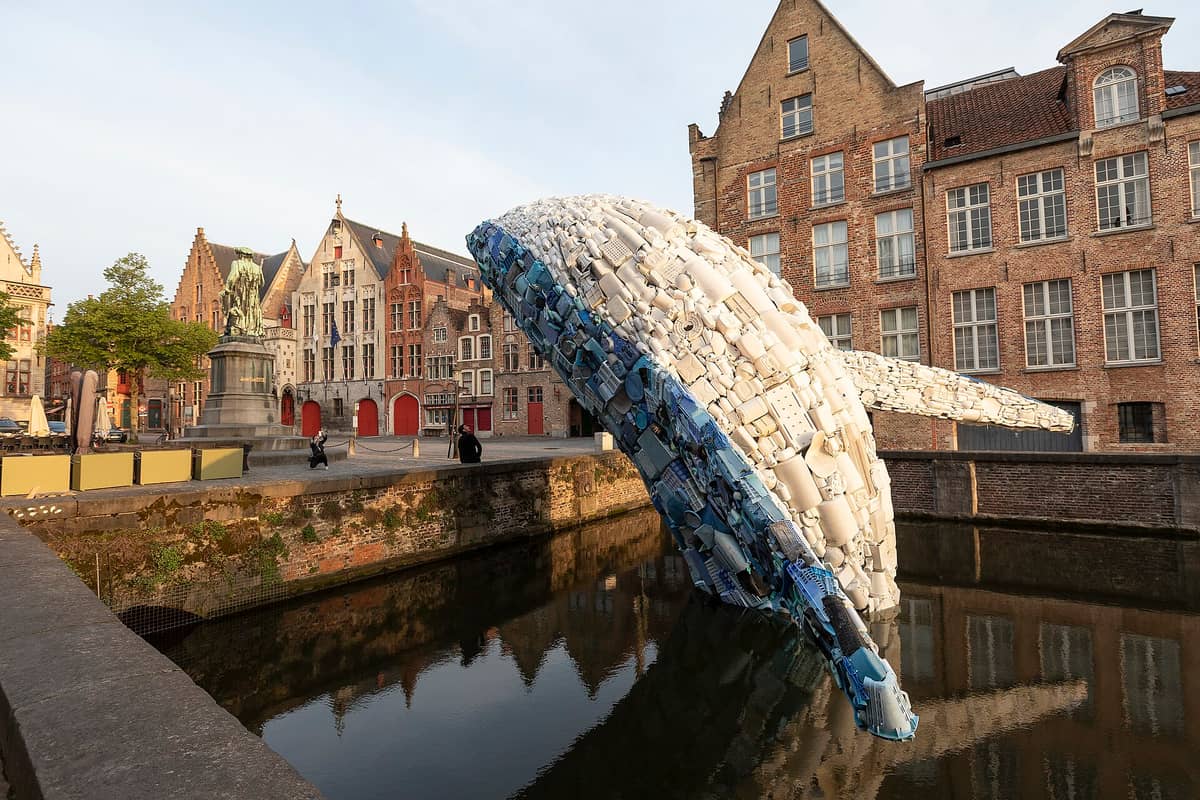
Jan Van Eyckplein is a compact, roughly triangular public square at the northern edge of Bruges' medieval core, where the canal called Spiegelrei meets the older commercial quarter of the city. The square is named after Jan van Eyck, one of the most consequential painters in European history, who spent the last eight years of his life in Bruges, from 1433 until his death in 1441. A bronze statue of the painter stands at the centre, palette in hand, facing the canal.
Unlike the grand, tourist-saturated Markt a few hundred metres to the south, this square functions more like a neighbourhood anchor. Locals cross it on their way to work. Cyclists slow down for the cobblestones. Café tables spill out under the facades on warmer mornings. The square's scale is human and immediate, not monumental.
💡 Local tip
Jan Van Eyckplein is free and open around the clock. There are no tickets, no queues, and no opening windows to plan around. It is one of the few genuinely worthwhile stops in Bruges that costs nothing and asks nothing of your schedule.
The Architecture Around the Square
The buildings that frame Jan Van Eyckplein tell most of the square's story. The most significant is the Poortersloge, on the north side. Built in the late 14th and early 15th centuries, its slender tower and stepped gable are textbook examples of Flemish Gothic civic architecture. The Poortersloge served as a meeting place for wealthy Bruges merchants and foreign traders during the city's peak as a northern European trading centre. Today it is not generally open to the public, but its exterior is intact and worth studying closely.
Across the square, the Tolhuis, the former customs house dating from 1477, presents a more restrained late-Gothic facade. Its ground floor once regulated the movement of goods along the canals that connected Bruges to the sea. The row of guild houses and merchants' residences completing the square are mostly private, with stepped gables rising in irregular rhythms above the street line. This gives the ensemble a notable coherence for a city that receives millions of visitors each year.
If you want to understand how this architecture fits into the broader medieval cityscape, the guide to Gothic architecture in Bruges gives useful context on the building types and periods represented across the historic centre.
Tickets & tours
Hand-picked options from our booking partner. Prices are indicative; availability and final rates are confirmed when you complete your booking.
Historium Bruges entrance tickets
From 19 €Instant confirmationFree cancellationBruges food tour with full meal
From 139 €Instant confirmationFree cancellationBruges walking audio guided tour
From 9 €Instant confirmationBruges Family Walking Tour
From 259 €Instant confirmationFree cancellation
Jan van Eyck and Why the Square Bears His Name
Jan van Eyck was not born in Bruges, but the city claimed him completely in his final years. He served as court painter to Philip the Good, Duke of Burgundy, whose court was based in the region, and he maintained a house and workshop in Bruges where he produced some of the most technically refined paintings of the 15th century. His reputation rested partly on his mastery of oil paint as a medium, a technique that allowed an unprecedented depth of detail and luminosity in portraiture and altarpiece work.
The 19th-century bronze statue at the centre of the square is a civic tribute rather than a period artifact. It was erected during a wave of Flemish cultural pride in the 1800s, when Bruges was rediscovering and restoring its medieval identity. The statue is dignified but not especially memorable on its own. Its value is contextual: standing next to it while looking out toward the Spiegelrei canal, you see something close to the geometry of the city that van Eyck himself would have known.
Van Eyck's most celebrated surviving work in Bruges is held at the Groeningemuseum, a short walk south. The Groeningemuseum holds several of his paintings alongside other masterworks of Early Netherlandish art, and pairs naturally with a visit to the square.
The Square at Different Times of Day
Early morning is the most rewarding time to visit Jan Van Eyckplein. Before 9am, the square is largely empty of tourists. The canal light along the Spiegelrei is at its most even, particularly on overcast days when the pale northern sky softens the reflections in the water. The cobblestones are still wet from the night, the gabled facades carry a quieter colour without direct sun, and the only sounds are canal birds and the occasional passing cyclist.
By mid-morning, especially in summer and on weekends, foot traffic increases steadily. The square never reaches the density of Markt or the canal bend at Rozenhoedkaai, but it does lose some of its contemplative quality once tour groups begin routing through. Midday light is flat and harsh for photography in summer. Late afternoon, particularly in the golden hour before sunset, brings warm directional light across the western facades and draws the best natural colour from the brickwork.
In winter, particularly between November and February, the square can be almost entirely empty on weekday mornings. Temperatures regularly sit between 2 and 7 degrees Celsius, and the canals take on a grey-green stillness. This version of the square is less photogenic in the postcard sense but more atmospheric in a considered way, and far easier to experience without distraction.
ℹ️ Good to know
Photography tip: For the classic view of the Spiegelrei canal with the reflected guild house facades, walk about 50 metres east along the canal bank from the square. The angle looking back west toward the square from the bridge gives you both the water reflection and the Poortersloge tower in the same frame. Early morning or overcast light works best.
Getting There and Moving On
Jan Van Eyckplein sits at the northern edge of the historic centre, about a 20-minute walk from Bruges railway station (Station Brugge). De Lijn bus stop 'Brugge Jan Van Eyckplein' (stop 502114) is adjacent to the square and serves routes connecting the centre to other parts of the city. Bus tickets can be purchased on the De Lijn app or at some retail points; verify current fares before travel as these change periodically. The route on foot passes through a residential and commercial neighbourhood that feels lived-in rather than touristy, which is part of its appeal.
The nearest car park is Parking Langestraat, though driving into the historic centre is not recommended given restricted access zones and limited parking supply. Cycling is a practical alternative: the square itself and the surrounding streets are part of the city's established cycling network, and the flat terrain makes arrival by bike straightforward.
On foot from Jan Van Eyckplein, you are roughly 5 minutes from the Vismarkt (the old fish market), 8 minutes from the Burg square with the Basilica of the Holy Blood, and 10 minutes from Markt. The square works naturally as a starting or ending point for a canal-side walk along the Spiegelrei, one of the less-trodden stretches of Bruges waterway.
The square sits comfortably into a half-day loop through the northern historic centre. The Bruges walking tour guide includes this area and suggests a logical order for connecting the canal quarter to the major monuments.
Is It Worth the Detour?
Jan Van Eyckplein is not a spectacle. There is no interior to enter, no exhibit to follow, and no dramatic view that requires advance planning. What it offers is architectural coherence, historical density, and relative calm in a city that increasingly struggles with overcrowding at its headline attractions. For visitors who engage with Bruges as a medieval city rather than as a set of photographic targets, the square is a genuine highlight.
For visitors with very limited time, primarily focused on art museums or canal boat tours, the square can be treated as a pleasant pass-through rather than a destination. It does not have a single unmissable feature that demands a stop on its own. The statue of van Eyck is modest. The buildings, while historically significant, require some background knowledge to read properly. Its real value compounds when you know what you are looking at.
⚠️ What to skip
Accessibility note: The square and the surrounding canal-side streets are paved with uneven cobblestones, and the bridges nearby involve gradients that can be challenging for wheelchair users or those with mobility difficulties. The bus stop directly on the square is accessible from the street level.
Travellers planning a full day in the historic centre will find this square fits naturally alongside the Vismarkt and the canal quarter of the Dijver into a coherent half-day route.
Insider Tips
- The Spiegelrei canal stretch east of the square is one of the least-photographed canal scenes in Bruges despite being visually comparable to the famous Rozenhoedkaai bend. Walk 80–100 metres east along the water for a sequence of gabled facades reflected in the canal without other tourists in the frame.
- A café on the south side of the square can be a convenient place to sit, warm up, and watch the square come to life before the day-trip crowds arrive from the train station.
- The Poortersloge tower is best photographed from the eastern side of the square rather than head-on, where the narrow angle compresses its height. Moving to the right of the facade reveals the full Gothic tower silhouette against the sky.
- The Bruges City Card covers museum entry at several nearby institutions, so it can offer meaningful savings if you are planning to visit the Groeningemuseum and other paid sites.
- In winter, the square occasionally serves as a minor staging point for market stalls in the weeks around Christmas. The atmosphere is noticeably different from the larger Christmas market at Markt and Simon Stevinplein, with fewer vendors but also far fewer visitors.
Who Is Jan Van Eyckplein For?
- Architecture and history enthusiasts who want to read Bruges beyond its postcard landmarks
- Photographers looking for canal-side compositions without crowds, particularly in early morning or winter
- Visitors combining a walk through the northern historic centre with a stop at the Groeningemuseum
- Travellers on a budget who want meaningful sightseeing without admission fees
- Anyone wanting a slower, more local-feeling experience of Bruges away from peak tourist zones
Nearby Attractions
Other things to see while in Historic Centre:
- Basilica of the Holy Blood
The Basilica of the Holy Blood (Basiliek van het Heilig Bloed) stands on Burg Square in Bruges' historic centre, housing a relic venerated since the Middle Ages. Entry to the basilica is free; the treasury costs €5. With two architecturally distinct chapels stacked on top of each other, it rewards visitors who take time to explore both levels.
- Belfry of Bruges (Belfort)
Standing 83 metres above the Markt, the Belfry of Bruges has dominated the city's skyline since the 13th century. The climb is steep and the staircase narrow, but the rooftop view over the canal network, church spires, and Flemish rooftops rewards the effort. Here is everything you need to know before you go.
- Burg Square
Burg Square, known locally as the Burg or Burgplein, is the political and ceremonial core of Bruges, framed by some of the finest medieval and Renaissance civic architecture in Belgium. Free to enter at any hour, it rewards careful exploration and rewards visitors who stay long enough to watch the light shift across its stone facades.
- Choco-Story Bruges
Choco-Story Bruges traces the story of chocolate from Maya and Aztec cacao rituals to the artisan praline shops lining today's Bruges streets. Located on Wijnzakstraat in the historic centre, it combines genuine cultural history with live chocolate demonstrations that make it one of the more substantive stops on the city's well-worn tourist circuit.