Łazienki Park and the Ujazdów neighborhood form Warsaw's most elegant green corridor, stretching along Aleje Ujazdowskie from the city centre toward the south. The area blends royal history, diplomacy, and everyday urban life in a way that few European capitals can match.
Łazienki Park, officially Royal Łazienki, is Warsaw's largest and most architecturally significant park, covering 76 hectares of landscaped gardens, royal residences, and tree-lined paths just minutes from the city centre. The surrounding Ujazdów neighborhood, lined with embassies and neoclassical facades along Aleje Ujazdowskie, gives the whole area a composed, almost ceremonial quality that stands apart from the rest of Warsaw.
Orientation
Łazienki Park sits in the southern half of Warsaw's central Śródmieście district, bordered by Aleje Ujazdowskie to the west, Belwederska street to the south, and Agrykola street to the north. The main entrance most visitors use is at Agrykola 1, about a 20-minute walk south from Nowy Świat street, or roughly 15 minutes from Plac Trzech Krzyży.
The park forms the southern anchor of Warsaw's Royal Route, the historic ceremonial corridor that runs from the Royal Castle in the Old Town through Krakowskie Przedmieście, then along Nowy Świat street and Aleje Ujazdowskie before terminating at Wilanów Palace. Łazienki Park is the largest and most complex stop along this route.
To the north, the park blends into the Ujazdów neighborhood proper, where Aleje Ujazdowskie is flanked by embassies, the Ujazdów Castle (now the Centre for Contemporary Art), and a series of early 20th-century townhouses. This avenue functions as one of the most architecturally consistent streets in Warsaw, with a calm, deliberate scale that contrasts with the commercial energy of Nowy Świat just a few blocks away. To the southeast, the park borders the Belweder Palace grounds and transitions toward the quieter residential streets of Mokotów.
ℹ️ Good to know
Łazienki Park has multiple entrances. The Agrykola entrance (north side) is most central. The Belwederska entrance (south side) is useful if you're approaching from Mokotów or Wilanów. The park is open year-round without an entrance fee, though individual palace museums charge admission.
Character & Atmosphere
The quality of a morning in Łazienki is specific: cool air off the ponds, the sound of peacocks calling from somewhere in the undergrowth, elderly Varsovians on their regular walk past the rose garden. The park draws joggers, dog walkers, and families before the tourist groups arrive, and for an hour or two around 8–10am, it has a genuinely local feel that's rare this close to any major European capital's historic attractions.
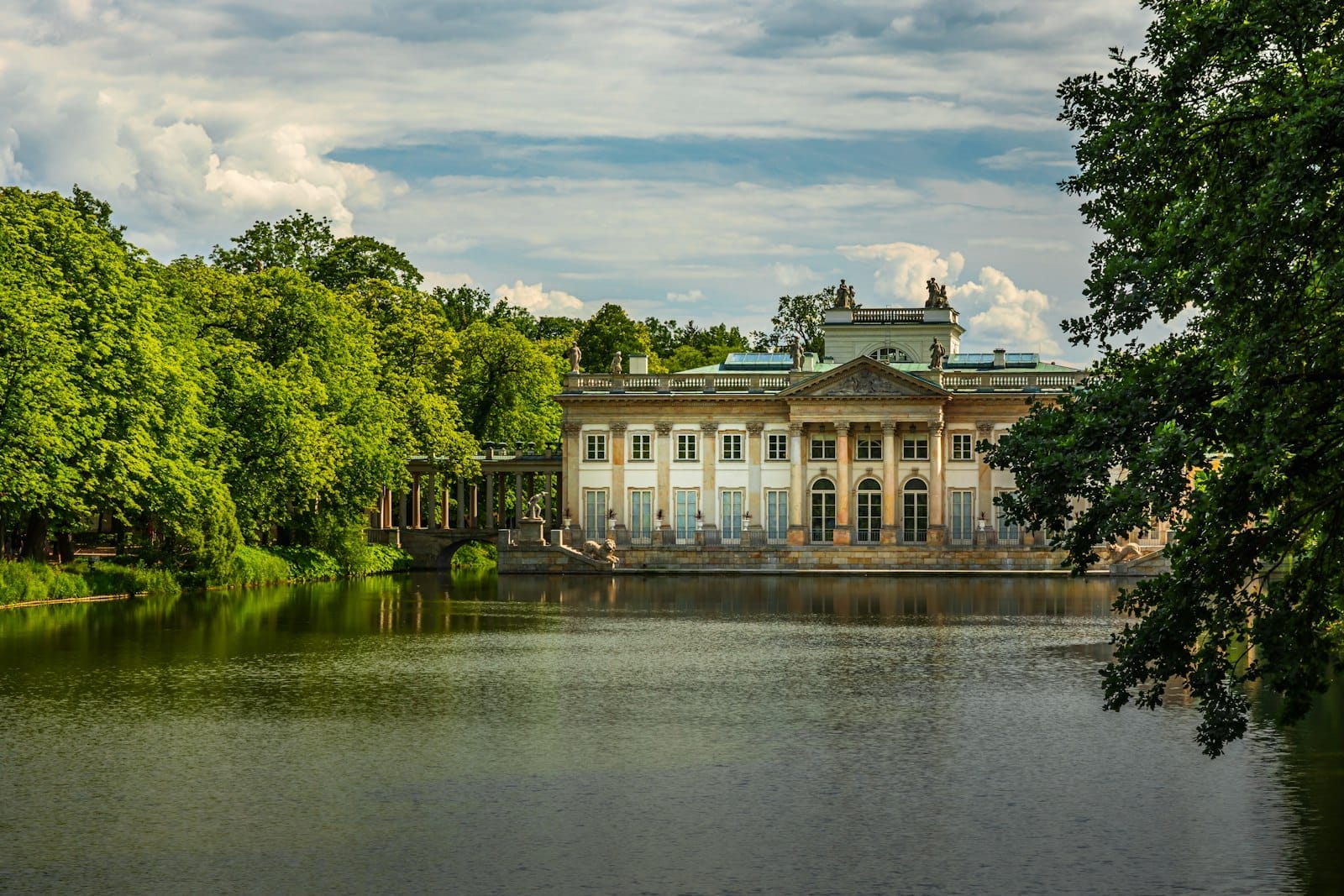
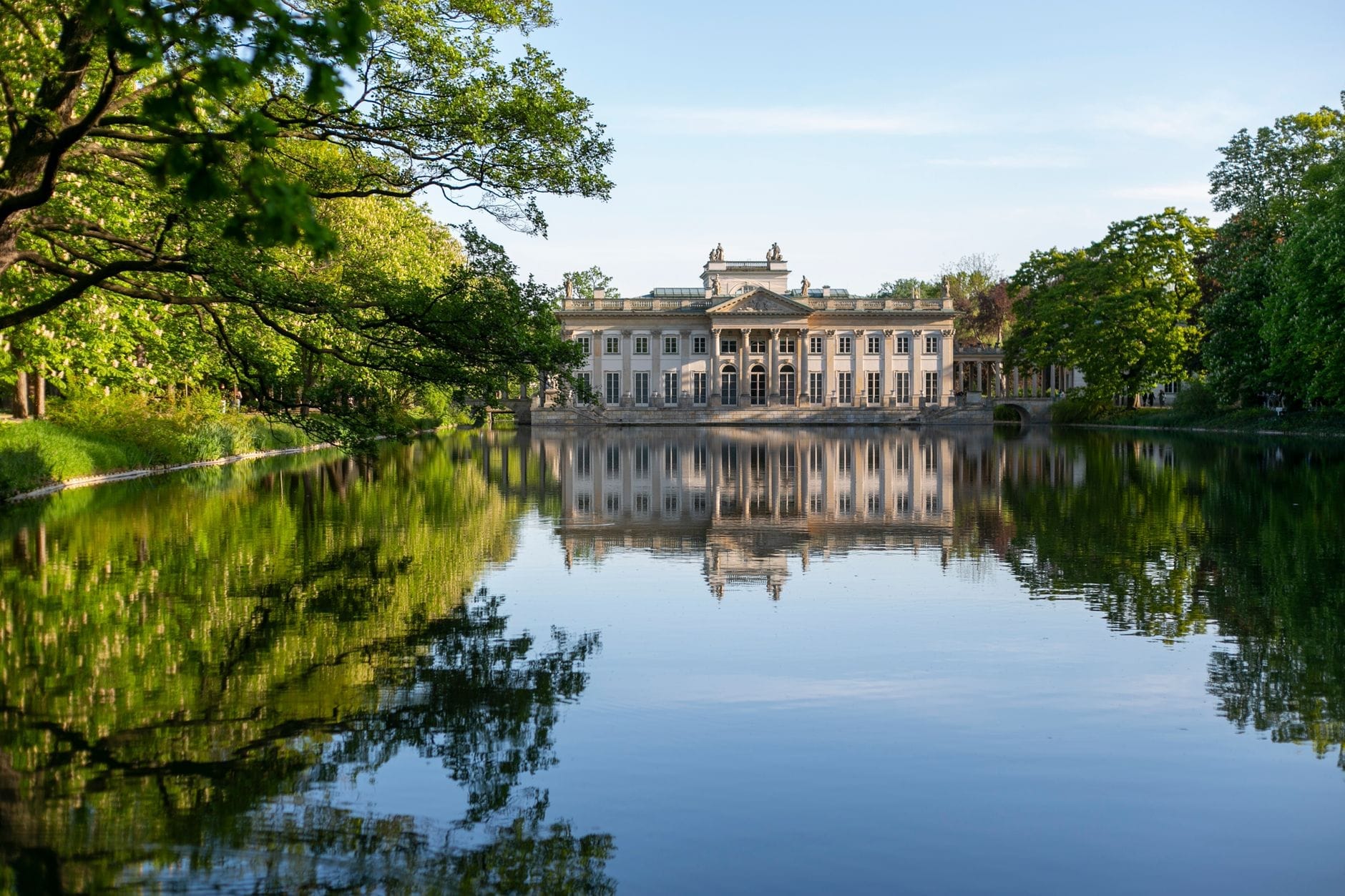
By midday, the Palace on the Isle draws most of the visitor traffic, and the paths between the main entrance and the palace fill with tour groups. The light falls well on the neoclassical facades in the early afternoon, reflecting off the central pond. The peacocks, which roam freely, tend to appear near the amphitheatre and the southern gardens. The park's 9,500-plus trees create a genuine canopy effect, so even on warm summer days the interior paths stay noticeably cooler than the streets outside.
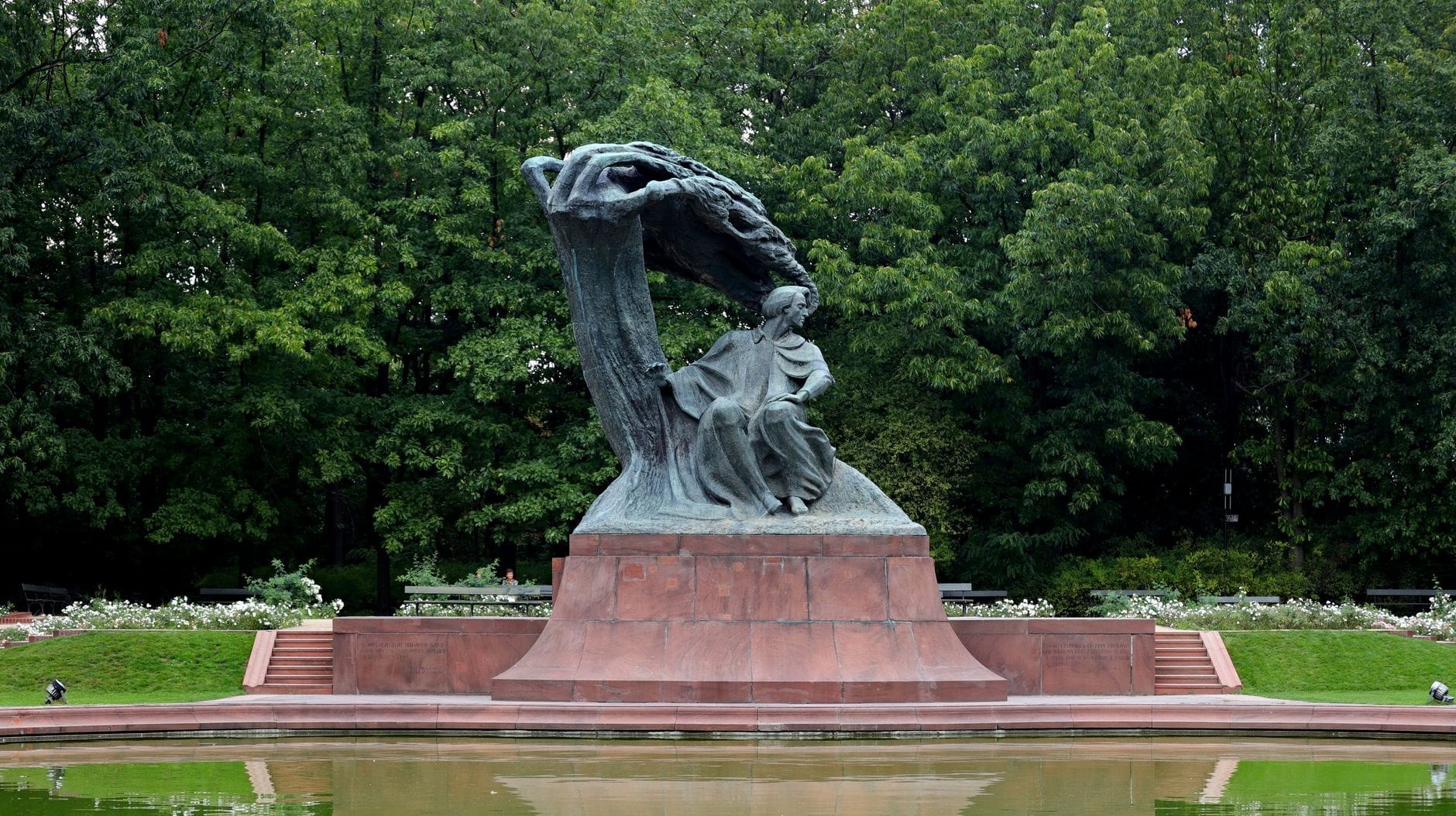
By evening, the atmosphere shifts. Fewer tourists, more locals sitting on benches near the water, the bronze Chopin Monument catching the last light before dusk. On Sunday afternoons from May through September, free Chopin recitals are held at the monument, drawing a relaxed crowd that spills across the surrounding lawn. These concerts are one of the most genuinely pleasurable public events in Warsaw, informal enough that people bring picnic food but attentive enough that you actually hear the music properly.
The Ujazdów side of the area, along Aleje Ujazdowskie, has a different register entirely. The wide avenue is lined with the flags of foreign missions, and the foot traffic is light and purposeful. This is not a neighborhood where you stumble between bars or duck into shops; it has the considered pace of a diplomatic quarter. The side streets between Ujazdowskie and Szucha Avenue contain some excellent cafés and restaurants that serve the embassy crowd and local professionals, without much tourist crossover.
What to See & Do
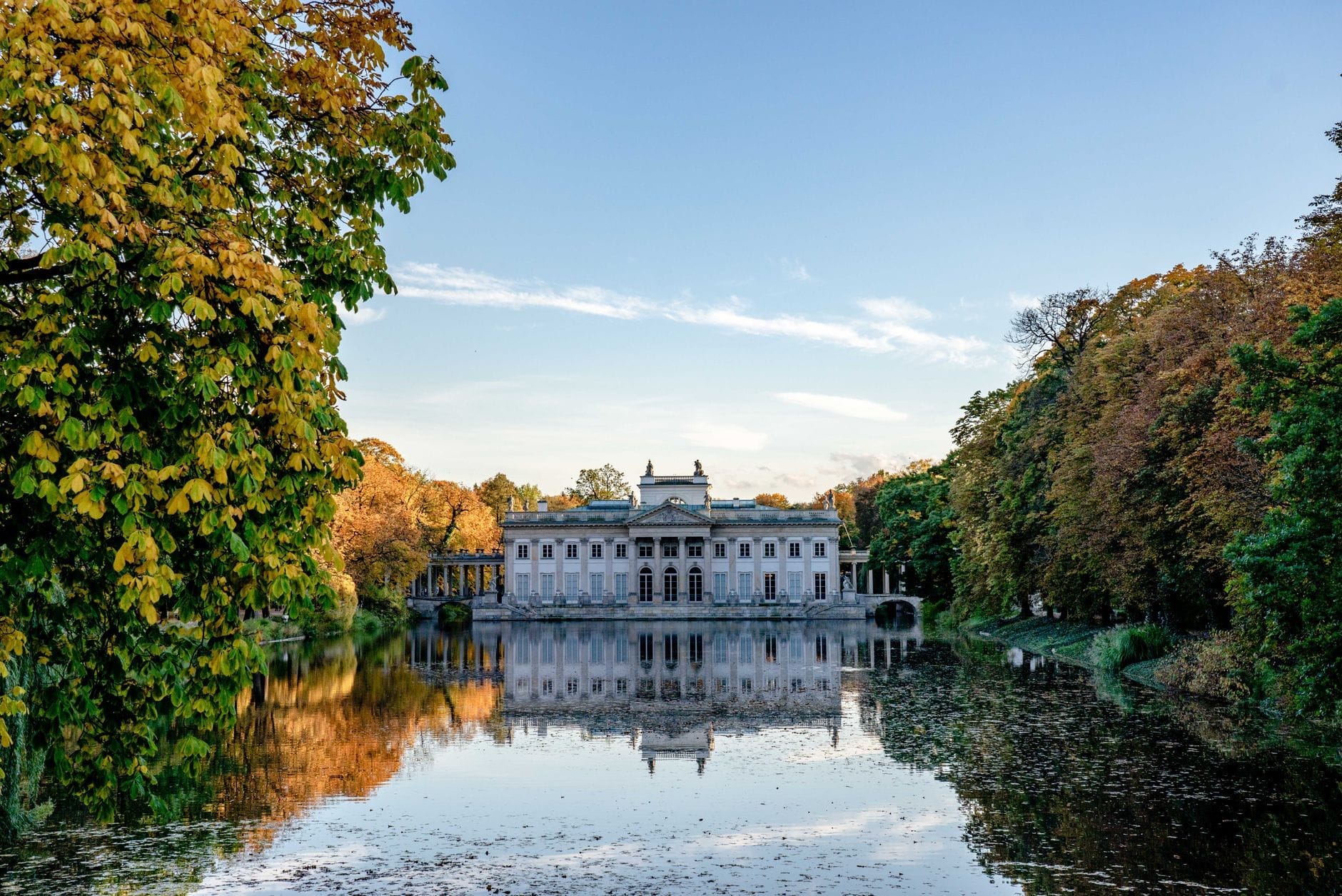
The centerpiece of the park is the Palace on the Isle, an 18th-century royal residence built for King Stanisław II August and positioned on an artificial island in the park's central pond. The building is reflected in the water on both sides, which is the image most people associate with Łazienki. The interior, restored after significant wartime damage, contains royal apartments and a picture gallery. Admission is ticketed.
The Chopin Monument stands at the northern end of the park, a few minutes' walk from the Agrykola entrance. Designed by Wacław Szymanowski and unveiled in 1926, it depicts Chopin seated beneath a stylized willow tree. The Sunday summer recitals here are free and widely attended; they typically run from May to the end of September, with two performances each Sunday at noon and 4pm. No booking required.
Old Orangery: contains the 18th-century Royal Theatre (one of the best-preserved court theatres in Europe) and the Royal Sculpture Gallery with casts of antique and Renaissance works
White House (Biały Dom): a classical villa dating from 1774–1776, used as a guest residence for visiting royalty and now open as a museum
Belweder Palace: bordering the park's southern edge, this historic palace now serves as an official presidential residence; the exterior and surrounding gardens are accessible
Myślewicki Palace: a compact neoclassical building in the park's eastern section, used for state functions and occasionally open to visitors
Ujazdów Castle: just outside the park's western boundary on Al. Ujazdowskie, now housing the Centre for Contemporary Art with rotating exhibitions
The park also fits naturally into a longer walk along the Royal Route. Traveling north from the Agrykola entrance takes you through the Ujazdów neighborhood and up toward Plac Zbawiciela, then onto Nowy Świat. For a full southern extension, the Royal Route continues beyond Belweder toward Wilanów, Warsaw's baroque palace and garden complex about 8 km south.
💡 Local tip
The Chopin recitals at the monument are genuinely worth timing your visit around. Arrive 10–15 minutes early on a Sunday afternoon to find a good spot on the lawn. The concerts last about an hour and feature different pianists each week throughout the season.
Eating & Drinking
The park itself has café facilities near the main entrances, but these are functional rather than destination-worthy. The more interesting food and drink options are on the streets surrounding the park, particularly in the blocks between Aleje Ujazdowskie and Aleje Szucha, and north toward Plac Zbawiciela.
The area around Plac Zbawiciela (Saviour Square), a 10–12 minute walk north of the Agrykola entrance, is one of Warsaw's most concentrated dining and café zones. The square itself is ringed with terraces that fill from late morning through midnight in warmer months. The variety here is good: everything from Polish comfort food to contemporary European and Vietnamese options, at mid-range prices.
Along and just off Aleje Ujazdowskie, several establishments cater to the diplomatic and professional crowd with more formal dining rooms and longer wine lists. Prices here are higher than the Warsaw average. For a quick stop during a park visit, the cafés on Agrykola street near the north entrance are convenient and reasonably priced.
The Ujazdów area doesn't have a strong street food culture the way some other parts of Warsaw do, and it's not a late-night bar district. If you're looking for casual drinking after dark, Plac Zbawiciela is the logical target, or you can follow Nowy Świat north into the denser nightlife zone around Śródmieście.
Getting There & Around
The park has no metro station directly adjacent. The closest metro stops are on Line M1: Politechnika station (to the north, about a 15-minute walk to the Agrykola entrance) or Pole Mokotowskie (to the west, with a longer approach through side streets). From the Old Town, a taxi or ride-hailing app takes around 10–15 minutes depending on traffic.
Bus is the most practical public transit option. Multiple bus lines run along Aleje Ujazdowskie and stop within a 5-minute walk of the park entrances. The 116, 180, and 195 routes (among others, verify current schedules with the ZTM Warsaw transit authority) connect the area to Nowy Świat, the city centre, and points south toward Wilanów. Trams also run nearby on Trasa Łazienkowska.
For most visitors staying in central Warsaw, the park is walkable. From the southern end of Nowy Świat, allow 20–25 minutes on foot. From the Old Town, the walk along the Royal Route is a logical extension of a full day of sightseeing, described in detail in a Warsaw walking tour guide. Cycling is also viable: Warsaw's Veturilo bike-share system has docking stations near the park perimeters.
⚠️ What to skip
Parking near Łazienki is limited and restricted on Aleje Ujazdowskie itself. If you're arriving by car, the side streets east of the park (around Szwoleżerów) sometimes have space, but driving here is not recommended for visitors staying in central Warsaw.
Where to Stay
There are no large hotel clusters immediately adjacent to the park. The Ujazdów area is primarily residential and diplomatic, so accommodation options are sparse compared to Śródmieście or the Old Town corridor. The best strategy is to stay in the central Śródmieście district (along Nowy Świat or near Plac Zbawiciela) and treat Łazienki as a 20-minute walk away. See the full Warsaw accommodation guide for area-by-area breakdowns.
A small number of boutique hotels and serviced apartments operate in the Ujazdów neighborhood itself, particularly in converted townhouses on the side streets off Aleje Ujazdowskie. These suit travelers who want quiet surroundings, easy access to the park, and proximity to the Royal Route without the noise of the busier central streets. The tradeoff is fewer dining and drinking options within walking distance at night.
This area suits solo travelers, couples, or small groups who prioritize green space and architectural setting over nightlife proximity. It's particularly good for visitors with an interest in Polish history and culture, given how easily it connects to the broader Royal Route. Families with children will appreciate the park's space and the peacocks, though the palace museums are less oriented toward young visitors than, for example, the Copernicus Science Centre.
History & Context
The park's origins trace to the 17th century, when the land was developed as a bathhouse complex (łazienki means baths in Polish) for the Lubomirski family. King Stanisław II August, Poland's last king, transformed it into a royal summer residence through the second half of the 18th century, commissioning the Palace on the Isle, the amphitheatre, orangeries, and extensive English-style landscaping. The result is one of the most coherent 18th-century royal park complexes in central Europe.
The park survived the Second World War in better condition than most of Warsaw, though the palaces were damaged and looted by German forces. The postwar reconstruction effort restored the main buildings to their 18th-century appearance. The surrounding Ujazdów neighborhood, which had contained a dense fabric of 19th and early 20th-century townhouses before the war, was partially rebuilt in the postwar decades, with embassies and institutions occupying many of the rebuilt properties along Aleje Ujazdowskie.
Today the park sits within Warsaw's Śródmieście district and is administered by the Łazienki Królewskie institution, which also manages several other royal properties. It connects culturally and historically to the wider story of the Royal Route and the Polish royal tradition, which you can trace further by visiting Wilanów Palace to the south or the Royal Castle in the Old Town to the north.
ℹ️ Good to know
Łazienki Park is genuinely worth visiting in all seasons. Autumn brings striking colour to the tree canopy. Winter snowfall on the ponds and palace rooflines is one of the more photogenic scenes in Warsaw. Spring sees the rose gardens and formal beds come into bloom. Summer is the busiest but also the most programmatically rich period, with the Chopin concerts and outdoor events.
Practical Notes
Łazienki Park is free to enter and open every day of the year, with the gardens generally accessible from early morning until late evening; individual palace museums (Palace on the Isle, Old Orangery, White House, Myślewicki Palace) charge separate admission fees; verify current prices and exact opening hours at the official Łazienki Królewskie website before visiting, as they change periodically.
For a broader understanding of Warsaw's green spaces and how Łazienki fits into the city's park network, the Warsaw parks and green spaces guide covers the city's main outdoor areas including Pole Mokotowskie and the Vistula riverfront. If you're planning a full day in the area, combining Łazienki with the National Museum Warsaw (about a 15-minute walk north on Aleje Jerozolimskie) makes for a coherent itinerary.
TL;DR
Łazienki Park is Warsaw's most significant royal park: 76 hectares of landscaped grounds, multiple palace museums, and the Chopin Monument, all free to enter at the gate level.
Best for: history enthusiasts, architecture travelers, families wanting green space, anyone doing the Royal Route in full.
The Sunday Chopin recitals (May–September, free) are among the best public cultural events in the city and worth timing a visit around.
Accommodation in the Ujazdów neighborhood itself is limited; staying in central Śródmieście and walking in is the most practical approach.
Not the right base if you prioritize nightlife, dense dining options within walking distance, or quick metro access — but excellent if you want calm, green surroundings and proximity to Warsaw's royal heritage.
Warsaw rewards a focused two-day visit more than most European capitals. This itinerary moves logically through the city's historic core, its most important museums, and its green escapes, so you leave with a real sense of the place rather than a blur of landmarks.
Warsaw's churches survived destruction, occupation, and reconstruction to remain among the most compelling religious buildings in Central Europe. This guide covers the best churches in Warsaw, from the Baroque grandeur of Holy Cross to the Gothic revival of St. John's Archcathedral and the military heritage of the Field Cathedral.
Warsaw is one of Central Europe's strongest museum cities. From world-class history museums built on the sites of WWII atrocities to interactive science centers and glowing neon archives, these are the best museums in Warsaw worth your time and zloty.
Warsaw rewards visitors year-round, but the experience shifts dramatically depending on when you arrive. This guide breaks down every season, from sun-drenched summer riverfront life to snow-dusted Christmas markets, helping you choose the right moment for your priorities and budget.
Warsaw is the beating heart of Chopin's world. This guide covers the key sites, live concert options, musical benches, and practical tips for tracing Fryderyk Chopin's legacy across the Polish capital, from the world's largest Chopin collection to free Sunday recitals in a royal park.
Warsaw preserves one of Central Europe's most complete collections of Stalinist and socialist realist architecture. This guide covers the key landmarks, the history behind them, practical visiting tips, and the common myths that distort what communist-era Warsaw actually looks like.
Warsaw has one of Central Europe's most integrated public transport networks, covering the entire city with metro, trams, buses, and suburban trains on a single ticket system. This guide breaks down every option, from Warsaw Chopin Airport transfers to night buses, with current fares and practical advice.
Warsaw divides opinion more than almost any European capital. This guide cuts through the noise with an honest look at what the city does well, where it falls short, how much it costs, and what kind of traveler will love it most.
Warsaw rewards visitors who look beyond its postwar facade. This guide covers the best things to do in Warsaw, Poland, from UNESCO-listed Old Town and world-class history museums to riverfront beaches and the city's creative Praga district, with clear advice on what's worth your time and money.
Three days is the sweet spot for Warsaw: enough time to walk the Royal Route, absorb the city's layered wartime history, cross the river into Praga, and still catch a sunset from the Vistula Boulevards. This itinerary structures the city's best attractions into three logical days so you don't waste a single hour backtracking.
Warsaw transforms each November into one of Central Europe's most atmospheric Christmas destinations, with free outdoor markets, a stunning Old Town backdrop, mulled wine, and festive activities spread across multiple city locations. This guide covers the best market spots, seasonal attractions, and everything you need to plan a perfect winter visit.
Warsaw rewards those who look past the postcard attractions. From a glowing neon archive in Praga to a rooftop garden above the Vistula, these lesser-known spots reveal the city's real character. This guide covers the neighborhoods, history sites, and local haunts that most visitors walk straight past.
Summer transforms Warsaw into an outdoor city, with free concerts in royal parks, sandy riverfront beaches, and long evenings spent at café terraces. This guide covers the best attractions and experiences across June, July, and August, from cultural landmarks to the places where locals actually spend their warmest months.
Winter in Warsaw generally runs from December through February, with temperatures hovering around freezing and short days that rarely exceed eight hours of daylight. But the city rewards cold-weather visitors with fewer crowds, atmospheric snowy streets, a thriving indoor cultural scene, and festive seasonal traditions that locals genuinely love.
Warsaw was once one of the great centers of Jewish life in Europe. This guide covers the history of the Jewish ghetto, the key memorials and museums, the only surviving prewar synagogue, and how to build a meaningful route through the Muranów district and beyond.
Warsaw's nightlife compares well with other European capitals. From Soviet-era neon-lit bars in Praga to rooftop cocktail lounges above the city skyline, the Polish capital offers a diverse after-dark scene that rewards those willing to explore beyond the Old Town.
Warsaw costs 30-50% less than most Western European capitals, yet delivers world-class museums, remarkable history, and excellent food. This guide breaks down exactly what to spend, where to save, and how to avoid the tourist-price traps that inflate budgets unnecessarily.
Warsaw is one of the greenest capital cities in Europe, with parks ranging from 18th-century royal landscapes to sandy Vistula riverbanks. This guide covers the best parks and green spaces in Warsaw, whether you want Chopin concerts on a Sunday afternoon, a long cycle through meadows, or a rooftop garden with river views.
Warsaw's shopping scene is far more interesting than a row of international malls. The city mixes beautifully restored market halls, independent boutique streets, flea markets, and food halls into a retail landscape that rewards explorers. This guide covers the best places to shop, browse, and eat your way through Warsaw.
The Warsaw to Kraków corridor is one of Poland's most traveled routes. This guide covers every realistic option, from PKP Intercity high-speed trains to FlixBus overnight departures, with clear price comparisons, booking strategy, and timing advice.
Warsaw rewards walkers more than almost any European capital. This guide covers the best self-guided walking routes, the apps that make them better, seasonal timing, and the context you need to actually understand what you're looking at.
Warsaw surprises families with a wide range of activities beyond its famous museums. From interactive science centers and a storied zoo to royal parks and riverside beaches, here is a practical guide to the best family experiences the Polish capital offers.
Warsaw suffered one of the most devastating urban destructions of the Second World War. This guide covers every major WW2 site and museum in the city, explains the crucial difference between the two Warsaw uprisings, and gives you practical logistics for visiting each location.
Warsaw's food scene runs deeper than Old Town tourist menus. This guide covers the essential Polish dishes to try, where to find them, how much to pay, and which spots locals rate over the obvious tourist traps — from budget milk bars to modern bistros.
Warsaw's food scene runs deeper than pierogi and bigos. With about 10 Bib Gourmand restaurants in Warsaw in the 2026 MICHELIN Guide Poland and a growing wave of creative chefs redefining Polish cuisine, the city rewards anyone willing to eat beyond the Old Town tourist strip. This guide covers where to eat in Warsaw at every budget, neighborhood, and time of day.
Choosing where to stay in Warsaw shapes your entire trip. This guide breaks down every major neighborhood by atmosphere, transport links, price level, and who it suits best — so you can book with confidence.