National Museum in Warsaw: What to See, When to Go, and What to Expect
The National Museum in Warsaw (Muzeum Narodowe w Warszawie) is Poland's largest and most comprehensive art institution, housing over 830,000 works across ancient, medieval, and modern collections. This guide covers every gallery, the best times to visit, how to get there, and what serious art lovers and casual visitors alike should know before they go.
Quick Facts
- Location
- Al. Jerozolimskie 3, 00-495 Warsaw (City Centre)
- Getting There
- Trams 7, 9, 22, 24, 25 near the museum; bus stop 'Foksal' nearby; about a 15–20 min walk from Warsaw Central station
- Time Needed
- 2 to 4 hours depending on how deeply you engage with collections
- Cost
- 30 PLN regular / 15 PLN reduced / 1 PLN for students and under-26 / Free on Tuesdays (permanent galleries)
- Best for
- Art lovers, history enthusiasts, families with older children, budget travelers on Tuesdays
- Official website
- www.mnw.art.pl/en
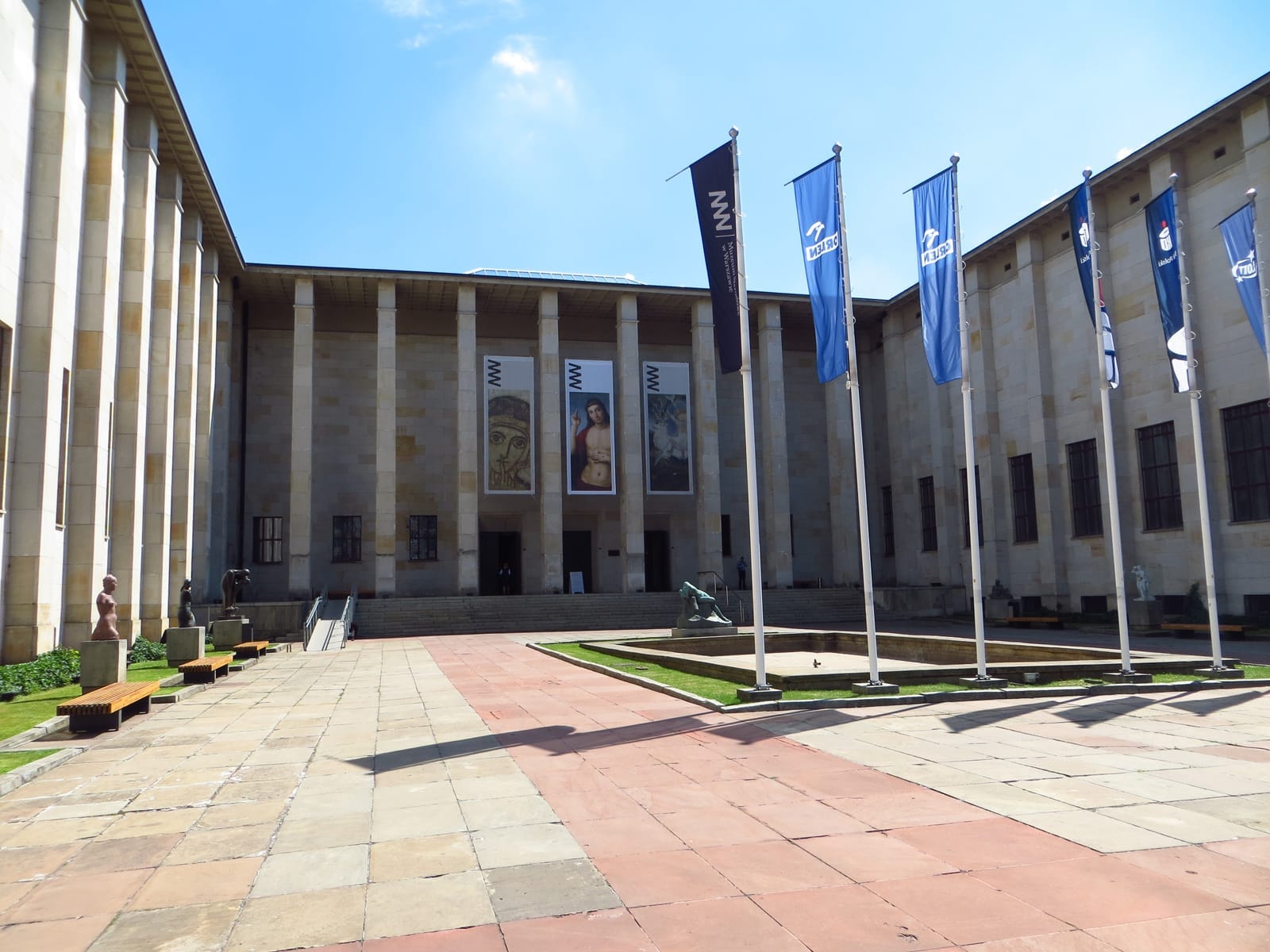
What Is the National Museum in Warsaw?
The National Museum in Warsaw, known in Polish as Muzeum Narodowe w Warszawie, is Poland's flagship art institution. With a collection exceeding 830,000 objects spanning five millennia, it is one of the largest museums in Central Europe. The building on Al. Jerozolimskie is a product of interwar modernism: sober, monumental, and slightly austere from the outside, which makes the depth and variety of what's inside all the more surprising.
The institution's roots go back to 20 May 1862, when it was established by decree as the Museum of Fine Arts in Warsaw. It was later renamed and repositioned as a national cultural anchor, absorbing collections that survived the Second World War, were repatriated after 1945, or were systematically assembled in the decades that followed. Today it sits at a crossroads between an encyclopedic museum and a specifically Polish cultural institution, with galleries that range from Fayyum portrait paintings from ancient Egypt to Polish modernism and design.
💡 Local tip
Permanent galleries are free every Tuesday. If your schedule is flexible, Tuesday visits offer full access to the core collections at no cost, though the museum is more crowded than on a regular weekday.
The Collections: What You'll Actually See
The museum is organized into themed galleries rather than a single chronological walk-through, which means you can meaningfully prioritize based on your interests. Plan your route before you arrive using the floor plans on the museum website, because trying to cover everything in one visit leads to fatigue rather than discovery.
Ancient Art and the Fayyum Portraits
The ancient art gallery includes one of the most remarkable holdings in Poland: a group of Fayyum mummy portraits from Roman-era Egypt. These encaustic paintings on wood, dating from the 1st to 3rd centuries CE, show individual faces with a directness and humanity that feels startling against their age. If you have any interest in the ancient Mediterranean world, this gallery alone justifies the entrance fee.
The gallery also holds Greek and Roman artifacts, coins, and decorative objects. The lighting tends to be subdued in this wing, which suits the material but requires a moment for your eyes to adjust coming in from the brighter hallways.
Medieval Art and the Gallery of Christian Art
The medieval collection is anchored by Polish and Central European religious art, including carved altarpieces, panel paintings, and Gothic sculpture. The craftsmanship in the woodwork is exceptional, and the scale of some altar panels is genuinely imposing in person. This section runs quieter than the main European painting galleries, so it rewards slow attention.
European Painting: Flemish, Dutch, and Italian Works
The European painting galleries contain works from the Flemish and Dutch Golden Age alongside Italian Renaissance and Baroque paintings. The collection is solid without being spectacular by comparison with the great Western European museums, but several individual works stand out. For visitors focused on European art history, this is a well-curated survey rather than an exhaustive encyclopedia.
Polish Painting: The Core of the Institution
The galleries dedicated to Polish art from the 18th through the 20th century are where the museum earns its national status. Works by Jan Matejko, whose vast historical canvases defined how Poles visualized their own past during the period of foreign partition, hang alongside the atmospheric landscapes of the Young Poland movement and the bold modernism of the interwar period. These rooms are essential context for understanding Warsaw's complicated cultural identity.
For anyone already interested in how Poland's artistic tradition developed under occupation and partition, the painting galleries connect well to the broader cultural landscape explored in our guide to Warsaw's best museums, which puts the National Museum in context alongside the city's other major institutions.
Decorative Arts, Textiles, and Design
One of the museum's less-visited but genuinely rewarding sections covers decorative arts: furniture, silverwork, ceramics, and textiles from across European and Polish workshops. The collection of Polish kontusz belts, the wide silk sashes worn by the nobility in the 17th and 18th centuries, is internationally significant. These are objects that rarely appear in Western European museum collections, and they offer a window into a visual culture that operated largely independently of the French-dominated mainstream.
Tickets & tours
Hand-picked options from our booking partner. Prices are indicative; availability and final rates are confirmed when you complete your booking.
Pub crawl in Warsaw
From 28 €Instant confirmationFree cancellationWarsaw Museum of Modern Art entrance ticket
From 8 €Instant confirmationSafe and Convenient Luggage Storage in Warsaw Old Town
From 6 €Instant confirmationFree cancellationInteractive spy-themed city game with host-guide in Warsaw Old Town
From 90 €Instant confirmationFree cancellation
The Building and Its Atmosphere
The museum's building was constructed between 1927 and 1938 to a design by Tadeusz Tołwiński. It belongs to the restrained, classicizing modernism common in European public buildings of the interwar period: clean lines, a large central entrance portal, and a long facade set back from the road. The building survived the Second World War with less damage than much of the surrounding city, which means it retains an unusual continuity with its original purpose.
Inside, the galleries are arranged off wide corridors with high ceilings. The proportions create a sense of space that many newer museum buildings lack. In the afternoon, natural light enters certain wings at an angle that makes the painting galleries particularly pleasant to move through. Morning visits have a cooler, more institutional quality, which suits the ancient art and medieval collections.
ℹ️ Good to know
The museum's interior temperature stays relatively consistent year-round for conservation reasons. In summer, this makes it a comfortable escape from the heat. In winter, the building is reliably warm, though coat check is available near the entrance.
Practical Walkthrough: Getting There and Getting In
The museum sits on Al. Jerozolimskie, one of Warsaw's main east-west arteries, near the intersection with Nowy Świat. Tram lines 7, 9, 22, 24, and 25 stop nearby, making it accessible from most central Warsaw neighborhoods without a transfer. From Warsaw Central station, the walk takes roughly 15 to 20 minutes east along Al. Jerozolimskie, passing through a stretch of the city that transitions from the commercial core into a denser cultural district.
The museum is within comfortable walking distance of Nowy Świat Street, Warsaw's main promenade, and shares the immediate neighborhood with several other significant institutions. Combining a museum visit with a walk along Nowy Świat or toward the Old Town makes for a full day without any transit required.
Opening hours are Tuesday through Thursday 10:00 to 18:00, Friday 10:00 to 20:00, and Saturday through Sunday 10:00 to 18:00. The museum is closed on Mondays. Ticket offices close 45 minutes before closing. Tickets cost 30 PLN regular and 15 PLN reduced, with a 1 PLN rate for children, young people, and students under 26. Groups of ten or more pay 15 PLN per person. Permanent galleries are free on Tuesdays. Both cash and card payments are accepted at the ticket desk.
⚠️ What to skip
Temporary exhibitions carry separate admission fees not covered by the Tuesday free-entry policy. Check the museum website before your visit if a specific temporary show is part of your plan.
Accessibility at the entrance is ground-level, which is practical for visitors using wheelchairs or with mobility considerations. For detailed accessibility information, including internal lifts and facilities, contact the museum directly or check the official website before arriving.
Photography and How the Experience Changes by Time of Day
Photography without flash is permitted in the permanent galleries. The medieval and decorative arts sections are relatively dim, which requires patience with handheld shots. The European and Polish painting galleries receive better natural light in the afternoon, particularly on the side facing the garden at the rear of the building.
Tuesday mornings are the lightest in terms of crowds: families, school groups, and art students are the most frequent visitors early in the week. Friday evenings, when the museum stays open until 20:00, are worth considering for visitors who want more space around the major Polish painting canvases. The late-afternoon light through the upper windows in the main painting halls on a clear Friday in autumn or spring is notably good.
If you are building a fuller cultural itinerary around the museum, the best time to visit Warsaw guide addresses seasonal conditions that affect museum visits and outdoor sightseeing alike.
Honest Assessment: Who Will Get the Most From This Museum
The National Museum in Warsaw rewards visitors who arrive with some prior interest in at least one of its collection areas. If you are deeply engaged with Polish history, the painting galleries will resonate strongly. If your interest is ancient art, the Fayyum portraits alone are worth the trip. If you are a generalist looking for one big cultural experience in Warsaw, this is a solid choice, but it is not a highlight-reel museum in the way that a focused single-collection institution can be.
Visitors who find encyclopedic museums draining, or who have limited time and want a single concentrated experience, might be better served by the Fryderyk Chopin Museum or the POLIN Museum, both of which offer more tightly structured narratives. The National Museum's strength is breadth, and that breadth is most rewarding when you have two to four hours and a clear sense of what you want to prioritize.
Travelers with a particular interest in Warsaw's Jewish history might note that the POLIN Museum of the History of Polish Jews, covered in our POLIN Museum guide, operates on a different model: one deeply immersive historical narrative rather than a collection of objects. Both museums are worth visiting, but they offer fundamentally different experiences.
For first-time visitors planning their overall itinerary, the 3-day Warsaw itinerary positions the National Museum within a broader sequence of the city's key cultural sites.
Insider Tips
- Pick up a floor plan at the ticket desk rather than relying on the gallery signage alone. The layout is logical but not immediately intuitive, and having the full map prevents doubling back.
- The museum café on the ground floor is a practical stop mid-visit. It is quieter than the cafés on Nowy Świat nearby and gives you a chance to rest before tackling the upper galleries.
- The gallery of Polish kontusz belts in the decorative arts section is one of the most internationally unusual holdings in the museum. Most visitors walk past it. It takes about 15 minutes and offers details you won't find explained elsewhere in Warsaw.
- Friday evenings are the quietest time to view the main Polish painting canvases. The extended hours until 20:00 attract fewer visitors than weekend afternoons, and the reduced crowd makes it easier to stand back from the large-format historical works.
- If you are visiting with children, the 1 PLN youth ticket for permanent galleries makes this one of the most affordable cultural experiences in the city. The ancient art gallery, with its mummy portraits, tends to be the section that holds younger visitors' attention longest.
Who Is National Museum in Warsaw For?
- Art lovers and students of European and Polish painting from the medieval period through the 20th century
- Visitors with an interest in ancient Mediterranean cultures, particularly the Fayyum portrait collection
- Budget travelers and students, given the 1 PLN youth ticket and free Tuesdays
- Travelers building a full cultural day in the City Centre alongside Nowy Świat and the surrounding museum district
- Anyone seeking a temperature-controlled environment during Warsaw's summer heat or winter cold
Nearby Attractions
Other things to see while in City Centre (Śródmieście):
- Fryderyk Chopin Museum
Housed inside the 17th-century Ostrogski Palace near Warsaw's Royal Route, the Fryderyk Chopin Museum holds one of the world's richest collections of Chopin memorabilia. Closed for full renovation throughout 2026; reopening is planned for 2027 — plan post-renovation visits and confirm dates on the official site.
- Grand Theatre – National Opera
The Grand Theatre – National Opera (Teatr Wielki – Opera Narodowa) is one of the largest opera houses in Europe, anchoring Theatre Square in central Warsaw with a neoclassical facade that survived war and rebuilding. Whether you attend a full opera, a ballet, or simply walk across the square to take in the architecture, this institution rewards both serious culture-seekers and curious first-time visitors.
- Hala Koszyki Food Hall
Built in 1909 and reborn in 2016, Hala Koszyki is a restored Art Nouveau market hall in central Warsaw where locals actually eat, drink, and shop. Free to enter, open daily until 1am, and genuinely good.
- Holy Cross Church (Kościół Świętego Krzyża)
One of Warsaw's most historically charged sites, Holy Cross Church on Krakowskie Przedmieście holds the preserved heart of Frédéric Chopin in a nave pillar. A Minor Basilica with a Baroque facade, 17th-century origins, and free entry, it rewards visitors who take the time to look closely.