Wilanów is Warsaw's southernmost district and home to one of Poland's finest Baroque royal residences. Beyond the palace grounds, the area combines historic village fabric with Miasteczko Wilanów, a planned modern quarter that has attracted an international crowd of families and professionals. It is quiet, green, and deliberately paced — a counterweight to the city centre's density.
Wilanów sits at the end of Warsaw's Royal Route, anchored by a Baroque palace that once rivalled the grandeur of Versailles and is now one of the best-preserved royal residences in Central Europe. The district around it has evolved into one of Warsaw's most affluent and internationally minded neighbourhoods, with low-rise villas, wide tree-lined streets, and a modern residential quarter that feels like a planned town grafted onto the city's southern edge. It is not where you go for nightlife or street food; it is where Warsaw takes a long, unhurried breath.
Orientation
Wilanów occupies the far southern reaches of Warsaw, sitting on the left bank of the Vistula well below the urban core. Its northern and western edges border Mokotów, one of Warsaw's largest and most densely built residential districts. To the southwest lies Ursynów, a sprawling communist-era housing district that has since filled in with newer development. Across the Vistula to the east sits Wawer, and directly to the south the district boundary meets the rural commune of Konstancin-Jeziorna, meaning Wilanów genuinely feels like the city running out of city.
Within the district, two distinct zones define the experience. The older, historic core around Stary Wilanów and Wilanów Królewski clusters around the palace and its gardens, with a handful of historic lanes, a parish church, and the broad formal parklands of the royal estate. A few kilometres to the west and southwest is Miasteczko Wilanów, a planned neighbourhood that has grown rapidly since the early 2000s into a self-contained community with its own shopping, schools, and street grid. These two zones have different characters but share the district's overall tone: space, greenery, and a noticeable absence of the noise that defines central Warsaw.
Wilanów forms the southern terminus of Warsaw's historic Royal Route, a corridor that runs northward through Nowy Świat Street and Krakowskie Przedmieście all the way to the Old Town. Understanding this axis helps build a mental map: Wilanów is the quiet end of a long procession that begins at the Royal Castle and passes through the social spine of the city.
Character & Atmosphere
Wilanów does not perform for visitors. The streets around the palace grounds are tidy and understated, lined with low garden walls and the kind of mature trees that take decades to grow. On weekday mornings the area around the palace gates is quiet enough to hear pigeons working the courtyard. Tour coaches begin arriving late morning, and by early afternoon the main axis in front of the museum entrance carries a steady stream of visitors, but it never reaches the density of the Old Town or the city centre parks.
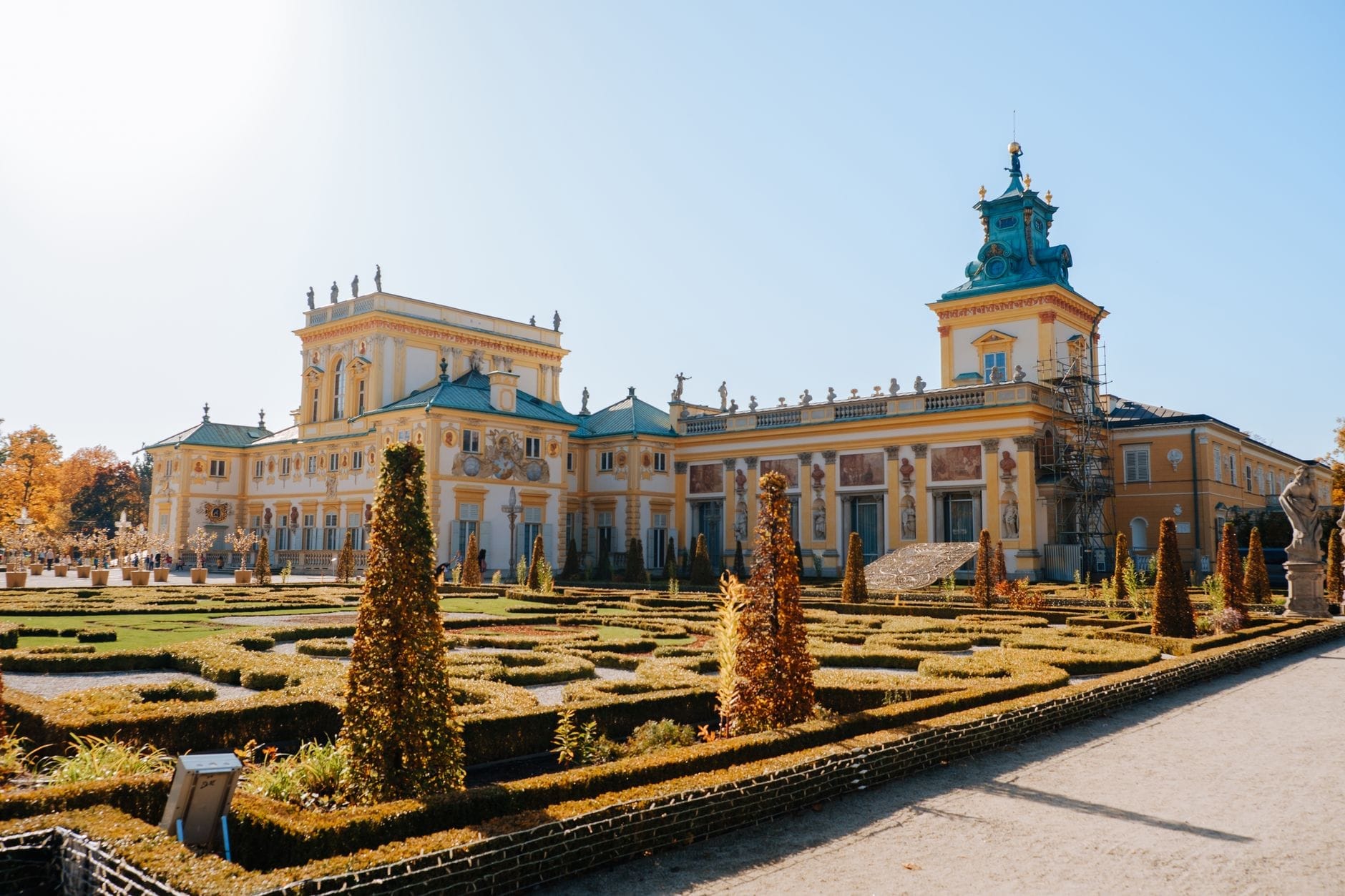
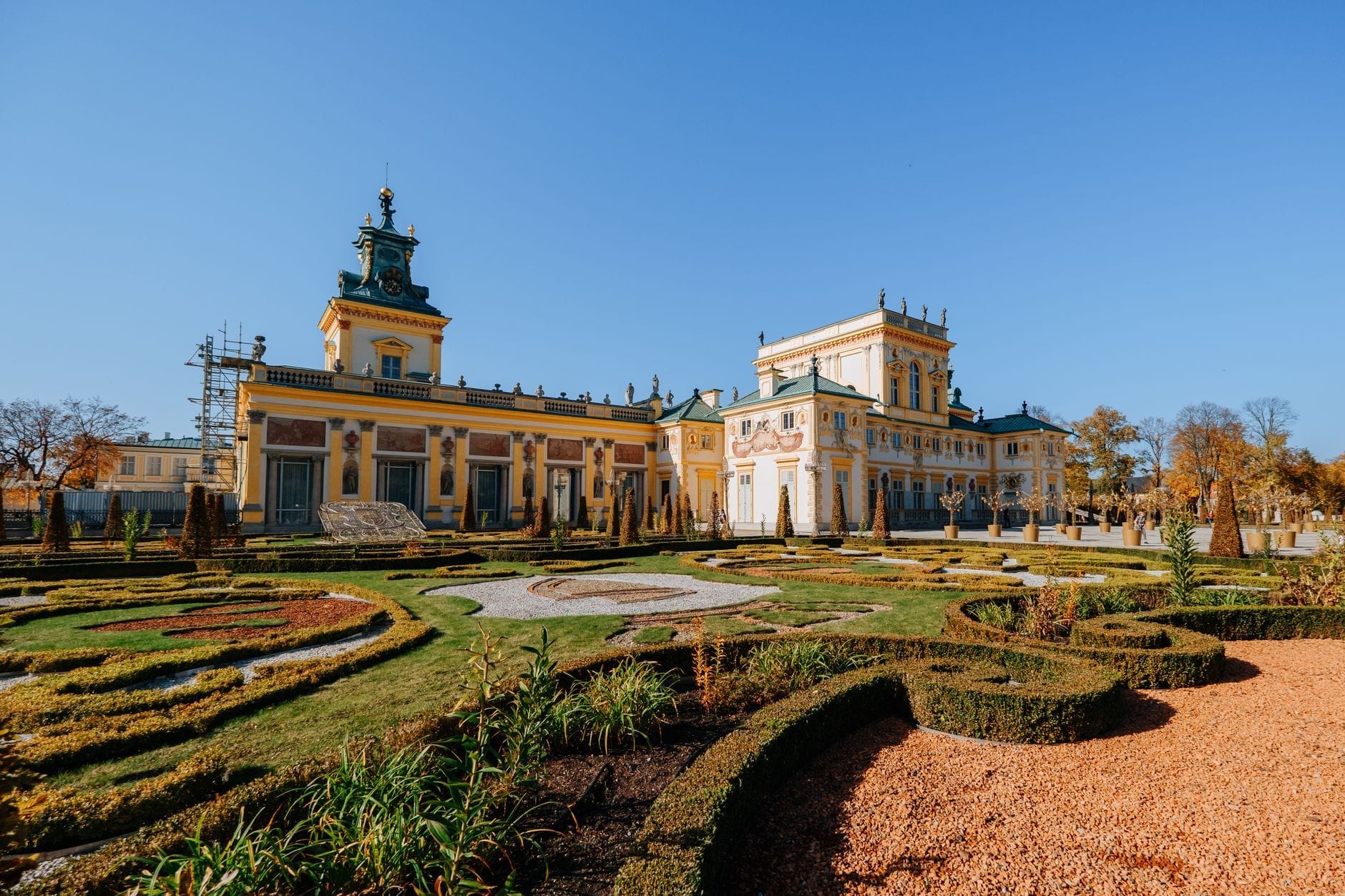
In the afternoons, especially in spring and early summer, the gardens are where Wilanów shows its best side. The formal baroque parterre on the eastern side of the palace catches the low afternoon light around 4 to 5pm, when the shadows of trimmed hedgerows stretch across the gravel paths and the crowds have begun to thin. This is the hour to walk slowly. The northern English-style landscape section of the park, less formal and more shaded, draws local residents walking dogs and couples sitting by the ponds.
Miasteczko Wilanów has a different rhythm entirely. It reads like a medium-density European suburb transplanted to Warsaw's edge: broad pavements, cycle paths, low-rise apartment blocks with ground-floor cafés and shops, and a population that skews toward young families and international professionals. The area around Przyczółkowa Street and the central retail zones gets active on weekend mornings when the local markets and food stalls draw residents from across the district. After dark, Miasteczko Wilanów quiets significantly. There is neighbourhood restaurant activity but no real nightlife infrastructure.
ℹ️ Good to know
Wilanów has historically had the highest proportion of foreign residents among Warsaw's districts. International schools, diplomatic families, and multinational company employees have settled here, which gives the area a slightly more cosmopolitan feel than its suburban setting might suggest.
What to See & Do
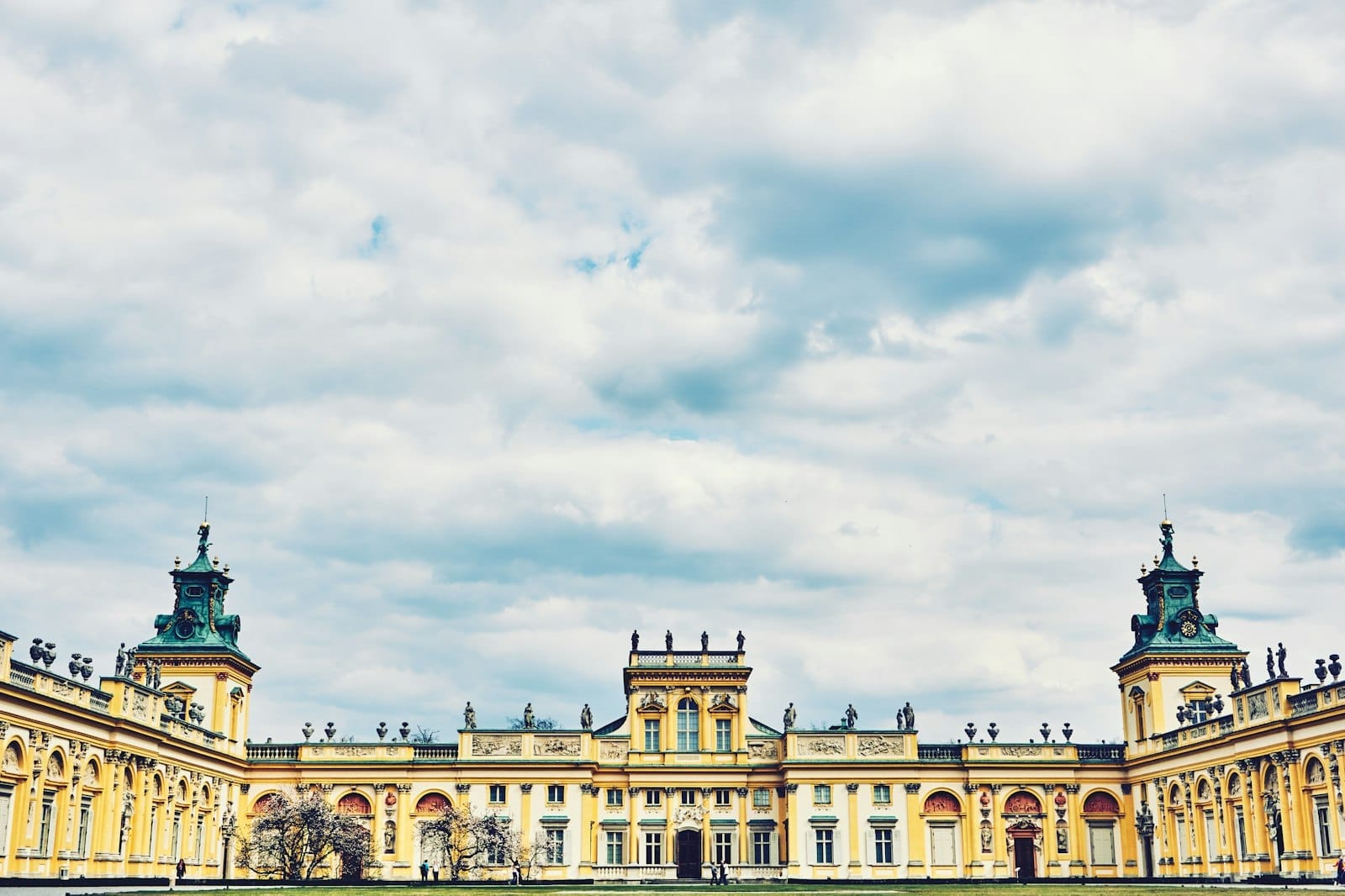
The central reason to come to Wilanów is the palace itself. Wilanów Palace was built in the late 17th century for King Jan III Sobieski, the Polish monarch who led the relief of Vienna against the Ottoman siege in 1683. The building is a confident piece of late Baroque architecture, with a garden facade that layers painted friezes, sculpture, and gilded trim across a relatively modest footprint — nothing like the sheer scale of Versailles, but more intimate and arguably more accomplished in its detail. The museum inside, established in 1805, is one of the earliest public museums in Poland and holds royal apartments, period furniture, and portrait collections that trace the estate's ownership through the centuries.
The Wilanów Palace gardens are worth as much time as the interior, possibly more. The formal baroque section directly behind the palace gives way to a romantic English-style landscape garden, a Chinese garden, and areas of naturalistic parkland extending toward the Vistula escarpment. Rose gardens, ponds with rowboats in season, and garden pavilions are scattered throughout. Plan at least ninety minutes for the grounds alone.
On the palace grounds you will also find the Poster Museum, housed in a converted riding school and dedicated to Polish poster art from the mid-20th century onward. Poland developed one of the world's most distinctive poster traditions during the communist period, and this collection is the definitive place to encounter it. Separate admission applies.
A short walk from the main palace entrance stands St Anne's Church in Wilanów, a modest Baroque parish church with an unusually long local history. The church is notable partly for keeping a mammoth bone in its belfry, a relic of pre-scientific natural history that has been held there for centuries. It is a small detail, but it illustrates the depth of local history in a district that most visitors treat as a day trip.
Wilanów Palace museum and royal apartments
Baroque and English-style palace gardens, including rose gardens and ponds
Poster Museum (Muzeum Plakatu) in the palace grounds
St Anne's Church in Wilanów, with its historic belfry curiosity
Miasteczko Wilanów weekend markets for local produce and street food
Cycling the Vistula escarpment paths from the palace grounds southward
💡 Local tip
The palace museum offers free entry on certain days of the week, which rotate seasonally. Check the official museum website before visiting to avoid paying full price when free entry is available. Queues are longest between 11am and 2pm on weekends.
Eating & Drinking
The food scene in Wilanów is more functional than distinctive, at least in the historic core around the palace. The immediate vicinity of the palace gates has a handful of cafés and one or two restaurants oriented toward daytime visitors, with predictable menus and prices that reflect the captive audience. They serve the purpose of a mid-visit coffee or a light lunch, but they are not destinations in their own right.
The more interesting eating is in Miasteczko Wilanów, where a younger, internationally minded resident base has generated genuine neighbourhood restaurants and cafés. Ground-floor units along the main residential streets hold Italian trattorias, sushi counters, Polish bistros, and specialty coffee shops that operate at the level of quality you would expect from similar quarters in central European cities. Price points are moderate, and the atmosphere is local rather than tourist-facing.
Weekend mornings bring the most character to Wilanów's food scene. Seasonal markets near the palace and in Miasteczko Wilanów stock local produce, baked goods, and prepared foods. These are neighbourhood markets for residents, not staged farmer's markets for tourists, which makes them a more honest reflection of how the district actually eats.
For visitors making a full day of the palace and gardens, the practical approach is to eat well before leaving the city centre. The stretch of Nowy Świat Street and the surrounding streets offer far more choice at comparable prices, and you can pick up provisions before boarding the bus south.
Getting There & Around
Wilanów has no metro connection. The nearest metro stations are in Ursynów, to the northwest, but they do not offer a convenient interchange for most visitors. The practical way to reach Wilanów from central Warsaw is by bus, specifically the routes running along Sobieskiego Street, which forms part of the historic Royal Route connecting the palace to the city centre. Journey time under normal conditions is around 30 minutes from central Warsaw stops, covering roughly 10 kilometres from the Royal Castle area to the palace. During peak traffic hours, road congestion can extend that to 50 minutes or more, particularly on Sobieskiego Street approaching the southern ring roads.
Bus lines serving Wilanów Palace include several routes that connect to major central Warsaw stops such as Plac Unii Lubelskiej in Mokotów, which itself connects to tram and metro lines. Check the current ZTM Warsaw public transport map for specific route numbers, as these are subject to change. Tickets are standard Warsaw city tickets, valid across all ZTM modes.
Ride-hailing via Bolt or Uber is a straightforward alternative, particularly for the return journey when timing matters. The fare from the palace to central Warsaw is reasonable and the drive is direct via Sobieskiego. Taxis from the street near the palace entrance also operate, though app-based rides are generally more transparent on price.
Cycling is a genuine option in fine weather. The Royal Route has dedicated cycling infrastructure along parts of its length, and Wilanów itself has cycle paths running through the palace grounds and into Miasteczko Wilanów. City bike rental stations (Veturilo) are present in the district. For a full cycling picture of getting around Warsaw, see the Getting Around Warsaw guide.
⚠️ What to skip
Wilanów is not walkable from central Warsaw in any practical sense. The palace is roughly 10 kilometres south of the Royal Castle and the Old Town. Do not attempt to walk from the city centre expecting a pleasant stroll — plan your transit in advance and account for the real travel time when building a day itinerary.
Where to Stay
Wilanów is not a typical base for first-time visitors to Warsaw. The lack of metro access and the distance from the main cluster of attractions, nightlife, and transit hubs mean that staying here adds transit time and planning complexity to every day of a trip. Most visitors are better served by staying in the city centre, Śródmieście, or Mokotów and making Wilanów a half-day or full-day excursion.
That said, Wilanów does have a small selection of hotel accommodation and boutique properties, mostly in the Miasteczko Wilanów area and in villas along the older residential streets near the palace. These suit a specific type of traveler: those on extended stays in Warsaw for business, families wanting space and quietness over convenience, or visitors who have already seen the city centre and want a slower base. Accommodation here tends toward higher price points relative to equivalent hotels in the centre, reflecting the residential premium of the district.
For the full picture of where to base yourself across Warsaw's neighbourhoods, the Where to Stay in Warsaw guide gives comparative advice across all the main areas.
Is Wilanów Worth the Trip?
For anyone with more than two days in Warsaw, yes. The palace is a genuine architectural achievement and the gardens are among the finest formal grounds in Poland. The experience is also meaningfully different from the city's other major heritage sites: quieter than the Old Town, less institutional than the National Museum complex, and set in a landscape that gives the buildings room to breathe.
For a first-time visitor with only one or two days, the calculus is harder. The transit time is real, and there is strong competition from attractions within walking distance of the city centre. Łazienki Park and its own palace complex offer a similar combination of royal architecture and green space much closer to the centre, and would come first for most short itineraries. Wilanów rewards the traveler who wants to go a layer deeper.
Those planning a full day in the south of Warsaw can also consider combining Wilanów with a stop in Mokotów on the way back, or with the parks and green spaces that define this part of the city. The 2 Days in Warsaw itinerary can help you decide where Wilanów fits in your overall schedule.
TL;DR
Wilanów is defined by its 17th-century Baroque palace, one of the best-preserved royal residences in Central Europe, set within extensive formal and landscape gardens.
The district is safe, affluent, and green, with a significant international resident community in the modern Miasteczko Wilanów quarter.
There is no metro access: buses along Sobieskiego Street take around 30 minutes from the centre, longer in peak traffic. Plan transit carefully.
Best suited to travelers with at least 3 days in Warsaw who want to see beyond the historic core, or those on extended stays seeking a quieter, more residential base.
Not recommended as a primary base for short trips: the distance and limited transit options add friction to daily sightseeing in the city centre.
Warsaw rewards a focused two-day visit more than most European capitals. This itinerary moves logically through the city's historic core, its most important museums, and its green escapes, so you leave with a real sense of the place rather than a blur of landmarks.
Warsaw's churches survived destruction, occupation, and reconstruction to remain among the most compelling religious buildings in Central Europe. This guide covers the best churches in Warsaw, from the Baroque grandeur of Holy Cross to the Gothic revival of St. John's Archcathedral and the military heritage of the Field Cathedral.
Warsaw is one of Central Europe's strongest museum cities. From world-class history museums built on the sites of WWII atrocities to interactive science centers and glowing neon archives, these are the best museums in Warsaw worth your time and zloty.
Warsaw rewards visitors year-round, but the experience shifts dramatically depending on when you arrive. This guide breaks down every season, from sun-drenched summer riverfront life to snow-dusted Christmas markets, helping you choose the right moment for your priorities and budget.
Warsaw is the beating heart of Chopin's world. This guide covers the key sites, live concert options, musical benches, and practical tips for tracing Fryderyk Chopin's legacy across the Polish capital, from the world's largest Chopin collection to free Sunday recitals in a royal park.
Warsaw preserves one of Central Europe's most complete collections of Stalinist and socialist realist architecture. This guide covers the key landmarks, the history behind them, practical visiting tips, and the common myths that distort what communist-era Warsaw actually looks like.
Warsaw has one of Central Europe's most integrated public transport networks, covering the entire city with metro, trams, buses, and suburban trains on a single ticket system. This guide breaks down every option, from Warsaw Chopin Airport transfers to night buses, with current fares and practical advice.
Warsaw divides opinion more than almost any European capital. This guide cuts through the noise with an honest look at what the city does well, where it falls short, how much it costs, and what kind of traveler will love it most.
Warsaw rewards visitors who look beyond its postwar facade. This guide covers the best things to do in Warsaw, Poland, from UNESCO-listed Old Town and world-class history museums to riverfront beaches and the city's creative Praga district, with clear advice on what's worth your time and money.
Three days is the sweet spot for Warsaw: enough time to walk the Royal Route, absorb the city's layered wartime history, cross the river into Praga, and still catch a sunset from the Vistula Boulevards. This itinerary structures the city's best attractions into three logical days so you don't waste a single hour backtracking.
Warsaw transforms each November into one of Central Europe's most atmospheric Christmas destinations, with free outdoor markets, a stunning Old Town backdrop, mulled wine, and festive activities spread across multiple city locations. This guide covers the best market spots, seasonal attractions, and everything you need to plan a perfect winter visit.
Warsaw rewards those who look past the postcard attractions. From a glowing neon archive in Praga to a rooftop garden above the Vistula, these lesser-known spots reveal the city's real character. This guide covers the neighborhoods, history sites, and local haunts that most visitors walk straight past.
Summer transforms Warsaw into an outdoor city, with free concerts in royal parks, sandy riverfront beaches, and long evenings spent at café terraces. This guide covers the best attractions and experiences across June, July, and August, from cultural landmarks to the places where locals actually spend their warmest months.
Winter in Warsaw generally runs from December through February, with temperatures hovering around freezing and short days that rarely exceed eight hours of daylight. But the city rewards cold-weather visitors with fewer crowds, atmospheric snowy streets, a thriving indoor cultural scene, and festive seasonal traditions that locals genuinely love.
Warsaw was once one of the great centers of Jewish life in Europe. This guide covers the history of the Jewish ghetto, the key memorials and museums, the only surviving prewar synagogue, and how to build a meaningful route through the Muranów district and beyond.
Warsaw's nightlife compares well with other European capitals. From Soviet-era neon-lit bars in Praga to rooftop cocktail lounges above the city skyline, the Polish capital offers a diverse after-dark scene that rewards those willing to explore beyond the Old Town.
Warsaw costs 30-50% less than most Western European capitals, yet delivers world-class museums, remarkable history, and excellent food. This guide breaks down exactly what to spend, where to save, and how to avoid the tourist-price traps that inflate budgets unnecessarily.
Warsaw is one of the greenest capital cities in Europe, with parks ranging from 18th-century royal landscapes to sandy Vistula riverbanks. This guide covers the best parks and green spaces in Warsaw, whether you want Chopin concerts on a Sunday afternoon, a long cycle through meadows, or a rooftop garden with river views.
Warsaw's shopping scene is far more interesting than a row of international malls. The city mixes beautifully restored market halls, independent boutique streets, flea markets, and food halls into a retail landscape that rewards explorers. This guide covers the best places to shop, browse, and eat your way through Warsaw.
The Warsaw to Kraków corridor is one of Poland's most traveled routes. This guide covers every realistic option, from PKP Intercity high-speed trains to FlixBus overnight departures, with clear price comparisons, booking strategy, and timing advice.
Warsaw rewards walkers more than almost any European capital. This guide covers the best self-guided walking routes, the apps that make them better, seasonal timing, and the context you need to actually understand what you're looking at.
Warsaw surprises families with a wide range of activities beyond its famous museums. From interactive science centers and a storied zoo to royal parks and riverside beaches, here is a practical guide to the best family experiences the Polish capital offers.
Warsaw suffered one of the most devastating urban destructions of the Second World War. This guide covers every major WW2 site and museum in the city, explains the crucial difference between the two Warsaw uprisings, and gives you practical logistics for visiting each location.
Warsaw's food scene runs deeper than Old Town tourist menus. This guide covers the essential Polish dishes to try, where to find them, how much to pay, and which spots locals rate over the obvious tourist traps — from budget milk bars to modern bistros.
Warsaw's food scene runs deeper than pierogi and bigos. With about 10 Bib Gourmand restaurants in Warsaw in the 2026 MICHELIN Guide Poland and a growing wave of creative chefs redefining Polish cuisine, the city rewards anyone willing to eat beyond the Old Town tourist strip. This guide covers where to eat in Warsaw at every budget, neighborhood, and time of day.
Choosing where to stay in Warsaw shapes your entire trip. This guide breaks down every major neighborhood by atmosphere, transport links, price level, and who it suits best — so you can book with confidence.