Frederiksberg is an independent municipality completely surrounded by Copenhagen, known for its royal palace and gardens, broad boulevards, and a refined residential character that feels distinctly different from the tourist-heavy city centre. It is the most densely populated municipality in Denmark, yet somehow still feels spacious, thanks to generous parks and wide, tree-lined streets. Travelers who want to experience Copenhagen at a slower, more local pace tend to find it here.
Frederiksberg is a city within a city: an independent municipality encircled entirely by Copenhagen, with its own mayor, its own pace, and a character shaped by royal history, green parks, and some of the most liveable streets in the Danish capital. It lacks the postcard waterfront of Nyhavn or the counterculture edge of Nørrebro, but what it offers instead is something rarer: a genuine sense of how affluent, design-conscious Copenhageners actually live.
Orientation
Frederiksberg sits immediately west of central Copenhagen, bordered by Vesterbro to the east and south-east, and by the outer residential districts of Valby and Vanløse to the south and west. It covers roughly 8.7 km² and is entirely enclosed within Copenhagen Municipality, making it one of the more unusual administrative arrangements in Scandinavia. Despite sharing seamless streets with the surrounding city, Frederiksberg has its own municipal government, its own tax rate, and a distinct identity that longtime residents are quietly proud of.
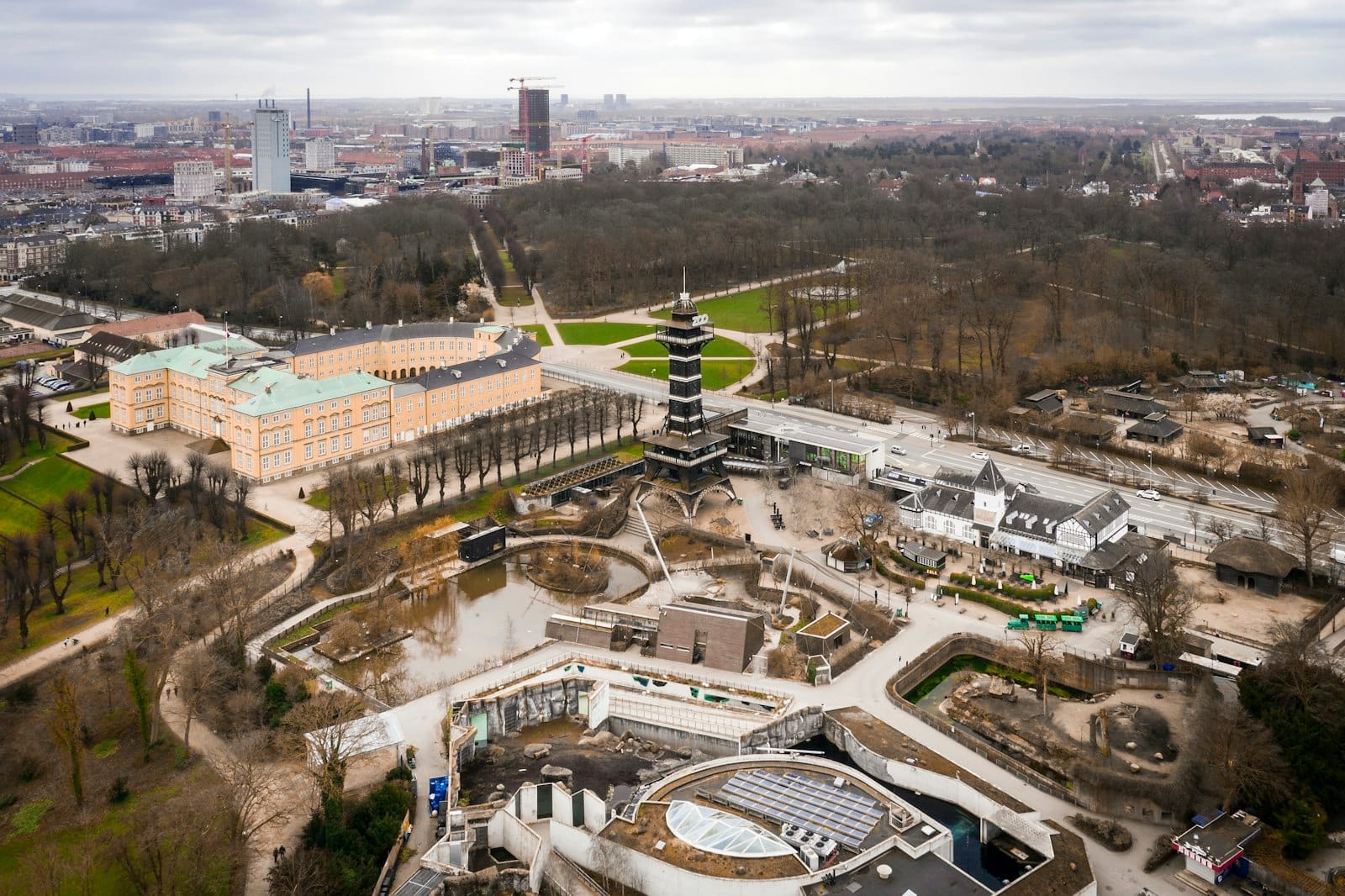
The neighbourhood's spine runs roughly east to west along Frederiksberg Allé, a wide, tree-lined boulevard that connects the eastern edge of the municipality, near Vesterbro, to the heart of Frederiksberg proper. Further west, the boulevard opens toward Frederiksberg Rundel, a small circular square from which several streets radiate outward. North of this axis lies the elevated plateau where Frederiksberg Palace stands above its formal gardens. South of the gardens, Søndermarken park extends toward the zoo and creates a near-continuous belt of green that anchors the western half of the district.
The eastern edge of Frederiksberg is close enough to Copenhagen Central Station that a brisk 15-minute walk brings you into the heart of the municipality. The northern strip, roughly along Falkoner Allé and Nordre Fasanvej, is where the metro cuts through, making this corridor the most transit-accessible part of Frederiksberg. Værnedamsvej, the food and café street that many visitors associate with Frederiksberg, actually straddles the boundary with Vesterbro — a detail that matters less once you are standing on it, surrounded by wine bars and cheese shops.
Character & Atmosphere
The defining quality of Frederiksberg is a kind of deliberate calm. The streets are wide, the buildings are solid 19th and early 20th century apartment blocks and villas, and the overall feeling is of a place that has been carefully maintained rather than gentrified. There are no derelict lots being converted into concept bars here. The transformation already happened a century ago, and the result has been preserved with considerable civic pride.
On weekday mornings, Frederiksberg reads as a neighbourhood in motion: parents cycling children to school along protected lanes, locals picking up pastries from bakeries on side streets, dog walkers threading through the gates of Frederiksberg Gardens before the tourist coaches arrive. The light in early morning, particularly in summer, falls low and golden across the broad avenues and through the mature linden trees that line them, giving the whole district a composed, almost painted quality.
By afternoon, the parks become the centre of gravity. Frederiksberg Gardens fills with people using it as both a destination and a cut-through: joggers, pensioners on benches, families near the canal boats, teenagers on the lawns. The formal gardens around the palace are a contrast to the more relaxed parkland below — the clipped hedges and symmetrical paths feel appropriately royal, while the lower sections open up into something greener and more informal. On weekends in summer, this area is genuinely crowded, though in a pleasant rather than overwhelming way.
After dark, Frederiksberg is quiet by Copenhagen standards. The action concentrates on Frederiksberg Allé and the streets around Frederiksberg Centret, where restaurants stay open late and bars draw a neighbourhood crowd rather than visiting tourists. This is not an area for club nights or late-night bar-hopping in the Vesterbro sense — it is a place where people linger over wine at a proper table. That distinction is part of its appeal for some travelers and a reason others might prefer to stay closer to the city centre.
ℹ️ Good to know
Frederiksberg is legally and administratively separate from Copenhagen Municipality, with its own mayor and council. It is not a district of Copenhagen in the bureaucratic sense, though for every practical travel purpose — transit, culture, food — it functions as a seamless part of the wider city.
What to See & Do
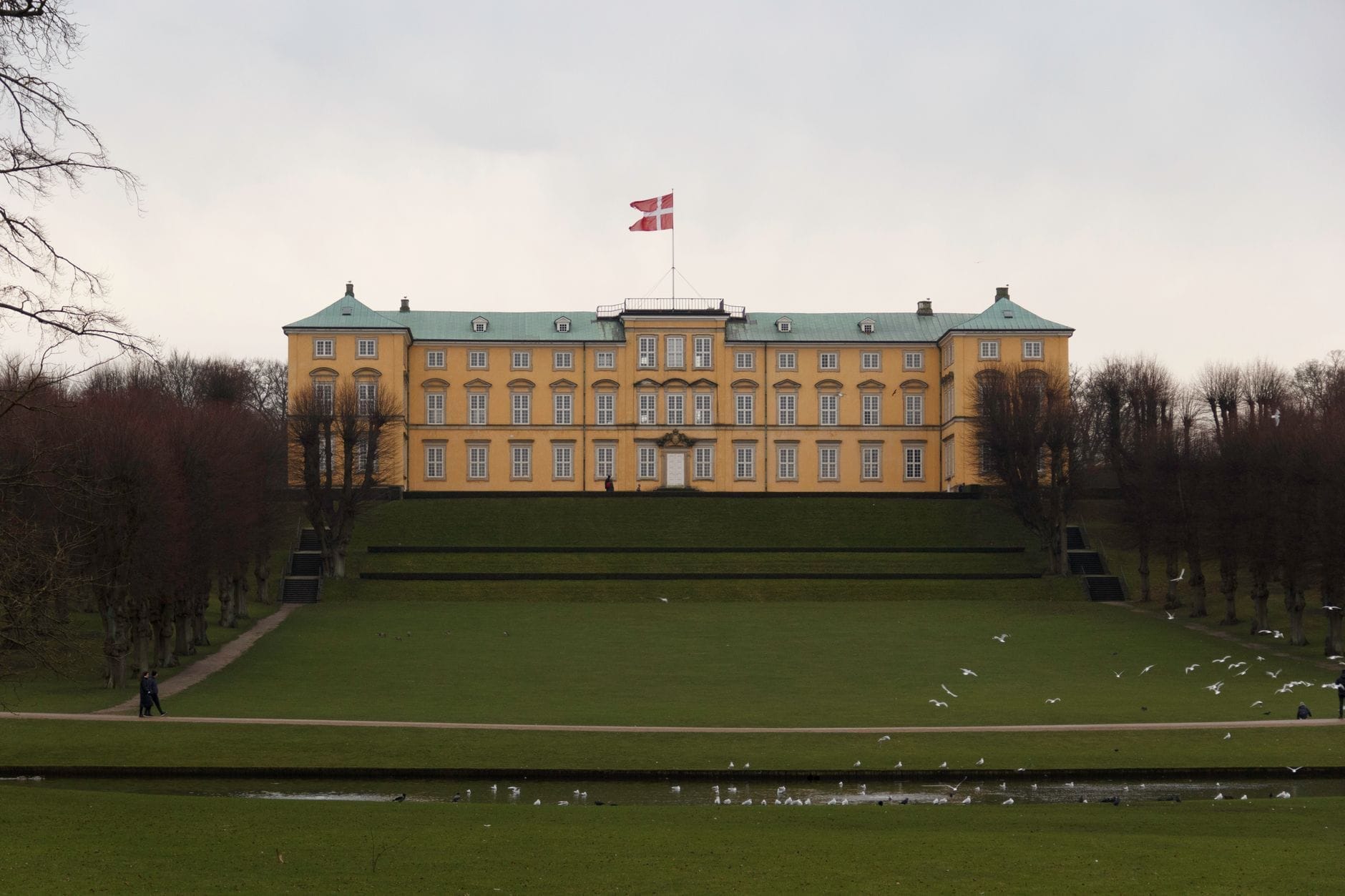
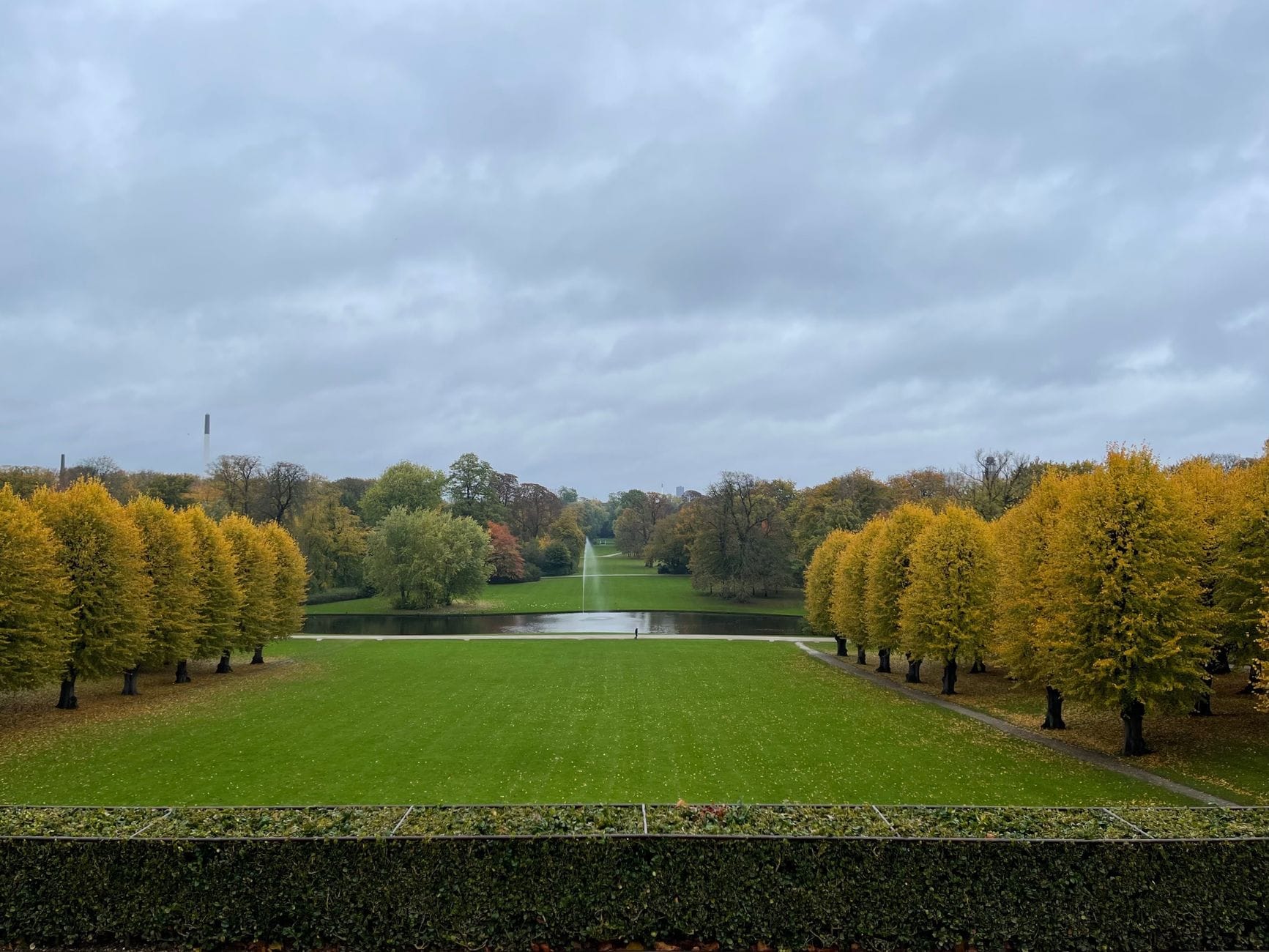
The most significant landmark is Frederiksberg Palace, a Baroque summer residence built for Frederik IV in the early 18th century and set on a gentle hill above terraced gardens. The palace is used today by the Danish Officers' Academy and is not fully open to the public, but the exterior, the terraces, and the grounds are freely accessible and worth the walk. The view from the palace down through the formal garden levels toward the lakes below is one of the more understated royal panoramas in Copenhagen.
Directly below the palace, Frederiksberg Gardens (Frederiksberg Have) covers more than 30 hectares of landscaped parkland. It contains a Chinese-style summerhouse on one of the small islands, several lakes, rowing boat rentals, and a general atmosphere of unhurried public life. To the south, Søndermarken connects directly without a break, extending the green space further and providing a more open, less formal park experience. Together, these two parks form one of the largest contiguous green areas within the Copenhagen urban boundary.
On the edge of Søndermarken, Copenhagen Zoo is one of the oldest zoos in Europe, founded in 1859. It is a serious institution with a large collection and well-regarded animal welfare standards by contemporary zoo benchmarks. The zoo draws heavy family crowds on weekends, and its mixed-architecture enclosures range from Victorian-era buildings to modern habitat designs. Budget a half-day if you plan to do it properly.
Walk the full length of Frederiksberg Allé from Vesterbro end to Frederiksberg Rundel to understand the scale and character of the boulevard
Visit Frederiksberg Gardens on a weekday morning before the crowds arrive, particularly in spring when the flowering trees are at peak
Explore the streets around Smallegade and Godthåbsvej for local shopping and neighbourhood bakeries with no tourist markup
Check the programme at Betty Nansen Theatre on Frederiksberg Allé for Danish and international theatre productions
Cross into Søndermarken for the more open, wilder feel that Frederiksberg Gardens does not quite provide
💡 Local tip
The rowing boats available on the lakes inside Frederiksberg Gardens are a genuinely enjoyable way to spend an hour, particularly with children. Rental prices are modest and the experience is properly local — you will find far more Danish families than tourists on the water.
Eating & Drinking
Frederiksberg has a food scene built around permanence rather than trend. The restaurants and cafés here are not chasing social media attention — they are the kind of places where the same families have been going for years, and where the menu changes seasonally rather than weekly. That produces a different kind of quality than the high-rotation concept restaurant scene in Vesterbro or the city centre.
Værnedamsvej is the street most visitors hear about first, and the reputation is warranted. Sometimes called the little Paris of Copenhagen, it is a narrow, café-dense street running along the Vesterbro-Frederiksberg boundary, lined with wine bars, French-leaning bistros, cheese shops, and a general atmosphere that rewards slow walking and multiple stops. Weekend afternoons here are lively without being overwhelming. It is one of the few streets in Copenhagen where you can sit on a pavement terrace and feel genuinely at ease rather than in a tourist corridor.
Beyond Værnedamsvej, Frederiksberg Allé carries a string of restaurants and cafés in the ground floors of its apartment buildings, including spots that do solid Danish lunches and evening menus. The area around Frederiksberg Centret has a higher concentration of everyday dining options at lower price points. For visitors interested in how Copenhagen's food culture operates beyond the headline restaurants, the Copenhagen food guide provides broader context on the city's dining landscape, including the smørrebrød tradition that shows up on lunch menus across Frederiksberg.
Coffee culture in Frederiksberg is strong. The neighbourhood has several specialty coffee roasters and independent cafés, particularly along Gammel Kongevej and the streets feeding off Frederiksberg Allé. These are working cafés used by locals throughout the day, not Instagram installations. Expect good beans, reasonable prices, and a calm room in which to sit for an hour. Pastry quality is consistently high, with both Danish classics and French-influenced options appearing on most counters.
Getting There & Around
The Copenhagen Metro is the fastest way in and out of Frederiksberg from the city centre and from the airport. The M1 and M2 lines run through the northern section of the municipality, with Frederiksberg Station serving as the primary stop — it sits roughly where Falkoner Allé meets the metro corridor and connects to central stations including Vanløse and, via the city loop, to Copenhagen Airport (CPH). Journey time from the airport to Frederiksberg Station is approximately 25 minutes with no changes. For a full overview of how to navigate Copenhagen's transit system, the getting around Copenhagen guide is the clearest available reference.
From Copenhagen Central Station, the eastern edge of Frederiksberg is reachable on foot in around 15 minutes, walking west along Vesterbrogade and then cutting north via Frederiksberg Allé. This walk passes through the transition zone between Vesterbro and Frederiksberg and is worth doing at least once to understand how the two neighbourhoods relate to each other physically. The change in street width, building height, and general pace is noticeable within a few blocks.
Cycling is the local mode of transport for most Frederiksberg residents, and the municipality has an extensive network of protected lanes. Rental bikes and city bikes are available and work on the same platforms used across the rest of Copenhagen. Most of the key destinations — the palace, the gardens, the zoo, Værnedamsvej — are within a 10-minute cycle of each other, making Frederiksberg easy to cover on two wheels without retracing routes. Several bus routes also run east-west along the main boulevards, providing frequent connections without requiring a metro change.
💡 Local tip
If you are coming from the Nørrebro or Østerbro side of Copenhagen, buses running along the main cross-city routes often drop you at or near Frederiksberg without requiring a metro journey. Check the Rejseplanen app (Denmark's official journey planner) for real-time routing across all modes.
Where to Stay
Frederiksberg does not have the density of hotels found in Indre By or around Nyhavn, but it offers a smaller selection of well-positioned options that suit travelers who want proximity to central Copenhagen without the noise and crowds of the most tourist-heavy areas. The eastern strip along Frederiksberg Allé and Gammel Kongevej has the most hotel options, placing guests within easy walking distance of Vesterbro and the city centre while still giving them a quieter base. For a broader look at where accommodation fits across the city, the where to stay in Copenhagen guide maps out the trade-offs across all major neighbourhoods.
Frederiksberg suits couples, solo travelers, and families who prioritise green space and a residential atmosphere over being steps from the main tourist circuit. The parks and zoo make it a particularly practical base for visitors traveling with children. The metro access from Frederiksberg Station means that even though the neighbourhood sits west of the centre, journey times to the main attractions remain short. Apartments and holiday rentals are relatively common here and often represent better value than similarly sized city-centre options.
One honest drawback for some travelers: Frederiksberg after 10pm is quiet. If evening entertainment and late-night access to bars and clubs matters to your trip, the neighbourhood functions better as a daytime destination than a base. Vesterbro, directly to the east, solves this problem and is close enough that the boundary feels arbitrary once you are moving between them.
⚠️ What to skip
Hotel supply in Frederiksberg is limited compared to central Copenhagen. Book further in advance than you might for city-centre hotels, particularly during summer and around major events. The Copenhagen Jazz Festival in July and Design Week in September both affect availability across the wider city.
Frederiksberg & the Wider City
One of Frederiksberg's underappreciated qualities is how well it works as a base for exploring the rest of Copenhagen. From Frederiksberg Station, the metro connects directly to the Carlsberg District to the south, which has been redeveloped from the former brewery campus into a cultural and residential quarter worth an afternoon. The Carlsberg District is a short metro or bus ride from central Frederiksberg and represents a very different kind of Copenhagen story.
For days when you want to move into the city centre, Vesterbro is the natural gateway, reachable on foot in under 15 minutes from the eastern edge of Frederiksberg. From there, the full network of central attractions — Tivoli Gardens, the National Museum, Strøget — is within easy reach. Frederiksberg also connects naturally to Nørrebro via bus routes along the northern edge, though the two neighbourhoods feel very different in character and demographic mix.
Cyclists will find Frederiksberg particularly well-connected. The dedicated lane network runs through the municipality and links seamlessly to the wider Copenhagen cycling infrastructure. Following the canal route south from Frederiksberg Gardens eventually brings you to the harbour and waterfront areas, demonstrating how compact and cyclable the city actually is. For visitors planning a cycling itinerary, the cycling in Copenhagen guide covers the key routes and lane logistics.
TL;DR
Frederiksberg is an independent municipality surrounded by Copenhagen on all sides, with a calm, affluent residential character and significantly more green space than most comparable urban areas of its size.
The main draws are Frederiksberg Gardens, Frederiksberg Palace, Søndermarken, and Copenhagen Zoo — plus the food street Værnedamsvej and the wide, café-lined Frederiksberg Allé.
Metro access via Frederiksberg Station keeps central Copenhagen within 10-15 minutes, making it a practical base for travelers who want a quieter neighbourhood without sacrificing connectivity.
Best suited to couples, families with children, and travelers who prioritise parks, local food culture, and a residential pace over proximity to nightlife and tourist landmarks.
Not ideal for travelers who want late-night entertainment on their doorstep or hotel-dense options with easy walk-in availability — for those needs, Vesterbro or Indre By serve better.
Two days in København is genuinely enough to cover the city's royal palaces, canal district, world-class food markets, and Freetown Christiania without feeling rushed. This itinerary sequences the sights logically, cuts the walking time, and flags what is actually worth your limited hours.
Copenhagen has an unusually strong museum scene for a city its size, with world-class collections spanning ancient history, modern art, design, and Nordic heritage. This guide covers the best museums in Copenhagen, from the grand institutions in Indre By to extraordinary day-trip destinations just outside the city.
Copenhagen rewards visitors year-round, but the right month depends entirely on what you want from the trip. This guide breaks down weather, crowds, pricing, and seasonal events so you can match your travel style to the right window.
Copenhagen Airport (CPH) sits just 8 km from the city centre, and your airport transfer takes as little as 13 minutes by metro or train. This guide breaks down every option — public transport, taxi, and private transfer — with real fares, journey times, and honest advice on what to skip.
The Copenhagen Card promises free entry to 80+ attractions and unlimited public transport across the Danish capital. But is it actually worth the price? This guide breaks down the numbers, the fine print, and who genuinely benefits.
Copenhagen transforms in winter. From the ticketed spectacle of Tivoli Gardens to free canal-side markets and steaming mugs of gløgg, this guide covers everything you need to plan a Christmas visit to København with confidence.
Copenhagen is one of the world's most architecturally ambitious cities, named UNESCO/UIA World Capital of Architecture in 2023. This guide covers the essential museums, landmark buildings, contemporary projects, and practical routes for anyone serious about design and architecture in København.
Copenhagen food culture runs deeper than Noma's legacy. This guide covers the essential dishes, best markets, smartest restaurant picks, and seasonal foods that define eating in the Danish capital — across every budget.
October in Copenhagen (København) is one of the most underrated times to visit. Tivoli transforms into a Halloween wonderland with over 20,000 pumpkins, the crowds thin out compared to summer, and the city's museums and food scene hit their stride. This guide covers the weather, the best events, what to prioritize, and what to skip.
Summer is Copenhagen's peak season, with up to 17 hours of daylight, open-air festivals, free harbour swimming, and parks packed with locals. This guide covers the weather, major events, best activities, and practical tips for visiting in June, July, and August.
The Copenhagen Jazz Festival runs for 10 days every July, filling the Danish capital with around 1,200 concerts across 120 venues. This guide covers dates, tickets, free events, the best neighborhoods to explore, and everything you need to plan your visit.
Copenhagen's after-dark scene is disproportionately strong for a city its size. From precision cocktail bars in the Latin Quarter to techno clubs in the Meatpacking District, this guide cuts through the noise and tells you exactly where to go, when to arrive, and what to expect — including what costs more than it should.
Copenhagen (København) has a reputation as one of Europe's priciest capitals, and that reputation is not entirely unfair. But with the right passes, free attractions, and a few local habits, you can experience the city fully without a sky-high bill. This guide breaks down exactly where your money goes and where you can save it.
Copenhagen rewards shoppers at every level, from international flagships on Strøget to vintage finds on Jægersborggade. This guide breaks down where to shop by neighborhood, what to buy, how much to spend, and which spots to skip.
Smørrebrød is Denmark's defining lunch tradition, and Copenhagen is the best place in the world to eat it. This guide covers the top restaurants, what to order, how much to pay, and the customs first-timers always get wrong.
Copenhagen (København) is one of Europe's most walkable capitals. This guide covers the classic self-guided walking tour route from Tivoli Gardens to Nyhavn and beyond, with practical details on distances, free stops, seasonal timing, and digital tools to make your day on foot count.
Copenhagen is one of Europe's most genuinely child-friendly capitals, with discounted museum entry, excellent playgrounds, and a compact city center that makes logistics manageable. This guide covers the best family activities in Copenhagen, from Tivoli Gardens to canal cruises, plus honest advice on passes, costs, and seasonal planning.
Copenhagen has roughly 350 km of segregated cycle tracks, and Copenhagen has roughly 350 km of segregated cycle tracks, and nearly half of all people who work or study in the city bike to work or school every day. This guide covers everything a visitor needs to cycle the city confidently: where to rent, which routes to ride, what the unwritten rules are, and when to go.
Copenhagen sits at the centre of an extraordinary region. Within two hours, you can reach UNESCO-listed castles, world-class art museums on clifftops, a remarkably preserved fishing village, and an entirely different country. These are the best day trips from Copenhagen, whether you have a full day or just an afternoon.
Copenhagen is one of Europe's most rewarding cities to explore on a tight budget. From free museum days and royal palaces to harbour swims and world-class parks, here are 20 genuinely free experiences that capture the best of the Danish capital.
Copenhagen's integrated transport network is one of Europe's most efficient. This guide covers the metro, S-trains, buses, cycling, taxis, and airport connections — with 2026 fares, zone logic, and practical advice on what's worth the money.
Copenhagen holds the key to understanding Hans Christian Andersen's life and work. From his former apartments along Nyhavn canal to his grave in Nørrebro, this guide maps every significant stop on the city's literary trail, with practical logistics for each.
Copenhagen rewards curious travellers who look beyond Nyhavn and Tivoli. This guide uncovers the city's overlooked neighbourhoods, underrated museums, and unexpected green spaces that locals actually love.
Copenhagen didn't accidentally become one of Europe's great food cities. The New Nordic movement, formalized in 2004, rewired how chefs here think about ingredients, technique, and season. This guide covers the key restaurants, price realities, seasonal logic, and how to experience the movement beyond fine dining.
Copenhagen rewards visitors with a rare combination of world-class history, cutting-edge design, and outdoor culture. This guide covers the best things to do in Copenhagen across every interest and budget, with honest assessments and practical logistics to help you plan confidently.
Choosing where to stay in Copenhagen shapes your entire trip. This guide breaks down every major neighborhood by budget, transport links, atmosphere, and traveler type — so you can book with confidence, not guesswork.