Søndermarken: Frederiksberg's Quiet Royal Park Worth the Detour
Søndermarken is a 32-hectare forested park in Frederiksberg that began as a royal hunting ground in the 18th century and opened to the public in 1852. Free to enter at any hour, it offers a noticeably quieter alternative to the more famous Frederiksberg Gardens directly across the road, with hilly woodland paths, open meadows, and a pace that belongs to the locals who use it daily.
Quick Facts
- Location
- Pile Allé 55, 2000 Frederiksberg, Denmark
- Getting There
- Frederiksberg Metro Station (M1/M2), then a short walk south
- Time Needed
- 45 minutes to 2 hours depending on pace
- Cost
- Free, open 24 hours year-round
- Best for
- Walkers, families, picnickers, anyone needing a break from central Copenhagen
What Søndermarken Actually Is
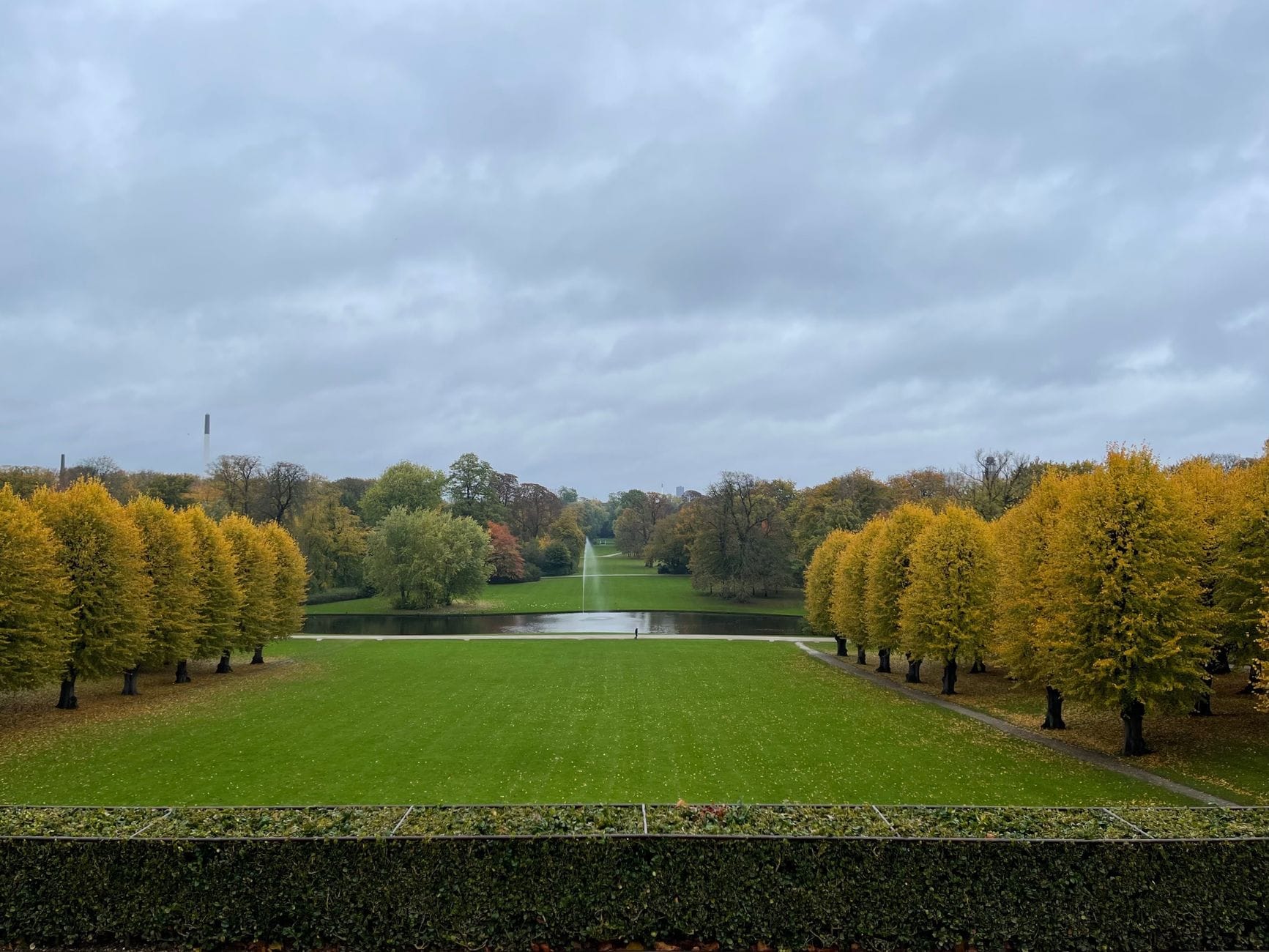
Søndermarken is a public park in Frederiksberg, an independent municipality that sits entirely within the urban spread of Copenhagen. At roughly 32 hectares (about 79 acres), it is not the largest green space in the area, but its character sets it apart from the more manicured options nearby. This is a hilly, forested park with a noticeably wilder feel: uneven ground, dense tree canopy in sections, open grassy slopes in others, and paths that curve rather than march in straight lines.
The park sits directly across Roskildevej from Frederiksberg Gardens, the ornate formal gardens attached to Frederiksberg Palace. While the Gardens draw visitors who want classical landscaping and palace views, Søndermarken pulls a different crowd: families with dogs, joggers doing morning laps, students eating lunch on the grass, and couples on afternoon walks. It does not try to be a showcase. That is precisely what makes it worth visiting.
💡 Local tip
Søndermarken and Frederiksberg Gardens are separated by Roskildevej but are closely linked historically. Consider visiting both in a single outing: the Gardens offer the formal palace landscape, while Søndermarken gives you the woodland counterpart with far fewer visitors.
History: From Royal Hunting Ground to Public Park
Søndermarken's origins lie in the 18th century, when the area served as a royal hunting ground associated with Frederiksberg Palace. The palace itself was a favored summer residence of the Danish royal family, and the surrounding land was managed as part of the royal estate. The park's hilly, forested terrain, which feels almost accidental compared to the symmetry of European palace gardens, is in large part a product of that hunting-ground heritage: it was never fully flattened or geometrically redesigned.
In 1852, King Frederick VII opened Søndermarken to the public. This was part of a broader shift in Danish royal policy during the 19th century that gradually made previously private royal lands accessible to Copenhagen's residents. Today the park is administered alongside Frederiksberg Palace and Gardens under the Danish royal palaces and gardens authority (Kongelige Slotte og Haver), though entry remains free and unrestricted at all hours.
For more on the area's relationship to Danish royal heritage, the nearby Frederiksberg Palace provides the architectural and dynastic context that surrounds the park on its northern edge.
Tickets & tours
Hand-picked options from our booking partner. Prices are indicative; availability and final rates are confirmed when you complete your booking.
1-hour boat harbour tour in Copenhagen
From 26 €Instant confirmationFree cancellationSmall group 3-hour walking tour in Copenhagen
From 45 €Instant confirmationFree cancellationCopenhagen to Malmo one-day tour
From 56 €Instant confirmationFree cancellationFull-day tour to Forest Tower and Forgotten Giants from Copenhagen
From 110 €Instant confirmationFree cancellation
How the Park Feels at Different Times of Day
Early mornings in Søndermarken are quiet in a specific way: the tree canopy holds the cool air longer than the open streets outside, and the sounds are mainly birds and the occasional cyclist passing on the perimeter paths. Joggers appear by around 7am, moving through predictable circuits. The light filters through the leaves at a low angle, and the grass in the open meadow sections is often still wet. This is the best hour for anyone who wants the park to themselves.
Midday on weekdays brings local workers from the surrounding Frederiksberg residential streets, using the park as a lunch break destination. Weekends between roughly 11am and 3pm are the busiest periods: families arrive with children and dogs, the grassy slopes fill up during warmer months, and the paths see consistent foot traffic. Even at peak times, though, the park rarely feels overcrowded in the way that a central Copenhagen attraction would. The size and the varied terrain naturally distribute visitors across the space.
Late afternoons in spring and summer have a particular quality as the light drops lower and the shadows lengthen across the meadow sections. The park empties steadily after 6pm on weekdays. In winter, Søndermarken is almost completely empty by mid-afternoon once daylight fades, but the bare-branched woodland has a spare, atmospheric quality that is genuinely worth experiencing if you are in the area.
What to See and Do Inside the Park
Søndermarken does not have ticketed attractions or formal points of interest in the conventional sense. Its appeal is the landscape itself. The terrain is more varied than most Copenhagen parks: the ground rises and dips across the 32-hectare area, so even a straightforward walk involves a few genuine slopes. The forested sections feel enclosed and cool in summer, with a dense overhead canopy and underfoot texture of roots and damp earth. The more open meadow areas provide contrast, especially in good weather when they become informal gathering spots.
The paths through the park are informal rather than rigidly planned, which means it is easy to explore without following a fixed route. Most visitors complete a loose loop of the park in 45 to 60 minutes at a relaxed pace. Dogs are common and generally well-behaved. Children's play areas exist within the park, making it a practical stop for families who need somewhere to pause between other sights.
Søndermarken sits within a cluster of notable Frederiksberg attractions. The Copenhagen Zoo is located nearby and is a natural combination visit for families spending a day in the area.
ℹ️ Good to know
The park's hilly terrain means some sections involve uneven or unpaved ground. Visitors with limited mobility should be aware that formal step-free pathways are not documented throughout the park. The perimeter paths along the main bordering streets are more navigable, but the interior woodland paths can be irregular.
Getting There and Practical Logistics
Frederiksberg Metro Station on the M1 and M2 lines is the most convenient transit access point. From the station it is a short walk south to reach the park's edges. The Frederiksberg area is also well connected by bus routes, and the park's perimeter roads, Pile Allé, Roskildevej, and Valby Langgade, provide orientation for anyone navigating on foot or by bike.
Cycling is a sensible way to reach Søndermarken from the city centre. The area is part of Copenhagen's broader cycling network, and the ride from central Copenhagen takes around 20 to 30 minutes at an easy pace. For general guidance on navigating the city on two wheels, the cycling in Copenhagen guide covers route planning and bike rental options.
There is no entry gate, no ticket booth, and no queue. The park is open at all hours on every day of the year. Parking exists in the surrounding streets but is subject to Frederiksberg parking regulations. In practical terms, public transit or cycling is the easier choice for most visitors coming from the city centre.
When to Visit and Weather Considerations
The park is most rewarding between late April and September. Spring brings the trees into leaf quickly, and by May the contrast between the forested sections and the open meadows is at its most pronounced. June through August offers the longest days, with daylight extending past 9pm at midsummer, giving the park an unusually long usable window in the evenings. The grass dries out enough to sit on comfortably, and the park fills with a social energy that is absent in colder months.
October can still be worth the visit: the tree canopy turns amber and rust, and the park takes on an autumn quality that suits photographers. Winter visits are for those who genuinely appreciate a quiet, grey, bare-woodland atmosphere. Copenhagen's winters are mild rather than harsh, typically hovering around 0 to 4°C, but overcast and short on daylight. For a broader picture of timing your Copenhagen trip, the best time to visit Copenhagen guide offers seasonal comparisons across the city's main attractions.
⚠️ What to skip
After heavy rain, the woodland paths in the interior of the park can become muddy. Waterproof footwear or sturdy shoes are worth wearing if rain has fallen recently. The open meadow sections drain faster than the forested interior.
Who Should Skip Søndermarken
Travelers with a tightly packed itinerary focused on museums, historic architecture, and waterfront Copenhagen may find Søndermarken a lower priority. The park does not offer a landmark, a view, or a singular experience that would distinguish it from other urban parks. It is, quite simply, a park: good at being a park, but not a destination in the way that Rosenborg Castle Gardens or the formal grounds of Frederiksberg Palace are.
Visitors primarily interested in cultural institutions should note that Frederiksberg and the surrounding area offer stronger dedicated attractions. The Ny Carlsberg Glyptotek and the Carlsberg District are both within reasonable distance and deliver more focused content for a limited amount of time.
That said, if you are traveling with children who need open space to run, with a dog, or simply with the intention of slowing down for an hour, Søndermarken delivers exactly what it promises without charging for the privilege.
Insider Tips
- The slope that rises toward the park's interior offers one of the few elevated vantage points in otherwise flat Frederiksberg. Walk uphill from the Pile Allé entrance and look back across the meadow for the best sense of the park's topography.
- Early Sunday mornings in summer are the most peaceful time to visit. The park is almost empty until around 10am, when families begin arriving with children and picnic supplies.
- The park's forested interior stays noticeably cooler than surrounding streets during warm weather. On hot July or August afternoons, the tree canopy provides genuine shade that is harder to find elsewhere in the neighborhood.
- Combine Søndermarken with Frederiksberg Gardens in a single morning. Cross Roskildevej on foot to move between the two, and you get both the formal royal garden landscape and the wilder park character without needing transport.
- Photography works best in the park during the golden hour before sunset in summer, when low light cuts through the tree trunks at an angle and the meadow sections are softly lit. The forested paths become deeply shadowed, so a camera that handles low light is useful.
Who Is Søndermarken For?
- Local-style morning or afternoon walks away from tourist crowds
- Families with young children who need open grass and room to move
- Dog owners looking for an off-the-beaten-path green space
- Photographers interested in woodland light and seasonal landscape
- Travelers staying in Frederiksberg or Vesterbro who want a nearby green escape
Nearby Attractions
Other things to see while in Frederiksberg:
- Copenhagen Zoo
Founded in 1859 and spread across roughly 11 hectares in Frederiksberg, Copenhagen Zoo is one of Europe's oldest zoological gardens. It combines a serious conservation mission with a striking architectural landmark: Norman Foster's geodesic elephant house. Here is what to expect before you go.
- Frederiksberg Palace
Frederiksberg Palace is a stately Baroque royal residence completed for King Frederik IV in the early 18th century, now home to the Royal Danish Military Academy. The palace grounds overlook the sweeping Frederiksberg Gardens, and public access is limited to guided tours on selected dates — which makes a visit feel genuinely exclusive.