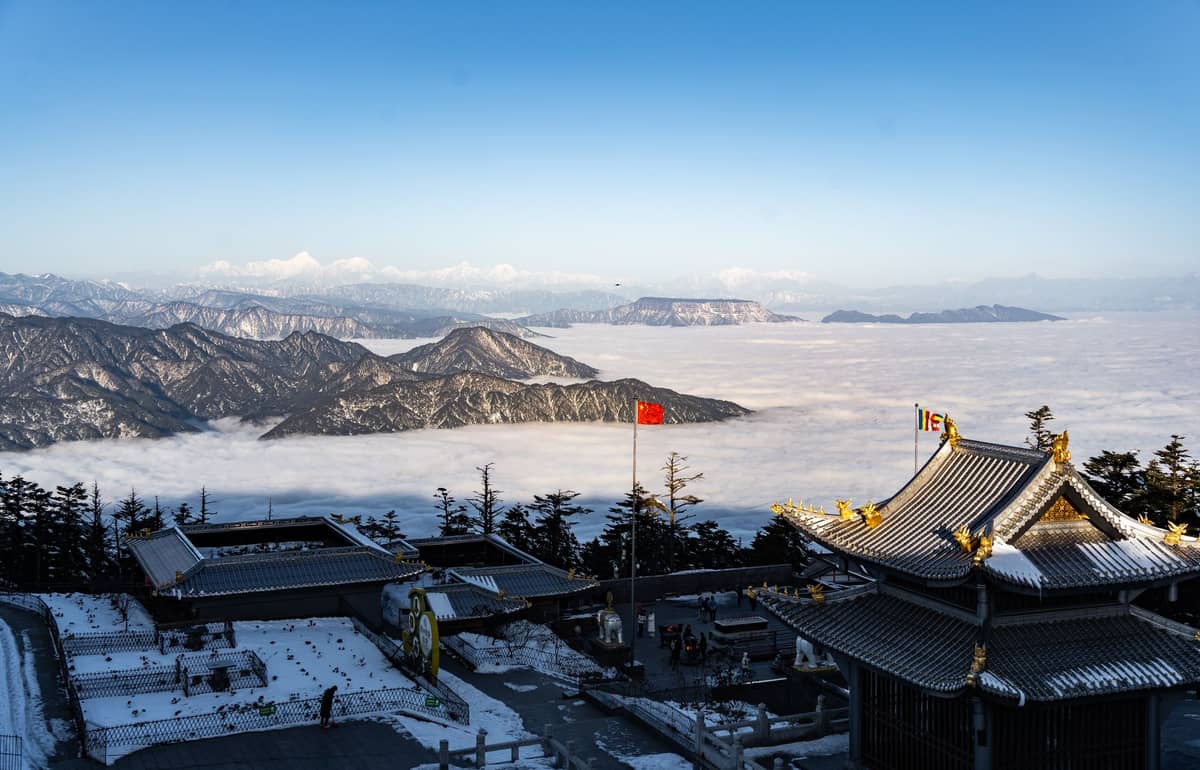
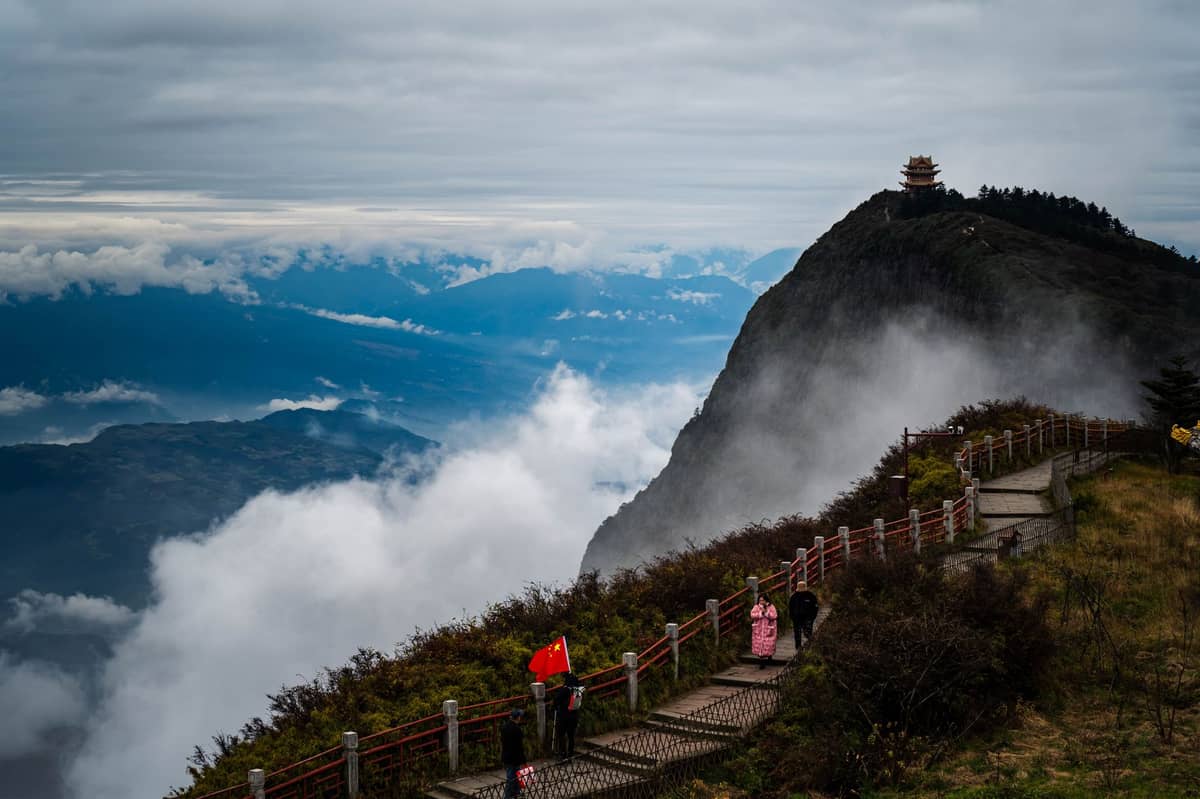
Mount Emei (Emeishan) is one of China's Four Sacred Buddhist Mountains, rising from subtropical forest to a summit above 3,000 meters in Sichuan Province. A roughly two-hour journey from Chengdu, it combines ancient pilgrimage temples, cloud-shrouded ridgelines, and high-altitude viewing platforms into a destination that rewards anything from a single long day to a three-day trek.
Emeishan is not a neighborhood in the conventional sense: it is a UNESCO World Heritage mountain scenic area that anchors the southwestern corner of the greater Chengdu travel region. Its scale is vertical rather than horizontal, its streets are stone stairways and forest paths, and its rhythm is set by temple bells and cable-car departure times rather than morning commutes.
Orientation: Where Emeishan Fits in the Chengdu Region
Mount Emei stands approximately 150 kilometers southwest of central Chengdu, inside Emeishan City, a county-level city administered under Leshan. Leshan itself is about 30 kilometers further southeast, placing the two UNESCO sites (Mount Emei and the Leshan Giant Buddha) within easy reach of each other for travelers doing a multi-site day trip or overnight. Most visitors approach from Chengdu, making this the defining long day trip or short overnight excursion from the city.
The mountain's visitor infrastructure is centered around the town of Baoguo, at the base of the scenic area. From there, a tiered system of shuttle buses and, higher up, cable cars carries visitors toward the summit ridge. The main gateway is the Emeishan Tourist Transportation Center near Mount Emei's Baoguo Temple area, where coaches from Chengdu terminate and local transit connections depart. The high-speed rail station, Emeishan Railway Station, sits a few kilometers from Baoguo and is connected by local bus and taxi.
Geographically, the mountain rises from around 550 meters at the base to 3,099 meters at Wanfo Ding (Ten Thousand Buddha Summit), with the more commonly visited Golden Summit (Jinding) at approximately 3,079 meters. That vertical spread means the mountain contains multiple climate zones, and conditions at the base can be entirely different from what awaits at the top. Think subtropical warmth and humidity at Baoguo Temple, temperate forest through the mid-sections, and alpine cold and frequent cloud cover at the summit.
For travelers planning a broader Sichuan itinerary, Emeishan sits naturally alongside a visit to the Leshan Giant Buddha, which is reachable in under an hour from the mountain base. Both sites are covered in detail in the day trips from Chengdu guide.
Character & Atmosphere: What Emeishan Actually Feels Like
The Baoguo Temple area at the mountain's base feels like a small pilgrimage town that has quietly adapted to tourism over decades. In the early morning, the smoke of incense drifts through the temple courtyards, monks in saffron robes move between buildings, and the first shuttle buses of the day idle in the forecourt. The sound is low: birdsong, distant chanting, the shuffle of hiking boots on stone paving. It is genuinely calm before 8 AM, and noticeably more crowded by mid-morning.
As you ascend by shuttle bus toward Leidongping and then by cable car to the Golden Summit, the atmosphere shifts completely. The forest closes in on the road, the air cools with every hundred meters of elevation, and the noise of the base area falls away entirely. On clear days, the light at the summit is sharp and almost blinding against white stone and gilded bronze. On overcast days, which are more common, the summit sits inside moving cloud banks that shred and reassemble around the enormous gilded statue of Samantabhadra (Puxian Bodhisattva) atop the main hall. That interplay of cloud, altitude, and religious architecture is what most visitors carry home as their defining memory of Emeishan.
The mid-mountain sections, accessible on foot via the old pilgrim trails, hold a completely different character again. Qingyin Pavilion sits where two streams meet in a narrow gorge, its sound-world defined by rushing water. Wannian Temple, one of the oldest surviving structures on the mountain, sits in a quieter grove and receives fewer day-trippers than the summit. Hikers who take even a short section of the stone trail network encounter dense subtropical forest, hanging moss, and sections where the path is unchanged from its medieval pilgrim form.
⚠️ What to skip
Tibetan macaques live on the mountain and are habituated to human presence. They can be aggressive, particularly around food. Keep bags closed and do not attempt to feed or photograph them at close range without maintaining a safe distance. The mountain administration rents walking sticks partly for this reason.
The summit area is not purely meditative. The Golden Summit platform is a significant commercial and logistical zone, with a large hotel, restaurants, souvenir shops, and substantial crowds during national holidays and summer weekends. The combination of sacred and commercial is characteristic of China's major mountain pilgrimage sites and should be expected rather than treated as a disappointment. The spiritual atmosphere reasserts itself in the early morning, before the cable cars deliver the main rush of visitors.
What to See & Do
The logical starting point is Baoguo Temple, a working monastery at the mountain's base that dates in its current form to the Ming dynasty. Its main halls are arranged on a hillside axis, with a substantial collection of Buddhist statuary including a large porcelain Buddha. The temple provides a grounding orientation before ascent and is walkable from the Tourist Transportation Center.
Fuhu Temple (Crouching Tiger Temple), a short walk from Baoguo, is larger and less visited by first-timers. Its setting inside a forest of ancient trees makes it worth the detour, and it houses a notable bronze pagoda cast in the Ming dynasty. For travelers interested in the depth of Emeishan's Buddhist heritage beyond the summit spectacle, the base temples are worth unhurried time.
The Golden Summit is the headline destination: the gilded copper statue of Samantabhadra riding ten elephants stands at the highest accessible point of the main scenic circuit, and on clear mornings the view across the Sichuan Basin and toward the Tibetan plateau is extraordinary. Sunrise visits require overnight stays on the mountain or a very early departure from Chengdu. The summit is reached via shuttle bus to Leidongping cable car station (the upper station is Jinding), or by foot on multi-day itineraries.
Baoguo Temple: working monastery, base of the scenic area, good starting point
Fuhu Temple: larger complex in forest setting, Ming-dynasty bronze pagoda
Qingyin Pavilion: pavilion at the confluence of two mountain streams, mid-mountain
Wannian Temple: ancient temple complex housing a bronze statue of Samantabhadra on an elephant, about 7.85 metres tall
Leidongping: shuttle-bus terminus and mid-mountain rest area, cable-car departure point
Golden Summit (Jinding): gilded summit platform and statue, highest standard visitor destination
Hiking trails: stone-paved pilgrim paths connecting temples across multiple days
ℹ️ Good to know
Mount Emei and the Leshan Giant Buddha together form a single UNESCO World Heritage Site inscribed in 1996. Combining both into one itinerary is logistically straightforward: buses connect the Emeishan area to Leshan in under an hour, and many visitors cover both in a single day, though this is rushed. An overnight stay allows a more considered pace.
Eating & Drinking
The Baoguo Temple area has a cluster of restaurants and small guesthouses serving standard Sichuan food: stir-fried dishes, noodle soups, mapo tofu, and rice plates. Prices are modest compared to Chengdu city, and the food is straightforwardly good. This is the best place to eat before ascent, when the choice is widest and the prices most reasonable.
Emeishan has its own local food identity, built around Buddhist vegetarian cooking. Many of the mountain's temples serve vegetarian meals to pilgrims and tourists, and dedicated vegetarian restaurants operate in the Baoguo area. These meals are typically simple, heavily reliant on tofu, mushrooms, and local mountain vegetables, and very affordable. For a wider perspective on Sichuan food traditions, the what to eat in Chengdu guide covers the regional context.
At mid-mountain stops and on the summit, food options narrow and prices rise substantially. The Golden Summit hotel and its associated dining facilities are convenient but expensive by local standards. Visitors doing a full-day or overnight summit trip should either pack lunch or budget accordingly. Instant noodles and snacks are available at small shops throughout the mountain, which is genuinely useful on a cold summit day.
Tea is available throughout the scenic area, and the mountain's forested sections have their own wild mushrooms and herbs that appear in dishes seasonally. If you are eating in the Baoguo area, look for dishes featuring mountain mushrooms and bamboo shoots alongside the standard Sichuan repertoire.
Getting There & Around
The fastest connection from Chengdu is by high-speed rail. Trains depart from Chengdu East Railway Station (Chengdudong) or Chengdu South Railway Station (Chengdunan) and reach Emeishan Railway Station in approximately 1 to 1.5 hours. From Emeishan station, local buses (route 5 or tourist bus services) and taxis connect to the Baoguo Temple visitor center area, a journey of roughly 10 to 15 minutes. For full logistics on getting around the broader region, the getting around Chengdu guide provides useful context on the city's rail and bus infrastructure.
Direct long-distance coaches operate from Xinnanmen Bus Station in central Chengdu to the Emeishan Tourist Transportation Center. Journey time is approximately 2.5 hours depending on traffic. This option is useful for travelers who prefer not to navigate the rail connection, but high-speed rail is generally faster and more predictable.
Within the scenic area, a tiered transport system operates: tourist shuttle buses run from the Baoguo area up to Leidongping (the mid-mountain shuttle terminus), and from there a gondola cable car rises to Jinding (Golden Summit). Shuttle bus and cable car tickets are purchased separately from the scenic area entrance fee. During peak periods, including national holidays and summer weekends, queue times for the cable car can be significant. An early start, ideally arriving at the shuttle bus departure point before 8 AM, materially improves the day.
💡 Local tip
Check cable-car operational status before planning around it. High winds, ice, and heavy fog all cause temporary closures, which happen without much advance notice. In winter and during autumn rain, summit access is frequently affected. Build flexibility into your itinerary and have a mid-mountain alternative ready.
There is no Chengdu Metro connection to Mount Emei. The relevant metro line context is for reaching Chengdu's intercity rail stations: Metro Line 2 serves Chengdu East (Chengdudong station), which is the most commonly used departure point for Emeishan-bound high-speed trains.
Where to Stay
Most visitors to Emeishan stay either in Chengdu (treating the mountain as a day trip) or in the Baoguo Temple area at the base of the scenic zone. The Baoguo area has a range of guesthouses, mid-range hotels, and budget hostels, all within walking distance of the temple and shuttle bus departure points. Staying here makes an early start on the mountain practical without requiring a pre-dawn departure from Chengdu.
For those specifically wanting a summit sunrise, there is accommodation at the Golden Summit itself, managed by the scenic area authority. The experience is stark and cold, particularly outside summer, but the reward of watching clouds roll over the summit at first light before the day-tripper crowds arrive is genuinely worth the logistical effort for travelers who prioritize that kind of moment. Book well in advance for summer weekends and national holidays.
Travelers who want to base themselves in a city and make day trips to both Emeishan and Leshan should consider whether Chengdu or Leshan city serves them better. Chengdu offers the full range of urban amenities and is the natural hub for a broader Sichuan itinerary. The where to stay in Chengdu guide covers the city's accommodation zones in detail for those planning around day trips.
Planning Notes: Time, Season, and Practicalities
The single biggest planning variable at Emeishan is weather and its effect on summit visibility and cable car access. The mountain is known for fog and cloud cover throughout the year, partly because of its role in producing the atmospheric phenomenon known as the Buddha's Halo (Faguang), a circumzenithal arc seen in cloud below the summit. September through November is generally considered a reliable window for clearer skies, aligning with the broader best time to visit Chengdu advice. Spring (March to May) is also workable, with fresh greenery on the trails and fewer crowds than summer.
Summer (June to August) brings the most visitors, warmer temperatures at the base, but frequent rain and mist on the summit. Winter (December to February) can be atmospheric, with snow and ice on the upper mountain, but cable car closures are common and the cold at the summit is serious, requiring proper warm clothing and layers even if the Chengdu morning you departed from felt mild.
Emeishan's elevation range means that clothing that feels adequate at the base may be dangerously insufficient at the summit. A temperature differential of 15 to 20 degrees Celsius between Baoguo and the Golden Summit is normal. Warm, waterproof layers should be considered essential rather than optional, even in summer. Rental cloaks are available near the summit cable car station as a last resort, but they are not a substitute for appropriate gear.
ℹ️ Good to know
Mount Emei is one of China's Four Sacred Buddhist Mountains, alongside Wutaishan, Jiuhuashan, and Putuoshan. It is associated with Samantabhadra (Puxian Bodhisattva) and has been a Buddhist pilgrimage destination since at least the 4th century CE. The UNESCO listing covers both the cultural heritage of the mountain's temples and the natural heritage of its forest ecosystems, which contain numerous endemic species including the Emei shan liocichla bird.
For travelers building a broader Sichuan itinerary, Emeishan pairs naturally with Chengdu's own heritage sites. Those interested in the region's religious architecture will find useful orientation in the best temples in Chengdu guide, and the Chengdu first-timer guide provides a framework for structuring a multi-day visit that incorporates both city and mountain experiences.
TL;DR
Mount Emei is approximately 150 km southwest of Chengdu, reachable in roughly 1 to 1.5 hours by high-speed rail to Emeishan Railway Station, then local transit to the Baoguo Temple area.
The mountain spans subtropical forest at the base to alpine conditions above 3,000 meters: always bring warm, waterproof layers regardless of the season or how warm Chengdu feels when you depart.
Best suited to travelers who want a serious UNESCO World Heritage experience combining Buddhist pilgrimage architecture, mountain scenery, and high-altitude viewing; less suitable for those wanting a quick, easy scenic excursion.
Combine with the Leshan Giant Buddha for a natural two-site day trip or overnight; both sites are within an hour of each other by road.
Peak crowds during national holidays and summer weekends make an early start critical: aim to be on the first shuttle buses by 7:30 to 8:00 AM to avoid cable car queues of an hour or more.
Three days is enough time to cover Chengdu's essential experiences without rushing. This itinerary balances the panda base, historic streets, Sichuan cuisine, cultural landmarks, and a day trip option, with practical notes on logistics, timing, and what to skip.
Chengdu's museum scene spans 4,500 years of Sichuan history, from mysterious Bronze Age civilizations to Tang Dynasty poets and dinosaur fossils. This guide covers the standout institutions, what to expect inside each one, and how to plan your visits efficiently.
Chengdu's temple scene spans 1,400 years of Buddhist and Taoist history, from incense-filled city monasteries to sacred peaks rising above the clouds. This guide covers the best temples in Chengdu and beyond, with honest advice on what to expect at each one.
Chengdu rewards visitors year-round, but the timing of your trip makes a real difference. This guide breaks down every season by weather, crowd levels, panda activity, and practical logistics so you can choose the window that actually suits your plans.
Chengdu is surrounded by ancient towns that most visitors completely overlook. This guide covers the five best options — Huanglongxi, Luodai, Jiezi, Anren, and Pingle — with real transport details, honest assessments, and seasonal advice to help you choose the right one for your trip.
Chinese New Year transforms Chengdu into one of China's most atmospheric festival cities, with temple fairs, lantern displays, and Sichuan folk performances across the city. But the season also brings peak crowds, tight transport, and some genuine planning challenges. This guide tells you exactly what to expect and how to prepare.
Chengdu is the capital of Sichuan Province, home to 21 million people, giant pandas, and some of the most distinctive food in China. This guide covers the practical details that actually matter for a first visit: which airport you land at, when to go, what to eat, where to stay, and how to get around without confusion.
Chengdu has a slower, more sensory side that makes it genuinely rewarding for couples. This guide covers the most romantic experiences in the city — from dawn panda visits and teahouse afternoons to Sichuan opera nights and scenic day trips — with a clear take on what's worth your time.
Hot pot is not just a meal in Chengdu — it is the social ritual that defines the city's food culture. This guide covers the best restaurants for Sichuan hot pot, exactly how to order, what to expect on the bill, and how to handle the heat without ruining your evening.
Chengdu's after-dark scene runs deeper than the typical tourist circuit. This guide breaks down the city's main nightlife districts, what each one actually offers, realistic price ranges, and how to get around after the metro stops running.
Chengdu is one of China's most rewarding cities for budget travelers. From free parks and temples to street food that costs less than a coffee back home, here's how to experience the best of Chengdu without overspending.
Chengdu is the world's foremost destination for seeing giant pandas in a conservation setting. This guide covers the Chengdu Research Base of Giant Panda Breeding in detail, how to book tickets, the best time to arrive, how to get there, and what the experience is actually like — including what most visitors get wrong.
Chengdu rewards those who step outside. This guide covers the city's best parks, gardens, riverside walks, and natural escapes, from the teahouse-dotted paths of People's Park to the forested peaks of Mount Qingcheng, an hour from the city center.
Chengdu is one of China's safest major cities for visitors, but that doesn't mean you can skip due diligence. From airport taxi scams to tea house traps, here's everything you need to stay safe, avoid getting ripped off, and travel with confidence.
Chengdu is one of southwestern China's best cities for shopping, whether you're after luxury brands, handmade Shu brocade, panda merchandise, or bulk spices for your hotpot. This guide covers the top malls, local markets, souvenir picks, and practical advice to help you spend wisely.
Chengdu is a UNESCO Creative City of Gastronomy and one of the most rewarding cities in Asia for eating on foot. This guide covers the essential Sichuan dishes, the best street food districts, practical navigation tips, and honest notes on what lives up to the hype.
Tea houses are central to daily life in Chengdu in a way that few cities can claim. This guide covers the history, etiquette, best venues, what things cost, and exactly what to expect when you sit down for tea in one of China's most relaxed cities.
The Chengdu to Chongqing route is one of southwestern China's most popular day trips or short breaks. This guide covers every transport option, station logistics, fare breakdowns, and how to make the most of your time in both cities.
Two of southwestern China's most compelling cities, separated by roughly 300 km and connected by high-speed rail. This guide breaks down what each city does best, who each suits, and whether you should bother visiting both.
Chengdu's historic core is genuinely walkable, but only if you know which clusters of sights sit close together and which require transport. This guide maps out three practical self-guided walking routes, breaks down entry costs, and flags the common mistakes that turn a pleasant city walk into an exhausting detour.
Chengdu is one of China's most family-friendly cities, pairing iconic wildlife encounters with hands-on cultural experiences, open parks, and food kids actually enjoy. This guide covers the top activities for families, practical logistics, and practical notes on what works best with children in tow.
Chengdu sits at the center of one of China's richest regions for day-trip travel. Within two hours by rail or road, you can stand before a 71-meter Tang Dynasty Buddha, hike Taoist mountain trails, and explore a 2,300-year-old irrigation system still in use today. This guide covers the best day trips from Chengdu, organized by theme.
Chengdu has two airports, an expanding metro network, and a ride-hailing app that works well once you set it up. This guide covers every transport option with real fares, practical route advice, and honest warnings about what to avoid.
Chengdu is the capital of Sichuan Province and home to giant pandas, world-class spicy food, ancient heritage, and one of China's most livable urban cultures. This guide cuts through the hype to tell you exactly what to expect, what to skip, and whether Chengdu deserves a spot on your itinerary.
Sichuan Opera is one of Chengdu's most distinctive cultural experiences, but knowing where to go, what to expect, and how to book makes a real difference. This guide covers the top venues, ticket tiers, the truth about face-changing, and practical logistics to help you plan a show worth attending.
Chengdu is one of China's most rewarding cities to explore, with a lineup that runs from giant panda encounters and 2,300-year-old irrigation systems to fiery hot pot dinners and late-night tea houses. This guide covers the best things to do in Chengdu with specific advice on timing, tickets, transport, and what to skip.
Chengdu is one of China's great eating cities, and Sichuan cuisine is far more complex than its reputation for chili heat suggests. This guide covers the essential dishes, street snacks, hot pot etiquette, price ranges, and where to actually find the best food across the city.
Choosing where to stay in Chengdu is straightforward once you understand the city's layout and metro network. This guide breaks down the top neighbourhoods by location, price range, and what kind of trip they suit best, so you can book with confidence.