Charlestown sits on a small peninsula north of the Charles River, offering Boston's deepest concentration of early American history alongside one of the city's most architecturally preserved streetscapes. From the Bunker Hill Monument to the Charlestown Navy Yard, the neighborhood rewards visitors who venture across the bridge from the North End.
Charlestown is where Boston's story begins. Settled in 1628, burned by the British in 1775, and rebuilt into a neighborhood of handsome Federal-style brick rowhouses, it holds two of the most significant sites in American Revolutionary history within easy walking distance of each other. Today it functions as a genuine residential community that happens to sit on top of a remarkable amount of history.
Orientation
Charlestown occupies a compact peninsula wedged between the Charles River to the south, the Mystic River to the north, and Boston Harbor to the east. It feels like a geographic island in the urban fabric, connected to the rest of Boston by bridges rather than continuous streets. That physical separation is one reason it has retained such a distinct identity despite being annexed to the City of Boston back in 1874.
The neighborhood's most recognizable landmarks cluster at opposite ends of a single axis. The Charlestown Navy Yard and its famous warships sit at the waterfront on the southeastern edge, while the Bunker Hill Monument rises from Monument Square at the northern high point of the hill. Between them, the neighborhood's daily life plays out along Main Street, through City Square, and up the slope of Breed's Hill via streets like Bunker Hill Street and Warren Street.
From Charlestown you can see downtown Boston across the water, which means you can also see Charlestown from downtown — the obelisk of the monument is visible from much of the city's skyline. The Leonard P. Zakim Bunker Hill Memorial Bridge, whose name acknowledges both a civil rights leader and the battle fought here, connects the neighborhood to Cambridge Street and the West End to the southwest. The North Washington Street Bridge is the pedestrian-friendly crossing from the North End, making it natural to combine both neighborhoods in a single walking day.
ℹ️ Good to know
Charlestown is part of Boston National Historical Park, which also includes sites across the harbor and in the North End. National Park Service rangers lead free guided tours from the Navy Yard Visitor Center — a useful orientation before exploring the rest of the neighborhood.
Character & Atmosphere
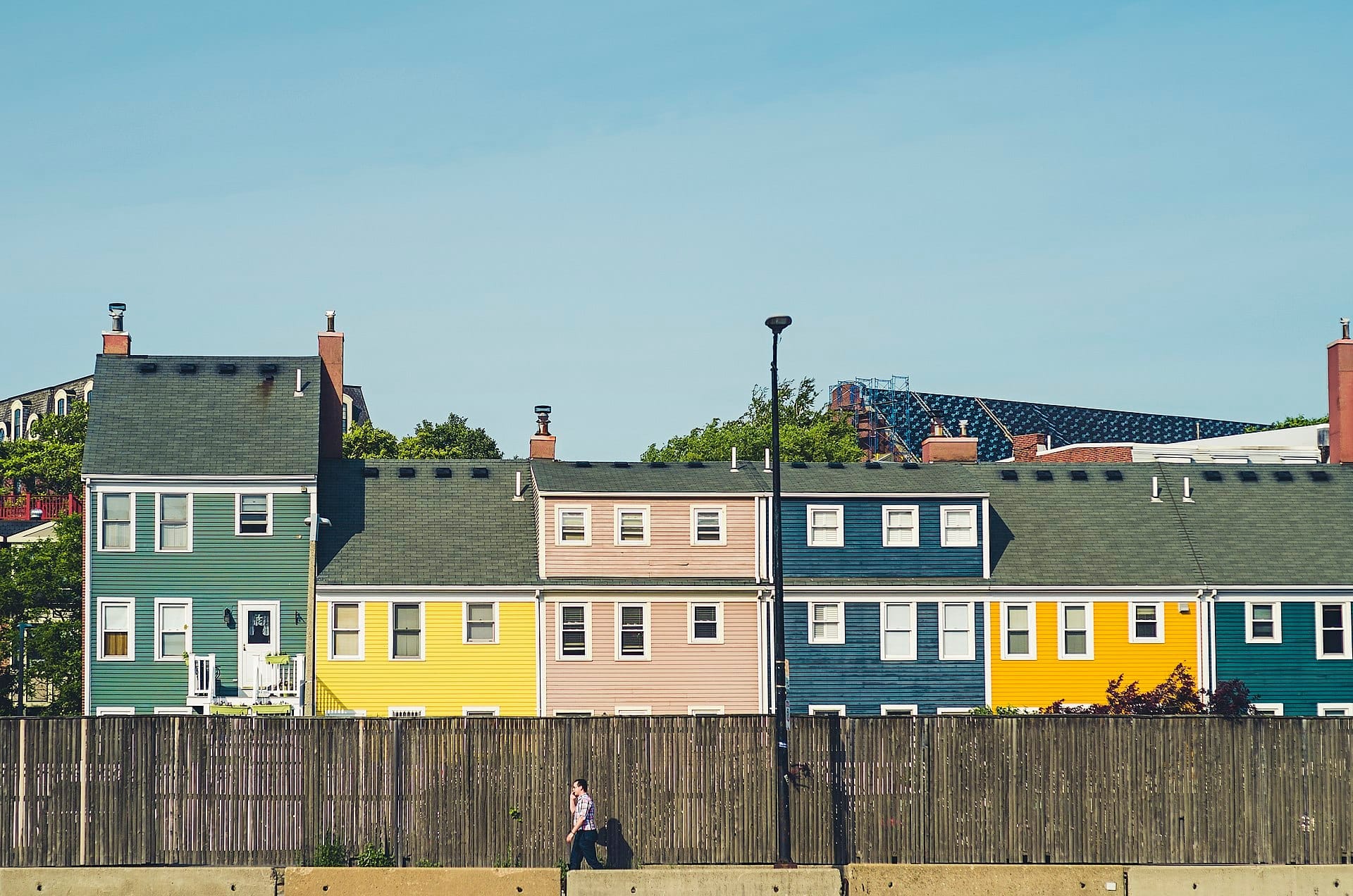
Charlestown in the early morning belongs entirely to its residents. Dog walkers cut through Winthrop Square, joggers loop the waterfront paths along the Navy Yard, and the smell of coffee drifts from a handful of cafes on Main Street before the first tour groups begin arriving. The streets are quiet at this hour, and the brick rowhouses on Warren Street and Cordis Street catch the morning light in a way that makes the whole neighborhood feel like it was preserved in amber.
By mid-morning, things shift noticeably. Visitors start crossing the North Washington Street Bridge from the North End, and the Navy Yard fills with families and school groups. The area around USS Constitution gets crowded on summer weekends and during peak fall foliage season. The residential streets above the Navy Yard, however, stay calm. Locals move through their routines — this remains a neighborhood where people actually live — and the tourist energy is mostly concentrated at specific sites rather than spread across the whole area.
After dark, Charlestown is quiet by Boston standards. The dining scene along Main Street draws residents from across the neighborhood, but there is nothing resembling a late-night strip. This is primarily a place where people have dinner and go home. The streets around the monument are especially peaceful at night, which is either a feature or a drawback depending on what you are looking for.
The neighborhood's character reflects decades of change. Charlestown was long known for its tight-knit Irish-American working-class community, a reputation that included a deeply insular social culture and, in the latter twentieth century, associations with organized crime. Substantial gentrification since the late 1980s has shifted the demographic and economic profile considerably, bringing in young professionals and pushing housing prices to among the highest in the city. The tension between long-standing residents and newer arrivals is part of the neighborhood's recent social history, though for visitors that tension is largely invisible — what you see is a well-kept, historically rich urban neighborhood with good bones.
What to See & Do
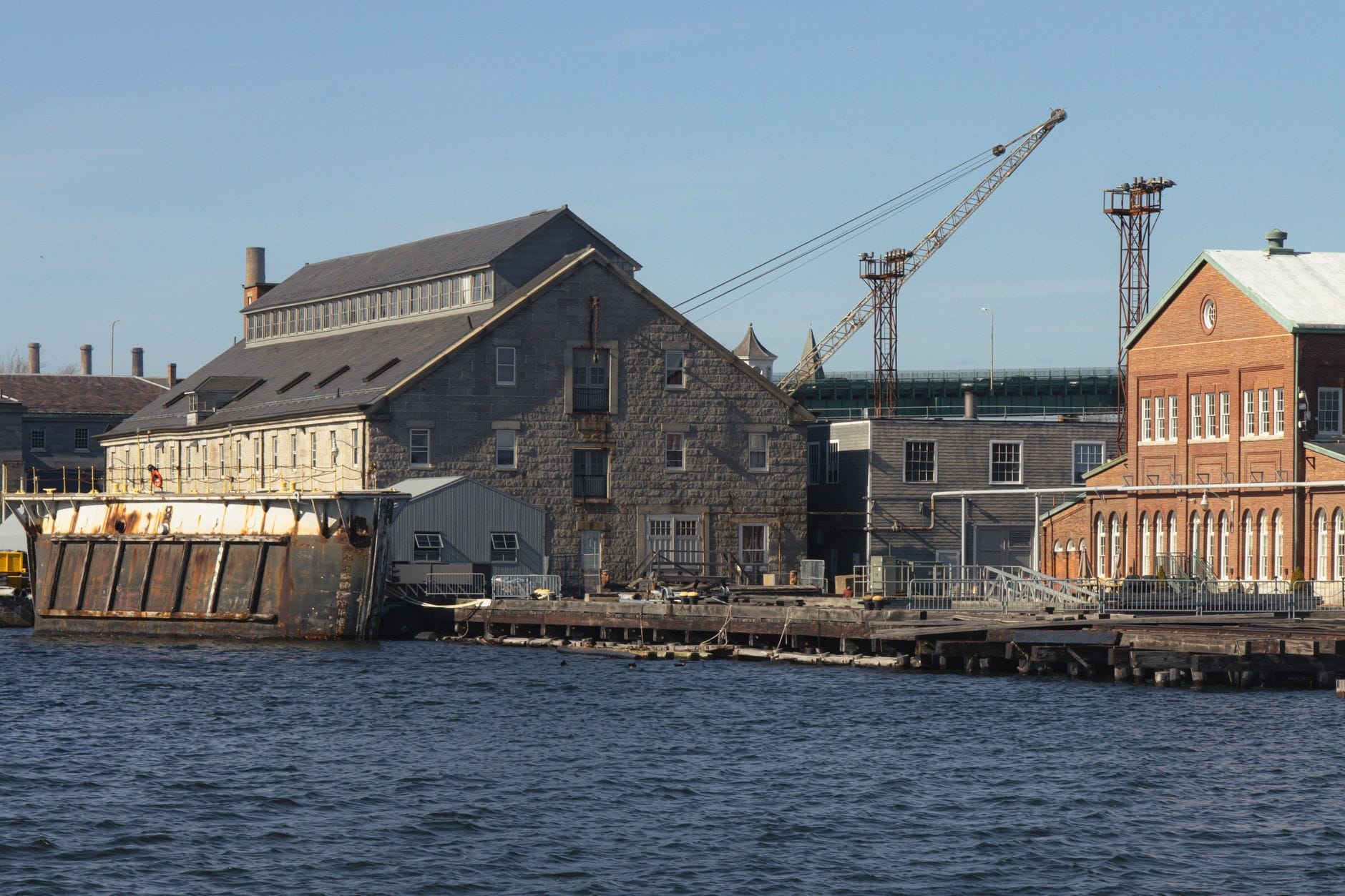
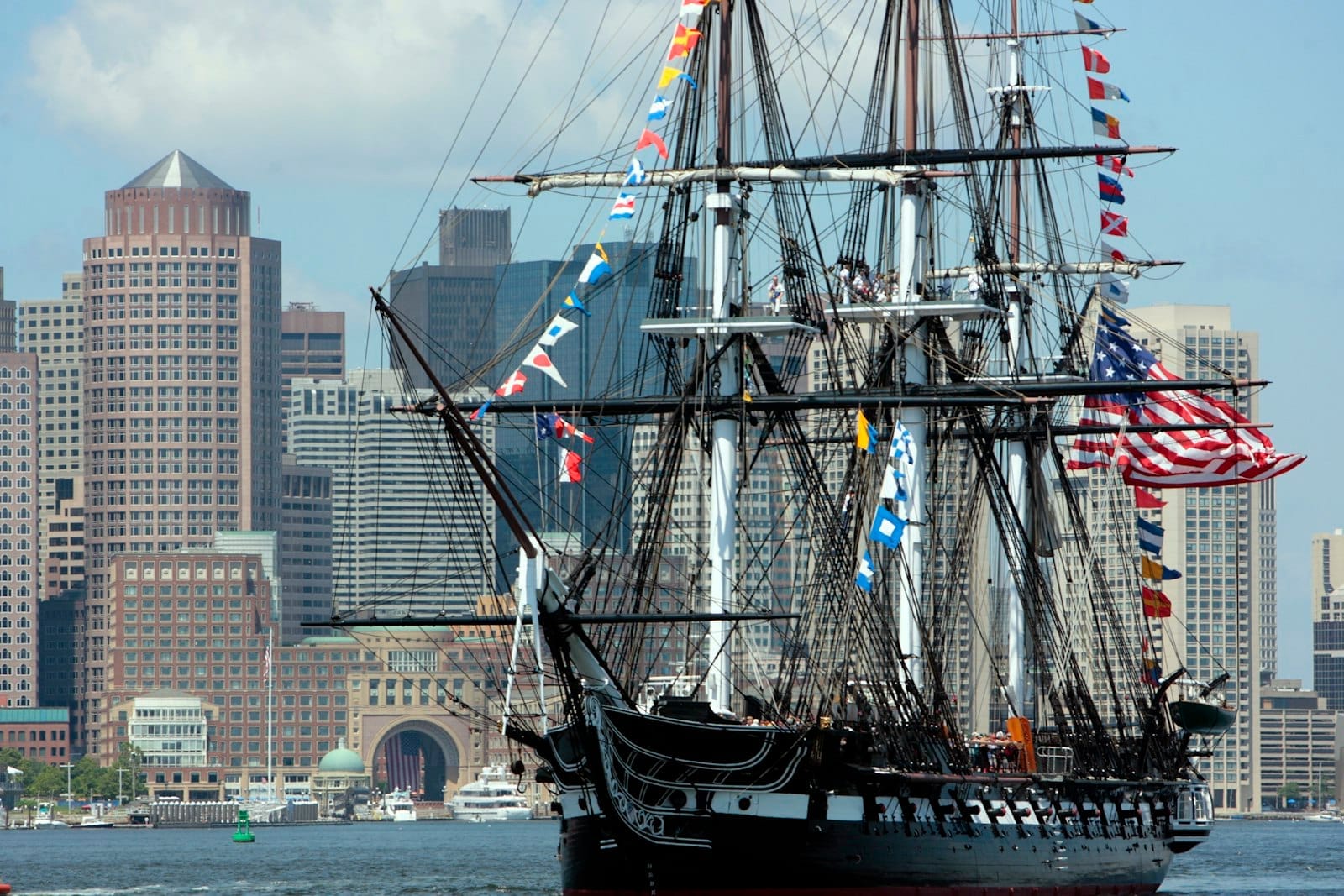
The two anchors of any visit are the Navy Yard and the monument. At the Charlestown Navy Yard, established in 1801 and now part of Boston National Historical Park, the main draw is USS Constitution — the oldest commissioned warship still afloat in the world, launched in 1797. She sits at Pier 1 and is open for tours. Alongside her is USS Cassin Young, a World War II destroyer that gives a vivid sense of how naval technology changed in 150 years. The yard itself has been converted to a mixed residential and park use, with restored rope walks and dry docks that tell the story of American naval manufacturing.
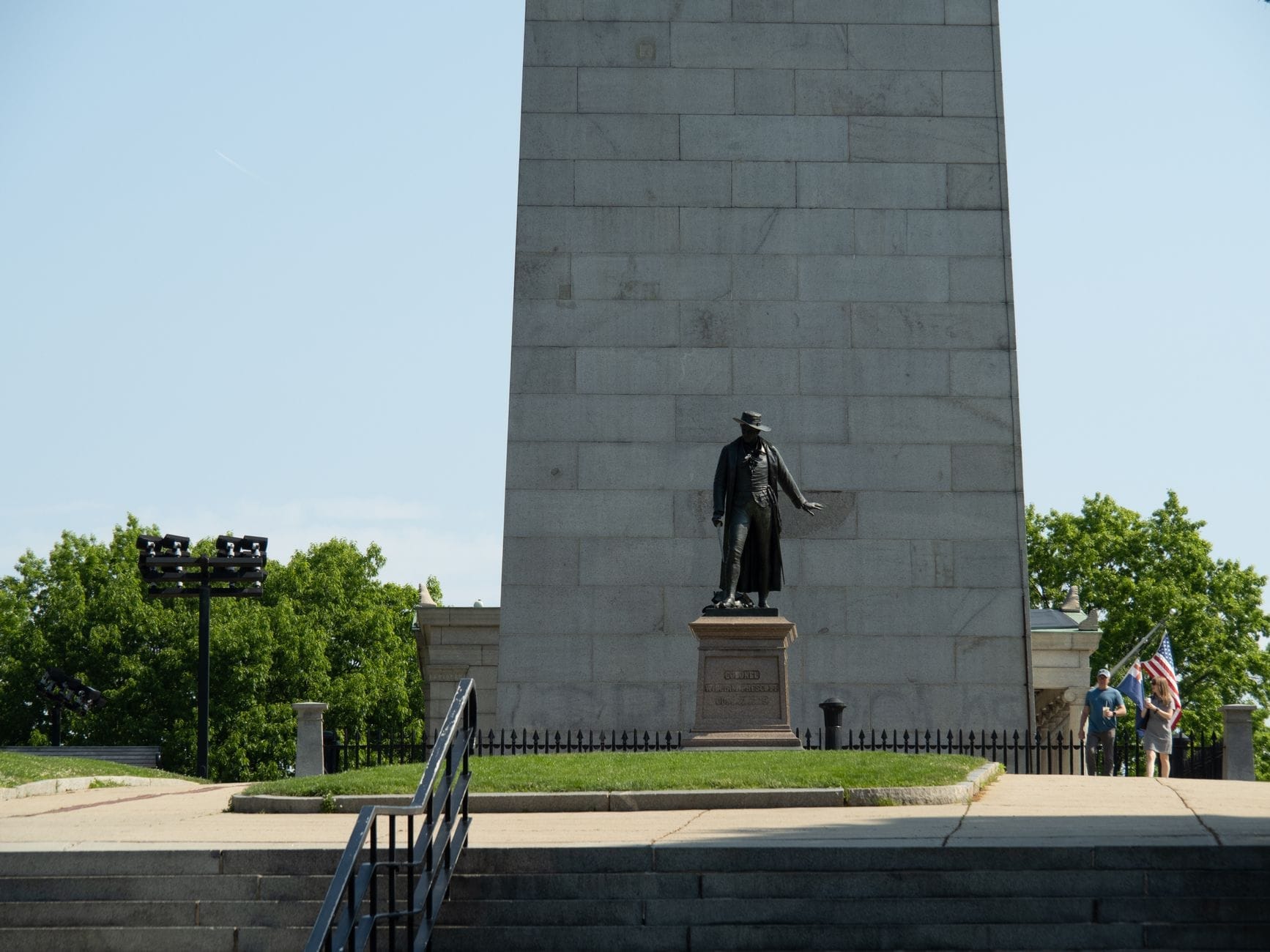
Walking uphill from the Navy Yard toward the monument takes about fifteen minutes on foot along Constitution Road and up Bunker Hill Street. The Bunker Hill Monument commemorates the Battle of Bunker Hill on June 17, 1775 — technically fought on Breed's Hill, which is where the obelisk stands. The 221-foot granite shaft was the first major monument to the American Revolution and took about sixteen years to complete. You can climb all 294 steps to the top for a panorama that stretches across the harbor, over downtown Boston, and out toward the harbor islands on a clear day. The Bunker Hill Museum, directly across Monument Square, provides context and artifacts before or after the climb.
Charlestown is also the northern end of the Freedom Trail, the 2.5-mile red-brick walking route that connects sixteen Revolutionary-era sites across Boston. The trail runs from Boston Common through downtown, through the North End, and ends here at the monument. If you are walking the trail from downtown, Charlestown is the final chapter — a satisfying ending given the scale of what you find here.
USS Constitution and USS Cassin Young at the Navy Yard (free admission, no reservation required for the ship tour — verify current hours with National Park Service)
Bunker Hill Monument and Museum at Monument Square (free, NPS-operated)
Charlestown Navy Yard Visitor Center for ranger programs and historical exhibits
Winthrop Square, a small park at the top of the hill with views across the neighborhood
City Square Park, a green space near the waterfront at the base of Main Street
The Korean War Memorial on Bunker Hill Street
💡 Local tip
If you are walking the Freedom Trail, consider doing it in reverse — starting at Bunker Hill and ending at Boston Common. You get the biggest historical sites while your legs are fresh, and you finish near the Public Garden and Back Bay, which are good for an evening stroll.
Eating & Drinking
The food scene in Charlestown is concentrated along Main Street and around City Square, and it skews toward the kind of neighborhood restaurants that serve residents rather than tourists. That is largely a good thing — prices are more reasonable than in the North End a few minutes away, and the atmosphere is distinctly local.
The range runs from traditional New England tavern food to upscale American bistros. Several long-standing bars and pubs near City Square serve the kind of straightforward food and local draft beer that has defined this neighborhood for generations. Higher-end options have appeared as the neighborhood has gentrified, offering farm-to-table menus in restored brick spaces that make the most of Charlestown's architectural character.
For visitors arriving from the water or finishing at the Navy Yard, there are casual options near the waterfront. If you want a more extensive meal after a day of sightseeing, Main Street is worth a slow walk from City Square up toward the monument — you will pass a mix of cafes, small restaurants, and bars that together give a fair sense of how the neighborhood eats. For a broader picture of Boston's food culture, see the guide to what to eat in Boston.
There are no food markets or street food vendors in Charlestown in the way you find them in the North End or Faneuil Hall area. Coffee shops open early and close in the afternoon, and the evening dining scene wraps up relatively early compared to other Boston neighborhoods. If you are looking for late-night options, you will need to cross back into the North End or head downtown.
⚠️ What to skip
Dining options near the Navy Yard are limited and tourist-oriented. Walk ten minutes up Main Street to find better value and a more local atmosphere. Most restaurants in Charlestown stop seating by 10pm, so plan accordingly if you are arriving late.
Getting There & Around
Walking from the North End is the most natural approach for visitors already exploring central Boston. The North Washington Street Bridge takes about five minutes on foot from the North End's Hanover Street area, and you arrive directly at City Square, a short walk from the Navy Yard entrance. This is the route most visitors take, and it makes geographic sense — you are connecting two of the oldest parts of the city along the waterfront.
By MBTA subway, two Orange Line stations serve Charlestown. Community College station is on the southwestern edge of the neighborhood, a few blocks from Bunker Hill Street — useful if you want to head straight up toward the monument. Sullivan Square station is further northwest and is a more practical entry point if you are coming from Cambridge or Somerville. Neither station puts you right at the main attractions, so expect a 10-15 minute walk from either stop.
MBTA bus Route 93 runs between Haymarket station in downtown Boston and Charlestown, stopping along Chelsea Street and Warren Street. This is a convenient option if you are coming from Government Center or the North Station area. For a broader overview of Boston transit options, the getting around Boston guide covers the full MBTA network.
The MBTA also runs a ferry service between the Charlestown Navy Yard ferry dock and Long Wharf in downtown Boston. The crossing takes about ten minutes and offers a completely different perspective on the neighborhood and the harbor. It is a legitimate transit option, not just a tourist boat, though verify current schedules and fares with the MBTA before traveling. Within Charlestown itself, everything worth visiting is walkable — the distance from City Square to the Bunker Hill Monument is about half a mile uphill, manageable even for casual walkers.
💡 Local tip
The MBTA ferry from Long Wharf to Charlestown Navy Yard is one of Boston's underused transit options and gives you a great view of the city skyline and the harbor as you approach. Check the MBTA website for current schedules — service frequency varies by season.
Where to Stay
Charlestown does not have a significant hotel presence. The neighborhood is almost entirely residential, and accommodation options within it are limited primarily to vacation rentals and a handful of bed-and-breakfast style properties in converted townhouses. For most visitors, the better approach is to base yourself in an adjacent neighborhood and visit Charlestown on a day trip.
The North End, Downtown Boston, and the Seaport District all put you within easy reach of Charlestown while giving you far more accommodation choice and better access to the rest of the city. Back Bay and Beacon Hill are also viable bases if you are prioritizing the Freedom Trail corridor. See the full guide to where to stay in Boston for a neighborhood-by-neighborhood breakdown of accommodation options.
If staying in Charlestown specifically appeals to you — and there is something pleasant about waking up to quiet brick streets and walking to the Navy Yard before the crowds arrive — look at vacation rental options on the residential streets above City Square, particularly around Monument Avenue and along the hill toward the monument. These put you in the most historically atmospheric part of the neighborhood, away from any traffic noise from the bridge approaches.
Charlestown and the Wider City
Understanding Charlestown means understanding where it fits in the larger arc of Boston's history. While Beacon Hill and the North End were being established and developed in Boston proper, Charlestown was a separate town with its own identity — older, in fact, than Boston itself by a few weeks in 1630, since Charlestown was founded earlier that year and Boston proper was settled in September 1630. Its annexation in 1874 was partly practical and partly political, and the neighborhood has never entirely lost the sense that it exists slightly apart from the city around it.
For visitors interested in the full sweep of Boston's Revolutionary history, Charlestown is essential. The Boston history guide covers how the Battle of Bunker Hill fits into the larger story of the Revolution, and how sites like the Navy Yard connect Boston to the development of the United States Navy. The neighborhood also ties into the best walking tours in Boston — several operators offer combined North End and Charlestown tours that cover both neighborhoods in a half-day.
Charlestown's position at the northern tip of the Freedom Trail also makes it the natural bookend to any multi-day exploration of central Boston. If you are spending three days in the city and want to cover the major historical sites, plan Charlestown for your last morning — it is a satisfying conclusion to the trail, and the harbor views from the monument give you a last chance to orient yourself spatially in a city that can otherwise feel like a maze of narrow colonial streets.
TL;DR
Best for: History enthusiasts, Freedom Trail walkers, and anyone who wants to see USS Constitution and the Bunker Hill Monument without a long journey from central Boston.
Skip it if: You are primarily interested in nightlife, shopping, or contemporary food culture — Charlestown offers very little of any of these.
Time needed: Half a day is sufficient for the Navy Yard, the monument, and a walk along Main Street; combine with the North End for a full day on foot.
Getting there: Walk across the North Washington Street Bridge from the North End, take the MBTA Orange Line to Community College or Sullivan Square, or arrive by MBTA ferry at the Navy Yard dock from Long Wharf.
One caveat: The neighborhood is quieter and more residential than most visitors expect. The main attractions are world-class, but outside of them, Charlestown is not a neighborhood you wander aimlessly — there is a clear route and clear destinations.
Three days is enough time to cover Boston's historic core, world-class museums, and distinct neighborhoods without feeling rushed. This itinerary groups sights by geography, saves you backtracking, and flags what to skip based on the season.
Boston is one of the great museum cities in America, with world-class collections spread across every neighborhood. Whether you have one afternoon or a full week, this guide covers the best museums in Boston — from encyclopedic art institutions to immersive history experiences — with practical tips on saving money along the way.
Boston rewards visitors year-round, but the timing of your trip shapes everything from hotel rates to what you can actually do outside. This guide breaks down each season honestly, flags the crowd spikes most travelers miss, and helps you match your travel style to the right window.
Boston Logan International Airport is one of the most conveniently located major airports in the United States, sitting just 3 miles from downtown. This guide covers every terminal, every transport option, seasonal travel patterns, and the practical details that make the difference between a smooth arrival and a stressful one.
Boston sits on Massachusetts Bay, and the beaches that surround it range from easy MBTA rides to rewarding day trips up the North Shore. This guide covers every option worth knowing, from historic Revere Beach to the pristine dunes at Crane Beach.
Harvard and MIT sit just across the Charles River from Boston, connected by the MBTA Red Line and packed with free things to see. This guide covers how to get there, what to book in advance, the best spots on each campus, and what most visitors get wrong.
Boston throws one of the most celebrated Fourth of July events in the United States, anchored by the free Boston Pops Fireworks Spectacular on the Charles River Esplanade. This guide covers the fireworks schedule, best viewing spots, Harborfest events, weather expectations, and practical logistics to help you plan every detail.
Boston rewards those who look beyond the Freedom Trail. This guide uncovers the city's overlooked museums, quiet green spaces, architectural surprises, and neighborhood experiences that locals return to again and again.
Boston is where the American Revolution was born. This guide covers every major colonial and Revolutionary War site in the city, from the Freedom Trail's 16 landmarks to day trips to Lexington and Concord, with practical advice on pricing, crowds, and what's actually worth your time.
Fall is widely considered the best season to visit Boston. Temperatures drop to comfortable levels, the city's parks and tree-lined streets turn brilliant shades of red and gold, and a packed events calendar keeps things interesting well into November. This guide covers when to go, where to see color, what to do, and how to plan it all without overpaying.
Summer transforms Boston into one of the most active cities on the East Coast, with outdoor concerts, harbor cruises, Red Sox baseball, and a packed events calendar. This guide covers the best things to do in June, July, and August, plus practical advice on heat, crowds, and booking ahead.
Boston in winter is colder and snowier than most visitors expect, but that's exactly what makes it compelling. Shorter queues, lower hotel rates, festive neighborhoods, and some of the city's best indoor experiences await those willing to bundle up. This guide covers everything you need to know before you go.
Boston's luxury scene is more layered than most visitors expect. From the only Forbes Five-Star waterfront hotel in New England to Michelin-caliber dining in Back Bay, this guide covers where to stay, what to eat, and how to spend your time at the upper end of the city's offerings.
Boston's after-dark scene is denser and more diverse than its early-closing reputation suggests. This guide breaks down the best bars, live music venues, and clubs by neighborhood, with practical advice on cover charges, crowd patterns, and where to go based on what you actually want to do.
Boston has a reputation for being expensive, but the reality is more nuanced. The city's most iconic experiences, from the Freedom Trail to the Public Garden, cost nothing. This guide breaks down exactly where to spend, where to save, and how to see the best of Boston without the financial hangover.
Boston packs nearly 300 parks, 7 miles of linked greenway, a harbor with 34 islands, and a paddleable river into a city of under 50 square miles. This guide covers the best outdoor activities in Boston across every season, from free trail walks to whale-watching excursions and Harbor Islands camping.
Boston's shopping scene is more diverse and spread out than most visitors expect. This guide breaks down every major retail district, indoor mall, and open-air market, with straightforward notes on what's worth your time and money across every budget level.
Boston is one of the most solo-friendly cities in the United States: compact, walkable, transit-connected, and loaded with free and low-cost experiences. This guide covers everything from neighborhood safety and budget planning to the best solo activities and seasonal timing.
On the night of December 16, 1773, a group of colonists boarded three ships in Boston Harbor and dumped 342 chests of British tea into the water. It was one of the most consequential acts of political protest in American history. This guide covers what actually happened, what gets the story wrong, and the best ways to experience it when you visit Boston.
Two days in Boston is enough to walk the Freedom Trail, eat your way through the North End, stand in the shadow of Fenway Park, and still catch a harbor sunset. This guide breaks down exactly how to spend your time, what it will cost, and what the tourist traps are worth skipping.
Boston is one of the most rewarding cities in the U.S. for families. Compact enough to walk, rich in hands-on science and history, and generous with free outdoor spaces, it rewards kids of nearly every age. This guide cuts through the hype with real prices, seasonal advice, and straightforward notes on what's worth your time.
Boston sits at the center of one of New England's richest regions for day tripping. Within two hours, you can walk Revolutionary War battlefields, swim on pristine barrier beaches, explore world-class museums, or wander a storybook fishing village. This guide covers the best day trips from Boston, with practical advice on how to get there.
Boston rewards budget travelers more than almost any other major American city. From the 2.5-mile Freedom Trail to free museum days, public parks, and historic naval vessels, here are free experiences that capture the best of Boston.
Boston is compact enough to walk between many of its most famous neighborhoods, but knowing how to use the MBTA subway, buses, ferries, and ride-hailing services will save you time and money. This guide covers every way to move around the city, from Logan Airport transfers to day-to-day transit passes.
Boston rewards couples with a surprisingly diverse mix of romantic experiences: peaceful garden strolls, candlelit Italian dinners in the North End, sunset cruises on the harbor, and world-class art museums. This guide covers the best options by season, with real prices and practical advice to help you plan a memorable trip.
Salem is one of the most rewarding day trips from Boston, but it rewards those who go in prepared. This guide covers exactly how to get there, what to see beyond the witch trial sites, and how to avoid the October chaos that catches most visitors off guard.
Boston packs Revolutionary history, world-class museums, a legendary baseball stadium, and a working waterfront into one of America's most walkable cities. This guide covers the best things to do in Boston across every neighborhood, season, and budget — with practical details on pricing, timing, and how to get around.
Boston is one of America's great walking cities, compact enough to cover on foot yet dense with 400 years of history around every corner. This guide covers the best self-guided routes, iconic landmarks, and neighborhood walks across the city.
Boston's food identity runs deep: centuries of seafood tradition, immigrant-shaped neighborhoods, and a handful of dishes that define New England eating. This guide covers what to order, where to find it, what it should cost, and what to skip.
Choosing where to stay in Boston shapes your entire trip. This guide breaks down every major neighborhood by location, transit access, price range, and who it suits best, so you can book with confidence instead of guessing.