The Boston Tea Party: History, Story, and How to Experience It Today
On the night of December 16, 1773, a group of colonists boarded three ships in Boston Harbor and dumped 342 chests of British tea into the water. It was one of the most consequential acts of political protest in American history. This guide covers what actually happened, what gets the story wrong, and the best ways to experience it when you visit Boston.

Plan and book this trip
Tools from our partner Travelpayouts help you compare flights and hotels. If you book through them, we may earn a commission at no extra cost to you.
Flights
Hotels map
TL;DR
- The Boston Tea Party took place on December 16, 1773, when 60–130 colonists destroyed 342 chests of East India Company tea at Griffin's Wharf to protest Parliament's Tea Act and taxation without representation.
- The Tea Act actually made tea cheaper, not more expensive. The protest was about monopoly power and the principle of parliamentary taxation, not retail prices.
- The Boston Tea Party Ships & Museum on Congress Street Bridge is the main destination for experiencing the event today, with replica ships and interactive reenactments.
- The Old South Meeting House, where colonists debated for hours before the raid, is a short walk away and provides essential historical context.
- Both sites sit along or near the Freedom Trail, making them easy to combine with other Revolutionary-era landmarks in a single day.
What Actually Happened on December 16, 1773
The Boston Tea Party was not a spontaneous riot. It was a carefully coordinated act of political defiance, planned over several weeks of public debate. Understanding why it happened requires a quick look at the Tea Act, passed by the British Parliament on May 10, 1773.
The Tea Act gave the British East India Company exclusive rights to ship tea directly to the American colonies, bypassing colonial merchants entirely. Crucially, it also maintained the existing tax on tea at American ports. The result: East India Company tea would be cheaper than smuggled Dutch tea, but colonists would still be paying a tax imposed by a parliament in which they had no representation. For colonial leaders like Samuel Adams, this was not a bargain. It was a trap designed to make them accept Parliament's right to tax them.
Three ships, the Dartmouth, Eleanor, and Beaver, arrived in Boston Harbor in late 1773 carrying 342 chests of the disputed tea. Under Massachusetts law, cargo that was not unloaded within 20 days would be seized by customs authorities. That deadline fell on December 17. Governor Thomas Hutchinson refused to let the ships leave without paying the duty. Colonial leaders refused to allow the tea to be unloaded. The standoff forced a decision.
On the evening of December 16, thousands of Bostonians gathered at the Old South Meeting House. When word arrived that Hutchinson had again refused to release the ships, Samuel Adams reportedly declared that he could do nothing more to save the country. Within hours, a group of 60 to 130 men, many connected to the Sons of Liberty, moved to Griffin's Wharf. Over roughly three hours, they split into three groups, boarded each ship, hauled up the tea chests, and broke them open with axes. All 340–342 chests, valued at somewhere between about £9,600 and £18,000 in 18th-century currency, were dumped into Boston Harbor. No other cargo was touched. One padlock that was accidentally broken was replaced the next day.
ℹ️ Good to know
The participants were not dressed as the full, feathered “Indian” caricatures common in later art, but some did adopt elements associated with Native Americans. Historical accounts describe them wearing blankets, some Indian-style garments or headdresses, and using soot or paint to obscure their faces; the disguises were primarily meant to hide individual identities rather than faithfully impersonate any specific Indigenous nation.
Three Myths About the Boston Tea Party, Corrected
A lot of what gets repeated about the Boston Tea Party is either oversimplified or flatly wrong. These are the three most common errors worth knowing before you visit.
- Myth: The Tea Act made tea more expensive The opposite is true. The Tea Act actually lowered the price of legal British tea below what colonists were paying for smuggled Dutch tea. The protest was about parliamentary authority and monopoly control, not retail pricing. Colonists were objecting to the principle that Parliament could tax them at will, not to paying too much for their morning cup.
- Myth: It was a chaotic mob action Contemporary accounts describe a remarkably disciplined operation. The men worked methodically and in organized teams, one per ship. They avoided damaging any other cargo. A bystander who tried to pocket some loose tea was reportedly caught and his coat seized. The participants swept the decks clean before leaving.
- Myth: It happened during the Revolutionary War The Boston Tea Party occurred in December 1773, nearly two years before the first shots were fired at Lexington and Concord in April 1775. It was a pre-war protest event, and at the time, most colonists, including many who participated, were not yet advocating for full independence from Britain.
The Aftermath: How Parliament's Reaction Made Things Worse
Britain's response to the Tea Party hardened colonial resistance in ways that London almost certainly did not anticipate. Parliament passed the Coercive Acts in 1774, a series of punitive measures that colonists quickly renamed the Intolerable Acts. The acts closed Boston's port entirely until the destroyed tea was paid for, dramatically reduced Massachusetts' powers of self-government, expanded the quartering of British troops in North America, including in inhabited private buildings if barracks were insufficient, and allowed British officials accused of crimes to be tried in Britain rather than in the colonies.
Far from isolating Massachusetts as a troublemaker, the Coercive Acts alarmed colonists across all thirteen colonies. They provided the unifying grievance that led directly to the First Continental Congress in Philadelphia in September 1774. In trying to punish Boston, Parliament had transformed a local protest into a continental crisis.
✨ Pro tip
If you want the full arc of this history in a single day, start at the Old South Meeting House on Washington Street, where the final debate happened on December 16, 1773. Then walk roughly 10 minutes south to the Boston Tea Party Ships & Museum at the Congress Street Bridge. You will be following, approximately, the same route the participants took that night.
Boston Tea Party Ships & Museum: What to Expect
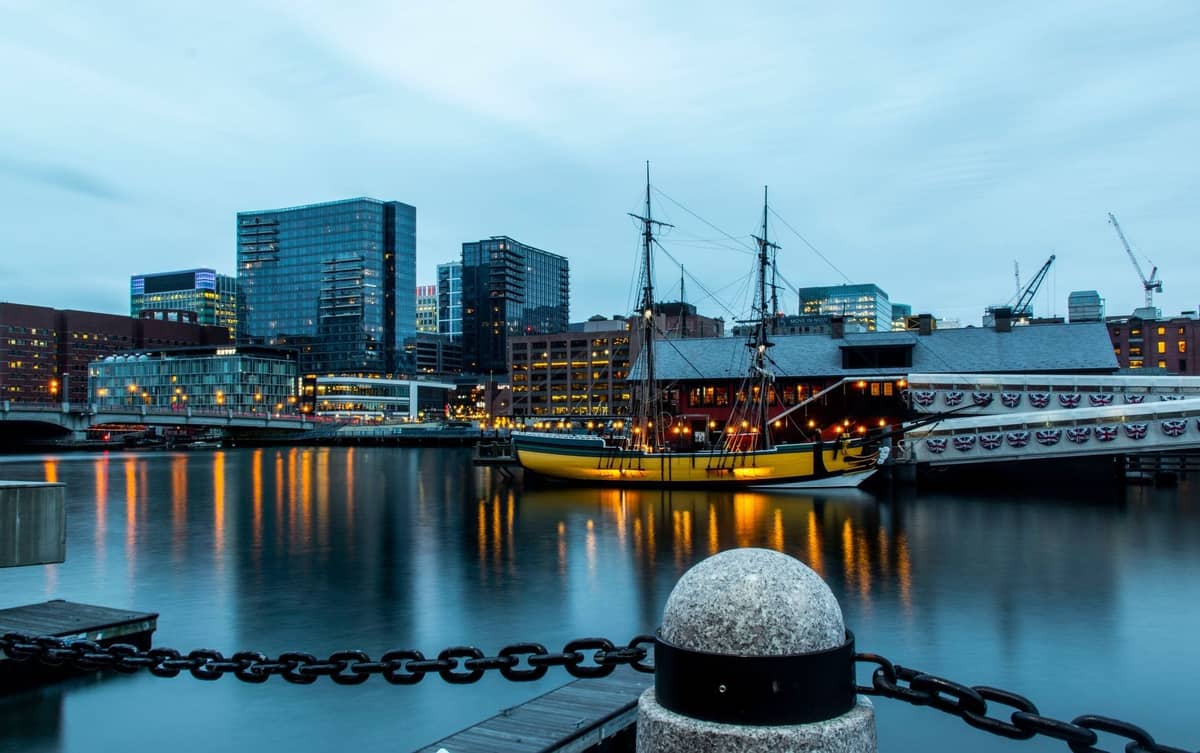
The Boston Tea Party Ships & Museum sits on the Congress Street Bridge over the Fort Point Channel, very close to the original Griffin's Wharf site (the exact location was lost to land reclamation in the 19th century). It is the most immersive way to engage with the event today.
The experience runs roughly 90 minutes for most visitors. It begins with a guided reenactment in a theater-style meeting house, then moves onto two full-scale replica ships, the Beaver and the Eleanor. Actors in period costume play key figures, and visitors are invited to participate, including throwing (replica) tea chests overboard. The museum section covers the lead-up to the protest, the ships themselves, and the political fallout. There is also a separate tea room on site if you want to sit with the irony of drinking tea at the end.
- Tickets are timed and should be booked in advance, especially in summer (June–August) when queues for walk-up visitors can be long.
- The experience is partially outdoors on the replica ships, so dress for the weather. Winter visits are entirely feasible but cold.
- Children generally respond well to the reenactment format. The guided experience is designed to be interactive rather than passive.
- Admission pricing uses dynamic rates. Check the official website for current prices before booking. Discounts are typically available for children, seniors, and Boston residents.
- The museum is within easy walking distance of South Station (Red and Silver Lines) and about 15 minutes on foot from Downtown Crossing.
The Old South Meeting House: The Overlooked Starting Point
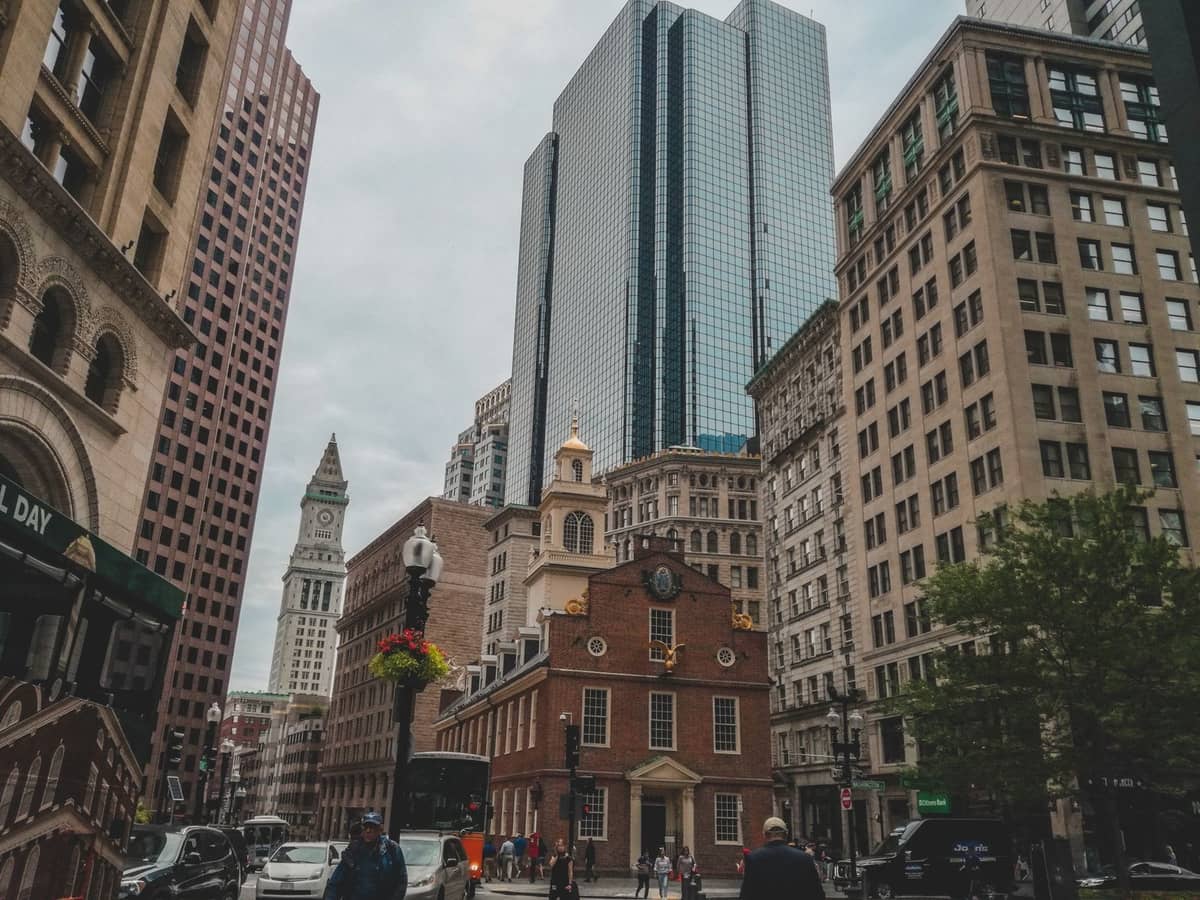
Most visitors head straight to the Ships & Museum and skip the Old South Meeting House on Washington Street. That is a mistake. The meeting house is where the Boston Tea Party actually began, and it provides context that makes the harbor experience much more meaningful.
On December 16, 1773, between 5,000 and 7,000 people crowded into and around the building, which was the largest gathering space in Boston at the time. They had been meeting repeatedly for weeks, debating whether to send the tea back to England, store it indefinitely, or take more direct action. When the final word came that Governor Hutchinson would not back down, the crowd's decision was made. The building itself is a working historic site, now operated by Revolutionary Spaces, and contains exhibits about both the Tea Party and the broader history of political debate in Boston.
💡 Local tip
The Old South Meeting House is also a stop on the Freedom Trail, so if you are walking the full trail, you will pass it regardless. Allow at least 30–45 minutes here if the Tea Party is your focus. The audio tour is worth using if you visit independently.
Combining the Tea Party With the Rest of Boston's Revolutionary History

The Boston Tea Party fits naturally into a broader day of Revolutionary-era sightseeing. The Freedom Trail is a 2.5-mile marked walking route that connects 16 historic sites across downtown Boston and Charlestown. The Boston Tea Party Ships & Museum is not an official Freedom Trail stop, but it is within a short walk of the trail's path through downtown, while the Old South Meeting House is an official stop on the Freedom Trail.
For the full picture of pre-Revolutionary Boston, also consider the Old State House, where the Declaration of Independence was first read to Bostonians in 1776, and the Granary Burying Ground, where Samuel Adams and Paul Revere are buried. Both are within a 10-minute walk of the Old South Meeting House.
If you want to extend further, the Paul Revere House in the North End and the Bunker Hill Monument in Charlestown both tell adjacent chapters of the same story. Together, these sites can fill a full day. If you are trying to prioritize, the Old South Meeting House and the Ships & Museum form the core Tea Party experience and can be done in three to four hours.
Traveling with children? The Ships & Museum's interactive format tends to work better for younger visitors than static exhibits. For more ideas on structuring the day, see our guide to visiting Boston with kids or the complete guide to Boston's history for deeper background on the colonial and Revolutionary periods.
FAQ
Where exactly did the Boston Tea Party take place?
The Boston Tea Party took place at Griffin's Wharf on December 16, 1773. The precise location of the original wharf was lost when Boston's shoreline was reclaimed and built over in the 19th century. The Boston Tea Party Ships & Museum on the Congress Street Bridge is located near the probable original site and is the best place to orient yourself geographically to the event.
How long does the Boston Tea Party Ships & Museum take?
Most visitors spend about 90 minutes at the museum, including the guided reenactment theater experience, the replica ships, and the indoor exhibits. If you linger in the tea room or take your time in the exhibits, plan for two hours. Timed entry tickets mean you will not have to wait long once you arrive, but booking in advance is strongly recommended in peak season.
Is the Boston Tea Party Ships & Museum worth the admission price?
For visitors with an interest in American history or families with children, yes. The interactive reenactment format is engaging, and the replica ships give you a physical sense of the scale of the protest. If you are primarily a museum person rather than an experiential attraction person, pairing it with the Old South Meeting House will make the visit feel more substantive. Walk-in prices are higher than pre-booked tickets, so buy online.
What was the Tea Act, and why did it provoke the Boston Tea Party?
The Tea Act, passed by the British Parliament on May 10, 1773, gave the British East India Company a monopoly on tea sales in the American colonies and allowed it to ship tea directly without going through colonial merchants, at a price that undercut local traders. However, it also maintained a small tax on tea at American ports. Colonial leaders, particularly those in Boston, objected to this not because the tea was expensive, but because accepting taxed tea meant implicitly accepting Parliament's right to tax them without their consent or representation. The Tea Act was seen as a political maneuver to trick colonists into conceding that principle.
Can I visit the Boston Tea Party sites in winter?
Yes, and there is something fitting about visiting in December, close to the anniversary date of December 16. The Ships & Museum operates year-round, though hours may be reduced in winter. The replica ship portion is outdoors, so dress warmly. Crowds are significantly thinner in winter than in summer, which means shorter waits and a more reflective experience. The anniversary itself sometimes draws special programming, so check the museum's event calendar if visiting in mid-December.