Boston Tea Party Ships & Museum: A Practical Guide to the Experience
The Boston Tea Party Ships & Museum puts you inside one of the most consequential nights in American history through live actor-led tours, full-scale replica ships moored on Fort Point Channel, and the only known surviving tea chest from the December 16, 1773 event. It is one of Boston's more immersive history attractions, but it comes with a price tag and a structure worth understanding before you buy your ticket.
Quick Facts
- Location
- 306 Congress St, Boston, MA 02210 — Fort Point Channel, Seaport District
- Getting There
- MBTA Silver Line SL1/SL2 to Courthouse Station (5-min walk); Red Line to South Station (10-min walk)
- Time Needed
- 1 to 2 hours for the full experience
- Cost
- Approx. USD from $35 adults, from $26 children ages 3–12 (dynamic pricing; verify at official site)
- Best for
- History enthusiasts, families with school-age children, first-time Boston visitors
- Official website
- www.bostonteapartyship.com
What Is the Boston Tea Party Ships & Museum?
The Boston Tea Party Ships & Museum is a living history attraction moored along Fort Point Channel at 306 Congress Street. Unlike a traditional museum where you walk quietly past display cases, this experience is structured as a guided theatrical tour. From the moment you arrive, costumed actor-interpreters take on the roles of colonists and lead small groups through the events of December 16, 1773, the night a group of colonists destroyed 342 chests of East India Company tea by throwing them into Boston Harbor.
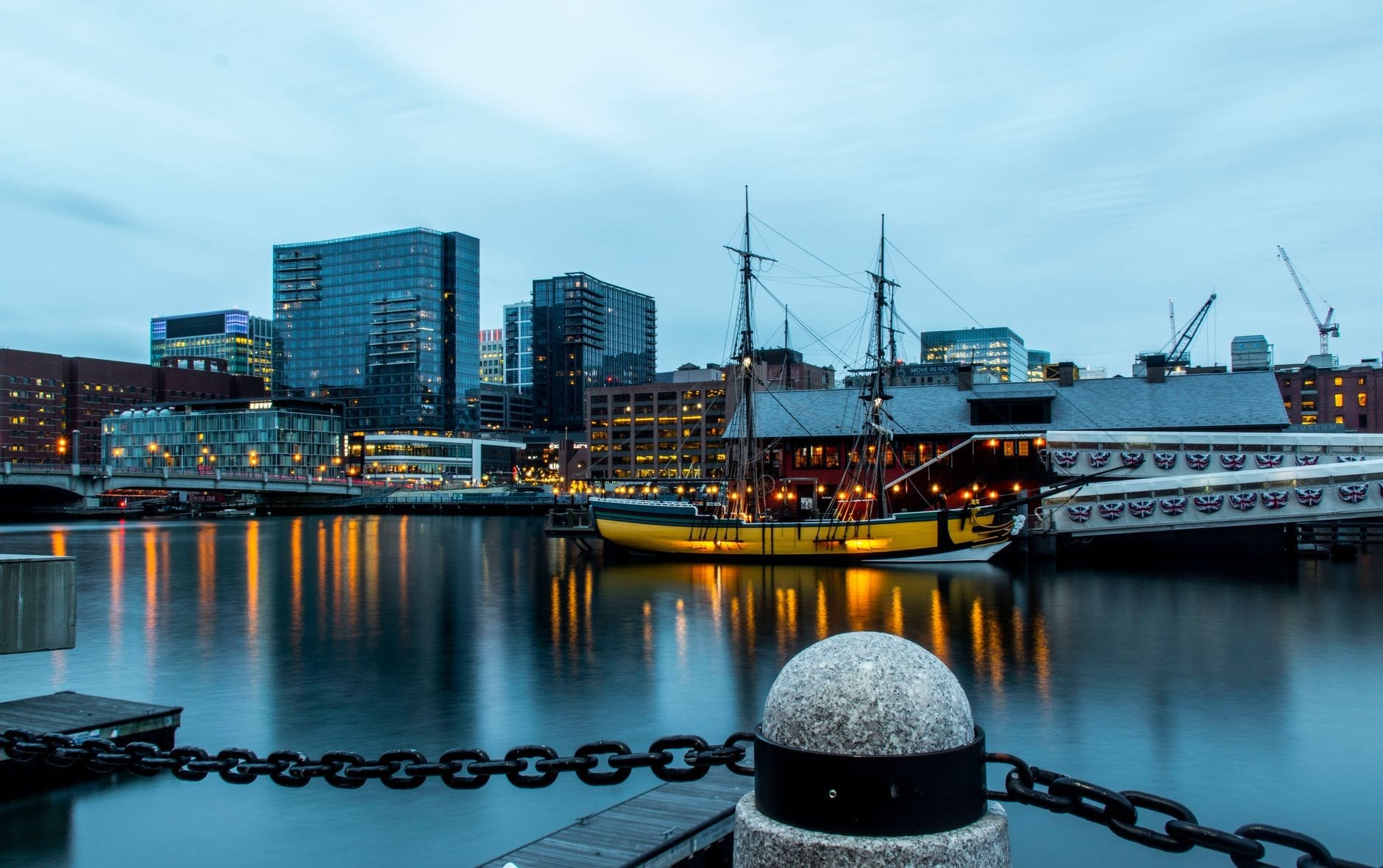
The complex reopened in its current form in 2012, featuring full-scale working replicas of two of the three original Tea Party ships: the brig Beaver and the merchant vessel Eleanor. The third ship, Dartmouth, is interpreted through exhibits rather than a physical replica. Visitors board the ships as part of the tour, which gives the experience a tactile quality that most revolutionary-era attractions in Boston cannot match.
ℹ️ Good to know
In-season tours begin at 10:00 a.m., with the last tour departing at 5:00 p.m. Off-season hours are reduced but the museum generally operates daily from 10:00 a.m. to 4:00 p.m. Confirm current schedules and buy tickets in advance on the official website to avoid sellouts, particularly in summer.
The Historical Weight of December 16, 1773
The Boston Tea Party was not a spontaneous riot. It was a carefully organized act of political resistance against the British Parliament's Tea Act, which gave the East India Company a monopoly on tea sales to the American colonies and effectively undercut local merchants. The Sons of Liberty, led in part by Samuel Adams, organized the operation over weeks, and roughly 100–130 men, many disguised as Mohawk Indians boarded three ships anchored in Griffin's Wharf and methodically dumped about 92,000 pounds of tea into the harbor over roughly three hours.
The consequences were immediate and severe. Parliament responded with the Coercive Acts of 1774, which colonists called the Intolerable Acts, closing Boston Harbor and dramatically restricting Massachusetts self-governance. Historians widely regard the Tea Party as a pivotal escalation on the road to the American Revolution, which began the following year at Concord and Lexington.
The museum's most significant artifact is the Robinson Tea Chest, described as the only known surviving tea chest from the Boston Tea Party. It sat in near-obscurity for generations before being authenticated and put on permanent display. Alongside it rests a vial of original tea recovered from the harbor, two objects that give the exhibition genuine historical gravity. For the broader story of how Boston's revolutionary period unfolded, the Boston history guide provides essential context.
Tickets & tours
Hand-picked options from our booking partner. Prices are indicative; availability and final rates are confirmed when you complete your booking.
Boston Tea Party Ships and Museum tickets
From 27 €Instant confirmationFree cancellationHarborwalk and tea party self-guided audio tour in Boston
From 7 €Instant confirmationFree cancellationBoston Summer Night Trolley Tour and River Cruise
From 27 €Instant confirmationFree cancellationLEGOLAND Discovery Center Boston tickets
From 26 €Instant confirmationFree cancellation
What the Experience Actually Feels Like
The tour begins inside the main building, where actor-interpreters address your group as if you are fellow colonists at the Old South Meeting House on the night in question. The theatrical framing is committed and well-rehearsed. Actors stay in character, respond to audience questions, and guide groups through escalating scenes before leading everyone outside to the moored ships.
Boarding the Beaver or Eleanor is the highlight for most visitors. The ships creak underfoot, the ropes and rigging are weathered and tactile, and the smell of salt air and treated wood is distinct. Guests are invited to hurl replica tea crates over the side into the channel, which generates genuine enthusiasm, especially among younger visitors. The gesture is symbolic now, not destructive, but the physical act of participating gives the moment a quality that simply reading about events cannot replicate.
Inside the main pavilion, a 4D theater presents a film with environmental effects including seat movement, water mist, and ambient sound. The exhibit galleries cover the political climate of colonial Boston with reasonable depth, touching on colonial economics, British taxation policy, and the roles of key figures including Paul Revere and Adams. The pacing is well-calibrated for family groups, though serious history readers may find the interpretive panels lean somewhat toward broad strokes rather than scholarly nuance.
💡 Local tip
Morning visits, particularly on weekdays before 11:00 a.m., offer smaller group sizes and more interaction time with the actor-interpreters. Summer afternoons see the largest crowds, and the ships can feel congested when multiple groups are aboard simultaneously.
How the Experience Changes by Time of Day and Season
The Fort Point Channel setting shifts noticeably across the day. In the morning, the water is calm and reflects the surrounding brick warehouse district, with Harbor views visible toward the Seaport. By midday in summer, tour groups press through quickly, the ships are populated continuously, and the theatrical pauses that make the morning sessions feel immersive become harder to sustain. Late afternoon, particularly in spring and fall, catches the water in warmer light and reduces foot traffic enough that the experience recovers much of its atmosphere.
Winter visits are distinctly different. The museum operates on reduced hours and days in the off-season, but the cold adds an unscripted authenticity: the harbor mist, the chill on deck, and the near-empty walkways make it easier to imagine the actual December night in 1773. Those willing to layer up and check hours in advance often find winter the most contemplative time to visit.
Getting There and Practical Logistics
The museum sits at 306 Congress Street on Fort Point Channel, at the edge of the Seaport District. One convenient public transit option is the MBTA Silver Line SL1 or SL2 from South Station to Courthouse Station, a roughly five-minute walk from the entrance. If you are arriving from the Red Line, exit at South Station and walk across the Congress Street Bridge, a straightforward ten-minute walk along the waterfront.
Parking exists in several nearby garages, but costs are high and driving into this part of Boston on summer weekends is not advisable. The museum is an easy addition to a walk that also takes in the Institute of Contemporary Art and the Boston Harborwalk, both within comfortable walking distance in the Seaport.
Admission starts from approximately USD $35 for adults and USD $26 for children ages 3 to 12, with dynamic pricing on peak days. Always purchase directly through the official website or at the box office rather than through third-party resellers, where prices sometimes include unmarked markups. Children aged 3 and under are admitted free.
⚠️ What to skip
The ship experience involves boarding via gangways and navigating a period-style vessel with uneven decking. Visitors with significant mobility limitations should contact the museum directly before visiting to discuss accessibility accommodations. The main exhibit building is more accessible than the ship decks.
Is It Worth the Price?
At roughly $35 per adult, the Boston Tea Party Ships & Museum sits in the mid-to-upper tier of Boston's paid attractions. Whether it justifies that price depends heavily on what you bring to it. For visitors who want passive sightseeing, it may feel expensive for 90 minutes. For families with children between roughly ages 7 and 14, or for adults who engage readily with interactive history, the theatrical format and physical ship access make it one of the more distinctive experiences in the city.
Visitors who are primarily interested in Boston's revolutionary history without theatrical framing will find more documentary depth along the Freedom Trail, where sites like the Old South Meeting House (the actual building where colonists debated that night) can be visited for lower admission. The two approaches complement each other well if you have multiple days in Boston.
The museum is not appropriate for visitors who find theatrical re-enactment gimmicky or who expect a research-grade history institution. The Robinson Tea Chest and the vial of original tea are significant artifacts, but the institution is primarily an entertainment-forward experience rather than a curatorial one. Understanding that distinction prevents disappointment.
Insider Tips
- Book the first tour slot of the day (10:00 a.m.) on weekdays. Groups are smallest at opening, and actor-interpreters are freshest, making their improvisational responses to audience questions noticeably sharper than during peak afternoon sessions.
- The Congress Street Bridge just outside the museum entrance offers one of the better vantage points for photographing the full-scale ships against the Fort Point Channel skyline. The best light falls on this angle in the late afternoon from the eastern sidewalk.
- If you are visiting with older teenagers or adult history enthusiasts, ask the actor-interpreters to address questions about the political opposition to the Tea Party, not all colonists supported it, and the more nuanced responses reveal how carefully the staff have studied the period.
- Combo tickets that bundle the Boston Tea Party Ships & Museum with other city attractions (including trolley tours) sometimes offer meaningful savings. Check the official site's deals page before purchasing individual tickets.
- The small gift shop carries a surprisingly solid selection of colonial history books alongside the expected souvenir merchandise. The section on primary sources and narrative histories of the Revolution is worth a browse if you want reading material that goes deeper than the exhibit panels.
Who Is Boston Tea Party Ships & Museum For?
- Families with school-age children (especially ages 7 to 14) who learn well through hands-on and theatrical experiences
- First-time Boston visitors who want an accessible, engaging introduction to the city's revolutionary history
- American history enthusiasts drawn by the Robinson Tea Chest, the only surviving artifact of its kind from the event
- Groups seeking an activity that combines movement, storytelling, and outdoor waterfront setting rather than passive gallery viewing
- Travelers pairing the visit with a broader Seaport District afternoon that includes waterfront dining and harbor views
Nearby Attractions
Other things to see while in Seaport District:
- Boston Children's Museum
Founded in 1913 and now one of the most visited family attractions in New England, Boston Children's Museum sits along Fort Point Channel in the Seaport District. With hands-on exhibits across multiple floors, it rewards families with children under 10 — but requires planning, especially on weekends.
- Boston Harborwalk
The Boston Harborwalk is a free, publicly accessible waterfront pathway stretching 43 miles along Boston Harbor, connecting neighborhoods from East Boston and Charlestown to the Seaport, South Boston, and Dorchester. It is one of the longest urban waterfront trails in the United States and has free public access, though individual parks and facilities along the route may have their own operating hours.
- Harpoon Brewery
Harpoon Brewery at 306 Northern Avenue is where Boston's craft beer story began. Holding Massachusetts Brewing Permit #001 since 1986, the Seaport District brewery offers guided tastings, a spacious Beer Hall, and seasonal outdoor seating steps from the waterfront.
- Institute of Contemporary Art (ICA)
The Institute of Contemporary Art / Boston sits on the edge of Fort Point Channel in the Seaport District, housed in a landmark building that cantilevers dramatically over the waterfront. It combines serious contemporary art with one of the most distinctive architectural experiences in the city, and offers free admission every Thursday evening from 5 to 9 PM.