Boston Harborwalk: The City's Waterfront Trail, Explained
The Boston Harborwalk is a free, publicly accessible waterfront pathway stretching 43 miles along Boston Harbor, connecting neighborhoods from East Boston and Charlestown to the Seaport, South Boston, and Dorchester. It is one of the longest urban waterfront trails in the United States and has free public access, though individual parks and facilities along the route may have their own operating hours.
Quick Facts
- Location
- Boston Harbor waterfront, from Chelsea Creek in East Boston to the Neponset River in Dorchester; Seaport access near Boston Wharf Rd, Boston, MA 02210
- Getting There
- Multiple MBTA stops depending on segment: Courthouse or World Trade Center (Silver Line SL1/SL2) for Seaport; Aquarium (Blue Line) for Downtown waterfront; ferry connections at Long Wharf and Charlestown Navy Yard
- Time Needed
- 1–2 hours for a single-neighborhood segment; full day or multiple visits for the entire route
- Cost
- Free; public access with no general admission fee
- Best for
- Walkers, joggers, history lovers, families, harbor views, and connecting waterfront neighborhoods on foot
- Official website
- www.bostonharbornow.org/what-we-do/explore/harborwalk
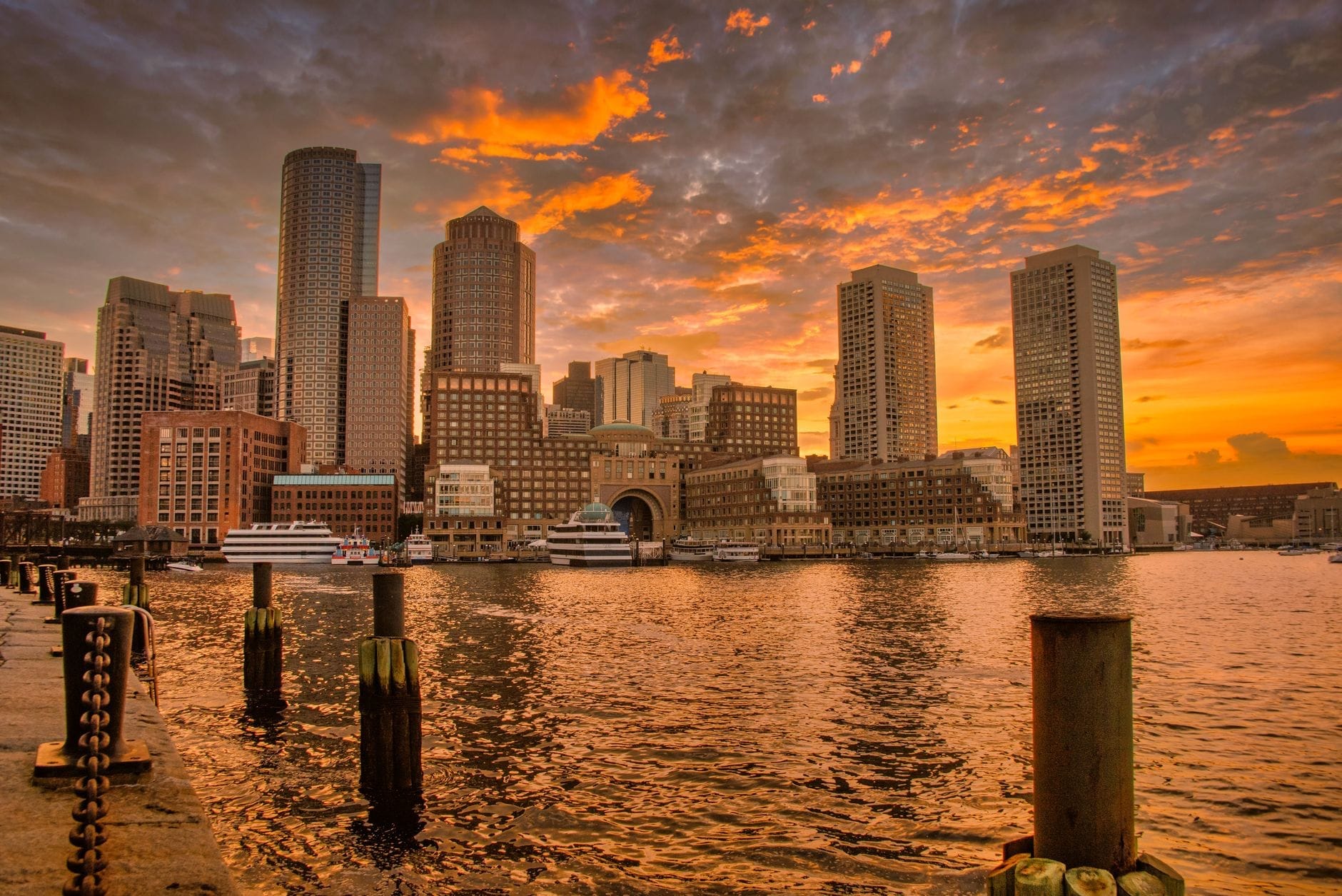
What Is the Boston Harborwalk?
The Boston Harborwalk is a continuous, non-motorized public walkway that traces the edge of Boston Harbor for 43 miles. It runs from Chelsea Creek and East Boston in the north all the way to the Neponset River in Dorchester to the south, passing through Charlestown, the Downtown waterfront, the North End, the Seaport District, and South Boston along the way. According to Boston Planning, approximately 38 miles have been completed, with the full system planned to exceed 47 miles when finished.
The path is the result of decades of planning and zoning policy that required waterfront development projects to contribute public access corridors along the harbor edge. It is not a single designed park but a stitched-together network of promenades, piers, plazas, and boardwalks, each segment reflecting the neighborhood it passes through. Some sections feel polished and urban; others are quieter, almost industrial, with the smell of salt water and the sound of rigging against masts.
ℹ️ Good to know
The Harborwalk has no gates or admission booths and charges no fee to use the path, though access and hours for specific adjoining parks, piers, or facilities may vary. Much of the route is paved and generally accessible to wheelchairs, and bicycles are permitted on some segments, including between the Neponset River Greenway and Castle Island, but cycling rules vary by section.
The Seaport Segment: Where Most Visitors Start
For visitors staying in or around downtown Boston, the Seaport District segment of the Harborwalk is the most convenient entry point. The path here runs along the South Boston Waterfront, with views across the inner harbor toward East Boston and Logan International Airport. The water is close enough that you can watch MBTA and private ferries cut across the channel, and on clear days the airport control tower is visible on the horizon.
This stretch sits adjacent to some of Boston's newer cultural institutions. The Institute of Contemporary Art Boston occupies a striking cantilevered building right on the water's edge at Fan Pier, and its ground-floor boardwalk is technically part of the Harborwalk. The building's geometry changes dramatically depending on whether you approach from the east or the west, making it one of the more photographed points on the entire route.
The Seaport section is busiest between late morning and early evening on weekends from May through October. During summer lunch hours, the harborside restaurant terraces fill quickly, and the paved sections near the convention center draw a steady stream of hotel guests and conference attendees. If you want the path to yourself, early morning on a weekday is reliably quiet: the light is low and golden off the water, the harbor smells clean and briny, and the only sounds are gulls and the distant thrum of ferry engines warming up.
Tickets & tours
Hand-picked options from our booking partner. Prices are indicative; availability and final rates are confirmed when you complete your booking.
Harborwalk and tea party self-guided audio tour in Boston
From 7 €Instant confirmationFree cancellationBoston Summer Night Trolley Tour and River Cruise
From 27 €Instant confirmationFree cancellationLEGOLAND Discovery Center Boston tickets
From 26 €Instant confirmationFree cancellationGhosts and Gravestones tour of Boston
From 39 €Instant confirmationFree cancellation
Walking the Downtown and North End Waterfront
North of the Seaport, the Harborwalk passes through the Downtown waterfront and into the North End. This section includes some of the oldest and most historically layered parts of the route. The wharves here, including Long Wharf and Rowes Wharf, date back to Boston's 17th and 18th century trading economy. Long Wharf in particular has been a working pier since around 1710, making it one of the oldest continuously active wharves in the country.
The New England Aquarium sits directly on the Harborwalk at Central Wharf, and the outdoor seal exhibit is visible from the path at no charge. Harbor seals are usually active and visible from the promenade outside, making this a natural stopping point even if you are not buying an aquarium ticket. Just north of here, the path continues past Christopher Columbus Park, which has a trellis walkway covered in wisteria and roses in spring and early summer.
As the path approaches the North End, the character shifts noticeably. The neighborhood is Boston's oldest residential area, and the waterfront here transitions between public park and working pier uses. It is close enough to Paul Revere House and the North End's historic core that combining a Harborwalk walk with a short detour inland is straightforward. The smell of garlic and espresso drifts from the restaurant blocks on Hanover Street, even on the waterfront, on warm evenings.
Charlestown and the Navy Yard Stretch
The Harborwalk continues into Charlestown via the North Washington Street Bridge (with sidewalks), passing through the Charlestown Navy Yard. This is one of the most historically dense segments of the entire walk. The Navy Yard operated as an active shipbuilding and repair facility from 1800 until 1974, and its granite dry docks, brick ropewalk buildings, and industrial infrastructure are still largely intact.
The USS Constitution, the world's oldest commissioned naval vessel still afloat, is moored here and can be seen from the Harborwalk path. The USS Constitution is open for tours on most days (verify current hours, as they change seasonally), and the museum adjacent to it is free. Standing on the Harborwalk directly alongside the Constitution's hull, looking up at its rigging, gives a scale that photographs rarely capture.
💡 Local tip
The MBTA ferry from Long Wharf to Charlestown Navy Yard takes about 10–15 minutes and drops you directly onto the Harborwalk. It is a fast, inexpensive, and pleasant way to cross the harbor and continue the walk on the Charlestown side without retracing your steps. Verify current ferry fares with the MBTA before travel.
South Boston: Castle Island and the Southern Reaches
South of the Seaport, the Harborwalk continues through South Boston toward Castle Island, a fortified peninsula that has guarded Boston Harbor since the 1600s. The bicycle rule mentioned above applies here: the segment from the Neponset River Greenway to Castle Island permits bikes, making this the most recreational section of the route.
The South Boston waterfront has a different feel from the polished Seaport section. It is more neighborhood-oriented, with local residents walking dogs and jogging in the early mornings, and families occupying the benches on weekend afternoons. Carson Beach is nearby, and on hot summer days the entire stretch from Castle Island back toward the Broadway Bridge fills with a combination of swimmers, sunbathers, and people simply walking the edge. The harbor here is wider and more open, giving longer sightlines across to Logan Airport and the harbor islands.
Practical Walkthrough: How to Use the Harborwalk
Which Segment to Walk First
Unless you are planning a multi-day project to walk the entire route, most visitors do best by picking one or two connected neighborhoods. The Downtown waterfront to North End to Charlestown combination, with a ferry return, makes a logical half-day loop. The Seaport to South Boston direction works well for late afternoons when the light falls across the harbor from the west.
Getting There and Getting Around
For the Seaport segment, take the MBTA Silver Line (SL1 or SL2) to Courthouse or World Trade Center stations. For the Downtown waterfront, the Blue Line to Aquarium Station deposits you directly adjacent to the path. For Charlestown, the MBTA ferry from Long Wharf is both the most efficient and the most scenic option. The Harborwalk is well-signed throughout, with blue wave markers on pavement and signage at major decision points.
Weather and Seasonal Conditions
Boston's weather directly affects the Harborwalk experience. Summer (June to August) is warm and often humid; the waterfront is cooler than inland areas on hot days due to the sea breeze, but the most popular sections become crowded. Fall (September to October) offers the best combination of comfortable temperatures and lower crowds. Spring can be cold and wet into April. Winter walks are possible and sometimes spectacular on clear days, but wind off the water is sharp, and some harborside amenities such as outdoor dining and boat tours close for the season.
⚠️ What to skip
Not all segments of the Harborwalk are continuously connected on foot. There are a handful of gaps where the path passes through private property or construction zones, particularly in the transition between the Seaport and South Boston. Checking the Boston Harbor Now website for current route conditions before a long walk is worth the effort.
Photography Tips
The Harborwalk faces east for much of its length, which means morning light is behind you when walking north-to-south, and in your eyes if shooting back across the harbor. For skyline shots of the Seaport and downtown, the best light arrives in the late afternoon and early evening when the glass towers pick up warm color. The Charlestown section offers a classic view back toward the Bunker Hill Monument and the Navy Yard roofline that works well in overcast conditions when harsh shadows are absent.
Is the Harborwalk Worth Your Time?
In practice, it depends on what you expect. The Harborwalk is not a manicured park experience comparable to the Charles River Esplanade or the Boston Public Garden. Portions of it are especially scenic and historically significant. Other sections pass behind convention halls, shipping facilities, and surface parking lots with little visual appeal. The Harborwalk is best understood as infrastructure, something that makes the harbor accessible to everyone rather than a finished destination in itself.
For travelers with limited time, the segment from Long Wharf through Christopher Columbus Park and the North End waterfront to the Charlestown Navy Yard offers the best return: history, harbor views, architectural variety, and proximity to major landmarks. For those who want to move and explore, the longer South Boston segments provide genuine open space and a local rather than tourist atmosphere.
Visitors primarily interested in history will find the Harborwalk pairs naturally with the Freedom Trail, which crosses the waterfront at several points. The two routes share the North End and Charlestown geography, making it straightforward to combine them in a single day.
Insider Tips
- The Harbor Islands ferry departs from Long Wharf, which sits directly on the Harborwalk. If you time your walk to arrive at Long Wharf in the late morning, you can continue your day with a ferry trip to Spectacle Island or Georges Island without needing to take any additional transit.
- The boardwalk outside the Institute of Contemporary Art in the Seaport is one of the best places in Boston to photograph the inner harbor, and it is completely free to access. The building's underside creates an interesting foreground frame for harbor shots.
- At the Charlestown Navy Yard, the stretch of Harborwalk closest to Pier 4 gives a direct broadside view of the USS Constitution. This is a cleaner angle for photography than the bow-on view most visitors get from the museum side.
- If you start at the Seaport and walk toward South Boston on a weekday morning between 7 and 9 a.m., you will have most of the path to yourself. The same stretch on a Saturday afternoon in July is noticeably congested.
- The Boston Harbor Now website maintains a digital Harborwalk map that identifies current gaps and closures. Downloading it before a long walk saves confusion at the points where the path is not yet continuous.
Who Is Boston Harborwalk For?
- Walkers and joggers who want a waterfront route connecting multiple neighborhoods
- History enthusiasts combining the walk with visits to the Charlestown Navy Yard, USS Constitution, or Freedom Trail
- Families looking for free outdoor space with harbor views and proximity to the Aquarium and Christopher Columbus Park
- Photographers seeking harbor skyline, industrial architecture, and maritime subject matter
- Travelers who want to experience Boston at a neighborhood level rather than moving between indoor attractions
Nearby Attractions
Other things to see while in Seaport District:
- Boston Children's Museum
Founded in 1913 and now one of the most visited family attractions in New England, Boston Children's Museum sits along Fort Point Channel in the Seaport District. With hands-on exhibits across multiple floors, it rewards families with children under 10 — but requires planning, especially on weekends.
- Boston Tea Party Ships & Museum
The Boston Tea Party Ships & Museum puts you inside one of the most consequential nights in American history through live actor-led tours, full-scale replica ships moored on Fort Point Channel, and the only known surviving tea chest from the December 16, 1773 event. It is one of Boston's more immersive history attractions, but it comes with a price tag and a structure worth understanding before you buy your ticket.
- Harpoon Brewery
Harpoon Brewery at 306 Northern Avenue is where Boston's craft beer story began. Holding Massachusetts Brewing Permit #001 since 1986, the Seaport District brewery offers guided tastings, a spacious Beer Hall, and seasonal outdoor seating steps from the waterfront.
- Institute of Contemporary Art (ICA)
The Institute of Contemporary Art / Boston sits on the edge of Fort Point Channel in the Seaport District, housed in a landmark building that cantilevers dramatically over the waterfront. It combines serious contemporary art with one of the most distinctive architectural experiences in the city, and offers free admission every Thursday evening from 5 to 9 PM.