Charles River Esplanade: Boston's Riverfront Park, Explained
The Charles River Esplanade is a 3-mile public park running along the south bank of the Charles River Basin in Boston's Back Bay and West End. Free to enter year-round, it draws joggers, cyclists, sailors, and concert-goers across every season. This guide covers what to expect at different times of day, how to get there, and what makes it worth your time.
Quick Facts
- Location
- Storrow Drive, Boston, MA 02114 (Back Bay / West End, south bank of the Charles River Basin)
- Getting There
- Charles/MGH (Red Line) via Longfellow Bridge; Science Park (Green Line); North Station (Green & Orange Lines)
- Time Needed
- 1 to 3 hours for a walk; longer if you rent a boat or attend an event
- Cost
- Free to enter. Some on-site operators (Community Boating, concessions) charge separately.
- Best for
- Joggers, cyclists, picnickers, outdoor concert fans, and anyone wanting skyline views without a ticket price
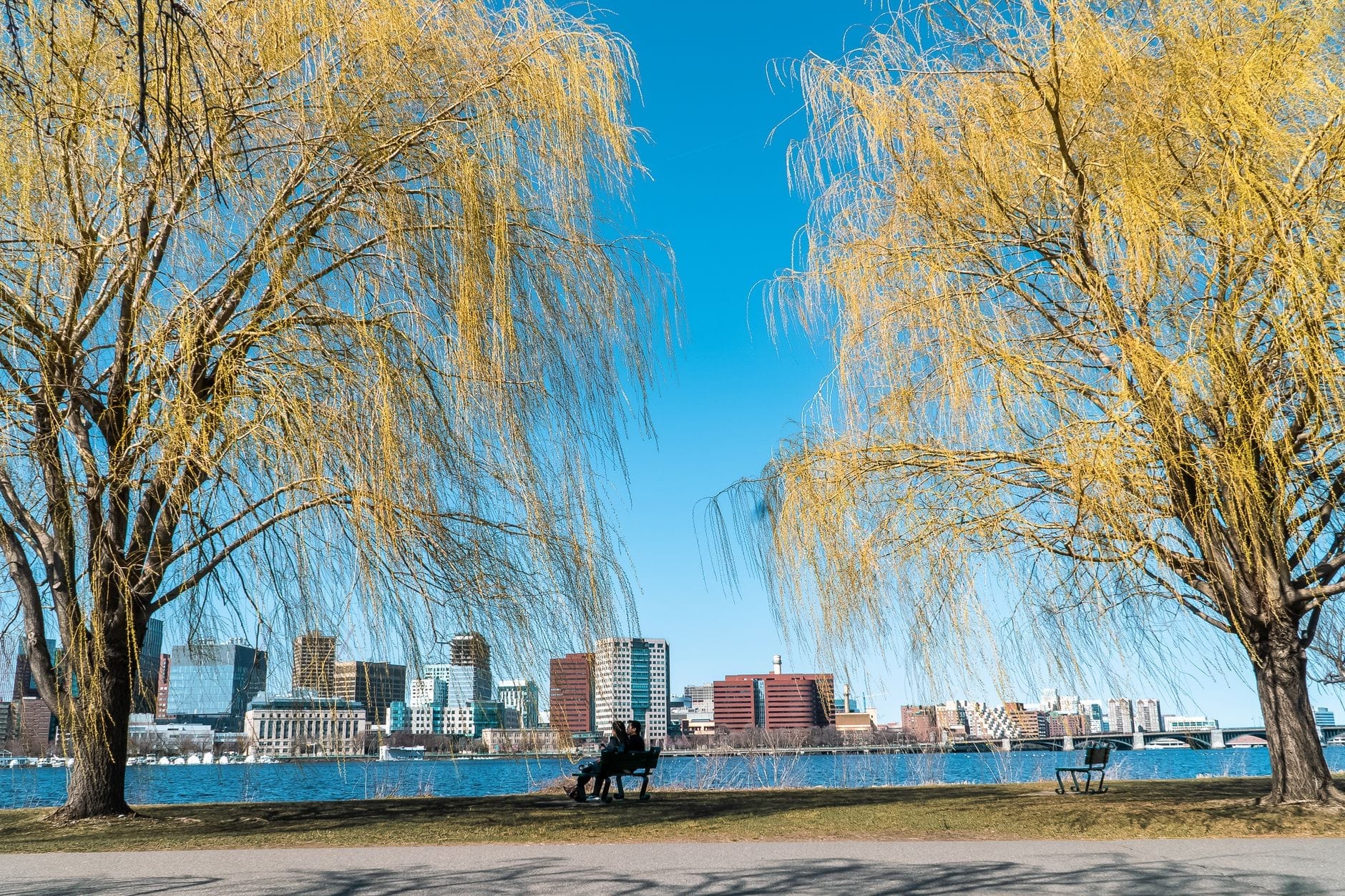
What the Esplanade Actually Is
The Charles River Esplanade is a long, narrow strip of public parkland running along the south bank of the Charles River Basin, stretching roughly 3 miles (4.8 km) between the Museum of Science and the Boston University Bridge. Managed by the Massachusetts Department of Conservation and Recreation (DCR), it sits in a narrow corridor between the river and the noise of Storrow Drive, connected to Back Bay and the West End by a series of pedestrian overpasses.
The first esplanade along the river opened in 1910 as the Boston Embankment, then it was significantly expanded between 1928 and 1936 to reach something close to its current scale. In 2009, the Boston Landmarks Commission designated it an official Boston Landmark, recognizing its architectural and cultural significance to the city. The informal name 'Esplanade' covers parkland also known historically as Charlesbank and the Storrow Memorial Embankment.
Despite being a linear park squeezed between a river and a highway, the Esplanade manages to feel spacious at most hours. The path widens considerably near the Hatch Memorial Shell, where lawns open up and benches face the water. For context on how this park fits into Boston's broader green infrastructure, see the guide to the Emerald Necklace, the chain of connected parks that Frederick Law Olmsted designed for the city.
How It Looks and Feels at Different Hours
Early mornings on the Esplanade have a distinct rhythm. By 6 a.m. on weekdays, the path is already populated with runners moving in both directions, their footfalls mixing with the sound of water lapping against the small docks and the distant hum of early Storrow Drive traffic. The Charles River Basin at this hour is glassy and often pale silver, with the Cambridge skyline and the MIT dome reflected clearly. The smell of cut grass and river water is strongest before midday.
Midday in summer turns the Esplanade into a full social landscape. Families spread blankets on the lawn near the Hatch Shell. Dog walkers cluster at the narrow paths near the lagoon. Sailboats from Community Boating, one of the oldest public sailing programs in the United States, tack back and forth across the basin with their bright white sails. Outdoor temperature rises quickly on the exposed riverside path, so sun protection and water are genuine considerations, not optional extras.
💡 Local tip
If you visit in summer, aim for before 9 a.m. or after 5 p.m. to avoid peak heat and crowds. The path has almost no shade between the Hatch Shell and the Arthur Fiedler footbridge.
Evenings, particularly on weekends, pull a different crowd. Couples walk the river edge at dusk as the city lights begin to reflect off the Charles. The Longfellow Bridge, with its distinctive granite towers, frames the view toward Cambridge and glows orange under streetlights. On concert nights at the Hatch Shell, that section of the park fills from early evening, with listeners spreading across the lawn well before any music starts.
Tickets & tours
Hand-picked options from our booking partner. Prices are indicative; availability and final rates are confirmed when you complete your booking.
Boston Summer Night Trolley Tour and River Cruise
From 27 €Instant confirmationFree cancellationLEGOLAND Discovery Center Boston tickets
From 26 €Instant confirmationFree cancellationGhosts and Gravestones tour of Boston
From 39 €Instant confirmationFree cancellationBest of Boston tour
From 182 €Instant confirmationFree cancellation
The Hatch Memorial Shell and Its Place in Boston Life
The most recognizable structure on the Esplanade is the Hatch Memorial Shell, an open-air performance venue on the western section of the park. Its bandshell, built in 1940, hosts the Boston Pops Orchestra's free outdoor concerts, including the legendary Fourth of July performance that draws enormous crowds to the riverbank each year.
On non-event days, the Shell area is quiet and photogenic, and the broad lawn in front of it is one of the better spots on the Esplanade for simply sitting and watching the river. During summer, the Hatch Memorial Shell hosts a rotating schedule of free public performances covering everything from film screenings to community concerts. Check the Esplanade Association's calendar before you visit if catching a performance is part of your plan.
The Fourth of July concert and fireworks display is one of the most-attended events in Boston each year. If you're planning a summer trip and want to understand when and where crowds peak, the guide to Boston's Fourth of July covers logistics, viewing positions, and crowd management in detail.
Walking the Park: A Practical Orientation
The Esplanade is best understood as a long linear walk with a few distinct nodes rather than a loop. The most-visited central section runs between the Arthur Fiedler footbridge (at the eastern end, near Dartmouth Street in Back Bay) and the Hatch Shell about half a mile to the west. This stretch has the widest paths, the most seating, a small lagoon, and the best uninterrupted river views.
Continuing west past the Hatch Shell, the park narrows and becomes quieter. Near the western end, the Charlesbank area is undergoing improvement, with a new Smith Family Pavilion being developed to include a staffed welcome area, year-round public restrooms, and universally accessible indoor and outdoor spaces. This section currently feels more utilitarian and less finished than the central Esplanade.
Pedestrian bridges cross Storrow Drive at several points, connecting the park to Back Bay streets. The most convenient crossing for visitors arriving from the Red Line at Charles/MGH station is via the Longfellow Bridge and the short path down to the riverbank. Coming from the Green Line at Science Park, you can access the western end of the park directly. There is no parking on Storrow Drive, and driving there specifically to park is not practical. Use the T.
⚠️ What to skip
Storrow Drive has a notorious history of trucks hitting its low underpasses (a local phenomenon sometimes called 'Storrowing'). As a pedestrian, crossing via the designated bridges is the only safe and legal option. Do not attempt to cross Storrow Drive at grade.
Activities on and Along the Water
Community Boating, located on the Esplanade near the Charles Street footbridge, is one of the most affordable sailing programs in the country and allows visitors to rent sailboats and kayaks by the day or on a membership basis. The boathouse sits directly on the river and is a focal point for activity from spring through fall. Rentals typically require a skills assessment before you're allowed out solo, so first-time visitors should plan for extra time.
For those who want to see the river from the water rather than sail on it, Boston Duck Tours include a stretch of the Charles River Basin in their amphibious vehicle route, which gives a different perspective on the Esplanade's waterfront edge.
Cycling is permitted on the Esplanade path, and the park connects to a broader network of riverfront bike paths extending toward Cambridge via the Longfellow Bridge and continuing along the Charles River Bike Path toward Watertown. The path surface is paved and generally well-maintained, though congestion near the Hatch Shell area on weekend afternoons can make cycling frustrating. Shared Bluebikes stations are located near several Esplanade access points.
Seasonal Differences and Weather Considerations
The Esplanade is generally open daily from dawn to dusk year-round, but the experience changes dramatically by season. Summer is peak season in every sense: maximum crowds, maximum programming at the Hatch Shell, boats on the river, and temperatures that make the exposed riverbank uncomfortable midday. Spring and fall offer more balanced conditions, with fewer people, cooler air, and the added visual interest of foliage on the trees lining the inner paths.
Winter on the Esplanade is undervisited and atmospheric. The basin sometimes freezes partially near the edges, and the city skyline across the water looks particularly sharp in cold, clear air. Ice fishermen are sometimes reported near the Longfellow Bridge area, Foot traffic drops to almost nothing by mid-morning on cold weekdays. If you're planning a Boston trip in colder months, the Boston in winter guide covers which outdoor spaces hold up best in cold conditions.
Boston's precipitation is evenly distributed throughout the year with no true dry season, so rain on any given visit is plausible regardless of month. The Esplanade has almost no shelter outside the Hatch Shell canopy and the Charlesbank pavilion area. A light rain jacket is useful most of the year.
Photography and What to Frame
The eastern section near the Arthur Fiedler footbridge offers the Esplanade's most photogenic river framing: the Longfellow Bridge in the mid-distance, the Cambridge skyline and MIT dome across the water, and sailboats moving through the basin from spring through fall. Morning light falls on the Cambridge side of the river, meaning the Esplanade itself is slightly backlit from the east in early morning, which is better for silhouette work and wide river shots than for portraits.
Evening produces the most rewarding light for photography, particularly in the hour before sunset when the Cambridge and Boston skylines are lit warm. The Hatch Shell lawn at dusk, with the white bandshell catching golden light and groups scattered across the grass, is one of the more quietly compelling scenes in the city.
ℹ️ Good to know
The bronze Arthur Fiedler memorial head, a distinctive large-scale portrait sculpture of the late Boston Pops conductor, sits near the footbridge that bears his name. It is frequently photographed and easy to miss if you walk quickly.
Insider Tips
- The small lagoon on the central Esplanade near the Community Boating boathouse is sheltered from wind and is where ducks, geese, and the occasional great blue heron congregate. Early morning is reliably productive for watching them before foot traffic disperses the birds.
- On nights when the Boston Pops performs at the Hatch Shell, you can hear the concert clearly from as far as 300 meters away down the path in either direction. If the lawn is at capacity, simply walking west along the river still gives you the full audio experience without the density of the main crowd.
- The pedestrian crossing from the Charles/MGH Red Line station involves walking across the Longfellow Bridge, which has its own stone towers and river views. Don't rush it. The walk across the bridge is worth pausing for, especially in late afternoon light.
- Restroom facilities on the Esplanade are limited and sometimes closed outside peak season. The most reliable facilities are near the Hatch Shell and at the Charlesbank end. Plan accordingly on longer visits.
- The Charles River Bike Path extends well beyond the Esplanade in both directions. If you have more than two hours and a bicycle, continuing west toward the Watertown Dam adds substantial mileage through quieter, greener sections of the river corridor that most visitors never reach.
Who Is Charles River Esplanade For?
- Runners and cyclists looking for a flat, scenic, car-free route through central Boston
- Visitors who want a genuine neighborhood-feel outdoor experience without paying museum prices
- Families with children, particularly near the Community Boating area and the Hatch Shell lawns
- Concert-goers attending summer events at the Hatch Memorial Shell
- Photographers targeting Boston skyline and river basin shots at dawn or dusk
Nearby Attractions
Other things to see while in Back Bay:
- Boston Marathon Finish Line
The Boston Marathon Finish Line on Boylston Street is one of the most emotionally charged strips of pavement in American sports. Free to visit any day of the year, it carries 120-plus years of athletic history and the weight of a city's resilience. Here is everything you need to know before you go.
- Boston Public Garden
The Boston Public Garden is a 24-acre city park and National Historic Landmark between Beacon Hill and Back Bay, free to enter and generally open daily from dawn to dusk. From the famous Swan Boats on the lagoon to flowering magnolias in spring and snow-dusted statuary in winter, the garden rewards visitors in every season.
- Boston Public Library
The Boston Public Library's Central Library in Copley Square is one of the most architecturally significant buildings in New England, and it costs nothing to enter. From its Renaissance Revival McKim Building to its modern Johnson Addition, it rewards visitors who are curious about art, history, and civic ideals equally.
- Commonwealth Avenue Mall
The Commonwealth Avenue Mall is a 32-acre linear park running along Commonwealth Avenue in Back Bay, lined with mature elms, historic bronze statues, and flanked by some of Boston's finest brownstone architecture. Free and open around the clock, it connects the Boston Public Garden to Charlesgate at the edge of the Back Bay Fens and serves as an important precursor and connector to Boston’s Emerald Necklace park system.