Boston Public Library: America's First Free Municipal Library
The Boston Public Library's Central Library in Copley Square is one of the most architecturally significant buildings in New England, and it costs nothing to enter. From its Renaissance Revival McKim Building to its modern Johnson Addition, it rewards visitors who are curious about art, history, and civic ideals equally.
Quick Facts
- Location
- 700 Boylston Street, Copley Square, Back Bay, Boston, MA 02116
- Getting There
- Copley Station (Green Line B/C/D); Back Bay Station (Orange Line) — both a short walk away
- Time Needed
- 1–3 hours depending on depth of exploration
- Cost
- Free admission. Special events may vary.
- Best for
- Architecture lovers, history buffs, solo travelers, rainy-day escapes
- Official website
- www.bpl.org/locations/central
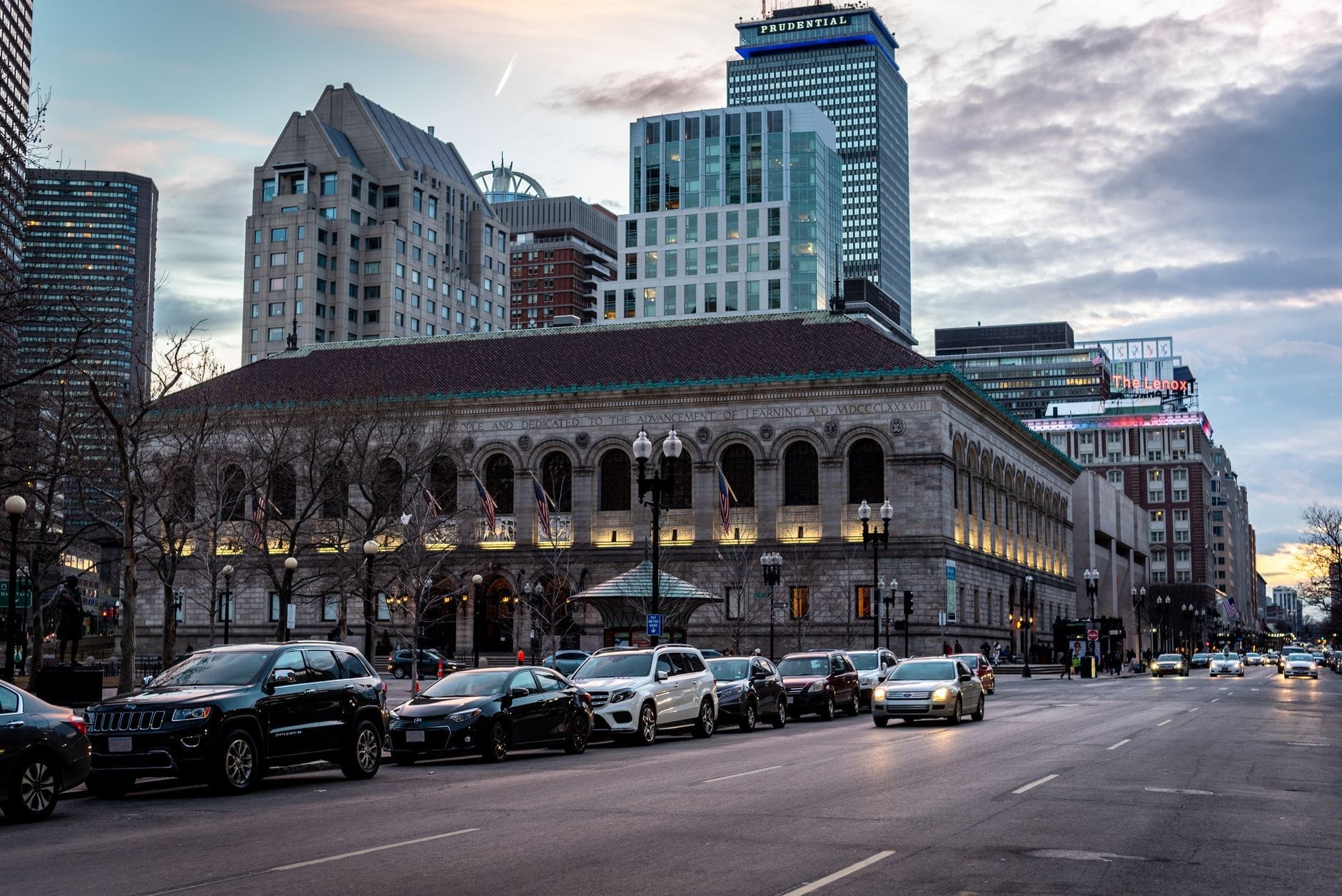
What the Boston Public Library Actually Is
The Boston Public Library Central Library in Copley Square is not just a place to borrow books. It is one of the most important civic buildings in the United States, a functioning public institution that also contains original murals by John Singer Sargent, sculpture by Augustus Saint-Gaudens, and courtyard architecture modeled on Renaissance Italy. When it opened in 1895, the McKim, Mead and White building helped set a standard for what a public library could be: not a warehouse for books, but a palace for the people.
Founded in 1848 by an act of the Massachusetts General Court, the BPL holds the distinction of being the first large free municipal library in the United States. That phrase, "Free to All," is carved into the Boylston Street facade and has defined the institution's identity ever since. Today the library system includes 25 neighborhood branches and holds approximately 24 million items, placing it among the three largest library collections in the country. The Central Library alone draws nearly 4 million visitors per year.
💡 Local tip
Entry to the Central Library is completely free, no ticket required. Walk in off Boylston Street anytime during opening hours and explore at your own pace. No reservation is needed for general visits.
Two Buildings, Two Eras
The Central Library is actually two connected buildings with very different characters. The original McKim Building, designed by Charles Follen McKim of McKim, Mead and White and completed in 1895, is the one most visitors come to see. Its exterior is pink Milford granite with arched windows and carved inscriptions of names of great thinkers and artists. The bronze entrance doors were designed by Daniel Chester French, the sculptor later responsible for the Lincoln Memorial in Washington.
The Philip Johnson Addition, completed in 1972, wraps around the McKim Building on the Boylston Street side and handles most of the library's day-to-day circulation. Its design is deliberately restrained — Johnson described it as a "respectful neighbor" — with large reading rooms flooded by natural light from clerestory windows. The contrast between the two buildings is striking once you know what to look for: ornate carved stone on one side, clean concrete geometry on the other.
Most casual visitors spend time only in the McKim Building. That's understandable, but the Johnson Addition has its own appeal: the reading rooms are spacious and quiet, the stacks are open to browsing, and the atmosphere on a weekday afternoon feels removed from the noise of Boylston Street outside.
Tickets & tours
Hand-picked options from our booking partner. Prices are indicative; availability and final rates are confirmed when you complete your booking.
Boston Summer Night Trolley Tour and River Cruise
From 27 €Instant confirmationFree cancellationLEGOLAND Discovery Center Boston tickets
From 26 €Instant confirmationFree cancellationGhosts and Gravestones tour of Boston
From 39 €Instant confirmationFree cancellationBest of Boston tour
From 182 €Instant confirmationFree cancellation
What to See Inside: A Practical Walkthrough
Start at the Dartmouth Street entrance to the McKim Building. The Grand Staircase is immediately ahead, flanked by marble lions carved by Saint-Gaudens. The stair hall is lined with yellow Siena marble, and the walls are painted with a mural cycle by Pierre Puvis de Chavannes, a French muralist whose work here influenced an entire generation of American painters.
On the second floor, the Bates Hall reading room is the architectural centerpiece of the building. It runs nearly the full length of the structure, with barrel-vaulted ceilings, long oak tables, and arched windows that face Boylston Street. The room has been restored and is still used as a public reading room. Sit at one of the tables for ten minutes and you will understand why this building was considered a civic monument.
Also on the upper floors of the McKim Building, the Sargent Hall contains murals painted by John Singer Sargent between 1890 and 1919. Titled "Triumph of Religion," the cycle covers the long hall with layered, symbolic imagery that Sargent worked on over nearly three decades. It remains one of the largest mural commissions in American art history and is often overlooked because it sits on a floor that sees less foot traffic.
ℹ️ Good to know
Free docent-led tours of the McKim Building depart from the Dartmouth Street lobby on select days. Check the BPL events calendar at bpl.org before your visit since schedules change seasonally.
The interior courtyard is accessible from both buildings and is one of the most pleasant spaces in all of Back Bay. Modeled on the Palazzo della Cancelleria in Rome, the open-air garden has a central fountain, arched colonnades on all four sides, and stone benches where visitors read, eat lunch, or simply sit. On warm afternoons the courtyard fills with office workers and students. On rainy mornings it is nearly empty, and the sound of water in the fountain carries clearly across the stone.
How the Experience Changes by Time of Day
Arriving at opening (9:00 AM on weekdays and Saturdays) means you will have Bates Hall almost entirely to yourself. The light through the arched windows falls at a low angle in the morning and catches the carved stonework on the walls in a way that afternoon light does not. This is the best time for photography inside the reading room.
By late morning, students and researchers begin to arrive in numbers, and the reading rooms settle into a productive quiet that feels appropriate for the space. The cafe on the ground floor of the McKim Building opens mid-morning and draws a steady crowd through lunch. The courtyard peaks around noon on weekdays when the surrounding office population arrives.
On weekday evenings the library stays open until 9:00 PM on weekdays, and the atmosphere shifts again. Fewer tourists, more students and local residents, and a noticeably calmer energy in the stacks. If your schedule allows a weekday evening visit, Bates Hall in the early evening, with the overhead chandeliers lit and the street noise muffled, is worth prioritizing.
⚠️ What to skip
The library closes at 5:00 PM on Fridays and Saturdays, and opens at 1:00 PM on Sundays. Holiday closures and adjusted hours apply on major holidays throughout the year. Confirm current hours at bpl.org before visiting.
Getting There and Getting Around
The library sits on Copley Square in Back Bay, one of the most walkable parts of Boston. Copley Station on the MBTA Green Line (B, C, and D branches) is directly across Dartmouth Street from the main entrance. Back Bay Station on the Orange Line is a short walk along Boylston Street. Both stations are served frequently throughout the day.
On foot, the library is easily combined with a visit to Copley Square directly outside, where Trinity Church and the John Hancock Tower face each other across the open plaza. The MBTA fare is around $2–3 with a CharlieCard; verify current pricing at mbta.com before travel.
Parking in the immediate area is limited and expensive on weekdays. The Back Bay Garage on St. James Avenue is the closest option, but transit or walking from a nearby neighborhood is strongly preferable. Cyclists can use the BlueBikes dock directly in front of the library on Boylston Street.
Photography, Accessibility, and Practical Notes
Personal photography is permitted throughout the public areas of the Central Library, including Bates Hall, the courtyard, the Sargent murals, and the staircase. Tripods and commercial shoots require prior approval. The courtyard offers the most forgiving light conditions, with soft, diffuse illumination through most of the day. The interior of Bates Hall can be challenging in direct midday light due to contrast between the windows and the shadowed interior.
The library is accessible via elevator and ramp entries in both the McKim and Johnson buildings. Staff at the circulation desks can direct visitors to accessible routes. For specific accommodation needs, the library's contact page at bpl.org lists departmental phone and email contacts.
The BPL is a short distance from several other significant Back Bay attractions. Trinity ChurchTrinity Church stands directly across Copley Square and is itself an architectural landmark worth stepping inside. Newbury Street, with its galleries, restaurants, and shops, begins one block north and provides a natural continuation for a Back Bay afternoon.
What This Place Is — and Is Not
The Boston Public Library is not a museum with a formal program of temporary exhibitions, though it does host rotating shows in its gallery spaces. It is not a tourist attraction in the conventional sense: there is no audio guide at the entrance, no gift shop at the exit, and no clear path marked through the highlights. Visitors who prefer structured experiences may find the open-ended nature of the building disorienting.
What it is, and without qualification, is one of the great public buildings in the United States, accessible to anyone for free, and still functioning as a working library where Boston residents sit with laptops and read newspapers. That combination of civic function and architectural grandeur is rare anywhere in the world. Travelers with even a moderate interest in architecture, American history, or 19th-century painting will find something here that justifies the time.
For context on how the BPL fits into Boston's broader cultural landscape, the best museums in Boston guide covers other major institutions, and the free things to do in Boston guide lists additional no-cost options across the city.
Insider Tips
- The Sargent murals on the top floor of the McKim Building receive far fewer visitors than Bates Hall. Most people turn around at the reading room and miss them entirely. Budget an extra 20 minutes to walk the full length of the hall.
- The courtyard garden is open to the public but is not visible from the street. Many visitors who enter through the Boylston Street (Johnson Addition) entrance never realize it exists. Ask at the information desk or follow signs toward the McKim Building to find it.
- Bates Hall is a functioning reading room, not a display space. You can sit at the original oak tables and work or read — which gives you a very different experience from rushing through as a tourist.
- The library's free docent tours cover the McKim Building's art and architecture in about 45 minutes and are run by knowledgeable volunteers who provide context that no printed guide matches. Check the BPL events page for current tour days and times.
- On rainy days, the BPL is one of the best places in Back Bay to wait out a storm. The Johnson Addition's ground floor has seating, a cafe, and restrooms. The courtyard, while open-air, has covered colonnades where you can sit dry and still enjoy the architecture.
Who Is Boston Public Library For?
- Architecture and design enthusiasts who want to see a McKim, Mead and White masterwork without paying museum admission
- Solo travelers looking for a quiet, unhurried experience away from crowded tourist sites
- Art-focused visitors interested in John Singer Sargent's most ambitious large-scale work
- Travelers who appreciate civic history and want to understand what made 19th-century Boston distinctive
- Families with older children interested in American history, though note the building is not structured for young children
Nearby Attractions
Other things to see while in Back Bay:
- Boston Marathon Finish Line
The Boston Marathon Finish Line on Boylston Street is one of the most emotionally charged strips of pavement in American sports. Free to visit any day of the year, it carries 120-plus years of athletic history and the weight of a city's resilience. Here is everything you need to know before you go.
- Boston Public Garden
The Boston Public Garden is a 24-acre city park and National Historic Landmark between Beacon Hill and Back Bay, free to enter and generally open daily from dawn to dusk. From the famous Swan Boats on the lagoon to flowering magnolias in spring and snow-dusted statuary in winter, the garden rewards visitors in every season.
- Charles River Esplanade
The Charles River Esplanade is a 3-mile public park running along the south bank of the Charles River Basin in Boston's Back Bay and West End. Free to enter year-round, it draws joggers, cyclists, sailors, and concert-goers across every season. This guide covers what to expect at different times of day, how to get there, and what makes it worth your time.
- Commonwealth Avenue Mall
The Commonwealth Avenue Mall is a 32-acre linear park running along Commonwealth Avenue in Back Bay, lined with mature elms, historic bronze statues, and flanked by some of Boston's finest brownstone architecture. Free and open around the clock, it connects the Boston Public Garden to Charlesgate at the edge of the Back Bay Fens and serves as an important precursor and connector to Boston’s Emerald Necklace park system.