Trinity Church Boston: Inside One of America's Greatest Buildings
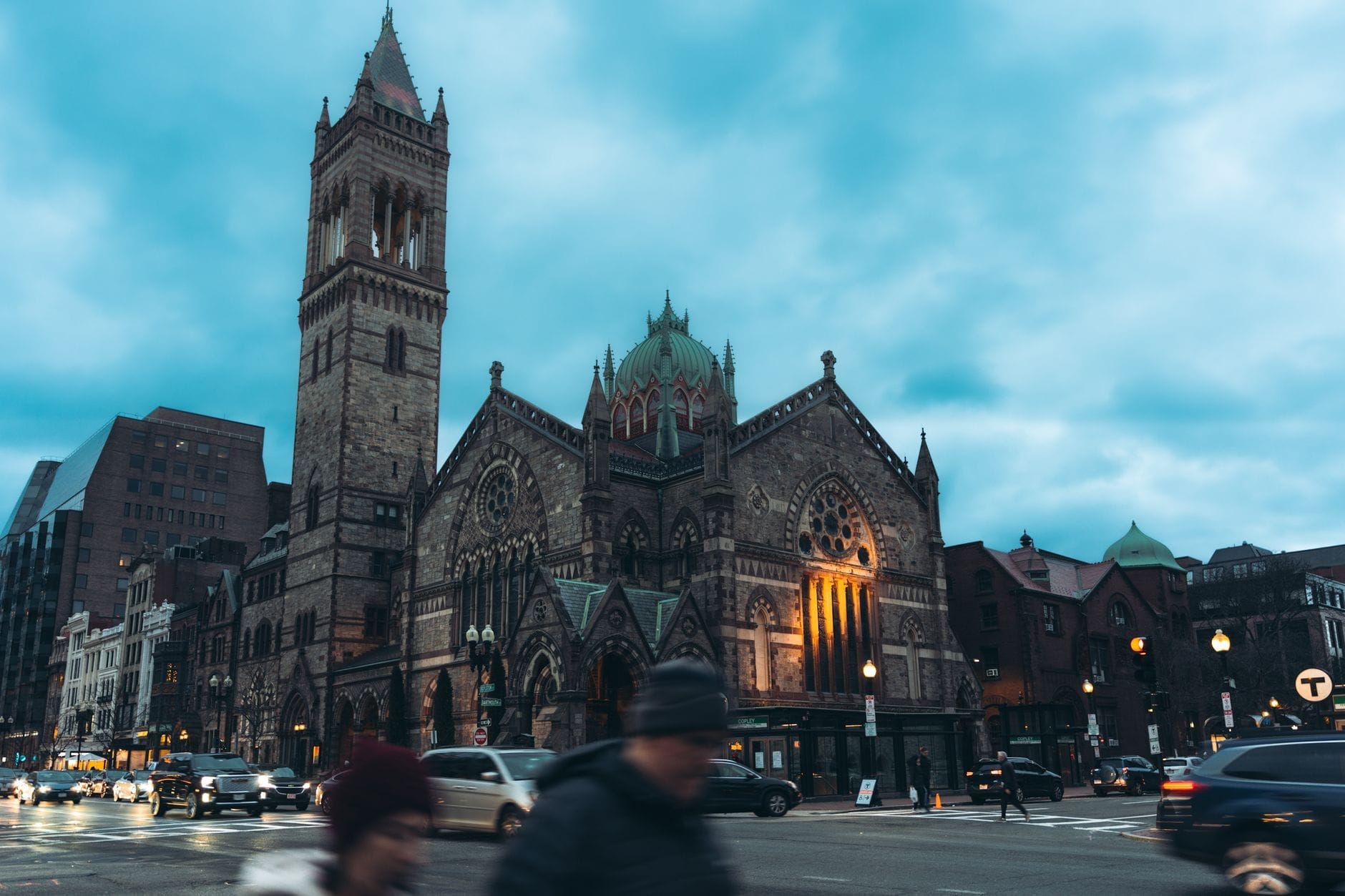
Trinity Church in the City of Boston stands at the heart of Copley Square as one of the most celebrated examples of Romanesque Revival architecture in the United States. Designed by Henry Hobson Richardson and completed in 1877, the National Historic Landmark rewards visitors with soaring interior murals, intricate stained glass, and a sense of gravity that few buildings in New England can match.
Quick Facts
- Location
- 206 Clarendon Street, Copley Square, Back Bay, Boston, MA 02116
- Getting There
- Copley Station (MBTA Green Line, B/C/D branches)
- Time Needed
- 45–90 minutes for a self-guided tour
- Cost
- Adults around $10, with reduced admission for seniors, students, military, Massachusetts residents, and free entry for children under 14 and EBT/WIC cardholders
- Best for
- Architecture enthusiasts, art history lovers, quiet contemplation
- Official website
- trinitychurchboston.org
What Trinity Church Actually Is
Trinity Church in the City of Boston is an active Episcopal parish and a National Historic Landmark, but calling it simply a church undersells the experience considerably. The building completed in 1877 is widely regarded as the masterwork of architect Henry Hobson Richardson, and it effectively invented a distinctly American architectural language, the style now called Richardsonian Romanesque, that influenced public buildings across the United States for decades. The American Institute of Architects has ranked it among the ten most architecturally significant buildings in the United States.
The parish itself dates to 1733, making it the third-oldest Episcopal congregation in Boston. The current structure is its third building, constructed on the then-newly-filled land of Back Bay between 1872 and 1877. With seating for approximately 1,350 people, it is one of the largest church buildings in the Episcopal Diocese of Massachusetts. What separates Trinity from most historic churches open to visitors is the interior: the nave is not a spare, whitewashed New England box but a dense, colorful environment layered with murals, carved stonework, and some of the finest American stained glass of the 19th century.
ℹ️ Good to know
Tours generally operate on selected weekdays, with hours that vary; the church does not offer regular public tours on Sundays. Hours can shift without much notice due to parish events or extreme weather, so check trinitychurchboston.org or call ahead before making a special trip.
The Architecture: What Richardson Built and Why It Matters
Richardson's design draws on French and Spanish Romanesque sources, rounded arches, rough-cut granite and brownstone, massive crossing tower, but synthesizes them into something that looks like nothing built in Europe. The exterior is dominated by the central tower rising above Copley Square, broad and weighty in a way that reads as permanent even against the glass towers of modern Back Bay. The west porch, which is your entry point, is carved in layered archivolts with figures that reward close inspection before you step inside.
The building sits on a corner of Copley Square directly across from the Boston Public Library, another architectural landmark completed a generation later. Standing between the two on a clear morning, when the granite of Trinity catches low-angle sunlight and goes warm amber, gives you a concentrated sense of what 19th-century Boston aspired to build. The square itself has been undergoing construction work, so approach from the Boylston Street side if the main plaza is partially fenced.
Trinity Church sits within one of Boston's most architecturally dense squares. The Boston Public Library faces it directly across Copley Square, and both buildings are worth treating as a single morning visit rather than choosing between them.
Tickets & tours
Hand-picked options from our booking partner. Prices are indicative; availability and final rates are confirmed when you complete your booking.
Boston Summer Night Trolley Tour and River Cruise
From 27 €Instant confirmationFree cancellationLEGOLAND Discovery Center Boston tickets
From 26 €Instant confirmationFree cancellationGhosts and Gravestones tour of Boston
From 39 €Instant confirmationFree cancellationBest of Boston tour
From 182 €Instant confirmationFree cancellation
Inside the Sanctuary: Light, Color, and Scale
Nothing about Trinity Church prepares first-time visitors for the interior. The nave is painted almost entirely in deep earth tones, burgundy, ochre, olive, and gold, with figural murals executed largely by artist John La Farge, who worked in close collaboration with Richardson. La Farge essentially invented the American tradition of decorative interior painting for ecclesiastical spaces here, and the density of the imagery is closer to a Byzantine church than anything else in New England.
The stained glass is equally serious. La Farge and his workshop produced many of the windows, including innovative opalescent glass techniques that diffuse light differently than traditional European pot-metal glass. The effect on a bright midday visit is a warm, slightly amber glow throughout the nave that shifts noticeably as clouds pass. On overcast days the interior feels more contemplative, the colors deeper and less luminous. Both moods are worth experiencing, but if you want the stained glass at its most vibrant, aim for a sunny morning between 10:00 and 11:30 am when light enters from the south and west.
The crossing, below the tower, is the spatial climax of the building. Look up from the center of the nave and the tower rises roughly 211 feet above you, ringed by painted arches and lit from clerestory windows. The acoustics in this spot are remarkable: even quiet conversation carries in unexpected ways. This is also the best place to photograph the ceiling, though a wide-angle lens and a very steady hand help considerably.
💡 Local tip
Photography tip: The interior is relatively dim despite the stained glass. Bring a camera or phone capable of shooting at higher ISO settings, or simply allow your eyes to adjust and take your time. Flash photography is generally unwelcome in active worship spaces. No tripods are permitted without prior arrangement.
When to Visit and How the Experience Changes
Weekday mornings, particularly Wednesday and Thursday between opening and noon, are the quietest times to visit. You may have entire sections of the nave to yourself, which makes a genuine difference in a space this size. Weekend tour hours do not exist, since Sunday is a worship day, so there is no option to time a visit around a lighter crowd on Sunday as you might with other attractions.
Friday afternoons bring a noticeable uptick in visitors, partly from tourists staying in nearby Back Bay hotels and partly from school groups during the academic year. If you visit on a Friday, arrive at opening to avoid the afternoon crowd in the relatively confined nave. Saturday midday is the busiest tour window overall.
Seasonally, spring and fall are the most comfortable times to visit. Summer afternoons can make the stone interior feel pleasantly cool compared to the street, but Copley Square itself can be intensely crowded during summer weekends. In winter, the short days mean you arrive and leave in lower-angle light, which is actually favorable for exterior photography of the tower.
Back Bay rewards slow exploration beyond Trinity Church. Copley Square is worth lingering in before or after your visit, and Commonwealth Avenue Mall is a short walk north if you want to extend your time in the neighborhood.
Practical Walkthrough: Getting There and Getting In
The most straightforward transit option is the MBTA Green Line to Copley Station, which deposits you directly onto Dartmouth Street at the edge of Copley Square. From the station exit it is roughly a two-minute walk to the church's west porch entrance on Clarendon Street. The Green Line runs B, C, and D branches through Copley, so almost any outbound Green Line train from downtown will get you there.
Admission is purchased inside at the visitor desk. Children under 14 enter free, and there are discounted rates for seniors, students, educators, military personnel, first responders, and Massachusetts residents. EBT and WIC cardholders also enter free. These categories cover a wide range of visitors, so it is worth asking at the desk even if you are unsure whether your situation qualifies.
The main entrance is via the West Porch facing Copley Square. As of mid-2023, construction fencing has been present in parts of the square, but the church has remained fully open for tours and worship throughout. If the plaza approach looks blocked, follow the perimeter to the Clarendon Street entrance. For visitors with specific mobility or accessibility needs, contact the church directly before your visit, as detailed accessibility information is not published prominently on the website.
⚠️ What to skip
Trinity Church does not offer self-guided audio tours at the time of writing. A docent-led tour option has been available historically, but availability varies by season and day. Check the church website for current tour formats before your visit.
Is It Worth Your Time?
For visitors with any interest in architecture, American art history, or simply unusual interior spaces, Trinity Church is one of the most rewarding 90 minutes you can spend in Boston. The $10 admission is low relative to what you are seeing. The quality of the La Farge murals and stained glass alone would justify the price at a dedicated museum.
That said, there are visitors for whom the experience will feel underwhelming. If you have no particular interest in ecclesiastical architecture or Victorian American art, and if the idea of standing in a dim nave studying painted surfaces for an hour sounds like work, Trinity may not reward your time the way the Freedom Trail or the harbor waterfront would. The church does not offer interactive exhibits, a cafe, or a gift shop that competes with major museum stores. It is fundamentally a place to look and think.
If you are building a broader itinerary for the neighborhood, the Back Bay area pairs Trinity Church naturally with the Boston Public Library and a walk along Newbury Street for a half-day that balances architecture with shopping and eating.
For a deeper dive into Boston's architectural and cultural history, the Boston history guide provides useful context for understanding how Trinity Church fits into the city's development as a major American cultural center.
Insider Tips
- Arrive at opening on a Wednesday or Thursday if you want the nave almost entirely to yourself. The difference between a 10:00 am Wednesday visit and a noon Saturday visit is substantial in terms of atmosphere.
- The exterior tower reads best from the southeast corner of Copley Square, where you get both the tower and the west porch in a single composition. This is also the angle that appears in most professional photographs of the building.
- Sunday morning worship services are free and open to the public, which means you can experience the full acoustic and musical life of the space, including the historic organ, without paying the tour admission. The late-morning Sunday Eucharist is the principal service, though exact times can change seasonally.
- The basement-level crypt area is sometimes included in tour routes and contains additional architectural detail that most visitors overlook in their haste to focus on the nave. Ask at the visitor desk what is currently accessible.
- If you plan to photograph the stained glass in detail, a polarizing filter dramatically reduces glare from interior lighting. The clerestory windows above the crossing are the most technically challenging to capture well.
Who Is Trinity Church For?
- Architecture and design enthusiasts who want to see Richardsonian Romanesque at its most complete
- Art history travelers interested in John La Farge's murals and opalescent stained glass techniques
- Visitors seeking a quiet, contemplative space away from the crowds of the Freedom Trail
- Travelers pairing a morning in Copley Square with the Boston Public Library across the street
- Anyone building a focused Back Bay walking itinerary that goes beyond shopping on Newbury Street
Nearby Attractions
Other things to see while in Back Bay:
- Boston Marathon Finish Line
The Boston Marathon Finish Line on Boylston Street is one of the most emotionally charged strips of pavement in American sports. Free to visit any day of the year, it carries 120-plus years of athletic history and the weight of a city's resilience. Here is everything you need to know before you go.
- Boston Public Garden
The Boston Public Garden is a 24-acre city park and National Historic Landmark between Beacon Hill and Back Bay, free to enter and generally open daily from dawn to dusk. From the famous Swan Boats on the lagoon to flowering magnolias in spring and snow-dusted statuary in winter, the garden rewards visitors in every season.
- Boston Public Library
The Boston Public Library's Central Library in Copley Square is one of the most architecturally significant buildings in New England, and it costs nothing to enter. From its Renaissance Revival McKim Building to its modern Johnson Addition, it rewards visitors who are curious about art, history, and civic ideals equally.
- Charles River Esplanade
The Charles River Esplanade is a 3-mile public park running along the south bank of the Charles River Basin in Boston's Back Bay and West End. Free to enter year-round, it draws joggers, cyclists, sailors, and concert-goers across every season. This guide covers what to expect at different times of day, how to get there, and what makes it worth your time.