Newbury Street: Back Bay's Eight-Block Walk Worth Taking Seriously
Newbury Street stretches eight blocks through Boston's Back Bay, lined with Victorian brownstones converted into boutiques, art galleries, salons, and restaurants. The street is free to walk anytime, shifts noticeably in character from east to west, and rewards visitors who take time to look up at the architecture as much as peer into the windows.
Quick Facts
- Location
- Back Bay, Boston — Arlington Street to Massachusetts Avenue
- Getting There
- MBTA Green Line: Arlington, Copley, or Hynes Convention Center stations; Orange Line: Back Bay Station
- Time Needed
- 1.5 to 3 hours for a full walk with stops; longer if dining
- Cost
- Free to walk; individual shops and restaurants set their own prices
- Best for
- Boutique shopping, architecture watching, cafe-hopping, people-watching
- Official website
- www.boston.gov/departments/transportation/open-newbury-street
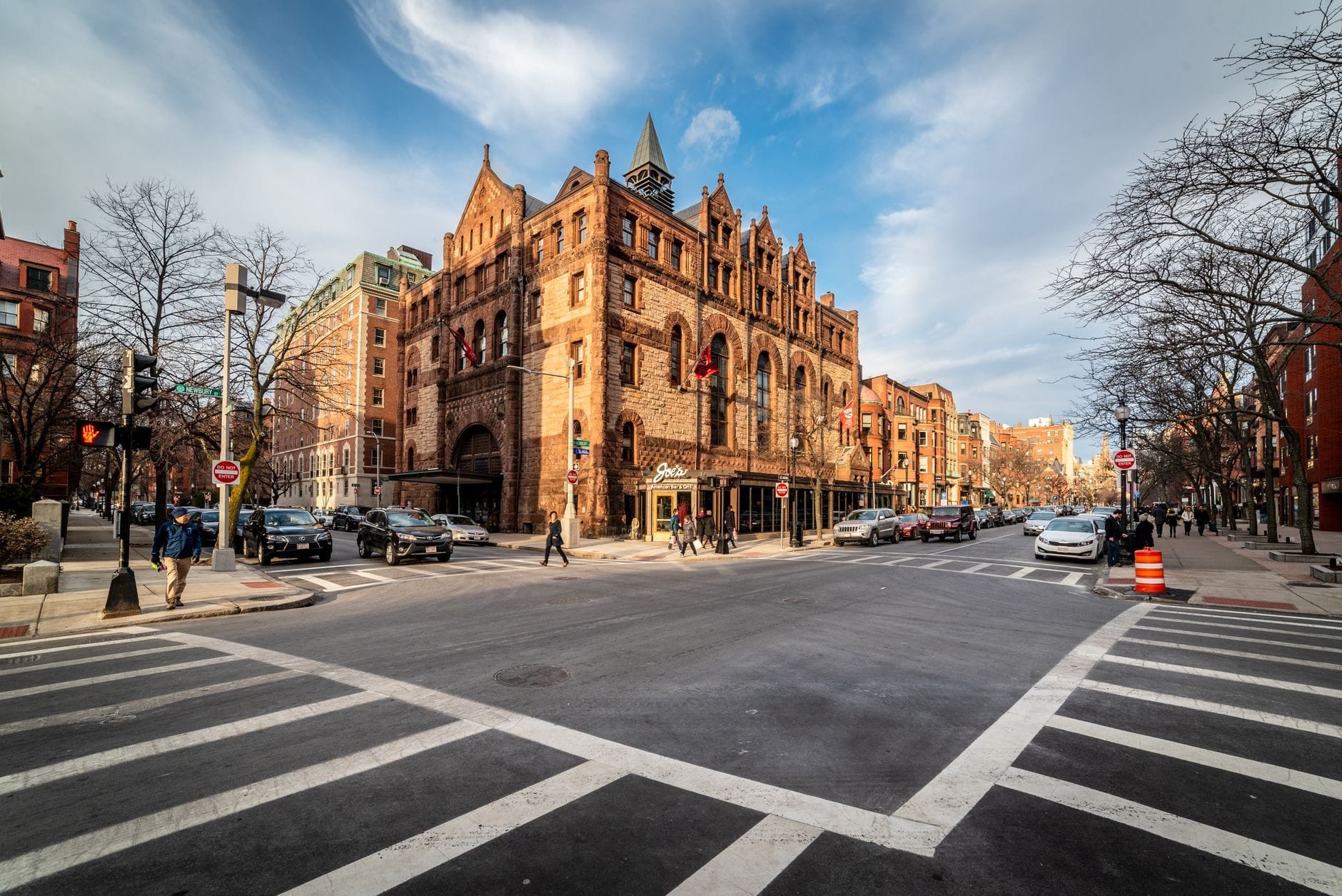
What Newbury Street Actually Is
Newbury Street is a public city street, not a mall or ticketed attraction. That distinction matters. There is no entrance, no curated experience, and no single authority deciding what belongs here. What you get instead is roughly a mile of brownstone-fronted buildings, most of them built in the late 19th century as part of Boston's Back Bay landfill project, now repurposed into a dense mix of independent boutiques, national retailers, art galleries, hair salons, restaurants, and coffee shops.
The street runs east to west through Back Bay, from Arlington Street at the Public Garden end to Massachusetts Avenue at the Fenway-Kenmore border. That gradient from east to west is one of the most useful things to understand before you arrive. The blocks closest to Arlington tend toward higher-end fashion labels and hushed gallery storefronts. As you move west past Exeter and Gloucester Streets, the mood relaxes, rents presumably drop, and the mix shifts toward vintage shops, tattoo parlors, record stores, and cheaper eats.
💡 Local tip
Start at the Arlington Street (east) end if you want galleries and upscale boutiques first. Start at Massachusetts Avenue if you prefer a more casual, eclectic feel with the polish increasing as you walk east.
The Architecture Overhead
The buildings on Newbury Street are largely intact Victorian brownstones, and they are the real constant along the strip. Back Bay was constructed on land reclaimed from the tidal flats of the Charles River, a project that transformed marshy terrain into one of the most systematically planned neighborhoods in 19th-century America. The grid layout, the consistent cornice heights, the alternating bow-front and flat-front facades — all of this reflects deliberate urban design from the 1850s through the 1880s.
Most of the ground floors have been opened up with larger windows or street-level entrances cut into the original masonry, but the upper floors remain largely unchanged. Look above the shop signs and you will see the original ornamental stonework, ironwork railings, and shallow bays that define the neighborhood's character. A yoga studio on the second floor, a dentist on the third, a residential unit at the top — the vertical layering of uses inside these buildings is just as interesting as the retail below.
The same architectural consistency runs through the surrounding streets, making Newbury Street a natural starting point for anyone who wants to understand how Back Bay fits together. The nearby Commonwealth Avenue Mall one block north offers the same brownstone context without the commercial traffic, and makes for a pleasant parallel return walk.
Tickets & tours
Hand-picked options from our booking partner. Prices are indicative; availability and final rates are confirmed when you complete your booking.
Boston Summer Night Trolley Tour and River Cruise
From 27 €Instant confirmationFree cancellationLEGOLAND Discovery Center Boston tickets
From 26 €Instant confirmationFree cancellationGhosts and Gravestones tour of Boston
From 39 €Instant confirmationFree cancellationBest of Boston tour
From 182 €Instant confirmationFree cancellation
How the Street Changes by Time of Day
Early mornings before 9 a.m. belong to dog walkers, delivery vans unloading into shop doors, and people grabbing coffee before the retail day begins. The sidewalks are wide enough that even moderate crowds feel manageable, but this is the quietest window if you want to photograph the streetscape without human clutter.
Late morning through early afternoon on weekdays is the most practical time to shop. Stores are fully open, staff have time to engage, and the lunch crowd from nearby offices tends to concentrate on the restaurant blocks rather than spreading across all eight. On weekends, particularly Saturday afternoons between noon and 3 p.m., the sidewalks get especially busy near the Copley and Arlington ends. The pace slows to a shuffle near popular cafe entrances.
Evenings shift the energy again. Restaurants fill up from around 6 p.m., and the street takes on a different quality as shop lights replace sunlight. The galleries are mostly closed by then, but the blocks near Exeter and Dartmouth Streets have enough bars and restaurants to keep the street active well into the night. If you are visiting in summer, the long daylight hours mean the stretch near the Public Garden stays naturally lit and photogenic until nearly 8 p.m.
ℹ️ Good to know
On designated Open Newbury Street Sundays in summer and one winter date, the street is closed to cars from 10 a.m. to 6 p.m. between Berkeley Street and Massachusetts Avenue. Vendors and performers set up in the roadway, and the full street width becomes pedestrian space. Check Boston.gov for the current season's schedule before your visit.
Shopping: What to Expect Across Eight Blocks
The retail on Newbury Street covers a wide range, and it would be misleading to characterize it as exclusively upscale or exclusively independent. Both exist here in close proximity, sometimes in the same block. You will find flagship stores for international fashion brands alongside one-off Boston boutiques that have occupied the same brownstone for decades.
Art galleries have historically been a distinguishing feature of Newbury Street compared to other Boston shopping corridors. Several established galleries occupy the upper floors of brownstones, particularly between Arlington and Dartmouth Streets. Most are free to enter, and even browsers are generally welcomed without pressure. The quality and focus vary considerably, from contemporary painting to photography to decorative arts.
For a broader view of Boston's independent retail and food market scene, the Boston Public Market near Haymarket is worth combining with a Newbury visit if you want to see a different retail format. And if the shopping on Newbury feels too mainstream for your taste, the SoWa district in the South End — SoWa Art + Design District — runs a Sunday market with a notably different character.
Eating and Drinking Along the Strip
Newbury Street has enough cafes that you will not need to plan a coffee stop in advance — just walk until one appeals to you. The density is high enough that the options range from quick counter service to proper sit-down brunch spots. On sunny days, the outdoor seating fills quickly; arriving before noon improves your chances of getting a sidewalk table.
Restaurant quality on Newbury Street is mixed. The street's foot traffic means some establishments rely on location rather than food. That said, there are well-regarded spots for everything from Japanese to Italian to New American cooking, spread across most of the eight blocks. If you are planning a dinner reservation, booking ahead on weekends is advisable — several of the more popular restaurants fill up, and the street gets competitive on Saturday evenings.
Practical Walkthrough and Getting There
The MBTA Green Line gives you three entry points: Arlington Station drops you at the east end near the Public Garden, Copley Station puts you in the middle near Boylston Street (one block south on Dartmouth Street), and Hynes Convention Center Station deposits you at the west end near Massachusetts Avenue. Back Bay Station on the Orange Line and Commuter Rail is a short walk south on Dartmouth Street if you are coming from another part of the city or arriving by train.
Newbury Street is most naturally combined with a walk through the nearby Boston Public Garden at the Arlington end, or with a visit to Copley Square and Boston Public Library a block south. These make for a natural half-day loop in Back Bay without backtracking.
Wear comfortable shoes. The sidewalks are brick for much of the stretch, which looks attractive but can be uneven. This matters especially if you are visiting in winter when ice can collect in the gaps. Bluebikes bike-share stations are available near the street, and on Open Newbury Street days, bike corrals are set up along the closed section.
Weather affects the experience more than most walking streets in Boston. Newbury Street is fully exposed, without the arcade cover of a shopping center, so a cold or wet day in November or March compresses the experience significantly. Late spring through early fall is when the street is at its best, particularly May, June, September, and October when temperatures are manageable and the brownstone facades are at their most photogenic.
⚠️ What to skip
Parking on Newbury Street and the surrounding Back Bay blocks is limited and expensive. Driving here is rarely worth the effort. Take the Green Line — the Arlington and Copley stops could not be more convenient.
Who Might Not Enjoy This
Newbury Street can feel repetitive if you are not interested in shopping, eating, or architecture-watching. Visitors looking for Boston's historical narrative, natural spaces, or free cultural programming will find the street pleasant to pass through but thin on substance for a dedicated visit. The street has no single landmark, no single event, and no admission-gated experience that provides a structured reason to be there beyond browsing. If that kind of open-ended wandering does not appeal, spend the time instead at the adjacent Public Garden or walk the Freedom Trail.
Travelers on tight budgets should also be realistic: window shopping on Newbury is free, but the temptation to spend is the entire point of the street. If budget is a constraint, the free things to do in Boston guide covers nearby options that deliver more for no cost.
Insider Tips
- The blocks between Gloucester and Hereford Streets on the west end have the densest concentration of independent vintage and specialty stores. These blocks are often overlooked by visitors who turn back before reaching Massachusetts Avenue.
- Gallery hopping on Newbury Street is entirely free and low-pressure. The galleries between Arlington and Dartmouth Streets are accustomed to casual visitors and rarely require an appointment for general viewing during regular hours.
- On Open Newbury Street Sundays, the car-free roadway fills with vendor tables and street performers, but the actual shops are often less crowded than a normal busy Saturday because the foot traffic spreads across the full street width. It is one of the better times to browse without being jostled on the sidewalk.
- The upper floors of many brownstones contain businesses that are easy to miss from street level. Look for small directory signs near staircase entrances — some of the more interesting galleries, studios, and independent shops are accessed by a short flight of stairs rather than a ground-floor storefront.
- If you want the Newbury Street brownstone aesthetic with half the crowds, walk Commonwealth Avenue Mall one block north. The architecture is equally impressive, there are no shops competing for your attention, and the tree-lined median makes for a much quieter stroll.
Who Is Newbury Street For?
- Architecture and urban design enthusiasts interested in 19th-century Back Bay planning
- Shoppers looking for a mix of independent boutiques and established fashion labels in one walkable strip
- Visitors who enjoy gallery browsing without the pressure of a formal museum visit
- People-watchers who want a lively street scene with good outdoor cafe seating
- Travelers building a half-day Back Bay loop that includes the Public Garden and Copley Square
Nearby Attractions
Other things to see while in Back Bay:
- Boston Marathon Finish Line
The Boston Marathon Finish Line on Boylston Street is one of the most emotionally charged strips of pavement in American sports. Free to visit any day of the year, it carries 120-plus years of athletic history and the weight of a city's resilience. Here is everything you need to know before you go.
- Boston Public Garden
The Boston Public Garden is a 24-acre city park and National Historic Landmark between Beacon Hill and Back Bay, free to enter and generally open daily from dawn to dusk. From the famous Swan Boats on the lagoon to flowering magnolias in spring and snow-dusted statuary in winter, the garden rewards visitors in every season.
- Boston Public Library
The Boston Public Library's Central Library in Copley Square is one of the most architecturally significant buildings in New England, and it costs nothing to enter. From its Renaissance Revival McKim Building to its modern Johnson Addition, it rewards visitors who are curious about art, history, and civic ideals equally.
- Charles River Esplanade
The Charles River Esplanade is a 3-mile public park running along the south bank of the Charles River Basin in Boston's Back Bay and West End. Free to enter year-round, it draws joggers, cyclists, sailors, and concert-goers across every season. This guide covers what to expect at different times of day, how to get there, and what makes it worth your time.