Boston Children's Museum: What to Expect, How to Plan, and Whether It's Worth Your Time
Founded in 1913 and now one of the most visited family attractions in New England, Boston Children's Museum sits along Fort Point Channel in the Seaport District. With hands-on exhibits across multiple floors, it rewards families with children under 10 — but requires planning, especially on weekends.
Quick Facts
- Location
- 308 Congress St, Boston, MA 02210 — Children's Wharf, Fort Point Channel, Seaport District
- Getting There
- South Station (MBTA Red Line, Silver Line, Bus Route 7) — approximately 3 blocks on foot
- Time Needed
- 2 to 4 hours depending on children's ages and energy levels
- Cost
- Timed-entry tickets required; check bostonchildrensmuseum.org for current USD pricing. Advance booking strongly recommended.
- Best for
- Families with children roughly ages 1 to 10; school groups; rainy-day visits
- Official website
- bostonchildrensmuseum.org
What Boston Children's Museum Actually Is
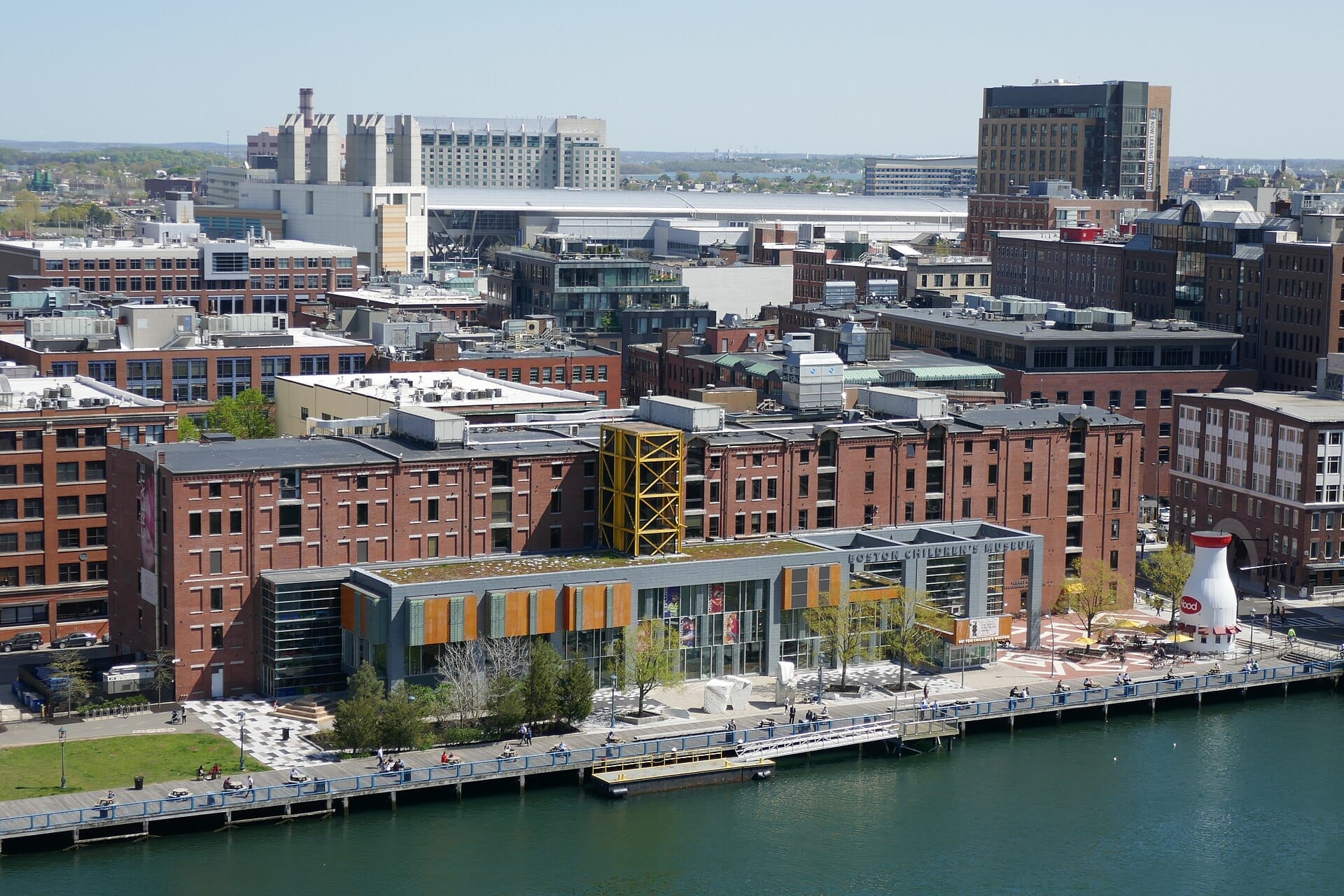
Boston Children's Museum is a hands-on, interactive learning institution spread across a converted wool warehouse on Fort Point Channel. Founded in 1913 by a group of teachers in Jamaica Plain, it is the second oldest children's museum in the United States and one of the most significant in the country for its influence on how children's museums are designed globally. It is not a quiet place to observe artifacts. It is loud, physically engaging, and intentionally designed to let children experiment, climb, splash, build, and fail productively.
The building itself has an exterior landmark: a 40-foot Hood milk bottle replica that stands on the wharf outside and has become a recognizable marker along the Fort Point waterfront. Inside, exhibits span multiple floors and cover themes including science, construction, movement, culture, and early childhood development. The programming changes seasonally, so repeat visits tend to surface something new.
ℹ️ Good to know
The museum is generally open seven days a week, though hours and occasional closures vary by date, including special holiday schedules and school vacation week programming. Always verify hours on the official calendar at bostonchildrensmuseum.org before you travel.
The Experience by Time of Day
Weekday mornings between opening and midday are the calmest window to visit. The sound level in the main hall is still significant — children's museums are inherently energetic spaces — but navigating between exhibits is easier, and younger toddlers tend to engage more freely when crowds thin out. By 11am on weekdays during school year, you'll often find structured school group visits, which means some exhibits briefly concentrate with larger parties moving in clusters.
Weekend afternoons are the museum's highest-traffic period. Stroller parking near popular exhibits fills quickly, the construction and water play areas draw long informal queues, and the noise level climbs considerably. If you're bringing children under three who are sensitive to overstimulation, a Saturday at 2pm is quite difficult. TJX $1 Sunday Afternoons (1–4 p.m.) are a popular reduced-price admission period that draws very high attendance — meaningful for budget-conscious families, but expect the museum at or near capacity.
The Fort Point Channel waterfront outside the museum softens the transition between arrival and entry. On clear mornings the light off the channel is sharp and blue-gray, and children often spend unplanned minutes watching boats or examining the milk bottle before going in. Build that in — it costs nothing and serves as a natural threshold moment before the indoor sensory intensity begins.
Tickets & tours
Hand-picked options from our booking partner. Prices are indicative; availability and final rates are confirmed when you complete your booking.
Boston Summer Night Trolley Tour and River Cruise
From 27 €Instant confirmationFree cancellationLEGOLAND Discovery Center Boston tickets
From 26 €Instant confirmationFree cancellationGhosts and Gravestones tour of Boston
From 39 €Instant confirmationFree cancellationBest of Boston tour
From 182 €Instant confirmationFree cancellation
Key Exhibits and What to Know About Them
The museum's exhibits are organized across floors and rotate partially over time, but some installations have been anchor features for years. The construction-themed area lets children work with real tools and building materials at child scale, reinforcing cause-and-effect learning through physical manipulation. It tends to draw older children in the 6 to 10 range who can work independently. The water play area, predictably, requires a change of clothes or waterproof layers — the museum provides smocks, but children who are enthusiastic about the activity get substantially wet.
There is a dedicated infant and toddler space designed for children under three, which provides a quieter, lower-stimulation environment within the broader building. For families with a mixed age range, this becomes a practical question of how to divide attention between an infant who needs calm and a five-year-old who wants to climb. The staff is accustomed to this and can point parents toward the most efficient path through the floors given their children's ages.
A permanent Japanese House exhibit, a full-scale replica of a traditional house from Kyoto, offers one of the museum's more culturally specific experiences. It provides context for how domestic space and daily life are structured differently across cultures and tends to interest children with some patience for exploration rather than pure physical play.
💡 Local tip
Bring a change of clothes for any child likely to engage with water exhibits. The museum's smocks help but are not fully waterproof. Comfortable, closed-toe shoes with grip matter for climbing structures.
Getting There and Arriving Prepared
South Station is the most practical transit hub for reaching the museum. It sits at the intersection of the MBTA Red Line and Silver Line, with multiple bus routes including Route 7 also stopping nearby. From South Station, the walk to the museum at 308 Congress St is roughly three blocks along the Fort Point Channel waterfront, passing through a section of the Seaport District that has grown considerably over the past decade with restaurants, offices, and the Institute of Contemporary Art. The walk itself is flat and straightforward, taking about 8 to 10 minutes at an adult pace with children.
Driving is possible but adds complexity. The Farnsworth Street and Stillings Street garages are the designated parking options; the museum offers validation. Sleeper Street parking is reserved for residents. Given Boston's traffic patterns on weekend mornings, particularly around South Station and the Seaport connector roads, transit is the more predictable option for most visitors.
Timed-entry ticketing is the current system, which means you select a date and arrival window when purchasing. The museum strongly recommends buying in advance, especially for weekends, school vacation weeks, and holidays. Advance purchase is not a formality — popular time slots do sell out, and arriving without a ticket on a Saturday morning during February school vacation week will result in disappointment. Tickets are priced in USD and purchased through the official website; those using museum passes, Go City cards, or cash payment are directed to call +1 617-426-6500 option 0 or contact the museum directly to reserve.
⚠️ What to skip
Do not assume walk-up tickets will be available on weekends or during school vacation weeks. Purchase timed-entry tickets online at bostonchildrensmuseum.org before your visit.
Historical and Cultural Significance
When Boston Children's Museum opened in 1913, the concept of a museum designed specifically around child-led exploration was pioneering. Its founding by teachers rather than collectors signaled a pedagogical orientation that has remained central to its identity. The museum's subsequent influence on exhibit design — pioneering the idea that children learn through doing rather than observing — contributed to a global shift in how institutions serve young visitors. It predates most major children's museums in the United States, making it a formative institution in its field. For context on Boston's broader cultural landscape and its concentration of educational institutions, the best museums in Boston guide provides a wider orientation.
The Fort Point Channel location adds a layer of industrial history to the visit. The warehouse district where the museum now sits was part of Boston's 19th and early 20th century wool and leather trade. The neighborhood's transition into a cultural and tech corridor over the past 25 years represents one of the more dramatic urban transformations in Boston's recent history, and the museum sits at its center.
Who Benefits — and Who Might Not
The museum delivers most clearly for children between roughly 18 months and 10 years. Below that age range, the infant and toddler space is purpose-built and works well. Above it, the exhibit design starts to feel less challenging for older children, who may exhaust what's available faster. Adults without children will find little to hold their attention independently, though the building's architecture and the waterfront setting outside are worth a few minutes. If you're planning a broader Boston itinerary with kids, the Boston with kids guide covers how to integrate the museum into a fuller trip.
Travelers who are sensitive to noise and high activity levels should know that even during off-peak hours, this is not a calm environment. The acoustics in a building designed for physical play and filled with children produce sustained ambient noise. That is intrinsic to the experience, not a design flaw — but it is worth stating plainly for visitors who might not be expecting it.
For families looking to anchor a longer day in the Seaport, the Institute of Contemporary Art is a short walk along the waterfront and offers a complete tonal contrast — which can work well as a late-afternoon add-on for parents after the museum visit wraps up.
Accessibility and Practical Logistics
Service animals are welcome at Boston Children's Museum. The timed-entry ticketing system helps manage crowd density, which benefits visitors with mobility considerations or sensory sensitivities by reducing the likelihood of arriving to an unexpectedly overcrowded environment. For specific accessibility features including elevator access, wheelchair routing, stroller policies, or sensory accommodation programs, contact the museum directly or consult the accessibility section of the official website, as these details are subject to change and are most accurately represented by the museum itself.
The Fort Point Channel waterfront adjacent to the museum is part of the broader Boston Harborwalk, which runs along the water and is flat, paved, and stroller-accessible. Before or after the museum, a short walk along this section provides a useful decompression space for children who need movement after an enclosed exhibit visit.
Insider Tips
- The TJX $1 Sunday Afternoons promotion (Sundays 1–4 p.m.) sounds appealing but produces the museum's single busiest period each week. If budget is the concern, it is the right call — but arrive as early in the afternoon window as possible and focus on less central exhibits first.
- The outdoor Hood milk bottle stand sells food and drinks seasonally. On a warm day, stopping there before going inside lets children burn initial excitement energy and gives parents a moment to review the floor map without competing for attention.
- Ask staff at the entrance for a current floor map with any temporary exhibit changes noted. The website reflects standard programming, but rotating installations and scheduled maintenance can take specific areas offline on any given day.
- The walk from South Station along Fort Point Channel takes you past several coffee shops and casual lunch spots in the Seaport. Planning a post-visit meal nearby is easier than navigating back into downtown with tired children.
- For families using museum membership passes or third-party discount cards like Go City, call ahead or email before your visit rather than assuming the standard online ticket flow applies. The museum's ticketing page explicitly notes this and a missed reservation can mean a wasted trip.
Who Is Boston Children's Museum For?
- Families with children between 18 months and 10 years old looking for a full half-day activity
- Rainy or cold weather visits when outdoor Boston attractions aren't practical
- Parents combining the museum with a broader Seaport District walking day
- School groups and educational visits with structured learning objectives
- Budget-conscious families who can plan around TJX $1 Sunday Afternoons
Nearby Attractions
Other things to see while in Seaport District:
- Boston Harborwalk
The Boston Harborwalk is a free, publicly accessible waterfront pathway stretching 43 miles along Boston Harbor, connecting neighborhoods from East Boston and Charlestown to the Seaport, South Boston, and Dorchester. It is one of the longest urban waterfront trails in the United States and has free public access, though individual parks and facilities along the route may have their own operating hours.
- Boston Tea Party Ships & Museum
The Boston Tea Party Ships & Museum puts you inside one of the most consequential nights in American history through live actor-led tours, full-scale replica ships moored on Fort Point Channel, and the only known surviving tea chest from the December 16, 1773 event. It is one of Boston's more immersive history attractions, but it comes with a price tag and a structure worth understanding before you buy your ticket.
- Harpoon Brewery
Harpoon Brewery at 306 Northern Avenue is where Boston's craft beer story began. Holding Massachusetts Brewing Permit #001 since 1986, the Seaport District brewery offers guided tastings, a spacious Beer Hall, and seasonal outdoor seating steps from the waterfront.
- Institute of Contemporary Art (ICA)
The Institute of Contemporary Art / Boston sits on the edge of Fort Point Channel in the Seaport District, housed in a landmark building that cantilevers dramatically over the waterfront. It combines serious contemporary art with one of the most distinctive architectural experiences in the city, and offers free admission every Thursday evening from 5 to 9 PM.