Outdoor Activities in Boston: Parks, Trails & Water Sports
Boston packs nearly 300 parks, 7 miles of linked greenway, a harbor with 34 islands, and a paddleable river into a city of under 50 square miles. This guide covers the best outdoor activities in Boston across every season, from free trail walks to whale-watching excursions and Harbor Islands camping.
Plan and book this trip
Tools from our partner Travelpayouts help you compare flights and hotels. If you book through them, we may earn a commission at no extra cost to you.
Flights
Hotels map
TL;DR
- Boston maintains nearly 300 parks and open spaces, including the 7-mile Emerald Necklace chain of green corridors.
- The Charles River and Boston Harbor both support paddling, sailing, and rentals; water sports are not limited to the ocean side. Check out the Charles River Esplanade for the best access points.
- Boston Harbor Islands National and State Park covers 34 islands; regular ferries run late May through mid-October only.
- Whale-watching tickets start from $75 per adult; free alternatives like the Harborwalk and Emerald Necklace trails cost nothing.
- Outdoor activity peaks June through September, but options exist year-round. See the best time to visit Boston for a full seasonal breakdown.
Boston's Green Corridors: The Emerald Necklace and Beyond
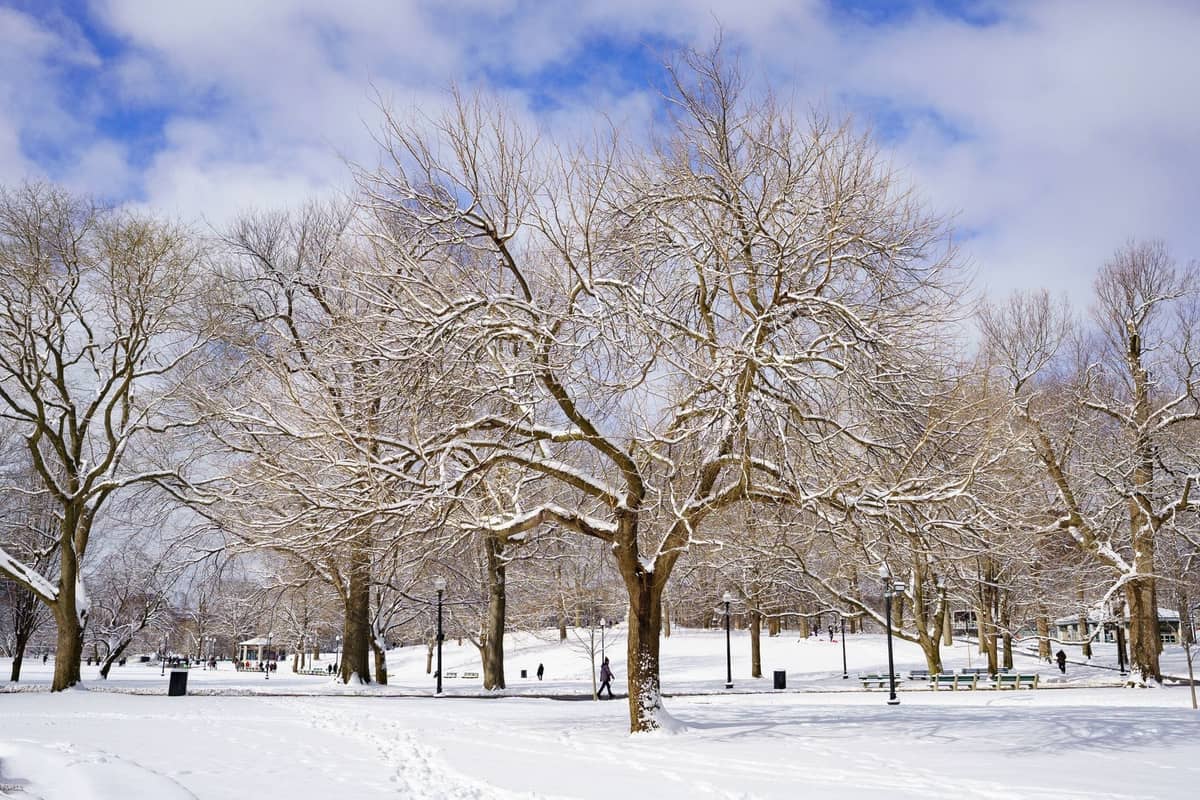
Frederick Law Olmsted designed the Emerald Necklace as a linked chain of parks stretching roughly 7 miles from Boston Common through the Back Bay Fens, the Riverway, Olmsted Park, Jamaica Pond, the Arnold Arboretum, and finally Franklin Park. The sequence was largely completed by the early 1900s, and the individual parks are managed today by the Emerald Necklace Conservancy and the City of Boston. You can walk or cycle the entire length in a single day, though most visitors explore sections at a time.
Jamaica Pond is one of the Necklace's most underused sections by tourists. The 1.5-mile loop around the kettle pond takes about 30 minutes at a walking pace, sailboat rentals and rowboats are available from the Jamaica Pond Boathouse seasonally, and the tree canopy makes it noticeably cooler on hot July days than downtown. The Arnold Arboretum just south of Jamaica Pond is free to enter and spans 281 acres; Lilac Sunday in early May draws thousands, but most weekdays it is quiet enough to feel removed from the city.
💡 Local tip
The Emerald Necklace parks are connected but not always obvious on a standard map. Download the Emerald Necklace Conservancy's trail map before you go, as the connecting paths between parks (particularly the Riverway corridor) can be easy to miss for first-time visitors.
In the city center, Boston Common and the Boston Public Garden together form a 74-acre green corridor on the edge of Back Bay and Beacon Hill. The Public Garden's Swan Boats operate from mid-April through mid-October, and the 4-acre lagoon is one of the more pleasant spots to sit on a warm afternoon in the city. Both parks are free, heavily visited on weekends, and best enjoyed on weekday mornings if you want room to move. The Commonwealth Avenue Mall extends westward from the Public Garden as a tree-lined pedestrian promenade through the Back Bay brownstone district, ideal for a flat, shaded walk.
Walking and Running: Trails, Waterfronts, and Harbor Paths
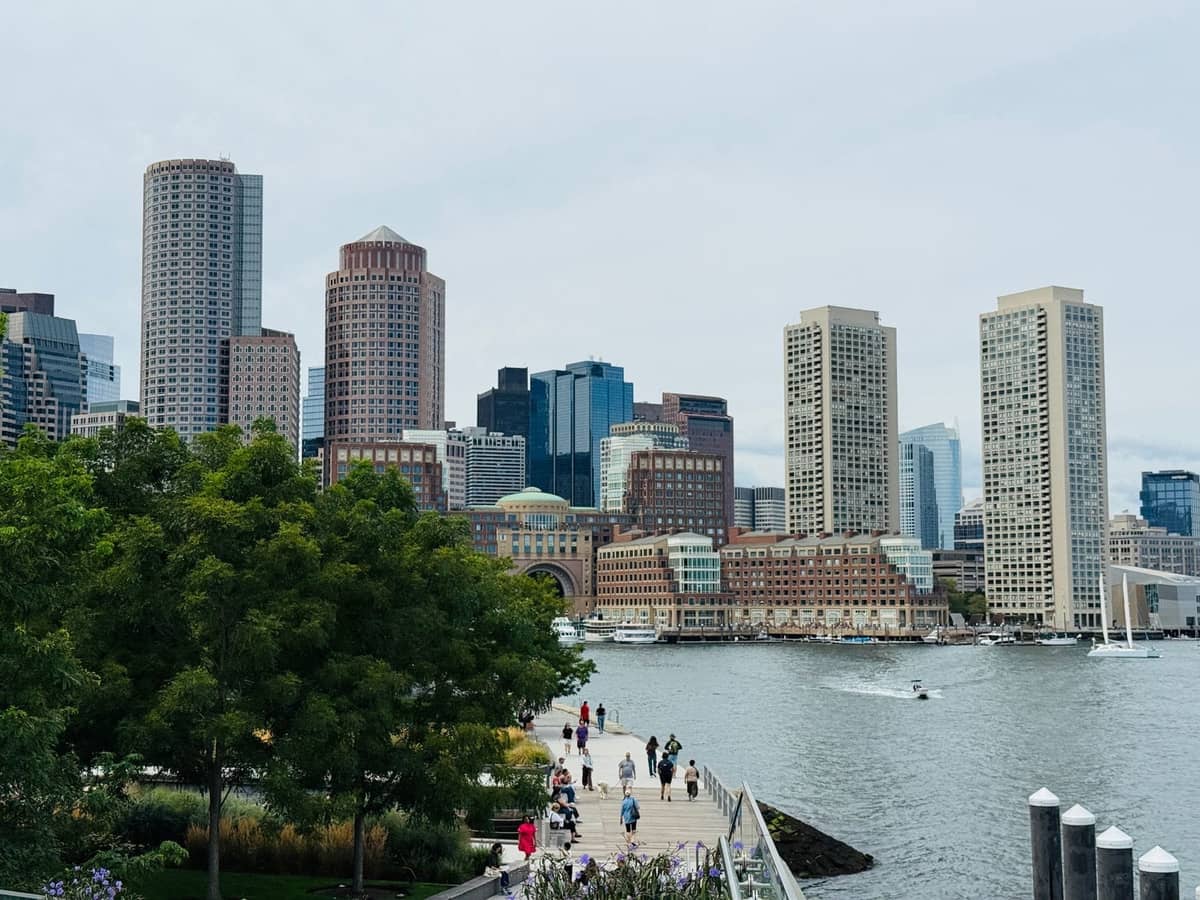
The Boston Harborwalk is a 43-mile self-guided route tracing the waterfront from East Boston to Dorchester. The most accessible and scenic sections run from the North End through the Seaport District along the Rose Kennedy Greenway waterfront. This stretch connects several open plazas, public art installations, and water-facing benches within easy walking distance of the MBTA Red and Green Lines. The full Harborwalk is free and open year-round, though some waterfront sections are more pleasant in warmer months.
Runners favor the Charles River Esplanade above almost any other urban route in Boston. The main path along the Esplanade connects to the longer Dr. Paul Dudley White Bike Path, which forms an 18-mile network along both sides of the Charles River from Watertown Dam to the Museum of Science. The loop is flat, paved, and well-marked. On summer evenings the Esplanade fills with cyclists, joggers, dog walkers, and people spilling out from the Hatch Memorial Shell, where free outdoor concerts run through the warmer months.
⚠️ What to skip
The Esplanade path between the Dartmouth Street footbridge and the Arthur Fiedler footbridge is one of the most congested stretches for cyclists and pedestrians in Boston. If you are cycling, early morning (before 8am) or late evening are significantly more comfortable than midday on weekends from June through August.
- Emerald Necklace (full corridor) 7 miles, flat to gently rolling, best walked in sections; free, accessible year-round.
- Charles River Esplanade loop 18 miles (full loop both banks) or shorter sections; paved, flat, popular with runners and cyclists.
- Boston Harborwalk Up to 43 miles total; most visitors focus on the 3-4 mile North End to Seaport section.
- Rose Kennedy Greenway 1.5-mile linear park through downtown; fountains, carousel (seasonal), and public art; free.
- Blue Hills Reservation 7,000 acres south of the city in Milton, with 125 miles of trails and the highest point in Greater Boston (Great Blue Hill, 635 ft). Accessible via commuter rail and short transit connection.
Water Sports on the Charles River and Boston Harbor
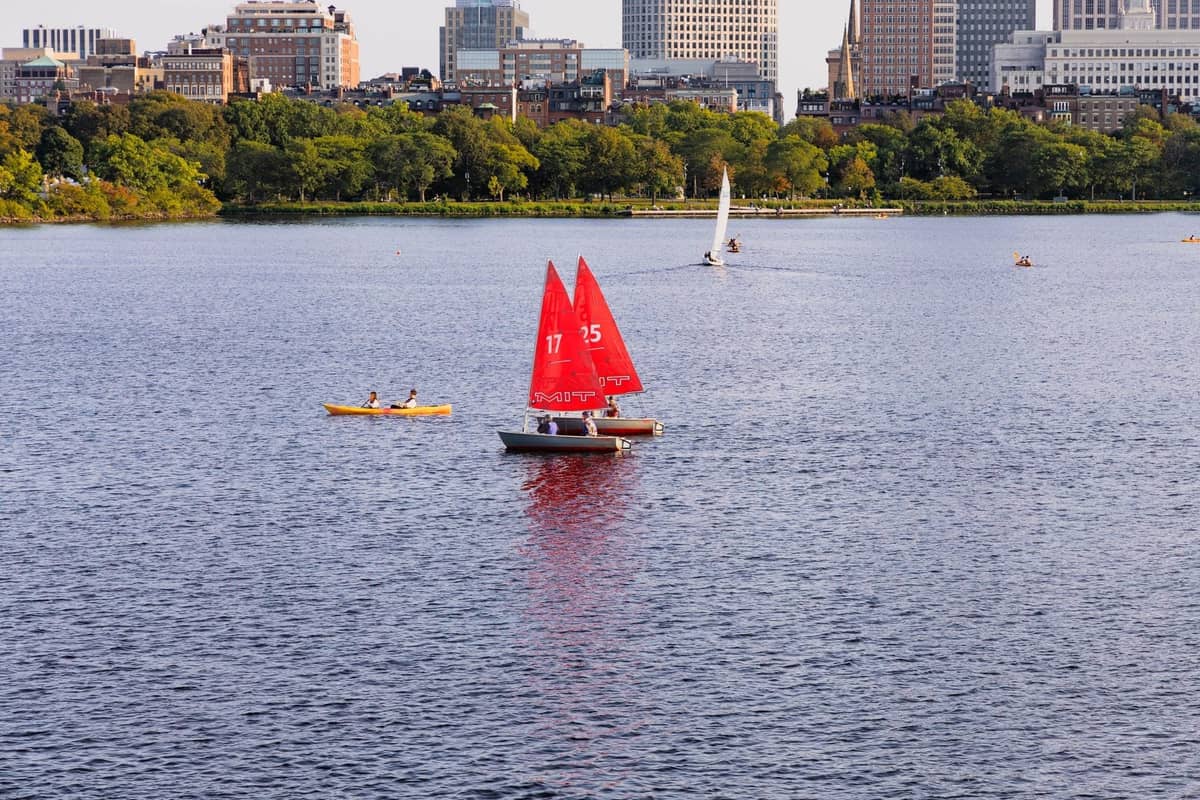
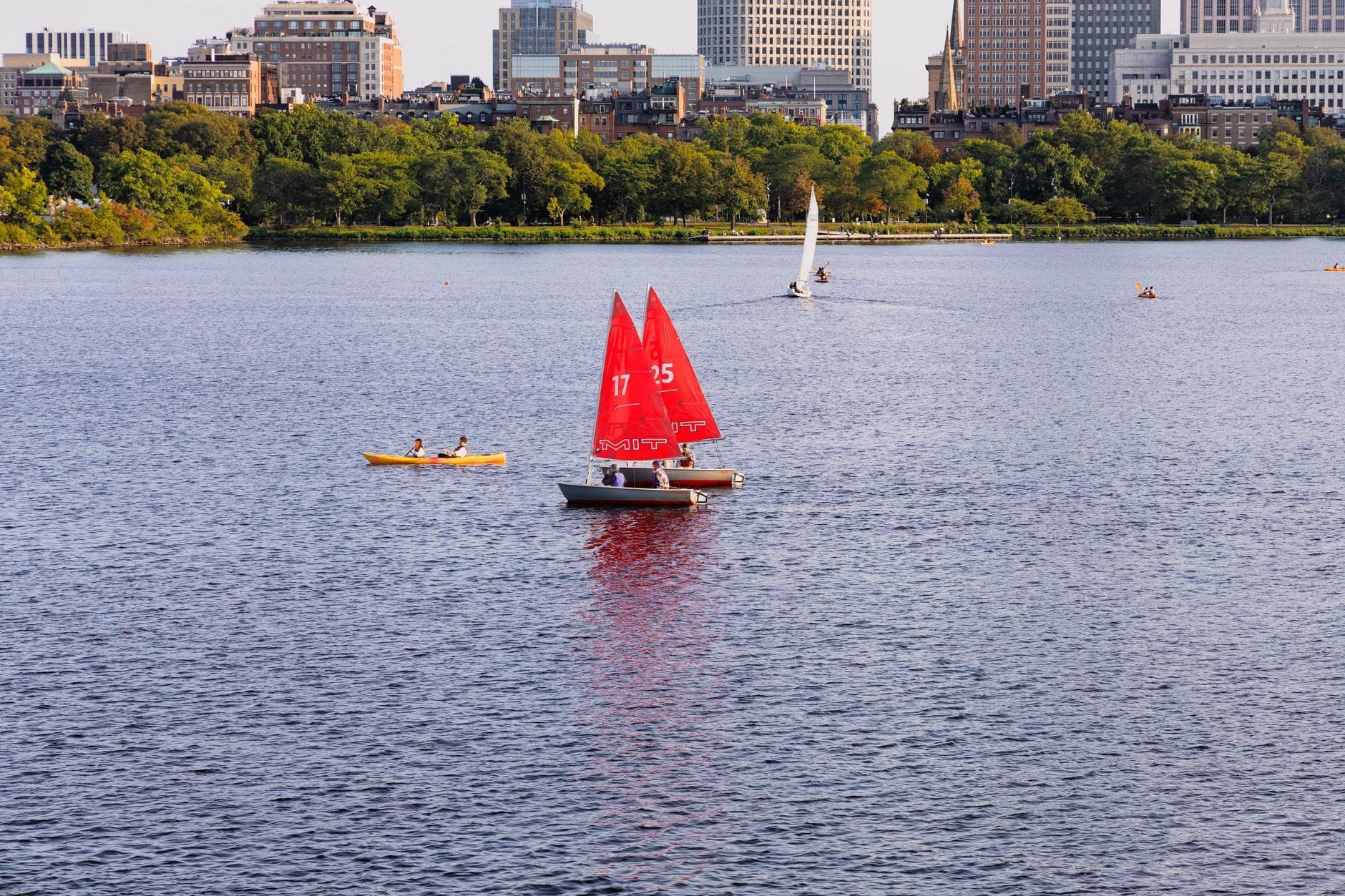
One of the most persistent misconceptions about outdoor activities in Boston is that water sports mean the ocean. The Charles River, which separates Boston from Cambridge, is the primary venue for most paddling, rowing, and sailing activity. The river is calm, sheltered, and generally more beginner-friendly than the harbor. Several boathouses along the Esplanade offer seasonal kayak and canoe rentals, and Community Rowing Inc. in Brighton provides sculling lessons and open programs for adults with no prior experience.
On the harbor side, kayaking and stand-up paddleboarding launch points exist near the Seaport District and in East Boston. Whale-watching tours depart from Long Wharf in the downtown waterfront area and run from April through October. Adult tickets start from $75 per person (verify current pricing at cityexperiences.com); booking at least a few days ahead is advisable in July and August when tours frequently sell out. Harbor cruises at lower price points (roughly $30-$50 for a 90-minute narrated cruise) are an alternative for those who prefer a seated, guided experience over active sports.
For sailing, Community Boating on the Esplanade is one of the oldest public sailing programs in the country. Day memberships and longer-term memberships are available, making it accessible for visitors who already know how to sail. The Boston Harbor whale-watching trips typically run 3-4 hours round-trip and venture into Massachusetts Bay. Humpback and finback whales are the most commonly seen species from late spring through fall, with peak sightings in June and July.
Boston Harbor Islands: The Most Underrated Outdoor Destination
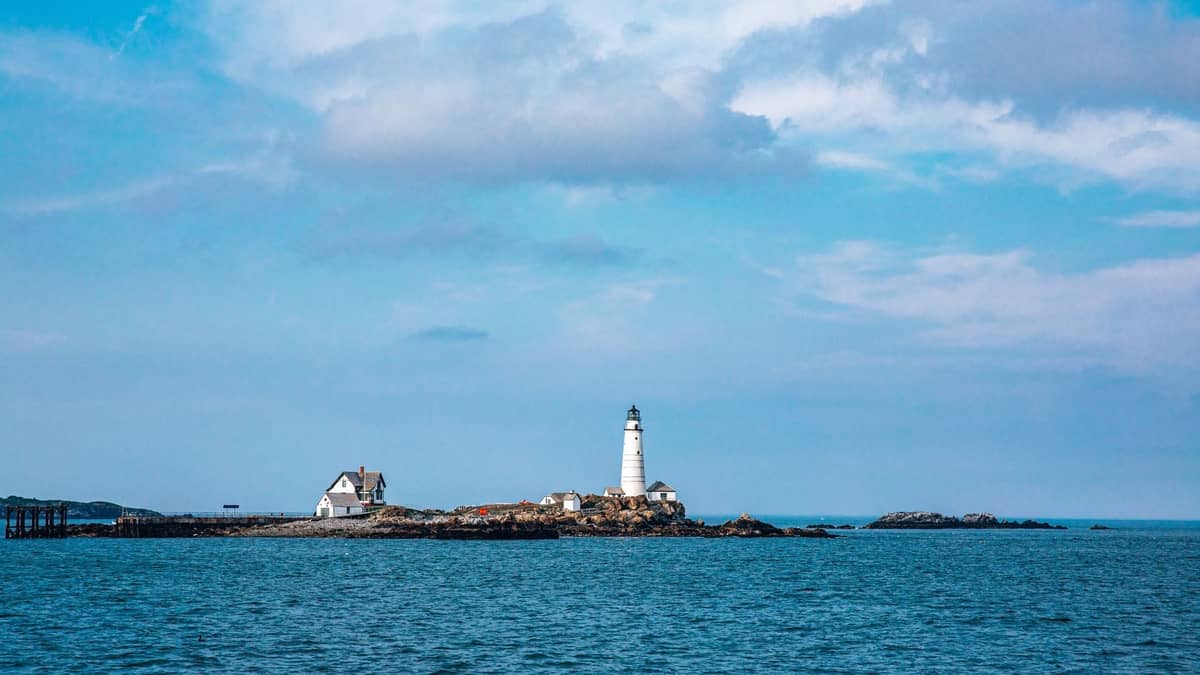
The Boston Harbor Islands National and State Park encompasses 34 islands and peninsulas within Boston Harbor. The scale surprises most first-time visitors: these are not small sandbars but substantive landforms with hiking trails, historic fortifications, beaches, and designated camping sites. The park is managed jointly by the National Park Service and the Massachusetts Department of Conservation and Recreation.
Regular ferry service from Long Wharf in downtown Boston typically operates from late May through mid-October. Primary island destinations include Spectacle Island, which has a visitors center, sandy beaches, and about 5 miles of trails with views back toward the Boston skyline, and Georges Island, which hosts Fort Warren, a Civil War-era fortification. Inter-island ferries connect several islands during peak season, but schedules and pricing change annually. Check the official Boston Harbor Islands website before planning a day trip.
✨ Pro tip
Camping on Peddocks, Bumpkin, or Grape Island requires advance reservations through the Massachusetts state parks reservation system, which opens in winter for the following summer. These sites book out quickly for peak weekends. If you miss the reservations window, aim for mid-week visits in late May or September when the crowds thin and ferry service is still running.
- Spectacle Island Closest to downtown, with a swim beach, cafe, and panoramic city views from the 157-ft drumlin summit. Good for families.
- Georges Island Fort Warren Civil War fortification, ranger-led tours, picnic areas. No overnight camping.
- Peddocks Island Largest island in the park; overnight camping available, historic Fort Andrews, varied terrain.
- Bumpkin and Grape Islands Quieter, more remote camping islands with wildflowers and sea kayaking access. No facilities beyond pit toilets.
Seasonal Guide: When to Go and What Changes
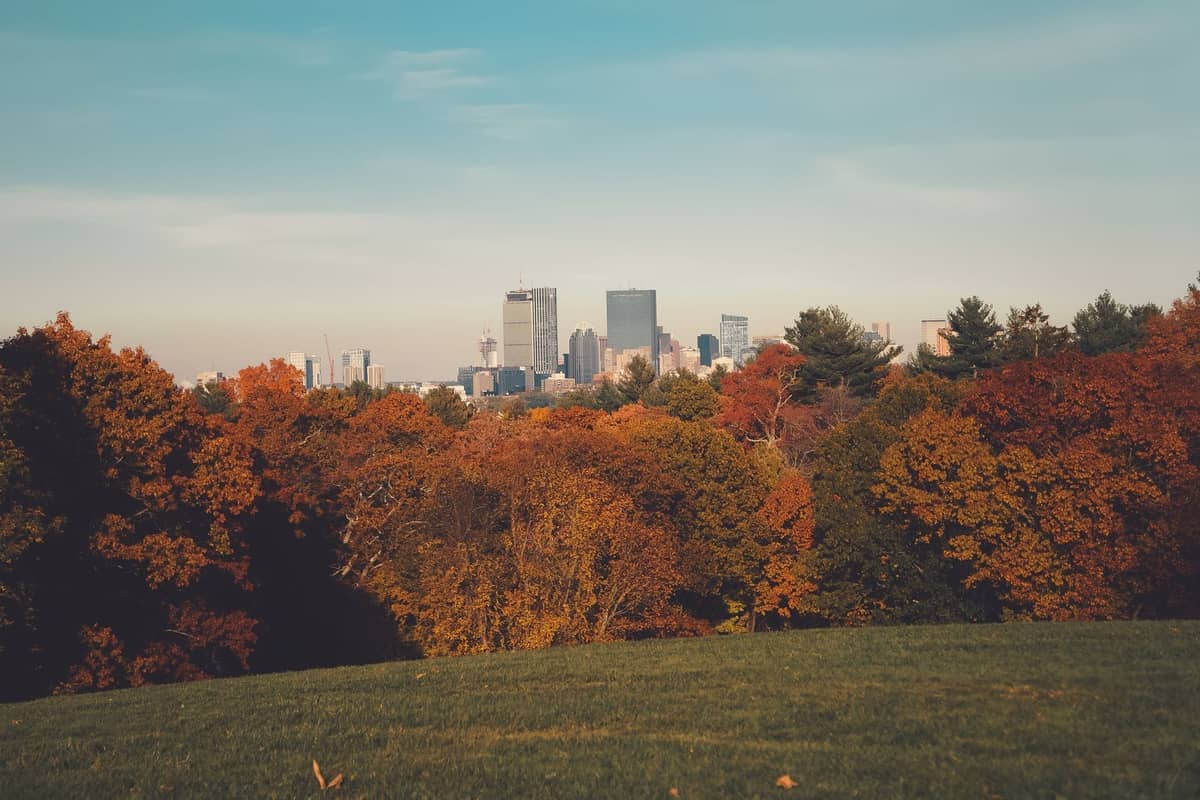
Boston has a humid continental climate, meaning real winters and real summers. Outdoor activities shift noticeably by season rather than simply being year-round in equal measure. Fall in Boston (late September through November) is widely regarded as the best season for trail walking and cycling. Temperatures settle in the 50s-60s°F, leaf color peaks in mid-October, and crowds at popular spots like the Emerald Necklace and the Harbor Islands drop significantly after Labor Day. The Arnold Arboretum and the Blue Hills Reservation are particularly worth visiting during fall foliage.
Summer (June through August) brings the full slate of water sports, Harbor Islands ferries, outdoor concerts at the Hatch Memorial Shell, and the highest foot traffic everywhere. July averages around 82°F with humidity; the Esplanade and the waterfront can feel crowded and warm by mid-afternoon. Plan water activities for morning departures. Winter shifts the outdoor picture considerably: the Frog Pond on Boston Common opens as a public skating rink from approximately November through March (skate rental available for around $12-$15), the trails remain walkable when not icy, and the Esplanade sees far fewer people. Spring (April through May) is transitional; the Public Garden blooms from late April, but weather is unpredictable and Harbor Islands service has not yet begun.
Practical Tips for Getting to Green Spaces
Most of Boston's major outdoor spaces are accessible without a car. The MBTA Green Line stops at Copley for the Back Bay Fens; the Orange Line stops at Forest Hills for the Arnold Arboretum; the Red Line reaches South Station, a short walk to the Harborwalk and the Rose Kennedy Greenway. For the Harbor Islands, ferries depart from Long Wharf, reachable on foot from Aquarium Station (Blue Line). For a full overview of transit options, see the guide to getting around Boston.
Boston also operates the Bluebikes bike-share system with hundreds of docking stations across Boston, Cambridge, and nearby municipalities. Day passes and single-trip options are available. The system works well for the Esplanade loop, the Emerald Necklace sections, and the Harborwalk. If you plan to cover significant distance, note that Bluebikes docks are denser in central neighborhoods and can be sparse near the Blue Hills or outer Harbor Islands access points. For families planning outdoor days with children, the Boston with kids guide covers practical logistics including stroller-friendly trail sections and accessible water access.
ℹ️ Good to know
Many of Boston's best outdoor spaces are entirely free: Boston Common, the Public Garden, the Emerald Necklace parks, the Harborwalk, the Charles River Esplanade, and the Arnold Arboretum all charge no admission. The main paid outdoor categories are Harbor Islands ferries (around $20-$25 round-trip for adults, verify current pricing), whale-watching tours (from $75 per adult), and seasonal rentals (bikes, boats, skates).
FAQ
What are the best outdoor activities in Boston for first-time visitors?
Start with the Charles River Esplanade walk or cycle, a loop through the Public Garden and Boston Common, and the Rose Kennedy Greenway. If you visit between late May and October, a day trip to Spectacle Island via the Harbor Islands ferry adds genuine variety. These four options cover water, green space, city views, and history without requiring rental gear or advance booking beyond the ferry ticket.
Can you kayak or paddleboard in Boston Harbor?
Yes. Kayak and stand-up paddleboard rentals and tours operate seasonally in the Seaport District and near East Boston. The Charles River is the more common venue for casual paddling, with several boathouses offering rentals along the Esplanade. Harbor paddling is best suited for experienced paddlers given boat traffic and choppier conditions.
When do the Boston Harbor Islands ferries run?
Regular public ferry service to the Harbor Islands typically runs from late May through mid-October, departing from Long Wharf in downtown Boston. Service is most frequent on weekends in July and August. Outside this window, island access is very limited and not available by standard scheduled ferry. Always verify current schedules and prices at the Boston Harbor Islands official website before planning your trip.
Are there free outdoor activities in Boston?
Most of Boston's parks and trails are free: Boston Common, the Public Garden, the Emerald Necklace, the Harborwalk, the Charles River Esplanade, and the Arnold Arboretum all have no admission charge. The Frog Pond skating rink on Boston Common charges a modest skate rental fee in winter but does not charge for entry. Free outdoor concerts at the Hatch Memorial Shell run through summer.
Is the Emerald Necklace walkable in a single day?
The Emerald Necklace spans roughly 7 miles end to end, so walking the full corridor in a single day is achievable but tiring, particularly since the parks are not always linked by obvious paths. A more practical approach is to cover 2-3 sections: for example, Jamaica Pond to the Arnold Arboretum to Franklin Park in one outing, and the Back Bay Fens to the Riverway in another. The MBTA Orange Line provides convenient access to the southern sections via Forest Hills Station.