Best Time to Visit Boston: A Season-by-Season Breakdown
Boston rewards visitors year-round, but the timing of your trip shapes everything from hotel rates to what you can actually do outside. This guide breaks down each season honestly, flags the crowd spikes most travelers miss, and helps you match your travel style to the right window.
Plan and book this trip
Tools from our partner Travelpayouts help you compare flights and hotels. If you book through them, we may earn a commission at no extra cost to you.
Flights
Hotels map
TL;DR
- Late September to mid-October is Boston's sweet spot: mild temperatures (typically 55–68°F), peak fall foliage around early-to-mid October, and noticeably fewer summer crowds. See Boston in fall for a full seasonal guide.
- Late spring (May to early June) is the second-best window — comfortable weather, graduation events aside, and prices that haven't hit summer peaks yet.
- Summer (June–August) is the most popular season, but also the most expensive and crowded, with July humidity making outdoor sightseeing uncomfortable on some days.
- Avoid booking blindly around April (Boston Marathon), September 1 (college move-in), and May/June graduation weekends — hotel rates spike and availability can tighten sharply.
- Winter is underrated for budget travelers: rates drop significantly, and the city's indoor attractions — from the Museum of Fine Arts to the Boston Public Library — are just as good in January as in July.
Boston's Climate at a Glance
Boston has a humid continental climate (Köppen Dfa), which means four distinct seasons rather than the blurred transitions you get in more temperate U.S. cities. Winters are cold and snowy, summers are warm to hot with real humidity, and spring and fall deliver the kind of sharp, clear days that make the city look its best. Average annual precipitation is around 44–47 inches, spread fairly evenly across the year — there is no true dry season, so rain is always a possibility regardless of when you visit.
Temperature ranges by season, based on 1991–2020 NOAA normals recorded at Logan International Airport: January averages a high of about 36°F (2°C) and a low of 22°F (-6°C); July averages a high of 82°F (28°C) and a low of 67°F (19°C); May sits comfortably around a mean of 57°F (14°C); September averages around 66°F (19°C). Seasonal snowfall averages around 49 inches (125 cm), concentrated between December and March. The warm season runs roughly June 5 to September 15; the cold season runs roughly December 4 to March 15.
ℹ️ Good to know
Boston time is Eastern Standard Time (EST, UTC-5) in winter and Eastern Daylight Time (EDT, UTC-4) during summer daylight saving hours. Daylight saving typically begins in early March and ends in early November — factor this into sunrise and sunset times when planning outdoor activities.
Spring (March to May): Uneven but Promising
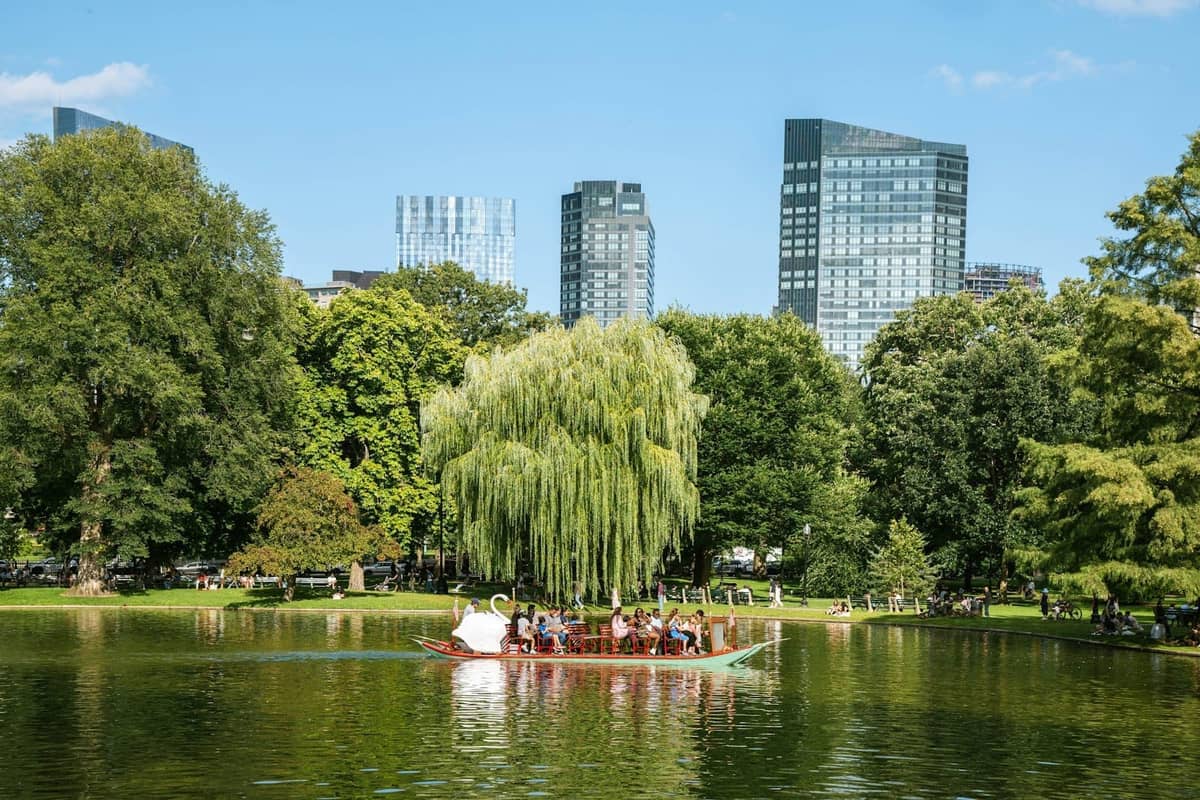
March in Boston is a weather lottery. The average mean temperature sits around 38°F (3°C), and late-season snowstorms are entirely possible through mid-March. By April, the city shakes loose: trees along Commonwealth Avenue bloom, the Public Garden's swan boats return (typically mid-April), and the energy shifts noticeably. May is especially good for exploring on foot — highs reach the mid-60s°F (around 18°C), crowds have not yet hit summer volume, and the city's parks start looking their best.
The big spring complication is the Boston Marathon, held on Patriots' Day (the third Monday of April). The race draws around 30,000 runners and hundreds of thousands of spectators. Hotels along the course and throughout Back Bay fill up months in advance, and rates easily double or triple the week of the race. If you happen to be visiting that week for the event, plan well ahead. If you're not, consider shifting your trip a week earlier or later to sidestep both the crowds and the inflated prices.
⚠️ What to skip
May and early June bring graduation season across Boston's many universities. Harvard, MIT, Boston University, Northeastern, and Boston College all hold commencement ceremonies within a few weeks of each other. Hotel availability near Cambridge and the Back Bay can disappear entirely on graduation weekends — book at least 2–3 months out if visiting in late May or the first week of June.
Summer (June to August): Peak Season, Real Trade-offs
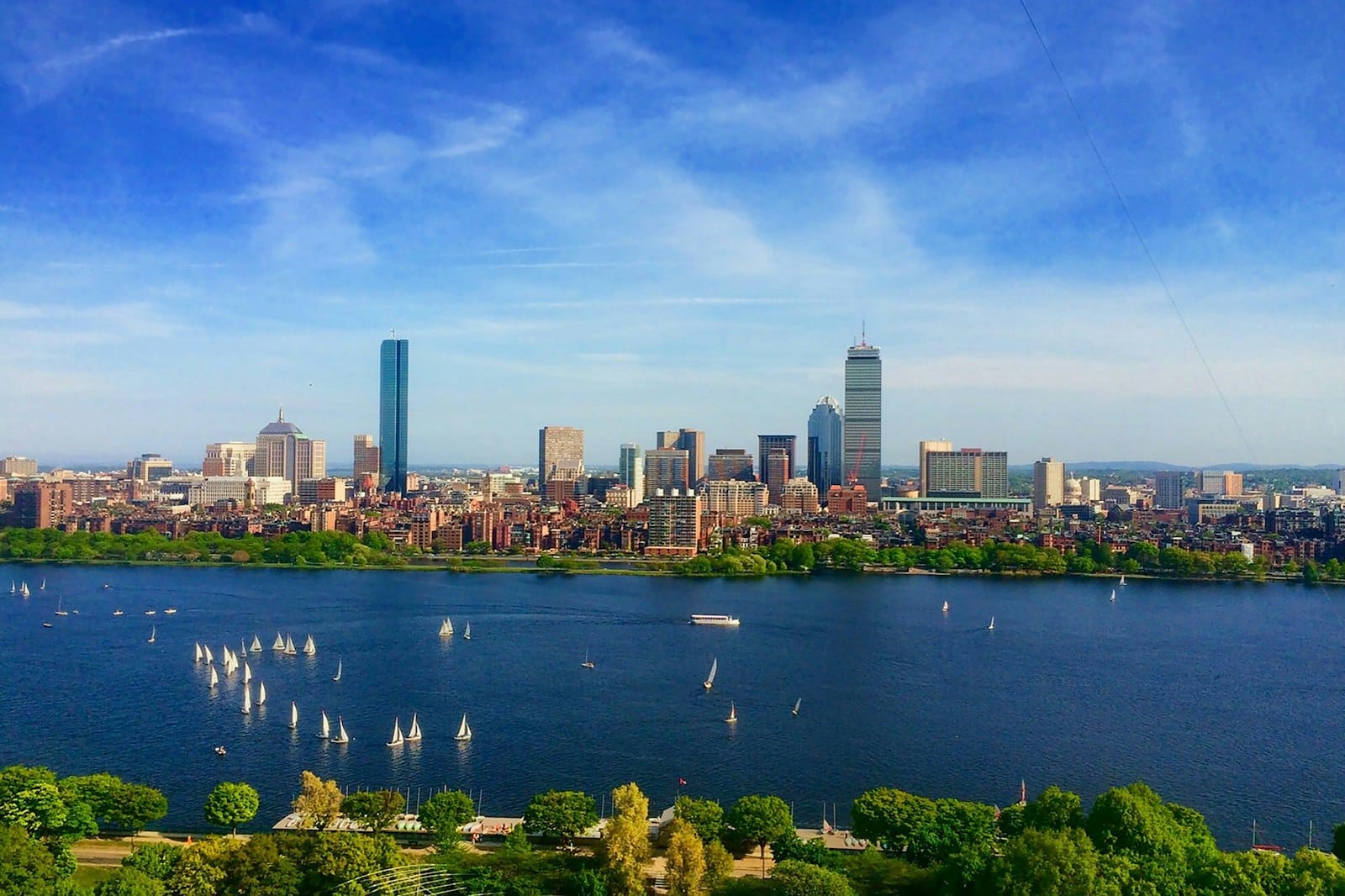
Summer is when the most people visit Boston, and the numbers back it up: leisure travel visitation peaks between June and August according to Boston tourism data. The appeal is obvious — long days, outdoor events, harbor activities, and the full slate of Red Sox home games at Fenway Park. July 4th draws massive crowds to the Esplanade for the Boston Pops concert and fireworks, one of the country's most famous Independence Day celebrations.
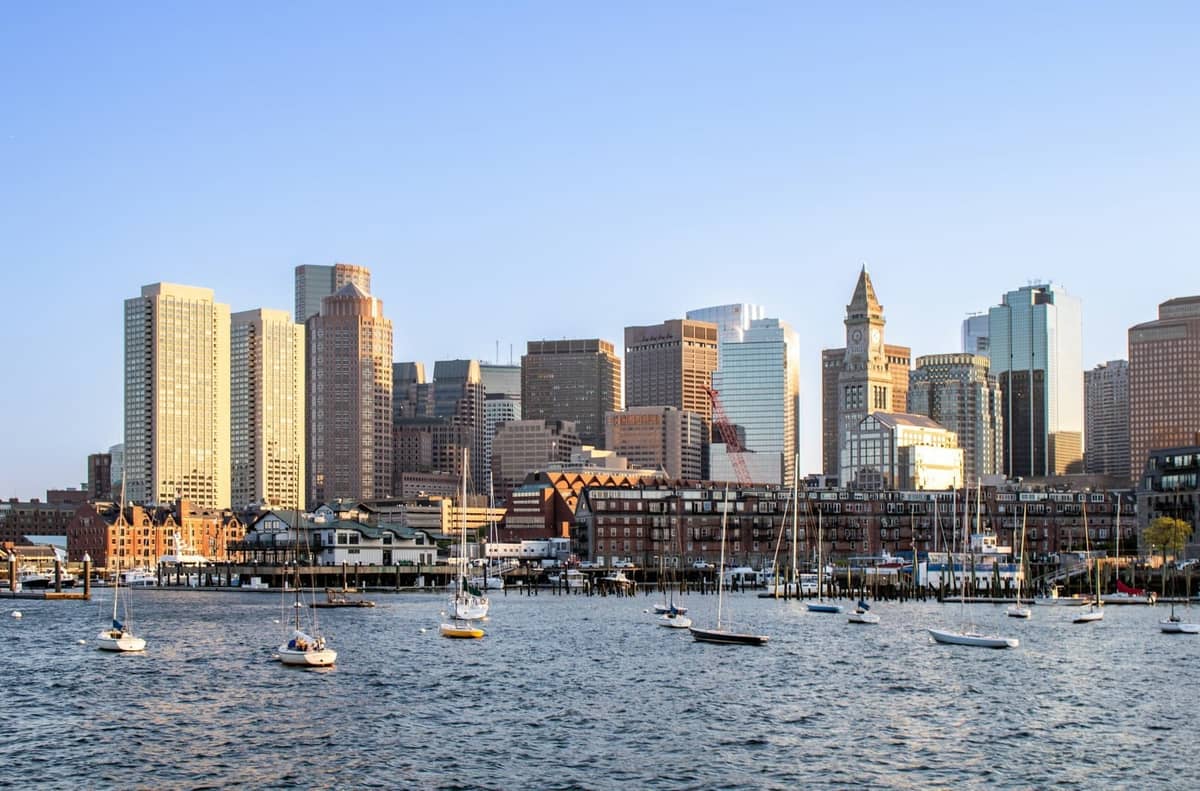
The trade-offs: July humidity can push the heat index well above the air temperature, making extended outdoor walking tours feel quite uncomfortable on peak days. Hotel rates are at their annual high. Popular sites like the Freedom Trail and Faneuil Hall Marketplace see their heaviest foot traffic. That said, early morning before 9am is a different city — the North End, Beacon Hill, and the waterfront are largely quiet, and the light is good for photography. If summer is your only option, front-load your outdoor itinerary before noon.
- Summer pros Full event calendar, Fenway Park in season, harbor activities, Boston Harborfest in late June/early July, long daylight hours (sunset around 8:15pm in late June)
- Summer cons Highest hotel rates of the year, July humidity, peak crowds at all major attractions, September 1 college move-in creates a mini chaos event
- Best summer sub-window Late June to early July, before the school vacation peak intensifies and while the weather is warm without the worst humidity
✨ Pro tip
September 1 is the unofficial 'moving day' for Boston's enormous student population — tens of thousands of college students move in around the same time, clogging streets and filling hotels near universities. If you're visiting late August or early September, avoid booking accommodation near Cambridge, Fenway, or the Back Bay for the August 31 to September 2 window specifically.
Fall (September to November): The Best Season — With Trade-Offs
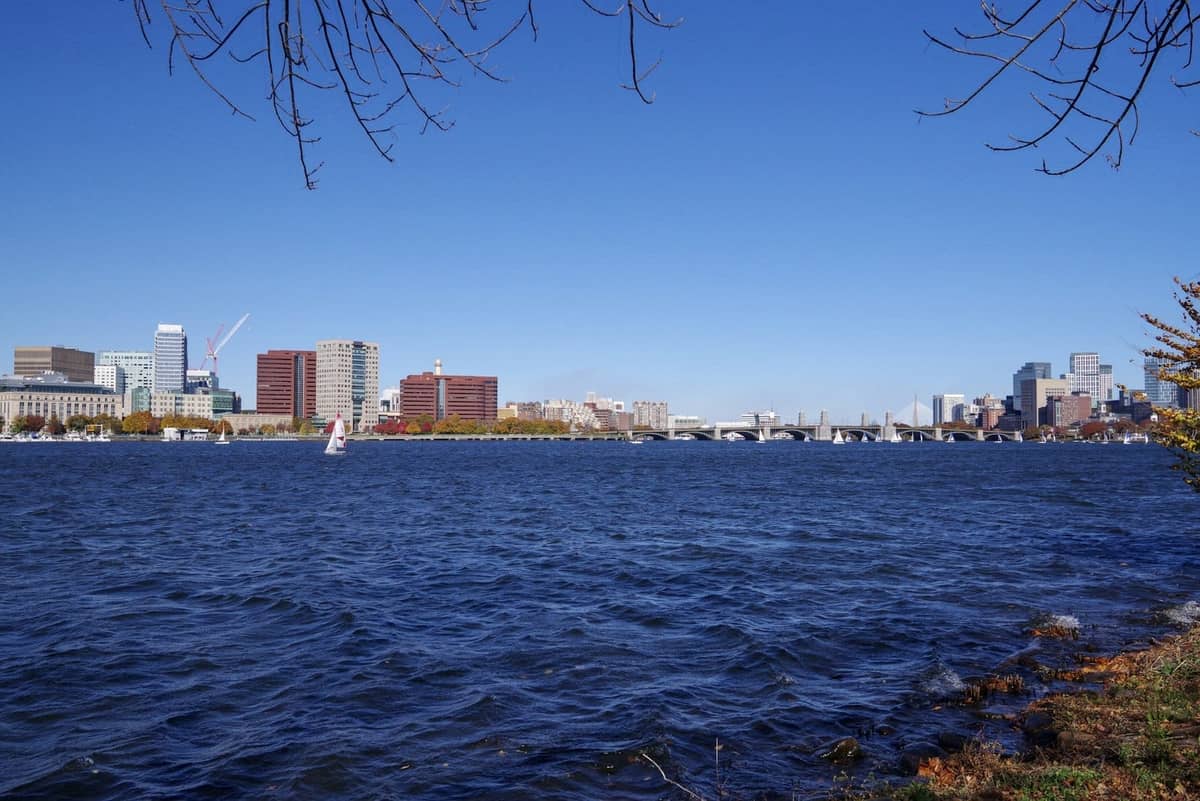
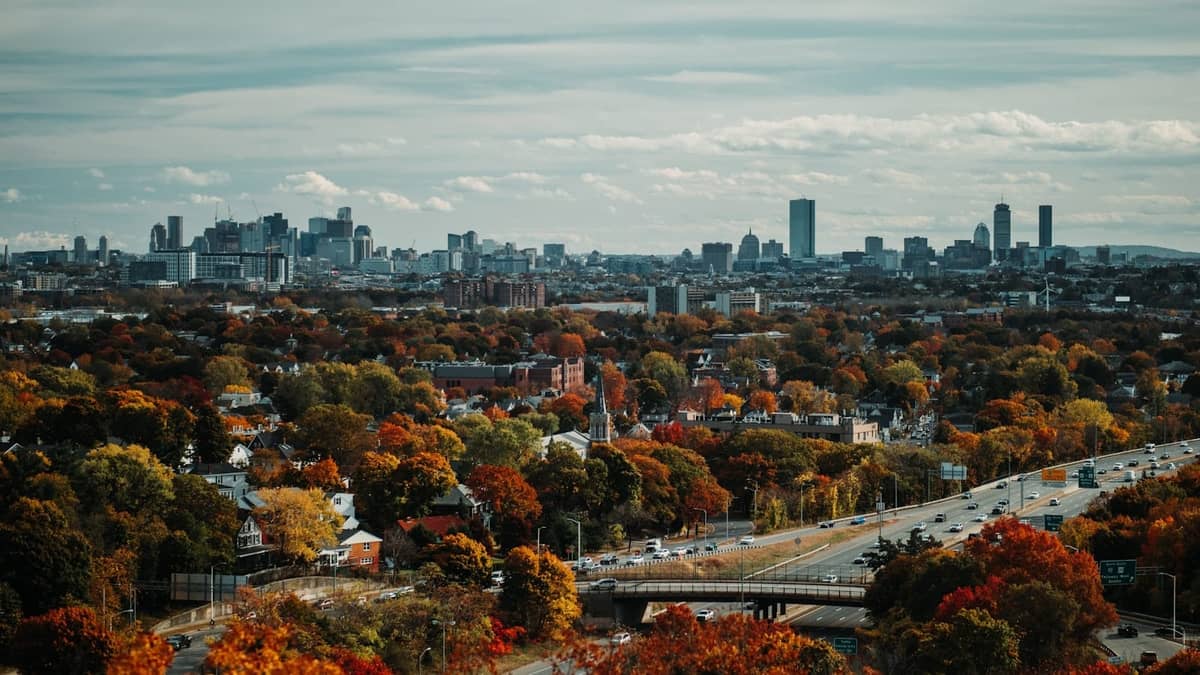
September to mid-October represents the strongest overall window for most travelers. Once the college move-in congestion clears and summer pricing steps down, Boston enters a period that locals prefer for time outside. Temperatures in September average around 66°F (19°C) — warm enough for comfortable walking but without the humidity drag of July. October cools progressively, with highs typically in the mid-50s to low 60s°F by mid-month.
Fall foliage in Boston itself generally peaks in early-to-mid October, though the exact timing varies year to year. The Arnold Arboretum in Jamaica Plain and the Emerald Necklace park system offer some of the best urban foliage viewing in the country. If you want to see foliage at its peak in the wider New England region, the northern parts of Massachusetts and Vermont typically hit their peak 1–2 weeks earlier than Boston itself — plan accordingly.
One fall-specific caveat: if the Red Sox make the playoffs, October can see demand spikes around home games — not as severe as Marathon weekend, but worth monitoring if you're flexible on exact dates. November is the quietest and most underpriced month of the shoulder season; the foliage is past peak and it can feel raw, but hotel rates drop noticeably and the city's indoor life — restaurants, theater, museums — continues in full form.
Winter (December to February): Cold, Cheaper, and Underrated
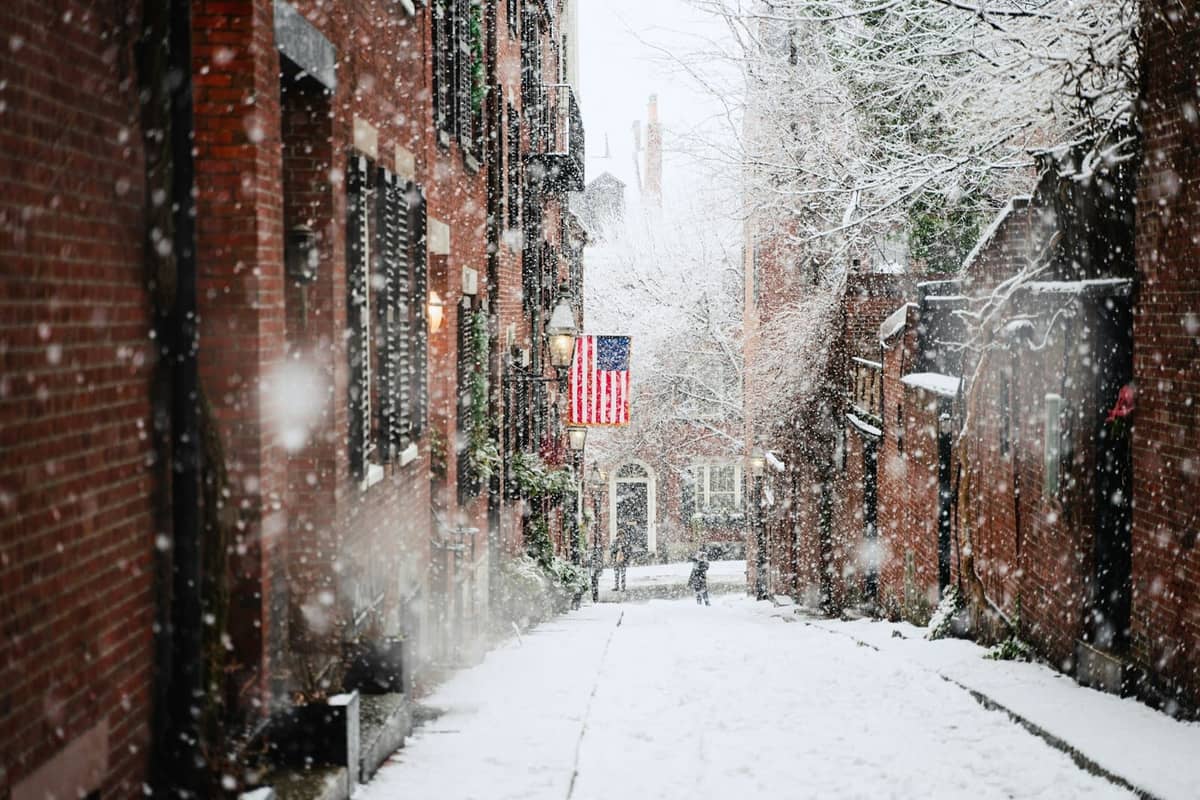
Boston winters are real. January averages a low of 22°F (-6°C), snowfall averages around 49 inches for the season, and nor'easters can dump significant accumulation in a matter of hours. That said, the city doesn't shut down — Bostonians are experienced winter operators, the MBTA keeps running, and most indoor attractions are heated and fully staffed. If you dress appropriately (insulated boots, layered clothing, waterproof outer layer), winter is navigable.
The case for a winter visit is primarily financial and crowd-based. Hotel rates fall substantially from summer highs. The Museum of Science, the New England Aquarium, and Boston's exceptional restaurant scene don't care what month it is. The historic sites along the Freedom Trail are far less crowded, and you can walk through Faneuil Hall or the Old State House without navigating tour groups. The holiday window (mid-November through December) brings its own appeal: the Boston Common Christmas tree lighting, ice skating at the Frog Pond, and the Nutcracker at the Boston Opera House.
- Dress in genuine layers: a moisture-wicking base, an insulating mid-layer, and a waterproof shell are non-negotiable for January or February visits
- Waterproof, insulated boots matter more in Boston than in most U.S. cities — sidewalk slush and ice are a regular feature of January and February
- Check the MBTA service status app before heading out during or after a major snowstorm — delays and service changes are common
- TD Garden hosts Bruins and Celtics home games through the winter — tickets are often available at shorter notice and lower prices than summer events
- The stretch between New Year's and mid-February is the quietest and cheapest window of the year for Boston hotel bookings
Price and Crowd Calendar: When to Book and When to Avoid
Boston's pricing calendar follows a fairly predictable arc, with a few sharp spikes that catch visitors off guard. High season runs June through early September, with July typically representing peak hotel rates. The shoulder seasons of April–May and September–November offer better value, but April has the Marathon spike and September has the move-in complication. Winter from mid-November through March (excluding the holiday week of Christmas/New Year's) consistently offers the lowest rates.
For logistics, Boston Logan International Airport (BOS) is approximately 3 miles from downtown and is well connected via the MBTA Blue Line and the Silver Line SL1 bus — the SL1 between Logan and South Station is free inbound to Logan. The MBTA (locally called 'the T') is the most practical way to move between neighborhoods. A CharlieCard covers subway and bus travel across the city. Taxis and ride-hailing (Uber and Lyft both operate here) run from roughly $25–40 to downtown depending on traffic.
- Peak demand dates to avoid or book early Boston Marathon weekend (third Monday in April), Memorial Day weekend, July 4th week, Labor Day weekend, college graduation weekends (late May to early June), September 1 move-in
- Best value windows Mid-January to mid-February, early March, and mid-November — rates are lowest and crowds minimal
- Best overall balance of weather, crowds, and price Late September through mid-October and the last two weeks of May (avoiding any graduation weekends)
💡 Local tip
For fall foliage day trips, the MBTA Commuter Rail connects Boston's North Station and South Station with towns on the North Shore, South Shore, and in western Massachusetts. Rockport on the North Shore and the towns west toward Concord and Lexington see strong foliage color in mid-October and are easy day trips without a car.
FAQ
What is the best time to visit Boston for good weather?
Late May and the September–October window offer the most reliably comfortable outdoor conditions. Temperatures in those periods typically sit between 55–70°F, with lower humidity than summer. July and August are warmer but come with real humidity and the year's highest crowds and prices.
What is Boston time zone?
Boston operates on Eastern Standard Time (EST, UTC-5) in winter and Eastern Daylight Time (EDT, UTC-4) during daylight saving, which runs from early March to early November. During the summer months when most travelers visit, Boston time is UTC-4.
When is Boston the least crowded?
Mid-January through mid-February is the quietest period. You'll find the lowest hotel rates, no major events competing for capacity, and short or nonexistent queues at popular attractions. The trade-off is genuine winter weather — January averages a low of 22°F (-6°C) and snowfall is likely.
Is Boston worth visiting in winter?
Yes, for the right traveler. Boston's indoor attractions — the Museum of Fine Arts, the Isabella Stewart Gardner Museum, the Boston Athenæum, and a dense restaurant scene — are as compelling in January as in July. Hotel rates drop significantly, and sites like the Freedom Trail are far less crowded. You need proper winter clothing, and you should be prepared for the possibility of a snowstorm disrupting a day of plans.
When does fall foliage peak in Boston?
Peak color in Boston itself typically falls in early-to-mid October, though the exact timing shifts by a week or two depending on the year's weather. The Arnold Arboretum and the parks of the Emerald Necklace are reliable spots to see fall color within the city. For peak foliage across wider New England, the northern regions of Massachusetts and Vermont generally peak 1–2 weeks earlier than Boston.