Museum of Fine Arts, Boston: What to Know Before You Go
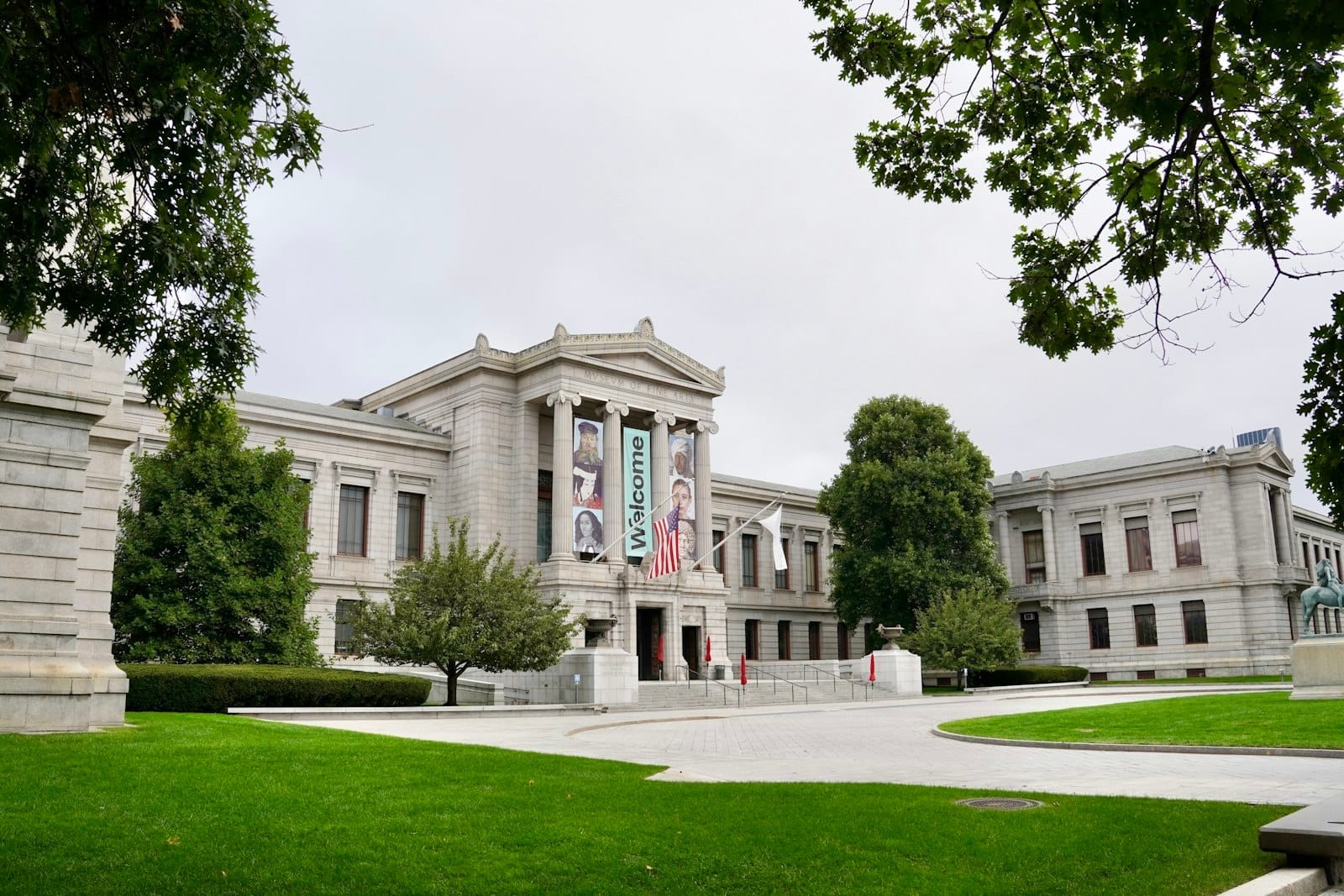
The Museum of Fine Arts, Boston is one of the largest and most encyclopedic art museums in the United States, with nearly 500,000 works spanning ancient Egypt to contemporary America. Housed in a landmark Beaux-Arts building in the Fenway-Kenmore neighborhood, it rewards first-time visitors and regulars alike with collections that take days to fully absorb.
Quick Facts
- Location
- 465 Huntington Avenue, Fenway-Kenmore, Boston, MA 02115
- Getting There
- MBTA Green Line E branch – Museum of Fine Arts stop; MBTA Orange Line – Ruggles stop
- Time Needed
- 2–5 hours depending on focus; a full day for serious collection browsers
- Cost
- Timed general admission tickets required; prices in USD listed at mfa.org/tickets. Discounts available for members, students, and children.
- Best for
- Art lovers, history enthusiasts, families with older children, solo travelers seeking a full-day cultural anchor
- Official website
- www.mfa.org
What the MFA Boston Actually Is
The Museum of Fine Arts, Boston, universally abbreviated as MFA Boston, is not a specialist collection or a boutique gallery. It is one of the most encyclopedic art museums in the world, with nearly 500,000 works spanning more than 100 galleries. The scope is remarkably broad: ancient Egyptian burial artifacts share the building with Impressionist paintings, Japanese decorative arts, Native American ceramics, and contemporary photography. Few American museums outside New York and Washington can match its range.
The original MFA building opened in 1870 on Copley Square, before the museum relocated to its current Huntington Avenue address in 1909. The main structure, designed in a grand Beaux-Arts style, was later expanded multiple times. A major recent addition is the Art of the Americas Wing, which opened in 2010 and added roughly 53,000 square feet of gallery space; the Linde Family Wing for Contemporary Art reopened in 2011 after renovation. The result is a building that reads as several architectural eras layered on top of one another, which becomes obvious as you move from the soaring rotunda of the original 1909 structure into the cleaner, more industrial aesthetic of the newer wings.
💡 Local tip
Book timed general admission tickets online before you arrive. Walk-up tickets are available, but purchasing in advance guarantees your preferred entry time and avoids queuing at the box office, especially on weekends.
Getting There and Finding Your Bearings
The museum sits on Huntington Avenue in the Fenway-Kenmore neighborhood, roughly equidistant between the Fens parklands and Fenway Park. The most direct transit option is the MBTA Green Line, specifically the E branch, which stops at the Museum of Fine Arts station directly in front of the main entrance on Huntington Avenue. Trains run frequently during the day, making this one of the easier major Boston attractions to reach without a car.
The MBTA Orange Line is a useful alternative if you are arriving from Back Bay, downtown, or the northern neighborhoods. Exit at Ruggles Station and walk about ten minutes north along Huntington Avenue. If you are already exploring the Fenway-Kenmore area, the museum pairs well with a visit to the Isabella Stewart Gardner Museum, which is roughly a ten-minute walk southeast along the Fenway.
On-site parking is available in the lot off Museum Road, though it fills quickly on weekends and during ticketed exhibitions. The museum's phone number for general inquiries is +1 617-267-9300, and TTY service for visitors who are deaf or hard of hearing is available at 617-267-9703.
Tickets & tours
Hand-picked options from our booking partner. Prices are indicative; availability and final rates are confirmed when you complete your booking.
Boston Summer Night Trolley Tour and River Cruise
From 27 €Instant confirmationFree cancellationLEGOLAND Discovery Center Boston tickets
From 26 €Instant confirmationFree cancellationGhosts and Gravestones tour of Boston
From 39 €Instant confirmationFree cancellationBest of Boston tour
From 182 €Instant confirmationFree cancellation
Hours, Tickets, and When to Visit
As of mid‑2026, the MFA’s general operating pattern is 10:00 to 17:00 on Saturdays through Wednesdays and 10:00 to 22:00 on Thursdays and Fridays. The museum is typically closed on Patriots' Day (the third Monday in April), July 4th, Thanksgiving, Christmas Day, and New Year's Day, with occasional special openings that are listed on its official calendar. However, hours shift seasonally and around special exhibitions, so always verify on the official calendar at mfa.org before planning your visit.
Thursday and Friday evenings, when the museum stays open until 22:00, represent one of the best-kept scheduling advantages in Boston. Crowds thin considerably after 17:00, the light changes as the galleries shift from natural to artificial lighting, and the atmosphere becomes noticeably quieter. The Great Rotunda and the Egyptian galleries feel different at night, more contemplative and less foot-traffic-heavy than a Saturday afternoon.
Weekend mornings between 10:00 and noon are the busiest windows, particularly when a headline special exhibition is running. Saturday afternoons see a second surge around 13:00 to 15:00. If your schedule is flexible, a weekday visit, especially mid-morning on a Tuesday or Thursday, gives you the closest thing to a private experience with the permanent collection.
ℹ️ Good to know
The MFA offers discounted or free admission programs for certain audiences, including Massachusetts residents under 17, college students with valid ID, and members. Check mfa.org/tickets for current eligibility and pricing before purchasing.
The Collections: Where to Focus Your Time
Attempting to see everything in a single visit is a mistake that leads to exhaustion rather than engagement. The MFA's permanent collection is organized across broad thematic and geographic wings. The Art of the Ancient World galleries on the ground floor house one of the finest Egyptian collections in North America, assembled partly through early 20th-century excavations conducted jointly with Harvard University. Mummy cases, carved stone reliefs, and intact burial objects from Giza and Nubia fill room after room at a density that rewards slow looking.
The European paintings collection is the crowd anchor. The Impressionist and Post-Impressionist rooms contain works by Monet, Renoir, and Cézanne that the MFA began acquiring in the late 19th century, making Boston one of the earliest American cities to embrace French Impressionism institutionally. The specific paintings rotate through conservation and loans, so the gallery configuration changes, but the overall density of recognizable works remains high.
The American wing is frequently underappreciated by first-time visitors focused on the European galleries. The MFA holds significant works by John Singer Sargent, Winslow Homer, and the Hudson River School painters, plus a period rooms collection that places decorative arts in architectural context. If you are interested in the broader arc of American cultural history, this pairs well with a subsequent visit to the Boston Public Library in Copley Square, where Sargent's mural cycle is on permanent display in the building itself.
The Japanese art collection is one of the largest outside Japan and reflects the deep 19th-century cultural exchange between Boston's intellectual community and Meiji-era Japan. Scholars like Ernest Fenollosa and William Sturgis Bigelow brought thousands of objects to the museum in the 1880s and 1890s. The lacquerwork, ceramics, screens, and Buddhist sculpture in this wing are displayed at a level of curatorial sophistication that makes it a serious destination for anyone with more than passing interest in East Asian art.
Sensory Details and the Physical Experience of Visiting
The entrance on Huntington Avenue opens into a wide, stone-floored lobby where the scale of the building becomes immediately apparent. The air is cool and faintly climate-controlled, carrying the particular dry museum smell of circulated air and aged materials. The main staircase to the upper floor is broad and unhurried in its rise, which sets the tone for the building's overall pacing: it is a space designed around deliberate movement.
Natural light is handled unevenly across the building. The older wings use large clerestory windows and skylights that fill certain galleries with diffused daylight, particularly in the Impressionist rooms in the afternoon. The newer contemporary wing relies more on adjustable artificial lighting calibrated to individual works. Moving between these zones creates a shift in mood that you notice physically, from the warmer, slightly amber quality of the older galleries to the cooler, more precise lighting of the contemporary spaces.
The museum café and restaurant options are adequate but not a reason to visit on their own. The main café operates during regular museum hours and handles volume competently. Serious lunch options are available at the full-service restaurant, but expect lines during peak weekend hours. Many visitors choose to exit, walk along Huntington Avenue for a meal, and re-enter using the same-day ticket stamp.
💡 Local tip
Photography without flash is permitted in most permanent collection galleries. The Egyptian galleries and the Japanese screens offer particularly strong natural light compositions in the mid-afternoon. Check posted signage in individual rooms, as rules vary for special exhibitions.
Practical Walkthrough and Accessibility
The MFA is fully wheelchair accessible, with elevators connecting all major gallery floors. The building's size means mobility-limited visitors should factor in additional time and consider renting a mobility device from the coat check area. Audio guides and specialized accessibility programs are detailed on the museum's accessibility pages, which are worth reviewing in advance if you or a member of your group has specific requirements.
Coat and bag check is available near the main entrance and is worth using if you are carrying a large backpack or bag, both for your own comfort over several hours of walking and because large bags are not permitted in certain gallery spaces. Strollers are allowed in most areas; the museum provides courtesy strollers at no charge, subject to availability.
Families with younger children will find the MFA more manageable than its size suggests if they focus on one or two wings rather than attempting a comprehensive circuit. The Art of the Ancient World and the Arms and Armor collection tend to hold attention well across age groups. For families specifically planning a Boston trip around children, the Boston Children's Museum in the Seaport District is a better primary destination, with the MFA working as a complementary stop for older kids and adults.
Is It Worth Your Time?
The MFA Boston is not overhyped. For a traveler with genuine interest in art, history, or material culture, it consistently delivers more than expected, particularly given how underappreciated its Japanese and Egyptian collections are relative to the European galleries that dominate most visitor itineraries. The permanent collection justifies the admission cost even without a special exhibition running.
That said, travelers on a tight one or two-day Boston schedule who are primarily interested in the city's Revolutionary-era history may find the Freedom Trail and sites like the Paul Revere House or the Old South Meeting House a better use of limited hours. The MFA rewards visitors who can give it at least a half day. A rushed 90-minute pass-through leaves most of the collection unseen and can feel unsatisfying.
Visitors who struggle with sensory overload or museum fatigue should plan their visit around the quieter evening hours on weekdays rather than a busy weekend afternoon. The scale of the building, the volume of works, and the acoustics of certain gallery spaces can be overwhelming during peak periods. Arriving with a specific plan for two or three wings, rather than trying to navigate comprehensively, is the most reliable approach to leaving with a positive experience.
Insider Tips
- The E branch of the Green Line drops you at the Museum of Fine Arts stop directly in front of the main entrance. If you accidentally board a different Green Line branch (B, C, or D), you will need to transfer or walk a significant distance. Check the destination sign on the front of the train before boarding.
- Wednesday and Thursday evenings after 17:00 are the best time to visit the Impressionist galleries without competing for wall space. By 18:30 on a Thursday, you can often stand alone in front of major works that would be three-deep on a Saturday.
- The museum gift shop near the main exit carries a range of exhibition catalogs that may be discounted compared to purchasing them through the MFA's online store. If you are interested in the Japanese or Egyptian collection specifically, the scholarly catalogs sold here are among the best available in English.
- Re-entry is permitted with your ticket on the same day. This is useful if you want to walk the Fens or grab lunch on Huntington Avenue without losing your admission. The staff will stamp your hand or ticket at the exit.
- The MFA hosts several annual lecture and film series that are open to non-members at a separate ticket price. These events fill quickly but offer access to curators and scholars at a level of depth that the standard gallery visit cannot replicate. Check the museum's public programs calendar when planning a trip.
Who Is Museum of Fine Arts, Boston For?
- Travelers with a strong interest in art history who want depth across multiple cultures in one institution
- Solo visitors who can move at their own pace and spend extended time with individual works
- Rainy or winter-day itineraries when outdoor Boston activities are less appealing
- Repeat Boston visitors who have covered the Freedom Trail and want a different dimension of the city
- Anyone with specific interest in Japanese art, ancient Egypt, or American decorative arts, where the MFA's collections are among the best in the world
Nearby Attractions
Other things to see while in Fenway–Kenmore:
- Fenway Park
Fenway Park has been the home of the Boston Red Sox since 1912, making it the oldest active ballpark in Major League Baseball. Whether you're catching a game under the lights or taking a guided tour on a quiet morning, the experience goes well beyond baseball.
- First Church of Christ, Scientist (Mother Church)
The First Church of Christ, Scientist — known as The Mother Church — anchors a 14-acre urban plaza in Boston's Fenway-Kenmore district, offering a rare combination of Romanesque Revival and Greek Revival with Byzantine influences architecture, free public access, and one of the city's most serene open spaces. Few visitors know it exists, which is precisely why it's worth your time.
- Isabella Stewart Gardner Museum
The Isabella Stewart Gardner Museum is not a conventional art institution. Built in the style of a 15th-century Venetian palazzo around a flower-filled courtyard, it houses one of America's most personal and unconventional private art collections, assembled by a Boston socialite whose will dictated that nothing could ever be moved, sold, or changed.
- Symphony Hall
Opened in 1900 and designated a National Historic Landmark in 1999, Boston's Symphony Hall is one of the finest concert venues in the world. Home to the Boston Symphony Orchestra and the Boston Pops, the hall rewards visitors with extraordinary sound, gilded Neoclassical architecture, and a program calendar that spans orchestral premieres to holiday spectaculars.