Isabella Stewart Gardner Museum: Boston's Most Singular Art Experience
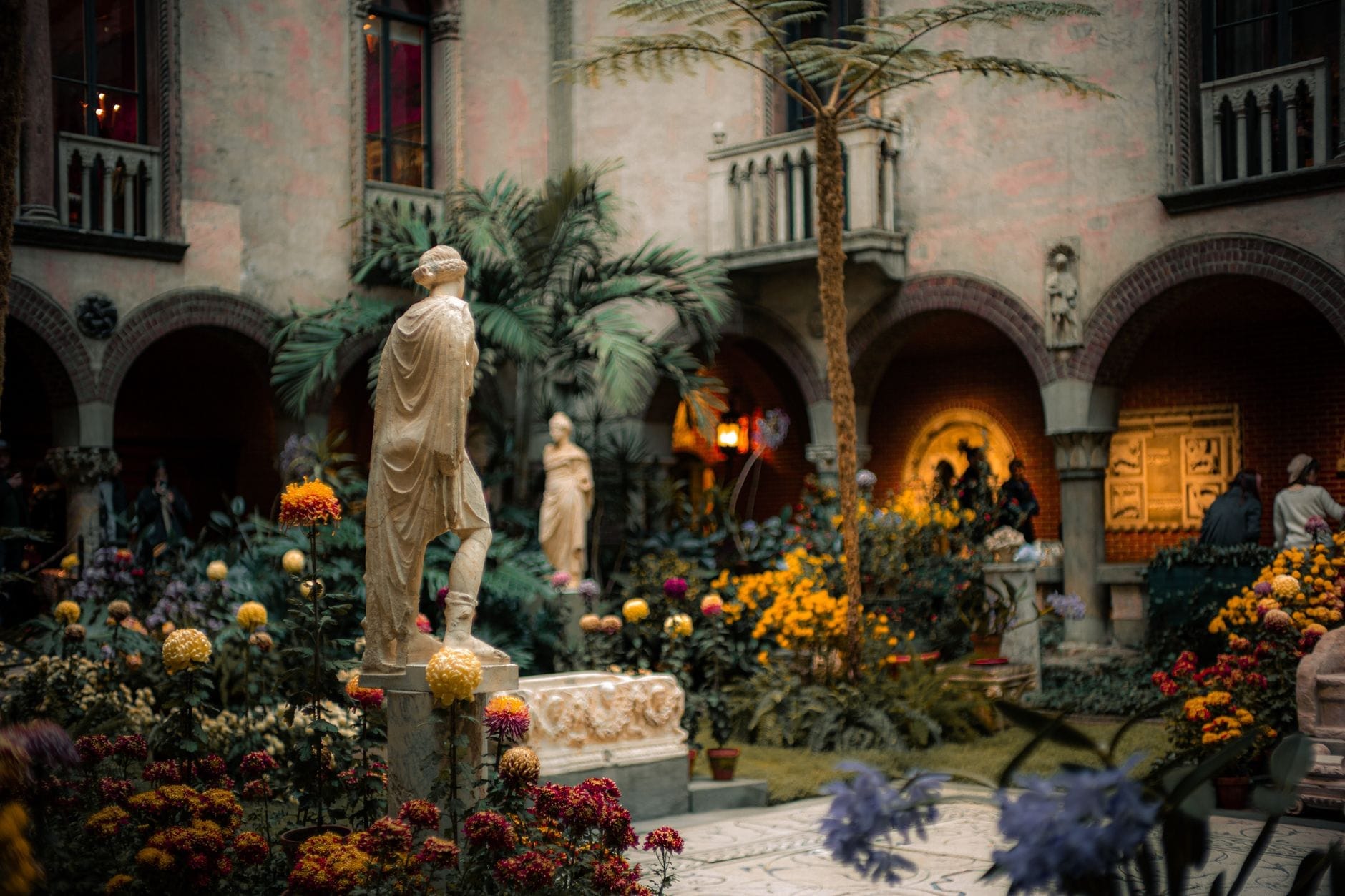
The Isabella Stewart Gardner Museum is not a conventional art institution. Built in the style of a 15th-century Venetian palazzo around a flower-filled courtyard, it houses one of America's most personal and unconventional private art collections, assembled by a Boston socialite whose will dictated that nothing could ever be moved, sold, or changed.
Quick Facts
- Location
- 25 Evans Way, Fenway, Boston, MA 02115
- Getting There
- MBTA Green Line (E branch) to Museum of Fine Arts stop, or Green Line to Kenmore then walk
- Time Needed
- 2 to 3 hours for a thorough visit
- Cost
- Adults $22 | Seniors $18 | College students $13 | Under 18 free | Members free
- Best for
- Art lovers, architecture enthusiasts, solo travelers, curious visitors who prefer intimacy over scale
- Official website
- www.gardnermuseum.org
What the Gardner Actually Is
The Isabella Stewart Gardner Museum is not organized like other art museums. There are no chronological galleries, no wall labels explaining why a painting matters, and no curators periodically rehanging works to reflect new scholarship. Isabella Stewart Gardner built this place as her home, filled it according to her own aesthetic logic, and left a will stipulating that nothing in the galleries could be permanently rearranged after her death in 1924. What you see today is, quite literally, exactly what she intended.
The original building, completed in 1901 and opened to the public on January 1, 1903 under the name Fenway Court, was designed to evoke a 15th-century Venetian palace. Gardner had the structure built around a glass-covered central courtyard, four stories tall, filled year-round with seasonal flowers and plants. In winter, you might find narcissus and orchids. In spring, climbing nasturtiums and wisteria. The courtyard is the museum's emotional center, and most visitors instinctively slow down when they step into it.
In 2012, architect Renzo Piano added a modern wing to the property. The contrast between the new glass-and-steel addition and the original Venetian Revival palace is striking but deliberately respectful: the Piano building houses temporary exhibitions, a cafe, a performance space, and additional education facilities, while the historic structure remains largely unchanged and devoted to Gardner's original vision.
💡 Local tip
Timed tickets are strongly recommended and popular entry windows sell out, especially on weekends. Book in advance through the museum's website to avoid being turned away.
The Collection: What You Will Find and Where
Gardner assembled roughly 7,500 objects over decades of travel, scholarship, and personal friendships with artists. The collection includes paintings by Titian, Rembrandt, Vermeer, Raphael, Botticelli, and Degas, alongside sculpture, tapestries, decorative objects, furniture, and personal correspondence. The arrangement is dense and sometimes bewildering in the best possible way. A medieval altarpiece sits beside a Dutch interior. A Roman mosaic floor anchors one of the upper rooms.
The Dutch Room on the second floor is one of the most important rooms in any American art museum, and it carries a strange weight. On March 18, 1990, thieves disguised as police officers stole 13 works from this room, including Vermeer's The Concert and three Rembrandts. The empty frames still hang where the paintings once were, per the terms of Gardner's will. The theft, worth an estimated $500 million and still unsolved, is considered the largest art heist in history. The blank frames are simultaneously a provocation, a memorial, and a reminder of how radically different this museum treats the very concept of display.
John Singer Sargent, who was a personal friend of Gardner's, is richly represented throughout the collection. His 1888 portrait of Gardner herself hangs in the Gothic Room, painted when she was 48. Sargent also created site-specific murals within the building. If you have broader interest in Boston's art world, the Museum of Fine Arts Boston is a five-minute walk away and offers a more encyclopedic counterpoint to the Gardner's deliberate intimacy.
The tapestry rooms and the Veronese Room reward slow attention. Many visitors rush through the upper floors and miss the smaller side rooms where some of Gardner's most idiosyncratic choices live: medieval relics, Japanese screens, and letters from Henry James pinned under glass. Allow more time than you think you need.
Tickets & tours
Hand-picked options from our booking partner. Prices are indicative; availability and final rates are confirmed when you complete your booking.
Boston Summer Night Trolley Tour and River Cruise
From 27 €Instant confirmationFree cancellationLEGOLAND Discovery Center Boston tickets
From 26 €Instant confirmationFree cancellationGhosts and Gravestones tour of Boston
From 39 €Instant confirmationFree cancellationBest of Boston tour
From 182 €Instant confirmationFree cancellation
The Courtyard: Heart of the Building
The glass-roofed interior courtyard is the single most memorable space in the Gardner. It runs through four seasons of plantings and is tended by the museum's horticulture team. In the early morning, when the museum first opens and before tour groups have arrived, the courtyard is almost eerily quiet: the sound of a small fountain, filtered light through the glass above, and the faint smell of whatever is in bloom. This is the best time to visit if you want to experience the space as Gardner likely imagined it.
The courtyard is surrounded by open loggia on each floor, giving visitors sightlines down into the planting beds from above. Roman sarcophagi and stone fragments are positioned around the perimeter. It is an effect that is somewhere between a private garden and a stage set, and it photographs extraordinarily well in the soft morning light.
ℹ️ Good to know
The courtyard plantings change seasonally. The museum publishes bloom schedules on its website, and visiting during a peak planting period (often spring, with nasturtiums and wisteria) adds another layer to the experience.
How the Experience Changes by Time of Day
Early admission, typically the first hour after opening, gives you the historic building with notably thin crowds. The upper floor galleries, which hold the Dutch Room and the Tapestry Room, are quietest then. By late morning, school and tour groups begin arriving, and the narrow hallways and tightly packed galleries start to feel congested.
Midday is the museum's busiest period. The galleries feel quite crowded in a way that makes it harder to stand in front of individual works without navigating around other visitors. If you arrive in this window, start in the Piano wing with a coffee in the cafe, then move into the historic building after 2pm when groups tend to thin out.
The museum occasionally hosts late-night events and chamber music performances, a tradition that dates to Gardner's own era when she hosted concerts and salons in the building. Check the museum's event calendar before visiting, as an evening concert in the Tapestry Room or Calvert Hall is a distinctly different kind of experience from a daytime gallery visit.
Getting There and Practical Logistics
The museum is located at 25 Evans Way in Boston's Fenway neighborhood, directly adjacent to the Back Bay Fens parkland. The most convenient public transit option is the MBTA Green Line E branch to the Museum of Fine Arts stop, which leaves a short walk to the museum's entrance. The museum does not have its own parking lot, and street parking in Fenway is limited, particularly on days when Fenway Park has a game.
If you are combining the Gardner with other attractions, the Museum of Fine Arts is an easy walk. The Emerald Necklace parkway, including the Back Bay Fens, runs directly past the museum and makes for a pleasant approach on foot from the Back Bay or Brookline direction. For broader context on the neighborhood, the Fenway-Kenmore area also includes Fenway Park and several colleges.
Photography is not permitted in the historical galleries; it is allowed only in the New Wing, the Courtyard, the Anne H. Fitzpatrick Façade, and the Living Room, and never with flash, tripods, or selfie sticks. Bags larger than a standard day pack must be checked. The coat check is free. Comfortable, flat shoes are practical: the historic building has uneven stone floors and some narrow staircases with low clearance.
⚠️ What to skip
On Red Sox home game days, the Fenway-Kenmore area gets very crowded before and after games. If your museum visit overlaps with a game, plan your arrival and departure with extra time, and note that nearby restaurants and bars will be at capacity.
Accessibility and Who Might Want to Skip
The Renzo Piano wing is fully accessible with elevators and wide corridors. The historic Venetian palace is more challenging: there are stairs, narrow passages, and uneven surfaces that limit mobility aid access to some areas. The museum provides detailed accessibility information on its website and recommends that visitors with specific needs contact staff in advance to plan their visit.
The Gardner is not the right museum for visitors primarily motivated by comprehensive art history coverage or visitors who need interpretive labels to feel oriented. The absence of wall text is a deliberate curatorial choice, not an oversight. If you want context, the museum sells a detailed collection guide at the entrance, and audio guides are available. But the experience fundamentally rewards visitors who are comfortable with ambiguity and personal response.
Families with young children can visit, and under-18s are admitted free, but the museum is compact and the galleries are not designed for children's engagement in the way that the Museum of Science Boston or Boston Children's Museum are. Small children may find the lack of interactive elements and the tight gallery spaces frustrating.
For visitors planning broader museum-focused time in Boston, the guide to best museums in Boston provides useful context for prioritizing your itinerary.
Insider Tips
- If you share a name with Isabella Stewart Gardner, admission is free. The museum has honored this policy for years as a tribute to its founder.
- The upper floors of the historic building get noticeably quieter than the ground floor and courtyard. The Veronese Room and the Titian Room on the third floor are often nearly empty even when the museum is busy.
- The cafe in the Piano wing serves a good lunch and is a useful place to decompress mid-visit. It draws a separate neighborhood crowd and is worth a stop even if you are only visiting the area and not the galleries.
- The 1990 heist empty frames in the Dutch Room are not labeled or dramatized in any way. Many visitors walk past them without realizing what they are looking at. Look for the hardware that held the Vermeer and the Rembrandts, still on the wall.
- Evening chamber music events at the museum sell out quickly. Check the calendar at least two to three weeks in advance if you want to attend. The acoustics in the Calvert Hall are exceptional.
Who Is Isabella Stewart Gardner Museum For?
- Art lovers who value curation and personal vision over comprehensive coverage
- Architecture and design enthusiasts interested in how space and collection intersect
- Solo travelers who want a contemplative, unhurried cultural experience
- History and biography readers interested in Gilded Age Boston and the life of Isabella Stewart Gardner
- Visitors combining a day of culture in the Fenway neighborhood with the nearby Museum of Fine Arts
Nearby Attractions
Other things to see while in Fenway–Kenmore:
- Fenway Park
Fenway Park has been the home of the Boston Red Sox since 1912, making it the oldest active ballpark in Major League Baseball. Whether you're catching a game under the lights or taking a guided tour on a quiet morning, the experience goes well beyond baseball.
- First Church of Christ, Scientist (Mother Church)
The First Church of Christ, Scientist — known as The Mother Church — anchors a 14-acre urban plaza in Boston's Fenway-Kenmore district, offering a rare combination of Romanesque Revival and Greek Revival with Byzantine influences architecture, free public access, and one of the city's most serene open spaces. Few visitors know it exists, which is precisely why it's worth your time.
- Museum of Fine Arts, Boston
The Museum of Fine Arts, Boston is one of the largest and most encyclopedic art museums in the United States, with nearly 500,000 works spanning ancient Egypt to contemporary America. Housed in a landmark Beaux-Arts building in the Fenway-Kenmore neighborhood, it rewards first-time visitors and regulars alike with collections that take days to fully absorb.
- Symphony Hall
Opened in 1900 and designated a National Historic Landmark in 1999, Boston's Symphony Hall is one of the finest concert venues in the world. Home to the Boston Symphony Orchestra and the Boston Pops, the hall rewards visitors with extraordinary sound, gilded Neoclassical architecture, and a program calendar that spans orchestral premieres to holiday spectaculars.