Fenway Park: Inside America's Oldest Ballpark
Fenway Park has been the home of the Boston Red Sox since 1912, making it the oldest active ballpark in Major League Baseball. Whether you're catching a game under the lights or taking a guided tour on a quiet morning, the experience goes well beyond baseball.
Quick Facts
- Location
- 4 Jersey Street, Boston, MA 02215 (Fenway-Kenmore neighborhood)
- Getting There
- Kenmore Station (Green Line B, C, D) — approx. 7-minute walk
- Time Needed
- 1.5–2 hrs for a ballpark tour; 3–4 hrs for a full game
- Cost
- Tours vary by type (check mlb.com/redsox/ballpark/tours); game tickets vary by opponent and date
- Best for
- Sports history lovers, architecture fans, families, first-time Boston visitors
- Official website
- www.mlb.com/redsox/ballpark
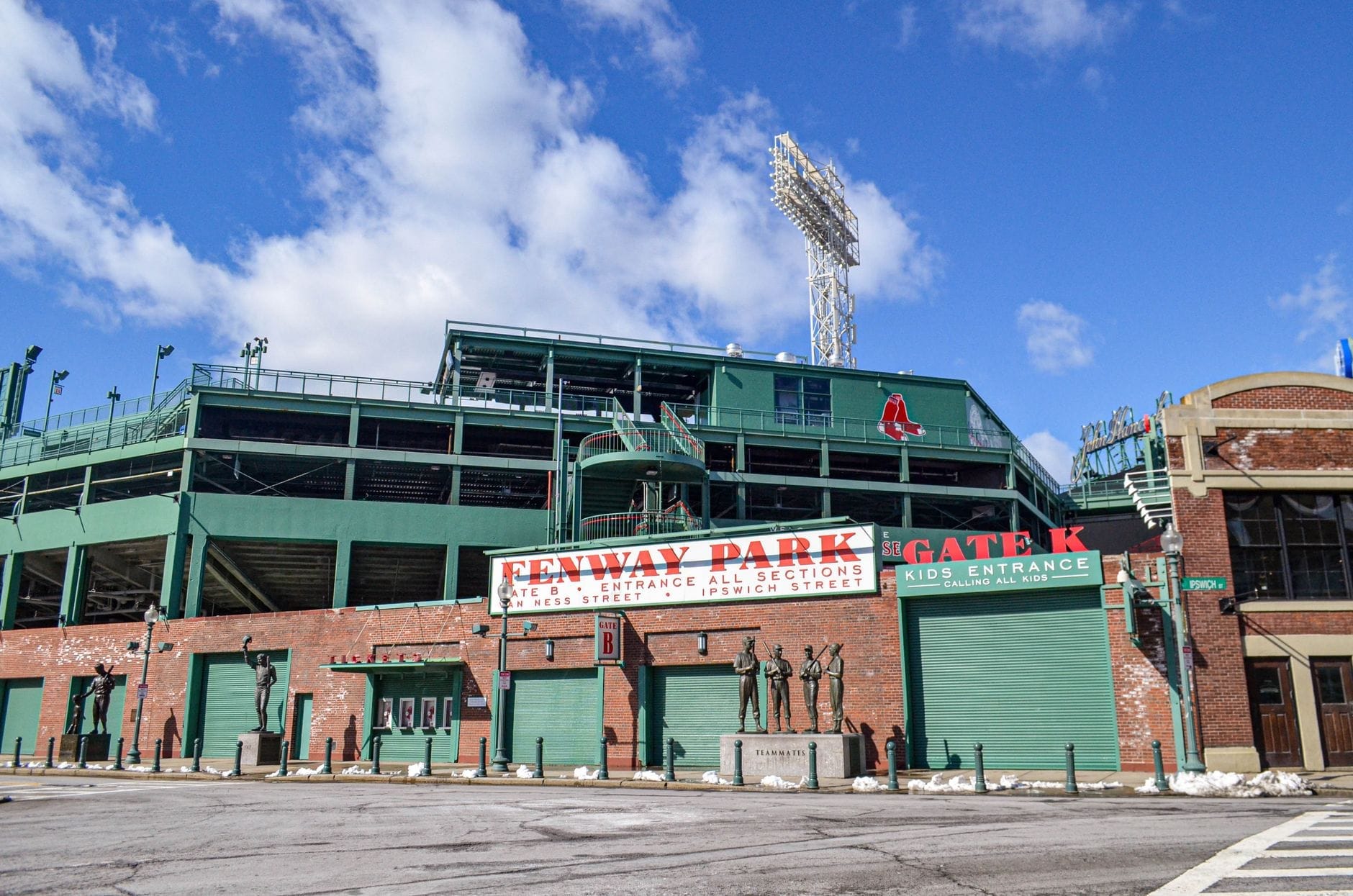
What Fenway Park Actually Is
Fenway Park is the oldest active ballpark in Major League Baseball, having opened on April 20, 1912. It sits at 4 Jersey Street in Boston's Fenway-Kenmore neighborhood, surrounded by bars, restaurants, and the kind of pre-game sidewalk energy that builds from mid-afternoon onward on Red Sox home dates. The park was added to the U.S. National Register of Historic Places in 2012, cementing its status not just as a sports venue but as a piece of American architectural heritage.
The numbers alone tell part of the story: seating for 37,305 during day games and 37,755 during night games, a left-field line of 310 feet, and the Green Monster, the iconic left-field wall standing 37 feet tall. But the numbers miss the texture of the place: the asymmetric field layout forced by the original 1912 land constraints, the narrow concourses that press fans into the open air of the grandstand, and the way the smell of grilled sausage and fresh-cut grass mixes on a warm April afternoon.
💡 Local tip
Tour hours typically start at 9:00 a.m. daily, but schedules shift around game days and special events. Always verify your specific date on the Red Sox official site before heading over.
Visiting Without a Game Ticket: The Ballpark Tours
Tours depart from the souvenir store on Jersey Street and run through areas most fans never access during games: the press box, the manual scoreboard inside the Green Monster, the warning track along the outfield, and the Red Sox dugout. The guided walk takes roughly one hour depending on the tour type and group size. Morning tours, before the midday tourist rush, tend to feel unhurried, with guides who have time to field questions and share detail that gets compressed when groups grow.
Premium and specialty tours, including some that offer access to suites or roof-deck areas, are available at higher price points. The base public tour gives a solid orientation to the park's layout and history. If your visit falls on a game day, tour access is typically cut off a few hours before first pitch, so plan morning tours for days when Boston is playing at home.
For visitors building a full Fenway-Kenmore itinerary, the park pairs naturally with a stop at the Museum of Fine Arts Boston, which is a short walk south, or the Isabella Stewart Gardner Museum about ten minutes on foot.
Tickets & tours
Hand-picked options from our booking partner. Prices are indicative; availability and final rates are confirmed when you complete your booking.
Boston Summer Night Trolley Tour and River Cruise
From 27 €Instant confirmationFree cancellationLEGOLAND Discovery Center Boston tickets
From 26 €Instant confirmationFree cancellationGhosts and Gravestones tour of Boston
From 39 €Instant confirmationFree cancellationBest of Boston tour
From 182 €Instant confirmationFree cancellation
The Green Monster: More Than a Wall
The Green Monster is the most recognized feature of Fenway Park, a 37-foot-tall left-field wall running 231 feet along the foul line. It exists because when the park was originally built in 1912, the left-field boundary abutted Lansdowne Street. Rather than lose home run territory, the design simply built upward. The original wall was wooden; the current structure, clad in metal panels painted green, dates from a 1976 renovation. What most visitors notice on a tour is how much the Monster changes the geometry of the entire outfield, forcing outfielders into positioning adjustments that apply nowhere else in baseball.
Inside the wall is a hand-operated scoreboard, still used during games to post line scores. Fenway is one of the last parks in the major leagues where a manual in-wall scoreboard remains in active use. On tours, the interior walkway behind the scoreboard is one of the highlights: a narrow, low-ceilinged passage where you can see the slots where metal plates are changed by hand and read the signatures and dates scratched into the paint by players and staff over decades.
ℹ️ Good to know
Green Monster seats sit atop the wall itself and offer an unusual perspective: you're looking down at left field rather than across it. They are popular and sell out quickly for marquee matchups. Check the Red Sox ticketing site early if this is a priority.
Attending a Game: What to Expect
A Red Sox home game at Fenway Park is a different experience from a tour. Jersey Street is restricted to vehicles on game days before first pitch, and the surrounding blocks fill with fans, food vendors, and the sustained noise of a crowd working itself up. The gates typically open 90 minutes before first pitch, and arriving early is worthwhile: the batting practice period lets you watch players up close from the lower grandstand seats, and the concourses are manageable before the rush.
Seats vary considerably in what they offer. The lower bowl behind home plate provides the traditional sightlines most associated with Fenway. Bleacher seats in right and center field are less expensive and more exposed to afternoon sun and wind. The roof deck boxes along the first and third base lines offer reasonable views with a slightly elevated angle. Whatever section you're in, the park's compact size means the farthest seat is closer to the field than in most modern stadiums built since the 1990s.
Concession options have expanded significantly since the early 2000s renovations. In addition to standard ballpark food, vendors throughout the concourses sell regional items. Fenway Franks remain the cultural baseline. The park is also cashless at most points of sale, so a card or mobile payment method is necessary.
⚠️ What to skip
Fenway's older construction means some seats have partial or obstructed views due to support columns. The Red Sox ticketing site flags these; read seat descriptions carefully before purchasing. Row 1 of some sections sits very close to the field but may have a railing partially in the sightline.
Getting There and When to Arrive
The MBTA Green Line is by far the most reliable way to reach Fenway Park. Kenmore Station, served by the B, C, and D branches, puts you about seven minutes on foot from the main entrance. On game days, trains fill quickly after the final out and the wait on the platform can stretch to 20 minutes or more. Some visitors choose to walk the mile or so back toward Back Bay to catch the Orange or Red Line from a less congested transfer point. Uber and Lyft are available but surge pricing before games makes them a poor value; traffic congestion in the neighborhood means drive times are unpredictable.
Parking near Fenway is handled through private lots in the surrounding blocks, none of which are managed by the Red Sox directly. Lots fill early and prices spike on game days. Driving is only practical if you arrive at least two hours before first pitch or if you're visiting for a morning tour on a non-game weekday.
If you're planning to explore more of the neighborhood on foot, the Fenway-Kenmore area connects directly to the Emerald Necklace park system, including the Back Bay Fens. The Fenway-Kenmore neighborhood also has one of the denser concentrations of pre-game dining options in the city.
History and Why It Matters Beyond Baseball
Fenway Park opened in 1912, less than a week after the Titanic sank, during a period when baseball stadiums were transitioning from wood to steel-and-concrete construction. The park was rebuilt in 1934 after fire damage and has been renovated incrementally through the decades, with the most significant modern additions coming after 2002 when the Red Sox ownership group began adding seating and improving infrastructure, restoring infrastructure, and improving accessibility rather than pursuing a new stadium. That decision to preserve rather than replace is now regarded as one of the more consequential choices in American sports venue history.
The park's listing on the National Register of Historic Places in 2012 was not automatic; it required documentation of architectural and cultural significance. The asymmetric layout, the manually operated scoreboard, the specific dimensions of the Green Monster, and the surviving sections of original steel framing all contributed to the designation. For visitors with an interest in 20th-century American architecture or urban history, Fenway rewards close attention to its physical fabric in a way that newer stadiums simply cannot.
Boston's depth of historic sites means Fenway fits into a broader conversation about the city's layered past. Visitors interested in that context should consider following the Freedom Trail on a separate day or exploring the Boston history guide to understand how sports culture connects to the city's identity.
Practical Notes: Weather, Photography, and Accessibility
Boston's baseball season runs April through late September or October for playoff teams. April and early May games can be cold: temperatures in the low 40s Fahrenheit are common at night, and Fenway's open-air design means the wind off the outfield is noticeable. Bring an extra layer for any evening game before Memorial Day or after Labor Day. July and August games are warm, sometimes humid, and afternoon sun falls directly on the first-base side lower grandstand.
Photography is permitted with personal cameras during tours and games. Long lenses are the most useful for capturing field-level action from the upper stands. On tours, the dugout and warning track sections are photographed well with a wide-angle or standard lens; the scoreboard interior is dimly lit and benefits from a camera that handles low light. Tripods are generally not permitted inside the park.
Accessibility at Fenway has improved considerably with the post-2002 renovations. Elevators provide access to multiple levels, ramps connect seating areas, and accessible seating is available throughout the bowl. Assistive listening devices, wheelchair escorts, and service animal accommodations are all available; details are listed on the Red Sox accessibility information page. Accessible parking in nearby lots is limited and should be arranged in advance.
Who Might Not Enjoy This
Visitors with no interest in baseball who take a tour may find it absorbing or may find it slow, depending on their tolerance for sports history detail. The tours are narrated primarily through a baseball lens; the architectural and historical angles are present but secondary. Travelers with significant mobility limitations should review the accessibility page carefully before booking, as some tour routes involve stairs or areas that are difficult to navigate. On game days, the Kenmore area becomes quite crowded, loud, and slow-moving; those sensitive to dense crowds should plan a tour visit on a non-game weekday morning instead.
Insider Tips
- Morning tours on weekday non-game days are the least crowded. Groups are smaller, guides move at a slower pace, and you'll likely get to spend more time in the dugout and on the warning track without being rushed.
- If you want Green Monster seats, search the Red Sox ticketing site in the weeks before the game rather than months out. Single seats in the Monster section sometimes become available as closer ticket buyers relist pairs they cannot fill.
- The Cask 'n Flagon bar directly across Lansdowne Street from the Green Monster has been a pre-game institution for decades. Go early: by two hours before first pitch, the line outside can be 30 minutes long.
- Seat numbers in the grandstand run in a non-intuitive direction compared to most venues. Check a seat map carefully before buying; odd and even numbers are split across sections in a way that surprises people expecting standard left-to-right numbering.
- For the best natural light photography of the exterior facade and Green Monster from street level, the corner of Lansdowne Street and Brookline Avenue in mid-morning gives you the cleanest angle with the light behind you.
Who Is Fenway Park For?
- Baseball fans visiting Boston who want to experience a historic park on their bucket list
- Architecture and urban history enthusiasts interested in early 20th-century stadium design
- Families with kids old enough to follow a game (roughly ages 7 and up)
- First-time Boston visitors who want to understand what makes the city's sports culture distinct
- Travelers on a long weekend who want a full-evening experience with a clear narrative arc
Nearby Attractions
Other things to see while in Fenway–Kenmore:
- First Church of Christ, Scientist (Mother Church)
The First Church of Christ, Scientist — known as The Mother Church — anchors a 14-acre urban plaza in Boston's Fenway-Kenmore district, offering a rare combination of Romanesque Revival and Greek Revival with Byzantine influences architecture, free public access, and one of the city's most serene open spaces. Few visitors know it exists, which is precisely why it's worth your time.
- Isabella Stewart Gardner Museum
The Isabella Stewart Gardner Museum is not a conventional art institution. Built in the style of a 15th-century Venetian palazzo around a flower-filled courtyard, it houses one of America's most personal and unconventional private art collections, assembled by a Boston socialite whose will dictated that nothing could ever be moved, sold, or changed.
- Museum of Fine Arts, Boston
The Museum of Fine Arts, Boston is one of the largest and most encyclopedic art museums in the United States, with nearly 500,000 works spanning ancient Egypt to contemporary America. Housed in a landmark Beaux-Arts building in the Fenway-Kenmore neighborhood, it rewards first-time visitors and regulars alike with collections that take days to fully absorb.
- Symphony Hall
Opened in 1900 and designated a National Historic Landmark in 1999, Boston's Symphony Hall is one of the finest concert venues in the world. Home to the Boston Symphony Orchestra and the Boston Pops, the hall rewards visitors with extraordinary sound, gilded Neoclassical architecture, and a program calendar that spans orchestral premieres to holiday spectaculars.