Faneuil Hall Marketplace: Boston's Historic Market Hub
Faneuil Hall Marketplace occupies four connected historic buildings in downtown Boston, anchored by the 1742 Faneuil Hall and stretching across the Quincy Market colonnade. Free to enter and open daily, it serves as both a working food and shopping destination and one of the most significant civic sites in American history.
Quick Facts
- Location
- 1 Faneuil Hall Square, Downtown Boston, MA 02109
- Getting There
- State St (Blue/Orange), Haymarket (Green/Orange), Government Center (Blue/Green via the Government Center–Bowdoin connector) – all under 5-minute walk
- Time Needed
- 1–3 hours depending on shopping and dining
- Cost
- Free to enter the marketplace and historic Faneuil Hall; individual vendors vary
- Best for
- History-minded travelers, families, solo walkers, food lovers on a tight schedule
- Official website
- faneuilhallmarketplace.com
What Faneuil Hall Marketplace Actually Is
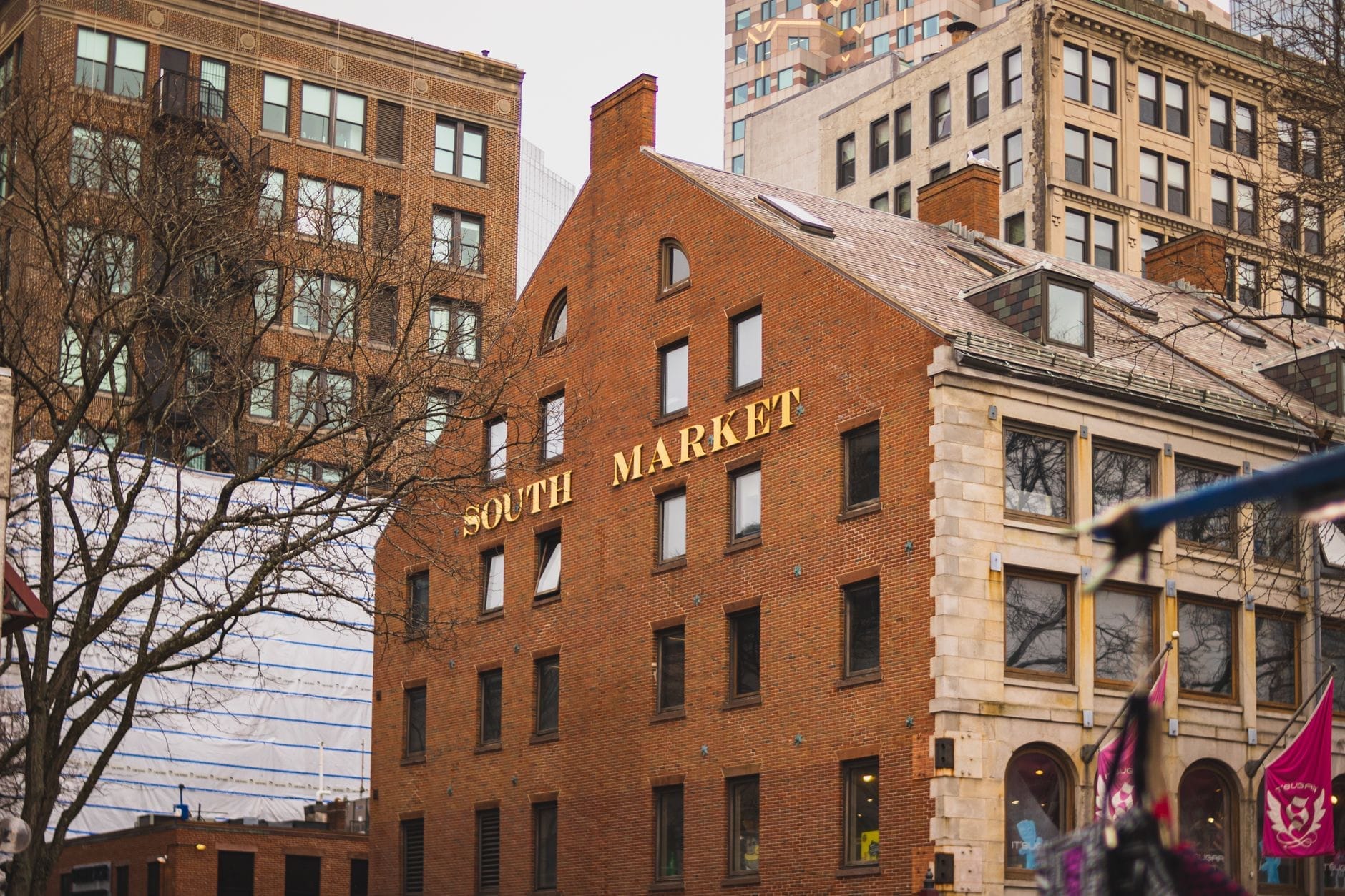
Faneuil Hall Marketplace is not a single building. It is a complex of four interconnected structures spanning a full city block in downtown Boston: Faneuil Hall itself, Quincy Market at the center, and the North Market and South Market buildings flanking it on either side. Together they form a pedestrian-friendly district where colonial-era brick meets chain restaurants, local food stalls, street performers, and one of the most storied meeting halls in the United States.
The site sits squarely on Boston's Freedom Trail, which makes it a near-mandatory stop for anyone walking the historic route through downtown Boston. But Faneuil Hall Marketplace is easy to reduce to a tourist cliché if you approach it without context. Understanding what the buildings were, what happened inside them, and how the complex was reinvented in the late 20th century changes the experience considerably.
💡 Local tip
The historic Faneuil Hall building and its second-floor Great Hall are free to enter and managed by the National Park Service. A ranger is typically on-site to answer questions. This is often missed by visitors who assume the hall is just a backdrop for the marketplace.
A Brief History Worth Knowing Before You Arrive
Faneuil Hall opened in 1742, funded by Boston merchant Peter Faneuil as a combined marketplace and public meeting room. From the beginning it served two purposes: ground-floor commerce and an upper-hall civic forum. In the years leading up to the American Revolution, the hall became a gathering place for opposition to British taxation policies, including protests against the Sugar Act and Stamp Act. Samuel Adams and other colonial leaders used the space to organize resistance, which is why the building earned the nickname the 'Cradle of Liberty.' That label has stuck across nearly three centuries.
The broader marketplace complex was a later addition. The granite Quincy Market building, completed in 1826, was commissioned by Mayor Josiah Quincy to relieve overcrowding at Faneuil Hall and provide a formal food market. Both buildings fell into significant disrepair through the mid-20th century. The modern festival marketplace concept, developed by the Rouse Company, reopened the complex in 1976 and 1978 as a retail and dining destination. It was one of the first major urban revitalization projects of its kind in the United States, and its commercial formula was later replicated in cities across the country. For a deeper look at Boston's revolutionary past, the Boston history guide covers the full arc from colonial settlement to the present.
Tickets & tours
Hand-picked options from our booking partner. Prices are indicative; availability and final rates are confirmed when you complete your booking.
Boston Summer Night Trolley Tour and River Cruise
From 27 €Instant confirmationFree cancellationLEGOLAND Discovery Center Boston tickets
From 26 €Instant confirmationFree cancellationGhosts and Gravestones tour of Boston
From 39 €Instant confirmationFree cancellationBest of Boston tour
From 182 €Instant confirmationFree cancellation
What to Expect When You Visit: Building by Building
Faneuil Hall
The hall itself is the oldest and most significant structure. The ground floor once housed market stalls and now contains a gift shop and National Park Service visitor area. The second-floor Great Hall is where the historic public meetings took place. It is a formal, high-ceilinged room with a gallery and portraits of major historical figures. The scale is smaller than many visitors expect, which actually heightens the sense of what it meant when hundreds of colonists crowded in to debate their future. The acoustics are poor by modern standards but the proportions feel civic and purposeful.
A grasshopper weathervane has topped the building since 1742. It is a Boston landmark in its own right, reportedly used during World War II as a challenge question to identify enemy spies, since every genuine Bostonian was assumed to know it. The fourth floor houses a museum dedicated to the Ancient and Honorable Artillery Company of Massachusetts, the oldest chartered military company in the Western Hemisphere. Hours for this floor differ from the main hall, so check separately if that interests you.
Quincy Market
Quincy Market is the long granite hall running west to east, dominated by a central rotunda. The interior is lined with food stalls offering everything from clam chowder in a bread bowl to cannoli, lobster rolls, BBQ, and international fare. The smell when you enter from Congress Street is immediate and unmistakable: popcorn, roasting nuts, and the faint sweetness of chocolate vendors. It is loud, well-lit, and operates like a food hall. Seating is scattered through the rotunda and along the colonnade outside.
Midday on a weekend is the most congested time. The rotunda can feel claustrophobic between noon and 2pm in summer. If you want to eat here without the press of the crowd, arrive before 11am or after 3pm. The food quality ranges from decent to unremarkable depending on the stall. The clam chowder is reliable and the cannoli from Mike's or Modern (both have outposts here) is as good as anywhere in the city.
North and South Market Buildings
These flanking granite buildings house a mix of national retail chains, souvenir shops, and a few locally oriented outfits. The range is broad: you will find recognizable clothing brands alongside Boston sports merchandise and novelty items. Neither building warrants significant time unless you are specifically shopping. The cobblestone plaza between the buildings is where street performers typically set up, especially from late spring through early fall. The performers are unpermitted and self-selected, ranging from skilled acrobats to modest musicians. The outdoor atmosphere in this corridor is often the most pleasant part of the marketplace on a warm afternoon.
How the Experience Changes by Time of Day
Early morning, roughly 8 to 10am, is the quietest window. The marketplace is not yet open to shoppers but the outdoor plazas are accessible and the surrounding architecture is clearest without crowds. This is the best time for photographs of Faneuil Hall itself and the Quincy Market facade. The light from the east catches the granite well in morning hours.
Late morning through mid-afternoon is the peak period, especially on weekends and during summer. Street performers draw significant crowds between buildings. The Quincy Market food hall is at its most congested. The outdoor seating fills quickly. If you have limited patience for tourist density, plan your visit for a weekday or arrive early.
Evening visits have a different character. The outdoor plazas are lit and the crowd shifts from tour groups and families toward locals and young adults. Some street performers continue into the evening. Many marketplace shops and food vendors close earlier on Sundays (often around 7pm) than on weekdays and Saturdays (often around 9pm), but hours vary by business so check current listings before a late arrival.
⚠️ What to skip
Holiday periods, particularly the week between Christmas and New Year's, bring very high foot traffic to Faneuil Hall Marketplace. The complex is lit for the season and the crowds can be intense. Factor in significantly more time if visiting during major holidays.
Getting There and Getting Around
The marketplace is one of the most transit-accessible sites in Boston. The State Street station on the Orange and Blue Lines is a two-minute walk. Haymarket station on the Green and Orange Lines is about the same distance from the north side. Government Center on the Blue and Green Lines is roughly a five-minute walk. Any of these work. If you are walking from the waterfront or from the North End, the approach along Congress Street brings you directly to the front of Faneuil Hall.
Driving is not practical. There is no dedicated parking at the complex and the surrounding streets have limited options. The MBTA is the most sensible approach for most visitors. For a full overview of moving around the city, the getting around Boston guide covers subway, bus, and walking routes in detail.
Accessibility at Faneuil Hall itself is handled via a ramp and elevator on the south side of the building. The National Park Service lists the site as wheelchair accessible with restrooms available. The outdoor plazas are paved with a mix of brick and cobblestone. Cobblestone sections between buildings can be uneven and are difficult for wheelchairs or strollers. The main Quincy Market interior is flat and fully accessible.
Who This Is For — and Who Should Skip It
Faneuil Hall Marketplace is worth visiting for the historic hall and to understand where the wider district connects to the city's revolutionary history. The combination of free entry, central location, and the genuine significance of the Great Hall makes it a reasonable stop on any first visit to Boston.
However, the commercial marketplace around it is, frankly, unremarkable as a shopping or dining destination. Most of the retail is available in any American city. The food in Quincy Market is convenient but not distinctive. If you come expecting a sophisticated local food market, you will be disappointed. The Haymarket outdoor produce stalls one block north on Blackstone Street are more interesting as a local institution. The marketplace succeeds as a public space and historic site rather than as a destination for serious shopping or food.
Travelers seeking quieter, less-visited historic experiences should also consider the Old South Meeting House or the Granary Burying Ground, both of which offer comparable historical depth with considerably fewer crowds. If this is your second or third visit to Boston and the marketplace's commercial side holds no appeal, it is entirely reasonable to skip it and focus time elsewhere.
Families with young children generally find the outdoor plaza, street performers, and quick food options at Quincy Market well-suited to their needs. The open space allows children to move around while adults eat. The performers are reliable entertainment for most ages. For this reason, the marketplace works well as a practical midday break during a longer walking day rather than as a standalone destination.
Insider Tips
- The second-floor Great Hall in Faneuil Hall is free and often uncrowded even when the marketplace outside is packed. Walk past the ground-floor gift shop and take the stairs. It takes 10 minutes and significantly changes how you understand the site.
- The cobblestone plaza between North and South Market runs roughly north-south and is where street performers set up. Arrive around 1pm on a summer weekend if you want to catch full audience-ready acts; most performers work the 1–4pm window.
- Haymarket, the outdoor produce and fish market one block north on Blackstone Street, operates on Fridays and Saturdays only. Prices are low and the atmosphere is entirely different from the tourist-facing marketplace. It is one of the few distinctly local recurring produce markets left in this part of the city.
- If you want a proper sit-down meal near the marketplace, walk two minutes north into the North End rather than eating inside Quincy Market. The price difference is modest but the quality gap is significant.
- Photography of Faneuil Hall is best from the small square directly in front of the hall, facing west toward Congress Street. The full facade is visible from here. The colonnade along Quincy Market photographs well in late afternoon light from the south side.
Who Is Faneuil Hall Marketplace For?
- First-time visitors to Boston who want to combine history and casual browsing in one stop
- Families needing a flexible midday anchor point with food options and open outdoor space
- Freedom Trail walkers for whom this is a mandatory and well-positioned stop on the route
- History enthusiasts who want to stand in the Great Hall where revolutionary-era debates took place
- Travelers on a tight schedule who need a central, free, and quickly digestible cultural stop
Nearby Attractions
Other things to see while in Downtown & Financial District:
- Boston Common
Founded in 1634, Boston Common is the oldest public park in the United States and the civic anchor of downtown Boston. Free to enter and open year-round, it serves as a gathering place for locals, a landmark on the Freedom Trail, and the starting point for exploring everything the city has to offer.
- Boston Harbor Whale Watching
The New England Aquarium Whale Watch presented by Boston Harbor City Cruises sends a high-speed catamaran from Long Wharf out to Stellwagen Bank National Marine Sanctuary, one of the most productive whale feeding grounds on the East Coast. With onboard aquarium naturalists and a whale-sighting guarantee, it is one of the few Boston experiences that delivers on its premise.
- Boston Public Market
Open daily from 8:00 AM to 8:00 PM and free to enter, Boston Public Market brings together more than 30 New England farmers, fishers, and food artisans in a year-round indoor market above Haymarket Station. It is the first public market in the United States to require that everything sold is produced in or originates from New England.
- Custom House Tower
Standing 496 feet above McKinley Square, the Custom House Tower was Boston's tallest building for about half a century until 1964. Today it operates as a Marriott Vacation Club property, and its free public observation deck tours remain a lesser-known opportunity for a panoramic view of the harbor and skyline.