Getting Around Boston: The Complete Transportation Guide
Boston is compact enough to walk between many of its most famous neighborhoods, but knowing how to use the MBTA subway, buses, ferries, and ride-hailing services will save you time and money. This guide covers every way to move around the city, from Logan Airport transfers to day-to-day transit passes.
Plan and book this trip
Tools from our partner Travelpayouts help you compare flights and hotels. If you book through them, we may earn a commission at no extra cost to you.
Flights
Hotels map
TL;DR
- The MBTA subway (called "the T") is the fastest and cheapest way to get around Boston, with fares starting at $2.40 per ride and a 7-day pass costing $22.50.
- Logan International Airport is only 3 miles from downtown: the Silver Line SL1 from the airport to South Station is free, and the Blue Line costs around $2.40 via CharlieCard. See the full Boston airport guide for more detail.
- The T does not run 24 hours. Last trains depart around 12:20-12:50 a.m. depending on the line, so plan late nights around taxis or ride-hailing.
- Boston's core neighborhoods are walkable. Beacon Hill, the North End, Downtown, and Back Bay are all within a 20-30 minute walk of each other.
- Driving in Boston is widely considered the worst option for visitors: parking is expensive and scarce, and the street layout is notoriously confusing. Save the car rental for day trips from Boston.
The MBTA Subway ("The T"): What You Need to Know
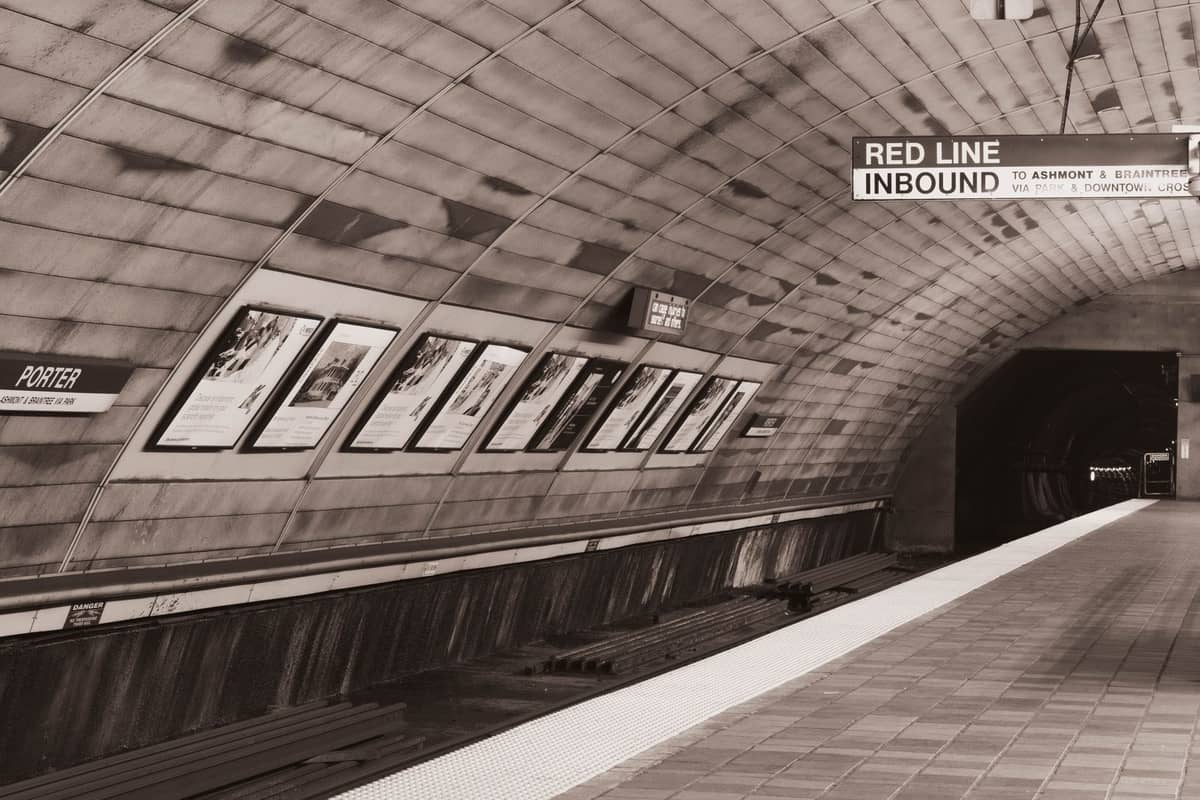
The Massachusetts Bay Transportation Authority operates what Bostonians simply call "the T" - one of the oldest subway systems in North America, dating back to 1897. It covers about 66 miles of track across four main color-coded rapid transit lines: Red, Orange, Blue, and Green. A fifth route, the Silver Line, appears on T maps but is actually a bus rapid transit service running on rubber-tire buses, not rail. That distinction matters practically: the Silver Line cannot substitute for the rail lines in terms of speed or reliability during congestion.
For most visitor itineraries, you will primarily use the Red Line (connecting Cambridge's Harvard Square and MIT through downtown to South Boston), the Green Line (Kenmore, Copley, Boylston, and the Museum of Fine Arts area), and the Orange Line (Back Bay, Chinatown, North Station). The Blue Line is most useful for reaching Logan Airport and the New England Aquarium waterfront area.
- Red Line Harvard/Cambridge through Park Street, Downtown Crossing, and South Station to Braintree or Ashmont. Essential for Cambridge.
- Green Line Five branches serving Back Bay, Kenmore/Fenway, Copley Square, and points west into Brookline and Newton. Can be slow in the surface sections.
- Orange Line North Station to Forest Hills via Back Bay and Chinatown. Fast and direct for the South End and Roxbury.
- Blue Line Wonderland (Revere Beach) to Bowdoin via Airport Station. Your main link to Logan Airport.
- Silver Line (BRT) Bus rapid transit connecting Logan Airport terminals to South Station and, separately, Chelsea. Free from the airport outbound to South Station.
⚠️ What to skip
The T does not run all night. Most lines operate from around 5-6 a.m. with last departures typically between 12:20 and 12:50 a.m. If you are heading out late for dinner, a concert at TD Garden, or a game at Fenway, plan to take an Uber or Lyft back rather than waiting for a train that will not come.
Fares, CharlieCards, and Transit Passes
Boston uses a contactless fare system built around the CharlieCard (a reloadable plastic smart card) and the CharlieTicket (a magnetic-stripe paper ticket). Always use a CharlieCard if you can: it gives you the best fares and works at every subway gate. Paper tickets and cash cost more per trip and add boarding time, especially on buses.
- Single subway ride (CharlieCard) $2.40 per trip, including one free transfer to a local bus, Silver Line, or connecting subway line within two hours.
- Local bus fare $1.70 with CharlieCard. Slightly higher with cash or CharlieTicket.
- 1-Day Pass $11 for unlimited subway and local bus rides. Worth it if you plan four or more subway trips in a day.
- 7-Day Pass $22.50 for unlimited subway and local bus. The best value for a week-long trip.
- Monthly Pass $90, covering subway and local bus. Only makes sense for stays longer than three weeks.
- Silver Line SL1 from Logan Airport Free in the outbound direction (airport to downtown). Inbound (downtown to airport) costs the standard fare.
💡 Local tip
Pick up a CharlieCard at any subway station staffed booth or at Logan Airport before you board the Silver Line. You can also get one at select retail locations. Load it with a multi-day pass right away to avoid fumbling with cash at turnstiles when you are carrying luggage.
Commuter Rail operates on a separate, zone-based fare system and is not covered by the standard subway/bus passes. If you are day-tripping to Salem, Concord, or Plymouth, you will pay a separate fare ranging from around $7 to $15 each way depending on the destination zone. Ferries are also separate, with MBTA harbor routes typically running a few dollars per crossing and private water taxis costing more.
Getting from Logan Airport to the City
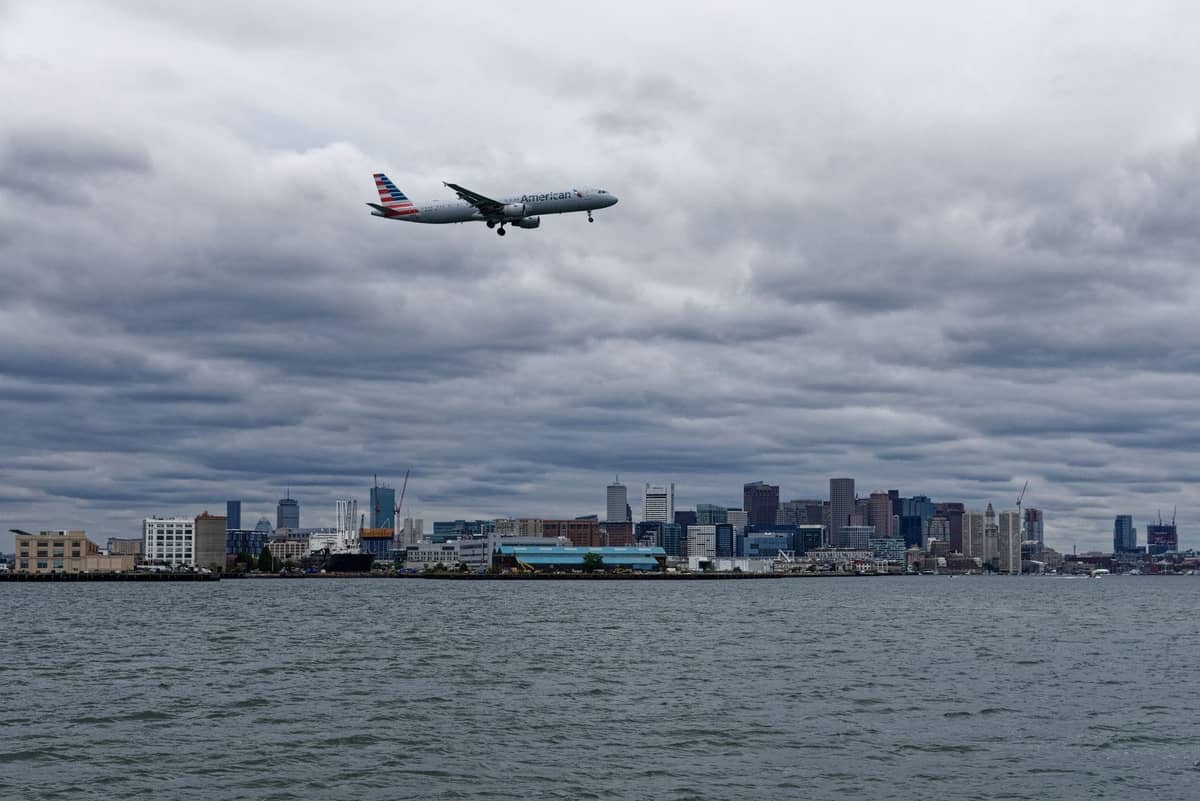
Logan International Airport (IATA: BOS) sits just 3 miles northeast of downtown Boston across the harbor, which makes it deceptively close on a map but variable in travel time due to Boston's notorious traffic. The airport is in East Boston, connected to the city by tunnel. On a good afternoon the drive takes 15 minutes; during a weekday evening rush it can stretch past 45 minutes. The good news: public transit options are fast, cheap, and well-signed from every terminal.
- Silver Line SL1 (free, fastest for most travelers) Free shuttle bus rapid transit from all terminals to South Station in around 20-30 minutes. Transfer to Red Line or commuter rail at South Station. No fare needed departing the airport.
- Blue Line (best for North Boston destinations) Free Massport shuttle buses (Routes 22, 28, 33) connect all terminals to Airport Station. From there, the Blue Line reaches Government Center and downtown in about 10-15 minutes. Standard $2.40 fare.
- Water taxi / ferry A free Massport shuttle connects terminals to the Logan dock. Private water taxis reach Long Wharf downtown in about 7 minutes, making this the fastest option in traffic. Fares vary by operator; expect roughly $15-25 each way.
- Taxi Metered taxis queue at designated stands outside each terminal. Typical fares to downtown range from approximately $25-40 depending on destination and traffic. A flat-rate tunnel toll applies.
- Uber / Lyft Pick up from designated rideshare zones at each terminal. Fares are often comparable to taxis but can surge during busy arrival waves. Check the in-app estimate before committing.
✨ Pro tip
Arriving with a lot of luggage late at night? Skip the Silver Line (which involves stairs and tight buses) and take the water taxi if the timing works, or a rideshare directly to your hotel. The Silver Line is ideal for solo travelers and small bags, but less practical with large suitcases during crowded departure times.
Walking: Boston's Most Underrated Transport Option
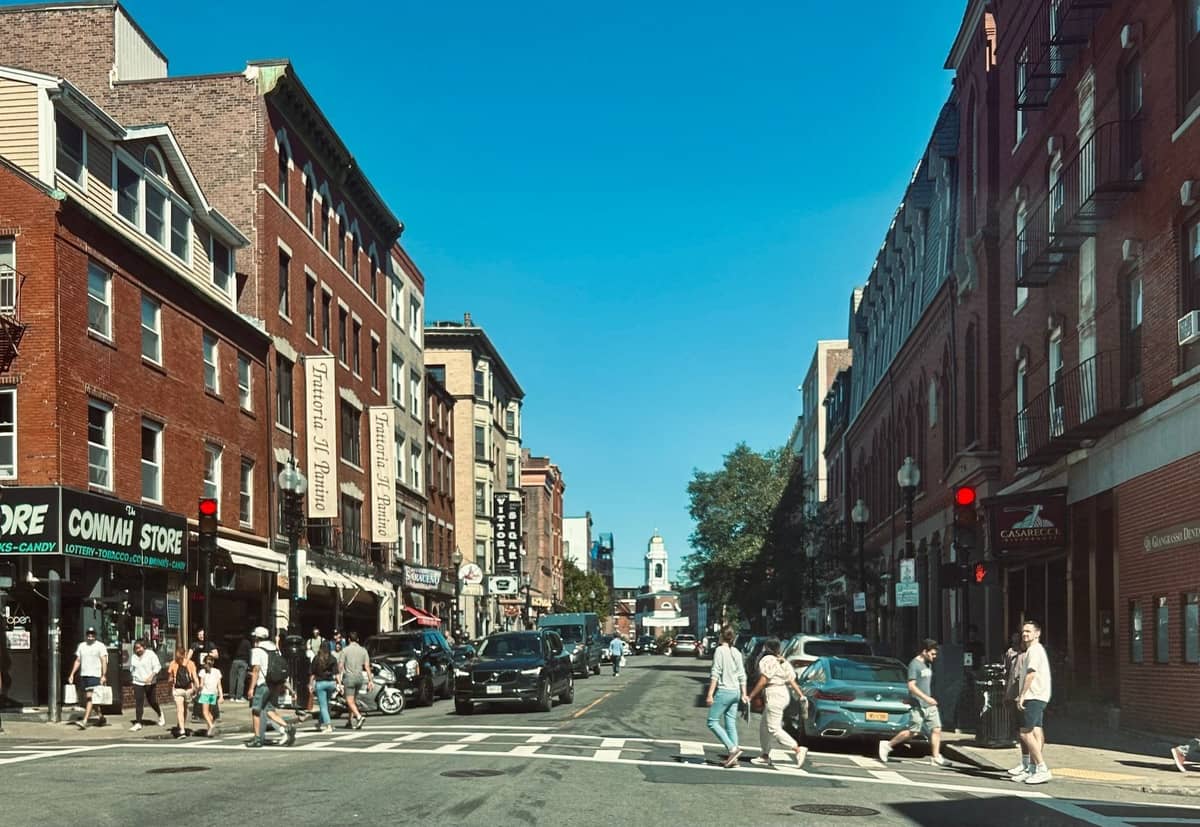
Boston's city proper covers just 48.4 square miles, and its most visited areas are even more compact. The entire Freedom Trail is a 2.5-mile walking route connecting 16 historic sites from the Boston Common to the Charlestown Navy Yard. That walk represents a large portion of what most visitors want to see, and it is entirely doable on foot without using the T at all.
The walk from Beacon Hill down to the North End takes about 20 minutes at a relaxed pace. Back Bay to the South End is under 15 minutes. The Boston Public Garden and Boston Common sit at the geographic heart of the walkable core. For most fair-weather days between May and October, walking between neighborhoods is not just feasible - it is the best way to actually see the city.
The exception is winter. Boston's climate is cold from December through February, with average January highs around 36°F (2°C) and wind chill making exposed streets feel much colder. Ice on brick sidewalks in Beacon Hill and the North End is a real hazard. In January and February, the T becomes significantly more appealing. Summer afternoons can also push into the low 80s°F with high humidity, making long walks less comfortable between noon and 3 p.m.
Biking, Ride-Hailing, and Other Ways to Move Around
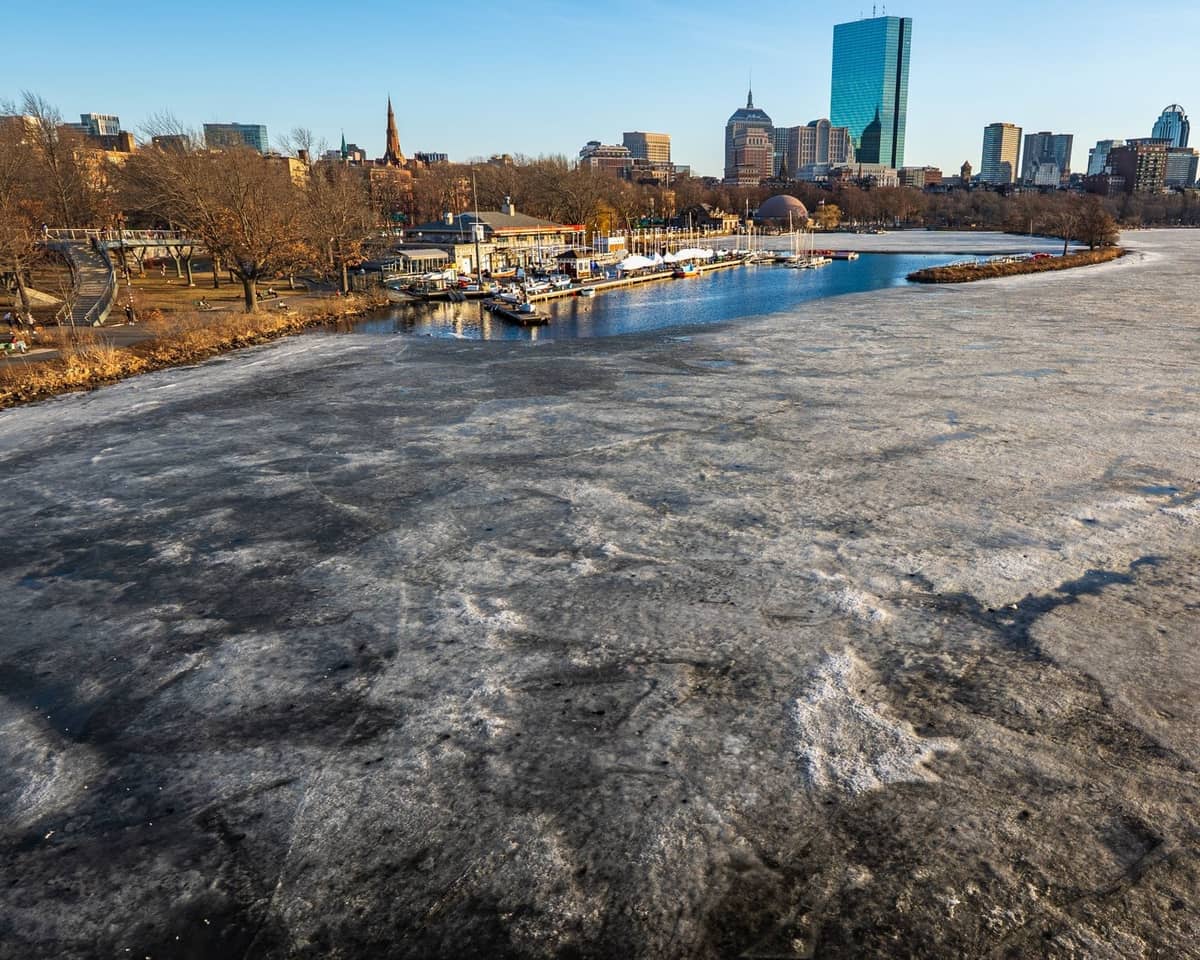
Bluebikes is Boston's public bike-share system, with hundreds of stations across Boston, Cambridge, Somerville, Brookline, and nearby cities. Single rides, day passes, and monthly memberships are available through the Bluebikes app or at station kiosks. Biking works well along the Charles River Esplanade, in the Seaport District, and through the Back Bay grid streets, but be cautious on narrow historic streets in Beacon Hill and the North End where lanes disappear and car traffic is unpredictable.
Uber and Lyft both operate actively in Boston and are generally reliable for late-night trips, airport runs, and reaching neighborhoods with weaker T coverage like the Seaport District or outer Dorchester. Traditional metered taxis are also available citywide, regulated by the City of Boston. Tipping 15-20% is standard practice for both.
Do not rent a car for exploring Boston itself. Parking in downtown and Back Bay routinely runs $30-50 per day in garages, street parking is extremely limited and strictly enforced, and Boston's street layout, a legacy of colonial cow paths rather than any grid planning, confuses even experienced urban drivers. If you want to visit the North Shore, Cape Cod, or other regional destinations, pick up a rental from Logan Airport at the end of your city days rather than driving into Boston from the start.
ℹ️ Good to know
Boston's ferries are an underused option for visitors. The MBTA Inner Harbor Ferry connects Long Wharf to the Charlestown Navy Yard in about 10 minutes and is not covered by standard subway/bus passes and uses separate ferry fares. It gives you a great view of the harbor and drops you steps from the USS Constitution and Bunker Hill Monument. Private ferries also run to the Boston Harbor Islands seasonally from Long Wharf.
Navigating Boston's Neighborhoods: Which Transit Line Serves What
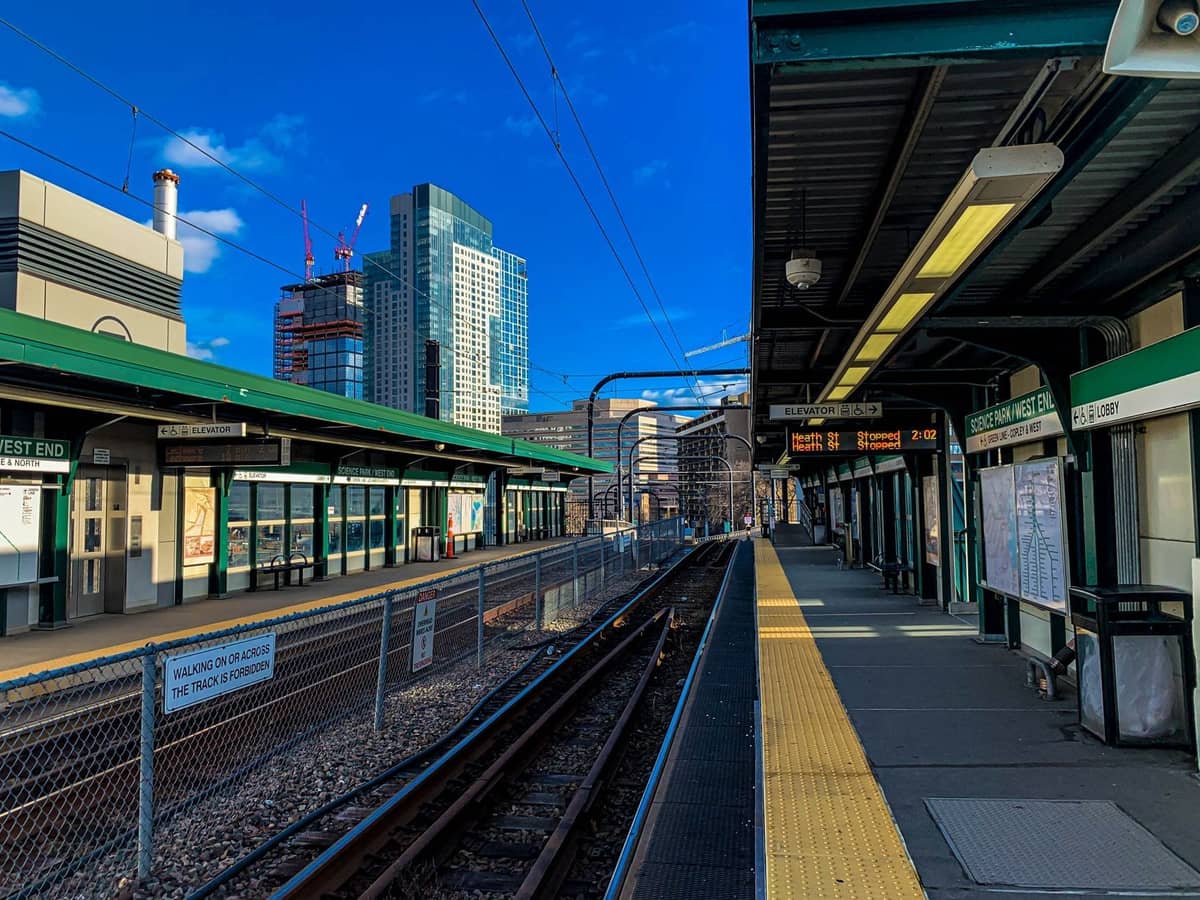
Understanding which T line reaches which neighborhood saves significant time. Cambridge (Harvard and MIT areas) is best reached via the Red Line from Park Street or Downtown Crossing. Fenway-Kenmore for Fenway Park and the Museum of Fine Arts uses the Green Line's B, C, or D branches. Charlestown is most scenic via the MBTA ferry from Long Wharf, though you can also walk across the bridge from the North End in about 20 minutes.
The Seaport District and South Boston Waterfront have limited direct T access: the Silver Line stops at World Trade Center and Courthouse stations, which cover the convention center area. Beyond that, walking or a rideshare is often faster. For Downtown Boston and Government Center, nearly every line converges, so you are well covered from almost any direction.
One important seasonal note: the Green Line branches (particularly the B branch through Brighton and C branch through Coolidge Corner) operate at-grade on surface streets for much of their routes and are significantly slower than the underground sections. During Red Sox home games, the Green Line toward Kenmore becomes extremely crowded from around 90 minutes before first pitch. If you are heading to Fenway, arriving early or walking from Back Bay station (about a 10-minute walk along Boylston Street) beats the sardine-can experience.
FAQ
How do I get from Logan Airport to downtown Boston cheaply?
The cheapest option is the Silver Line SL1, which runs free from all Logan terminals to South Station in downtown Boston. Take the free Massport shuttle bus from your arrival terminal to the Silver Line stop, board the bus, and ride to South Station where you can connect to the Red Line or walk to nearby hotels. The trip takes around 20-30 minutes without traffic.
Is the MBTA CharlieCard worth getting for a short trip?
Yes, even for a two or three-day visit. The CharlieCard gives you the lowest per-ride fare ($2.40 versus more with cash), and you can load a 1-Day ($11) or 7-Day ($22.50) pass onto it for unlimited rides. Pick one up at any staffed station booth.
Can I walk between Boston's main tourist neighborhoods?
For most of them, yes. The Freedom Trail links the key historic sites on a 2.5-mile route entirely on foot. Beacon Hill, the North End, Downtown, Faneuil Hall, and the waterfront are all within a comfortable 20-30 minute walk of each other. Back Bay and Fenway are a short T ride or 30-45 minute walk from the historic core.
Does the T run late enough for evening plans?
The T runs until roughly 12:20-12:50 a.m., with last trips varying by line and direction. This covers most restaurant dinners and early evening events, but not late-night bar crawls or events that end after midnight. For those, budget for Uber or Lyft, which are widely available across the city.
Is it worth renting a car to get around Boston?
Not for the city itself. Parking costs $30-50 per day downtown, traffic is heavy, and the street layout is quite difficult to navigate. Rent a car only if you are planning day trips outside the city to places like Salem, Concord, or Cape Cod. For everything within Boston, the T, walking, and ridesharing are more practical.