Boston Harbor Whale Watching: Humpbacks, Naturalists, and Open Atlantic
The New England Aquarium Whale Watch presented by Boston Harbor City Cruises sends a high-speed catamaran from Long Wharf out to Stellwagen Bank National Marine Sanctuary, one of the most productive whale feeding grounds on the East Coast. With onboard aquarium naturalists and a whale-sighting guarantee, it is one of the few Boston experiences that delivers on its premise.
Quick Facts
- Location
- Long Wharf, Downtown Boston, MA (near New England Aquarium)
- Getting There
- Aquarium Station, MBTA Blue Line (5-minute walk to departure pier)
- Time Needed
- 3 to 4 hours total including boarding and return
- Cost
- Ticket prices vary by date and passenger type; check cityexperiences.com for current USD pricing. Whale-sighting guarantee included.
- Best for
- Wildlife enthusiasts, families with older children, nature photographers, first-time Boston visitors
What Boston Harbor Whale Watching Actually Is
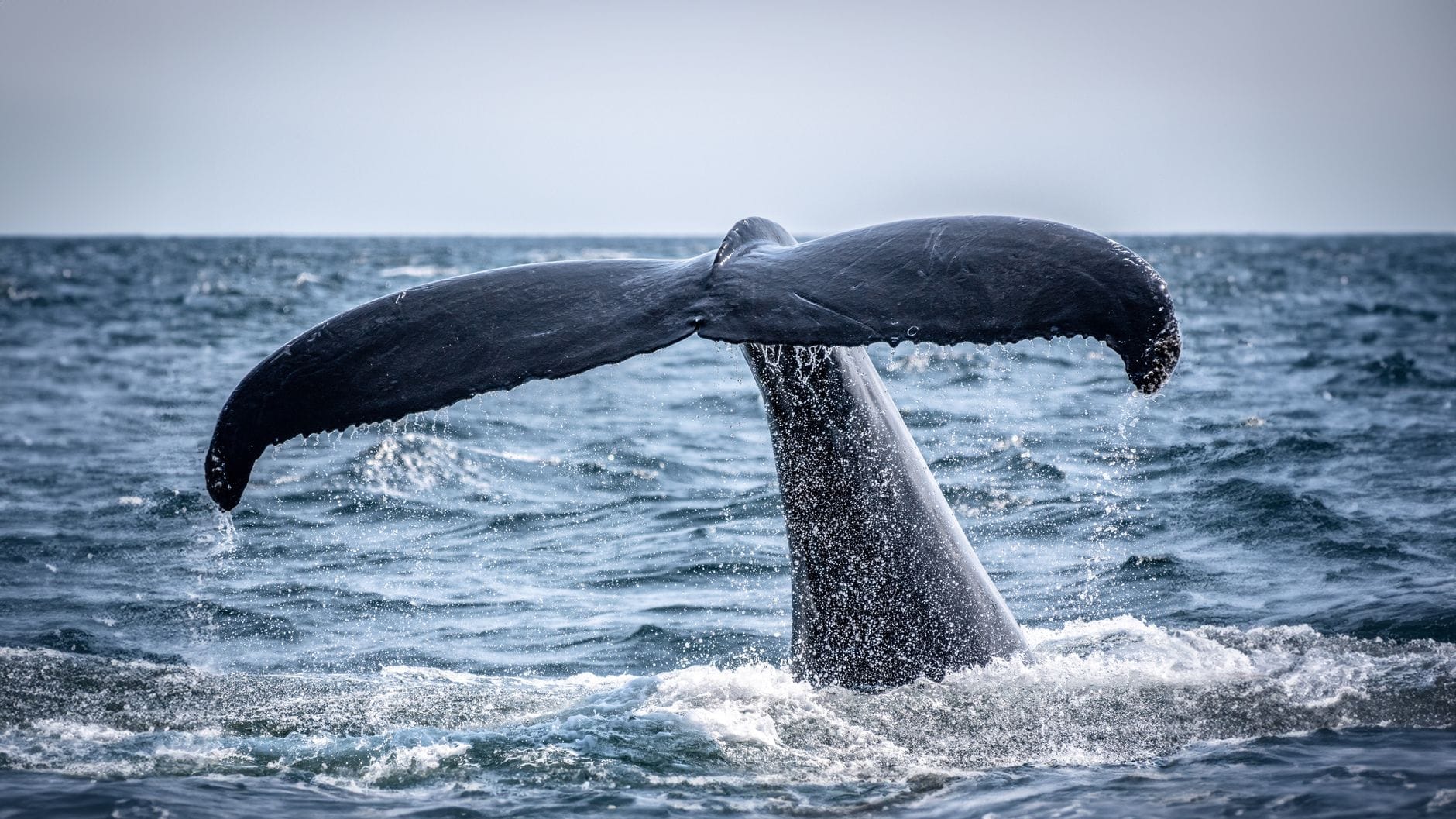
The New England Aquarium Whale Watch, operated in partnership with Boston Harbor City Cruises, is the flagship whale-watching experience departing from Long Wharf in downtown Boston. The cruise runs from roughly mid-May through October, and on each trip a high-speed catamaran carries passengers approximately 20 to 25 miles offshore to Stellwagen Bank National Marine Sanctuary, a federally protected marine feeding ground at the mouth of Massachusetts Bay.
Stellwagen Bank is not a random patch of ocean. It is a shallow underwater plateau where nutrient-rich cold water wells up from the depths, concentrating prey fish like sand lance and herring. That concentration of food draws humpback whales, finback whales, minke whales, Atlantic white-sided dolphins, and occasionally, the critically endangered North Atlantic right whale. The combination of proximity to a major city and reliably productive marine habitat is what makes this particular excursion worth the time.
ℹ️ Good to know
Every cruise is staffed by New England Aquarium naturalists, not generic tour guides. They identify individual whales by name using fluke and dorsal fin markings, explain feeding behaviors as they unfold, and answer questions on the water. This scientific layer is what separates the experience from a standard sightseeing boat.
The Journey Out: Harbor to Open Water
Departures from Long Wharf place you squarely in the heart of Boston's working waterfront. You board facing the New England Aquarium on your left and the downtown skyline behind you. As the catamaran pulls away from the dock, the first 20 minutes are spent crossing the inner harbor, past the historic wharves of the North End and through the traffic lanes used by Logan Airport ferries and cargo vessels. The water here smells of brine and diesel, and the chop is mild.
Once past the harbor islands, the city drops below the horizon and the ocean opens up. The catamaran is fast by whale-watch standards, cutting across Massachusetts Bay in roughly 75 to 90 minutes depending on sea conditions. Passengers who experience motion sickness should take medication before boarding. Wind speeds on the open water can be significantly higher than conditions on shore, even on a calm Boston day. Bring an extra layer regardless of the forecast. For more on how weather affects outdoor activities in the city, the Boston outdoor activities guide covers season-by-season planning in detail.
Tickets & tours
Hand-picked options from our booking partner. Prices are indicative; availability and final rates are confirmed when you complete your booking.
Boston Harbor Historic Sightseeing Cruise
From 38 €Instant confirmationHarborwalk and tea party self-guided audio tour in Boston
From 7 €Instant confirmationFree cancellationGuided tour of Boston revolutionary sites with harbour cruise
From 144 €Instant confirmationFree cancellationBoston Summer Night Trolley Tour and River Cruise
From 27 €Instant confirmationFree cancellation
At Stellwagen Bank: What You Will See and When
Whale Species and Behavior
Humpback whales are the star attraction and the most reliably sighted species on these cruises. They are acrobatic feeders, and watching a 40-ton animal execute a bubble-net feeding lunge 50 feet from the vessel is a disorienting experience. The boat cuts its engines when whales are nearby, and the ocean gets unexpectedly quiet. You hear exhalations before you see the animals half the time.
Finback whales, the second-largest animal on Earth, appear as long dark shadows surfacing with a low, forward-angled blow. They rarely breach but cruise close to the surface and are unmistakable in size. Minke whales are smaller, faster, and often spotted just long enough for one good look before they dive and vanish. Atlantic white-sided dolphins, if present, tend to ride the bow wave, which produces the kind of close encounter that photographs well even with a phone.
How Sightings Change Through the Season
Mid-May through June tends to produce sightings of feeding aggregations as whales arrive from their winter breeding grounds and prey fish are abundant near the surface. July and August bring the most consistent activity and the most favorable sea conditions, though the boats are also fuller. September and October offer a useful trade-off: crowds thin, the water is calmer on average than summer afternoons, and humpbacks are often feeding heavily before their southward migration. The season officially winds down in late October, when sightings become less predictable.
💡 Local tip
Morning departures tend to have calmer seas than afternoon trips, as summer wind picks up over the course of the day. If the schedule allows a choice, the first departure of the day is generally the smoother ride.
Practical Details: Getting There and What to Bring
Getting to Long Wharf
Long Wharf sits directly adjacent to the New England Aquarium in downtown Boston. The most direct route by public transit is the MBTA Blue Line to Aquarium Station, which puts you at the foot of the pier in under five minutes on foot. The Blue Line connects at Government Center and State Street with the Green and Orange Lines, making it accessible from most parts of the city. Tickets and schedules are available through the MBTA. For a broader breakdown of transit options across Boston, see the getting around Boston guide.
Long Wharf is also walkable from Faneuil Hall Marketplace, the North End waterfront, and the Rose Kennedy Greenway. Rideshares drop off on Atlantic Avenue, a 2-minute walk from the boarding area. Parking is available at nearby garages but not recommended for a half-day excursion given downtown Boston rates.
What to Bring
- Windproof outer layer: open ocean temperatures run 10 to 15 degrees cooler than downtown, even in summer
- Sunscreen and sunglasses: the deck glare at sea is intense and there is no shade on open water
- Motion sickness medication if needed: take it at least 30 to 60 minutes before departure, not once onboard
- Binoculars: the naturalists have them, but your own pair dramatically improves sightings at distance
- Camera with a fast shutter speed setting: whale behaviors happen quickly and without warning
- Cash or card for food and beverages sold onboard
The Naturalist Experience and What Makes It Different
Most whale-watch operators hire marine biology students or local captains with general knowledge. The New England Aquarium assigns trained naturalists who work with Stellwagen Bank data year-round and can often tell you which specific whale you are looking at by name. Humpbacks on Stellwagen are individually catalogued through a decades-long photo-identification database. When a naturalist says a whale is named Patches or Nile and explains it was born in a particular year, it changes the way you read the animal's behavior.
The naturalists also identify other species as they appear: seabirds, harbor porpoises, ocean sunfish, sea turtles. On a good day, Stellwagen Bank reads as a complete marine ecosystem rather than a single species show. This depth of commentary is the clearest differentiator between this cruise and generic harbor tours.
When This Is Worth It — and When It Is Not
Whale watching is wildlife, and wildlife does not guarantee cooperation. Even with a whale-sighting guarantee, a trip where the animals stay deep or distant is simply a long boat ride in cold wind. The guarantee covers your money with a voucher for another trip rather than a refund, so scheduling flexibility matters.
Rough sea conditions make the crossing uncomfortable, and the catamaran provides a harder ride than a displacement hull. If you are prone to seasickness and the sea state is above two feet, reassess before boarding. The operator publishes departure status updates; check the morning of your trip.
Travelers who are short on time or primarily interested in Boston's urban history may find a 3 to 4 hour excursion harder to justify against the city's onshore options. The Boston Harbor Islands offer a different kind of maritime day trip that is shorter and closer to shore. And if marine life is the priority but ocean crossings are not, the New England Aquarium is literally on the same pier.
⚠️ What to skip
Children under five typically struggle with the length of the crossing and the unpredictability of sightings. The experience is better suited to families with children who are old enough to sustain attention over several hours and understand that whale appearances cannot be scheduled.
Before and After the Cruise: Making a Full Day of It
Long Wharf sits at the edge of one of Boston's most walkable corridors. Before boarding, Faneuil Hall Marketplace is a 10-minute walk and a reasonable place to eat before a morning departure. The Rose Kennedy Greenway runs parallel to the waterfront and connects Long Wharf northward toward the North End and southward toward the Seaport District.
After the cruise, the Boston Harborwalk traces the water's edge from Long Wharf in both directions and gives a ground-level perspective on the harbor you just crossed. If the trip ran into the late afternoon, the harbor area changes tone noticeably as restaurant terraces along the Seaport fill up, making this a natural end to a full day on or near the water.
Insider Tips
- Book tickets in advance for summer weekends. The catamaran fills quickly in July and August, and last-minute tickets are often unavailable for popular departure times.
- The upper deck provides the widest viewing angles and best sightlines for photography, but it is also the most exposed to wind and spray. Dress accordingly before going up rather than realizing mid-crossing that your jacket is in your bag below.
- Ask the naturalist early in the trip which species have been sighted most frequently that week. They track real-time data and can give you a realistic sense of what to expect before you reach the bank.
- If you are considering combining the cruise with a New England Aquarium visit, do the cruise first. Aquarium exhibits land differently after spending three hours watching the same species in open water.
- The whale-sighting guarantee voucher is valid for a future trip in the same season. If you plan to be in Boston again, it retains real value. If this is a one-time visit, factor that limitation into your expectations before booking.
Who Is Boston Harbor Whale Watching For?
- Wildlife and nature enthusiasts who want a genuine open-ocean experience within reach of a major city
- Families with children aged 7 and older who can sustain interest over a half-day excursion
- Photographers looking for large marine mammal subjects in natural feeding conditions
- Travelers extending a visit to the New England Aquarium into a full waterfront day
- First-time Boston visitors who want to see the city from the water and understand its maritime geography
Nearby Attractions
Other things to see while in Downtown & Financial District:
- Boston Common
Founded in 1634, Boston Common is the oldest public park in the United States and the civic anchor of downtown Boston. Free to enter and open year-round, it serves as a gathering place for locals, a landmark on the Freedom Trail, and the starting point for exploring everything the city has to offer.
- Boston Public Market
Open daily from 8:00 AM to 8:00 PM and free to enter, Boston Public Market brings together more than 30 New England farmers, fishers, and food artisans in a year-round indoor market above Haymarket Station. It is the first public market in the United States to require that everything sold is produced in or originates from New England.
- Custom House Tower
Standing 496 feet above McKinley Square, the Custom House Tower was Boston's tallest building for about half a century until 1964. Today it operates as a Marriott Vacation Club property, and its free public observation deck tours remain a lesser-known opportunity for a panoramic view of the harbor and skyline.
- Faneuil Hall Marketplace
Faneuil Hall Marketplace occupies four connected historic buildings in downtown Boston, anchored by the 1742 Faneuil Hall and stretching across the Quincy Market colonnade. Free to enter and open daily, it serves as both a working food and shopping destination and one of the most significant civic sites in American history.