Rose Kennedy Greenway: Boston's Big Dig Turned Green
The Rose Fitzgerald Kennedy Greenway is a free, 1.5-mile public park threading through downtown Boston where an elevated highway once stood. From rotating public art to summer fountains and weekend food trucks, it connects neighborhoods that were long divided by concrete — and gives visitors a calm, walkable spine through the city's historic core.
Quick Facts
- Location
- Downtown Boston, along the former Central Artery corridor (Chinatown to North End)
- Getting There
- MBTA: South Station (Red/Silver), Aquarium (Blue), Haymarket (Green/Orange), North Station (Green/Orange)
- Time Needed
- 30 minutes to walk end-to-end; 1.5–2 hours to explore at a leisurely pace
- Cost
- Free (public park); individual concessions and rides vary
- Best for
- Walkers, families, public art lovers, lunch breaks, connecting neighborhoods
- Official website
- www.rosekennedygreenway.org
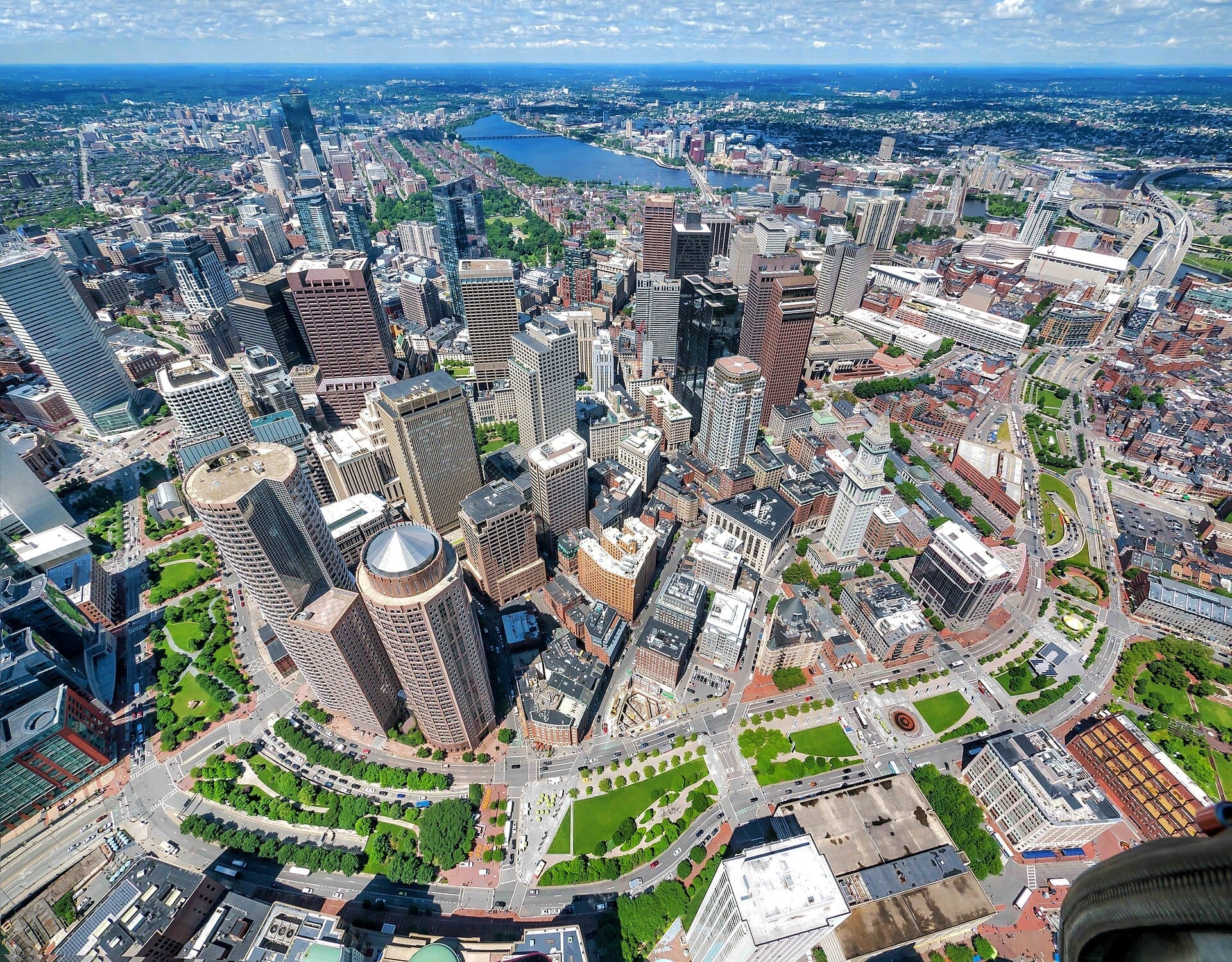
What the Greenway Actually Is
The Rose Fitzgerald Kennedy Greenway is not a traditional park. It is a 1.5-mile (2.4 km), 17-acre ribbon of public space that runs through the heart of downtown Boston, following the path of the elevated John F. Fitzgerald Expressway that was torn down as part of the Big Dig — the most expensive urban highway project in U.S. history. When that highway came down, the land beneath and around it was stitched into a series of parks, plazas, and promenades connecting Chinatown, the Financial District, the Wharf District, and the North End. The Greenway opened officially in 2008, and it is maintained by the Rose Fitzgerald Kennedy Greenway Conservancy, a nonprofit that programs and stewards the space year-round.
Named for Rose Fitzgerald Kennedy — Boston native, matriarch of the Kennedy family, and daughter of a former Boston mayor — the park is a genuine piece of urban repair. For decades, the elevated expressway had cut off downtown Boston from its own waterfront. Walking the Greenway today, with Atlantic Avenue on one side and glimpses of Boston Harbor on the other, you feel how profoundly that scar has healed.
ℹ️ Good to know
The Greenway is officially open daily from 7:00 a.m. to 11:00 p.m., year-round. General access is completely free. Individual features like the carousel have their own fees and seasonal schedules — check rosekennedygreenway.org before visiting.
The Layout: Sections Worth Knowing
Because the Greenway runs 1.5 miles end to end, its character shifts noticeably as you move through it. Most visitors don't walk the full length in one go — they dip in from a transit stop and explore from there. Understanding the rough sections helps you plan where to enter.
Dewey Square and South Station End
The southern anchor, near South Station, is Dewey Square — an open plaza framed by office towers and with a farmers market presence in warmer months. This end tends to attract the lunch crowd on weekdays: office workers grabbing food from the rotating truck vendors, joggers cutting through before heading toward the waterfront. It's the most urban-feeling segment of the park, and it's your best entry point if you're arriving by Red Line or Silver Line.
Carousel and Central Sections
Moving north toward Aquarium Station, the park broadens into a series of lawns and plazas. The carousel — a hand-crafted, custom-built merry-go-round with figures designed specifically for the Greenway — operates seasonally here and draws families with young children. Nearby, rotating public art installations occupy designated plinths and open spaces, meaning what you see on one visit may be entirely different from the next. The Conservancy updates its art programming regularly; the art is not always blockbuster, but some installations are surprising in context.
Wharf District and Fountain Sections
The mist and spray fountains along the Wharf District portion are the Greenway's most popular feature in summer. On a July afternoon, children line up to run through them in bare feet while parents occupy nearby benches. The fountains are programmable and change their jet patterns — worth a few minutes of watching even if you don't get wet. This stretch also sits closest to Long Wharf and the New England Aquarium, making it a natural pre- or post-activity stop.
North End Parks
The northern end near Haymarket and the North End has a quieter, more residential feel, especially on weekday mornings. The open lawns here are used for dog walking, impromptu soccer games, and, in summer, occasional outdoor movie screenings and concerts organized by the Conservancy. This section sits close to the Rose Kennedy Greenway's connection to Hanover Street and the North End neighborhood, making it an ideal starting point if you plan to continue into that district.
Tickets & tours
Hand-picked options from our booking partner. Prices are indicative; availability and final rates are confirmed when you complete your booking.
Boston Summer Night Trolley Tour and River Cruise
From 27 €Instant confirmationFree cancellationLEGOLAND Discovery Center Boston tickets
From 26 €Instant confirmationFree cancellationGhosts and Gravestones tour of Boston
From 39 €Instant confirmationFree cancellationBest of Boston tour
From 182 €Instant confirmationFree cancellation
How the Greenway Changes Through the Day
Early morning, before 8:00 a.m., the Greenway is the domain of joggers, dog walkers, and commuters cutting across from transit stops. The light at that hour, particularly in spring and fall, falls across the lawns at a low angle. There's almost no sound beyond footsteps and birds. It's especially peaceful, which is unusual for a park this close to a Financial District.
Midday on weekdays is when the Greenway fills with purpose. Food trucks park along designated spots, queues form quickly, and every available bench gets occupied. The noise level rises sharply. It's a useful time to visit if you want to see the park alive and social, but don't expect to find a quiet corner near the Dewey Square end from noon to 1:30 p.m.
Evenings in summer are the Greenway at its most social. The fountains are lit, outdoor programming often runs, and people linger long after the food trucks have gone. In winter, the park empties quickly after dark — perfectly safe, but cold and quiet. A few decorative lights in the winter months make the northern sections pleasant for an after-dinner stroll, but there is not much reason to stay long.
💡 Local tip
If you visit in summer and want the fountain section without the crowds, arrive before 9:00 a.m. or after 6:30 p.m. The midday rush (11:30 a.m. to 2:00 p.m.) is the busiest window by far.
The Historical and Urban Context
The Big Dig — formally the Central Artery/Tunnel Project — rerouted Interstate 93 underground through downtown Boston between 1991 and its substantial completion in 2007. At a total cost of roughly $15 billion (one of the most expensive highway projects in American history), it eliminated the elevated expressway that had been built in the 1950s and immediately became a source of noise, blight, and community division. The neighborhoods north and south of downtown, particularly the North End, had been effectively cut off from the waterfront by the highway structure for fifty years.
The Greenway represents what the city did with the surface land once the highway went underground. Rather than a single monolithic park, the design reflects multiple landscape architects working on different sections — which explains why the Greenway feels somewhat inconsistent in character as you walk it. Some sections are elegant and calm; others feel like glorified traffic medians. That inconsistency is worth knowing going in, so you can manage expectations.
Named for Rose Fitzgerald Kennedy, who was born in Boston's North End in 1890 and lived to 104, the park's name connects the physical landscape of downtown Boston to one of the city's most prominent family legacies. The Kennedy family's ties to Boston run deep — a fact that gives the naming a coherence that goes beyond ceremony.
For travelers interested in the deeper layers of Boston's development and civic history, the Boston history guide covers the decades of urban planning decisions that shaped the city you see today.
What to See and Do Along the Way
- Interactive fountains (seasonal, typically spring through fall): programmable jets that change patterns, popular with children
- Rotating public art installations: sculptures, large-scale works, and temporary commissions that change throughout the year
- The Greenway Carousel: custom-crafted figures including local wildlife and Boston-themed characters; seasonal operation, small fee
- Food truck rotation: a curated, rotating lineup of vendors parks along the Greenway on weekday lunches and weekend afternoons — check the Conservancy's website for the current schedule
- Outdoor events and programming: summer concerts, outdoor films, fitness classes, markets, and cultural events organized by the Greenway Conservancy
- Farmers market at Dewey Square: seasonal, typically spring through fall on select days — verify current schedule at rosekennedygreenway.org
The Greenway functions as a connector between several major Boston attractions. To the north, it leads naturally toward the Faneuil Hall Marketplace and Haymarket. Along the eastern edge, you're steps from Long Wharf, where whale watching tours and harbor ferries depart. The southern end connects easily to the Financial District and South Station.
Getting There and Getting Around
The Greenway's strength as a transit-connected destination is real. Multiple MBTA lines stop within a block or two of different sections. The Blue Line's Aquarium Station drops you right at the Wharf District section. South Station (Red and Silver Lines) serves the Dewey Square end. Haymarket (Green and Orange Lines) gives you access to the North End parks. There is no single 'main entrance' — you can step on or off the Greenway at nearly any cross street.
The Greenway is flat, paved, and stroller- and wheelchair-accessible throughout. There are no stairs along the main promenade, and entry points from adjacent sidewalks are generally step-free. Bike lanes and racks are available nearby, and the Bluebikes bike-share system has stations along the corridor.
💡 Local tip
If you're combining the Greenway with a visit to the North End (for lunch or pastries at one of the Italian cafes on Hanover Street), walk north from Haymarket Station. The transition from the Greenway into the North End takes about three minutes on foot.
Photography Notes
The Greenway is photogenic at specific moments and mostly unremarkable at others. The fountain sections photograph best in direct sunlight, when the water catches light against a blue sky. Early morning, when the light is low and the lawns are empty, gives you something closer to architectural photography — the park's geometry without the noise of crowds. Fall is arguably the best season visually: the trees along the Greenway turn, the crowds thin, and the contrast between the urban towers and the warm foliage is striking.
The park's art installations can be interesting subjects, but quality varies by installation. Ask the Conservancy website what is currently on display before planning a photography visit around the public art.
Boston's fall foliage season makes the Greenway particularly appealing from mid-October through early November. For seasonal planning, the guide to Boston in fall covers what to expect across the city during that window.
Is It Worth Your Time?
The Greenway is worth walking through — especially if you're already moving between downtown Boston and the waterfront or North End. As a destination in its own right, it is more functional than spectacular. The park design is competent but uneven, and some sections feel more like landscaped highway median than true urban park. If you've visited New York's High Line or Chicago's Millennium Park, you may find the Greenway a step below in terms of destination power.
That said, in summer, with the fountains running, food trucks operating, and an interesting art installation in place, it becomes pleasant. It is also one of the few places in downtown Boston where you can sit on a lawn and feel unhurried without paying for anything. For first-time visitors moving between South Station, the waterfront, and Faneuil Hall, weaving through the Greenway is a better choice than staying on Atlantic Avenue.
Visitors who want intense cultural programming, a single memorable focal point, or a park experience that rivals the best in the world may leave underwhelmed. Solo travelers on a tight schedule may prefer to walk through briskly rather than plan dedicated time. Families with children who want to use the fountains or carousel will get considerably more out of it than a traveler ticking boxes.
For travelers working through a broader downtown Boston itinerary, the 3-day Boston itinerary shows how the Greenway fits naturally into a route connecting several major landmarks.
Insider Tips
- The Greenway Conservancy publishes a food truck schedule on its website — check it the night before so you know which vendors are parked and where. The lineup rotates frequently and sells out popular items by 12:30 p.m. on good-weather days.
- The carousel is not always open even during its operating season — it closes for rain and maintenance. If the carousel is the main reason you're visiting with a child, call ahead or check the Conservancy's social channels that morning.
- Walking the Greenway from south to north (Dewey Square toward the North End) puts the sun at your back in the morning and gives you a better view of the harbor on your left as you walk. Reverse it in late afternoon.
- The Greenway's lawn sections can get muddy and soft for a day or two after heavy rain, particularly in the North End parks section. Avoid wearing good shoes if there's been significant rainfall the previous 24 hours.
- If you're visiting in December or January, the Greenway's winter light installations (when operating) are understated but pleasant. Confirm with the Conservancy website whether any seasonal programming is active, as it changes year to year.
Who Is Rose Kennedy Greenway For?
- Families with young children who want the interactive fountains and carousel in summer
- Walkers connecting downtown Boston to the North End, Faneuil Hall, or the waterfront
- Lunchtime visitors looking for outdoor seating and access to the food truck lineup
- Public art enthusiasts interested in rotating, site-specific commissions
- Travelers who want a free, accessible, and flat route through the center of the city
Nearby Attractions
Other things to see while in Downtown & Financial District:
- Boston Common
Founded in 1634, Boston Common is the oldest public park in the United States and the civic anchor of downtown Boston. Free to enter and open year-round, it serves as a gathering place for locals, a landmark on the Freedom Trail, and the starting point for exploring everything the city has to offer.
- Boston Harbor Whale Watching
The New England Aquarium Whale Watch presented by Boston Harbor City Cruises sends a high-speed catamaran from Long Wharf out to Stellwagen Bank National Marine Sanctuary, one of the most productive whale feeding grounds on the East Coast. With onboard aquarium naturalists and a whale-sighting guarantee, it is one of the few Boston experiences that delivers on its premise.
- Boston Public Market
Open daily from 8:00 AM to 8:00 PM and free to enter, Boston Public Market brings together more than 30 New England farmers, fishers, and food artisans in a year-round indoor market above Haymarket Station. It is the first public market in the United States to require that everything sold is produced in or originates from New England.
- Custom House Tower
Standing 496 feet above McKinley Square, the Custom House Tower was Boston's tallest building for about half a century until 1964. Today it operates as a Marriott Vacation Club property, and its free public observation deck tours remain a lesser-known opportunity for a panoramic view of the harbor and skyline.