Boston in Fall: Foliage, Festivals & What to Expect
Fall is widely considered the best season to visit Boston. Temperatures drop to comfortable levels, the city's parks and tree-lined streets turn brilliant shades of red and gold, and a packed events calendar keeps things interesting well into November. This guide covers when to go, where to see color, what to do, and how to plan it all without overpaying.
Plan and book this trip
Tools from our partner Travelpayouts help you compare flights and hotels. If you book through them, we may earn a commission at no extra cost to you.
Flights
Hotels map
TL;DR
- Boston's fall foliage typically peaks between mid-October and early November, later than rural New England by about one to two weeks.
- Best free foliage spots include the Arnold Arboretum, Charles River Esplanade, and Boston Public Garden.
- September is comfortable and less crowded; October is peak season with higher hotel rates and busy weekends.
- Pack layers: September highs average around 73°F (23°C), but October evenings can drop into the low 40s°F.
- Book accommodation and guided foliage tours early, especially around Columbus/Indigenous Peoples' Day weekend. See our best time to visit Boston guide for full seasonal context.
Fall Weather in Boston: What You'll Actually Experience
Boston's fall spans September through November, and each month feels meaningfully different. September is essentially a warm extension of summer with lower humidity. Daytime highs hover around 73°F (23°C), evenings cool to the mid-50s°F, and rain arrives periodically but rarely derails a full day of plans. It's comfortable weather for walking long distances, which matters in a city as walkable as Boston.
October is the headline month. Average highs drop to the low 60s°F (around 16-17°C), and lows at night can dip below 45°F (7°C) by the end of the month. You'll want a proper jacket, not just a light layer. The weather can flip from crisp and sunny to overcast and rainy within the same day, so packing versatility is key: a waterproof outer layer, mid-layer fleece, and comfortable walking shoes that can handle wet cobblestones. Beacon Hill's historic streets are gorgeous but slippery when wet.
November is the shoulder of fall. Early November can still offer some foliage color and mild days, but by mid-November you're solidly in pre-winter territory with average temperatures in the mid-40s°F to around 50°F and genuine cold after dark. Crowds thin significantly after the first week of November, which makes it a smart window for travelers who want the atmosphere without the October pricing.
💡 Local tip
Boston's Columbus/Indigenous Peoples' Day weekend (second Monday in October) is one of the busiest fall weekends in the city. Hotels book up months in advance and prices spike. If your dates are flexible, the third week of October often offers comparable foliage color with noticeably lower rates.
Where to See Fall Foliage in Boston
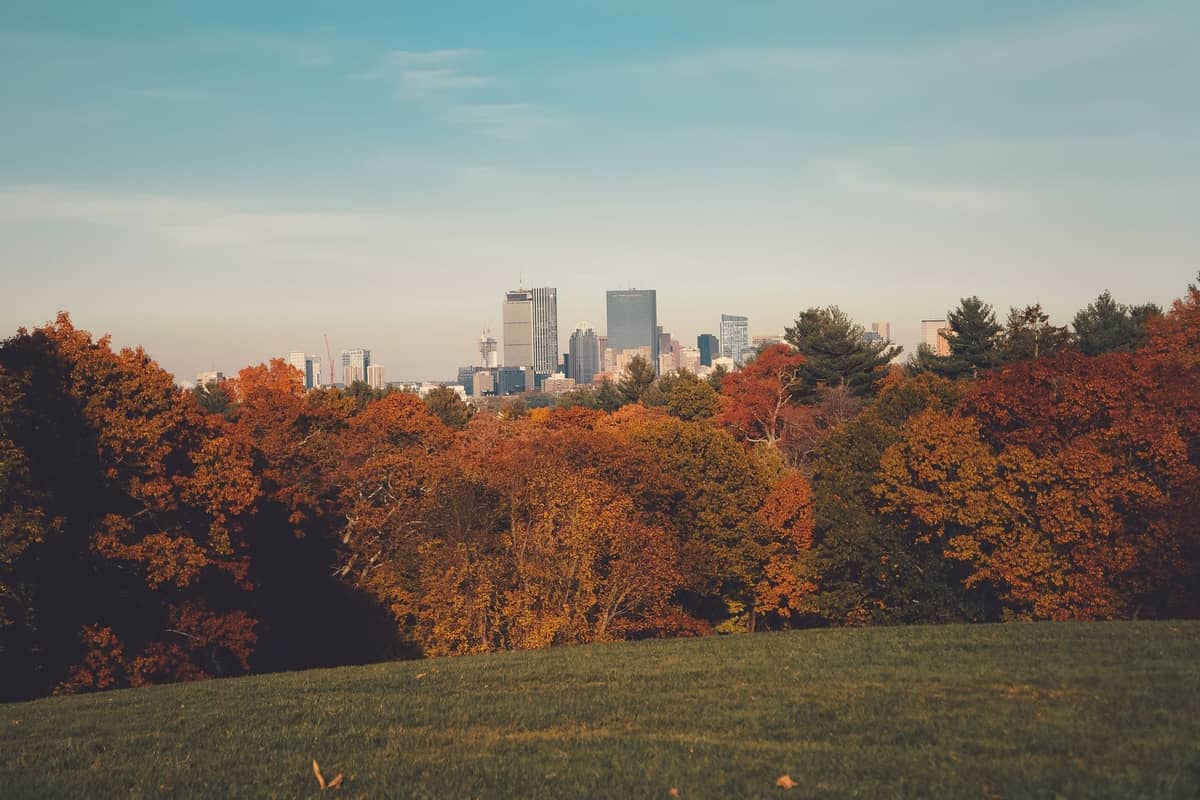
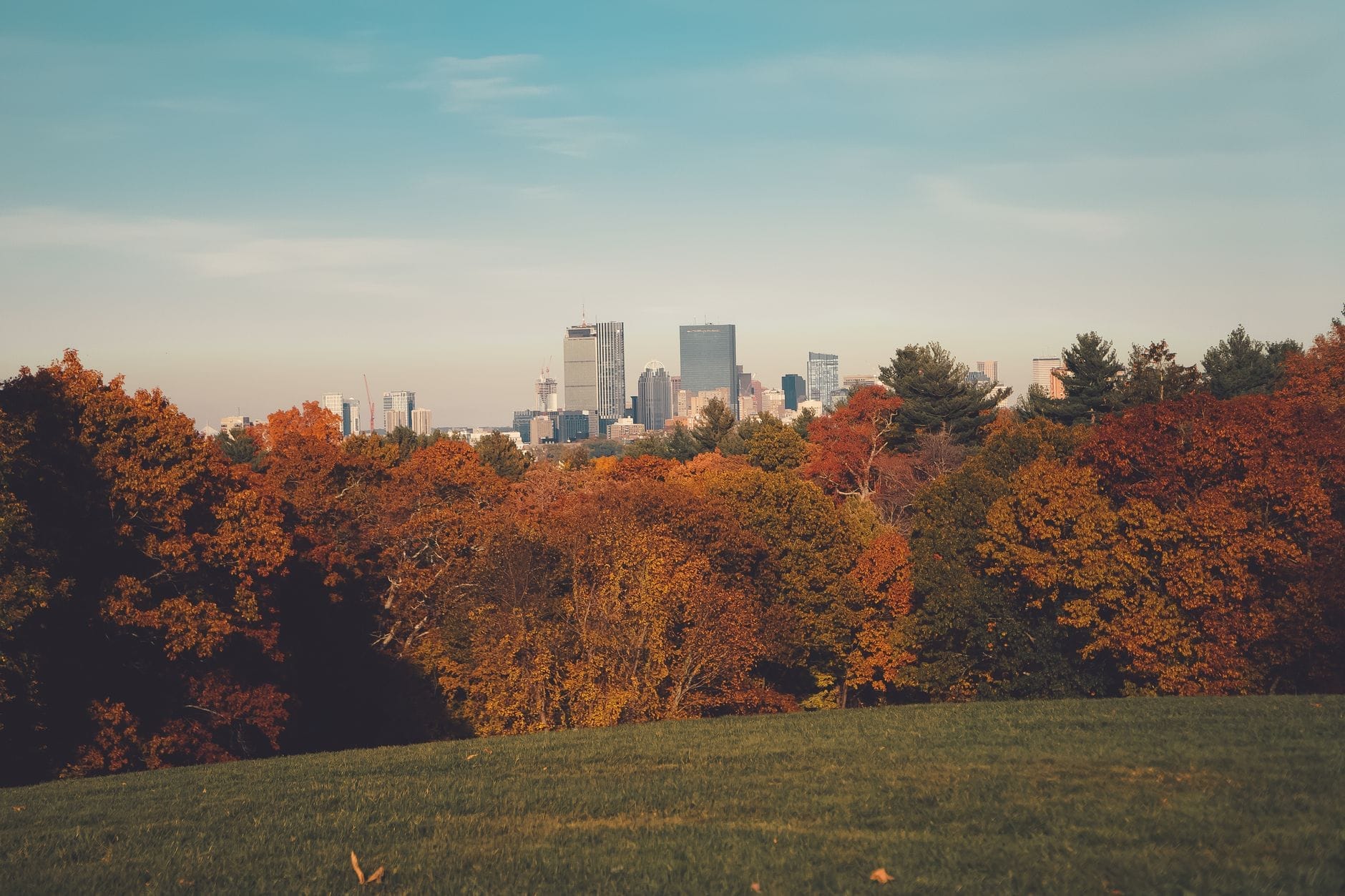
One persistent misconception about Boston foliage is that you need to leave the city to see it. That's wrong. Boston's urban tree canopy is substantial, and several neighborhoods and parks deliver serious color without requiring a rental car or a day trip. The trade-off is that Boston's peak color arrives later than northern New England, typically mid-October to early November, because the urban heat island effect slows the seasonal transition.
- Arnold Arboretum 247 acres of managed landscape in Jamaica Plain, open daily from sunrise to sundown with free admission. It's managed by Harvard University and contains over 15,000 plants. In fall, the collection of oak, maple, and sweetgum trees produces exceptional color. Take the MBTA Orange Line to Forest Hills station, a short walk from the main entrance.
- Boston Common and Public Garden The oldest public park in the United States sits at the geographic heart of the city. The Public Garden's weeping willows and elm-lined paths turn gold in October. It's free, central, and easy to combine with a walk through Beacon Hill.
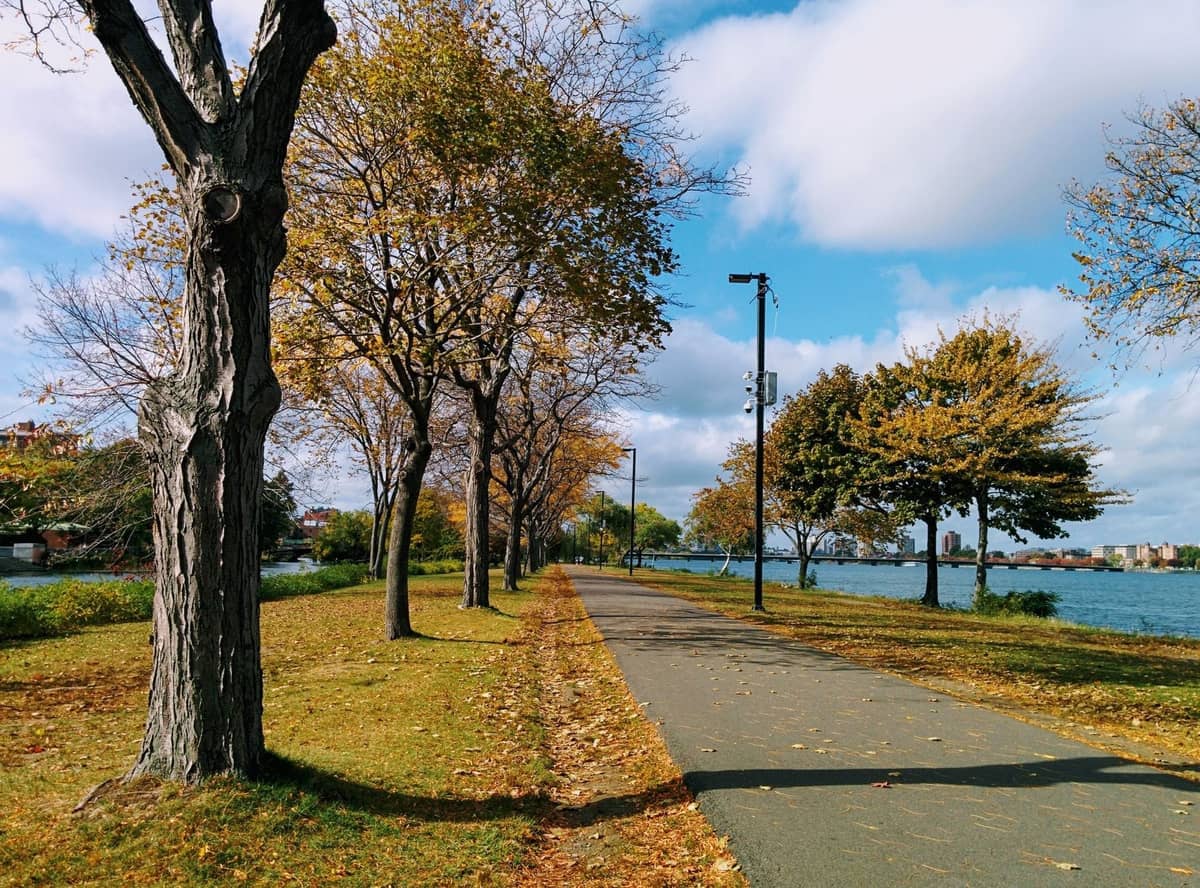
- Charles River Esplanade The Charles River Esplanade on the Boston side of the river is lined with mature trees that peak in mid-October. The combination of river reflections and fall color makes for some of the best urban foliage photography in New England.
- Commonwealth Avenue Mall The tree-lined median running through Back Bay is planted with American elms, which turn a warm yellow in fall. The 1.7-mile stretch from the Public Garden to Kenmore Square is one of the most photographed streets in the city during October.
- Beacon Hill The brick-lined streets and iron fences of Beacon Hill frame fall color in a way that feels almost theatrical. Acorn Street in particular, one of the most photographed cobblestone lanes in America, looks exceptional with maple leaves scattered across the bricks.
For those willing to travel slightly beyond city limits, the Blue Hills Reservation in Milton offers elevated views across a forested landscape that peaks roughly one to two weeks ahead of downtown Boston. Closer to the city, Jamaica Pond in the Emerald Necklace ring of parks is a quieter alternative to the Arnold Arboretum and equally impressive at peak color.
✨ Pro tip
Peak foliage in Boston generally coincides with Columbus/Indigenous Peoples' Day, but this varies by up to two weeks depending on summer rainfall and temperature patterns. Early November is not necessarily too late: in some years, color persists well past Halloween. Check the Massachusetts state parks fall foliage tracker at mass.gov for real-time updates before your trip.
Fall Festivals and Events Worth Planning Around
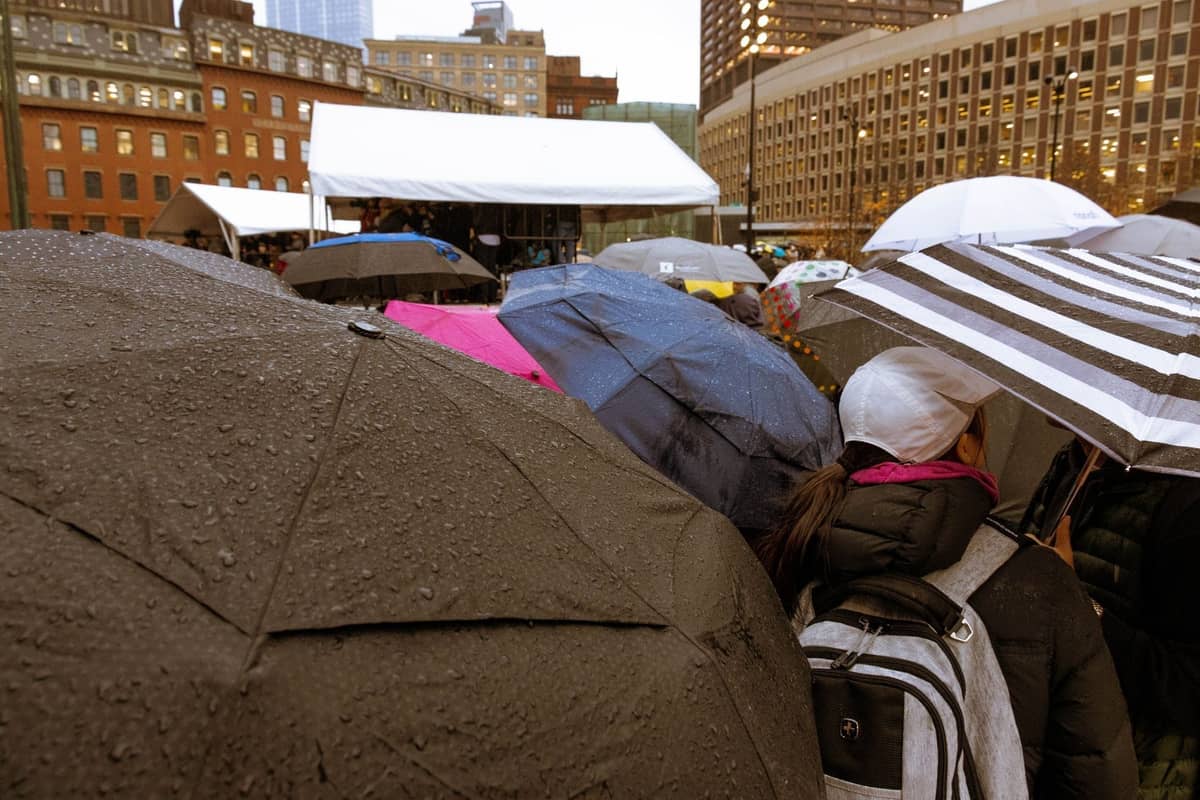
Boston's fall calendar is especially busy, and several events draw enough visitors to affect hotel availability and pricing city-wide. Knowing which events coincide with your dates helps you either lean into the energy or avoid the crowds, depending on your preferences.
- Head of the Charles Regatta (mid-to-late October) One of the largest rowing events in the world, drawing over 11,000 athletes and roughly 300,000 spectators over two days. The race runs along the Charles River between Boston and Cambridge. Watching from the Weeks Footbridge or Anderson Memorial Bridge is free. Expect serious crowds around Cambridge and Back Bay for the entire weekend.
- Boston Book Festival (October) A free literary festival centered on Copley Square, typically held in mid-to-late October. Dozens of authors give readings and talks across multiple venues in Back Bay. It's one of the more distinctly local events on the fall calendar.
- Honk! Festival (mid-October) A street-band festival rooted in activist and community music, centered around Harvard Square in Cambridge. Entirely free and unlike anything else on the fall calendar. Brass bands, puppets, and dancing fill the streets.
- Red Sox Postseason (September–October, if applicable) When the Red Sox make the playoffs, Fenway Park becomes impossible to get near without tickets. Even regular late-September games carry an end-of-season energy. Fenway's surrounding neighborhoods in the Kenmore Square area get extremely busy on game days.
- Halloween in Salem (throughout October) Salem's Haunted Happenings festival runs through most of October and culminates on Halloween. It's a day trip from Boston, roughly 30 minutes by MBTA Commuter Rail from North Station. Halloween weekend itself is extremely crowded; aim for a weekday in mid-October for a better experience.
For a deeper look at what Boston's neighborhoods offer during fall, the Cambridge side of the river adds significant value in October, particularly around Harvard Square during the Honk! Festival and Head of the Charles. The Back Bay neighborhood concentrates much of the Boston Book Festival activity and is well-positioned for both the regatta viewing areas and Commonwealth Avenue foliage walks.
Getting Around Boston in Fall
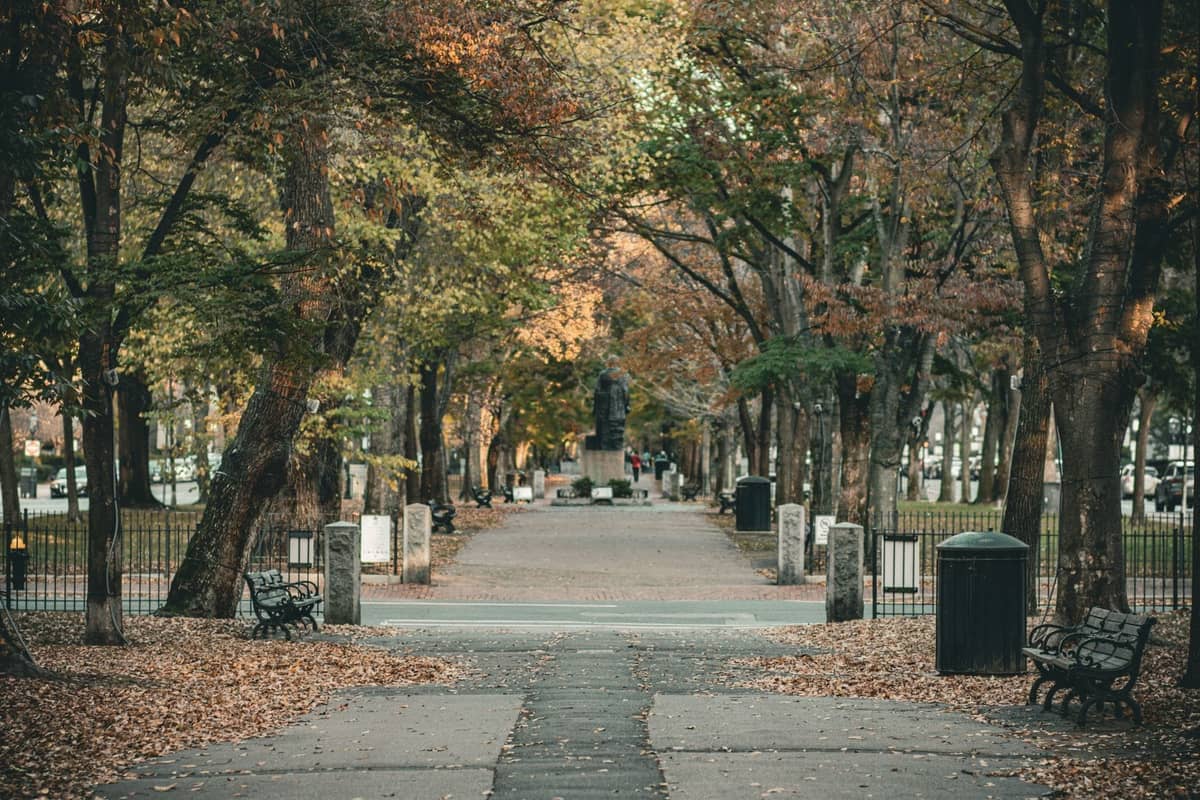
Fall is one of the best seasons to walk Boston. The humidity of summer is gone, temperatures are cool enough for sustained movement, and the city's compact geography rewards exploration on foot. The core neighborhoods, from the North End through Downtown, Beacon Hill, Back Bay, and the South End, are all within comfortable walking distance of each other. Bring shoes with grip: wet leaves on brick sidewalks are notably slippery.
The MBTA subway, known locally as the T, covers the rest efficiently. The Green Line connects Back Bay and Kenmore Square to downtown; the Red Line links downtown to Cambridge and Harvard Square; and the Orange Line runs to Forest Hills, about a 10–15 minute walk from the Arnold Arboretum entrance. If you're arriving at Logan International Airport, the free Silver Line SL1 bus connects directly to South Station at no cost from the terminals. For full transport options, see our guide to getting around Boston.
⚠️ What to skip
Head of the Charles Regatta weekend (typically the third weekend of October) causes significant traffic congestion around the Charles River. Avoid driving near Storrow Drive, Memorial Drive, and the Cambridge/Allston area on regatta Saturday and Sunday. The T is the only sensible option for getting to and from the event.
Fall Activities Beyond the Foliage
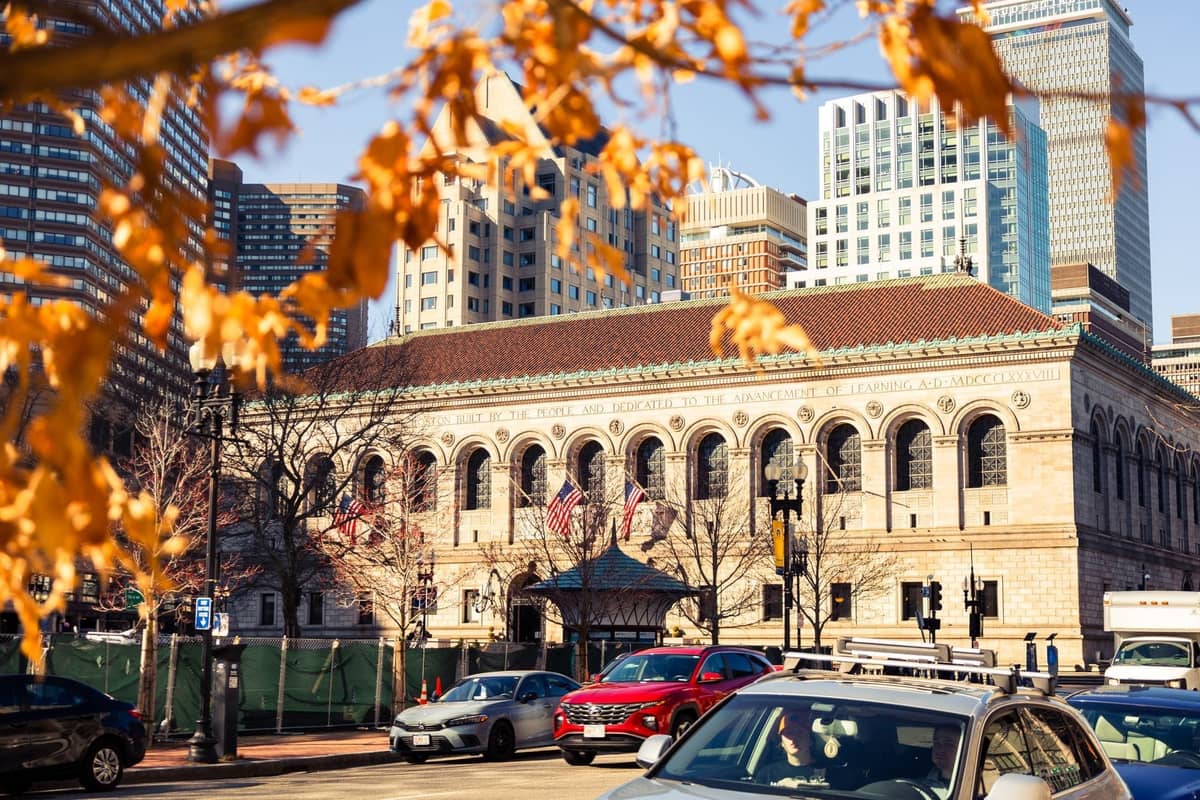
Boston in fall is not only about leaves. The season opens up a range of activities that are impractical or less enjoyable in summer's heat and humidity. Museum visits become more appealing when you're not competing with peak-summer tour groups, and several of Boston's best cultural institutions are at their best in fall.
The Museum of Fine Arts Boston is one of the largest art museums in the United States and worth a half-day minimum. Admission is $30 for adults (verify current pricing at mfa.org). The Isabella Stewart Gardner Museum nearby in the Fenway neighborhood is a more intimate experience and one of the distinctive museum spaces in the country. Visitors under 18 are admitted free.
Fall is also a strong season for Boston's history sites. Crowds at the Freedom Trail thin considerably after Labor Day, making it easier to actually absorb the sites rather than shuffle through them. The 2.5-mile walking route connects 16 historically significant locations, including the Paul Revere House in the North End and the Bunker Hill Monument in Charlestown. Cool fall temperatures make the full walk much more comfortable than attempting it in July.
- Whale watching season typically extends through October from Boston Harbor, with humpback and finback whales often feeding in Stellwagen Bank Marine Sanctuary.
- The Boston Harbor Islands ferry to Spectacle and Georges Islands typically operates through Indigenous Peoples’ Day/Columbus Day weekend, giving you access to Spectacle Island and Georges Island before the service suspends for winter.
- October is a strong month for Boston's restaurant scene: summer tourist rushes have subsided, and many chefs release fall menus featuring New England ingredients like butternut squash, apple, and local seafood.
- Fenway Park tours run through the end of the baseball season and are easier to book in September and October than during peak summer months.
- The SoWa Art + Design District in the South End hosts a weekly open market on Sundays through October, with local artists, food trucks, and vintage vendors.
Practical Planning: Costs, Crowds, and Timing
Fall is not a budget season in Boston. Hotel rates in October rival summer pricing, particularly on Head of the Charles and Columbus Day weekends. Booking two to three months in advance is standard practice for October travel. September offers the best value in the fall window: the weather is pleasant, foliage hasn't started yet so there's no foliage premium on hotels, and the city is returning to its academic-year rhythm after summer.
For travelers focused on value without sacrificing experience, our Boston on a budget guide covers free and low-cost options across the city. Many of the best fall experiences, including the Arnold Arboretum, the Public Garden, the Esplanade, and the Freedom Trail, cost nothing. The free things to do in Boston guide lists options that work particularly well in fall when the outdoor settings look their best.
If you're considering a day trip to see foliage in more dramatic form than Boston's urban parks provide, Salem is the most popular option in October and is served directly by MBTA Commuter Rail from North Station. Round-trip off-peak fares are typically around $16–$18. Concord, home to Minute Man National Historical Park, is another option along the Fitchburg Line. For those willing to rent a car, the Berkshires in western Massachusetts peak one to two weeks ahead of Boston and offer more expansive color over rolling hills.
FAQ
When does fall foliage peak in Boston?
Boston's fall foliage typically peaks between mid-October and early November. This is later than rural New England by roughly one to two weeks due to the urban heat island effect. The Columbus/Indigenous Peoples' Day weekend (second Monday in October) often coincides with near-peak color. Early November can still offer good color in some years, particularly at the Arnold Arboretum.
Is fall a good time to visit Boston?
Yes, fall is one of the two best seasons to visit Boston, along with late spring. Temperatures in September and October are comfortable for walking, crowds are lower than summer, and the events calendar is active. The main drawbacks are higher hotel prices in October and the potential for rain on any given day. November offers a quieter, cheaper alternative once foliage season ends.
What should I pack for Boston in fall?
Layers are essential. September needs a light jacket and the option to layer up at night. October requires a proper mid-layer and a waterproof outer shell, with temperatures dropping into the low 40s°F after dark by month's end. Comfortable, waterproof walking shoes with grip are important: Boston's brick sidewalks and cobblestone streets become slippery when wet or covered in fallen leaves.
What are the biggest events in Boston in the fall?
The Head of the Charles Regatta (mid-to-late October) is the largest single event, drawing roughly 300,000 spectators over two days. Other notable events include the Boston Book Festival (October), the Honk! Festival in Cambridge (October), and Halloween activities in nearby Salem throughout October. The Red Sox also play late-season and potentially playoff games at Fenway Park through October.
Can I see fall foliage in Boston without leaving the city?
Yes. Boston has significant urban foliage in the Arnold Arboretum (free, open daily sunrise to sundown), the Public Garden, Commonwealth Avenue Mall, the Charles River Esplanade, and throughout Beacon Hill. You do not need to leave the city for impressive fall color, though rural areas in Massachusetts peak earlier and offer more expansive views.