Blue Hills Reservation: Boston's Wildest Outdoor Escape
Ten miles south of downtown Boston, Blue Hills Reservation spreads across more than 7,000 acres of forested hills, rocky ridgelines, and glacial wetlands. Free to enter and open year-round from dawn to dusk, it offers 125 miles of trails ranging from easy pond-side loops to a genuine summit climb at 635-foot Great Blue Hill.
Quick Facts
- Location
- Milton, MA — about 10 miles south of downtown Boston
- Getting There
- MBTA Red Line to Ashmont, then MBTA Bus 240 or 238 into Milton/Canton; driving is the most practical option for most trailheads
- Time Needed
- 2–6 hours depending on trail choice; half-day is ideal for the summit
- Cost
- Free entry and parking; Blue Hills Trailside Museum: Adults $5, Seniors (65+) $4, Children (2–12) $3
- Best for
- Hikers, trail runners, families with older kids, fall foliage seekers, wildlife watchers
- Official website
- www.mass.gov/locations/blue-hills-reservation
What Blue Hills Reservation Actually Is
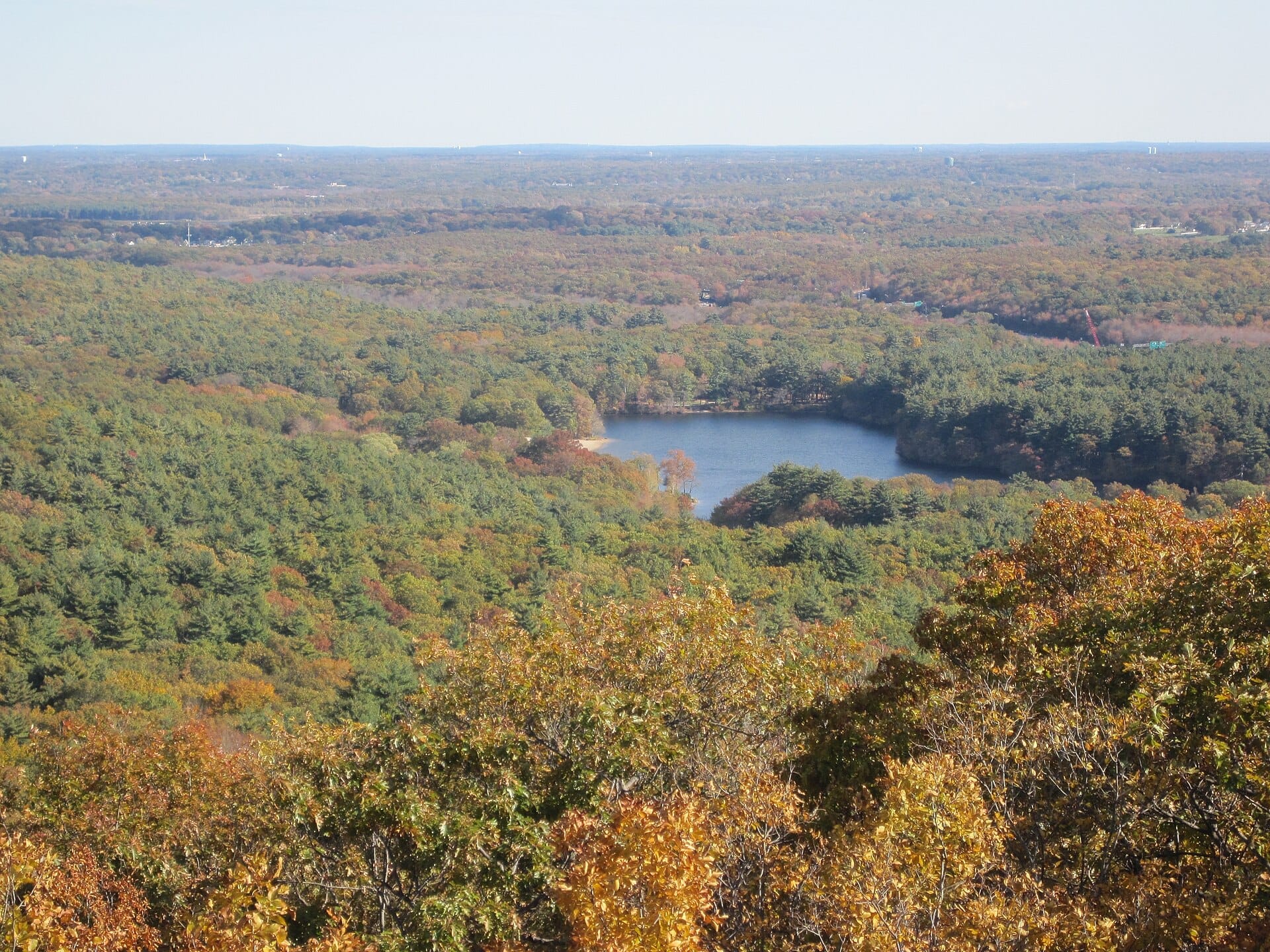
Blue Hills Reservation is a Massachusetts state park managed by the Department of Conservation and Recreation (DCR), covering over 7,000 acres across portions of Milton, Quincy, Braintree, Canton, Randolph, and Dedham. It is not a manicured city park. It is genuine wild terrain: dense oak and hickory forest, rocky outcrops that require hands-on scrambling, beaver-dammed wetlands, and open summits with unobstructed views of the Boston skyline.
The reservation contains 22 hills and about 125 miles of marked trails. The highest point, Great Blue Hill, reaches 635 feet (194 meters) above sea level, which may sound modest but earns its place as one of the higher coastal peaks in New England south of Maine. The summit carries real weather exposure. Wind, temperature drops, and fog can move in quickly, which matters more than the elevation number suggests.
Purchased in 1893 by the Metropolitan Parks Commission, Blue Hills was among the first parcels protected in what became Greater Boston's regional open space system. That same impulse toward accessible public land shaped places like the Emerald Necklace closer to the city. But Blue Hills is larger, wilder, and less landscaped than anything within Boston proper.
💡 Local tip
Park entrance and all trails are free. The main parking lot at Houghton's Pond is also free. The only paid experience is the Blue Hills Trailside Museum (Adults $5, Seniors $4, Children $3), which is worth adding for families.
The Summit Experience: Great Blue Hill and the Observatory
The climb to Great Blue Hill is the centerpiece of most visits. From the main trailhead near the DCR Reservation Headquarters on Hillside Street in Milton, the ascent via the Skyline Trail takes roughly 45 minutes to an hour at a moderate pace. The trail moves from shaded forest into open rocky terrain where the footing demands attention: exposed quartzite and puddingstone slabs, some covered with lichen, become notably slippery after rain.
At the summit, the Blue Hill Meteorological Observatory has been continuously recording weather data since 1885, giving it one of the longest continuous weather records in North America. The observatory is a National Historic Landmark and, on certain weekends, opens for public tours. The stone tower on the summit provides 360-degree views that include the downtown Boston skyline to the north, Cape Cod Bay on clear days to the south, and a rolling inland panorama that reveals just how much undeveloped land still exists within commuting distance of a major city.
Early morning on weekdays, the summit is often empty except for a few trail runners and the wind. By 10am on weekends and most weekend afternoons, expect steady foot traffic on the main route. If you want the summit view without the crowd, aim for a weekday arrival before 9am, or come in winter when snow and cold sharply reduce visitor numbers.
⚠️ What to skip
The summit is exposed and conditions change fast. Even in summer, bring a layer. In winter, ice on the upper rock slabs requires microspikes or traction devices — trail conditions are not maintained like a ski slope.
Tickets & tours
Hand-picked options from our booking partner. Prices are indicative; availability and final rates are confirmed when you complete your booking.
Downtown Freedom Trail to Back Bay via Beacon Hill walking tour
From 38 €Instant confirmationFree cancellationBack Bay to Downtown Freedom Trail via Beacon Hill walking tour
From 30 €Instant confirmationFree cancellationBunker Hill Monument Self-Guided Walking Audio Tour
From 9 €Instant confirmationFree cancellationBoston Summer Night Trolley Tour and River Cruise
From 27 €Instant confirmationFree cancellation
Houghton's Pond: The Easier, Family-Friendly Side
Not every visit to Blue Hills needs to involve a climb. Houghton's Pond, located on the eastern edge of the reservation along Hillside Street, is a glacially formed kettle pond with a small swimming beach, picnic areas, and a network of relatively flat loop trails through surrounding forest. In summer, the beach is typically staffed by lifeguards and draws families from across the South Shore. The water is clear and cool, and the grassy banks fill with groups on hot July and August afternoons.
The 1.5-mile loop around the pond is suitable for strollers on dry days, though sections become muddy after significant rain. Frogs call loudly from the reedy margins in spring, and red-winged blackbirds stake out territory in the cattails along the western shore. Parking at Houghton's Pond is free, which makes this one of the better free outdoor recreation values within the Boston metro area.
Wildlife and Natural Ecology
Blue Hills Reservation supports a range of wildlife that surprises visitors expecting a suburban park. White-tailed deer are common enough to be unremarkable. Eastern coyotes are active at dawn and dusk, particularly in winter when their tracks cross snow-covered trails. Broad-winged hawks concentrate over the ridgelines during fall migration, and the hawkwatch at the summit draws birders with spotting scopes in mid-September.
The wetland areas, particularly around Ponkapoag Pond in the western section of the reservation, support nesting great blue herons and, with luck, river otters. The forest itself is predominantly second-growth oak-hickory woodland that regenerated after 19th-century agricultural clearing, with older trees in some sheltered ravines.
For visitors already planning wildlife-focused trips, the Blue Hills Trailside Museum at 1904 Canton Avenue is operated by Mass Audubon and houses live animals including a red-tailed hawk, a box turtle, and other species that cannot be returned to the wild. It functions as a compact interpretive center that explains the ecology of the reservation. Families visiting Boston with children might pair this with the Franklin Park Zoo in Roxbury for a full day of wildlife-focused activity.
Seasonal Conditions and When to Go
The reservation is open year-round, generally from dawn to dusk, and each season offers a distinctly different experience. Fall is the most visually dramatic period, typically mid-October through early November, when the hillside forests shift through orange, rust, and gold. The summit views are clearest in fall, when lower humidity and northwest winds scrub the atmosphere. This is also the busiest period on weekends.
Spring arrives slowly at Blue Hills, with trails remaining muddy through March and into April. Wildflowers appear in sheltered spots by late April. Summer is popular for pond swimming and family picnics but can be humid and buggy on the lower trails; insect repellent is useful from late May through August. Winter transforms the reservation into something quieter and often beautiful: snow covers the ridgelines, the leafless canopy opens long sightlines, and foot traffic drops dramatically. For visitors who enjoy Boston in winter, a clear-day summit hike here rewards the effort with views the crowded fall season rarely surpasses.
ℹ️ Good to know
Fall foliage peaks in the Blue Hills roughly the third week of October, slightly later than peak color in northern New England. Check the DCR website for current trail conditions before visiting after major rain or winter storms.
Getting There and Practical Logistics
Driving is the most practical option for most visitors. From downtown Boston, take I-93 south to the Houghton's Pond exit (current exit numbering may vary) for the eastern trailheads and swimming area. The drive takes 20–30 minutes outside of rush hour and considerably longer on Friday afternoons or summer weekends. Free parking is available at Houghton's Pond and at several smaller trailhead lots along Hillside Street and Canton Avenue.
Public transit is possible but inconvenient. The MBTA Red Line runs to Ashmont Station in Dorchester, from which MBTA bus routes such as 240 and 238 serve the Milton/Canton area near parts of the reservation. The walk from the bus stop to the main trailheads adds significant time and is not ideal for families with gear. Check current MBTA schedules at mbta.com before relying on this option.
If you are combining Blue Hills with a broader Boston outdoor itinerary, the reservation pairs naturally with a visit to Arnold Arboretum in Jamaica Plain, which offers a more cultivated but ecologically rich counterpoint to Blue Hills' wild terrain. Both are free to enter.
What to Bring
- Sturdy footwear: trail runners or hiking boots for rocky terrain; sneakers work on the pond loop but not the summit
- Water: no potable water sources on most trails; bring at least 1 liter per person for a summit hike
- Layers: summit temperatures run 5–10°F cooler than the base on windy days
- Trail map: download the DCR trail map in advance; cell signal is unreliable in the interior of the reservation
- Insect repellent: essential from late May through August on lower, wooded trails
Who Should Think Twice
Blue Hills is not the right destination for every traveler. Visitors with limited mobility will find most trails inaccessible; the terrain is rocky, rooted, and uneven. The Houghton's Pond area offers the most accessible experience, but even there, unpaved surfaces and uneven ground limit wheelchair or stroller use. The Blue Hills Trailside Museum may be the most accessible option within the reservation for those with mobility constraints.
Travelers with only a day or two in Boston who prioritize history and architecture will find more concentrated value staying in the city center. Blue Hills requires transport, time, and physical effort. It rewards those investments, but it is not a quick add-on to a Freedom Trail afternoon.
If you are looking for outdoor activity that is walkable from central Boston, the Charles River Esplanade or the Boston Public Garden offer green space without needing a car. Blue Hills is for visitors who specifically want to leave the city behind.
Insider Tips
- The Skyline Trail offers a ridge traverse across multiple summits. Instead of an out-and-back to Great Blue Hill, consider a point-to-point section of the Skyline Trail with a car shuttle, which avoids retracing steps and reveals far more of the reservation's terrain.
- The Blue Hill Meteorological Observatory typically opens for public summit tours on select weekend afternoons. Check their schedule in advance at bluehill.org — the interior tower views and historical instruments are worth the timing effort.
- Parking at the Canton Avenue trailhead near the Trailside Museum is smaller and fills faster than Houghton's Pond on busy weekends. Arrive before 9am on fall weekends or expect a wait.
- The western portion of the reservation around Ponkapoag Pond sees far fewer visitors than the eastern summits. A quiet, flat trail circles the pond through Atlantic white cedar bog — a rare and striking habitat. Bring waterproof shoes if the trail has been wet.
- For fall hawkwatching, position yourself on the Great Blue Hill summit between 10am and 2pm in mid-September. Broad-winged hawks stream south along the ridge in the hundreds on days with northwest winds following a cold front.
Who Is Blue Hills Reservation For?
- Hikers and trail runners looking for genuine terrain within reach of Boston
- Families with children ages 6 and up who can manage rocky trails to the summit
- Fall foliage seekers who want elevated views over a forested landscape
- Birders during spring warbler migration and fall hawk migration
- Visitors wanting a full outdoor day trip without leaving the metro area
Nearby Attractions
Combine your visit with:
- Arnold Arboretum
Founded in 1872, the Arnold Arboretum is the oldest public arboretum in North America — a free, 281-acre landscape in Jamaica Plain managed by Harvard University. With over 15,000 accessioned plants and sweeping hillside views, it draws botanists, dog walkers, and curious visitors in equal measure across all four seasons.
- Boston Duck Tours
Boston Duck Tours puts you aboard a replica World War II DUKW amphibious vehicle for an 80-minute circuit of the city's most historic landmarks, finishing with a splash into the Charles River. Running seasonally from late March through late November, it's one of the few tours in Boston that covers both street-level sights and a Charles River perspective in a single trip.
- Boston Harbor Islands
Boston Harbor Islands National and State Park puts 34 islands and peninsulas within easy ferry reach of downtown Boston. From Civil War earthworks on Georges Island to the oldest lighthouse station in the United States on Little Brewster, the park rewards visitors who are willing to trade the city's brick sidewalks for salt air and open water.
- Castle Island
Castle Island is a 22-acre state park in South Boston where a granite fort built between 1834 and 1851 anchors one of the city's most satisfying free outings. The park sits along Pleasure Bay, connected to the mainland by walkways, and offers harbor views, a loop walk popular with locals, and seasonal guided tours of Fort Independence.