Franklin Park Zoo: Boston's Urban Wildlife Escape in Franklin Park
Spread across 72 acres in the heart of Boston's Franklin Park, Franklin Park Zoo offers genuine wildlife encounters from African savanna exhibits to Australian creatures, all within reach of the city by public transit. Operated by Zoo New England, it rewards an unhurried half-day visit, especially on weekday mornings when crowds are thin and animals are most active.
Quick Facts
- Location
- One Franklin Park Road, Boston, MA 02121 (Roxbury/Franklin Park)
- Getting There
- MBTA Orange Line to Ruggles or Jackson Square, then bus 22, 28, 29, or 45
- Time Needed
- 2.5 to 4 hours for a thorough visit; half-day with younger children
- Cost
- Standard admission varies; MA EBT/WIC residents: $5/person (up to 4 people) through Dec. 31, 2026. Check zoonewengland.org for current standard pricing.
- Best for
- Families with children, wildlife enthusiasts, casual nature walkers
- Official website
- www.zoonewengland.org/franklin-park-zoo
What Franklin Park Zoo Actually Is
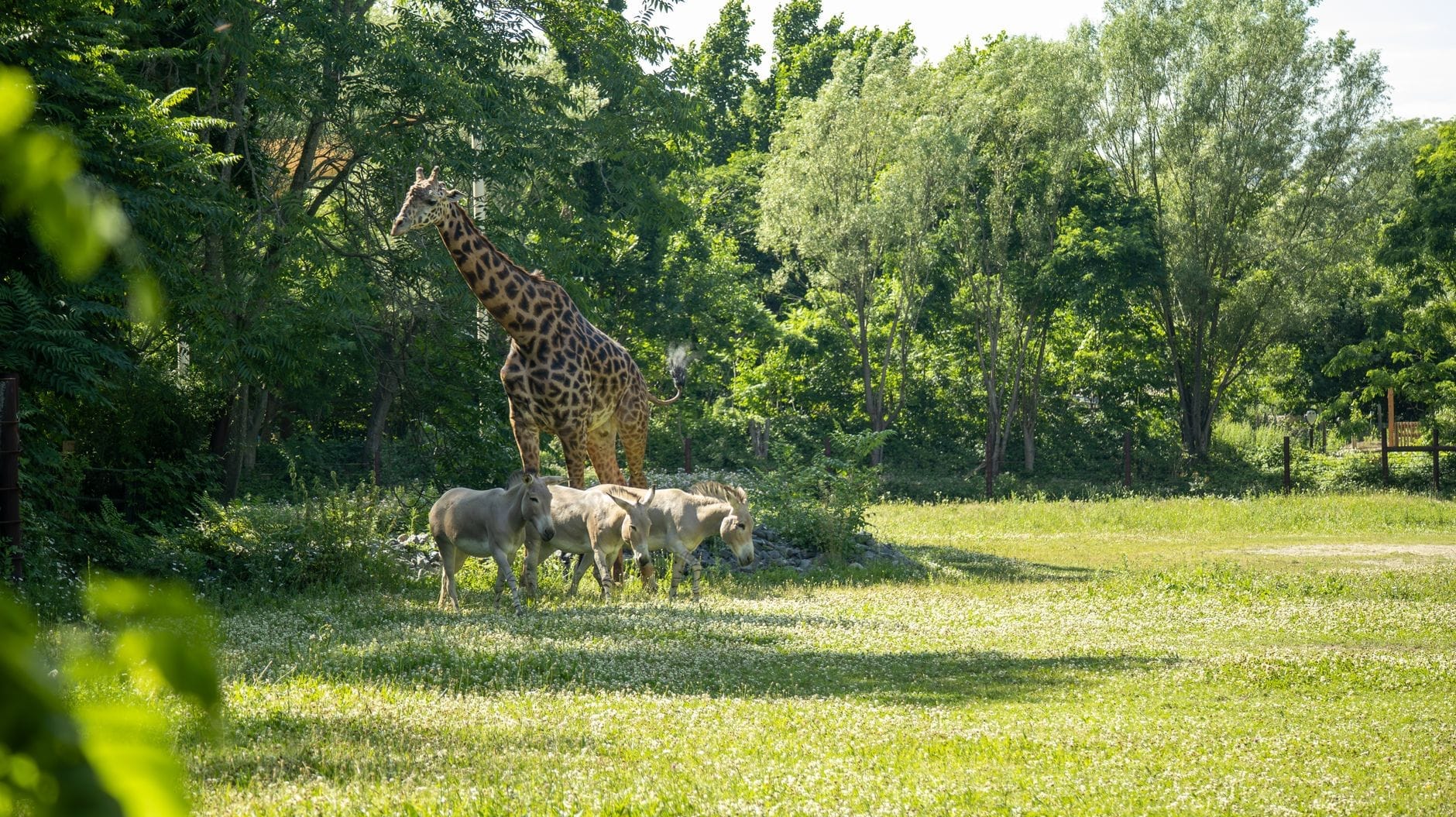
Franklin Park Zoo is a 72-acre zoological park operated by Zoo New England, sitting inside Frederick Law Olmsted's Franklin Park in Boston’s historic Franklin Park. It is not a boutique wildlife sanctuary or a sprawling destination resort zoo. What it is, honestly, is a well-maintained mid-size urban zoo with legitimate exhibit depth, particularly strong in African wildlife, where the Serengeti Crossing habitat gives giraffes, zebras, and ostriches a large outdoor range.
The zoo occupies a meaningful slice of Boston's parkland history. Franklin Park itself was designed by Olmsted in the 1880s as the crown jewel of his Emerald Necklace park system, and the zoo opened in 1914. Walking the grounds, especially along the wooded perimeter paths, you feel the interplay between designed parkland and zoo infrastructure in a way that purely suburban zoos rarely offer.
If you are planning a wider exploration of Boston's green spaces, the Emerald Necklace connects Franklin Park to the Arnold Arboretum and Jamaica Pond in a continuous parkland corridor worth knowing about before your visit.
The Experience: Moving Through the Zoo
Most visitors enter through the main gate on Franklin Park Road and fan out roughly counterclockwise toward the larger mammals. The paths are paved and wide enough for strollers, though some connector routes between exhibits use compacted gravel that can be uneven after rain. The terrain is gently rolling, with a few short inclines that are noticeable if you are pushing a heavy stroller or have limited mobility.
The Serengeti Crossing is typically the showpiece. On a clear morning, the open habitat lets you watch giraffes move through actual distance, not just stand at a fence rail. The smell here is unmistakably animal, earthy and warm, which younger children either find thrilling or startling. Zebras graze without fencing between them and the giraffes, giving the enclosure an unusually naturalistic quality by urban zoo standards.
The Tropical Forest building houses the gorilla habitat, one of the older permanent structures on the property. Inside, the air is humid and close, carrying a distinctive greenhouse warmth even in February. Western lowland gorillas are the draw here, and the exhibit is designed so multiple viewing angles are possible, including a lower-level window that puts children at eye level with the animals. It is worth lingering. Early mornings tend to see more gorilla activity before the heat of the day slows them down.
💡 Local tip
Arrive within the first 30 minutes of opening. Animals are measurably more active before 10:30 a.m., keepers often conduct morning feeding routines during this window, and school groups have not yet arrived to crowd the main paths.
Tickets & tours
Hand-picked options from our booking partner. Prices are indicative; availability and final rates are confirmed when you complete your booking.
Boston Summer Night Trolley Tour and River Cruise
From 27 €Instant confirmationFree cancellationLEGOLAND Discovery Center Boston tickets
From 26 €Instant confirmationFree cancellationGhosts and Gravestones tour of Boston
From 39 €Instant confirmationFree cancellationBest of Boston tour
From 182 €Instant confirmationFree cancellation
How the Experience Changes by Time of Day and Season
Morning visits, particularly on weekdays, are the clearest choice for serious animal-watching. By midday in summer, many large mammals retreat to shaded areas and become harder to observe. The zoo can feel noticeably different in early October than in July: the crowds thin dramatically after Labor Day, the afternoon light is lower and warmer, and the surrounding Franklin Park canopy shifts into fall color that frames exhibits in a way summer visits do not offer.
Winter visits are underrated but require solid preparation. The zoo is open year-round, with hours running 9:00 a.m. to 4:00 p.m. from October through March. Cold-weather days mean shorter lines and the chance to see how indoor habitats like the Tropical Forest feel distinctly different: stepping inside from a 28-degree January morning into humid gorilla habitat warmth is one of those sensory contrasts that makes an off-season zoo visit memorable.
In late summer and early fall, Zoo New England operates Boston Lights, a nighttime lantern experience running from approximately 6:00 to 10:30 p.m. on its seasonal schedule. This event transforms the zoo into a different kind of attraction entirely, with illuminated sculptures and installations throughout the grounds. It is separately ticketed and worth checking the official calendar well in advance, as it sells out on popular dates.
⚠️ What to skip
The zoo is closed on Thanksgiving Day and Christmas Day. If you are visiting Boston in late November or December, confirm the schedule at zoonewengland.org before making plans.
Getting There: Transit Is a Viable Option
Franklin Park Zoo sits roughly 6 miles south of downtown Boston, in a part of the city that many visitors never reach by foot. Driving is straightforward with free parking available on-site, accessible via Storrow Drive, Route 9, I-93, and Route 128 depending on your origin point.
By public transit, the MBTA offers two practical approaches. From the Orange Line, you can exit at Ruggles Station and board MBTA bus routes 22, 28, 29, or 45 to reach the zoo. Alternatively, exit at Jackson Square and use routes 22, 28, or 29. The Orange Line connects directly to Back Bay, Copley, Downtown Crossing, and North Station, so this route works well if you are staying in the central neighborhoods.
If you are still working out your broader Boston transit strategy, the getting around Boston guide covers MBTA fares, CharlieCard setup, and neighborhood-by-neighborhood transit logic in practical detail.
Practical Details Worth Knowing Before You Go
The zoo's hours shift meaningfully by season. April through July, weekday hours run 9:00 a.m. to 5:00 p.m., with weekends extended to 6:00 p.m. August through September daily hours are 9:00 a.m. to 5:00 p.m. October through March, the zoo closes at 4:00 p.m. daily. These are the posted hours at the time of writing; always confirm current hours at zoonewengland.org before traveling.
For Massachusetts residents holding EBT or WIC cards, discounted daytime admission is available at $5 per person for up to four people, valid through December 31, 2026. Standard adult and child ticket prices should be confirmed directly on the Buy Tickets page at zoonewengland.org, as pricing tiers change and purchasing in advance is generally recommended for peak season weekends.
There is a stroller rental option on-site, and a zoo café operates during peak months, though the food options are functional rather than notable. Packing snacks and water, especially for summer visits, is a better strategy than relying on in-zoo dining. The zoo grounds have shaded benches distributed throughout, and the wooded sections near the perimeter offer respite during hot afternoons.
ℹ️ Good to know
Photography at Franklin Park Zoo works best in the first two hours after opening. The low-angle morning light enters the open exhibits from the east, and animals tend to be positioned near the viewing areas rather than retreated to shaded shelter. A phone camera handles most scenarios well; longer focal lengths help with the giraffe habitat.
Who Gets the Most From This Zoo
Franklin Park Zoo earns its visit primarily for families with children under 12 and for travelers who want a meaningful outdoor activity without leaving city limits. The animal collection is diverse, the exhibits are maintained thoughtfully, and the combination of forest park setting with zoological content gives it a character that purely suburban zoos lack.
That said, serious zoo enthusiasts accustomed to the scale of institutions like the San Diego Zoo or the Smithsonian's National Zoo should calibrate expectations. This is a mid-size urban zoo with a strong gorilla and African savanna program but a smaller overall footprint than major American zoo destinations. If you have already done the Museum of Fine Arts, Fenway Park, and the Freedom Trail and are looking for something distinctly different on day three or four, Franklin Park Zoo fits that brief well.
Families planning a full day around the zoo might also consider pairing it with Arnold Arboretum, which is walkable within Franklin Park and offers 281 acres of labeled trees and winding paths at no admission cost.
Travelers who should probably skip Franklin Park Zoo: solo visitors with a compressed two-day itinerary focused on historic Boston, and those primarily interested in architecture, food, or nightlife. The zoo also sits in a part of Boston where street orientation can be unfamiliar to first-time visitors, so factoring in transit time from central neighborhoods is worth doing honestly before committing.
For a broader look at how the zoo fits into a Boston family trip, the Boston with kids guide covers age-by-age attraction recommendations across the city.
Insider Tips
- Weekday mornings in late September and early October offer perhaps the best zoo conditions of the year: crowds are minimal, temperatures are comfortable, and the Franklin Park tree canopy around the exhibits shows early fall color that makes the whole experience feel more expansive than a summer visit.
- If you are visiting with young children, the Serengeti Crossing viewing deck tends to be less crowded than ground-level viewing areas and provides a better sight line to where giraffes spend most of their morning hours.
- Boston Lights, the nighttime lantern event in late summer and fall, is a categorically different experience from the daytime zoo and is worth checking the Zoo New England events calendar for. It can sell out on popular dates.
- The zoo's free parking lot makes driving convenient, particularly if you are coming from suburbs south or west of the city. From the northern neighborhoods, the Orange Line remains faster.
- Check the Zoo New England website for member preview days and special conservation programs. Membership also covers reciprocal access at the sister property, Stone Zoo in Stoneham.
Who Is Franklin Park Zoo For?
- Families with children aged 3 to 12 looking for a full half-day activity
- Visitors spending four or more days in Boston who want a break from historic downtown sites
- Budget-conscious travelers, particularly Massachusetts EBT/WIC holders with access to discounted admission
- Wildlife photography enthusiasts who want savanna and primate subjects in a parkland setting
- Anyone visiting during the Boston Lights season (late summer to fall) seeking an evening activity
Nearby Attractions
Combine your visit with:
- Arnold Arboretum
Founded in 1872, the Arnold Arboretum is the oldest public arboretum in North America — a free, 281-acre landscape in Jamaica Plain managed by Harvard University. With over 15,000 accessioned plants and sweeping hillside views, it draws botanists, dog walkers, and curious visitors in equal measure across all four seasons.
- Blue Hills Reservation
Ten miles south of downtown Boston, Blue Hills Reservation spreads across more than 7,000 acres of forested hills, rocky ridgelines, and glacial wetlands. Free to enter and open year-round from dawn to dusk, it offers 125 miles of trails ranging from easy pond-side loops to a genuine summit climb at 635-foot Great Blue Hill.
- Boston Duck Tours
Boston Duck Tours puts you aboard a replica World War II DUKW amphibious vehicle for an 80-minute circuit of the city's most historic landmarks, finishing with a splash into the Charles River. Running seasonally from late March through late November, it's one of the few tours in Boston that covers both street-level sights and a Charles River perspective in a single trip.
- Boston Harbor Islands
Boston Harbor Islands National and State Park puts 34 islands and peninsulas within easy ferry reach of downtown Boston. From Civil War earthworks on Georges Island to the oldest lighthouse station in the United States on Little Brewster, the park rewards visitors who are willing to trade the city's brick sidewalks for salt air and open water.