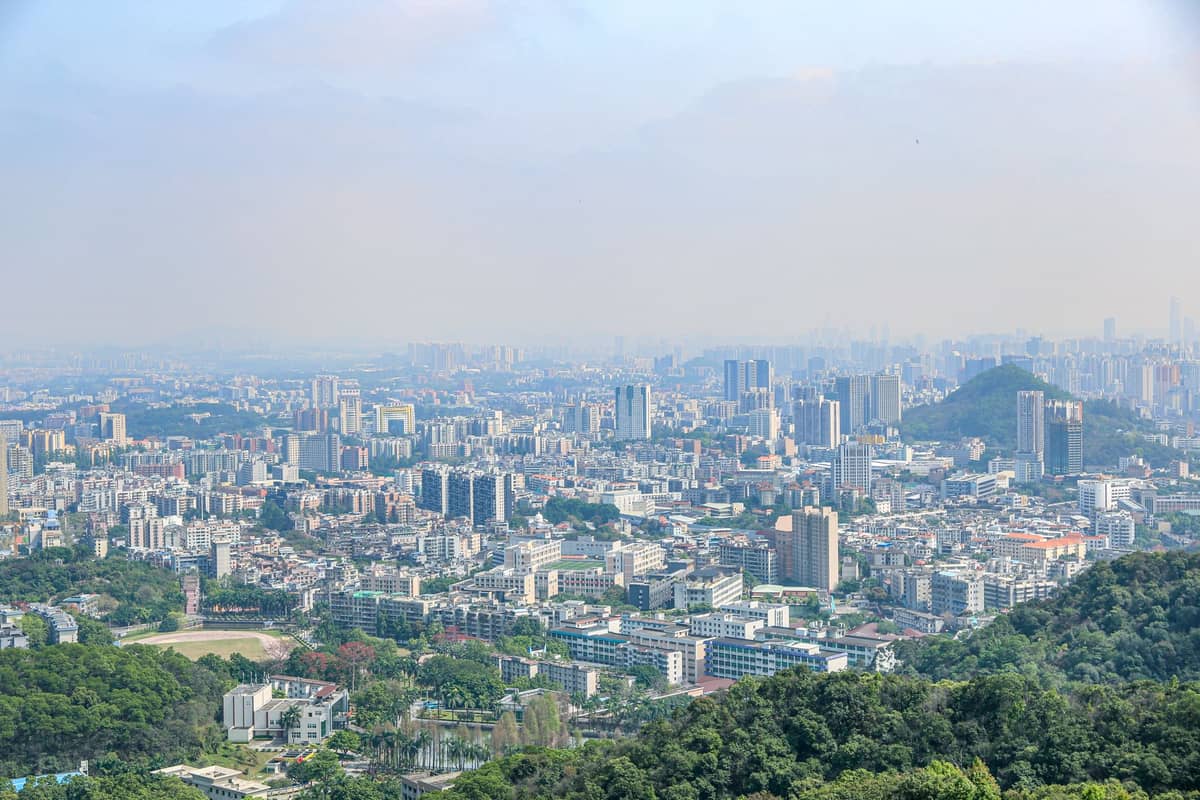
Baiyun District stretches across the north-central reaches of Guangzhou, covering everything from the granite slopes of Baiyun Mountain to the runways of Guangzhou Baiyun International Airport. It is one of the city's largest districts by area, blending urban residential neighborhoods, forested parkland, and major transport infrastructure in a way that few other parts of Guangzhou can match.
Baiyun District is northern Guangzhou's green lung and its main gateway to the world. Where the city's older central districts feel dense and layered with history, Baiyun opens up: wider roads, forested ridgelines above the urban grid, and the hum of aircraft on final approach to one of China's busiest airports. It is not a conventional sightseeing district, but Baiyun Mountain alone justifies the trip north.
Orientation
Baiyun District occupies the north-central part of Guangzhou, sitting above the historic central districts and extending into lower-density terrain. To its south lie Liwan and Yuexiu, the old city districts where most of Guangzhou's historical sightseeing is concentrated. Tianhe and Huangpu border Baiyun to the southeast and east. To the north, the district gradually gives way to Huadu and Conghua, which are more peripheral and semi-rural in character.
The district is genuinely large. Its southern urban fringe merges almost seamlessly with central Guangzhou's residential neighborhoods, and that is where most of the metro-accessible activity is concentrated. Travel north and the density thins quickly, culminating in the airport zone. For most visitors, the relevant part of Baiyun is its southern half: the area around Baiyun Mountain and the residential and commercial subdistricts that connect to the central metro network within 20 to 40 minutes.
The Pearl River water system feeds rivers across Baiyun, including the Bajiang River and the Liuxi River. These waterways are not major visitor draws in themselves, but they shape the district's topography and give it a greener, more open feel than the flat urban grid further south. The granite massif of Baiyun Mountain is the district's visual anchor, visible on clear days from many points across northern Guangzhou.
Character and Atmosphere
Baiyun does not feel like a tourist district and makes no particular effort to be one. The southern urban neighborhoods are genuine Guangzhou residential territory: wide arterial roads, markets selling vegetables and live seafood on weekday mornings, apartment complexes with drying laundry on the balconies, and the particular mid-morning quiet of a city where most working people have already commuted out. Cantonese is the default language on the street; Mandarin is understood but less commonly heard at the local level.
Early mornings around the lower entrances to Baiyun Mountain tell you something important about this district. Retirees arrive before 7am with telescoping walking poles. Groups practice tai chi on the granite-paved plazas near the park gates. Vendors set up bamboo steamers and sell breakfast congee and rice rolls to hikers heading uphill before the heat builds. By 9am the paths are genuinely busy; by midday on a weekend, the main routes feel crowded in the way that any major urban park does on a sunny day in a city of nearly nineteen million people.
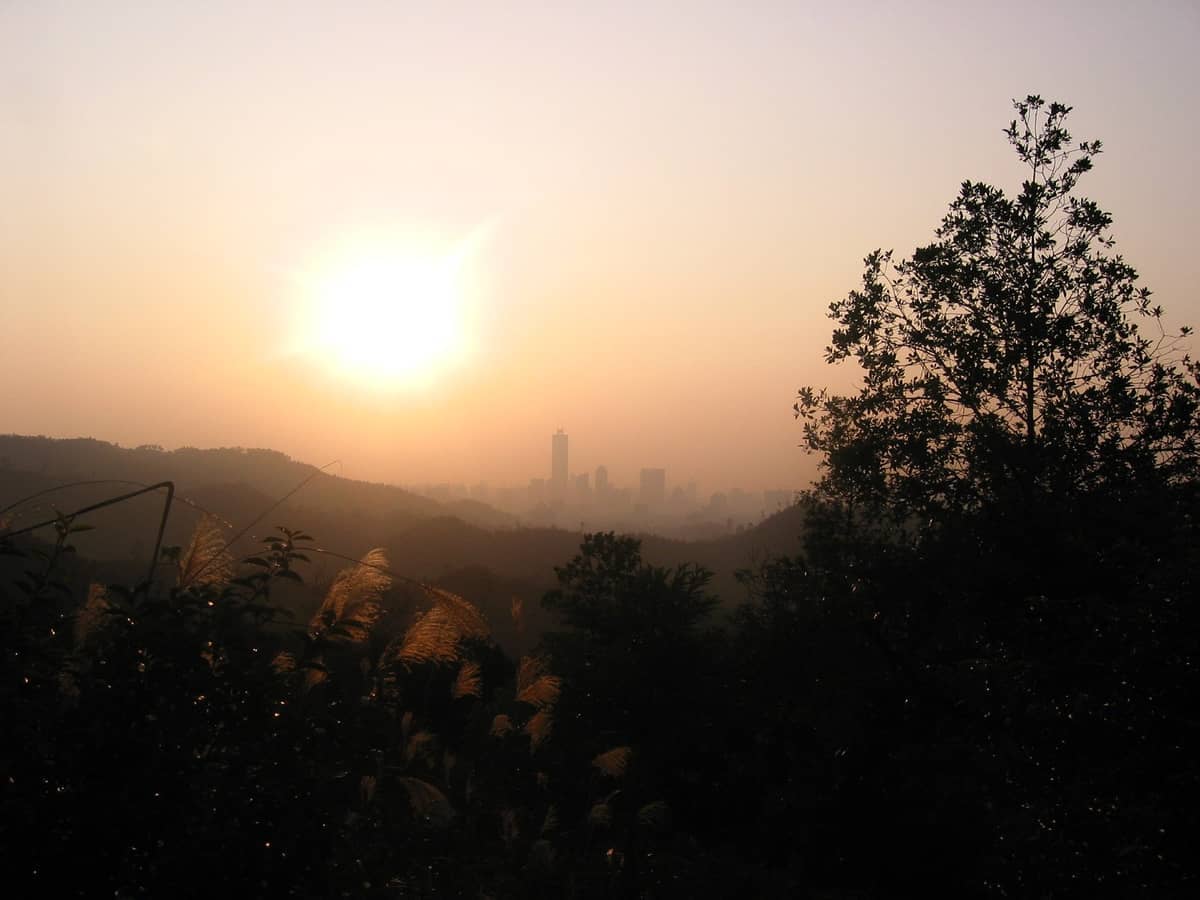
Afternoons in the lowland neighborhoods slow down noticeably. The light in late afternoon turns hazy and golden over the lower slopes, and the mountain itself casts long shadows across the roads heading south. After dark, Baiyun's residential streets are calm rather than lively; this is not where Guangzhou's nightlife happens. The atmosphere is domestic and low-key, which suits some travelers very well and will disappoint others looking for energy after dark.
ℹ️ Good to know
Baiyun Mountain Park has multiple entrance gates; the Yuntai Garden entrance in the south and the Moxing Ridge area in the north each offer different experiences. Check which gate best matches your planned route before heading there.
What to See and Do
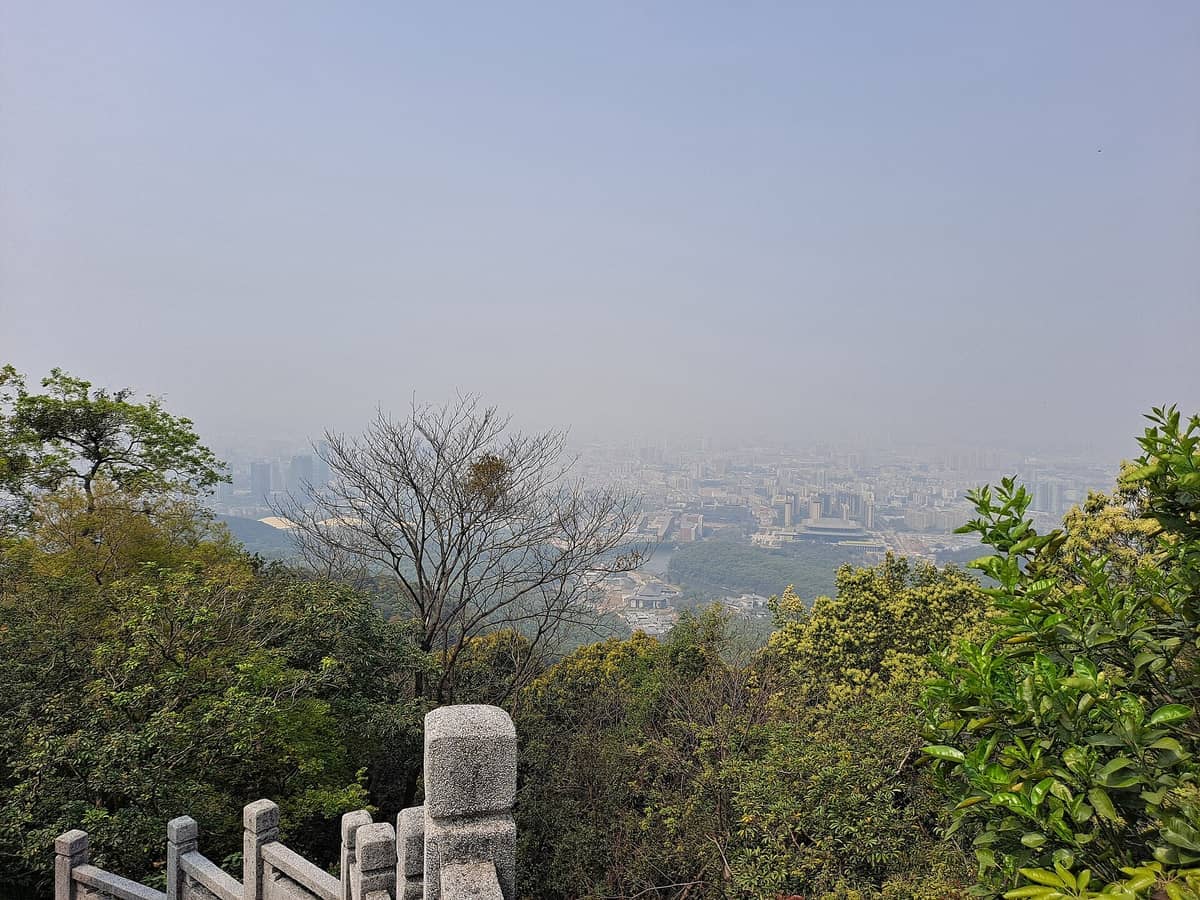
The district's dominant attraction is Baiyun Mountain, known in Cantonese as Baak-wan Saan and formally designated as a national scenic area. The mountain is not a single peak but a range of over thirty summits, with Moxing Ridge as the highest point at around 382 metres. The park covers more than 20 square kilometres and contains a cable car, formal garden areas, temples, scenic overlooks, and long hiking trails. The views from the upper ridges across Guangzhou's low-rise northern suburbs toward the CBD skyline in the south are among the better elevated perspectives the city offers. The guide on hiking Baiyun Mountain covers route options and practical logistics in detail.
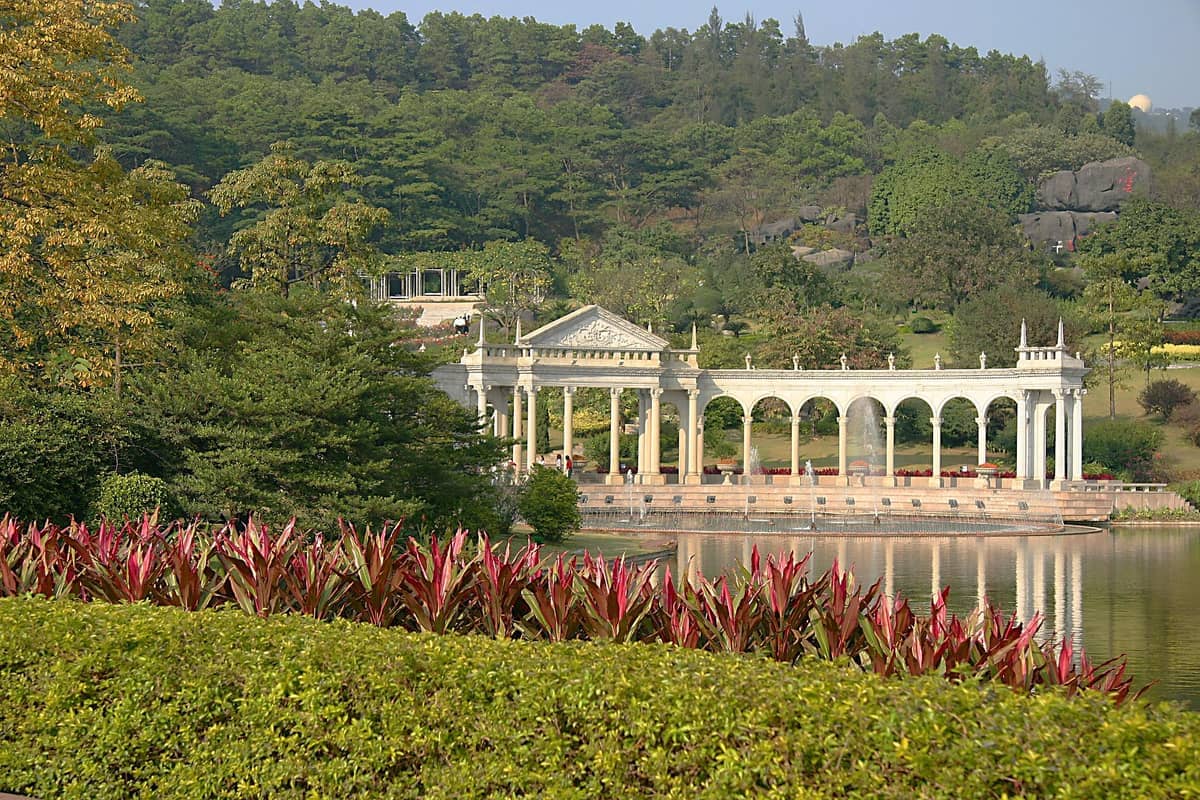
Within the mountain park, Yuntai Garden is worth a separate visit. Modeled loosely on French formal garden design but planted with subtropical species, it occupies a south-facing slope below the main ridge and is particularly photogenic in spring when the flowering plants are at their peak. Admission is separate from the main park ticket.
Also within Baiyun Mountain's boundaries is Moxing Ridge, the highest point in the range, accessible via a combination of walking paths and shuttle bus. On clear autumn days, the ridge offers panoramic views across the city. The path up is well-maintained but genuinely uphill; allow at least ninety minutes for a return trip on foot from the upper cable car station.
Beyond the mountain, Baiyun District holds the South China National Botanical Garden, one of the largest botanical research collections in Asia. It is located in the northeastern part of the district and covers a substantial area of landscaped terrain and natural forest. It appeals more to plant enthusiasts and families with time to wander than to visitors on a tight itinerary, but the scale is genuinely impressive.
Baiyun Mountain scenic area: hiking, cable car, temple visits, and city views
Yuntai Garden: formal gardens with subtropical planting within Baiyun Mountain park
Moxing Ridge: the highest point in the Baiyun range, best visited in autumn for clear skies
Yuntai Garden and Baiyun Mountain parks: major green escapes in the district
Canton Orchid Garden (nearby in Yuexiu; often combined with Baiyun parks): a dedicated orchid collection worth visiting in spring
💡 Local tip
Visit Baiyun Mountain on a weekday if possible. Weekend crowds at the lower entrance plazas and cable car queues can be substantial, particularly between October and March when the weather is at its best.
Eating and Drinking
The food culture in Baiyun's residential neighborhoods is thoroughly Cantonese and priced for locals rather than tourists. The streets around the lower mountain entrances have a cluster of restaurants and snack stalls that cater to hikers and day-trippers: clay pot rice, roast meats, fresh tofu, and the kind of simple congee that Guangzhou does better than anywhere else. Prices at these places are low and portions are generous.
Baiyun District is not a dim sum destination in the way that central Liwan or Yuexiu are, but it has a functional range of yum cha restaurants in its urban subdistricts. These are neighborhood spots rather than institutions, operating on the traditional morning-only schedule and filled mostly with older residents who come daily. If you find yourself staying near the mountain and want a proper Cantonese breakfast, this kind of local teahouse is easy to find within a few blocks of any metro station in the area.
The residential commercial strips have the full range of everyday Guangzhou eating: Cantonese roast shops with ducks and pork hanging in the windows, noodle counters, hotpot restaurants, and the newer tea drink chains that have colonized every neighborhood in southern China. There are no internationally recognized restaurant destinations in Baiyun, and the café culture that characterizes parts of Tianhe has not really taken hold here. For serious food tourism, you will be taking the metro south.
💡 Local tip
The stalls near Baiyun Mountain's south entrance tend to raise prices on weekends. For better value and less theater, eat in the streets a few blocks away from the park gates, where the restaurants are aimed at residents rather than day-trippers.
Getting There and Around
The Guangzhou Metro reaches into the southern and central parts of Baiyun District on multiple lines, making access from the city center straightforward. Several metro stations serve the area around Baiyun Mountain, including Baiyun Park station on Line 2 and nearby interchange points. From the central interchange at Gongyuanqian or from Tianhe, the ride north into Baiyun takes roughly 20 to 30 minutes. The full guide to getting around Guangzhou covers metro fares, navigation apps, and ticketing in practical detail.
Guangzhou Baiyun International Airport (IATA: CAN) is the district's other major transport hub, located in the northern part of Baiyun and Huadu. The airport connects to the city center via the Guangzhou Metro Airport Express line, with a journey to central Guangzhou taking approximately 40 to 50 minutes depending on destination. Taxis and ride-hailing via DiDi are also available from the airport, though travel time varies significantly with traffic. Verify current fares and metro schedules before arrival, as these change periodically.
Within the district, surface buses cover routes that the metro does not. For getting between the urban subdistricts and the mountain park entrances on the western and northern sides, local buses are the practical option. Route numbers and stops are posted in Chinese; navigation apps like Baidu Maps or Amap (Gaode) display real-time bus information and are reliable tools for navigating Baiyun's bus network without Mandarin fluency.
Inside Baiyun Mountain park itself, a shuttle bus system connects the main entrance plazas with upper sections of the mountain, including the cable car base station. This is the practical choice for visitors who want to reach the ridge without a full uphill walk. Shuttle tickets are purchased separately inside the park.
Where to Stay
Baiyun District is not a primary hotel base for most visitors to Guangzhou, and for good reason: the city's best-connected accommodation options cluster further south in Tianhe and Yuexiu, where one metro ride puts you near most of the historic and commercial sights. That said, there are circumstances where staying in Baiyun makes practical sense. The full guide to where to stay in Guangzhou covers all district options with honest trade-offs.
Travelers with early-morning or late-night flights through Baiyun International Airport are the most obvious Baiyun stayers. The airport zone has a range of business and transit hotels, most of them functional rather than characterful. They exist to solve a logistics problem, and they do that adequately.
A small number of hotels and guesthouses operate near the mountain park, oriented toward weekend hikers and families visiting on day trips. These tend to offer lower prices than equivalent central options, and the proximity to Baiyun Mountain is genuine; you can be on the lower trails within fifteen minutes of checkout. The trade-off is that evenings in this part of the district are quiet in the extreme, and heading to Yuexiu or Liwan for dinner requires a metro journey. For independent travelers who prioritize green space over urban convenience, this can be a workable base.
Practical Assessment: Who Baiyun Is For
Baiyun District asks more of a visitor than Guangzhou's more curated neighborhoods. There are no pedestrianized heritage streets here, no consolidated sightseeing zones, and no particular infrastructure designed to guide a tourist from one attraction to the next. What it offers instead is scale, greenery, and an unperformed version of how northern Guangzhou actually operates day to day.
For travelers doing more than two days in Guangzhou, Baiyun Mountain is a genuine priority worth building half a day around. Pair it with a visit to Yuntai Garden and you have a full morning with real variety. First-timers might want to orient themselves in the historic core first; the Guangzhou first-timer guide suggests how to sequence the city for a short trip.
Travelers arriving or departing through CAN who need a nearby hotel have a pragmatic reason to stay in Baiyun. Everyone else will find the metro connections from central neighborhoods sufficient for a mountain day trip, and will sleep more conveniently further south.
TL;DR
Baiyun District is northern Guangzhou's largest district, covering dense residential neighborhoods, Baiyun Mountain's forested range, and Guangzhou Baiyun International Airport.
Baiyun Mountain is the standout attraction: over 30 peaks, a cable car, formal gardens, and elevated city views accessible via metro from central Guangzhou in around 30 minutes.
The district has a functioning local food scene based on Cantonese staples; it is not a destination for food tourism but delivers honest, inexpensive neighborhood eating.
Most visitors will base themselves in Tianhe or Yuexiu and visit Baiyun as a day trip; staying in the district makes most sense for airport transits or hikers who want early mountain access.
Best suited to travelers who want green space and authentic residential Guangzhou rather than packaged sightseeing; not recommended as a first-timer base.
Three days is the ideal amount of time to experience Guangzhou's full range: ancient temples and colonial backstreets, futuristic skylines and river cruises, and one of the world's great food cities. This day-by-day itinerary covers the essential attractions without turning the trip into a rushed checklist.
Guangzhou's humid subtropical climate means the difference between a comfortable trip and a sweaty, storm-interrupted one often comes down to timing. This guide breaks down every season, flags the Canton Fair impact on prices, and tells you which months are genuinely worth prioritizing.
Guangzhou rewards those who look up, climb high, and linger by the river after dark. This guide covers the city's best viewpoints, from the 488-meter observation deck of Canton Tower to the forested summit of Moxing Ridge, plus hilltop temples, riverside promenades, and terraced gardens with sweeping city panoramas.
The Canton Fair is the world's largest trade fair, held twice a year in Guangzhou, China. This guide covers registration, badge requirements, phase schedules, venue logistics, and practical tips for first-time foreign buyers.
Guangzhou sits at the center of one of the most destination-rich regions in China. Whether you want ancient watchtowers, serious Cantonese food, or a Hong Kong skyline, the best day trips from Guangzhou are faster and cheaper to reach than most travelers expect. This guide ranks your options by practicality, not just scenery.
Guangzhou is the undisputed home of dim sum, where yum cha is less a meal and more a daily ritual. This guide covers the best restaurants across the city, the dishes worth ordering, the timing tricks locals rely on, and the common mistakes first-timers make.
Guangzhou rewards budget travelers generously. From ancient temples and colonial island walks to world-class museums and urban wetlands, these 20 free attractions cover the city's history, culture, and nature without spending a yuan on entry.
Guangzhou is a sprawling city of nearly 19 million people across 7,434 km², but its transport network is one of the most efficient in China. This guide covers the metro system, taxis, ride-hailing, airport connections, and everything else you need to move around the city confidently.
Guangzhou's built environment spans two thousand years of history, from climate-adapted Lingnan courtyards to some of the boldest contemporary structures in Asia. This guide walks you through the key styles, the best places to see them, and how to plan a serious architectural itinerary across the city.
Baiyun Mountain is Guangzhou's best-known hiking destination, with marked trails, a cable car to the summit area, and panoramic views over the Pearl River Delta. This guide covers every trail option, gate access, transport logistics, and the best times to go.
Cantonese opera is one of southern China's most distinctive art forms, and Guangzhou is the best city in the world to experience it. This guide covers the top venues, the essential museum visit, seasonal advice, and practical tips for first-timers and returning visitors alike.
Chimelong Tourist Resort in Guangzhou's Panyu District is one of China's largest theme park complexes, but each park inside it runs on its own schedule, pricing, and vibe. This guide breaks down every option so you can pick the right park and plan your day without wasted time.
Chinese New Year in Guangzhou is not a single night of fireworks. It is a rolling season of flower fairs, lantern exhibitions, temple activities, and district-level events that stretches from late January through early March. This guide covers what happens, when, where, and how to navigate it without getting caught out.
Guangzhou is southern China's Cantonese capital: a city of 18.7 million people, 2,200 years of history, and some of the best food in the country. This guide covers everything a first-time visitor needs, from arrival logistics and district breakdowns to the best time to visit and frank guidance on what the city actually delivers.
Guangzhou Baiyun International Airport (CAN) is southern China's primary aviation hub, serving a city of nearly 19 million people. This guide covers everything from booking flights and understanding the airport layout to getting into the city quickly and affordably.
Autumn is the most comfortable season to visit Guangzhou, with cooler temperatures, low rainfall, and clear skies from October through December. This guide breaks down the weather month by month, what to do, what to watch out for, and how to get the most from a fall visit to Guangdong's capital.
Guangzhou punches well above its weight as a luxury destination. This guide breaks down the best 5-star hotels by district, the fine dining worth your money, and the high-end cultural experiences that separate a premium Guangzhou trip from a basic one.
Guangzhou has one of the richest museum scenes in southern China, spanning 2,000 years of trade, art, and revolutionary history. This guide covers the best museums across every category, from ancient archaeology to Cantonese opera, with practical tips on booking, admission, and where to go first.
Guangzhou nightlife spans rooftop lounges with skyline views, a dedicated riverside bar strip, speakeasy cocktail bars, live music venues, and Pearl River night cruises. This guide breaks down where to go, what to spend, and when to go out across the city's main after-dark districts.
Guangzhou is one of China's most rewarding cities for budget travelers. From 2 CNY metro rides to free museums and 10 CNY street food, this guide breaks down exactly where your money goes and how to stretch it further across every category of spend.
The Pearl River (Zhujiang) is Guangzhou's geographic and cultural backbone, stretching through the city's historic core and modern skyline. This guide covers night cruises, waterfront walks, pier logistics, and the best spots along the riverbank for first-timers and returning visitors alike.
Guangzhou has been a trading city for over 2,000 years, and that commercial DNA runs through everything from its flagship luxury malls in Tianhe to its chaotic wholesale garment markets near the train station. This guide breaks down every major shopping zone by what you actually buy there, how much to budget, and when to go.
Guangzhou has been a city of traders, pilgrims, and believers for over two thousand years, and its temples reflect every strand of that history. This guide covers the finest Buddhist, Taoist, Islamic, and colonial Christian sites in the city, from ancient pagodas in Yuexiu to a spectacular Mazu complex on the Pearl River Delta.
The journey from Guangzhou to Hong Kong takes as little as 47 minutes by high-speed train or up to 4 hours by road.. This guide breaks down every realistic option, including which ferry routes actually exist, what each costs, and when to book in advance.
Guangzhou's best neighborhoods are surprisingly walkable once you know which districts to target. This guide breaks down the top self-guided walking routes, what each area offers, how to connect them by metro, and the practical details that make a walking day actually work.
Guangzhou is the wholesale capital of southern China, with over 1,000 specialized markets covering everything from clothing and electronics to toys and fabrics. This guide cuts through the noise with district-by-district breakdowns, real pricing expectations, payment logistics, and the timing intel that separates experienced buyers from first-timers.
Guangzhou is a genuinely underrated family destination, with world-class theme parks, interactive museums, free parks, and riverfront evenings that work for all ages. This guide covers the best activities for kids, honest pricing, seasonal advice, and how to structure your visit without burning out.
Guangzhou rarely tops bucket lists, but that's exactly what makes it interesting. This guide cuts through the business-city stereotype to show what the city actually offers travelers: world-class Cantonese food, genuine history, serious shopping, and a pace of life that Beijing and Shanghai simply don't have.
Guangzhou rewards visitors with one of China's richest mixes of history, food culture, river life, and modern architecture. This guide covers the top things to do in Guangzhou across every district, with practical assessments, practical logistics, and seasonal advice.
Guangzhou is the birthplace of Cantonese cuisine, a cooking tradition built on freshness, precision, and restraint. This guide covers the essential dishes, where to eat them, what to pay, and how to eat like a local from sunrise to sunset.
Guangzhou has several distinct hotel zones, and choosing the wrong one can cost you hours of commuting per day. This guide breaks down the five main areas by trip type, with practical assessments of who each zone actually suits.