Xochimilco is Mexico City's southern UNESCO World Heritage borough, where a network of pre-Hispanic canals and floating gardens survives as a living remnant of the Valley of Mexico's original lake landscape. Colorful wooden trajineras carry visitors past chinampa farms, marimba bands, and food vendors on weekends, while the town center runs on its own quieter, distinctly local rhythm.
Xochimilco sits about 28 kilometers south of Mexico City's historic center, and it feels that far removed in time as well as distance. This is where the ancient lake system that once surrounded Tenochtitlán still exists in visible, navigable form: a UNESCO-inscribed network of canals and chinampa farming plots that has been in continuous use since before the Spanish arrived.
Orientation
Xochimilco is one of Mexico City's 16 boroughs (alcaldías), covering roughly 125 square kilometers in the far south of the capital. Its urban center lies at approximately 19.2646° N, 99.1051° W, well below the main urban corridor that connects Centro Histórico to Coyoacán and beyond. The borough is bounded to the north by Coyoacán and Tlalpan, to the south by Milpa Alta, and to the east by Tláhuac. To the south, the borough transitions from urban settlement into conservation-designated land and agricultural land, including parts of the Ajusco highlands.
The part most visitors come for is not the entire borough but specifically the canal zone: the UNESCO World Heritage area inscribed as a component of the "Historic Centre of Mexico City and Xochimilco." These canals lie south and southeast of the Xochimilco town center, a historic colonial core with its own plaza, market, and parish church. The zone is distinct from the touristy embarcadero strip, which is where most first-time visitors spend their time. For context on how Xochimilco fits into the wider city's geography, the where to stay in Mexico City guide covers how the southern boroughs compare to more central neighborhoods.
Getting your bearings here takes a moment. The Tren Ligero station is in the northern part of the urban center, and the main embarcaderos are a 25 to 30 minute walk south of that. Local streets between the station and the waterfront are a mix of market stalls, residential blocks, and the kind of neighborhood life that has nothing to do with tourism. The main dock area, centered on Embarcadero Nativitas (sometimes misspelled “Navitas”), is where canal traffic concentrates on weekends.
Character & Atmosphere
On a weekday morning, Xochimilco's town center moves at a pace that feels closer to a provincial Mexican city than to the urban density of Roma or Condesa. The Mercado Xochimilco opens early, and the smells of fresh produce, copal incense from nearby church vendors, and frying food from market stalls layer over each other in the cool morning air. The altitude here is the same as central Mexico City, around 2,240 meters, and mornings are crisp even in warmer months.
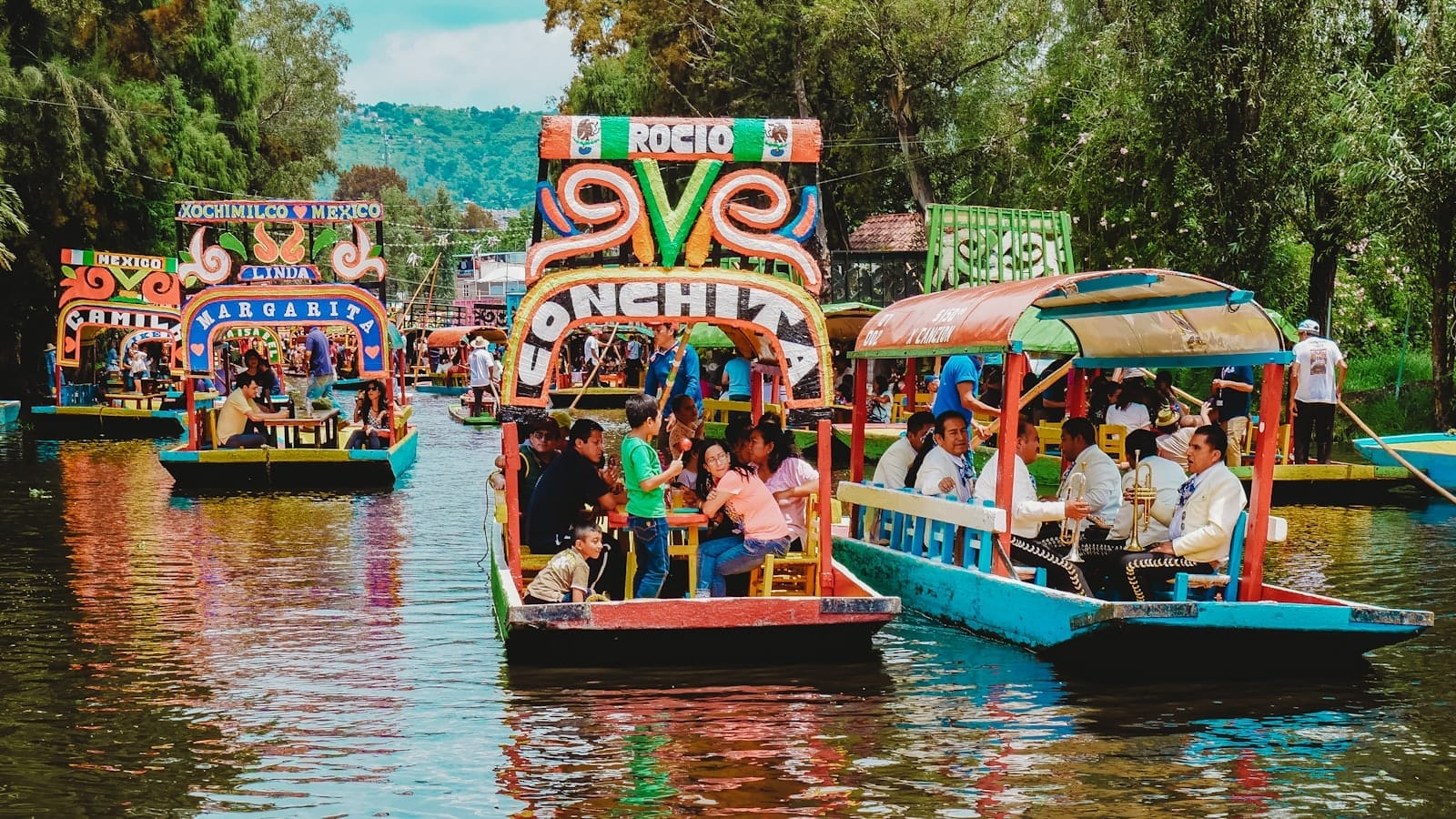
By late morning on Saturdays and Sundays, the character shifts substantially. Families from across Mexico City pour in for trajinera rides, and the embarcaderos become often crowded. Music from marimba players and mariachi bands hired by different boats drifts across the water simultaneously, creating an overlapping wall of sound that is festive if you are in the right mood and overwhelming if you are not. Vendors in smaller boats pull alongside the trajineras selling food, drinks, flowers, and handicrafts. The canal experience on a weekend afternoon is not peaceful: it is a floating street party.
Weekdays are a different proposition entirely. The canals are quieter, the embarcaderos less frantic, and the boat operators more willing to take a slower route through narrower waterways lined with willows and chinampa plots where farmers are actually working. The quality of the experience on a Tuesday morning compared to a Sunday afternoon is not comparable: they are essentially two different places.
💡 Local tip
If your schedule allows, visit on a weekday. You will have more negotiating room on routes, less competition for embarcadero space, and far better views of the working chinampa landscape without the weekend party atmosphere.
After dark, Xochimilco is largely a local neighborhood again. The tourist activity winds down well before sunset, and the streets around the town center are lit by a combination of market vendors, local restaurants, and pulquerías. It is not a nightlife destination in the way that Roma Norte or the Zona Rosa are, and visitors who are not comfortable navigating unfamiliar streets at night in an area they do not know should plan to return to central Mexico City before the evening.
What to See & Do
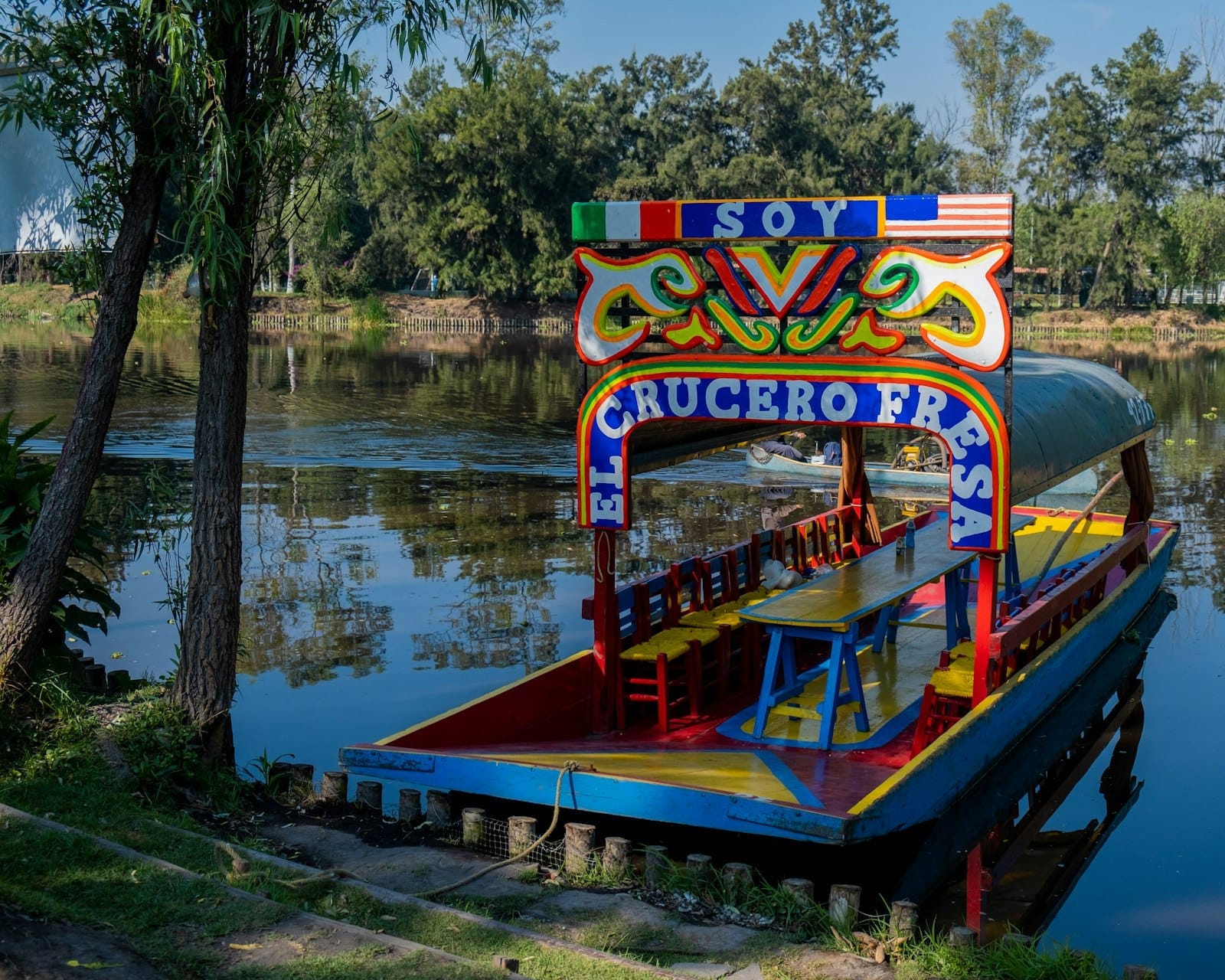
The defining experience is a ride on the trajineras of Xochimilco: the flat-bottomed wooden boats, painted in bright colors and named with decorative arches, that have been transporting people through the canals for generations. Boats are hired by the hour at fixed official rates posted at each embarcadero. At Embarcadero Nativitas, the official rate has recently been around 600 MXN per trajinera per hour, with a maximum capacity of roughly 20 people per boat. Always verify the posted tariff matches what you are being charged before boarding.
Beyond the canal ride itself, the chinampa landscape is the real reason this place holds UNESCO status. These are rectangular plots of land built up from the lake bed using layers of aquatic vegetation, mud, and stakes, a technique developed by pre-Hispanic cultures that allowed agriculture on what was otherwise open water. Some chinampas are still actively farmed, producing flowers, vegetables, and herbs for Mexico City markets. The best views of working chinampas are from the narrower secondary canals, which a good boat operator will navigate on request.
The town center of Xochimilco is worth time on its own. The parish church of San Bernardino de Siena, completed in the 16th century, anchors the main plaza and is one of the more significant early colonial religious buildings in the southern part of the city. The surrounding streets have the feel of a historic town center rather than a Mexico City neighborhood, with low-rise buildings, local shops, and a plaza where residents actually gather.
Trajinera canal ride from Embarcadero Nativitas or nearby docks
Working chinampa visits via secondary canals (ask your boat operator)
Parish church of San Bernardino de Siena in the town plaza
Mercado Xochimilco for local produce, flowers, and prepared food
Ecological park (Parque Ecológico de Xochimilco) for bird watching and quieter canal access
ℹ️ Good to know
Xochimilco is inscribed as part of the UNESCO World Heritage Site alongside the Historic Centre of Mexico City. The inscription specifically recognizes the chinampas and canal system as an irreplaceable pre-Hispanic cultural landscape, not just a tourist attraction.
Eating & Drinking
The food scene in Xochimilco is centered on the market and the streets around it rather than on sit-down restaurants. Mercado Xochimilco is the main hub, a large covered market where you will find tlayudas, quesadillas cooked on comales, pozole, and the kind of Mexican market food that has not been adjusted for outside tastes. Prices are local: a full meal at a market stall costs a fraction of what the same food would cost in Roma Norte.
On the water, vendor boats pull alongside your trajinera selling everything from cold beer and micheladas to grilled corn, tamales, and botanas. This floating food service is part of the classic canal experience and a reasonable way to eat if you are spending several hours on the water. Quality varies boat to boat, and there is no way to inspect food before buying, so stick to things cooked in front of you or items that are clearly fresh.
Xochimilco has a local pulquería tradition that is worth exploring if you are curious about Mexico's fermented agave drinks. Pulque is the maguey sap fermented without distillation, with a mild, slightly viscous character and a lower alcohol content than mezcal. For a deeper look at agave-based drinking culture across Mexico City, the Mexico City mezcal guide covers the broader landscape, though pulque is its own separate category.
The streets immediately around the embarcaderos have a cluster of restaurants and food stalls that cater primarily to day visitors. These are generally reliable for basic Mexican food but are not the most interesting eating in the borough. Walk a few blocks inland toward the town center and the options become more local and better priced.
Getting There & Around
The standard transit route from central Mexico City takes Metro Line 2 south to Tasqueña station, then the Tren Ligero (light rail) all the way to the Xochimilco terminus station called Xochimilco. The Tren Ligero is a surface-level rail line that runs through southern urban neighborhoods before reaching Xochimilco, a journey of roughly 30 to 40 minutes from Tasqueña depending on frequency. For a full overview of how public transit works across the city, the getting around Mexico City guide is the most complete starting point.
From the Xochimilco Tren Ligero station, Embarcadero Nativitas is about 25 to 30 minutes on foot heading south and east through the town. Local buses run between Tasqueña and the embarcadero area (route 25B toward Avenida H. Galeana y Ciclamen is one option), cutting the walk to a few minutes. Taxis and rideshares are available along this route as well.
By car or rideshare from central Mexico City, the trip takes 30 to 90 minutes depending on traffic, which in this city is a wide but wide range. Weekend mornings before noon tend to be faster. The Periférico Sur and Calzada de Tlalpan are the main arterials heading south. Parking near the embarcaderos exists but is limited and chaotic on weekends.
⚠️ What to skip
Traffic on weekend afternoons heading back north from Xochimilco can be severe. Plan to leave before 4 PM on Sundays if you are returning by road, or accept that the Tren Ligero may be your more reliable option regardless of crowds.
Xochimilco is also accessible as part of a southern Mexico City day that includes Coyoacán, which is roughly 6 to 8 kilometers north by road. The two neighborhoods pair well for a full day: Coyoacán in the morning, Xochimilco for a midday or early afternoon canal ride.
Where to Stay
Xochimilco is not a neighborhood where most visitors should base themselves for an extended stay. Accommodation options are limited compared to central neighborhoods, and the distance from the bulk of the city's museums, restaurants, and nightlife makes it a logistically difficult home base. The Tren Ligero and metro connection to central areas works, but it takes time.
Travelers who want to experience Xochimilco's quieter weekday atmosphere and the early morning canal light might find value in a one-night stay in the town center area, particularly around the plaza near San Bernardino de Siena. For most visitors, though, staying in Roma or Condesa and making a day trip south is the more practical approach. Those spending extended time in the city and prioritizing off-the-tourist-trail southern neighborhoods may find Xochimilco or adjacent Coyoacán more appealing as a base.
For a full breakdown of which neighborhood suits which type of traveler, the where to stay in Mexico City guide compares all the main options with transit access and daily life considerations factored in.
What to Know Before You Go
Xochimilco is frequently included in three-day Mexico City itineraries as a half-day excursion, usually paired with Coyoacán. The 3-day Mexico City itinerary covers how to sequence this alongside the city's major attractions without spending most of your time on the Periférico.
The canal experience is weather-dependent in a way that most Mexico City attractions are not. During the rainy season, roughly May through October, afternoon thunderstorms can arrive quickly and drench the open-top trajineras. Morning visits are more reliable for weather regardless of season. Bring sunscreen: the glare off the water is significant, and there is no shade on many stretches of the main canal.
Xochimilco appears in some free and low-cost Mexico City experiences lists, though this requires some clarification. Walking the town center and visiting the market costs nothing. The canal ride does not: you are hiring the boat, and the fixed hourly rate applies whether you are two people or twenty. Split across a larger group, the per-person cost is reasonable. As a solo traveler paying the full hourly rate for an empty boat, it is more expensive.
💡 Local tip
If you are visiting solo or as a couple, ask at the embarcadero whether shared rides are available. On busy weekend days, operators sometimes arrange group boats that split the cost, which brings the per-person price down significantly.
TL;DR
Xochimilco is a UNESCO World Heritage Site and the last intact remnant of the Valley of Mexico's ancient canal and chinampa system: irreplaceable as a cultural landscape.
The weekend canal experience is festive and crowded, with live music, vendor boats, and family groups; weekday visits offer a quieter, more agricultural version of the same waterways.
Transit access via Metro Line 2 to Tasqueña, then Tren Ligero to the Xochimilco terminus, is reliable and inexpensive; allow 25 to 30 minutes of walking from the station to the main embarcadero, or take a local bus or taxi.
Best suited for day-trippers from central Mexico City rather than as a base neighborhood; pairs naturally with a morning in Coyoacán before heading south to the canals.
Not ideal for travelers who dislike crowds, loud music, or weather exposure; go on a weekday morning if either of those is a concern.
Mexico City ranks among the top museum cities on earth, with over 150 institutions spanning pre-Columbian archaeology, muralism, folk art, contemporary art, and colonial history. This guide cuts through the noise and tells you exactly which museums are worth your time, where they are, and what makes each one well worth the trip.
Mexico City is a genuine year-round destination, but timing your visit around weather patterns, local festivals, and price cycles makes a real difference. This guide breaks down every season so you can decide when to go based on what actually matters to you.
Mexico City transforms every late October and early November into one of the world's great cultural spectacles. This guide covers the grand parade, neighborhood celebrations, ofrenda traditions, and everything practical you need to experience Día de Muertos properly.
Mexico City sits at the centre of one of the most rewarding regions in the Americas for day trips. Whether you want ancient pyramids, colonial cities, forested national parks, or floating gardens, each of these excursions can be done in a single day from CDMX and back.
Mexico City is one of the world's great bargain destinations. From world-class museums with no entry fee to sprawling parks, ancient ruins, and monumental public art, you can fill days of extraordinary sightseeing without spending a single peso on admission.
Mexico City's transport network is one of the largest in the world, covering 12 Metro lines, 7 Metrobús corridors, bike share, and rideshare apps. This guide breaks down every option with real costs, practical routes, and practical warnings so you can move through CDMX efficiently and safely.
Mexico City carries an outsized reputation for danger that doesn't match the reality most tourists experience. This guide breaks down official advisories, neighborhood safety, common crime patterns, and practical precautions so you can make an informed decision about visiting CDMX.
Lucha libre is one of the most electric live experiences in Mexico City. This guide covers the two main venues, weekly schedules, ticket prices, how to buy safely, and what to expect inside the arena so you can skip the guesswork and enjoy the spectacle.
Mexico City International Airport (IATA: MEX) is one of the busiest airports in Latin America and your gateway to one of the world's great cities. This guide covers terminals, ground transport, airlines, facilities, and practical tips to make your arrival or departure as smooth as possible.
At 2,240 metres (7,350 feet) above sea level, Mexico City is one of the highest major capitals in the world. This guide covers altitude sickness symptoms, acclimatisation strategies, climate effects, and common misconceptions so you can plan your trip with confidence.
Mexico City has become one of Latin America's top remote work destinations, combining fast fiber internet, affordable living costs, and a rich urban culture. This guide covers everything from the best neighborhoods for nomads to visa logistics, coworking costs, and daily life practicalities.
Mexico City rewards those who look beyond the obvious. This guide reveals the museums, markets, archaeological sites, and neighbourhoods that locals love but most visitors miss, from a volcanic-stone pyramid in the south to a 19th-century Moorish kiosk that once travelled to New Orleans.
Three days in Mexico City covers the highlights, but only if you plan smart. This guide breaks down exactly where to go, in what order, and what to skip — with logistics, pricing, and local context built in.
Mexico City (CDMX) rivals much larger capitals in the luxury travel market. This guide covers where to stay, where to eat, and what to do at the high end, with clear advice on pricing, neighborhoods, and how to avoid wasting money on the wrong choices.
Mexico City is the best place outside Oaxaca to explore mezcal seriously. This guide covers the top mezcalerías in Roma, Polanco, and Centro, where to buy quality bottles to take home, and the essential knowledge to taste confidently without getting burned by tourist-trap pours.
Mexico City's nightlife runs deep and late, spanning cantinas, cocktail bars, electronic clubs, live mariachi, and lucha libre events across a dozen distinct neighborhoods. This guide breaks down where to go, what to expect, and how to do it safely across CDMX's best after-dark districts.
Mexico City (CDMX) is one of the best-value major cities in North America. This guide breaks down realistic daily budgets, the cheapest ways to get around, free and low-cost attractions, and where to eat well without overspending — whether you have 3 days or 3 weeks.
Mexico City sits atop one of the ancient world's great civilizations. This guide covers every pyramid and archaeological site worth your time, from the colossal monuments at Teotihuacán to the Aztec ruins buried beneath the modern city center.
Mexico City is one of Latin America's great shopping destinations, with a range that stretches from centuries-old craft markets to high-end international boutiques. This guide breaks down the best areas by shopping style, with practical notes on prices, hours, and where the tourist traps hide.
Solo travel in Mexico City (CDMX) is more straightforward than most people expect. This guide covers the best neighborhoods to base yourself, how to get around on a budget, which attractions to prioritize, and straightforward safety advice so you can make the most of one of the world's great capitals.
Mexico City is one of the world's great street food capitals, with thousands of stands serving everything from tacos al pastor to tamales and tlacoyos at prices that rarely exceed MXN 100 for a full meal. This guide covers the essential dishes, neighborhood-by-neighborhood breakdown, timing, pricing, food safety, and how to get the most out of eating on the streets of CDMX.
Mexico City rewards those who look up, down, and out. This guide covers the best places to see the city from above, from the classic observation deck of Torre Latinoamericana to the hilltop drama of Chapultepec Castle and the wide valley views at Teotihuacán.
Mexico City rewards walkers like few capitals on earth. From Aztec ruins and colonial palaces to Art Deco parks and bohemian barrios, these are the routes and guided tours worth lacing up your shoes for.
Mexico City is one of Latin America's most rewarding family destinations, with a free world-class zoo, hands-on children's museums, canal boat rides, and ancient pyramids. This guide covers the best kid-friendly attractions, practical logistics, and straightforward tips to help families make the most of CDMX.
Teotihuacán is one of the great ancient cities of the world, and it sits just 50 km northeast of Mexico City. This guide covers every practical detail: how to get there independently, whether a guided tour is worth it, when to arrive, what the ticket situation actually looks like, and the climbing ban that catches many visitors off guard.
Mexico City (CDMX) packs pre-Hispanic ruins, landmark museums, colonial architecture, and one of the world's great food scenes into a metro area of over 21 million people. This guide covers the top things to do in Mexico City by category, with practical timing advice and logistics to help you plan a smarter trip.
Mexico City (CDMX) is a metropolis of over 21 million people, and choosing the right neighborhood to stay in makes a genuine difference to your trip. This guide breaks down the best areas by budget, travel style, and transit access — with straightforward assessments of what each zone actually delivers.