Museo Dolores Olmedo: Guide to Mexico City's Premier Private Art Collection
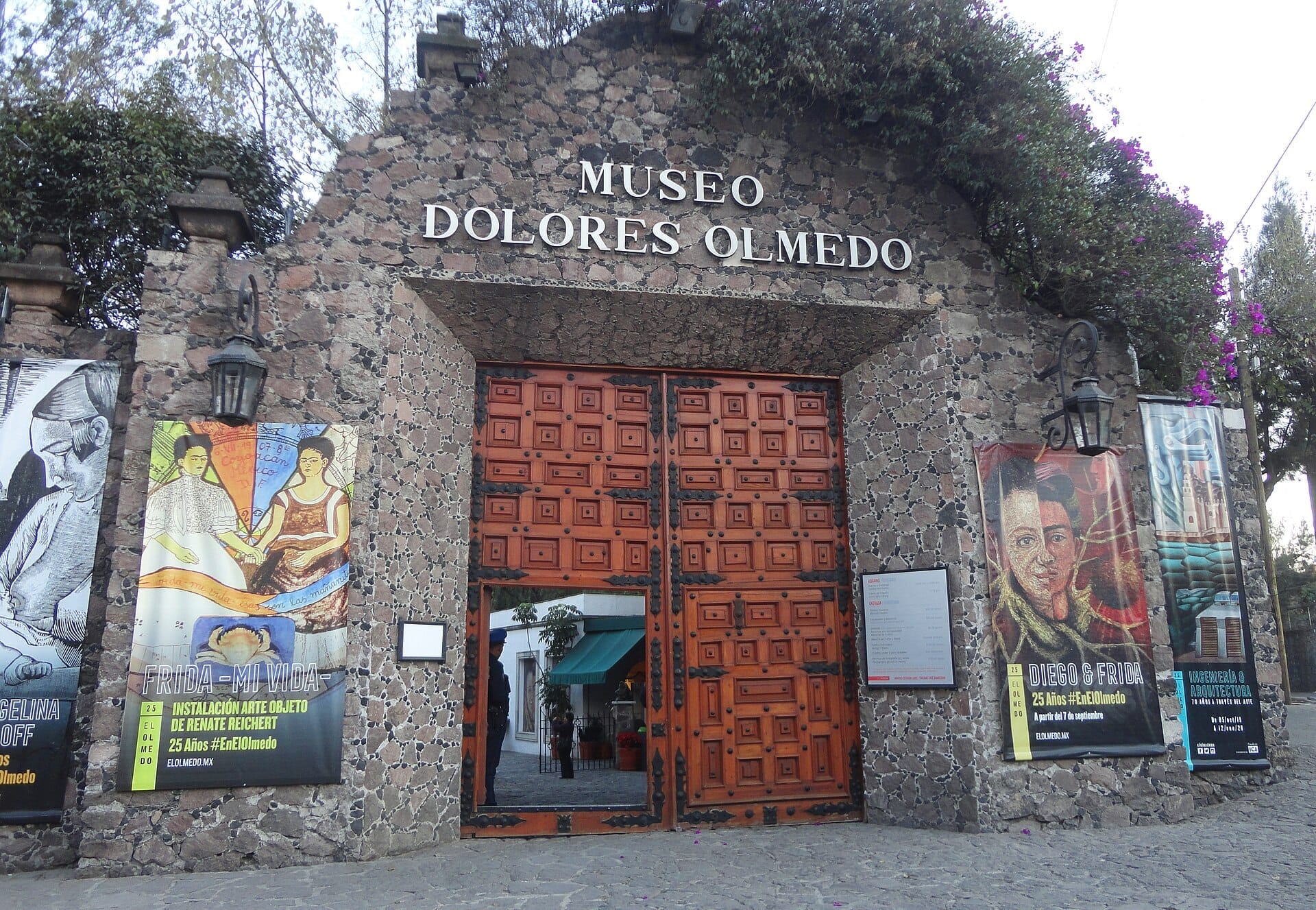
The Museo Dolores Olmedo Patiño holds the largest single collection of works by Diego Rivera and Frida Kahlo in the world. Housed in a 16th-century hacienda in Xochimilco, the museum has been closed since 2020 and is scheduled to reopen at its historic La Noria site in 2026. Here is everything you need to know before planning a visit.
Quick Facts
- Location
- Av. México 5843, Col. La Noria, Xochimilco, Mexico City (historic site; reopening announced for 2026 at La Noria; Chapultepec/Parque Aztlán relocation plans remain under debate)
- Getting There
- Tren Ligero to Xochimilco station, then local transport toward La Noria (historic site; transit to new Chapultepec location TBD)
- Time Needed
- 2–3 hours for the galleries and grounds
- Cost
- Historically approx. US$5; Tuesdays were free. Verify current pricing at official site before visiting.
- Best for
- Diego Rivera and Frida Kahlo enthusiasts, colonial architecture lovers, pre-Hispanic art collectors
- Official website
- museodoloresolmedo.org.mx
⚠️ What to skip
Important: The Museo Dolores Olmedo has been closed since 2020. A 2026 reopening has been announced, while previously reported relocation plans to Parque Aztlán, Chapultepec, remain contested and not confirmed. Check the official website at museodoloresolmedo.org.mx before making any travel plans around this attraction.
What Is the Museo Dolores Olmedo?
The Museo Dolores Olmedo Patiño is, by any measure, one of the most significant art collections in Latin America. It holds the largest concentration of Diego Rivera paintings in the world, alongside a major holding of works by Frida Kahlo, making it the single most important destination in Mexico City for anyone seriously interested in either artist. The museum also contains pre-Hispanic pieces, colonial-era artifacts, and works by other 20th-century Mexican artists collected by Dolores Olmedo herself over decades.
Dolores Olmedo was a businesswoman, socialite, and close friend of Diego Rivera from the 1920s onward. Rivera painted her portrait multiple times, and she became one of the foremost collectors of his work. After purchasing the estate known as Hacienda La Noria in Xochimilco in 1962, she spent decades turning the colonial grounds into a personal museum. When it opened formally to the public on 17 September 1994, it gave visitors something unusual: a world-class art collection set inside a working hacienda, with peacocks wandering the gardens and xoloitzcuintli dogs, the ancient hairless breed of Mexico, roaming freely on the lawns.
For context on how this collection fits into the broader picture of Rivera and Kahlo sites across the city, the Museo Frida Kahlo (Casa Azul) in Coyoacán displays Kahlo's personal home and belongings, while the Museo Casa Estudio Diego Rivera y Frida Kahlo in San Ángel shows where the two artists worked side by side. The Dolores Olmedo collection, by contrast, is about the depth of a single collector's obsession — one that spans the full arc of Rivera's output.
The Hacienda La Noria: A 16th-Century Setting Unlike Any Other
The historic site in Xochimilco sits within a stone hacienda complex that dates to the 16th century. Hacienda La Noria was a colonial agricultural estate, and its thick stone walls, interior courtyards, and wide garden terraces survive largely intact. Unlike the white-cube environment of most modern museums, the Dolores Olmedo collection was displayed in rooms that had once served as living quarters, kitchens, and storehouses. The paintings hung against textured plaster walls, and afternoon light filtered through colonial windows in ways that changed the character of the galleries hour by hour.
The grounds were as much a draw as the art. Resident peacocks moved between the garden paths, and the xoloitzcuintli dogs, a breed that has existed in Mexico since pre-Columbian times and is directly depicted in Rivera's murals, were kept as living exhibits. Visitors who arrived in the late morning would typically find the dogs settled on the warm stone paths, apparently unbothered by the foot traffic. The garden also included a section displaying outdoor pre-Hispanic sculptures, anchoring the property's sense of deep historical layering.
Tickets & tours
Live prices and dates from our booking partner. If you book, we may earn a commission at no extra cost to you.
Puebla and Cholula guided tour from Mexico City with optional lunch
From 43 €Instant confirmationFree cancellationXochimilco, Coyoacan and Frida Kahlo Museum with skip-the-line tickets
From 63 €Instant confirmationFree cancellationMexico City exploration game and tour in Chimalistac
From 10 €Instant confirmationFree cancellationCuernavaca and Taxco Guided Tour with Optional Lunch
From 40 €Instant confirmationFree cancellation
The Art Collection: Diego Rivera at Full Scale
The Rivera holdings at Dolores Olmedo are not a representative sample. They are a comprehensive survey. The collection includes paintings from his early Cubist period in Paris, his transition through post-Impressionism, and the mature muralist style he developed in Mexico from the 1920s onward. Rivera worked in an enormous range of formats, and the museum displayed not only finished canvases but studies, sketches, and preparatory works that are rarely seen elsewhere.
If you have already spent time at the Museo Mural Diego Rivera in the Centro Histórico, which houses a single large-scale mural, visiting Dolores Olmedo reveals a completely different dimension of his practice. The depth of portable works here makes it possible to trace his stylistic development in a way no single mural can achieve.
The Frida Kahlo section, while smaller than the Rivera holdings, is substantial and includes works of genuine importance. The selection complements rather than duplicates what is displayed at the Casa Azul in Coyoacán: where the Casa Azul is primarily a biographical experience built around personal objects and her home environment, the Olmedo collection is focused on the paintings as objects.
Beyond Rivera and Kahlo, the collection includes works by Angelina Beloff, Rivera's first wife, and a significant assembly of pre-Hispanic figurines, ceramics, and stone objects that Olmedo acquired over her lifetime. These are displayed in dedicated gallery rooms and give the museum an anthropological dimension that distinguishes it from a purely modern art institution.
The 2026 Reopening and Possible Relocation to Chapultepec: What Is Changing and Why It Matters
ℹ️ Good to know
The museum's proposed move to Parque Aztlán within Chapultepec has been described in media coverage as controversial. Reports from July 2025 (The Art Newspaper) indicate the museum plans to reopen in 2026, while questions remain over whether the collection will in fact be relocated from La Noria to Chapultepec. The future of the historic Hacienda La Noria site in Xochimilco had not been formally clarified as of that reporting.
The Museo Dolores Olmedo closed during the Covid-19 pandemic in 2020 and has not reopened at its original Xochimilco site. Plans announced in recent years have included the possibility of placing a new version of the museum inside Parque Aztlán in Chapultepec, the large public park in the Chapultepec-Polanco area of western Mexico City, but this relocation has not been definitively confirmed. This represents a fundamental change in the museum's character.
Chapultepec already hosts several of Mexico City's most visited cultural institutions, including the Museo Nacional de Antropología and the Castillo de Chapultepec. A new Dolores Olmedo location in that area would make the collection significantly more accessible to visitors staying in central or western neighborhoods. However, the combination of the colonial hacienda setting and the Xochimilco environment was a meaningful part of the original experience, and that context will be lost in any new building.
For travelers who knew the Xochimilco site, the original experience involved arriving through the southern edge of the city, where the density of the urban grid gives way to residential streets and canal-side markets. The transition from the noise of Xochimilco to the quiet stone courtyard of the hacienda was a genuine tonal shift. Whether the new location will replicate anything comparable remains to be seen.
Planning Your Visit: What You Need to Verify Before Going
Because of the ongoing closure and planned relocation, practical information for the Museo Dolores Olmedo requires extra verification steps before any visit. Do not rely on older guidebooks, cached search results, or pre-2020 travel blogs for opening hours, directions, or ticket pricing. The historic site at Av. México 5843 in La Noria, Xochimilco, has been closed and its future status is uncertain. A 2026 reopening has been announced, but whether this will occur at the historic La Noria site or a new Chapultepec location had not been confirmed at publication, and details including admission pricing, transit access, and exact address remained unconfirmed.
- Check the official website at museodoloresolmedo.org.mx for current status and any reopening announcements.
- Contact the museum directly if you are planning travel specifically around a visit to the collection.
- For the historic site, the Tren Ligero light rail from Tasqueña Metro station (Line 2) runs to Xochimilco; the La Noria hacienda was then reachable via short local transport or a walk of several blocks.
- For the future Chapultepec location, Metro Line 1 (Chapultepec station) or Line 7 (Auditorio station) would likely be the most practical transit options, but confirm routes once the new site is established.
- Historically, Tuesdays offered free admission; photography required a small additional fee. These policies may change entirely with the relocation.
💡 Local tip
If you are traveling to Xochimilco specifically, the area offers the trajineras canal experience, the Mercado de Xochimilco, and the atmospheric southern neighborhoods regardless of the museum's status. A day in Xochimilco remains worthwhile independent of this collection.
The Xochimilco Context: Why the Original Location Mattered
Xochimilco sits at the southern edge of Mexico City, and it is one of the few parts of the metropolitan area where the pre-Hispanic canal and chinampa system that once covered the Valley of Mexico remains partially intact. The borough is part of the UNESCO World Heritage Site that also covers the Centro Histórico. Visiting the Dolores Olmedo museum from the canal docks meant traveling through a neighborhood where vendors sold cut flowers grown on chinampas, where the smell of canal water and marigolds mixed on market mornings, and where the city's scale and pace changed. For more on the area, the Xochimilco trajineras experience offers the most direct engagement with the canals and floating garden system.
The museum's gardens connected thematically to this landscape. The pre-Hispanic sculptures displayed outdoors, the indigenous dog breed kept on the grounds, and the colonial agricultural architecture of the hacienda created a layered reading of Mexican history that a purpose-built museum in Chapultepec will struggle to replicate. This is worth knowing not to discourage a future visit to the new location, but to help travelers understand what the collection has historically offered and what part of that offering is architectural rather than curatorial.
Who Should Prioritize This Museum (and Who Might Not)
The Dolores Olmedo collection is essential for anyone with serious interest in Diego Rivera, and it substantially rewards anyone tracking Frida Kahlo's output across multiple venues. The breadth of the Rivera holdings goes well beyond what any single mural or site can offer, and the pre-Hispanic collection adds a dimension that purely modern art institutions lack.
Visitors who find the Kahlo and Rivera circuit oversaturated in Mexico City may find less here to hold their attention. The collection is not primarily about Mexican popular art, contemporary work, or the kind of eclectic programming that characterizes institutions like the Museo Universitario Arte Contemporáneo. It is a focused private collection with a clear curatorial identity built around one collector's priorities.
If your time in Mexico City is limited and you are choosing between Rivera-related sites, consider visiting the best museums in Mexico City guide for a broader comparison of what each institution offers before committing a half-day to any single venue.
Insider Tips
- The museum's closure means current travel blogs describing the Xochimilco visit are outdated. Cross-check any practical information against the official site or recent news sources before planning. The Art Newspaper's July 2025 coverage of the Chapultepec relocation controversy is the most current public reporting available.
- If the new Chapultepec site opens in 2026, plan to visit on a weekday morning. Chapultepec draws very large weekend crowds, and the park's other anchor institutions (Museo Nacional de Antropología, Castillo) compete for the same visitor time. A Tuesday or Wednesday opening slot will be significantly quieter.
- The xoloitzcuintli dogs at the historic site were one of its most memorable features and a direct connection to Rivera's imagery, where the breed appears in several major works. Ask when booking or visiting the new location whether the dogs will remain part of the museum experience.
- The pre-Hispanic collection at Dolores Olmedo is less well-known than the Rivera and Kahlo holdings but is substantial and worth dedicated time. Visitors who arrive with only the canonical works in mind often spend longer than expected in the archaeological rooms.
- Historically, Tuesday admission was free. If this policy continues at the new location, Tuesday mornings represent the best value. However, free-admission days at Mexico City museums tend to attract more school groups, which can change the gallery atmosphere considerably.
Who Is Museo Dolores Olmedo For?
- Diego Rivera specialists and enthusiasts wanting the deepest single-collection survey of his portable works
- Frida Kahlo followers who want to see her paintings in a context separate from the biographical Casa Azul experience
- Travelers interested in pre-Hispanic ceramics and figurines alongside 20th-century Mexican modernism
- Architecture and heritage visitors drawn to colonial hacienda settings (historic site) or major Chapultepec institutions (new site)
- Anyone building a multi-day itinerary around Mexican muralism and its key figures across the city
Nearby Attractions
Other things to see while in Xochimilco:
- Xochimilco Canals & Trajineras
Xochimilco's 170-kilometer canal network is one of the last surviving fragments of the pre-Hispanic lake system that once defined the Valley of Mexico. Visitors rent brightly painted wooden boats called trajineras and drift past floating gardens, flower vendors, and roving mariachi ensembles. It is a UNESCO World Heritage Site, a living ecological system, and an experience unlike anything else in Latin America.
Planning a trip? Discover personalized activities with the Nomado app.