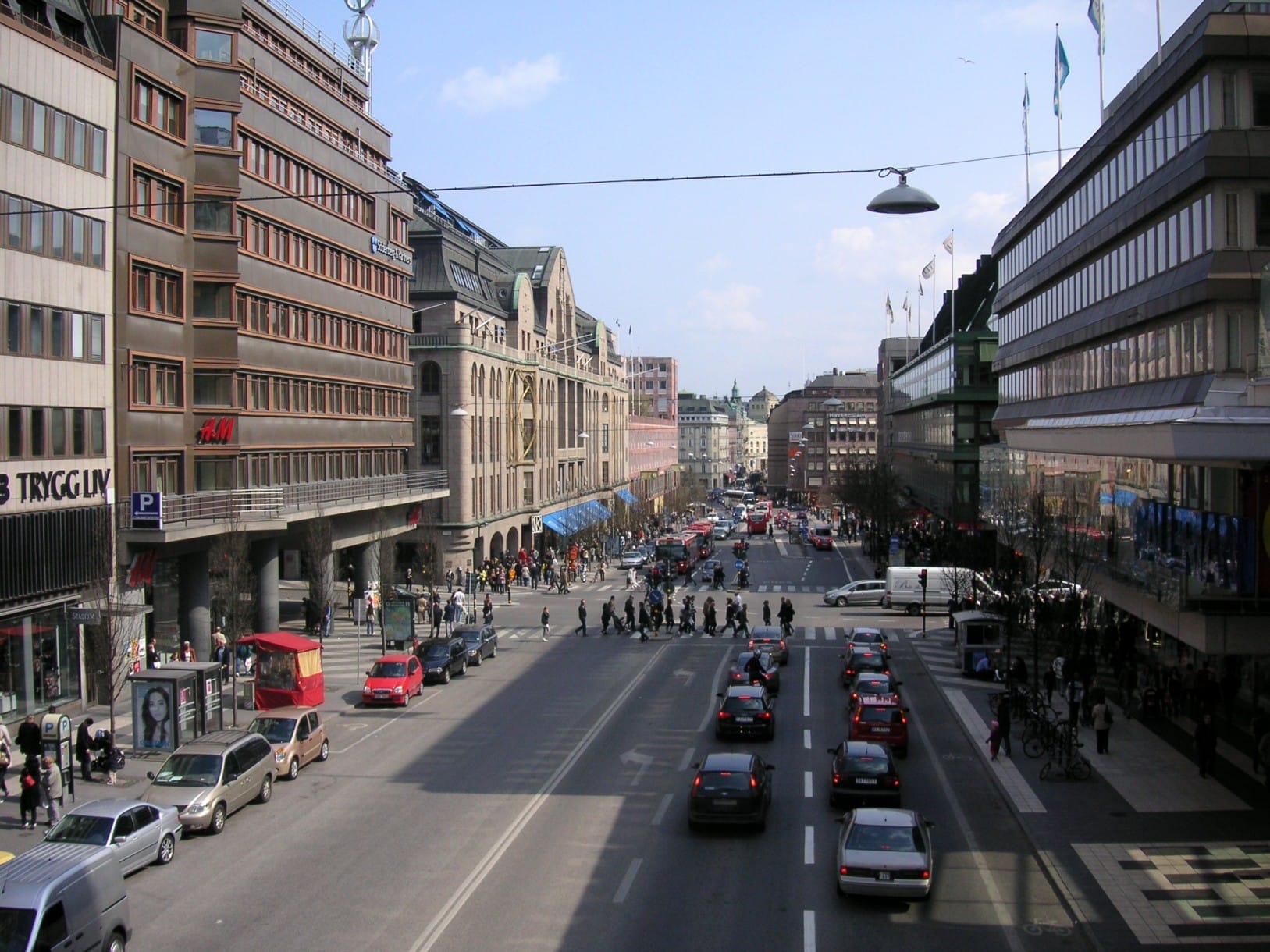
Norrmalm is Stockholm's modern city centre, built around Central Station and Sergels torg. It is where commuters, shoppers, and visitors converge every day, with major transport links, cultural institutions, and a dense concentration of restaurants and shops spread across pedestrianised streets and wide urban squares.
Norrmalm is the functional heart of Stockholm, the district where almost every visitor arrives and where the city does most of its daily business. It lacks the cobblestone charm of Gamla Stan or the creative edge of Södermalm, but its central position, unmatched transport connections, and genuine urban energy make it the most practical base in Stockholm and a neighbourhood worth understanding on its own terms.
Orientation: Where Norrmalm Sits in Stockholm
Norrmalm occupies the northern side of the central waterway called Strömmen, which separates it from Gamla Stan to the south. To the east, Birger Jarlsgatan marks the rough boundary with Östermalm. To the northwest, the district fades into Vasastan somewhere around Tegnérgatan, and to the southwest it faces Kungsholmen across the water near Stadshuset. As a borough in the broader administrative sense, Norrmalm extends much further north towards Brunnsviken, but the area that functions as 'City' in everyday speech is the compact commercial core around Sergels torg, Drottninggatan, and the Central Station.
Most travellers will pass through Norrmalm the moment they arrive in Stockholm. Stockholm Central Station, the country's main rail hub, sits on the western edge of the district. Next door is Cityterminalen, the long-distance bus terminal. T-Centralen, the metro interchange where all three Tunnelbana lines converge, is directly beneath the station. In practical terms, Norrmalm is where Stockholm's transport network radiates outward from, which makes it both intensely convenient and occasionally overwhelming.
Norrmalm's central position means it is walkable to a remarkable number of things. Gamla Stan is a ten-minute walk south across Strömbron. Östermalm starts just east of Birger Jarlsgatan, and the ferry pier for Djurgården is reachable in about 15 minutes on foot via Strandvägen. For visitors who want proximity to everything without committing to a specific neighbourhood, Norrmalm is the default answer.
Character & Atmosphere
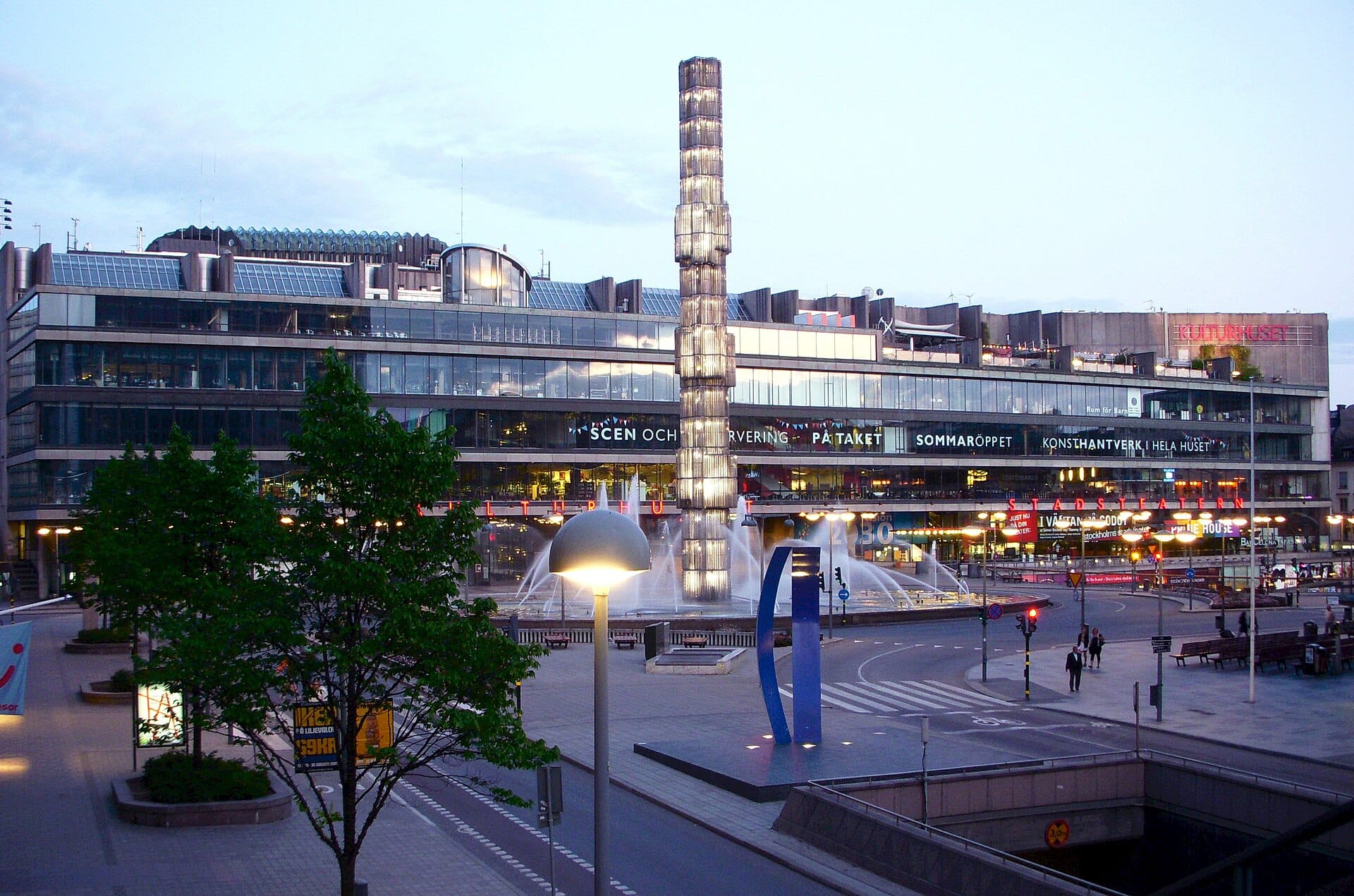
Norrmalm is a product of mid-20th century urban ambition. Between the 1950s and 1970s, a large portion of the older district was demolished and rebuilt with modernist office towers, pedestrianised shopping streets, and wide urban squares. The result is a neighbourhood that looks quite different from the rest of central Stockholm: bigger buildings, broader pavements, more concrete. Sergels torg, the central plaza with its glass obelisk and circular underground level, is the clearest expression of this era. It polarises visitors, but it functions as a genuine urban hub where teenagers skate, protesters gather, buskers compete, and commuters cross paths at all hours.
In the morning, Norrmalm belongs to commuters. The streets around Central Station are thick with people arriving from the suburbs, queuing for coffee, and moving purposefully in every direction. Drottninggatan, the long pedestrianised street that runs north from Sergels torg, is quiet at this hour, with shopkeepers opening shutters and delivery vans parked across the pavement. By mid-morning the district shifts gear: tourists start appearing, shops open properly, and the lunch crowd begins filling the restaurants around Hötorget, the open-air market square where vendors sell fruit, flowers, and vegetables under permanent canopies.
Afternoons in Norrmalm are commercial and purposeful. The main shopping corridors are at their most crowded between 14:00 and 18:00. Kungsträdgården, a long park that runs south from the NK department store towards the water, is one of the few genuinely relaxed spots in the district: locals sit on benches, children play near the fountains, and in summer the outdoor cafés do steady business beneath the lime trees. In winter the park hosts a popular ice rink. After dark, the character shifts again. The area around Stureplan just over the Östermalm border draws a well-dressed nightlife crowd, while the blocks nearest Central Station see a rougher mix of people.
ℹ️ Good to know
Norrmalm is not a neighbourhood that rewards slow wandering in the way that Gamla Stan or Södermalm does. Its strength is efficiency and access. Treat it as your operational base and venture outward from it rather than expecting it to charm you on its own streets.
What to See & Do
Norrmalm is not primarily an attractions district, but it contains several cultural institutions worth knowing about, and its public spaces are more interesting than their reputation suggests. Sergels torg is the obvious starting point: the underground level sits below the plaza and connects to Kulturhuset, a multi-storey cultural complex with galleries, a library, a cinema, and performance spaces. Entry to most of the building's common areas is free, and the upper-floor terrace gives a useful overview of the city.
Kulturhuset is one of Stockholm's most accessible cultural venues, with changing exhibitions, a dedicated space for children, and a busy café. It sits directly on Sergels torg and is easy to combine with time at the square itself. A short walk east along Hamngatan brings you to Kungsträdgården and, at its southern end, the views towards the Royal Palace and the water.
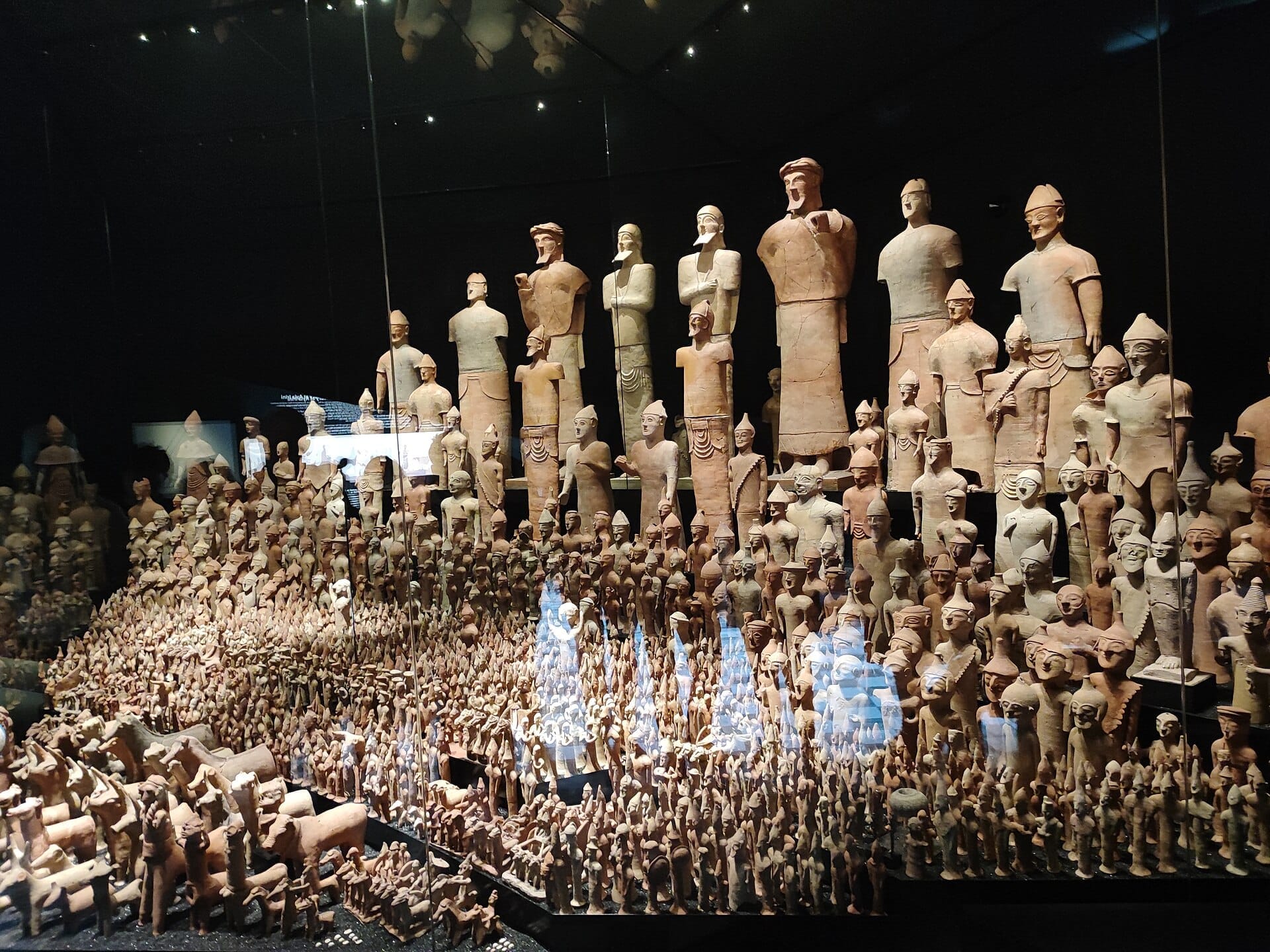
The Medelhavsmuseet on Fredsgatan is one of Stockholm's more underrated museums, with significant collections of ancient Egyptian, Greek, and Roman artefacts. It receives far fewer visitors than the big draws on Djurgården, which means you can often have entire rooms to yourself. Also in Norrmalm, the Royal Swedish Opera on Gustav Adolfs torg faces the water and hosts a full season of opera and ballet from September to May.
Sergels torg and Kulturhuset: Stockholm's modernist civic centrepiece
Hötorget market square: fresh produce, flowers, and street food most days
Kungsträdgården park: seasonal events, ice skating in winter, outdoor dining in summer
Medelhavsmuseet: Egyptian and Mediterranean antiquities on Fredsgatan
Royal Swedish Opera on Gustav Adolfs torg
NK (Nordiska Kompaniet): Stockholm's landmark department store on Hamngatan
Åhléns City: large department store at the corner of Klarabergsgatan and Drottninggatan
If you are putting together a wider itinerary, Norrmalm is a natural staging point. The Stockholm metro art starts right here at T-Centralen, which has some of the most impressive station decoration on the entire network. It is worth a few minutes even if you are not travelling onwards.
Eating & Drinking
Norrmalm's food scene is wide rather than deep. Because the district draws such a mix of office workers, tourists, commuters, and students, almost every type of eating option is represented, but truly outstanding restaurants are spread thinly across a lot of mediocre ones. The main concentration of restaurants is around Hötorget, along Drottninggatan, and on the side streets between Sergels torg and Stureplan. Fast food chains are present in force, particularly around Central Station, but the indoor market at Hötorgshallen beneath the square is the better choice for a quick and interesting lunch.
Hötorgshallen is a covered food hall dating back to the 1950s that has survived multiple cycles of renovation and gentrification. It now houses a mix of fishmongers, delis, Middle Eastern food stalls, sushi counters, and Swedish smörgåsbord restaurants. Prices are reasonable, the quality is generally solid, and it gives you a sense of how the city actually eats at midday rather than how it performs for tourists.
Café culture in Stockholm is well explained in the city's fika tradition, and Norrmalm has plenty of places to practice it. The chains (Espresso House, Wayne's Coffee) are everywhere, but there are independent cafés scattered along the side streets off Drottninggatan and near the Kulturhuset. For a more deliberate coffee stop, the blocks around Kungsgatan and Sveavägen have a higher concentration of quality-focused independents.
In the evening, the drinking and dining scene concentrates near Birger Jarlsgatan and the edges of Stureplan to the east, or along Sveavägen heading north. The restaurants directly around Sergels torg and Central Station skew towards convenience rather than quality. Budget-conscious travellers will find good value at the Thai and Middle Eastern restaurants around Hötorget, while those willing to spend more should consider crossing into Östermalm for the better dining options in that area.
💡 Local tip
For a genuinely good lunch in Norrmalm, go to Hötorgshallen before 12:30 to beat the office crowd. Many of the stalls serve set lunch deals (dagens lunch) that include a main course, salad, bread, and a drink at a fair price.
Getting There & Around
Norrmalm is the easiest neighbourhood in Stockholm to reach from anywhere. Stockholm Central Station (Centralstationen) is the terminus for long-distance trains from Gothenburg, Malmö, and Oslo, as well as for the Arlanda Express, which connects the district to Stockholm Arlanda Airport in roughly 20 minutes. Regional commuter trains (pendeltåg) also stop here. Next door, Cityterminalen handles all long-distance coach services.
T-Centralen, directly beneath the station, is the only stop in the city served by all three metro lines: the red, blue, and green lines. This makes it the transfer point for the entire Tunnelbana network, and from here you can reach almost any other neighbourhood in Stockholm within 15-20 minutes. The metro runs frequently throughout the day and continues late into the night, with night services on weekends.
Multiple tram and bus routes pass through the district, and the SL system covers all of them on the same ticket. For a practical guide to navigating the network, see getting around Stockholm. On foot, Norrmalm is entirely flat and easy to navigate. Drottninggatan is fully pedestrianised for its central stretch, and Kungsträdgården provides a pleasant walking corridor towards the water.
Cycling is practical here given the flat terrain, and there are bike lanes and ample places to park your own or rented bicycle around Sergels torg, Hötorget, and near the Central Station. For visitors arriving at Arlanda, the Arlanda Express drops you into the heart of Norrmalm with no further connection required.
⚠️ What to skip
The area immediately outside Central Station and around Sergels torg has a higher concentration of petty theft than other parts of central Stockholm. Keep bags zipped and be particularly aware in the tunnels and underpasses connecting the station to the metro. The areas are well-policed and safe by any international standard, but crowded transport hubs reward standard precautions.
Where to Stay
Norrmalm has the highest concentration of hotels in Stockholm, ranging from international chain hotels near the station to smaller boutique properties on the quieter side streets. The advantage of staying here is obvious: you are within walking distance of everything central, and the transport connections mean even the far reaches of the city are accessible without hassle.
The blocks around Central Station are the most convenient but also the least scenic. Hotels closer to Kungsträdgården, Hötorget, or along Sveavägen tend to be quieter at night and offer a slightly better street-level environment. For travellers arriving on late trains or leaving on early ones, the station-adjacent hotels offer genuine practical value that outweighs the uninspiring surroundings.
Norrmalm suits business travellers, short-break visitors who want maximum coverage in minimum time, and first-timers to Stockholm who want a central anchor. Those looking for more atmosphere might prefer staying in Södermalm or Vasastan and using Norrmalm's transport links without sleeping in the middle of it. A wider overview of accommodation options across the city is available in the where to stay in Stockholm guide.
Honest Assessment: Who Norrmalm Is For
Norrmalm is not Stockholm's most beautiful or characterful neighbourhood. The mid-century redevelopment removed much of the historic fabric, and what replaced it is earnest modernism that has aged to varying degrees. If you are hoping to feel the texture of old Stockholm, you will be better served by a short walk to Gamla Stan or a metro ride to almost any other central district.
What Norrmalm does exceptionally well is logistics. Everything connects here. The standard one-day Stockholm itinerary passes through Norrmalm by necessity, and for good reason: it is the city's operational centre. For a broader view of what the city offers across all its neighbourhoods, the things to do in Stockholm guide gives a useful starting framework.
The food hall at Hötorgshallen, the art at T-Centralen, the open space of Kungsträdgården, and the programme at Kulturhuset are all genuinely worth your time. Norrmalm rewards those who know how to use it rather than those who wander it hoping it will surprise them.
TL;DR
Norrmalm is Stockholm's commercial downtown, centred on Sergels torg, Central Station, and Drottninggatan.
T-Centralen gives direct metro access to every other neighbourhood in the city, making it the most connected base in Stockholm.
Cultural highlights include Kulturhuset, Medelhavsmuseet, the Royal Opera, and the Hötorgshallen food market.
The neighbourhood suits practical-minded travellers and first-time visitors; those wanting charm and atmosphere will find more of it in Gamla Stan, Södermalm, or Vasastan.
Petty theft risk near the station is worth noting, but the district is safe by international standards and well-policed throughout.
Three days is the sweet spot for a first visit to Stockholm. This itinerary covers Gamla Stan, Djurgården's world-class museums, Södermalm viewpoints, and a day-three excursion to the archipelago or Drottningholm Palace, with practical transport and budget advice throughout.
Stockholm has well over 100 museums, and the range is genuinely extraordinary. This guide cuts through the options to bring you the best across art, history, science, and culture, whether you have one afternoon or a full week to explore.
Stockholm rewards visitors in every season, but the experience changes dramatically depending on when you go. This guide breaks down weather, crowds, hotel prices, and key events month by month so you can choose the timing that fits your priorities.
Stockholm's geography, built across islands where Lake Mälaren meets the Baltic, creates extraordinary viewpoints at every turn. This guide covers the city's finest panoramas, from free clifftop walks on Södermalm to ticketed towers, waterfront promenades, and elevated galleries with views to match the art inside.
Stockholm's surroundings pack in Viking history, royal palaces, and thousands of Baltic islands within an hour of the city center. These are the best day trips from Stockholm, whether you travel by scenic boat, regional train, or local bus.
Stockholm is one of Europe's most rewarding cities to explore on a tight budget. From UNESCO-listed cemeteries and free permanent museum collections to clifftop viewpoints and underground art, here are the best free things to do in Stockholm.
Stockholm's public transport network is one of Europe's most integrated, covering metro, buses, trams, commuter rail, and ferries under a single fare system. This guide breaks down exactly how to navigate the city, get in from the airport, and avoid the most common ticketing mistakes.
Stockholm rewards those who look beyond Gamla Stan and the Vasa Museum. From a clifftop promenade with jaw-dropping harbor views to a UNESCO-listed forest cemetery and an underground art gallery spanning the entire metro system, these are the places Stockholmers actually spend their time.
Stockholm is Sweden's capital, built across 14 islands where Lake Mälaren meets the Baltic Sea. This guide breaks down what the city genuinely offers, who it suits best, and what the honest drawbacks are, so you can decide whether it belongs on your itinerary.
Stockholm is Scandinavia's most sophisticated capital, where waterfront palaces sit beside Michelin-starred restaurants and boutique design hotels. This guide covers everything you need to plan a genuinely high-end trip: where to stay, what to eat, how to move around, and which luxury experiences are worth the premium.
Midsommar is Sweden's most beloved celebration, and Stockholm offers everything from Skansen's traditional maypole to archipelago parties. This guide covers where to go, what to bring, what shuts down, and how to avoid the most common mistakes.
The Nobel Prize ceremony in Stockholm is one of the world's most prestigious annual events, but the award ceremony itself is closed to the public. This guide explains what actually happens during Nobel Week, which events you can attend as a visitor, and how to make the most of being in Stockholm in early December.
Stockholm rewards even the shortest visit. Built across 14 islands where Lake Mälaren meets the Baltic Sea, the Swedish capital packs medieval history, world-class museums, and striking waterfront scenery into a surprisingly walkable core. This guide shows you exactly how to spend one day in Stockholm — with a practical hour-by-hour structure, honest cost breakdowns, and advice on what to skip.
The Stockholm Archipelago stretches across roughly 30,000 islands, islets, and skerries east of the city. This guide breaks down how to reach the islands, which ones are worth your time, how much to budget, and when to go — whether you have two hours or two days.
Stockholm Arlanda Airport (ARN) is Sweden's main international hub, sitting roughly 42 km north of the city center. This guide breaks down every transfer option, current prices, journey times, and the common mistakes travelers make, so you can get into Stockholm without overpaying or wasting time.
Stockholm transforms in late November and December into one of Scandinavia's most atmospheric Christmas destinations. This guide covers the city's best Christmas markets, what to expect at each, how much you'll pay, and how to make the most of the short winter days.
Stockholm is the living capital of Scandinavian design, where minimalism, natural materials, and functional craft shape everything from flagship store interiors to everyday café furniture. This guide covers the best design districts, essential shops, museums, and practical advice for navigating the city's design scene across every budget.
Fika is Sweden's most beloved daily ritual: a proper pause for coffee and something sweet, shared with others. This guide covers the best cafés in Stockholm for fika, what to order, how much to pay, and how to do it like a local rather than a tourist.
Stockholm in summer is a genuine high point for the city: long days, mild temperatures, and the full range of outdoor experiences from archipelago hopping to rooftop dining. This guide covers the weather honestly, breaks down the best activities by month, and flags where the crowds and prices bite hardest.
Winter in Stockholm is a study in contrasts: candlelit Christmas markets set against medieval stone, short days that fade by 3pm, and a city that genuinely knows how to make cold weather feel worth it. This guide covers everything from the Stortorget market to surviving the dark season with your sanity intact.
Stockholm nightlife runs deeper than its expensive reputation suggests. This guide breaks down every major district, venue type, cover charge reality, and seasonal shift — so you spend your nights well, not wandering the wrong street at midnight.
Stockholm has a reputation as one of Europe's pricier capitals, but that reputation is only half the story. With the right approach to accommodation, food, transport, and sightseeing, you can experience one of the world's most beautiful cities on 500-949 SEK per person per day. This guide breaks down exactly how.
The Stockholm Pass promises free entry to 60+ attractions plus hop-on hop-off buses and boat tours. But does the math actually work in your favor? This guide breaks down the real costs, the best-value itineraries, and the cases where you're better off skipping it entirely.
Stockholm has a remarkably varied shopping scene, from the flagship luxury corridor along Biblioteksgatan to the independent vintage stores of Södermalm's SoFo district. This guide breaks down where to shop, what to buy, and how to get the most out of your budget in Sweden's capital.
Stockholm takes wellness seriously, blending century-old bathhouse traditions with modern urban spas and wild archipelago sauna experiences. This guide covers the best spas in Stockholm across every budget and travel style, from Centralbadet's 1909 Art Nouveau interiors to wood-fired saunas on the Baltic coast.
Stockholm and Copenhagen are roughly 522 km apart, connected by direct trains, flights, and buses. This guide breaks down journey times, realistic costs, and which option makes sense depending on your priorities, budget, and travel style.
The overnight ferry from Stockholm to Helsinki is one of Scandinavia's classic travel experiences, covering 214 nautical miles across the Baltic Sea in around 16 hours. This guide covers operators, pricing, cabin choices, departure logistics, and how to get the most from the crossing.
The Stockholm to Oslo route covers roughly 416 km and can be done by high-speed train, overnight bus, or short-haul flight. This guide breaks down every option honestly, including what each mode actually costs, how long it takes door-to-door, and when to book for the best fares.
Stockholm is one of Europe's most genuinely family-friendly capitals, with stroller-accessible transport, free museum entry for under-18s, and an entire island dedicated to children's attractions. This guide covers the best activities, honest pricing, seasonal strategies, and practical logistics for families visiting Stockholm.
Stockholm is one of Europe's most rewarding capitals, spread across 14 islands where Lake Mälaren meets the Baltic Sea. This guide covers the best things to do in Stockholm, from world-class museums and medieval streets to boat tours and local neighborhoods, with honest advice on what's worth your time and what to skip.
Stockholm sits at the heart of Viking-Age Scandinavia, and the city's museums and surrounding landscape hold some of the most significant Norse artifacts and burial sites in the world. This guide covers every serious option, from the immersive Viking Museum on Djurgården to the archaeological treasures at Historiska Museet, plus the best day trips for those who want to stand on actual Viking ground.
Stockholm's food scene runs far deeper than meatballs and Michelin stars. This guide covers the classic Swedish dishes worth seeking out, where to find them by neighborhood, how to eat well without overspending, and the food halls and lunch deals locals actually use.
Stockholm's accommodation scene splits sharply by neighborhood, budget, and travel style. This guide breaks down every major area, what you'll actually pay, and which districts are worth the price premium versus the ones that only look good on a map.